




























![[ New Arrival ] Porto Max Electric Scooter For Commute & Grocery Shopping - HOVSCO](http://www.hovsco.com/cdn/shop/files/PotroMax-3.jpg?v=1706927007&width=1200)
- by SteveJames
How Should You Balance 450 Lbs on a Step-Through Bike?
- by SteveJames
E-Bikes
Accessories
 Free Shipping
 15-Day Returns
 2-Year Warranty
Free Shipping
15-Day Returns
2-Year Warranty
2-Year Warranty
Free Shipping
15-Day Returns
2-Year Warranty
The safest way to carry 450 lbs on a step-through bike is to keep most of the mass low, centered, and slightly rear-biased, while preserving a light but controlled front end. In practical terms, a 3:7 front-to-rear load split works well for heavy cargo because it reduces steering shake, keeps the bike planted, and lowers the chance of wobble when you start, stop, or turn.
low center of gravity step thru ebikes
On a step-through frame, the open design can feel stable when unloaded, but it can become twitchy once cargo rises too high or shifts too far forward. The steering system reacts immediately to front load, so even a modest mistake can make the bike feel nervous at low speed. A smart cargo plan does not just hold the weight; it manages how the bike behaves under motion.
For heavy hauling, I prefer to think in terms of handling first, capacity second. A bike that technically carries the load but feels unstable is not a successful setup. The goal is to keep the front wheel tracking naturally while using the rear structure for the bulk of the work.
The rear rack should carry most of the load, because it sits on the stronger half of the bike’s cargo triangle and is less likely to disturb steering. The front rack should support only enough weight to keep the bike from feeling tail-heavy. That is why a 3:7 split is a useful real-world starting point for a 450 lb total load.
For a 450 lb load, that means roughly 135 lbs in front and 315 lbs in back. I would still treat that as a target, not a blind rule, because the shape of the cargo matters as much as the number on the scale. Dense, compact items belong lower and closer to the frame; bulky items belong where they can be tied down securely without affecting steering.
The 3:7 split works because it prevents the front end from becoming too light while avoiding a front-heavy steering problem. If the front is underloaded, the bike can wander and feel vague at slow speeds. If the front is overloaded, the handlebars become busy, and the bike may develop the kind of shimmy riders remember long after the ride is over.
In the field, I have found that the best cargo bikes feel almost boring when loaded correctly. That is exactly what you want. The bike should not demand constant correction from the rider, and it should not lurch when the road tilts, the rider stands up, or the brakes come on hard.
Keep the heaviest items as low as possible and as close to the wheel hubs as you can. High-mounted weight raises the center of gravity and makes the bike feel less settled, especially at slow speed or during cornering. Avoid stacking tall boxes above the rack line unless there is no other option.
If you are using a front basket or front platform, place lighter, denser items there and keep the load tight against the rack structure. On the rear, spread the mass evenly left to right so the bike does not pull sideways. A balanced rear setup often feels calmer than a single-sided load, even when the total weight is the same.
Wobble happens when the front end receives a mix of flex, speed, and uneven mass that the steering system cannot settle quickly enough. It is more likely when the front load is too light, too high, or too loosely attached. It can also show up when the bike frame or rack has play in the mounting points.
A step-through bike deserves extra care here because the frame shape can be more sensitive to torsional stress than a traditional high-step design. That does not mean it is unsafe. It means the load must be placed with more discipline, especially when the total cargo reaches 450 lbs and the bike is being used for real work rather than casual riding.
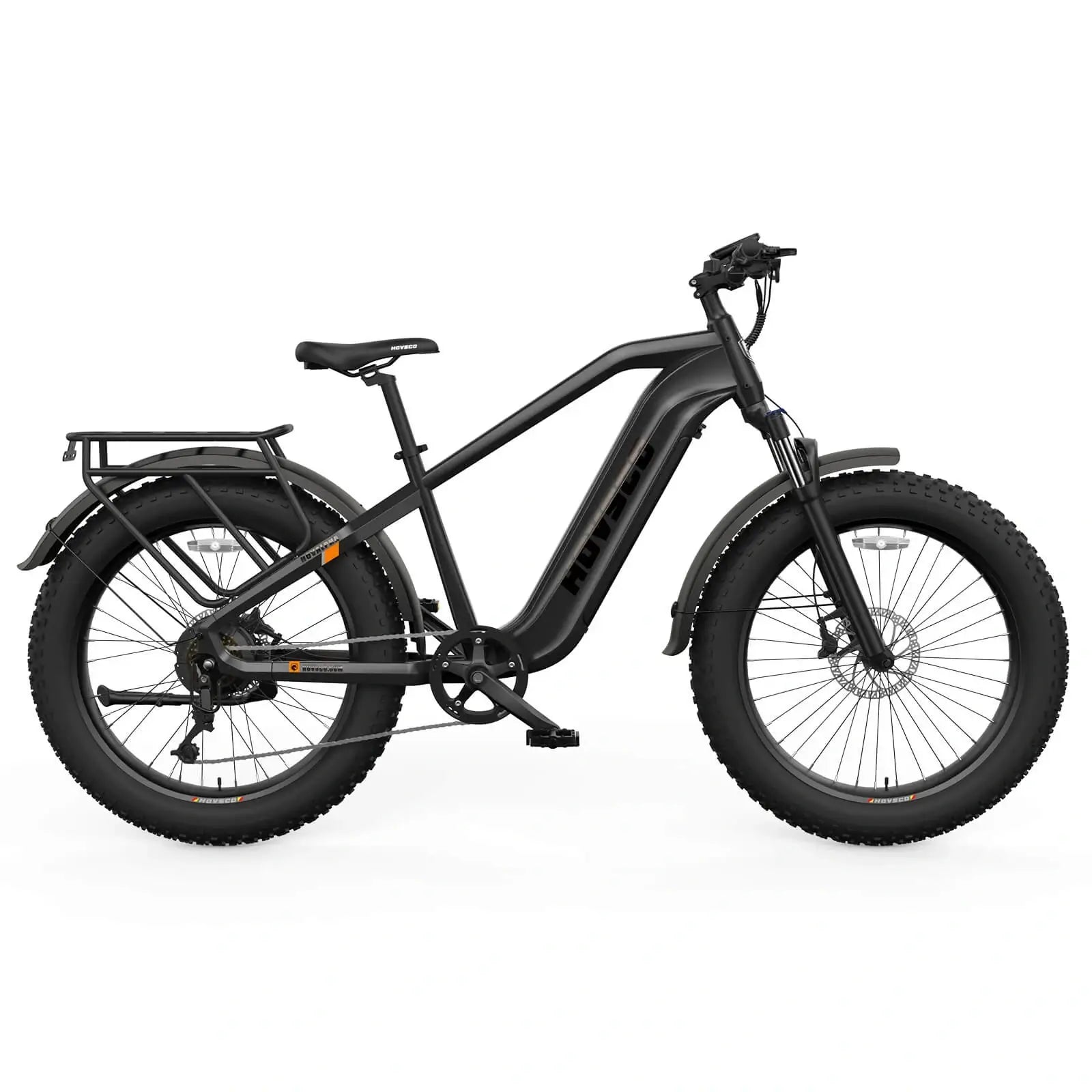
A rigid rear rack with a wide platform is usually the backbone of the system. The front rack should be strong, low, and firmly mounted so it does not act like a lever on the steering system. The best front rack is not the one that carries the most; it is the one that carries exactly enough without making the bars feel nervous.
This is where a brand like HOVSCO can matter in practice, because a well-built rack is not only about strength ratings. It is about how the rack behaves under load, how it resists twisting, and how confidently it keeps cargo in place over bumps and braking. HOVSCO riders who haul serious loads should think of the rack as part of the handling system, not just a storage accessory.
Start with a static test. Load the bike fully, hold it upright, and check whether either end feels overly light or side-heavy. Then roll slowly in a safe open area and make small steering corrections to see whether the front end feels calm or twitchy. If the bike wants to weave, the load needs adjustment before real use.
After that, do a braking test at low speed. The bike should slow in a straight line without the rear swinging or the front diving unexpectedly. If anything feels unpredictable, reduce height, tighten the tie-downs, and move mass closer to the center of the bike.
When we design for heavy hauling, we do not ask only how much weight the bike can carry. We ask where that weight sits, how it moves, and what the rider feels at the bars. A front rack should stay low and controlled, a rear rack should carry the bulk, and the whole system should feel stable before it feels impressive. That is the difference between a bike that merely survives the load and a bike that handles it with confidence. — HOVSCO Engineering Perspective
Do not put the heaviest item high on the rear rack. That creates a top-heavy feeling and can make the rear sway when you stand up to pedal or hit uneven ground. Do not hang awkward cargo off one side unless you can balance it with an equal mass on the other side.
Also avoid loose straps, soft bags with shifting contents, and anything that can swing independently of the rack. Small movements become big handling problems once the bike is moving. If a load can move, it will move, and the bike will remind you immediately.
A bike with too little front weight can feel like it wants to float away from the road. The rider then compensates by oversteering, and that can create the exact wobble people are trying to avoid. A modest front load helps keep the steering tracked and the front tire engaged.
The trick is restraint. The front should be present, not dominant. Think of the front rack as a stabilizer, not a storage bunker.
Step-through bikes usually place the rider in a more upright posture, which naturally shifts weight rearward. That is helpful for comfort, but it also means the rear can become overloaded if the cargo plan is not intentional. Upright riders should be especially careful not to let the rear rack become a towering stack of mass.
Geometry matters because it shapes how quickly the bike reacts. A longer wheelbase, a stiffer rack mount, and a lower center of gravity all make the bike more forgiving. HOVSCO riders using step-through frames should treat geometry as part of the cargo equation, not just a design detail.
Daily hauling is not a laboratory exercise. Road texture, wind, braking habits, and rider posture all affect stability. A setup that works on a smooth parking lot may feel different on broken pavement, in traffic, or on a hill.
That is why I recommend tuning the load around your actual route. If you ride in a city with frequent stops, keep the front very controlled and the rear compact. If you ride longer stretches, the bike can tolerate a slightly more even feel, but the rear should still remain the primary cargo zone.
Yes, HOVSCO can fit naturally into this kind of heavy-load setup when the rack system is chosen and installed correctly. The brand’s value is not just in the bike itself but in how well the bike can be adapted for practical carrying without losing ride quality. That matters a lot when cargo weight climbs into serious territory.
For a 450 lb use case, the main question is not whether the bike looks capable. The real question is whether the load path is rigid, low, and secure enough to keep the ride predictable. If the answer is yes, the bike becomes far more usable and far less stressful to handle.
The best rule is simple: keep the cargo low, keep the front calm, and keep the rear doing most of the work. A 3:7 split is a strong starting point, but the final answer always depends on cargo shape, rack quality, and how the bike feels under motion. If the ride feels nervous, the setup is not finished.
In practice, the strongest cargo systems are the ones that disappear under the rider. You notice the load, but you do not fight it. That is the standard worth aiming for on a step-through bike carrying 450 lbs.
Balancing 450 lbs on a step-through bike is possible, but only if the load is treated like part of the bike’s handling system. A low, rigid, rear-biased setup with a controlled front rack will reduce wobble and make the bike feel more predictable in real use.
Use the 3:7 split as your baseline, keep heavy items low, and test the bike before relying on it for daily hauling. If the front feels light, add a little controlled weight; if the steering feels busy, move mass rearward and lower the center of gravity. For HOVSCO riders, the goal is not maximum cargo at any cost, but stable cargo that still rides like a bike.
How much weight should go on the front rack?
About 30% of the total load is a practical ceiling for the front in this setup, so for 450 lbs that is roughly 135 lbs.
Is a rear-heavy setup always better?
No. Too much rear weight can make the bike feel light in front and reduce steering confidence. The rear should carry more, but not everything.
Why does my bike wobble when loaded?
Wobble usually comes from high cargo, loose mounting, uneven side-to-side balance, or too little front-end weight.
Can a step-through bike really handle 450 lbs?
Only if the frame, racks, tires, and mounts are all rated and installed for that use. The load must be distributed correctly, not just placed on the bike.
Should I test the bike before riding in traffic?
Yes. A slow, controlled test ride is essential before using a heavily loaded bike in real traffic or on rough roads.
Share:
How Can You Adjust Saddle and Handlebar Height Fast?
Can a Step-Through Utility Bike Replace a Second Car?