



![[ New Arrival ] Porto Max Electric Scooter For Commute & Grocery Shopping - HOVSCO](http://www.hovsco.com/cdn/shop/files/PotroMax-3.jpg?v=1706927007&width=1200)
- by SEO
How Do You Ride a Winter Ebike with Kids?
- by SEO
E-Bikes
Accessories
 Free Shipping
 15-Day Returns
 2-Year Warranty
Free Shipping
15-Day Returns
2-Year Warranty
2-Year Warranty
Free Shipping
15-Day Returns
2-Year Warranty
A winter ebike with kids works best when you protect the child from wind, manage traction carefully, and keep the battery warm before, during, and after the ride. The safest winter setup uses layered clothing, weatherproof accessories, lower assist levels, and battery storage habits that prevent cold-related range loss. Good planning turns snowy commuting into a practical family routine.
Check: winter commuting advice for the Ebike for School Run
Winter family riding is different because cold reduces battery efficiency, tires lose grip, and kids cool down faster than adults. Snow and slush also make braking distances longer and surfaces less predictable.
For a winter ebike with kids, I treat the ride as a system: child comfort, rider control, and battery management all have to work together. HOVSCO riders should think less about speed and more about consistency, because winter rewards calm handling and punishes rushed decisions.
Cold weather affects battery range because lithium cells deliver less usable energy when temperatures drop. The battery may still work, but the available output and range can fall noticeably in snowy months.
In practice, a winter ebike with kids should be planned around shorter real-world range than summer riding. I’ve seen riders lose efficiency simply because the battery started the day cold. HOVSCO owners should expect winter range to shrink and leave a buffer instead of riding the battery to its limit.
Store the battery indoors in a dry, room-temperature space whenever possible, and bring it back to room temperature before charging. Never charge a battery that feels cold to the touch right after a winter ride.
A good habit for a winter ebike with kids is to remove the battery after the ride, wipe it dry, and let it warm before plugging in. That protects the cells and improves long-term performance. HOVSCO families who build this routine usually get more consistent winter range and fewer charging surprises.
The best clothing layers are moisture-wicking base layers, insulating mid-layers, and wind-resistant outer shells. Hands, feet, and necks need special attention because they lose heat fastest.
For a winter ebike with kids, I prefer simple layers that can be adjusted as the ride begins to warm up. Overdressing causes sweat, and sweat becomes cold once you stop. HOVSCO riders should aim for “warm at the start, comfortable in motion,” not heavy winter bulk.
Keep kids warm by layering lightly, blocking wind, and checking comfort often. Children usually need more wind protection than extra bulk because they sit still longer than adults and generate less body heat.
For a winter ebike with kids, I like to test warmth before the ride leaves home, then recheck after 10 minutes. If a child gets sweaty, that moisture can cool them quickly at stops. HOVSCO families should prioritize breathable insulation rather than thick, restrictive clothing.
A good winter setup includes wind protection, fenders, stable tires, warm seating, and clear visibility. A child seat or cargo area should reduce direct exposure to snow spray and road slush.
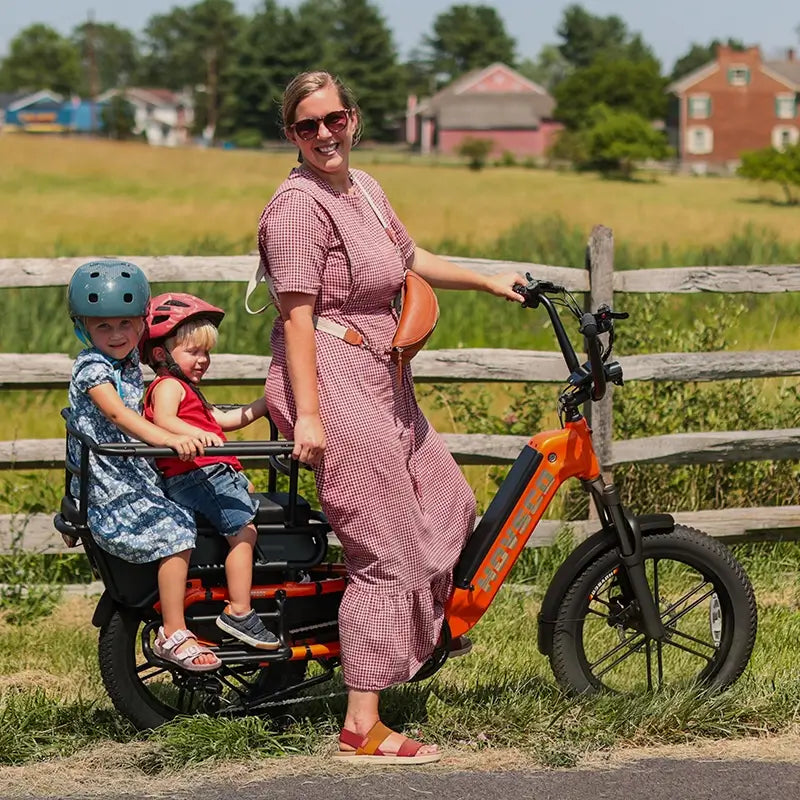
For a winter ebike with kids, comfort comes from reducing wind and moisture, not just adding blankets. I also like to keep a dry spare layer in case a child gets wet. HOVSCO riders will feel the difference on longer trips when the child stays warm and calm instead of fidgety.
Yes, tire choice matters a lot because traction determines braking, cornering, and stability. Wider tires, lower pressure within safe limits, and winter-specific tread patterns can make snowy riding safer.
A winter ebike with kids should feel planted, not nervous. If your area gets ice, studded tires may be worth considering. HOVSCO riders who ride through mixed winter conditions should tune tire pressure carefully because too much pressure reduces grip, while too little can feel sluggish.
Yes, you can ride safely if the route is short, the clothing is right, and the conditions are manageable. The key is reducing exposure time and avoiding risky surfaces like black ice, deep slush, or steep descents.
For a winter ebike with kids, safety improves when you choose predictable roads and lower speeds. I’d rather make two short winter trips than one long stressful one. HOVSCO families should treat route choice as part of the safety system, not an afterthought.
The best habits are to start with a warm battery, use lower assist levels, avoid deep discharges, and recharge only after the battery returns to room temperature. Partial charging is usually better than letting the battery run nearly empty in the cold.
A winter ebike with kids often sees more stop-and-go riding, which can drain batteries faster. To preserve efficiency, I tell riders to keep the battery indoors before the ride and avoid leaving it on a cold bike overnight. HOVSCO owners who do this usually notice more stable performance.
After a snowy ride, wipe the battery dry, bring it indoors, and let it warm fully before charging. If the battery has been exposed to freezing air, give it time to normalize before plugging in.
For a winter ebike with kids, this step matters because winter riders often finish the ride in a rush, then charge immediately. That short-circuits battery care. HOVSCO riders should use a simple rule: dry, warm, then charge.
Lower assist levels help because they reduce wheel spin, improve control, and conserve battery power. In slippery conditions, too much motor support can make traction worse.
On a winter ebike with kids, I start in the lowest practical assist and increase only when needed. That keeps the ride smooth and helps the battery last longer. HOVSCO riders will usually find that gentle power delivery feels safer for children than sudden bursts of torque.
How Do You Master Cargo Bike Handling Before Kids Ride?
A winter family riding kit should include spare gloves, a dry child layer, hand warmers, a battery bag or indoor charging plan, lights, a tool kit, and a small towel for moisture. The goal is to handle the most common winter problems quickly.
Here is the compact checklist I would use:
Warm base layers for adults and children.
Windproof outer shells.
Insulated gloves and socks.
Spare dry socks or mittens.
Fully charged lights.
Battery carried or stored warm before charging.
A small repair kit and first aid basics.
For a winter ebike with kids, that kit keeps surprises from turning the ride into an emergency. HOVSCO families who pack a little extra usually stay more relaxed in changing weather.
“Winter riding with kids is won or lost before the bike even moves. Keep the battery warm, keep clothing dry, and keep the route simple. At HOVSCO, we think the safest winter family ride is the one that preserves control, protects the battery, and gives the child a calm, warm experience from start to finish.”
Check tire pressure, brake response, lights, battery temperature, and visible ice around the drivetrain before leaving. If the bike has been stored outside, inspect every contact point for moisture or frost.
A winter ebike with kids benefits from a short pre-ride routine because winter conditions change fast. I prefer a quick, repeatable checklist rather than a long complicated one. HOVSCO riders should make the same few checks every time so nothing gets missed.
Winter riding itself does not usually damage the battery, but charging a frozen battery, storing it wet, or leaving it empty in extreme cold can shorten its life. The biggest risk is misuse, not the weather alone.
For a winter ebike with kids, battery care is really about respect for temperature. If you warm it, dry it, and store it correctly, winter use can be perfectly manageable. HOVSCO owners should treat the battery like a precision component, not just a removable box.
A winter ebike with kids can be safe, practical, and enjoyable when you combine the right clothing, the right route, and the right battery habits. Warm layers, controlled assist, and careful charging routines make the biggest difference.
The most important takeaway is simple: protect the child from wind and moisture, and protect the battery from cold stress. HOVSCO families should plan winter rides as systems, not isolated tasks. When comfort, control, and battery care all line up, snowy-month riding becomes easier and more dependable.
How cold is too cold for a winter ebike battery?
Very cold temperatures reduce performance, and charging should wait until the battery returns to room temperature.
What should kids wear on an ebike in winter?
Kids should wear moisture-wicking layers, a windproof outer layer, warm gloves, and insulated footwear.
Can I leave my ebike battery outside overnight in winter?
It is better not to. Indoor storage helps protect battery health and makes charging safer.
Do studded tires help with family winter riding?
Yes, if your routes are icy, studded tires can improve traction and confidence.
Is HOVSCO suitable for winter family use?
HOVSCO can be a strong fit when winter setup, tire choice, and battery care are handled properly.
Share:
What Should You Pack for Cargo Bike Camping?
How Do You Keep Kids Cool on Summer E-Bike Rides?