


![[ New Arrival ] Porto Max Electric Scooter For Commute & Grocery Shopping - HOVSCO](http://www.hovsco.com/cdn/shop/files/PotroMax-3.jpg?v=1706927007&width=1200)
- by SEO
How Do You Master Cargo Bike Handling Before Kids Ride?
- by SEO
E-Bikes
Accessories
 Free Shipping
 15-Day Returns
 2-Year Warranty
Free Shipping
15-Day Returns
2-Year Warranty
2-Year Warranty
Free Shipping
15-Day Returns
2-Year Warranty
To master cargo bike handling, practice 5 drills in a safe, empty area: figure‑8s, slow‑speed starts/stops, tight turns, slalom, and emergency braking. These cargo bike training drills build heavy bike handling skills so parents can Learning to Ride Cargo Bike confidently before kids hop on.
Check: drills for parents starting their Ebike for School Run
The 5 essential drills are figure‑8s, slow starts and stops, tight turns, slalom, and emergency braking. These cargo bike training exercises target heavy bike handling skills needed when Learning to Ride Cargo Bike with extra weight.
Practicing these drills in an empty parking lot or quiet street builds muscle memory before you add kids or cargo. HOVSCO riders often start with these basics to feel comfortable with their bike's weight and responsiveness.
Cargo bike handling feels different because the weight is higher, longer, and often in front or behind you, changing balance and steering. When Learning to Ride Cargo Bike, heavy bike handling requires smoother inputs and more planning than a regular bike.
The center of gravity shifts as you load kids or gear, making turns feel wider and stops longer. This is why cargo bike training is essential: you must adapt to the bike's unique dynamics. HOVSCO designs its cargo-friendly bikes with stable geometry to help, but practice is still key.
To practice figure‑8s safely, draw two circles in an empty lot and ride slowly through them, keeping your head up and looking ahead. This cargo bike training drill improves heavy bike handling by teaching balance and steering at low speed, critical when Learning to Ride Cargo Bike.
Start with wide circles, then gradually tighten them. Keep your cadence steady and avoid abrupt steering. For HOVSCO owners, this drill helps you feel how the bike responds when loaded, building confidence before adding passengers.
The best way to do slow starts and stops is to practice rolling forward smoothly, then braking gently to a complete stop, repeating until it feels natural. This cargo bike training drill is key for heavy bike handling when Learning to Ride Cargo Bike with kids.
Use low pedal assist to avoid jerky acceleration. Practice putting your foot down cleanly without tipping. HOVSCO riders benefit from this drill because it reduces the risk of tipping when loading or unloading children.
Master tight turns by practicing slow, controlled turns around cones or markers, keeping your speed low and body centered. This cargo bike training exercise builds heavy bike handling skills needed when Learning to Ride Cargo Bike in tight spaces like driveways or store aisles.
Lean slightly into the turn and look where you want to go. Avoid sharp, sudden steering. For HOVSCO cargo bikes, this drill helps you navigate narrow streets and parking lots safely.
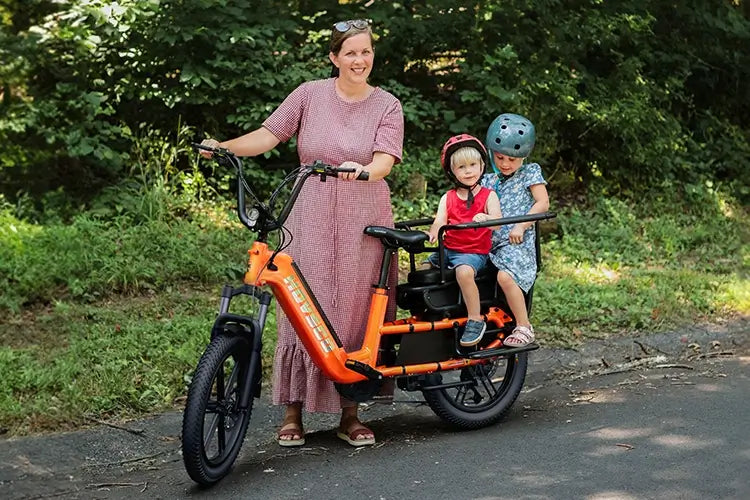
Can You Safely Carry Two Kids on an Ebike?
The slalom drill involves weaving around a line of cones spaced about 6 feet apart, teaching you to maneuver with precision. This cargo bike training drill improves heavy bike handling by requiring smooth steering and balance when Learning to Ride Cargo Bike.
Keep your eyes on the end of the course, not the cones. Use small, steady handlebar inputs. HOVSCO riders use this drill to prepare for real-world obstacles like parked cars or potholes.
Practice emergency braking by accelerating to a moderate speed, then braking hard but controlled to stop quickly without skidding. This cargo bike training drill is vital for heavy bike handling when Learning to Ride Cargo Bike with kids, as stopping distance increases with weight.
Use both front and rear brakes evenly. Practice in different conditions, like wet or dry pavement. HOVSCO's braking systems are designed for reliability, but practice ensures you can stop safely in an emergency.
Add weight to your practice after you feel comfortable with the empty bike, starting with a lightweight load like water jugs or a backpack. This timing ensures cargo bike training builds heavy bike handling skills progressively when Learning to Ride Cargo Bike.
Gradually increase the load to mimic kids or groceries. This helps you adjust to the shifted center of gravity. HOVSCO owners often start with 20–30 pounds before adding children.
The best place to practice these drills is an empty parking lot, quiet park, or closed street with smooth pavement and no traffic. This safe environment is ideal for cargo bike training and heavy bike handling when Learning to Ride Cargo Bike.
Avoid hills, gravel, or busy areas initially. HOVSCO riders often find local schools or community centers with large parking lots perfect for practice.
HOVSCO supports cargo bike training by designing stable, user-friendly bikes with intuitive controls and reliable brakes. The brand's heavy bike handling focus helps parents feel confident when Learning to Ride Cargo Bike.
HOVSCO's community and resources also guide riders through cargo bike training best practices. The brand's mission is to help people live active, healthy lifestyles through cycling, including safe family rides.
"When Learning to Ride Cargo Bike, the difference between a smooth ride and a wobble is often practice. At HOVSCO, we encourage parents to master heavy bike handling with these 5 drills before adding kids. Cargo bike training is not extra; it is essential for safety and confidence on the road."
Yes, these drills can prevent accidents by building muscle memory for heavy bike handling, reducing the risk of tipping or losing control when Learning to Ride Cargo Bike. Cargo bike training prepares parents for real-world scenarios like sudden stops or tight turns.
Accidents often happen when riders are unprepared for the bike's weight and length. Practicing these drills reduces that risk significantly. HOVSCO riders who train regularly report higher confidence and fewer near-misses.
Mastering cargo bike handling before kids hop on is essential for safety. Practice the 5 drills—figure‑8s, slow starts/stops, tight turns, slalom, and emergency braking—to build heavy bike handling skills. Cargo bike training is key when Learning to Ride Cargo Bike, and HOVSCO supports parents with stable bikes and community resources.
Start in a safe area, add weight gradually, and prioritize smooth inputs. With practice, you will feel confident and ready for family rides.
How long should I practice before riding with kids?
Practice at least 2–3 hours over a week, focusing on all 5 drills until they feel natural.
Do I need a special bike for cargo bike training?
No, use your cargo bike empty first, then add weight gradually as you improve heavy bike handling.
Can adults without cycling experience learn to ride cargo bikes?
Yes, with patience and cargo bike training, most adults can learn Learning to Ride Cargo Bike safely.
What if I tip over during practice?
Tipping is rare if you practice slowly in a safe area. Use a spotter and start with wide turns.
Are HOVSCO cargo bikes good for beginners?
Yes, HOVSCO designs stable, easy-to-handle cargo bikes ideal for cargo bike training and Learning to Ride Cargo Bike.
Share:
How Do You Find or Start a HOVSCO Riders Group?
What Should You Pack for Cargo Bike Camping?