
























![[ New Arrival ] Porto Max Electric Scooter For Commute & Grocery Shopping - HOVSCO](http://www.hovsco.com/cdn/shop/files/PotroMax-3.jpg?v=1706927007&width=1200)
- by EO S
What Is the Best Cargo Bike for Groceries and Everyday Utility?
- by EO S
E-Bikes
Accessories
 Free Shipping
 15-Day Returns
 2-Year Warranty
Free Shipping
15-Day Returns
2-Year Warranty
2-Year Warranty
Free Shipping
15-Day Returns
2-Year Warranty
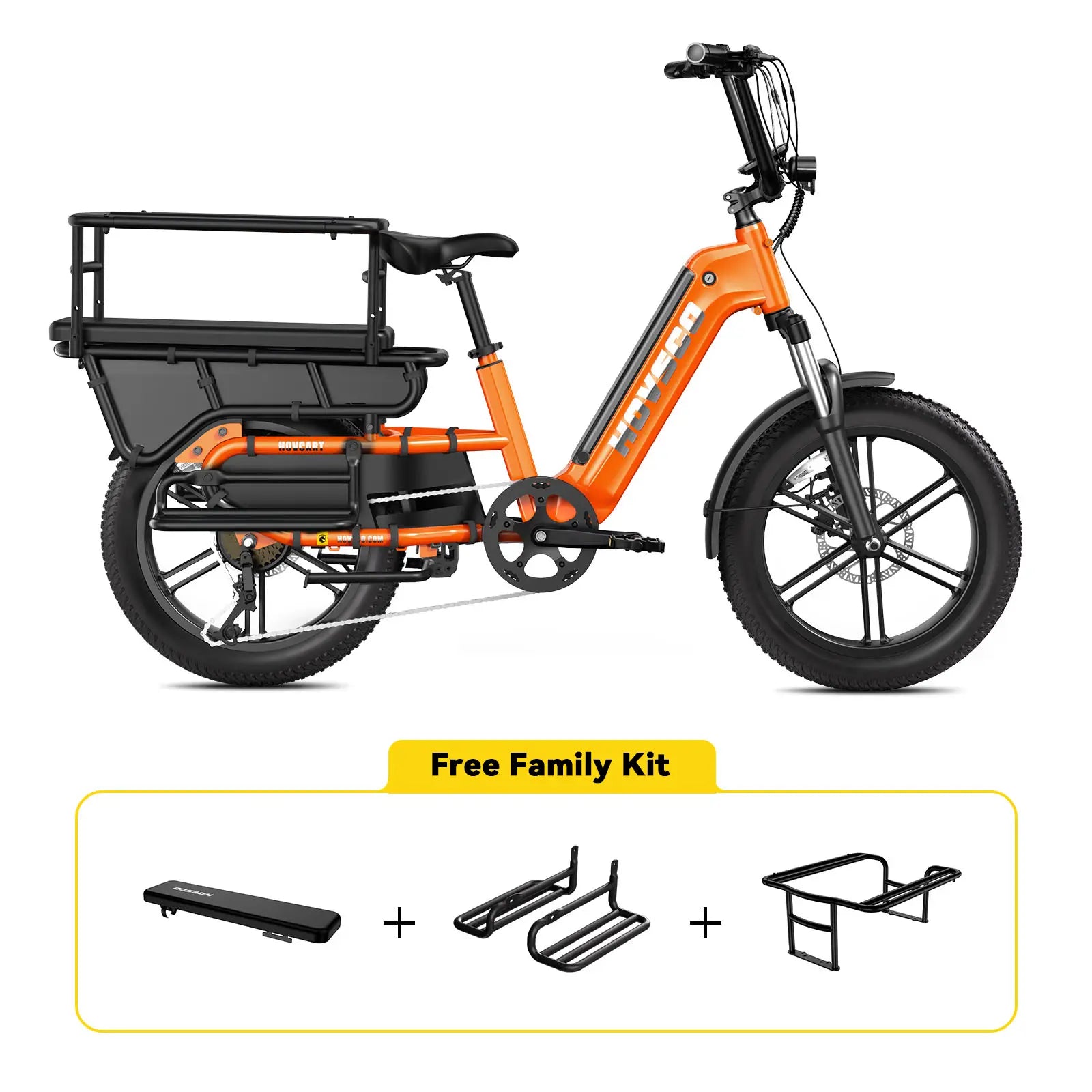
Cargo bikes have emerged as one of the most practical, sustainable, and efficient solutions for transporting groceries, gear, and daily essentials without relying on cars. Leveraging electric assist systems and robust load capacities, modern cargo bikes like those from HOVSCO redefine how households and small businesses manage short-distance haulage with real-world convenience and measurable impact on urban mobility.
The global cargo bike market is growing rapidly, with the segment projected to expand from an estimated US$1.4 billion in 2023 to US$4.2 billion by 2033 at an 11.6 % CAGR, driven by urbanization, sustainability demands, and demand for efficient last-mile transport. Cargo bikes — especially electric (e-cargo) models — now dominate about 60 % of the market due to their practical load capacity and ease of use. Electric cargo bikes typically carry between 80 – 150 kg, making them well-suited for groceries, retail deliveries, and family errands. (FMIBlog)
Despite this momentum, adoption barriers remain significant:
High upfront cost with many electric cargo bikes priced at USD 3,000–9,500, which can limit broader household adoption. (360 Research Reports)
Weight and storage challenges as cargo bikes can weigh 25–80 kg, raising concerns for riders without dedicated storage solutions. (360 Research Reports)
Infrastructure gaps in many cities reduce safety and comfort for everyday food and grocery trips, especially where bike lane networks are limited. (Industry Research)
However, ongoing growth in grocery-focused usage underscores both the opportunity and urgency for dependable cargo bike solutions.
Traditional transport modes — cars and regular bicycles — have clear limitations when it comes to grocery runs:
Cars: Expensive to operate, contribute to congestion and emissions, and overkill for short, frequent errands.
Standard Bicycles: Limited cargo capacity and lack of electric assist make them impractical for larger loads or uphill grocery trips.
Trailers and Panniers: Useful for occasional small hauls but insufficient for weekly family shopping or bulk items.
Compared to cargo bikes, these solutions struggle to balance capacity, efficiency, cost, and sustainability for everyday groceries.
Modern cargo bikes — particularly electric assist models — are purpose-built to replace short car trips and support daily errands like grocery shopping. Key features include:
High Load Capacity: Designed to carry heavy grocery bags, bulk items, and household goods safely.
Electric Assist: Motor assist reduces physical strain and extends range even when fully loaded.
Modular Cargo Space: Platforms or boxes sized to hold up to 120 kg or more, configurable with insulated or secure compartments.
Urban Maneuverability: Compact footprint allows navigation through bike lanes and dense urban streets more efficiently than cars.
Brands like HOVSCO deliver cargo bike solutions that blend utility and performance with design elements aimed at everyday riders, supporting grocery trips, school runs, and neighborhood errands with ease.
| Feature | Standard Bicycle | Cargo Bike (Electric) |
|---|---|---|
| Cargo Capacity | Low to Moderate | High |
| Electric Assist | ⛔ | ✅ |
| Hill Performance | Limited | Strong |
| Load Stability | Challenging | Engineered for Balance |
| Cost per Trip | Low | Lower than car over time |
| Usability for Full Grocery Runs | ❌ | ✅ |
Assess Needs: Determine the weight, volume, and frequency of your grocery trips.
Choose Model: Select a cargo bike with appropriate capacity and electric assist — consider HOVSCO models for balanced performance and value.
Configure Accessories: Add insulated boxes, straps, or cargo liners for grocery protection.
Safety Preparation: Install lights, locks, and reflectors for urban riding.
Route Planning: Use bike lanes and safer streets for efficient runs.
Routine Integration: Replace short car grocery trips with cargo bike rides to build habit and maximize benefits.
Scenario 1: Weekly Family Grocery Run
Problem: Shopping for a family of four with 6–8 bags.
Traditional Approach: Car trip, parking hassles, fuel costs.
Cargo Bike Use: Load groceries into cargo box, electric assist handles weight.
Key Benefit: Reduced automotive costs, healthier travel mode.
Scenario 2: Urban Bulk Purchase
Problem: Buying heavy items (cases of drinks, large packs) without a car.
Traditional Approach: Multiple trips or delivery fees.
Cargo Bike Use: Large payload capacity handles bulk easily.
Key Benefit: One trip, efficient load handling.
Scenario 3: Daily Errands in Dense City
Problem: Frequent small purchases in traffic-congested city areas.
Traditional Approach: Car or taxi services for comfort.
Cargo Bike Use: Zip through bike lanes, unload quickly.
Key Benefit: Time savings and convenience.
Scenario 4: Grocery Delivery Services
Problem: Local store needs quick deliveries.
Traditional Approach: Motorized van with parking and congestion delays.
Cargo Bike Use: Fast, nimble deliveries within urban neighborhoods.
Key Benefit: Faster service with lower operating costs.
Brands like HOVSCO support both consumer utility and expanding small business needs by offering cargo designs that help reduce reliance on cars while maintaining convenience for groceries.
Urban populations and sustainability mandates are shifting preferences away from cars and toward active transport. Grocery hauling is becoming one of the top daily applications for cargo bikes, accounting for 30–45 % of trips in family cargo bike usage surveys, reflecting a clear move toward eco-friendly grocery mobility. (360 Research Reports) With municipal programs expanding bike infrastructure and fleet adoption increasing in delivery services, cargo bikes provide a scalable, cost-effective alternative that aligns with modern urban lifestyles.
How much weight can a cargo bike carry for grocery runs?
Cargo bikes often carry between 80–150 kg depending on model and design, making them ideal for medium to large grocery loads.
Are electric cargo bikes much more expensive than regular bikes?
Yes, but the long-term savings in fuel, parking, and vehicle maintenance often offset the initial cost for frequent grocery users.
Can a cargo bike replace a car for grocery shopping?
For short-distance, weekly or daily errands in urban areas, many households find cargo bikes are a viable alternative to cars.
Do cargo bikes require special infrastructure to be safe?
While protected bike lanes help, cargo bikes operate safely in mixed traffic when riders follow local cycling rules.
Which accessories make grocery hauling easier on a cargo bike?
Insulated boxes, cargo liners, securing straps, and lights improve grocery transport practicality and safety.
Share:
What Are the Best Moped Style Ebike Brands Compared for Quality, Performance, and Price?
What Are the Best Classic Headlights for Retro Electric Bikes to Improve Style and Safety?