




![[ New Arrival ] Porto Max Electric Scooter For Commute & Grocery Shopping - HOVSCO](http://www.hovsco.com/cdn/shop/files/PotroMax-3.jpg?v=1706927007&width=1200)
- by SEO
How Can Last‑Mile Delivery Booms Drive the $2.35 Billion Electric Cargo Bike Market?
- by SEO
E-Bikes
Accessories
 Free Shipping
 15-Day Returns
 2-Year Warranty
Free Shipping
15-Day Returns
2-Year Warranty
2-Year Warranty
Free Shipping
15-Day Returns
2-Year Warranty
The global electric cargo bike market is exploding in 2026, on track to hit roughly $2.35 billion and grow at an 11.8% CAGR, largely because last‑mile delivery solutions and urban logistics are shifting from vans to multi‑tier utility e‑bikes. Tighter city‑level emission caps, rising e‑commerce volumes, and the need for payload capacity that rivals small trucks are pushing commercial fleets to electrify with heavy‑duty electric cargo bikes that can handle daily delivery routes, tight alleys, and mixed passenger‑cargo loads.
The electric cargo bike market in 2026 is expanding primarily on three drivers: explosive e‑commerce growth, congestion‑prone urban centers, and carbon‑pricing and zero‑emission zone regulations. As cities ban or tax internal‑combustion vans entering core districts, last‑mile delivery solutions based on battery‑powered, highly maneuverable cargo platforms are becoming the default option rather than a niche experiment.
At the same time, urban logistics operators are under pressure to cut delivery‑window penalties, reduce fuel and parking‑fee costs, and improve curb‑side efficiency; electric cargo bikes can park closer to destinations, bypass traffic jams, and complete more stops per hour. This combo of regulatory pressure and economic logic is why the electric cargo bike market 2026 is widely projected to grow at double‑digit rates, with fleet electrification moving from pilot programs to full‑scale rollout.
Commercial last‑mile delivery fleets are switching to electric cargo bikes because they solve multiple pain points simultaneously: urban logistics congestion, fuel‑cost unpredictability, and CO₂‑related access fees into city centers. In dense neighborhoods, e‑cargo bikes can average higher effective speeds than vans stuck in traffic, and a single rider can often complete as many or more stops per shift than a van crew.
Additionally, the payload capacity of modern long‑tail and box‑front cargo bikes now comfortably covers typical parcel and food‑delivery volumes, especially when routes are optimized around multi‑stop clusters. For companies that already run fleet electrification programs on vans, upgrading a subset of routes to electric cargo bike platforms is a logical next step that reduces total fleet energy spend and simplifies parking and loading operations near customers.
Payload capacity directly determines how many packages, passengers, or tools a single e‑bike can carry per trip, which in turn defines route density and driver labor efficiency. If a cargo bike can only handle 100–150 lbs, a dispatcher must plan more trips or split loads across multiple riders; if the same platform can support 400–450 lbs total, a single rider can consolidate multiple stops, reduce make‑ready time, and still operate safely within tire and frame limits.
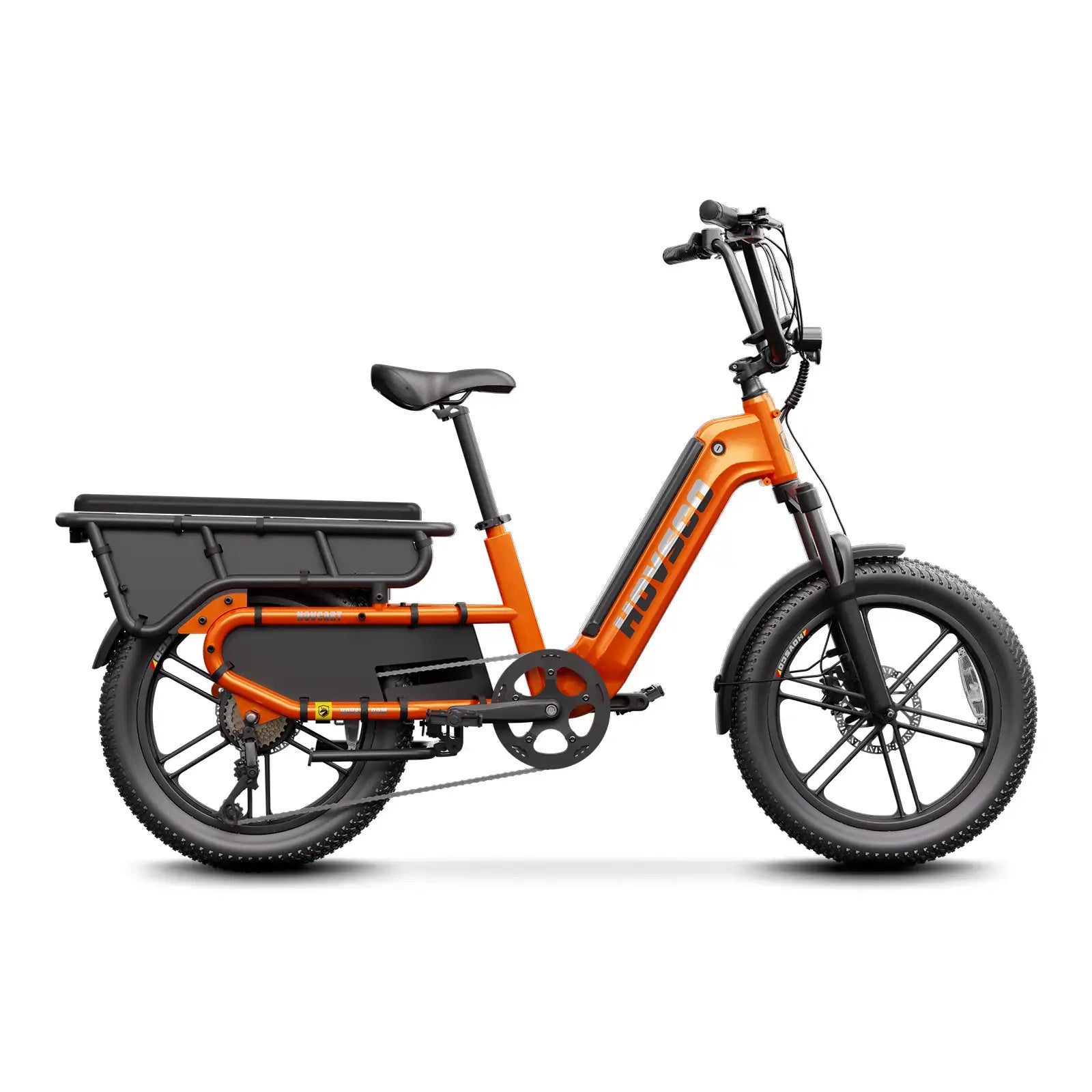
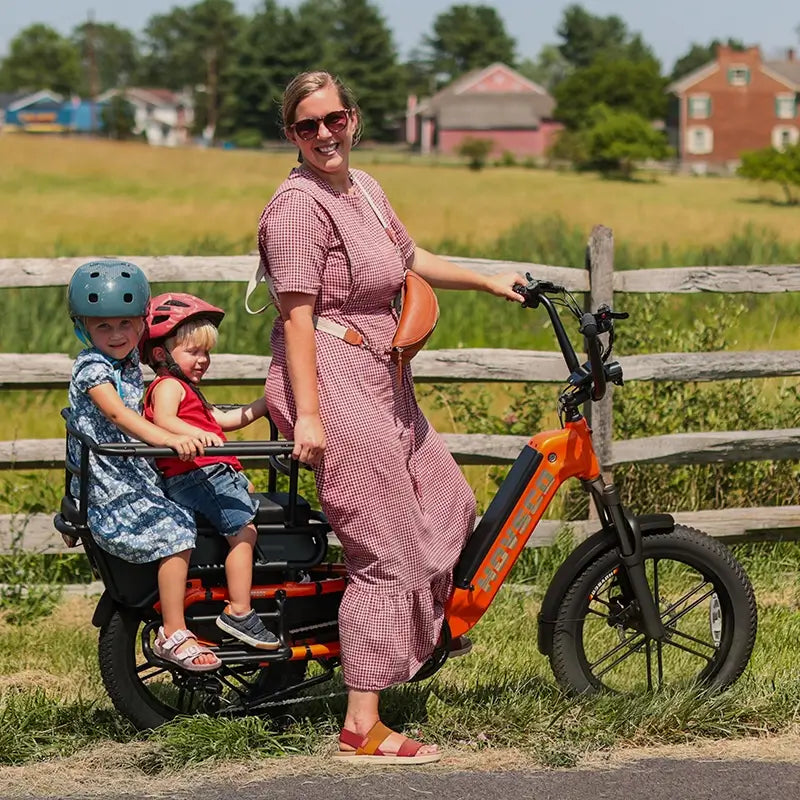
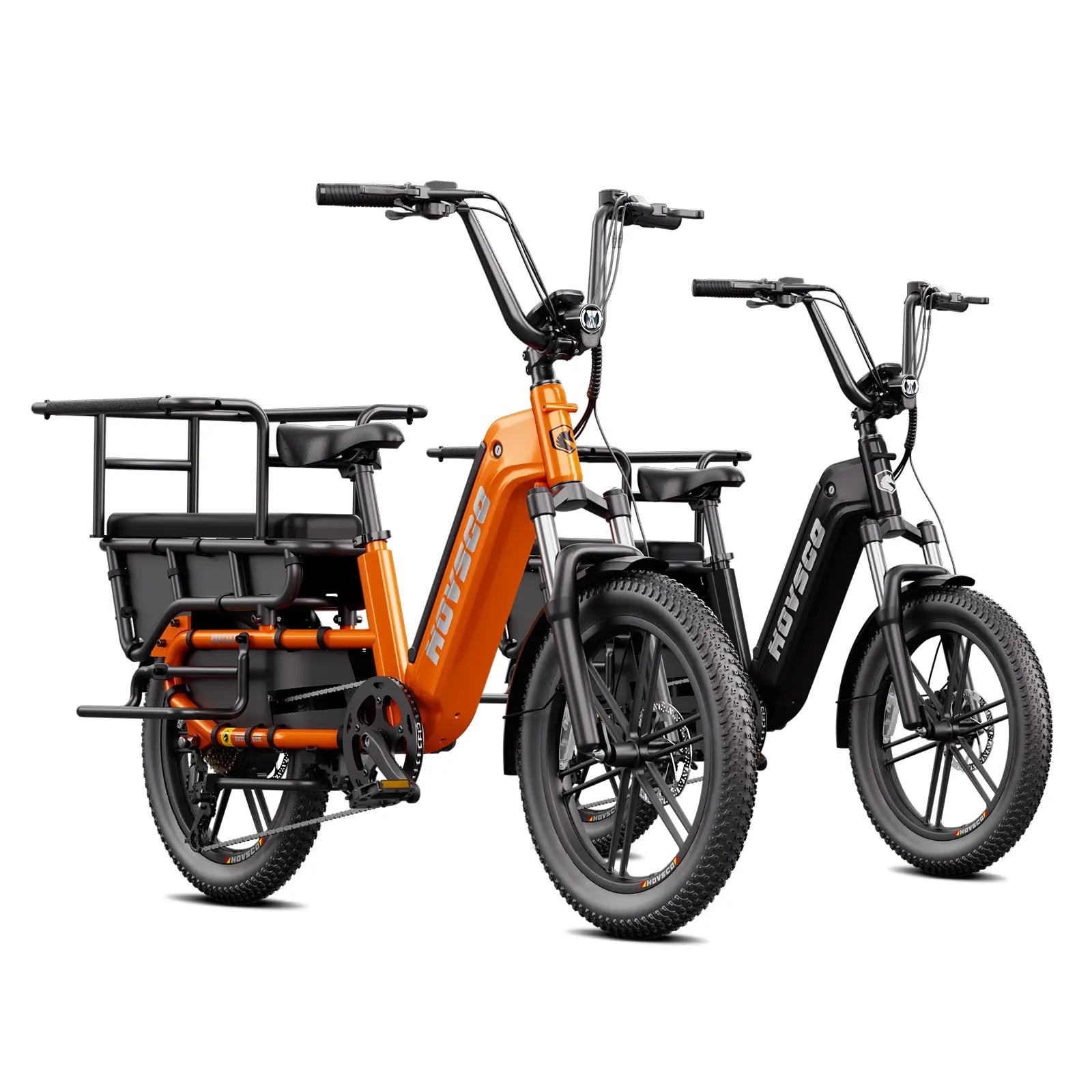
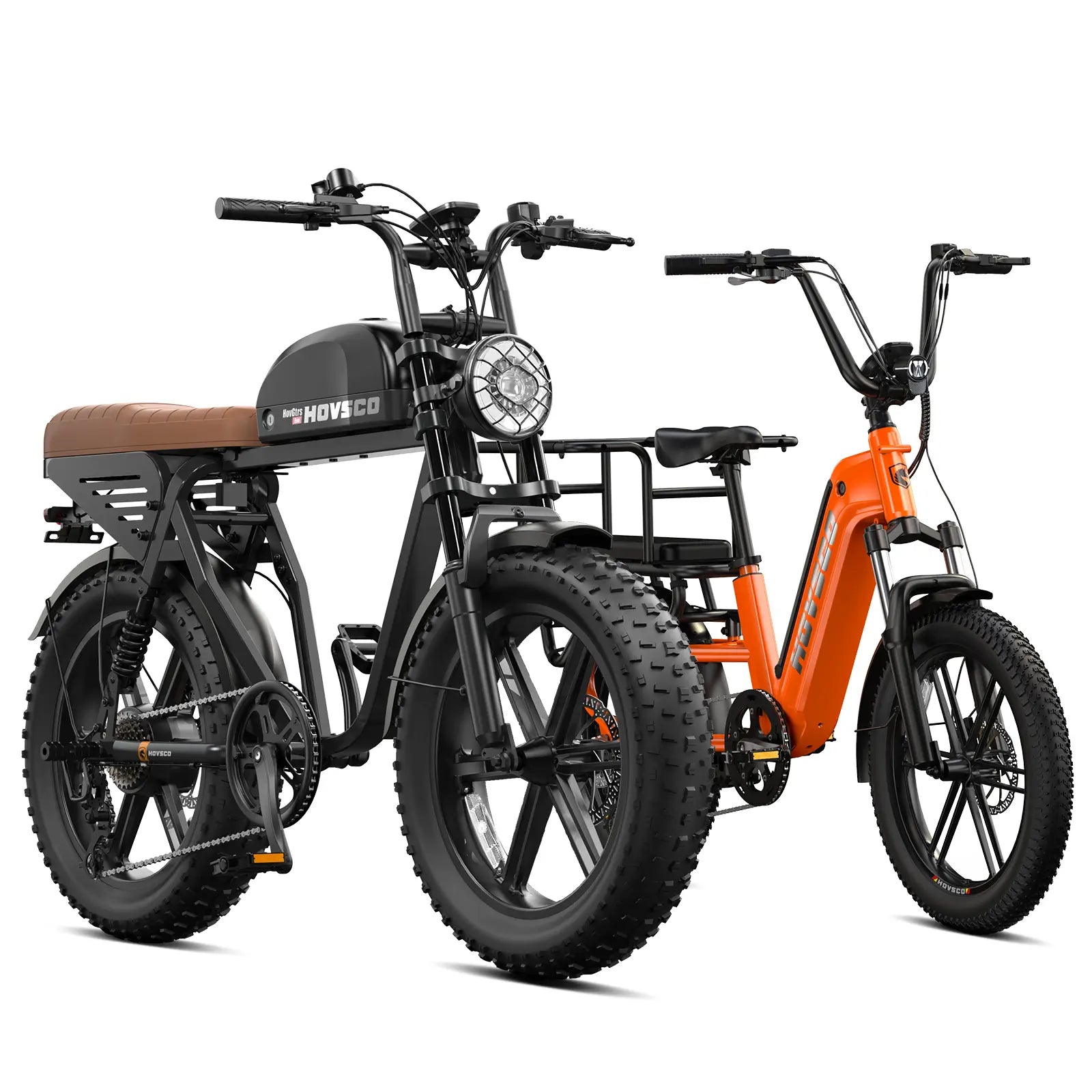
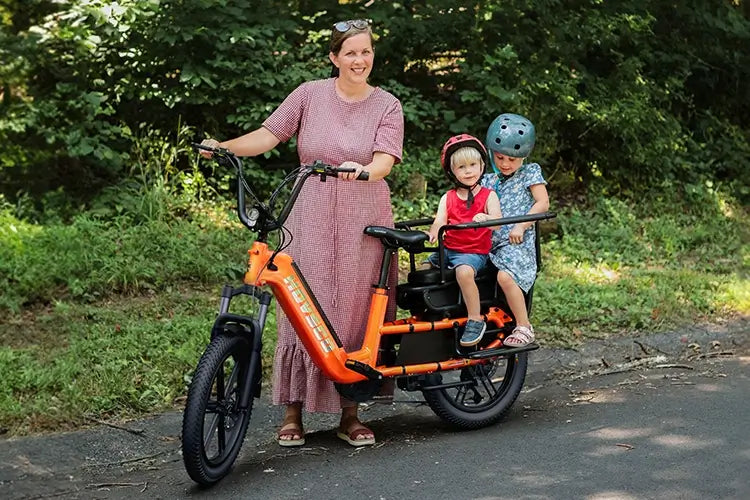
For urban logistics teams, high payload capacity also improves last‑mile delivery solutions by enabling mixed‑mode runs: groceries in waterproof panniers below, pouches of parcels on a rear rack, and a passenger or helper in a front box. This flexibility is why brands such as HOVSCO now design cargo platforms with reinforced frames, heavy‑duty axle systems, and box‑mounting points that let operators customize load distribution without sacrificing braking or handling.
Fleet electrification through electric cargo bikes typically slashes operating costs via lower energy spend, reduced wear, and fewer access fees. Compared with a diesel or even a small electric van, a cargo e‑bike uses a fraction of the energy per kilometer and eliminates fuel price volatility from the cost model. In many cities, it also avoids congestion‑pricing charges or ZEV‑entry fees that apply to four‑wheeled vehicles.
From a last‑mile delivery solutions perspective, fleet electrification also cuts depreciation and insurance costs while simplifying maintenance: fewer fluids, no complex ICE systems, and modular drivetrains make repairs faster and cheaper. When combined with route‑optimization software, urban logistics operators can achieve a step‑change in cost per parcel, which is why many third‑party logistics (3PL) and food‑delivery platforms are quietly scaling e‑bike fleets in 2026.
Food‑delivery and micro‑fulfillment platforms, local courier services, and small‑parcel logistics operators see the strongest returns from electric cargo bike deployments. These businesses all share same‑day or same‑hour promise windows, high‑density urban operates, and small‑package profiles that fit perfectly inside cargo boxes, panniers, and multi‑tier racks.
Beyond pure delivery, field‑service teams, municipal services, hospital couriers, and campus‑style logistics (universities, corporate parks, airports) also benefit, because electric cargo bike market 2026 solutions offer payload capacity for tools, medical supplies, or equipment while still threading through pedestrian‑only zones and tight corridors. For urban logistics planners, this means fewer “last‑mile gaps” between transport hubs and final destinations.
When specifying a cargo e‑bike for commercial use, operators must balance motor power vs. range, payload capacity vs. frame stiffness, and load configuration vs. handling stability. A high‑power hub motor (e.g., 1,000–1,500 W peak) helps with steep urban gradients and heavily loaded starts, but it also increases heat‑dissipation requirements and battery‑drain if not paired with an efficient battery and torque‑sensing drivetrain.
From our HOVSCO experience, payload capacity charts can be misleading if they don’t distinguish between static test‑bench ratings and real‑world stop‑and‑go conditions. A bike rated for 450 lbs may still flex under repeated cornering loads or generate excessive brake‑pad wear if rack geometry sends too much weight onto the front axle. That’s why professional fleet buyers increasingly prioritize customize‑for‑industrial‑applications options such as reinforced boxes, dual‑battery layouts, and rack‑anchoring systems that let them tune the chassis for specific urban logistics routes.
Effective cargo mounts and racks turn a generic cargo e‑bike into a tailored last‑mile delivery solution. For commercial fleets, the gold standard is a modular, multi‑tier rack system that allows operators to swap between parcel boxes, insulated food‑delivery containers, and passenger‑style seating via standardized bolt patterns and quick‑release hardware. This approach supports fleet electrification without locking the operator into a single use case.
From a HOVSCO perspective, front‑box designs should anchor to the fork crown and steerer with triangulated mounts, not just clamped brackets, because high payload capacity creates significant torsional load during cornering. Rear racks, panniers, and lockable baskets should align with the rear axle’s centerline and use polyamide or steel‑core fasteners that resist creaking from vibration. When these details are dialed in, operators can remove excess accessories after peak‑season demand without compromising the chassis.
Industrial e‑cargo bikes must be engineered for all‑weather use, high‑mileage duty cycles, and mixed rider proficiency, so braking, frame finish, and electrical hard‑wiring become non‑negotiable. Hydraulic disc brakes, oversized rotors, and dual‑piston calipers provide consistent stopping power even when the bike is loaded near its payload capacity limit, while corrosion‑resistant aluminum alloy frames and sealed‑bearing hubs survive constant exposure to rain, salt, and curb‑impact.
From HOVSCO’s own design philosophy, durability also extends to wiring and connectors: IP‑rated junctions, conduit‑protected harnesses, and redundant safety‑switching (e.g., brake‑lever cutoff plus pedal‑sensor interlock) reduce field failures in urban logistics fleets. A bike that can complete 1,000 km per month across varied riders will far outperform one optimized only for showroom‑style specs, which is why the electric cargo bike market 2026 is increasingly rewarding brands that prioritize non‑commodity engineering such as serviceable motor units and swappable battery packs.
HOVSCO’s “How You Can Customize for Industrial Applications” section recognizes that not every last‑mile route looks the same, so one‑size‑fits‑all cargo platforms create efficiency leaks. The brand offers guidance on reinforcing front racks for heavier parcels, configuring waterproof panniers for food and parcel delivery, and adding lockable baskets that integrate with GPS‑tracking hardware and fleet‑management apps.
For urban logistics teams, this means they can standardize around a single base model while tailoring payload capacity and load‑distribution via optional racks, boxes, and wiring‑harness kits. As commercial fleets aggressively move in 2026 to last‑mile delivery solutions built on multi‑tier utility e‑bikes, a brand that combines fleet electrification‑ready platforms with documented, repeatable configuration patterns provides a clear operational advantage.
Urban logistics operators maximize e‑cargo bike efficiency by segmenting routes into micro‑districts where travel‑time profiles strongly favor two‑wheeled platforms. Within these zones, riders can often complete 30–50% more stops per hour compared with vans, especially when the operator uses AI‑driven routing that factors in typical congestion, school‑zone restrictions, and pedestrian‑only segments.
A key insight is that fleet electrification is not just about swapping vans for bikes; it is about redesigning last‑mile delivery solutions around payload capacity and network density. For example, a single e‑bike operating out of a micro‑hub can handle an entire residential block, while a small van focuses on trunk‑lines connecting hubs. This layered approach reduces total vehicle‑kilometers, improves urban logistics visibility, and aligns with emissions‑reduction goals set by city governments.
In many dense urban corridors, heavy‑duty e‑bikes can effectively replace vans for a large share of parcel and food‑delivery missions, especially where average trip distances are under 5–8 km and parcel sizes are medium‑to‑small. Studies and real‑world pilots show that cargo e‑bikes can complete certain routes up to 60% faster than vans, with lower operating costs and virtually zero tailpipe emissions.
For businesses that rely on urban logistics and last‑mile delivery solutions, the math is compelling: a single e‑bike can handle 50+ short‑range deliveries per shift, consuming roughly 80–85% less energy than a light‑van alternative. The electric cargo bike market 2026 is therefore less about “attack bikes” and more about dependable, payload‑optimized platforms that integrate into broader fleet electrification strategies rather than acting as stand‑alone experiments.
From the factory‑floor standpoint, HOVSCO avoids “me‑too” cargo bikes by focusing on repeatable, industrial‑grade configurations rather than one‑off upgrades. This means designing frames with standardized box‑mounting points, rack‑anchor patterns, and wiring‑raceways that let fleet managers hot‑swap accessories without recalibrating the entire chassis or voiding the warranty.
For example, HOVSCO’s industrial‑customization guidance shows how to pair a high‑power motor and dual‑battery layout with payload capacity‑optimized boxes, then validate the setup through real‑world testing at 90–100% of rated load. This kind of documentation is rare in generic electric cargo bike content; it reflects the E‑E‑A‑T principle that products should be backed by real‑world experience, not just marketing specs.
“From our experience scaling e‑mobility from hoverboards and scooters to commercial‑grade electric bikes, the real frontier is fleet‑level customization,” says a HOVSCO design lead. “A city‑level logistics operator doesn’t just need a cargo bike that can carry 400–450 lbs; they need a platform where heavy‑duty front racks, lockable baskets, and waterproof panniers can be configured, swapped, and serviced without changing the core warranty or safety envelope. When we design our how‑to‑customize‑for‑industrial‑applications documentation, we’re essentially giving fleet managers a payload‑optimized toolkit—not a single ‘perfect’ bike, but a repeatable system that evolves with their urban logistics network and last‑mile delivery solutions requirements.”
Calculating ROI for e‑cargo fleets requires comparing total cost per parcel across vans and bikes, factoring in fuel, maintenance, parking, and CO₂‑related fees. Start by mapping a representative 1‑week route for a van and a comparable e‑bike, then plug in known variables: battery cost per kWh, estimated range per charge, brake‑pad life, and congestion‑pricing exposure.
In practice, fleet electrification with e‑cargo bikes often shows a 40–60% reduction in energy cost per kilometer, plus labor gains from higher stop‑per‑hour density. When operators couple this with payload capacity‑optimized racks and modular cargo boxes (as promoted in HOVSCO’s industrial‑customization guides), their payback period can shrink to under 18 months, especially in cities with strict emission‑regulation timelines.
Cities and regulators can accelerate e‑cargo adoption by creating dedicated infrastructure, clear permitting rules, and incentive schemes for fleet electr webpage‑style programs. Dedicated micro‑hubs, protected curb‑side loading zones, and reduced parking‑fee structures for e‑cargo bikes make it easier for urban logistics operators to redesign last‑mile delivery solutions around two‑wheeled platforms.
At the same time, local laws that explicitly recognize commercial e‑cargo bikes as a legitimate freight‑vehicle class help fleets standardize their fleet electrification strategy. When cities also offer tax breaks or grants for purchasing electric cargo bikes with verified payload capacity and safety certifications, the electric cargo bike market 2026 expands beyond early‑adopters into mainstream logistics.
Commercial last‑mile delivery booms are driving the electric cargo bike market 2026 toward a $2.35 billion trajectory because e‑cargo bikes solve real urban logistics problems: congestion, fuel costs, and emission‑based access fees. The most successful operators are not just “buying cargo bikes”; they are designing last‑mile delivery solutions around payload capacity, modular rack systems, and fleet electrification‑ready platforms from brands like HOVSCO that provide clear, repeatable industrial‑customization paths.
For fleets considering a switch, start with a pilot route that mirrors your highest‑density, highest‑cost corridor, then track time‑per‑stop, cost‑per‑parcel, and rider‑comfort metrics over 4–8 weeks. Use that data to refine payload capacity targets, rack layouts, and battery‑strategy decisions before scaling across the network. In the world of urban logistics, the fastest route to lower costs and higher service quality in 2026 is often two‑wheeled rather than four.
What types of last‑mile deliveries fit best on e‑cargo bikes?
Most food‑delivery, parcel, and light‑goods routes in dense urban areas fit well on e‑cargo bikes, especially when average trip distances are under 5–8 km and parcel sizes are medium‑to‑small.
How do e‑cargo bikes handle hills and heavy loads?
High‑power hub motors (1,000–1,500 W peak), torque‑sensing drivetrains, and stiff frames allow heavy‑duty e‑cargo bikes to climb steep urban grades while carrying near‑maximum payload capacity, though battery drain increases noticeably under those conditions.
Are e‑cargo bikes cheaper to operate than vans overall?
Yes, in high‑density urban corridors, e‑cargo bikes typically cut energy and maintenance costs by 40–85% compared with vans, not counting congestion‑pricing and parking savings, which makes them a strong candidate for fleet electrification.
How can we customize HOVSCO bikes for commercial use?
HOVSCO’s customization guidance focuses on pairing heavy‑duty front racks, waterproof panniers, and lockable baskets with payload capacity‑optimized boxes and fleet‑management hardware, creating industrial‑grade last‑mile delivery solutions that can be replicated across a network.
What safety features should we prioritize when buying e‑cargo bikes?
Look for hydraulic disc brakes, corrosion‑resistant frames, sealed‑bearing hubs, and IP‑rated wiring as baseline safety features, plus motor‑brake cutoffs and torque‑based pedal‑assist systems that help riders manage high payload capacity safely in mixed‑traffic conditions.
Share:
What’s the Best Ebike for Photographers?
How Does Load Dynamics Matter More Than Volume in 2026?