


![[ New Arrival ] Porto Max Electric Scooter For Commute & Grocery Shopping - HOVSCO](http://www.hovsco.com/cdn/shop/files/PotroMax-3.jpg?v=1706927007&width=1200)
- by SteveJames
E-Bike Winter Riding: Safer, More Reliable Cold-Weather Miles
- by SteveJames
E-Bikes
Accessories
 Free Shipping
 15-Day Returns
 2-Year Warranty
Free Shipping
15-Day Returns
2-Year Warranty
2-Year Warranty
Free Shipping
15-Day Returns
2-Year Warranty
Master E-Bike Winter Riding with practical guidance for safer traction, battery care, visibility, and cold-weather commuting.
E-Bike Winter Riding can help commuters and recreational riders extend their season beyond the first cold snap. The U.S. e-bike market remains significant, with PeopleForBikes reporting that the market is larger than traditional retail figures alone suggest because direct-to-consumer and peer-to-peer sales also matter.
Winter does introduce meaningful constraints. Cold temperatures can reduce lithium-ion battery performance, precipitation reduces visibility, and snow or slush can alter braking and cornering behavior. The strongest winter setup is therefore not simply the one with the biggest motor. It is the one matched with thoughtful route planning, sensible riding technique, dependable equipment, and consistent maintenance.
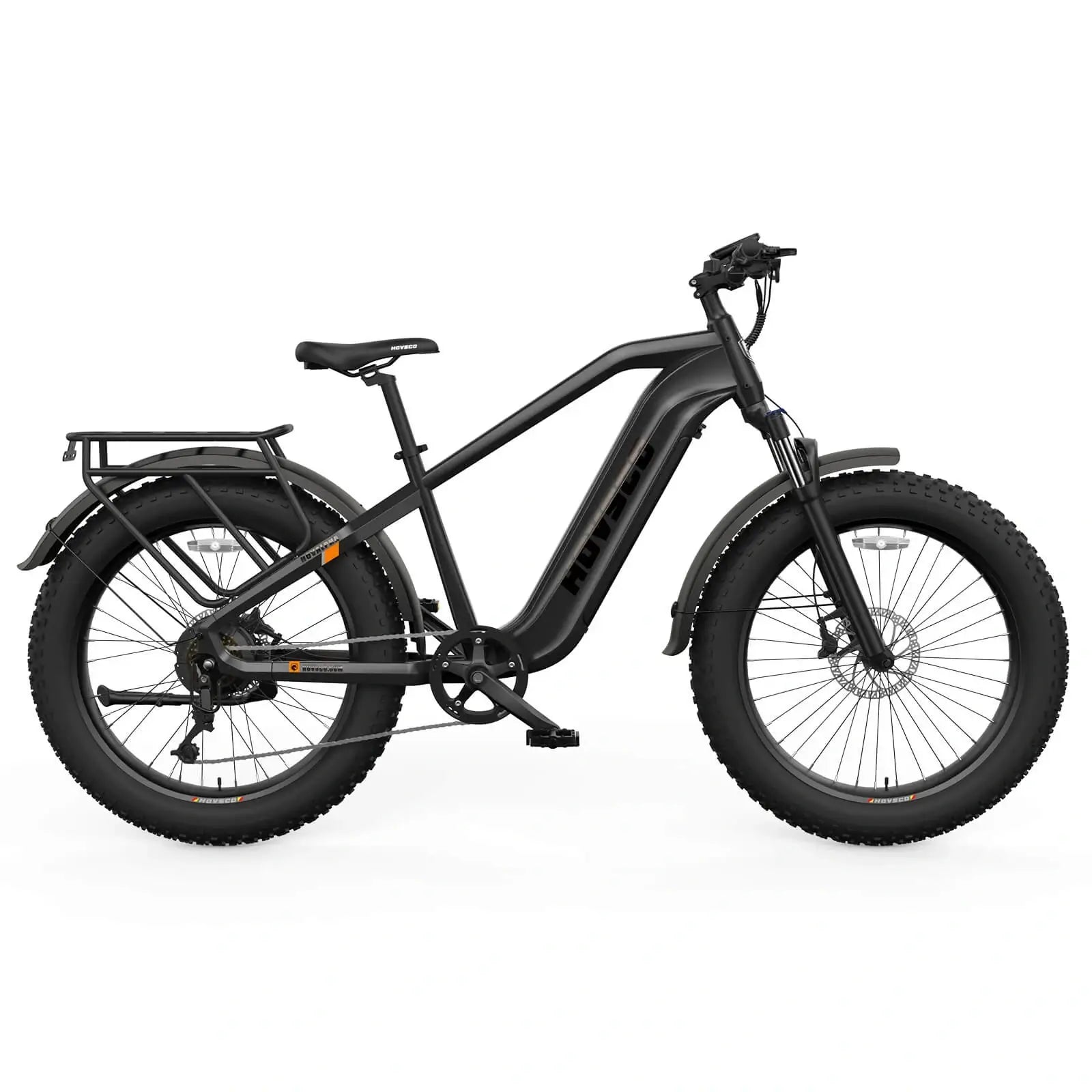
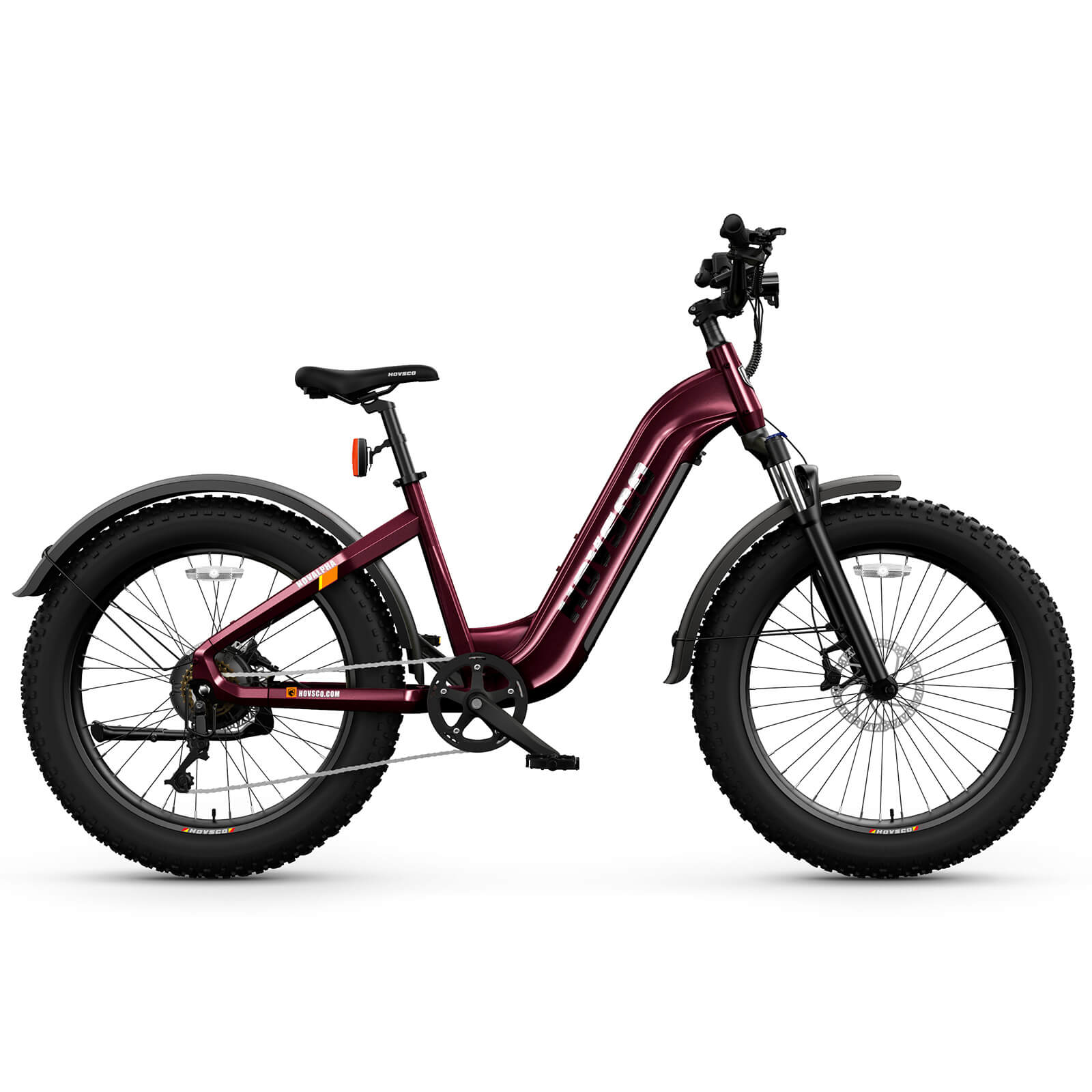
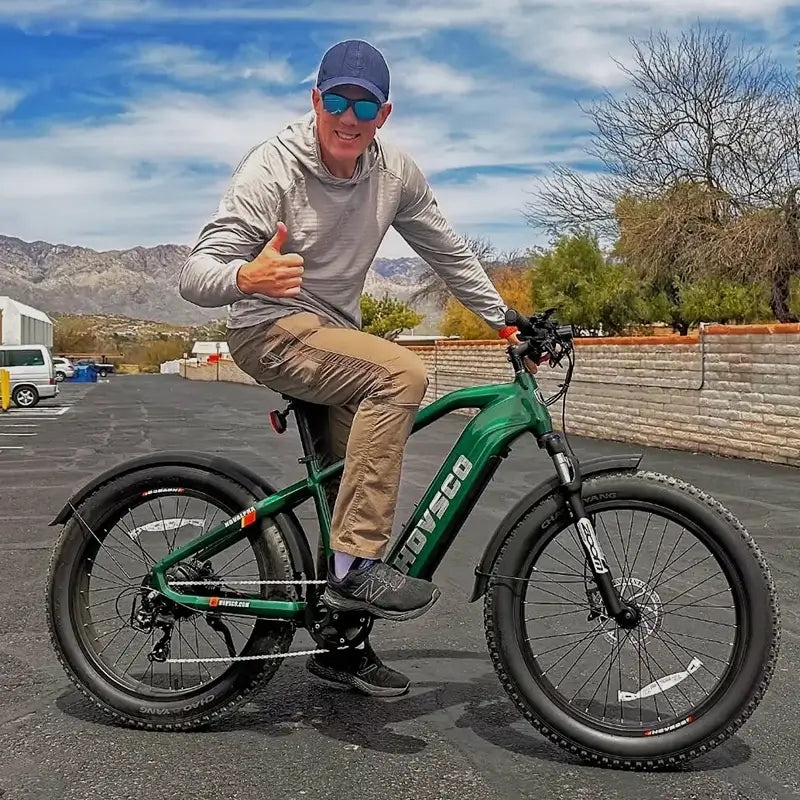
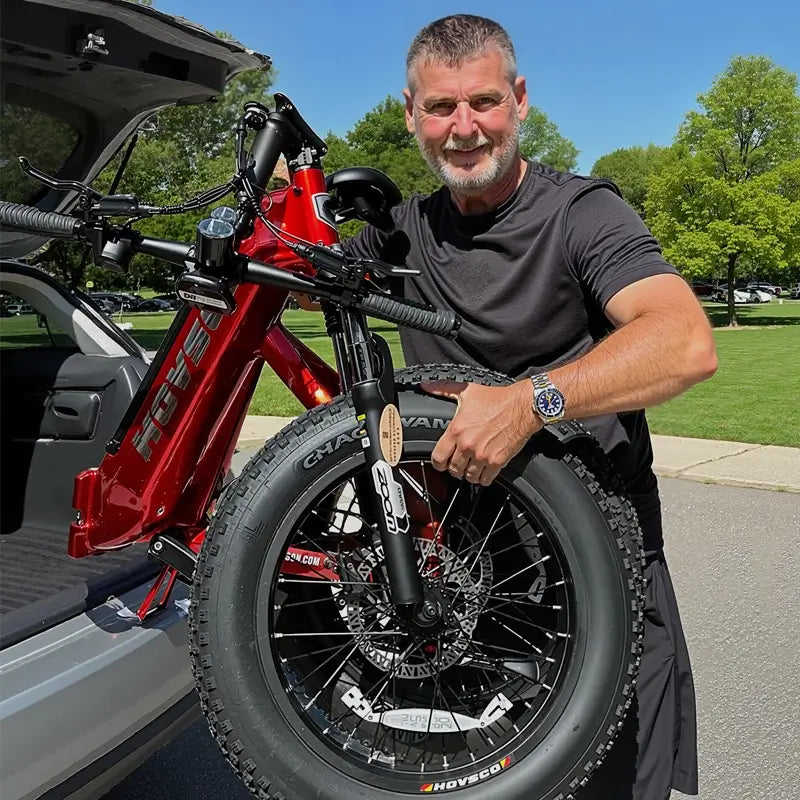
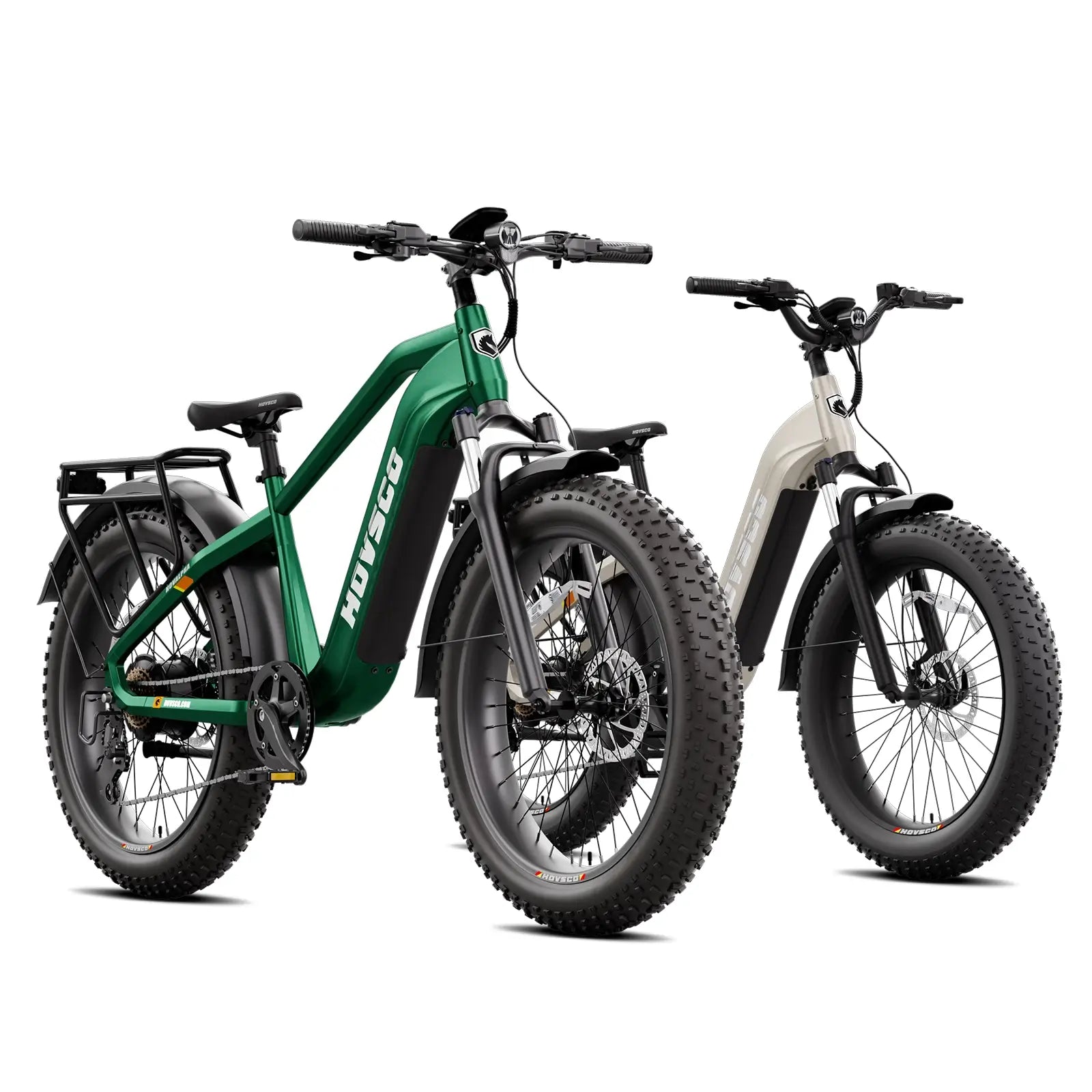
For riders navigating packed snow, loose gravel, slush, uneven pavement, or mixed-use paths, Hovsco’s fat-tire e-bike lineup offers relevant hardware. The HovAlpha Fat Tire Electric Bike is built around 26 × 4-inch tires, a 750W sustained rear-hub motor with 1,300W peak output, a removable 48V 20Ah lithium-ion battery, an 80 mm suspension fork, and hydraulic disc brakes with 180 mm rotors.
Those specifications do not make every winter surface safe. They do give riders a practical platform for controlled travel when routes are cleared, conditions are manageable, and the rider is prepared to reduce speed.
E-Bike Winter Riding is the practice of using an electric bicycle in cold, wet, snowy, or icy conditions while adjusting equipment, battery care, clothing, route selection, and riding behavior for lower traction and reduced visibility.
The main winter challenge is changing traction. Wet leaves, painted road markings, slush, compacted snow, frozen runoff, and metal utility covers can all become slippery. Even a familiar route can feel completely different when temperatures fall below freezing.
Riders also have less time to react. Shorter daylight hours, fog, snowfall, and dirty road spray can obscure hazards. Drivers may have reduced visibility as well, particularly near intersections where snowbanks block sight lines.
Battery planning becomes more important in cold weather. Lithium-ion batteries can deliver less usable range when cold, and wind or heavy clothing can add physical effort. A rider who normally returns home with plenty of charge may have a noticeably smaller reserve after an exposed winter route.
Finally, salt and grit create a maintenance burden. Without regular cleaning, salty water can collect around the chain, derailleur, brake hardware, bolts, and electrical connections. Winter riding works best when a brief inspection and wipe-down become part of every ride.
Cold conditions can reduce lithium-ion battery range by roughly 10–15% below 32°F, so winter riders should start with extra charge and avoid treating warm-weather range figures as a guarantee.
That reduction does not mean an e-bike is unsuitable for winter. It means range planning should become more conservative. A battery stored indoors, charged in a dry moderate-temperature environment, and installed just before departure is usually better positioned for a cold ride than one left outside overnight.
Fat tires for stability
Wider tires can help riders feel more settled on loose snow, gravel, slush, and rough pavement. They do not eliminate the risk of sliding on ice, but they can improve the riding experience where surfaces are soft or inconsistent.
Hydraulic disc braking
Hydraulic disc brakes offer strong braking control in wet conditions. Still, winter riders should begin braking earlier, use both brakes progressively, and avoid harsh lever inputs that could overwhelm available traction.
Removable battery design
The HovAlpha’s removable battery makes it easier to store the battery indoors before and after a ride. This is useful in winter because battery temperature can affect practical range and charging behavior.
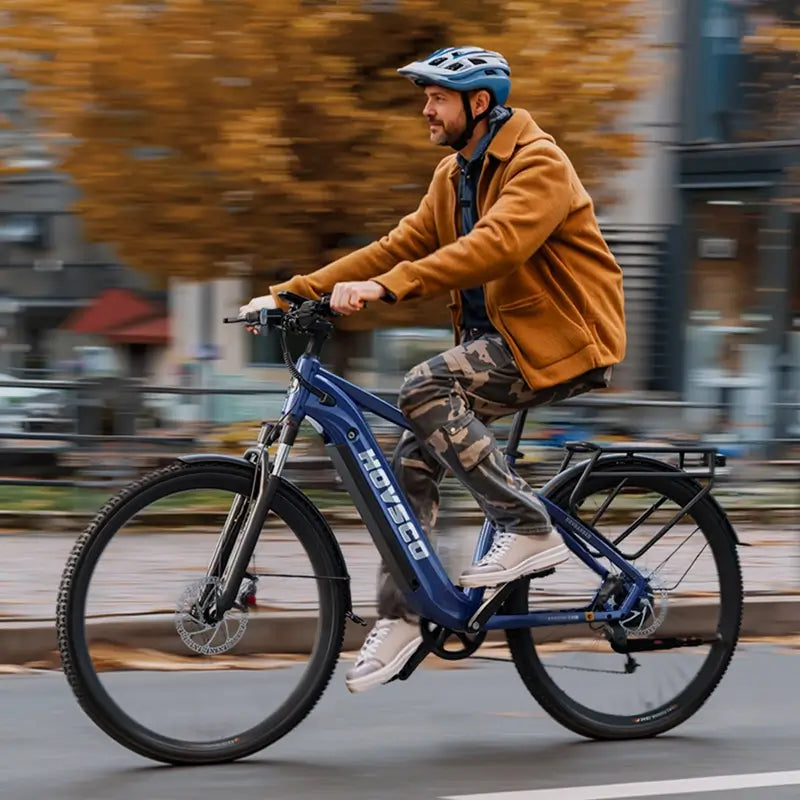
A commuter chooses a slightly longer route because it uses plowed streets, protected crossings, and better lighting.
A rider uses low or moderate pedal assist on slippery surfaces to reduce sudden acceleration and preserve battery charge.
A weekend explorer brings a warm layer, phone, lights, and a contingency plan, then turns back when packed snow becomes unpredictable.
Winter e-bike equipment should solve specific problems rather than create unnecessary bulk. Waterproof gloves, a windproof outer layer, eye protection, warm footwear, reflective details, and reliable lights usually deliver more practical value than novelty accessories.
For icy conditions, riders should consider whether studded tires are more appropriate than standard fat tires. Wider tires can improve flotation and stability on soft snow, but studs are designed to improve mechanical grip on ice. The correct choice depends on the route’s most frequent surface.
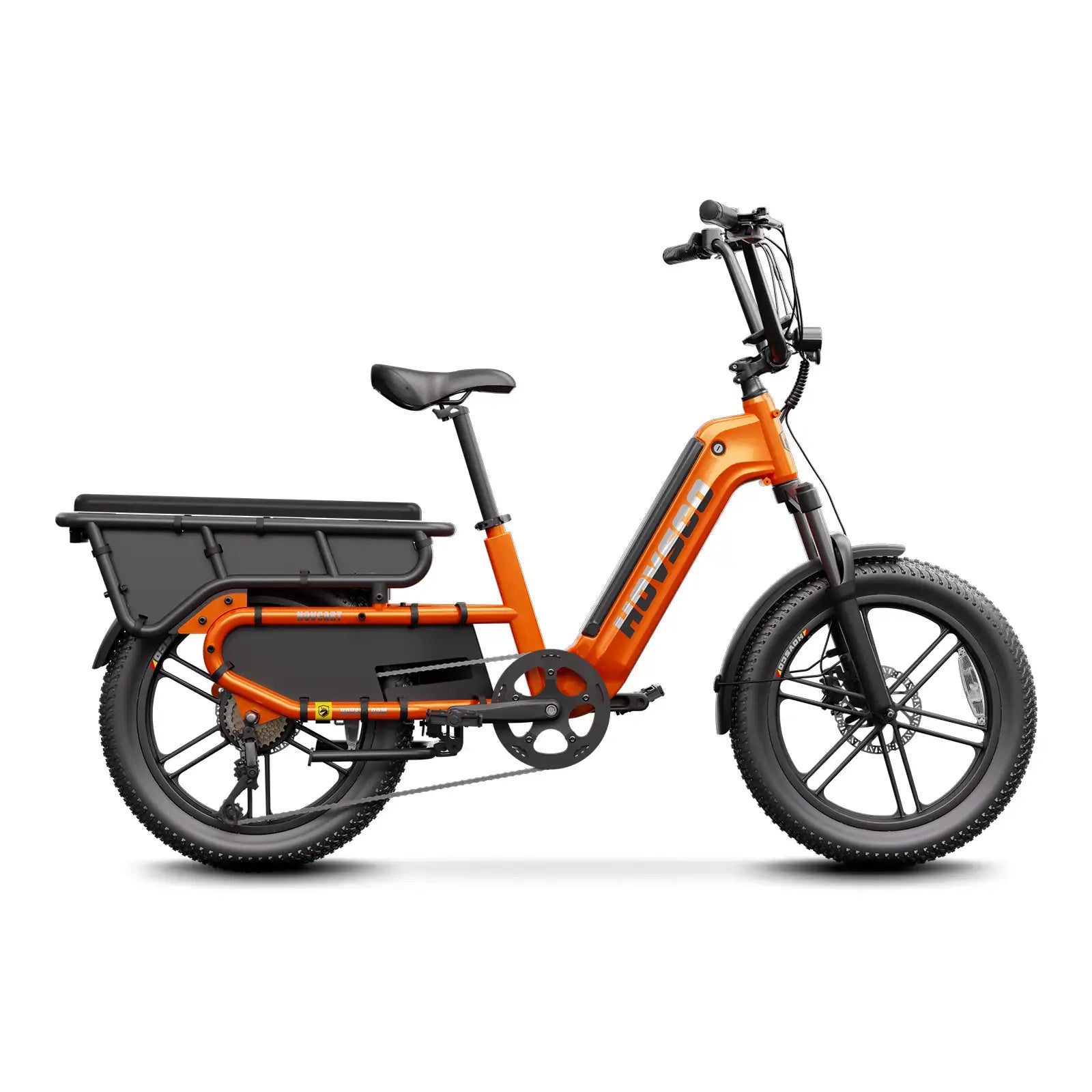
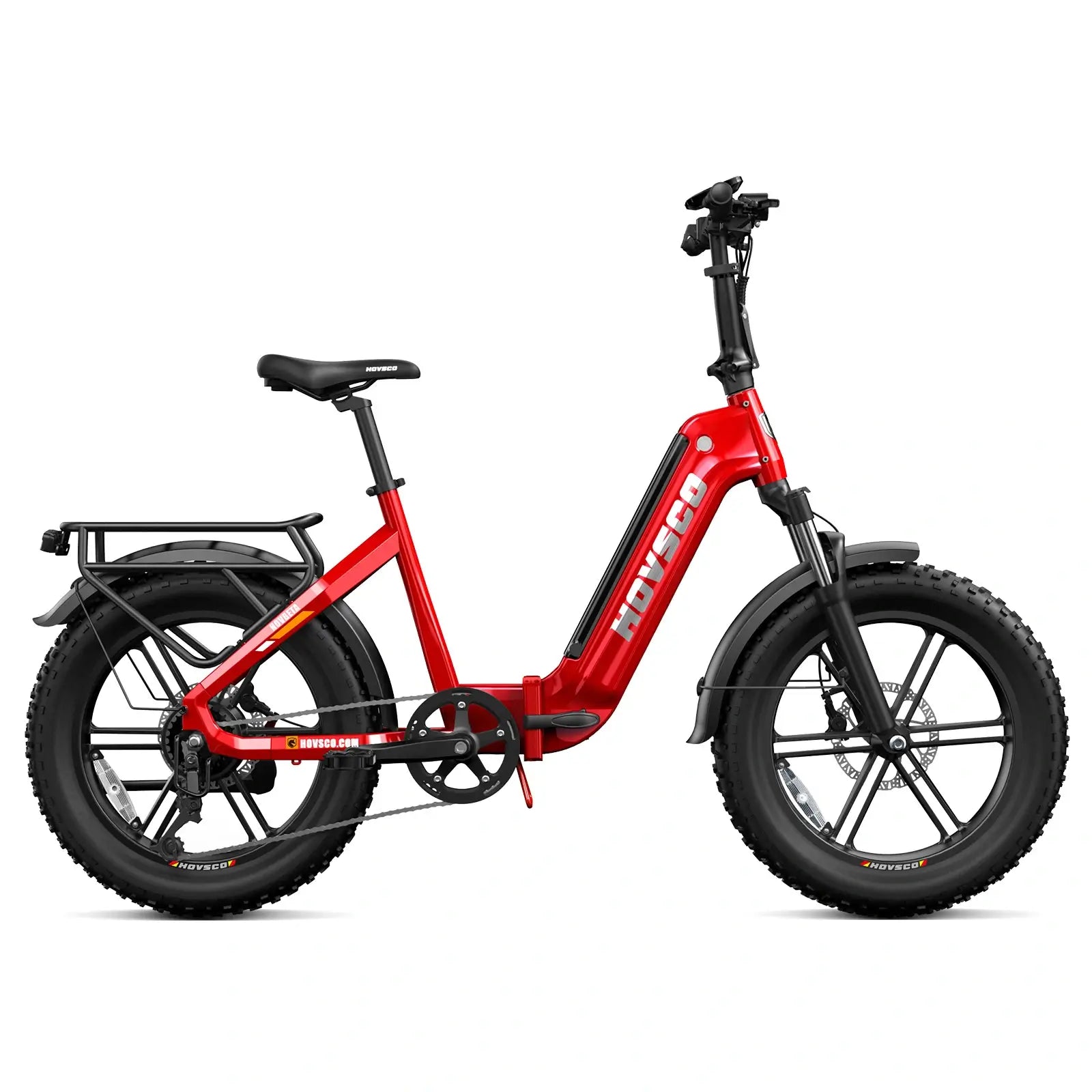
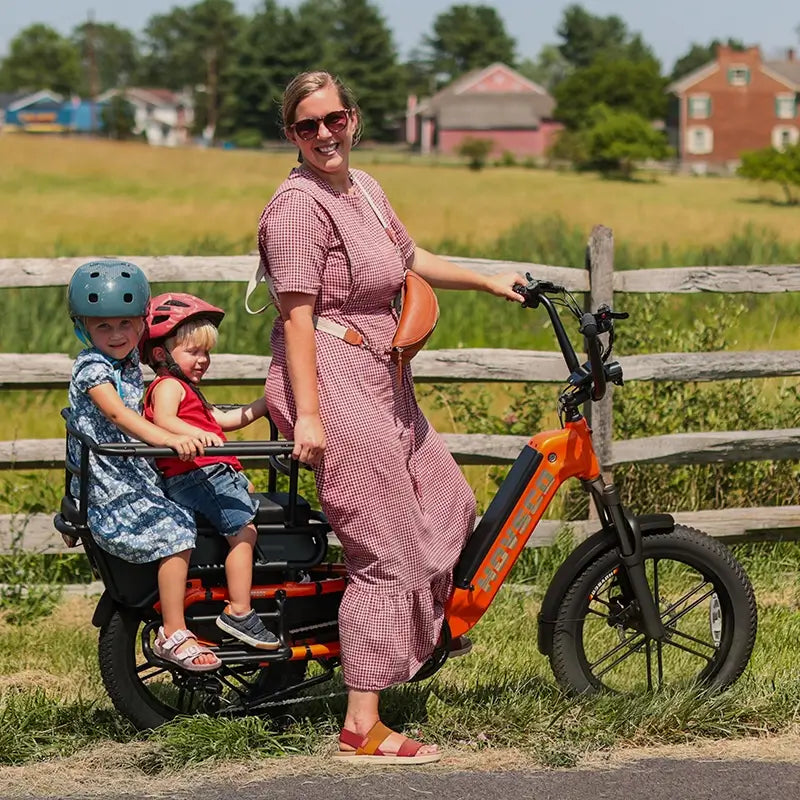
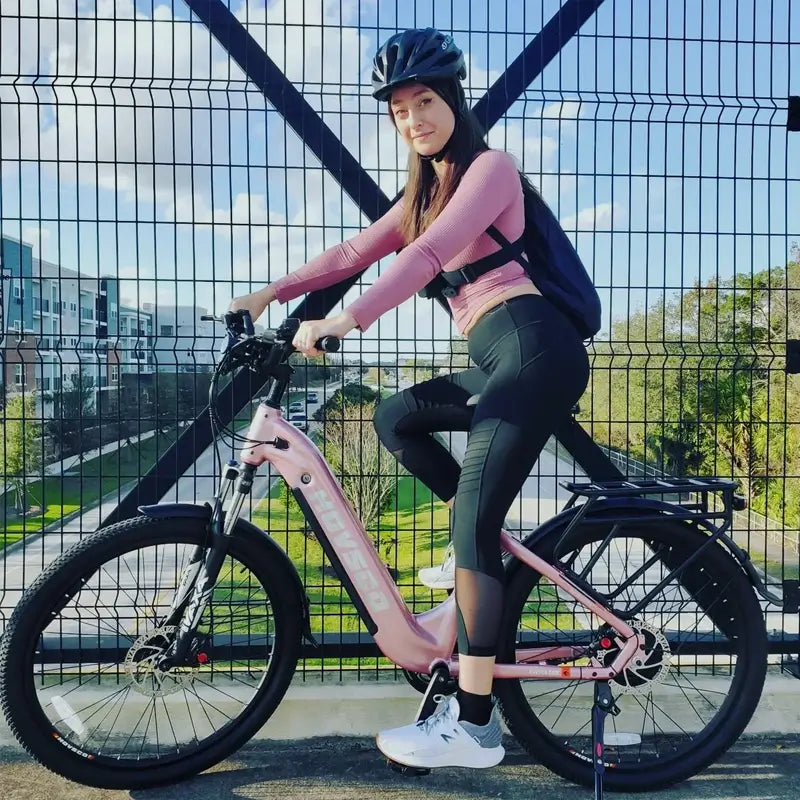
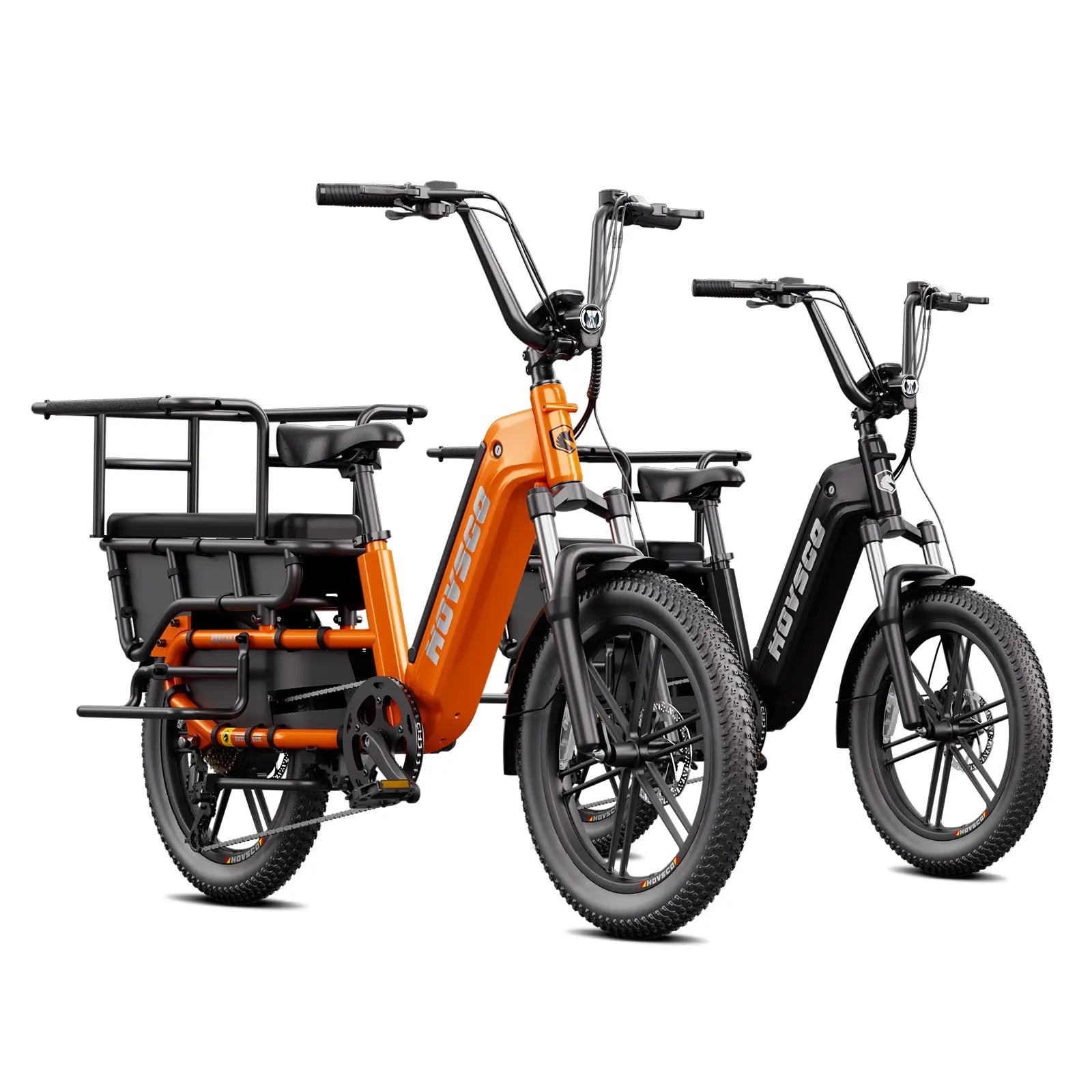
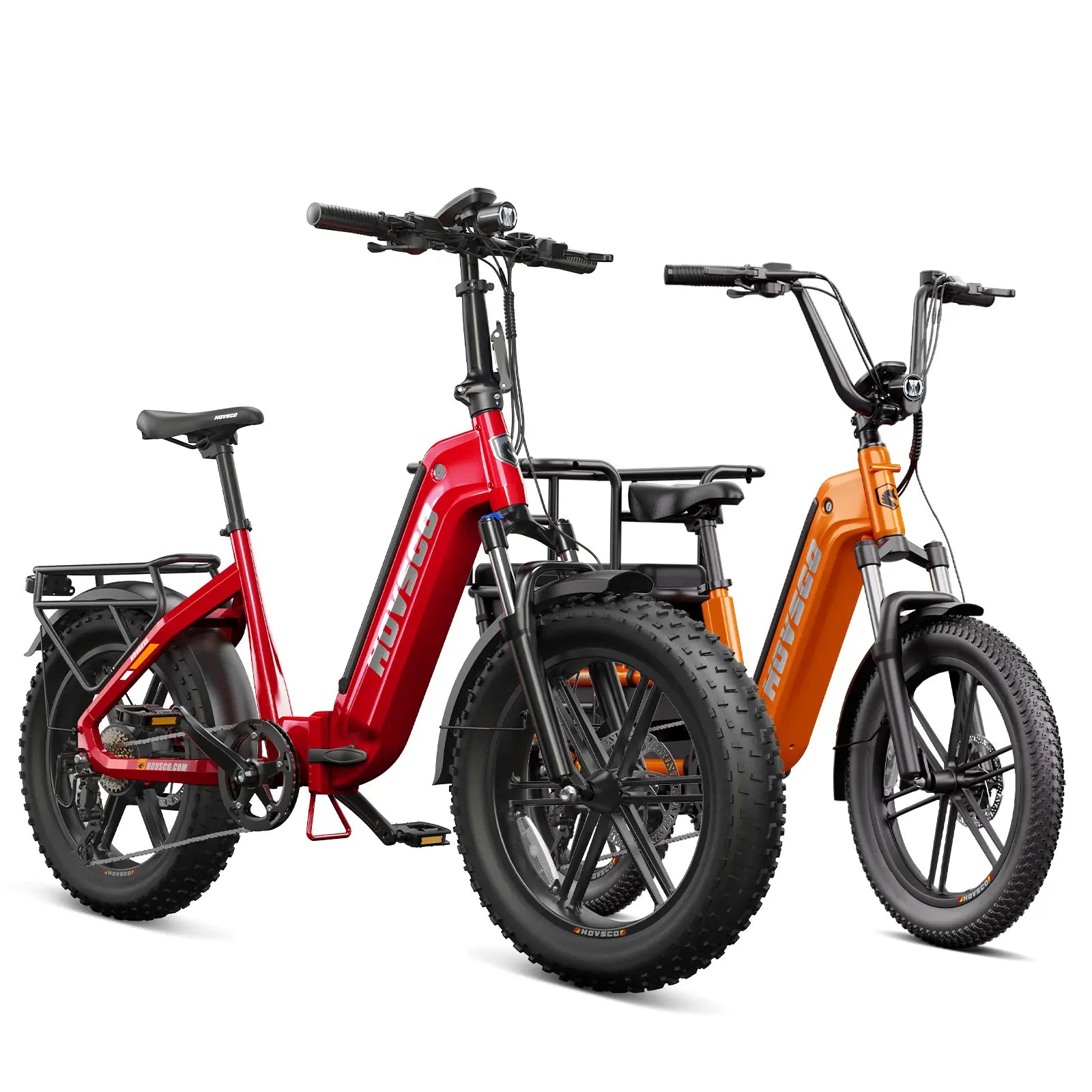
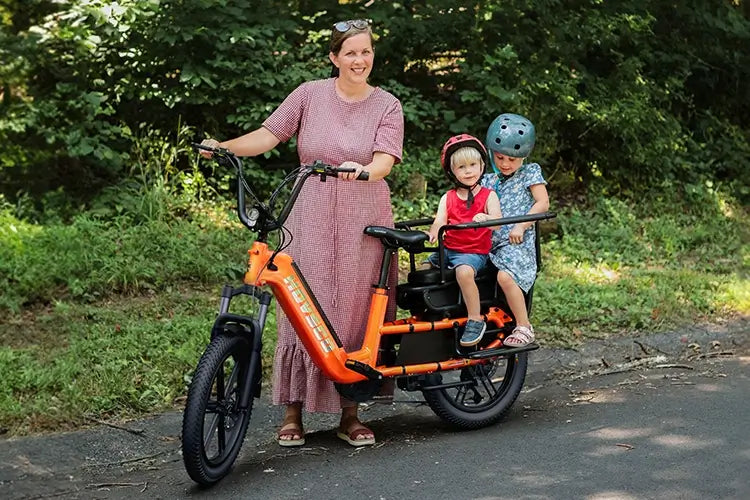
For utility trips, riders can also review Hovsco’s HovCart Step-Thru Cargo E-Bike for a family- and cargo-oriented option. For riders with limited storage space, Hovsco also offers folding e-bike options through its broader catalog.
Start by evaluating the actual route. A mostly cleared city commute may favor lighting, full fenders, predictable handling, and a manageable battery. A route involving unplowed side streets, loose snow, dirt paths, or rough pavement may make wider tires and front suspension more useful.
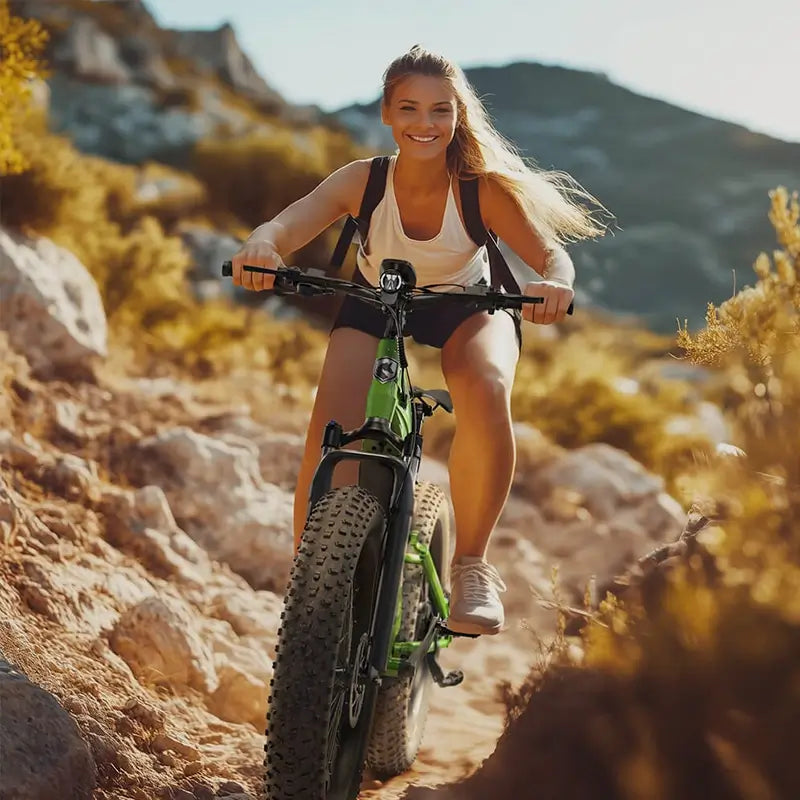
The HovAlpha Fat Tire Electric Bike is intended for terrain including snow, sand, gravel, dirt, mountain paths, and roads. Its fat tires, suspension fork, integrated lighting, and hydraulic disc brakes make it especially relevant for riders whose winter conditions are mixed rather than strictly urban.
However, the safest selection criteria remain practical: choose a bike that fits the rider, can be stored properly, matches local e-bike regulations, and supports realistic trips rather than extreme-weather ambitions.
Check weather and route conditions. Review temperature, wind, precipitation, road treatment, and black-ice warnings. Choose plowed, well-lit roads over shortcuts through untreated areas.
Start with sufficient battery charge. Plan for reduced winter range and avoid beginning a long trip with a partially charged battery. Store the removable battery indoors whenever possible.
Inspect the bike before departure. Check tire condition, tire pressure, brakes, lights, chain, pedals, and battery security. Confirm that the front and rear lights are visible.
Dress in adjustable layers. Use a moisture-wicking base layer, insulation, and a wind- or water-resistant outer layer. Protect fingers, toes, ears, and eyes without restricting movement.
Ride smoothly and slowly. Accelerate progressively, brake early, turn gradually, and leave extra following distance. Avoid sudden steering inputs, hard braking, and aggressive cornering.
Clean the e-bike after riding. Remove slush, salt, and grit with a soft cloth or gentle rinse where appropriate. Dry the drivetrain and apply suitable lubricant according to the component manufacturer’s recommendations.
Traditional approach
A rider leaves at normal speed, takes the usual route, and discovers too late that an intersection has hidden ice near the curb. The rider arrives cold, rushed, and uncertain about whether the return journey will be safe.
With a Hovsco approach
The rider begins with an indoor-stored battery, chooses a cleared corridor, turns on lights before dawn, and allows extra travel time. A HovAlpha’s wide tires and front suspension can make uneven surfaces more manageable, while hydraulic disc brakes support controlled braking when applied progressively.
The key improvement is not speed. It is predictability. The rider plans a route with more room, more visibility, and fewer last-second decisions.
Traditional approach
A rider decides that winter errands require a car because carrying a bag through slush seems inconvenient. Small trips become vehicle trips even when the destination is close.
With a Hovsco approach
A rider selects a cargo-capable e-bike, secures items properly, limits the load to manageable levels, and travels on cleared roads at a reduced pace. Hovsco positions the HovCart Step-Thru Cargo Ebike as an all-terrain, cargo- and family-friendly ride.
Winter cargo riding requires extra caution because added weight affects stopping distance and balance. A rider should load items low, secure them firmly, and never assume pedal assistance offsets the handling effects of cargo.
Traditional approach
A cyclist uses a standard narrow-tire bicycle on a snowy multi-use path, loses confidence in loose sections, and cuts the ride short.
With a Hovsco approach
The rider evaluates the surface before committing, selects packed paths rather than deep snow, lowers speed, and uses a fat-tire e-bike only where traction remains consistent. The goal is not to force a route through difficult terrain but to explore safely within the available conditions.
If ice dominates the route, walking, rerouting, fitting studs, or postponing the ride is a more responsible decision than relying on motor power or wide tires alone.
Helmet use remains important in every season. A properly fitted bicycle helmet can reduce the risk of head and brain injuries in a crash. In winter, lighting and high-contrast clothing also become more important because daylight is limited and road spray can reduce visibility.
Riders should remember that speed changes the consequences of poor traction. A modest reduction in speed can provide more time for braking, steering, and hazard recognition. It also reduces the likelihood that a minor slide becomes a serious fall.
Winter riding should remain optional. If freezing rain, deep snow, strong winds, flooded roads, or poor driver visibility make a route hazardous, riders should choose another mode of transportation.
Do not assume that a battery should be charged immediately after a freezing ride. Bring it indoors, allow it to return to a moderate temperature, and follow the manufacturer’s battery instructions before charging.
Keep charging equipment dry and inspect the battery casing and terminals regularly. If a battery appears damaged, swollen, overheated, or unusually difficult to charge, stop using it and contact the manufacturer or a qualified service provider.
For everyday winter commutes, the simplest routine is effective: store the battery inside, install it shortly before departure, begin each ride with adequate charge, and avoid draining it to empty in severe cold.
Can you ride an e-bike in winter?
Yes. E-Bike Winter Riding can be safe and practical when routes are clear enough to ride, the rider lowers speed, uses lights, wears suitable clothing, and maintains the e-bike. It is not appropriate for every storm or icy condition.
How cold is too cold for an e-bike battery?
Cold weather reduces available range, especially below freezing. Riders should store and charge batteries indoors at moderate temperatures, start with extra charge, and consult their model’s battery guidance. Do not charge a battery immediately after it has been exposed to extreme cold.
Are fat-tire e-bikes good for snow?
Fat-tire e-bikes can be useful on packed snow, loose snow, gravel, slush, and uneven terrain. Their wider contact patch can improve stability, but they do not make ice safe. Studded tires are a better option where icy surfaces are common.
How do I maintain an e-bike after salted roads?
Wipe down salt and road grime after each ride, dry the chain and drivetrain, and lubricate moving parts as needed. Avoid blasting electrical components with high-pressure water. Regular cleaning reduces corrosion risk and helps reveal developing wear.
What should I wear for winter e-bike commuting?
Wear breathable layers that can be adjusted as effort changes. A moisture-wicking base layer, insulated mid-layer, windproof shell, warm gloves, waterproof footwear, eye protection, and reflective elements are useful for many winter commuters.
Do I need special winter e-bike tires?
Not necessarily. Good-condition tires at the appropriate pressure may be sufficient for cleared wet roads. Fat tires can be useful on soft or uneven snow, while studded tires are more suitable for regular ice. Match the tire to the surface you encounter most often.
One common mistake is riding at summer speeds. Cold-weather riding rewards patience: slower approaches to corners, earlier braking, and wider turning lines all protect traction.
Another mistake is relying solely on the motor. Pedal assistance can make hills and headwinds easier, but it cannot create grip on ice or stop a bicycle on an unsafe surface. Use power smoothly and keep the bike balanced.
A final mistake is forgetting post-ride care. Leaving salty slush on the drivetrain overnight creates preventable wear. Five minutes of cleaning can protect the e-bike’s long-term performance.
A dependable winter routine is simple: check the forecast, charge and store the battery correctly, inspect the bike, dress for changing conditions, ride conservatively, and clean the bike afterward.
This approach helps riders preserve both confidence and equipment. It also makes winter riding feel less like an extreme activity and more like a practical part of everyday transportation.
E-Bike Winter Riding is most successful when riders accept the season’s limits and prepare accordingly. A fat-tire e-bike such as the Hovsco HovAlpha can provide useful traction, suspension comfort, removable-battery convenience, and braking hardware for mixed winter routes.
But equipment is only part of the equation. Safe winter riding depends on reduced speed, smart route choices, visible clothing and lights, realistic battery expectations, and the willingness to skip a ride when conditions become unsafe.
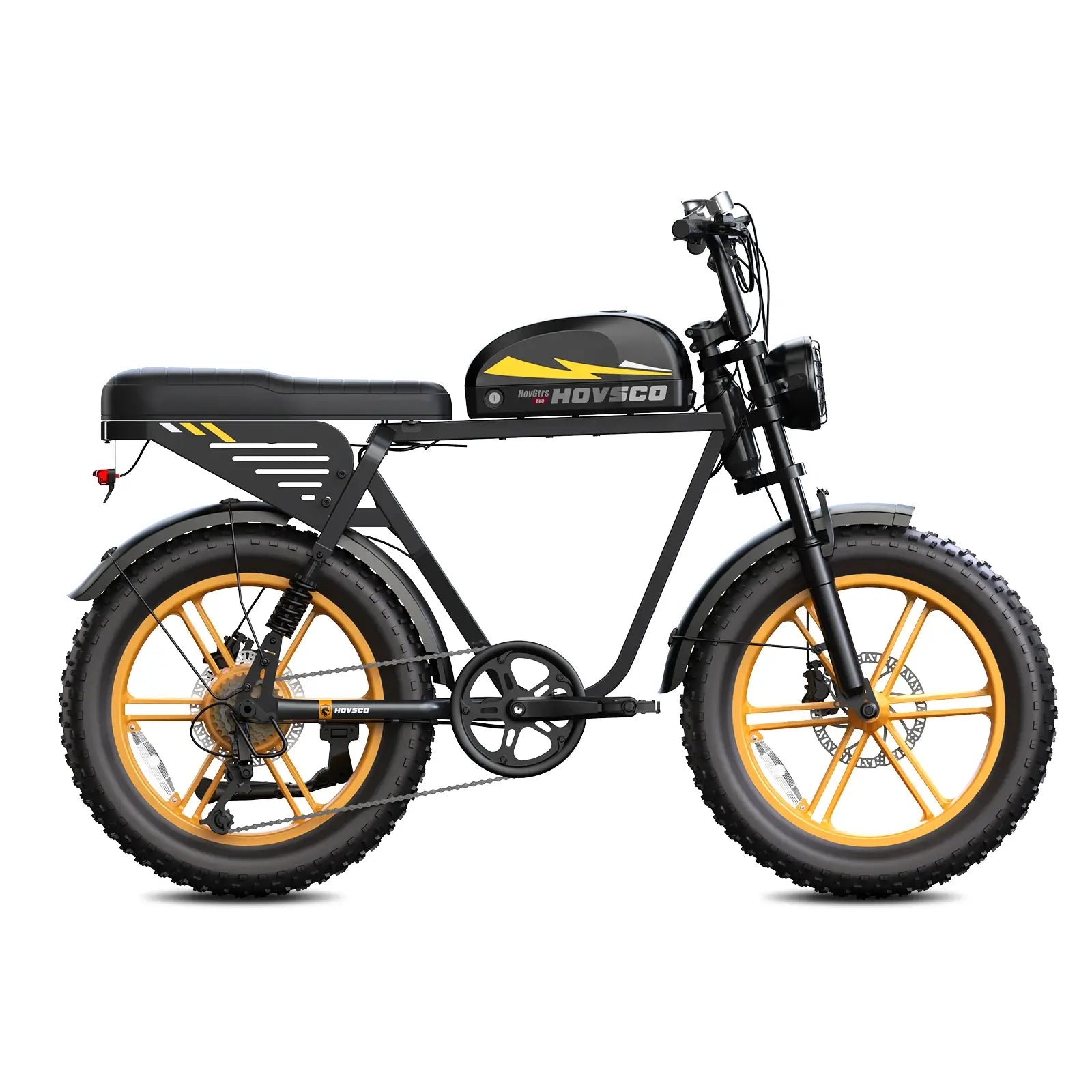
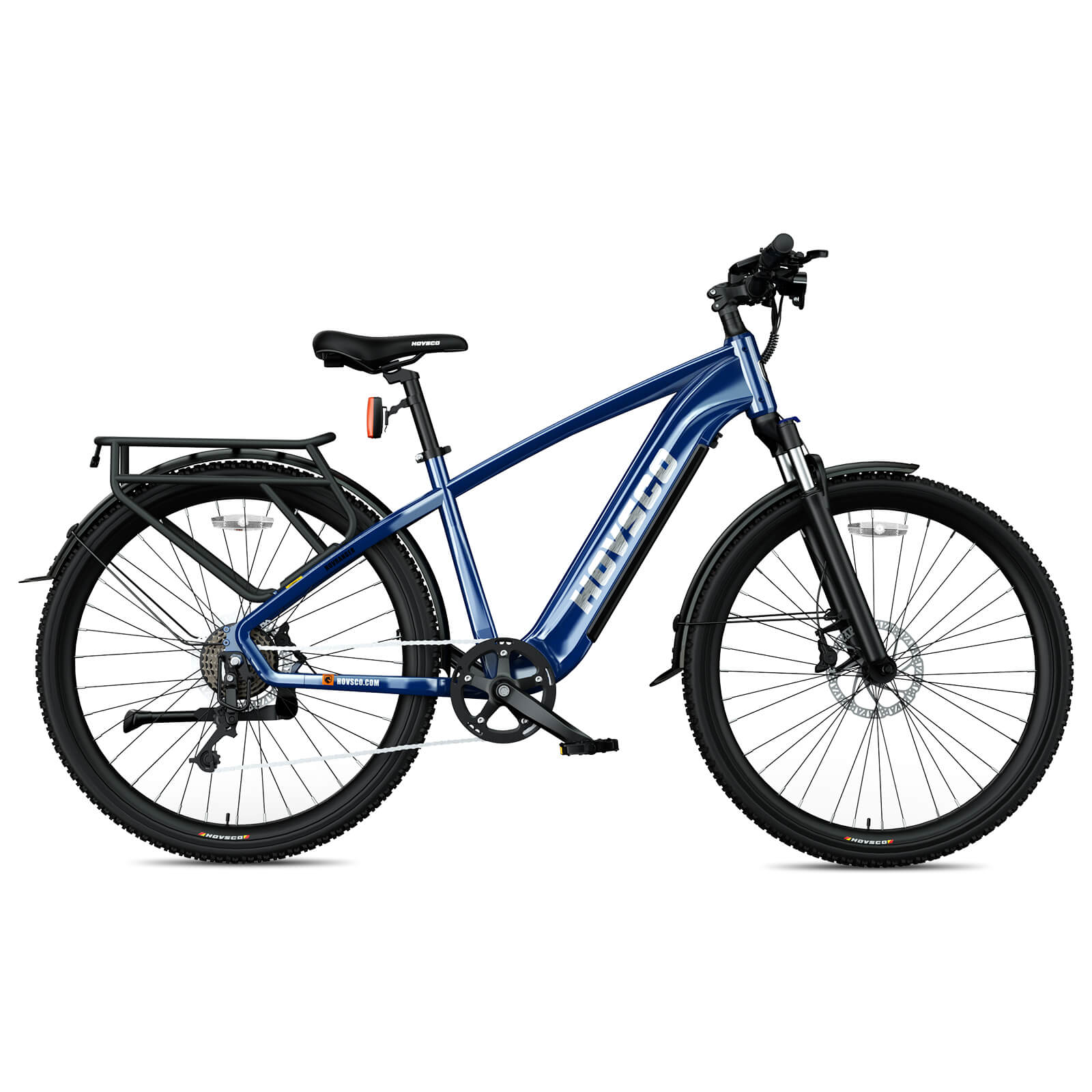
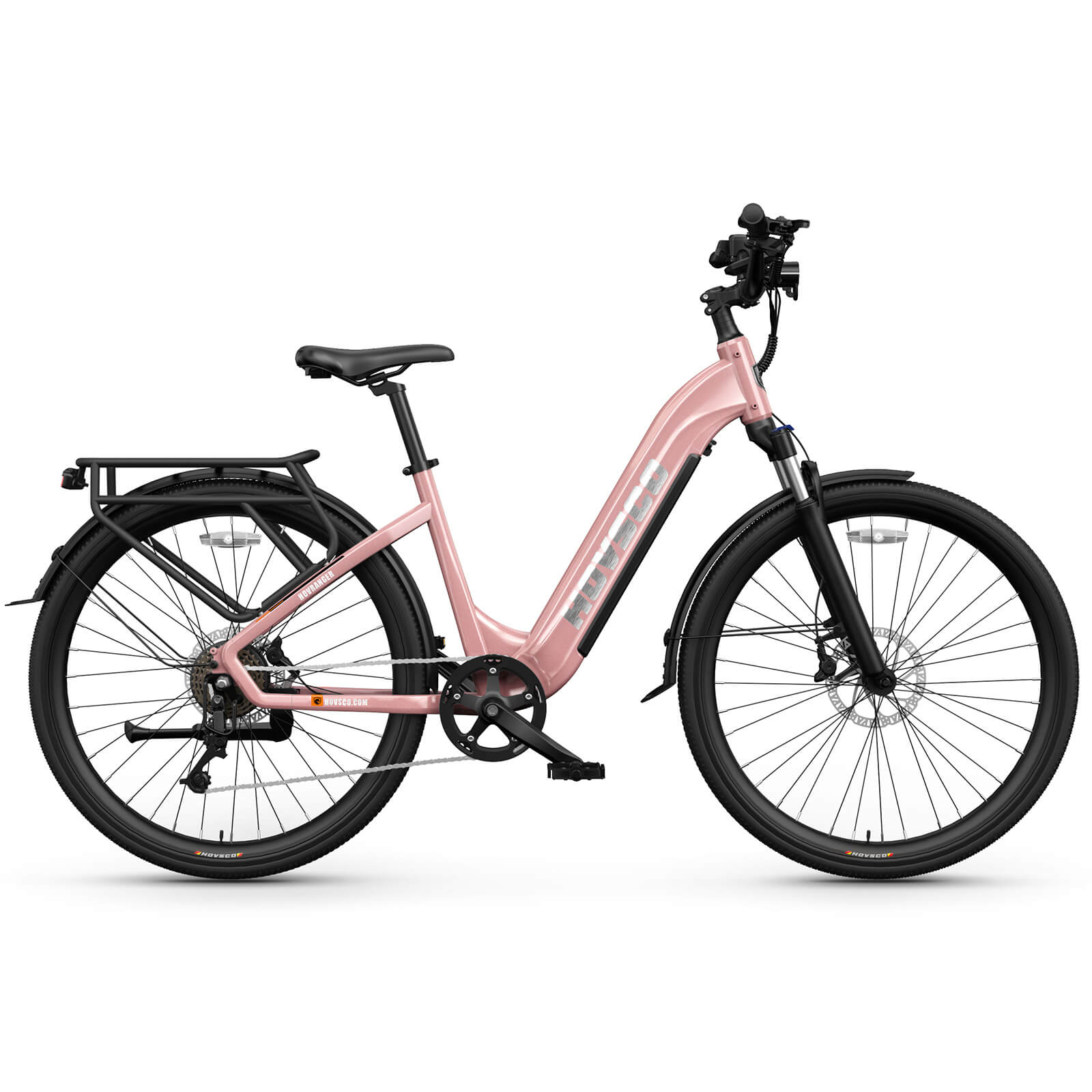
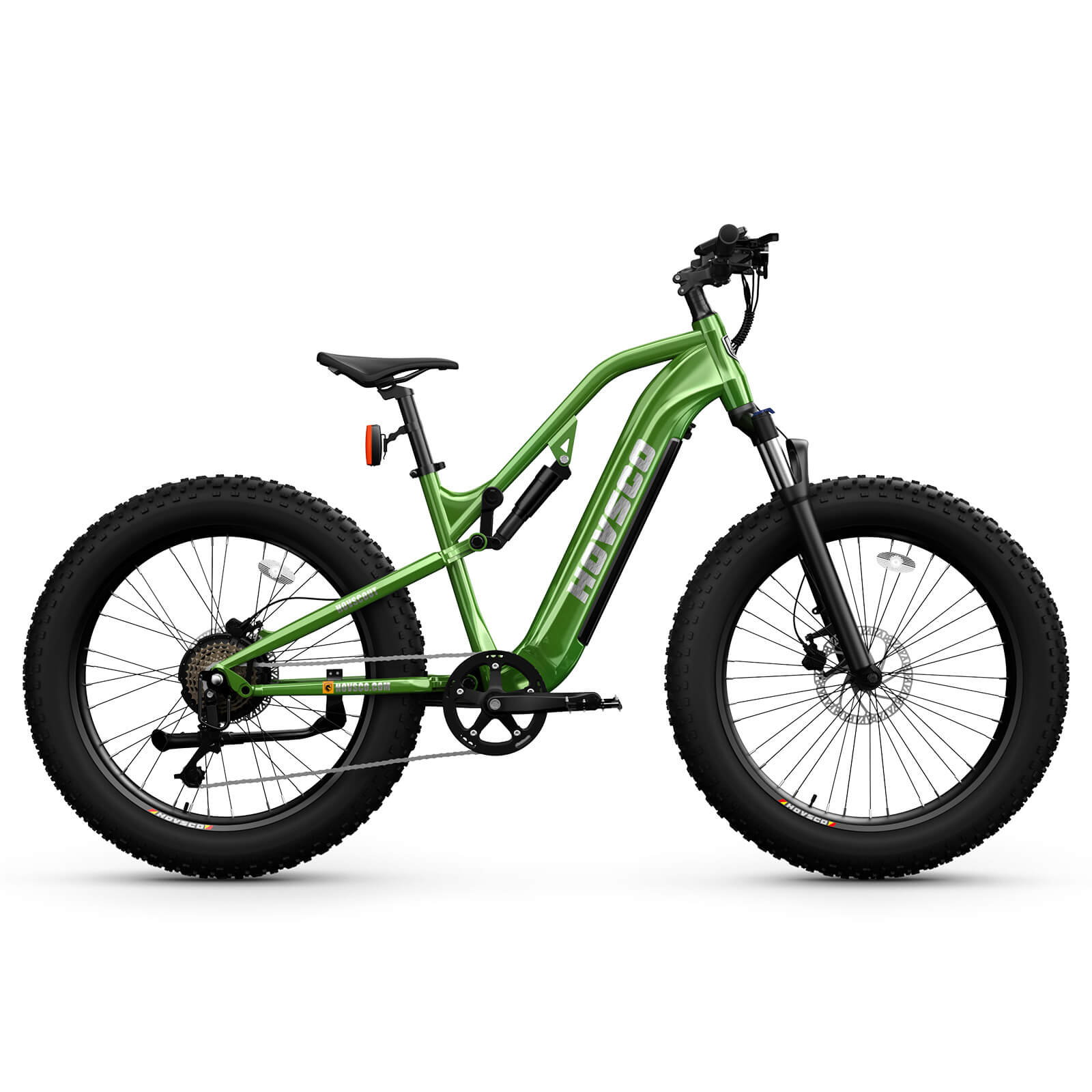
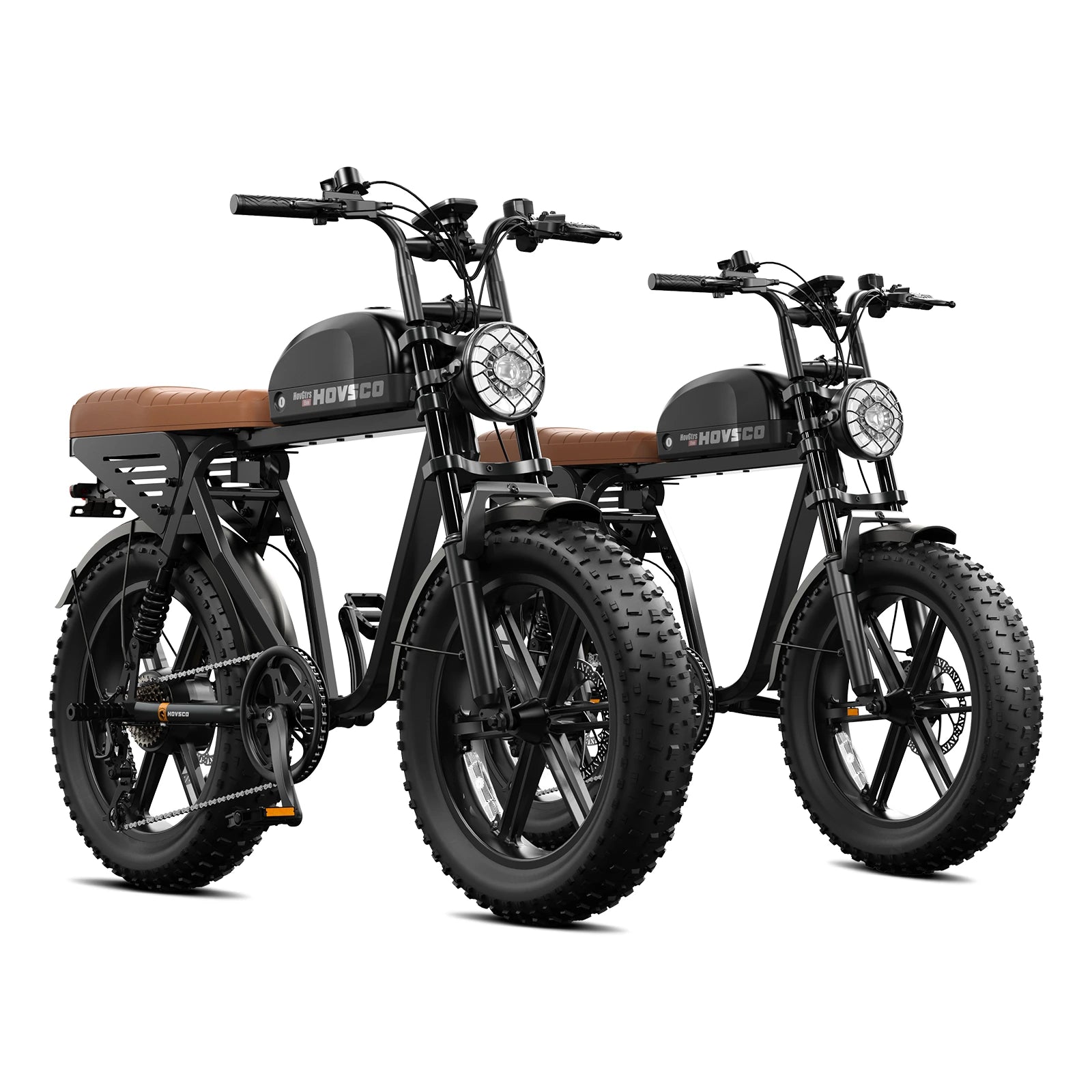
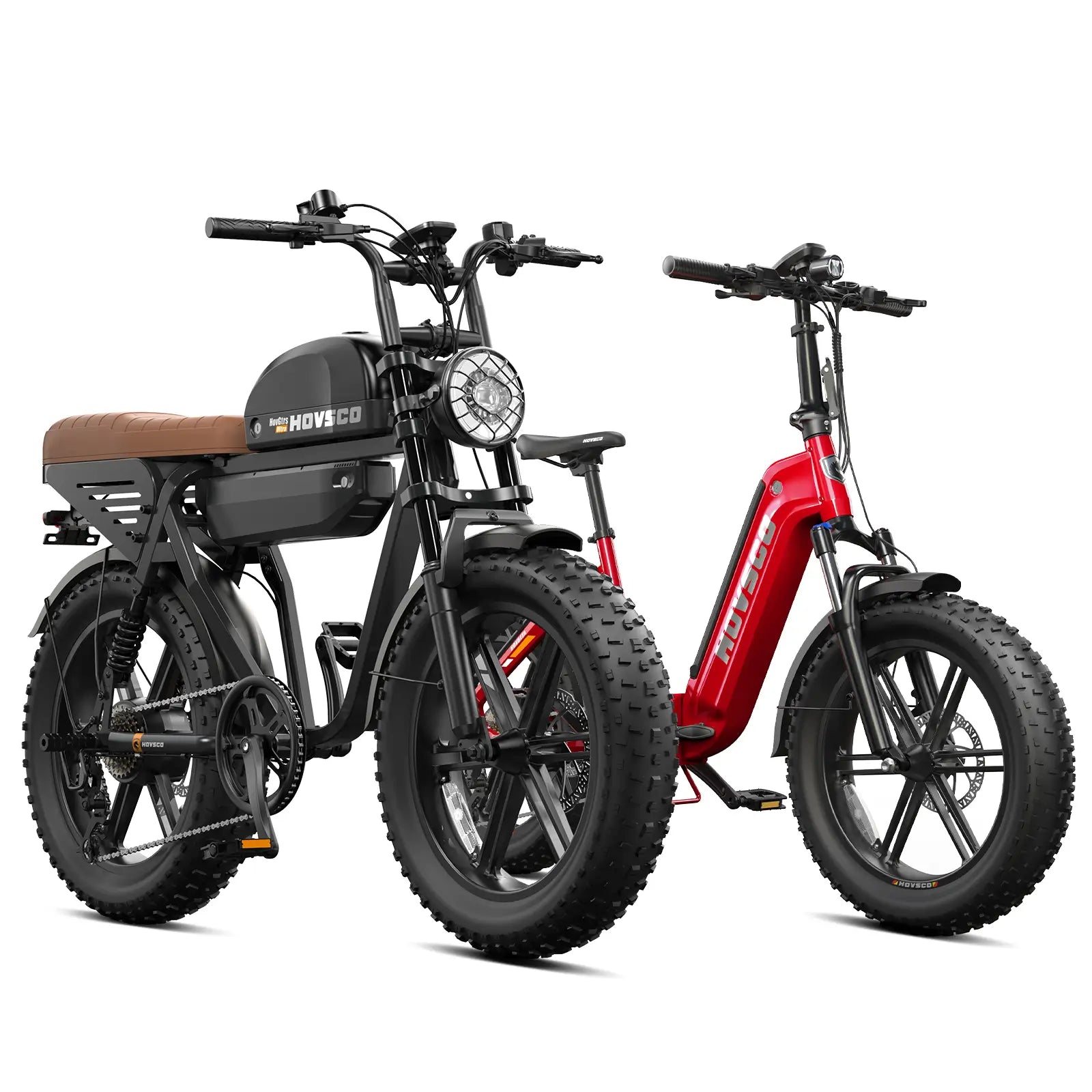
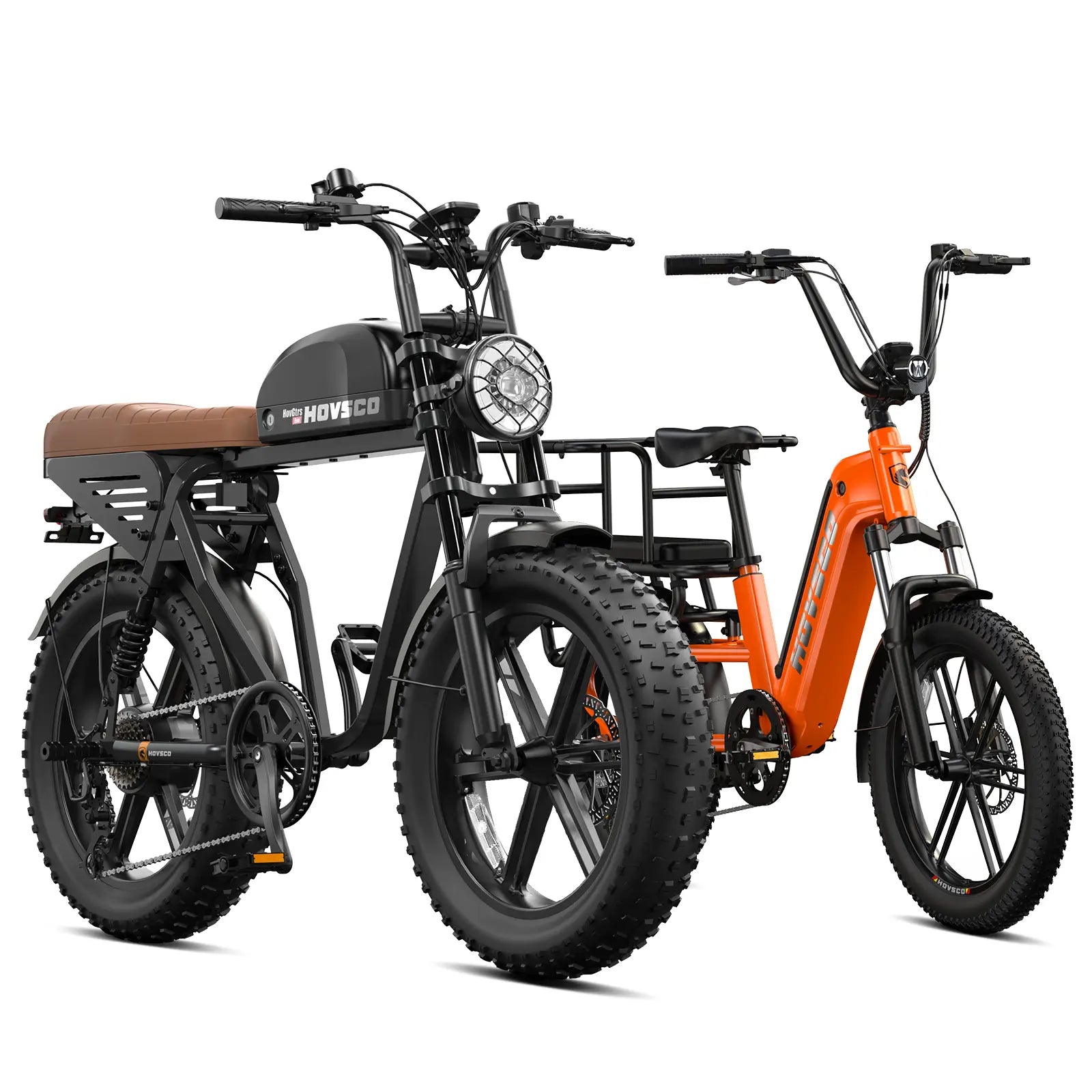
Hovsco offers electric bikes across fat-tire, cargo, commuter, folding, and moped-inspired categories. Riders planning for winter can explore the HovAlpha Fat Tire Electric Bike and the wider Hovsco electric bike collection to find a model suited to their terrain, storage space, cargo needs, and everyday routes.
PeopleForBikes — The U.S. E-Bike Market Is Bigger Than the Numbers Show (2026)
U.S. Department of Energy — Technology Integration Annual Progress Report (2023)
Centers for Disease Control and Prevention — Bicycle Safety (2025)
National Highway Traffic Safety Administration — Winter Driving Tips
Active Travel Studies — Individual Determinants of Winter Bicycle Commuting (2023)
Share:
Lightweight EV Materials: Smarter E-Bike Design for Everyday Range and Control
U.S. Electric Bike Market: Practical Mobility for Modern American Life