
























![[ New Arrival ] Porto Max Electric Scooter For Commute & Grocery Shopping - HOVSCO](http://www.hovsco.com/cdn/shop/files/PotroMax-3.jpg?v=1706927007&width=1200)
- by EO S
Are Family Electric Bikes With Cargo the Ideal Solution for Modern Households?
- by EO S
E-Bikes
Accessories
 Free Shipping
 15-Day Returns
 2-Year Warranty
Free Shipping
15-Day Returns
2-Year Warranty
2-Year Warranty
Free Shipping
15-Day Returns
2-Year Warranty
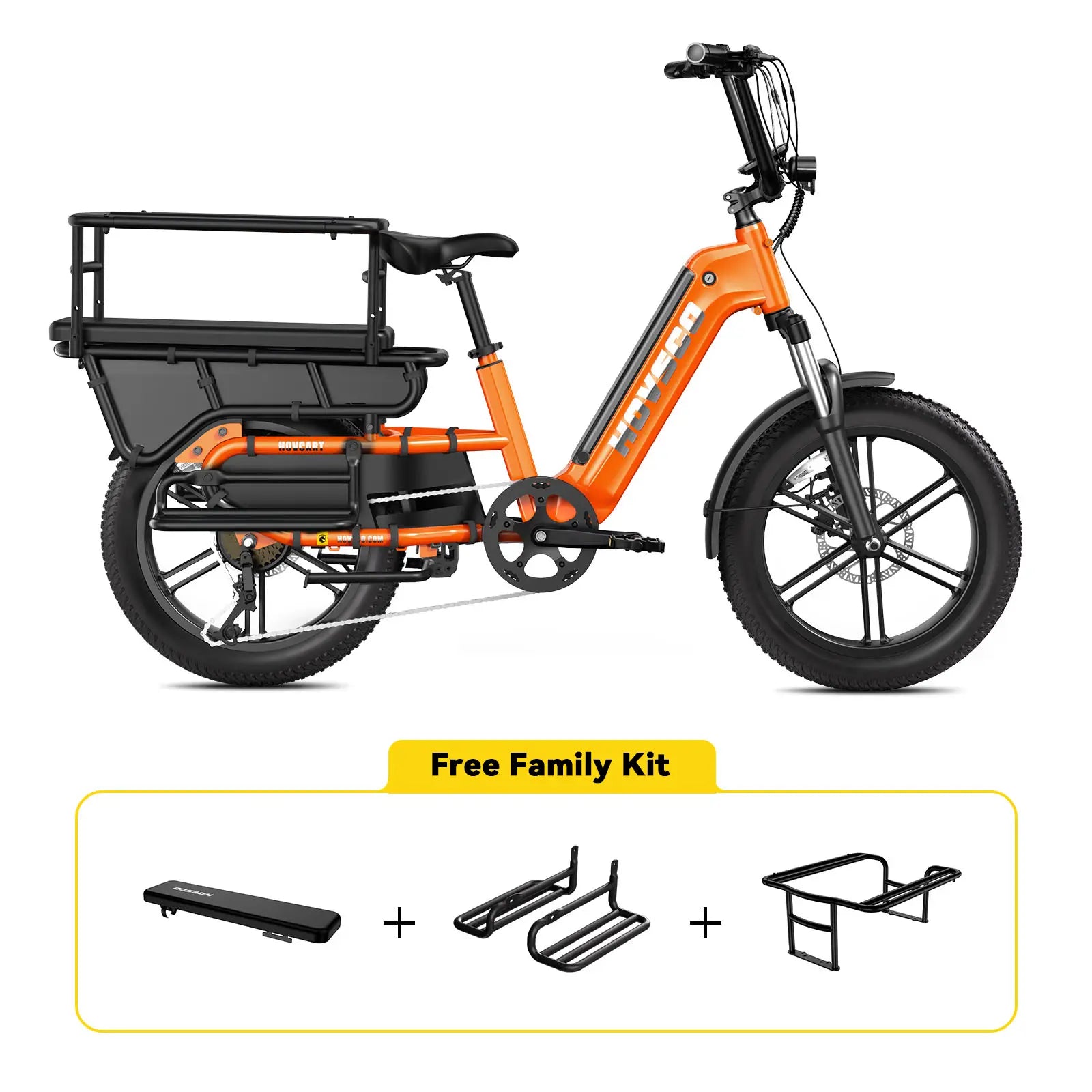
Family electric bikes with cargo capability are rapidly transforming how families handle daily travel, errands, and recreation. Designed to carry children, groceries, and gear with ease, these e-bikes—especially models aligned with brands like HOVSCO—offer a practical, eco-friendly, and cost-effective alternative to cars for short-distance family mobility.
The family cargo bike segment has seen significant growth as urban populations increase and households look for sustainable transport options. In 2024, the global family cargo bikes market was valued at over USD 715 million and is projected to exceed USD 2.29 billion by 2033, growing at a compound annual growth rate (CAGR) near 14 %. Electric-assist models are driving much of this expansion as families seek easier ways to replace short car trips under 5–8 km. Around 62 % of family cargo bikes sold globally in 2024 were electric-assisted, and over 2.3 million units were sold worldwide across all cargo bike categories, with usage primarily tied to child transport and daily errands. Families increasingly adopt these bikes to replace a significant portion of short car journeys, reduce emissions, and enhance urban mobility. (Industry Research)
Despite strong interest, many households still face barriers to adoption. The upfront cost of mid-range electric family bikes often ranges from USD 3,000 to USD 6,000 or more, creating affordability hurdles. In addition, insufficient cycling infrastructure in many cities limits safe routes for larger cargo bikes, prompting concerns about handling and rider confidence, especially when carrying children. These pain points slow down broader adoption even as demand rises. (Industry Research)
Urban congestion, rising fuel prices, and a desire for healthier transportation alternatives continue to drive families toward electric-assisted cargo bikes. Parents are seeking reliable, safe, and spacious options that can handle daily school runs, grocery errands, and family outings without the stress and cost of car travel.
Traditional family transport methods present several limitations when compared to modern e-cargo bikes:
Cars and SUVs: While flexible for long trips, they incur high fuel and maintenance costs, parking challenges, and contribute to urban congestion.
Public Transit: May not support family logistics efficiently, particularly with children, gear, or multiple stops.
Standard Bicycles: Limited carrying capacity and physical effort required can make them impractical for families with young children or heavy loads.
Compared to these, family electric bikes with cargo capability—such as those recommended by HOVSCO—combine electric assist, stability, and space for passengers or cargo, making everyday travel more manageable and cost-efficient.
Family electric bikes with cargo are e-bikes designed with extended frames, reinforced racks or cargo areas, powerful motors, and robust battery systems to assist families in transporting children, pets, groceries, and equipment. Core capabilities typically include:
High-capacity cargo areas or seats suited for children and loads.
Electric assistance that supports heavier weights and reduces pedaling strain.
Enhanced stability and braking for safety with passengers on board.
Extended battery range to handle longer daily usage.
Accessory options like weather covers, safety harnesses, and integrated lighting.
Brands like HOVSCO often emphasize user-centric design, comfort, and reliability in their e-bike offerings, ensuring family-oriented features align with real-world use and preferences.
| Feature | Car/SUV | Standard Bike | Family E-Cargo Bike |
|---|---|---|---|
| Purchase Cost | High | Low | Moderate–High |
| Operating Cost | High | Very Low | Low |
| Passenger & Cargo Capacity | High | Low | High |
| Daily Errand Efficiency | Medium | Low | High |
| Environmental Impact | High | Zero | Near Zero |
| Urban Maneuverability | Poor | Good | Good |
| Storage & Parking | Difficult | Easy | Easier |
Define Family Needs: Assess typical cargo (children, groceries, bags), daily distances, and local terrain.
Evaluate Models: Compare motor power, battery range, load capacity, and safety features. Look for trustworthy brands like HOVSCO with community support and after-sales service.
Check Local Regulations: Confirm electric bike classifications, speed limits, and legal requirements for family cargo bikes in your area.
Plan Safe Routes: Identify bike lanes and low-traffic streets for daily travel with passengers.
Customize with Accessories: Add child seats, weather protection, and lighting systems to enhance safety and comfort.
Routine Maintenance: Keep tires, brakes, and battery health monitored for consistent performance.
Problem: Cars for short school trips add cost and time.
Traditional Approach: Driving children to school daily.
With Family E-Cargo Bike: Safely transport children, backpacks, and supplies with electric assist.
Key Benefit: Lower travel cost, reduced traffic stress, and active lifestyle.
Problem: Multiple car trips for groceries and errands are inefficient.
Traditional Approach: Use car for every short stop.
With Family E-Cargo Bike: Carry groceries and items in cargo area with ease.
Key Benefit: Significant savings on gas and parking, more convenience.
Problem: Weekend outings by car can be costly and stressful.
Traditional Approach: Drive to parks or destinations.
With Family E-Cargo Bike: Enjoy outdoor rides with family and cargo space for picnic supplies.
Key Benefit: Healthier activity and reduced travel expense.
Problem: Moving pets or bulky equipment via car adds hassle.
Traditional Approach: Use car for larger items.
With Family E-Cargo Bike: Secure cargo or pets with designated carriers or racks.
Key Benefit: Flexible transport, fun experience for family and pets.
The family electric bike market is poised for strong growth as urban mobility trends lean toward sustainability, health, and cost savings. With projections indicating substantial market expansion over the next decade and increasing adoption of electric-assist models, families are increasingly viewing e-cargo bikes as viable alternatives to cars for many daily activities. Quality-oriented offerings like those from HOVSCO continue to elevate performance and reliability, making family e-cargo bikes practical as lifestyle and transport solutions rather than niche products.
What weight can family electric bikes with cargo typically carry?
Load capacity varies, but many models support 100–250 kg including passengers and cargo.
Can family electric bikes replace a second household car?
For many families and short urban journeys, yes—especially for trips under 10 km.
Are family electric bikes safe for children?
Yes, when equipped with proper child seats, safety harnesses, and ridden with caution following local laws.
How far can an electric family cargo e-bike travel on one charge?
Range typically varies from 30 km to over 120 km depending on battery capacity and load.
Do family electric bikes need special licenses?
Regulations differ by region, but most electric cargo bikes fall under standard e-bike classifications without special licensing.
Family Cargo Bikes Market Size, Share & Growth Forecast 2035 – MarketGrowthReports
Family Cargo Bikes Market Trends & Statistics – IndustryResearch.biz
Family Cargo Bikes Global Shipments & Market Trends – 360ResearchReports
Share:
Are Leather Saddles the Best Accessory for Retro Electric Bikes?
What Are the Best Moped Style Ebike Brands Compared for Quality, Performance, and Price?