



























![[ New Arrival ] Porto Max Electric Scooter For Commute & Grocery Shopping - HOVSCO](http://www.hovsco.com/cdn/shop/files/PotroMax-3.jpg?v=1706927007&width=1200)
- by SteveJames
Active Transportation Benefits for Healthier, Lower-Stress Daily Travel
- by SteveJames
E-Bikes
Accessories
 Free Shipping
 15-Day Returns
 2-Year Warranty
Free Shipping
15-Day Returns
2-Year Warranty
2-Year Warranty
Free Shipping
15-Day Returns
2-Year Warranty
Discover the real active transportation benefits, from better health and lower commuting costs to easier family errands, with practical insights and HOVSCO e-bike solutions.
Active transportation is no longer a niche idea reserved for cyclists and urban planners. It has become a practical answer to rising commuting costs, sedentary routines, traffic congestion, and the growing desire for more sustainable daily travel. Whether the trip is a school run, a grocery stop, or a ride to work, people are looking for ways to make transportation more efficient without losing flexibility.
That is where the conversation shifts from theory to usability. Walking and traditional cycling remain valuable, but many riders need something more realistic for modern routines. Hills, cargo, longer distances, family responsibilities, and limited time all make consistency harder. Electric bikes help bridge that gap by making active transportation easier to adopt and easier to sustain.
For riders who want a more practical way to replace short car trips, HOVSCO offers a product range that aligns well with everyday mobility. Its lineup includes family-focused cargo e-bikes, foldable options for compact storage, step-through models for easier access, and longer-range choices for more demanding routes.
Active transportation benefits refer to the health, financial, environmental, and lifestyle gains that come from using physically engaged travel modes such as walking, biking, and e-biking for everyday trips. Instead of treating movement as a separate task that only happens at the gym, active transportation builds it into routines people already have to complete.
This is one reason the concept is so effective. A person does not need to create extra time for exercise when the commute, errand run, or neighborhood trip already provides meaningful movement. Over time, that shift can change not only how people travel, but how they feel during the day.
One of the biggest problems with car-first transportation is that it often feels efficient while quietly creating several kinds of friction. Drivers may save effort in the moment, but they often trade that convenience for parking stress, stop-and-go traffic, fuel costs, and less daily movement. Many short trips that could be manageable by bike still happen by car simply because the car has become the default choice.
Another issue is physical inactivity. Office work, screen-heavy schedules, and long seated commutes have made it easy for movement to disappear from the average day. When transportation requires no physical engagement, it contributes to a routine in which the body does less and the mind often feels more fatigued.
Family logistics make things even more complex. Parents may need to carry groceries, backpacks, or young children. Traditional bicycles can work, but not always comfortably or consistently. If the bike cannot support real-world needs, it becomes a weekend accessory instead of a daily tool.
The same is true for riders living in apartments or people with mixed commutes. A full-size bicycle may be inconvenient to store, hard to bring indoors, or difficult to combine with transit. These practical barriers stop many people before they begin. That is why active transportation only scales when the equipment fits the rider’s actual life.
The biggest transportation upgrade is often not a faster commute, but a commute that adds movement, lowers costs, and remains realistic enough to repeat every day.
HOVSCO positions its e-bikes around practical use cases rather than abstract performance claims. That matters because most riders are not trying to win races. They are trying to make school drop-offs smoother, reduce car trips, manage hills more comfortably, and feel less drained by daily travel.
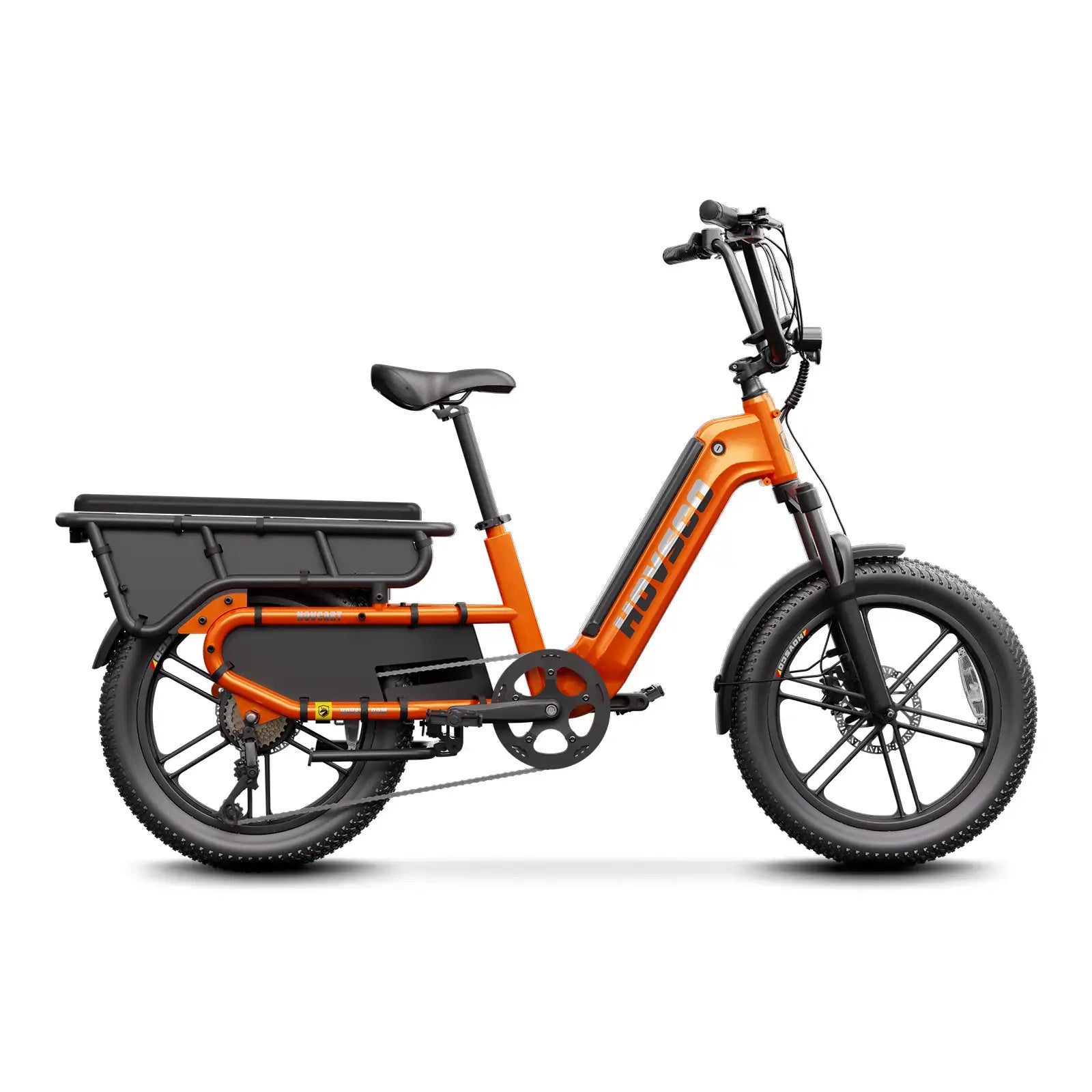
A strong example is the HovCart Family E-Bike, which is built around utility and cargo use. Riders looking for storage flexibility can explore the broader E-Bikes collection, while those who want easier mounting can browse the Step-Through eBikes collection. For households centered on school runs, cargo, and errands, the Family E-Bikes collection makes the brand’s practical focus even clearer.
Utility-first design
A bike becomes far more useful when it can handle more than the rider alone. Utility-oriented models support errands, bags, and family routines in ways that help replace real car trips rather than just recreational rides.
Electric assist that lowers resistance
Electric assistance does not remove the rider from the activity. Instead, it reduces the barriers that keep many people from riding in the first place, especially hills, headwinds, heavier loads, and longer distances.
Model variety for real lifestyles
Not every rider needs the same setup. Some need compact storage, some need step-through comfort, and some need serious hauling ability. A brand with multiple practical categories makes it easier for more riders to stay consistent.
A parent replaces two separate car trips with one cargo e-bike run for school drop-off and groceries.
A commuter living in an apartment uses a foldable e-bike because it stores more easily than a full-size bicycle.
A rider who avoided biking on hilly routes starts riding regularly once electric assist makes the return trip manageable.
A strong blog post should not push products too aggressively, but it should help readers see how one purchase decision can connect to a broader riding lifestyle. In HOVSCO’s case, that means showing how different collections solve different forms of transportation friction.
A rider who first arrives for family utility may later realize that a foldable or step-through model is better for a second household member. Someone interested in the cargo-focused HovCart Family E-Bike may also want to compare easier-access options in the Step-Through eBikes collection. Households that want a fuller view of practical models can also browse the Family E-Bikes collection or explore the wider E-Bikes collection.
This type of internal linking works well because it matches the way people actually shop. They often begin with one need, such as commuting or family errands, and then realize there are adjacent use cases worth solving too.
Identify the easiest trip to replace first, such as a coffee run, school drop-off, or grocery errand.
Estimate what the trip really involves, including distance, hills, bags, children, or parking difficulty.
Decide what matters most: cargo capacity, compact storage, easy mounting, or longer range.
Match the bike type to the routine instead of choosing based on speed alone.
Begin with two or three repeatable weekly trips rather than trying to replace every car trip at once.
Build confidence through consistency, then expand into longer or more complex routes over time.
Scenario
A parent needs to handle school drop-off, pick up groceries, and get back home without turning the day into a chain of short car trips.
Traditional approach
This usually means multiple stops, repeated parking, loading and unloading, and a routine built entirely around the car.
After switching to HOVSCO
A cargo-oriented option such as the HovCart makes it easier to carry more in one ride, reduce local driving, and turn a logistical chore into a more fluid routine.
Scenario
A commuter wants to ride more often but does not have easy garage storage and does not want to leave a bike outside.
Traditional approach
A normal bicycle may feel too awkward to carry upstairs, too bulky for small spaces, or too inconvenient to integrate with transit.
After switching to HOVSCO
A foldable e-bike can reduce that friction significantly, making it more realistic to store the bike indoors and use it as part of a mixed commute.
Scenario
A rider wants the health and mood benefits of cycling but has stopped riding regularly because longer trips feel too demanding.
Traditional approach
The bike remains underused because the route seems manageable on the way out but discouraging on the way back.
After switching to HOVSCO
Electric assist changes the equation by making longer and slightly more difficult rides feel sustainable, which helps the rider stay more active across the week.
What are active transportation benefits in simple terms?
They are the everyday gains people get when they walk, bike, or use e-bikes for practical travel. These gains usually include more movement, lower transportation stress, reduced fuel dependence, and a more efficient way to handle local trips.
Are e-bikes really part of active transportation?
Yes. E-bikes still involve pedaling and rider participation, but they reduce the effort required for hills, distance, cargo, and wind resistance. That makes them especially useful for people who might not otherwise ride consistently.
What are the best active transportation benefits for families?
For families, the biggest benefits are convenience, flexibility, and reduced dependence on short car trips. A cargo-capable e-bike can make school runs, local errands, and neighborhood travel much easier to combine.
How do active transportation benefits compare with driving?
Driving may seem easier at first, but it usually adds parking stress, fuel costs, and a fully sedentary travel routine. Active transportation offers a way to keep daily movement built into life without needing a separate workout block.
Which HOVSCO bike is most relevant for active transportation benefits?
That depends on the rider’s routine. The HovCart is highly relevant for family errands and cargo needs, while foldable and step-through options are more suitable for storage limitations, accessibility, or comfort-focused daily commuting.
What should people look for when buying an e-bike for active transportation?
The most important things are fit for purpose, not just headline specs. Buyers should consider cargo needs, storage space, ease of mounting, route distance, and whether the bike supports the trips they actually take every week.
Active transportation is a high-intent topic because it sits at the intersection of health, commuting, sustainability, urban living, and cost-conscious shopping. People searching this phrase are often not looking for abstract theory. They want practical ways to improve everyday travel.
That is why a balanced article performs well. It should lead with real pain points, define the concept clearly, acknowledge practical barriers, and then introduce products in a measured way. Overly sales-heavy copy weakens trust, while purely informational copy may miss conversion opportunities. The best-performing approach is useful first and commercial second.
Active transportation benefits are most powerful when they become part of normal life rather than an occasional ideal. The more realistic the setup, the more likely a rider is to stick with it. HOVSCO’s family, foldable, and comfort-oriented e-bike options make that transition easier by focusing on everyday usability instead of overcomplicating the decision.
Explore HOVSCO’s e-bike lineup to find a more practical way to commute, carry, and ride more often. HOVSCO is an electric bike brand focused on utility, comfort, and everyday mobility for riders who want active transportation to work in the real world.
Share:
Sustainable Tourism Trends 2026: How Low-Carbon Mobility Powers Cleaner Travel — July 2026
E-Bike Market Growth: Why Utility and Cargo Models Matter More Than Ever in July 2026