
























![[ New Arrival ] Porto Max Electric Scooter For Commute & Grocery Shopping - HOVSCO](http://www.hovsco.com/cdn/shop/files/PotroMax-3.jpg?v=1706927007&width=1200)
- by SteveJames
Which E-Bike Is Best for Grocery Shopping?
- by SteveJames
E-Bikes
Accessories
 Free Shipping
 15-Day Returns
 2-Year Warranty
Free Shipping
15-Day Returns
2-Year Warranty
2-Year Warranty
Free Shipping
15-Day Returns
2-Year Warranty
An electric bike can make grocery shopping easier when its carrying system, handling, brakes, and battery match the load you actually bring home. For one or two bags, a standard step-through e-bike with quality panniers is often enough. For recurring bulky shops, choose purpose-built utility capacity—but avoid buying more bike than your errands require.
A practical grocery e-bike should carry your usual shopping load securely, without exceeding the rack, frame, or total system weight limits. Start with your real basket size, then choose panniers, a basket, or a crate that keeps weight low and stable rather than simply choosing the largest stated payload.
The most useful metric is not a headline “cargo capacity.” It is the combined system limit: rider, bike, accessories, groceries, and sometimes a lock. A rack may be rated for 55 pounds, while the complete bike has a different total weight limit. Both numbers matter.
For normal errands, think in load tiers:
Light shop: A few items, pharmacy pickup, bread, produce, or dinner ingredients. A front basket or compact rear basket works well.
Weekly shop for one or two people: Two rear panniers are usually the best answer. They hold more than backpacks, keep your back cool, and place the mass near the rear axle.
Bulk or irregular shop: Large beverage packs, pet food, paper goods, and oversized household items need a longer rear platform, a reinforced rack, or multiple accessory mounting points.
In workshop inspections, I have seen the same mistake repeatedly: riders judge capacity by how much can physically fit in a basket. The engineering limit is whether the mount, fasteners, rack rails, and load placement can control that mass over potholes and braking events. A 25-pound load bouncing over a curb can impose much higher momentary stress than its static weight suggests.
This electric bike for grocery shopping buying guide starts with a simple rule: buy storage that suits your routine, then confirm it is designed for the bike—not merely attached to it.
Rear panniers are the most versatile choice for regular grocery runs, while baskets suit quick purchases and crates suit bulky, low-value items. The right setup keeps heavy goods close to the bike’s centerline and allows you to load, unload, and park without fighting loose bags.
Panniers outperform a single big basket for dense loads because they distribute weight on both sides. Put canned goods, bottles, and root vegetables at the bottom; place bread, eggs, and soft produce on top. Do not let a long baguette, umbrella, or reusable-bag handle reach the rear wheel, drivetrain, or brake rotor.
A front basket is excellent for a small tote, but its location changes steering feel. The farther the load sits ahead of the steering axis, the more it can tug the handlebar at low speed. That is why a basket mounted to the frame or fork crown generally feels calmer than one hanging entirely from the handlebar.
For a grocery-only setup, prioritize easy removal. Carry panniers into the store, pack at the checkout, clip them back on, and leave the bike’s center of gravity predictable. HOVSCO riders should also use accessories with compatible mounting hardware rather than improvising clamps around painted rack tubing.
Groceries affect braking distance, cornering, and low-speed balance more than they affect straight-line speed. Keep the heaviest items low, split them left to right, and ride more smoothly than you would with an empty bike—especially through turns, on wet pavement, and while stopping downhill.
Weight placement changes handling through leverage. Ten pounds placed low beside the rear wheel is easier to control than ten pounds perched high on a rear rack. The high load creates more roll force as the bike leans; it also amplifies side-to-side sway when you stand up to pedal.
Use these loading habits:
Split dense goods between both panniers as evenly as possible.
Keep bottles upright and close to the bottom of each bag.
Put fragile items in a padded tote or rigid insert.
Secure open baskets and crates with a cargo net, not one stretched bungee cord.
Test the load by gently rocking the parked bike before riding away.
Braking deserves special attention. More rolling mass means more energy that the brakes must manage. Hydraulic disc brakes provide useful modulation under load, but lever feel alone does not replace preparation: check pad thickness, rotor condition, tire pressure, and rack bolts before a large shop.
Avoid sharp steering inputs after loading. Start in a low assist setting, pedal smoothly, and allow extra space before intersections. If the bike develops a “tail-wagging” sensation, stop and redistribute the load before continuing.
For grocery errands, smooth low-speed assistance, usable torque on your local hills, and honest loaded range matter more than a peak watt number. A battery should comfortably cover your round trip with a reserve, because cargo, headwinds, cold weather, and frequent stops reduce real-world range.
A hub-drive system can be a practical choice for flatter routes and routine loads: it is generally simple, provides direct assistance, and works well when you prefer steady support. A mid-drive can feel more responsive on steep hills because it uses the bike’s gears, but it may place greater wear on chain and cassette components if riders shift under hard motor load.
The technical question is not “How large is the battery?” It is “How many watt-hours do I realistically consume per mile with groceries?” A loaded rider on frequent-stop urban errands can use considerably more energy than a lightly loaded rider on a flat leisure route.
Build a reserve into every trip:
Use lower assistance when the route is flat and the load is light.
Select a lower gear before a hill or stop sign rather than forcing the motor at low cadence.
Plan to return with meaningful charge, not a nearly empty battery.
Treat cold-weather range claims conservatively and charge indoors according to the manufacturer’s guidance.
For electric bike for grocery shopping buying guide decisions, choose the battery around route conditions and trip frequency—not around the longest marketing range figure. HOVSCO emphasizes everyday riding enjoyment, but reliable errands begin with conservative range planning and a charging routine you can maintain.
Strong brakes, correctly inflated tires, a stable frame, and a confidence-building fit are the safety foundation for loaded grocery riding. Storage accessories are valuable only when the bike remains controllable during emergency stops, uneven pavement, tight parking, and slow turns outside the store.
A step-through frame can be particularly practical when you are getting on and off repeatedly with bags attached. It reduces the need to swing a leg over rear cargo and makes a fully loaded bike less awkward to mount. But frame access should not be confused with frame stiffness; both need to be evaluated through a test ride.
Tires are part of the cargo system. Wider-volume tires can improve comfort and grip, yet they must be inflated within the tire maker’s stated range. Underinflation can make a loaded rear end feel vague and increases the chance of rim impacts. Overinflation can make groceries—and the rider—take every road vibration.
Look for these grocery-focused details:
Disc brakes with predictable lever feel.
Bright integrated lights for late-day shopping.
Full fenders to protect food bags from wet-road spray.
A kickstand designed to hold the loaded bike without sinking or folding.
Rack mounting points and hardware that can be checked and retightened.
A parking-lot test is more revealing than a fast straight-road test. Ride slowly in circles, stop and start several times, simulate a tight turn, and use the kickstand with a weighted bag on the rack. This is where practical differences become obvious.
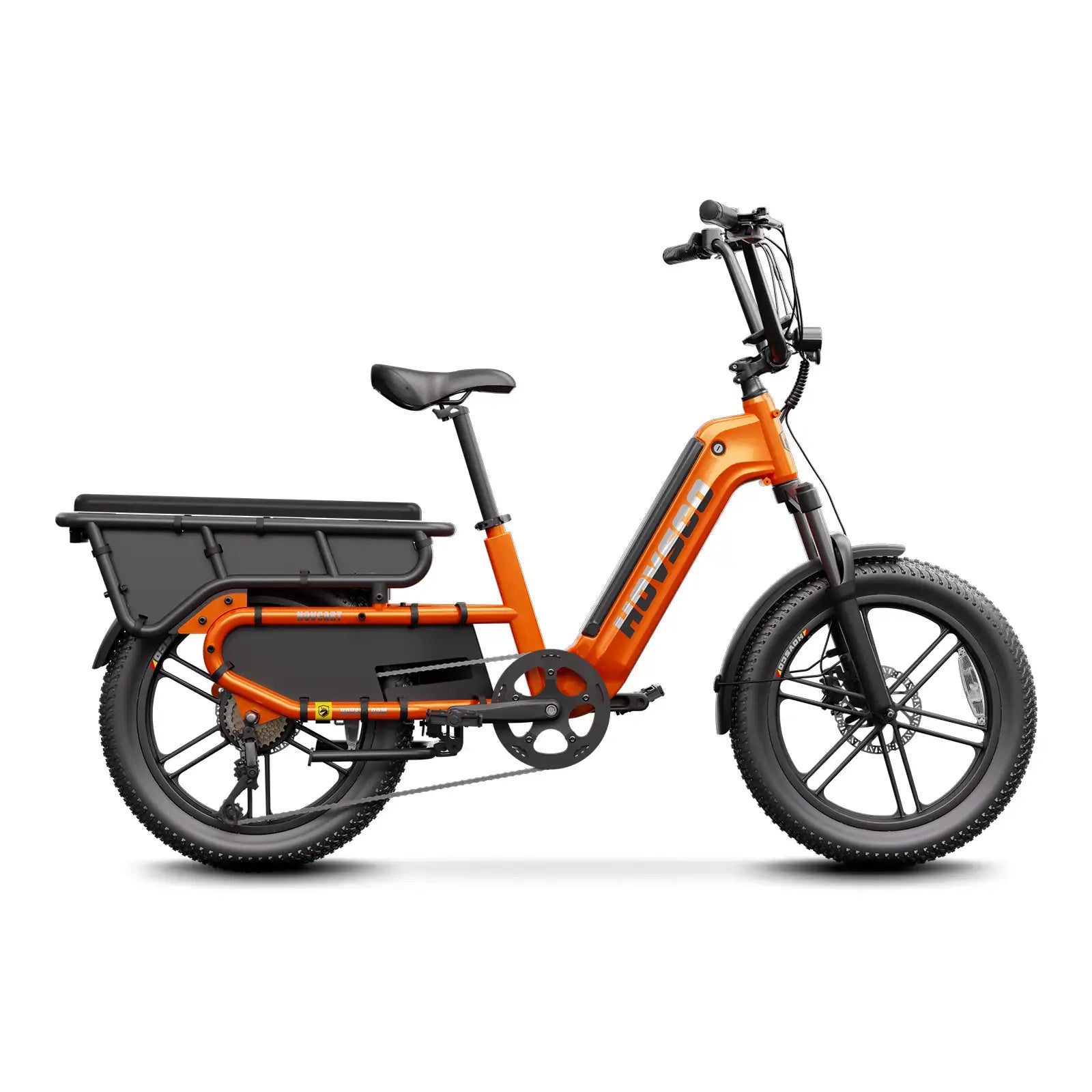
A standard e-bike is usually better when your groceries fit into panniers and you value lighter weight, easier storage, and everyday maneuverability. A utility-oriented e-bike becomes worthwhile when bulky loads are frequent, not merely possible once in a while.
This distinction protects shoppers from a common mismatch. More hauling capability can add wheelbase, bike weight, accessory cost, and storage difficulty. Those compromises are sensible only if your errands repeatedly demand them.
Choose a standard e-bike with accessories when you typically buy a few bags at a time, carry the bike up stairs, park in a compact apartment space, or want a familiar ride feel. Choose a more load-focused configuration when your normal shop includes bulky staples, multiple bags, or frequent stops that exceed ordinary pannier volume.
Do not choose by category labels alone. “Cargo” is a broad vehicle term that belongs on a dedicated category page; grocery buyers should instead assess their specific bag volume, load frequency, terrain, and home storage. For ordinary errands, the most capable solution is often the smallest system that remains stable and safe.
Pack heavy items low and balanced, secure every open container, and lock the bike through a fixed object before going inside. Plan for the moment after checkout: your cargo should be stable enough to ride home without stopping to catch a slipping bag or protect fragile food.
Use reusable bags with stiff bottoms or pannier inserts. Thin shopping bags stretch under weight, allow bottles to tip, and can catch on spokes if they are tied to the wrong place. Insulated liners help with frozen food, but do not turn a warm bike ride into long-term cold storage—shop chilled and frozen items last.
At the store, park where the bike is visible and does not block pedestrian access. Lock the frame to an immovable rack; secure a removable battery or take it with you when appropriate. A high-quality lock is part of grocery convenience because a fast errand should not become a costly interruption.
Before departure, perform a 20-second check:
Both panniers fully latched.
Cargo net tight and clear of wheels.
Kickstand fully raised.
Tires visibly firm.
Lights on if conditions are dim.
No bag handle near the chain, cassette, or brake rotor.
Yes—well-matched accessories can transform a normal e-bike into an efficient grocery tool without adding unnecessary bulk. Start with panniers and a secure rack, then add a basket, crate, rain cover, insulated liner, or mirror only when a specific errand problem justifies it.
The best accessories solve a repeated friction point. If bread gets crushed, use a structured top bag. If drinks slide around, use dividers or a crate liner. If you routinely shop after work, prioritize lights, reflective bag panels, and weather protection before adding more storage volume.
“For grocery use, we assess the complete load path—not just the advertised rack number. Grocery weight passes from the bag to the rack, from rack mounts into the frame, then through tires and brakes to the road. A quiet, stable ride comes from secure mounting, low load placement, correct tire pressure, and cargo that cannot shift. At HOVSCO, the practical question is always: can the rider stop, turn, park, and unload with the same confidence after shopping as before it?”
HOVSCO has grown around the belief that e-bikes should support active, useful daily riding. That means choosing practical equipment for the actual errand, maintaining it carefully, and enjoying the ride rather than forcing a one-size-fits-all hauling setup.
The smartest purchase matches your normal grocery load, route, storage space, and handling confidence before comparing headline motor power or maximum payload. Test the bike with realistic weight, verify all limits, and budget for secure carrying accessories, a lock, and ongoing maintenance.
Use this electric bike for grocery shopping buying guide checklist before purchase:
Measure the grocery bags or totes you normally bring home.
Add your body weight, expected cargo, and accessories against the bike’s stated system limit.
Confirm the rack’s own weight rating and accessory compatibility.
Test slow turns, starts, braking, and mounting with a representative load.
Check whether the bike fits through your door, elevator, gate, or storage area.
Evaluate route hills, pavement quality, traffic, and all-weather needs.
Confirm battery charging location and safe storage routine.
Include a lock, cargo net, rain protection, and panniers in the real budget.
The best result is rarely the biggest platform or the highest power specification. It is a well-fitted e-bike that carries your regular shop securely, feels predictable at walking speed, and is easy enough to use that you genuinely choose it for errands.
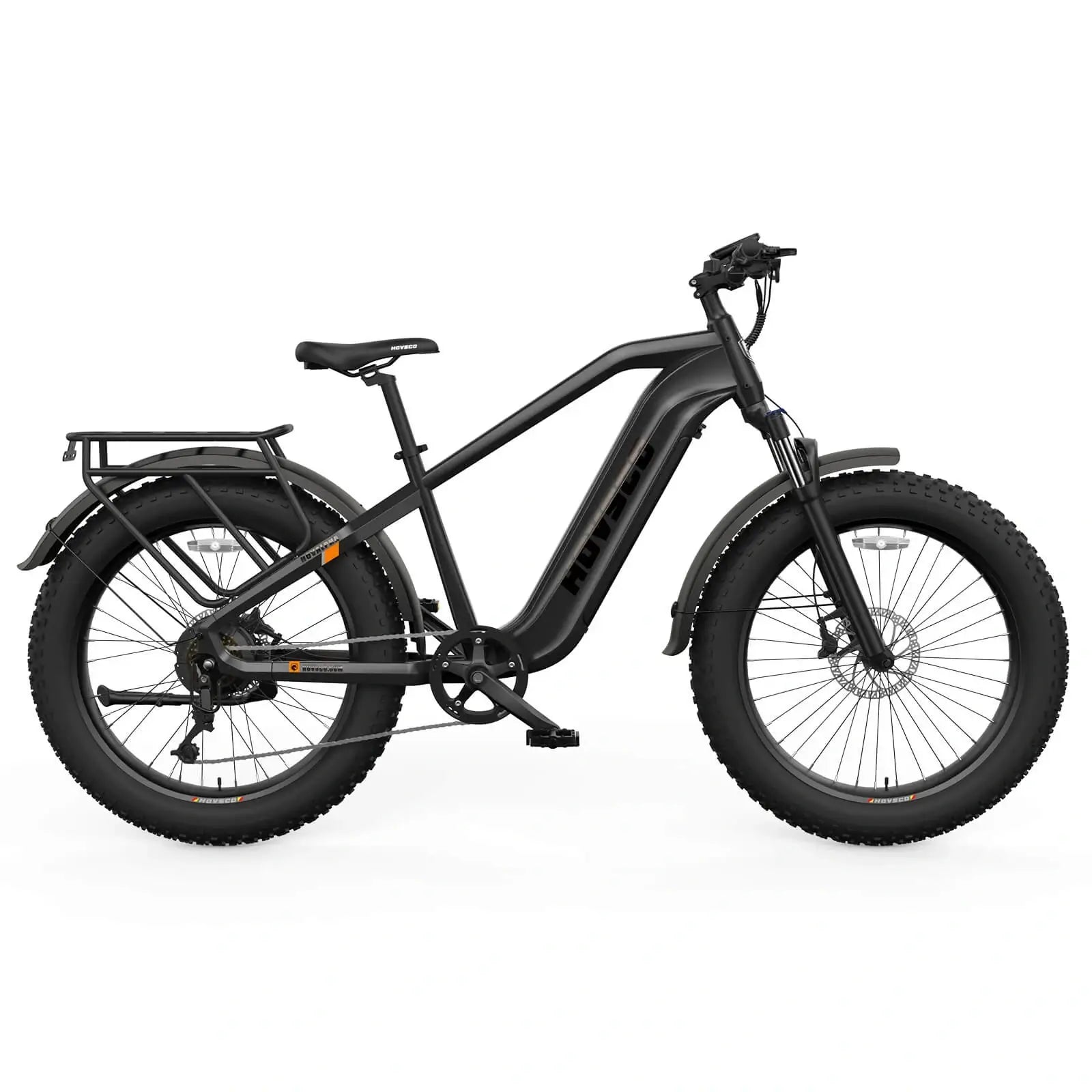
For many shoppers, HOVSCO and similar everyday e-bike options become more useful when paired with the right rack and pannier system—not when overloaded beyond their intended role. Build your setup around repeatable grocery habits, keep dense loads low, and make every return trip calm, secure, and enjoyable.
Can I carry groceries in a backpack on an e-bike?
You can for very light purchases, but panniers are usually safer and more comfortable for heavier loads. A backpack raises the weight on your body, increases fatigue, and can make you less stable during sudden stops.
How much grocery weight can rear panniers handle?
It depends on the pannier, rack, and complete bike ratings. Check all three limits, use the lowest applicable number, and divide weight evenly between left and right sides.
Are front baskets safe for grocery shopping?
Yes, for lighter and well-secured loads. A frame-mounted basket generally feels more stable than a handlebar-mounted basket, especially on uneven roads or during slower turns.
Should I use maximum pedal assist with groceries?
Not automatically. Start with moderate assistance for smoother control, then increase support for hills, headwinds, or heavier loads. Sudden high assistance can make starts feel abrupt when the bike is loaded.
Share:
How Do You Choose a Long-Range Electric Scooter?
How Do You Choose a Long-Range Moped E-Bike?