




![[ New Arrival ] Porto Max Electric Scooter For Commute & Grocery Shopping - HOVSCO](http://www.hovsco.com/cdn/shop/files/PotroMax-3.jpg?v=1706927007&width=1200)
- by SteveJames
How Do You Choose a Long-Range Electric Scooter?
- by SteveJames
E-Bikes
Accessories
 Free Shipping
 15-Day Returns
 2-Year Warranty
Free Shipping
15-Day Returns
2-Year Warranty
2-Year Warranty
Free Shipping
15-Day Returns
2-Year Warranty
Choose a long-range electric scooter by matching its official range to your actual round-trip distance, then adding a meaningful reserve for hills, rider weight, wind, cargo, and battery aging. Compare battery watt-hours, charging time, total weight, tire size, brakes, and service support—not just the largest mileage claim on the product page.
A practical long-range scooter should cover your full daily route with at least 25–35% battery remaining. For a 20-mile round trip, do not buy around a 20-mile claim; target an official 30-mile-class scooter and plan your ride around realistic conditions.
The first rule of how to choose long range electric scooter is to measure the job before comparing products. Use your map app to calculate your one-way commute, return distance, usual detours, elevation changes, and any charging opportunities at work or school.
A 30-mile official range is not a guarantee that every rider will travel 30 miles every day. It is a maximum obtained under favorable test conditions. For a rider covering 10 miles each way, a scooter rated for around 30 miles is typically a more sensible starting point than a model with little or no range reserve.
The goal is not to finish every ride with a flashing low-battery icon. Deep discharges add stress to a lithium-ion battery, while arriving home with reserve capacity gives you flexibility when weather, traffic, or a forgotten errand changes the plan.
For riders who need a practical starting point, explore HOVSCO’s long-range electric scooter collection by filtering for range, rider load, scooter weight, and charging routine—not appearance alone.
Treat an official range as a controlled maximum, then convert it into a personal planning range. Start by reserving 20–35% for ordinary urban riding and more if you are near the maximum rider load, ride hills, or regularly use full throttle.
Official range figures are useful because they establish a benchmark, but they cannot include every real-world variable. Battery performance is tested against controlled load, temperature, tire pressure, speed mode, and terrain. Your route is less controlled, so your usable range will vary.
A better buying question is: “What energy reserve will this scooter have after my normal day?” To answer it, look beyond miles and inspect battery watt-hours.
Watt-hours are calculated as:
For example, a 36V, 10.4Ah battery contains 374.4Wh. This number is more useful than a vague “large battery” claim because it shows how much energy the scooter stores and makes comparisons between models easier.
In smooth, low-speed riding, a commuter scooter may use roughly 11–13Wh per mile. In stop-start traffic, with hills, heavier loads, headwinds, or fast acceleration, consumption rises. That is why two riders can report very different distance results from the same scooter.
Rider weight, steep grades, repeated acceleration, cold weather, headwinds, low tire pressure, and fast riding reduce range. The largest losses usually come from sustained hills and high-speed throttle use because the motor must draw much more current than it does while cruising steadily.
Real-world range is best understood as energy consumption rather than luck. Every acceleration asks the battery for a burst of current. Every hill turns electrical energy into elevation. Every underinflated pneumatic tire adds rolling resistance and makes the motor work harder.
Use this planning chart when converting an official range into an everyday target:
Do not mistake top speed for efficient speed. Riding at the highest setting can shorten travel distance because aerodynamic drag rises as speed increases. A moderate, steady pace is generally the most battery-friendly way to commute.
Before every long ride, check tire pressure when the tires are cold. This simple maintenance step reduces rolling resistance, improves handling, and helps protect both tire and rim from pothole damage.
Battery watt-hours, voltage, cell protection, charging protocol, and warranty matter more than a headline range number. Choose a battery sized for your route with reserve capacity, and use only the supplied or manufacturer-approved charger to protect the battery-management system.
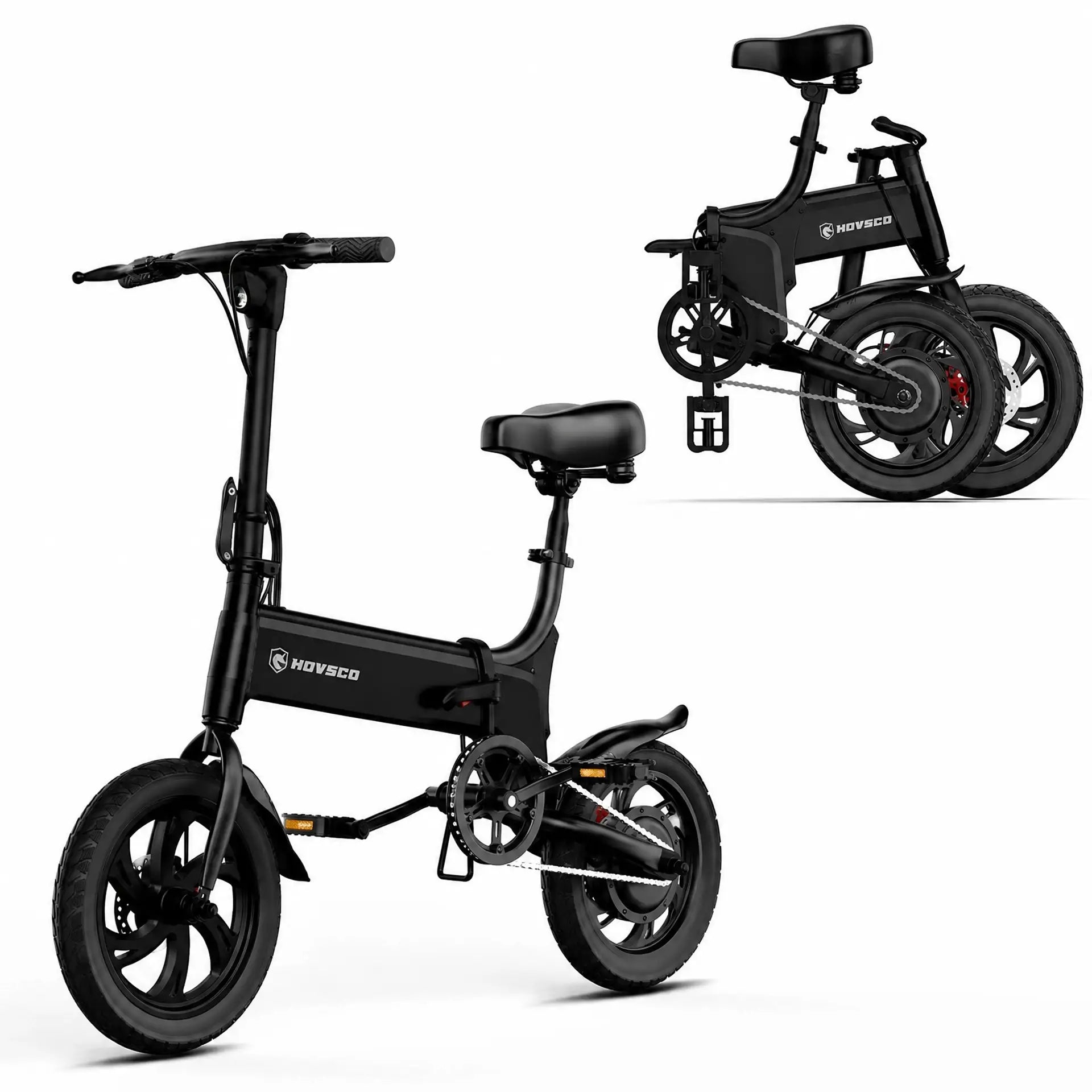
A 30-mile-class product should disclose its battery details clearly. Porto Max uses a 36V, 10.4Ah, 374.4Wh internal lithium-ion battery and is designed around a claimed range up to 35 miles with an approximate six-hour charge time.
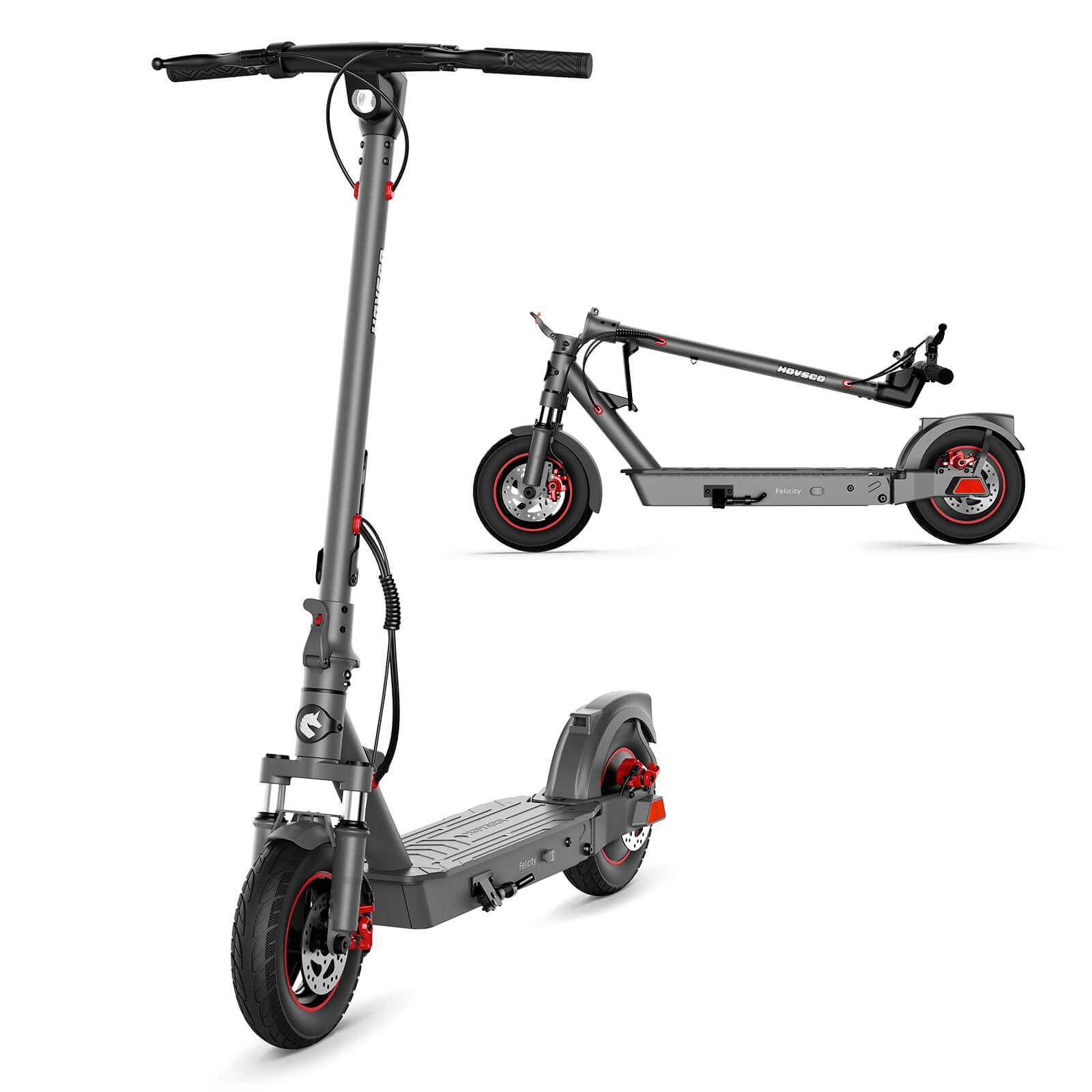
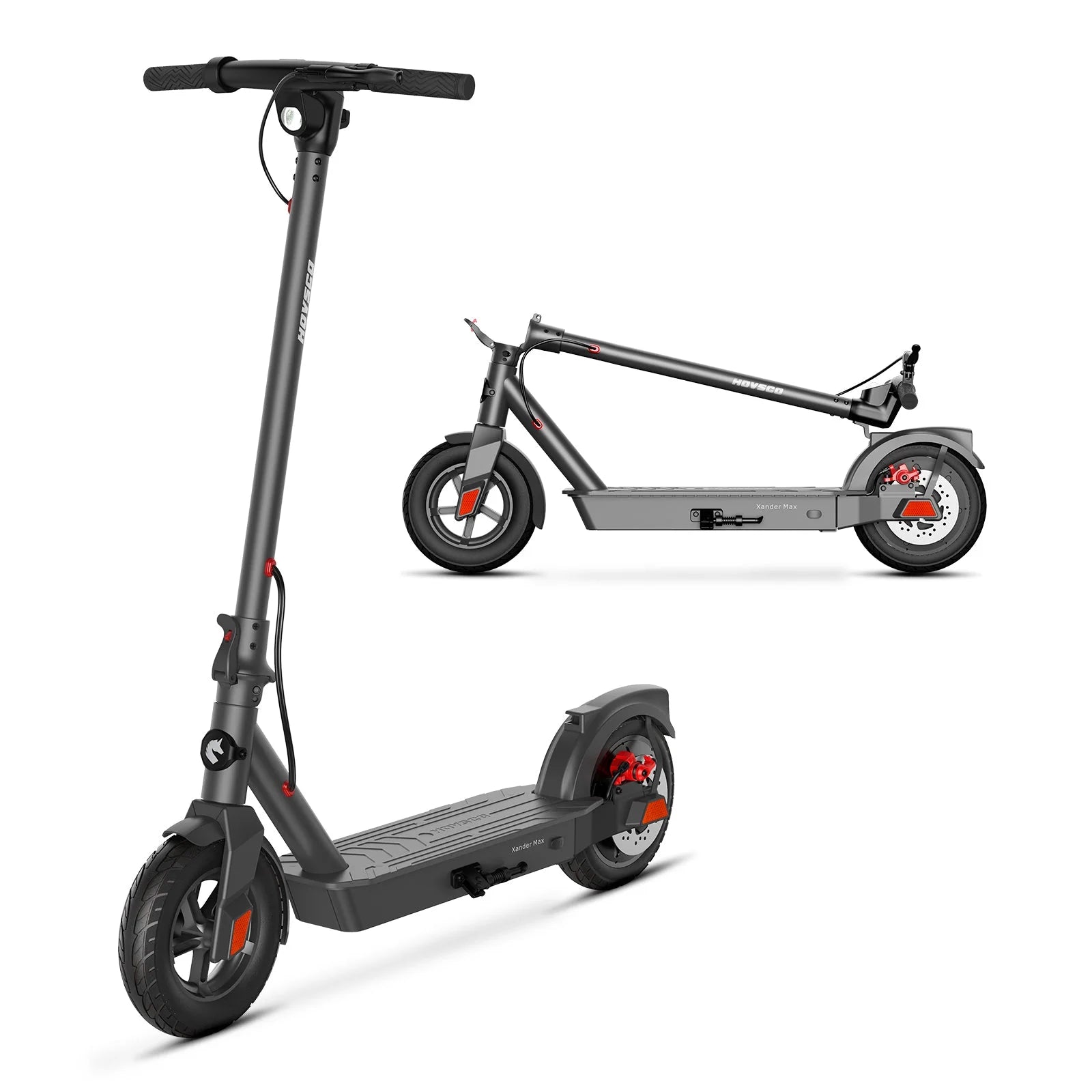
Felicity and Xander Max are designed for 30-mile-class use and use comparable 36V, 10.4Ah battery capacity. Their similar energy storage means your route, rider weight, grade, riding style, and portability needs should guide the final choice.
When examining a product page, verify these specifications:
Battery voltage and amp-hour rating
Total watt-hour capacity
Published charging duration
Internal or removable battery design
Charger specifications and replacement availability
Battery warranty coverage
Battery-management protection against overcharge, over-discharge, and overheating
Avoid storing a battery completely empty. If you will not ride for several weeks, store it in a dry, temperate place with a partial charge and follow the manufacturer’s storage guidance. Heat is especially damaging, so never leave a charging scooter in direct sun, a hot vehicle, or near flammable material.
Choose a scooter weight you can safely lift, turn, fold, and carry on your worst day—not just in a showroom. A 35–43-pound scooter can be manageable for ground-floor storage but awkward on stairs, buses, crowded trains, or tight apartment hallways.
Weight is the quiet trade-off behind long range. More battery capacity, larger tires, stronger frames, seats, suspension, and braking hardware all add pounds. A heavier scooter can feel planted at speed, but portability may become the deciding factor.
A useful real-world test is to simulate your actual handoff. Fold the scooter, lift it from floor height, carry it through a doorway, turn on a landing, and place it in your vehicle or storage area. If that sequence feels unsafe or exhausting, the product is too heavy for your routine regardless of its range claim.
Porto Max is built for a more substantial seated commuting setup, while Felicity emphasizes suspension comfort and Xander Max prioritizes a lighter folding format. That distinction matters every time you encounter stairs, elevators, trunk loading, or storage constraints.
A seated, cargo-oriented scooter may be the better fit for a flat, ground-level commute with grocery runs. A lighter folding design generally makes more sense for riders who combine scooting with trains, elevators, or frequent vehicle transport.
Prioritize tires, brakes, suspension, lighting, deck traction, and water resistance because these parts determine whether the scooter remains safe and useful after the battery is charged. Range only has value if you can ride confidently in normal urban conditions.
For daily 30-mile-class use, 10-inch or larger pneumatic tires deserve serious attention. Larger wheels roll over pavement seams and cracks more smoothly than tiny hard tires, and pneumatic construction provides useful vibration isolation. Maintain them correctly because a damaged or underinflated tire can end a commute early.
Braking deserves more attention than top speed. A disc brake paired with electronic braking provides layered control, but riders still need to learn progressive braking: shift weight rearward, squeeze smoothly, and leave extra room on wet roads.
Porto Max, Felicity, and Xander Max use commuter-focused hardware intended to balance stopping confidence, ride stability, and daily practicality. Before purchasing, confirm the current brake configuration, tire type, lighting setup, water-resistance rating, and rider-load limit for the exact product version you intend to buy.
Water resistance is not permission to submerge, pressure-wash, or charge a wet scooter. Wipe the scooter dry after wet riding, inspect the charging port, and allow the electrical connections to air-dry before plugging in the charger.
A scooter with enough range but an inconvenient charging window can still fail as transportation. Select a battery and charger combination that restores the energy you use during the time the scooter naturally sits parked, usually overnight or during a full work shift.
A six-hour charging window works well for many commuters because it fits an evening-to-morning routine. The important distinction is between a complete recharge and a practical top-up. If your daily ride uses only part of the battery, you may not need a full recharge every night.
Set up a safe charging location with a stable, nonflammable surface, ventilation, a protected outlet, a dry charging port, and enough space that the cable cannot become a trip hazard. Do not place the scooter where it blocks an exit or emergency path.
Never rely on a public outlet without permission, and do not use damaged chargers or frayed cables. A long-range scooter purchase is also a home charging and storage decision, so solve that problem before the scooter arrives.
Yes. Match Porto Max to riders prioritizing a seated, larger-wheel commuting setup; choose Felicity when dual suspension and a stronger motor suit rougher pavement; consider Xander Max when lower carrying weight and folding convenience matter most.
The right choice is not automatically the model with the highest number beside “range.” These scooters serve similar long-haul commuting needs, but their physical layouts create different ownership experiences.
“I advise riders to choose the range they can use repeatedly, not the largest number they can afford. A 30-mile-class scooter becomes dependable when the rider returns with reserve capacity, maintains tire pressure, and charges in a safe, dry location. The engineering trade-off is simple: larger batteries increase freedom, but also weight and charge time. Select the machine that fits your route, storage space, and lifting ability every day.”
HOVSCO understands that the best specification sheet is one that reflects the rider’s actual route, not an idealized weekend ride. Riders should balance battery capacity against storage, lifting ability, charging habits, and the road surfaces they face most often.
Choose more than 30 miles of claimed range when your normal round trip exceeds about 18–20 miles, when you cannot reliably charge at work, or when cold weather, hills, cargo, and a higher rider load are regular parts of your route.
The buying logic behind how to choose long range electric scooter changes when your route has no charging backup. A 30-mile claim can be an excellent fit for a 12-mile round trip, but it becomes a narrow margin for a 24-mile commute in hilly terrain.
Move to a larger battery category if you regularly travel more than 20 miles daily, encounter several long grades, carry tools or groceries, ride in cold weather, or want more capacity reserve as the battery ages.
Do not oversize without considering storage and portability. A very heavy scooter can create a new problem if you cannot lift it safely. The best long-range purchase balances usable energy, realistic range, and everyday handling.
Before buying, calculate your round-trip mileage, reduce the advertised range for your conditions, confirm your lifting and storage plan, inspect safety hardware, and verify charging and service support. Buy only when the scooter still fits after every one of those checks.
Use this final decision sequence:
Measure your normal and longest weekly route.
Add 25–35% range reserve.
Compare battery watt-hours, not mileage claims alone.
Check the rider-load limit with clothing and cargo included.
Test or realistically simulate carrying weight and folded size.
Confirm brake type, tire size, lights, and water-resistance rating.
Plan a dry, safe charging location before delivery.
Recheck local riding, helmet, speed, and sidewalk rules.
This is the durable answer to how to choose long range electric scooter: buy for the most demanding normal day, then ride with a reserve. HOVSCO riders should also review current product documentation and local regulations before making a final purchase decision.
Is a 30-mile electric scooter enough for commuting?
It is often enough for commutes up to roughly 18–20 miles round trip when conditions are moderate and you maintain a battery reserve. Longer, hillier, colder, or heavier-load routes need more advertised capacity.
Does a heavier rider reduce scooter range?
Yes. More rider and cargo mass requires more energy during acceleration and climbing. Use the listed payload limit as a hard boundary and choose extra range reserve if you are close to it.
Can I ride an IPX5 scooter in rain?
IPX5 indicates resistance to water exposure, not waterproof operation. Avoid deep puddles and immersion, never pressure-wash electrical areas, and do not charge the scooter until the charging port is dry.
Should I charge my scooter after every ride?
Follow the manufacturer’s instructions. Charging after normal use is convenient for many riders, but avoid leaving a depleted battery unused for long periods and use only an approved charger.
Which is more important: motor wattage or battery watt-hours?
For distance, battery watt-hours are the more direct measure of stored energy. Motor power matters for acceleration and hills, but strong acceleration can also consume battery energy faster.
A long-range scooter should make your routine easier, not turn every ride into a range calculation. Choose enough official mileage for your full route plus reserve, validate the battery in watt-hours, make sure the weight fits your daily handling, and build charging and maintenance into your schedule. That approach turns a 30-mile-class scooter from a promising specification into dependable transportation.
Share:
How to Choose a Long-Range Fat Tire Ebike?
Which E-Bike Is Best for Grocery Shopping?