



![[ New Arrival ] Porto Max Electric Scooter For Commute & Grocery Shopping - HOVSCO](http://www.hovsco.com/cdn/shop/files/PotroMax-3.jpg?v=1706927007&width=1200)
- by SteveJames
What's the Lightest E-Bike for a Short Rider?
- by SteveJames
E-Bikes
Accessories
 Free Shipping
 15-Day Returns
 2-Year Warranty
Free Shipping
15-Day Returns
2-Year Warranty
2-Year Warranty
Free Shipping
15-Day Returns
2-Year Warranty
For smaller riders, e-bike weight shows up in the moments nobody puts in the brochure: lifting the bike over a curb, steadying it at a red light, carrying it up a stairwell, or loading it into a car. Weight matters more the smaller you are, because it is a bigger fraction of your own body weight. We'll walk through where that weight comes from, what the published numbers actually tell you, and a five-minute parking-lot test that settles whether a bike feels manageable.
At a Glance
| Why weight matters | Lifting, stairs, stops, and parking-lot control |
| Rider vs bike weight | The same bike is a bigger percentage of a smaller rider's weight |
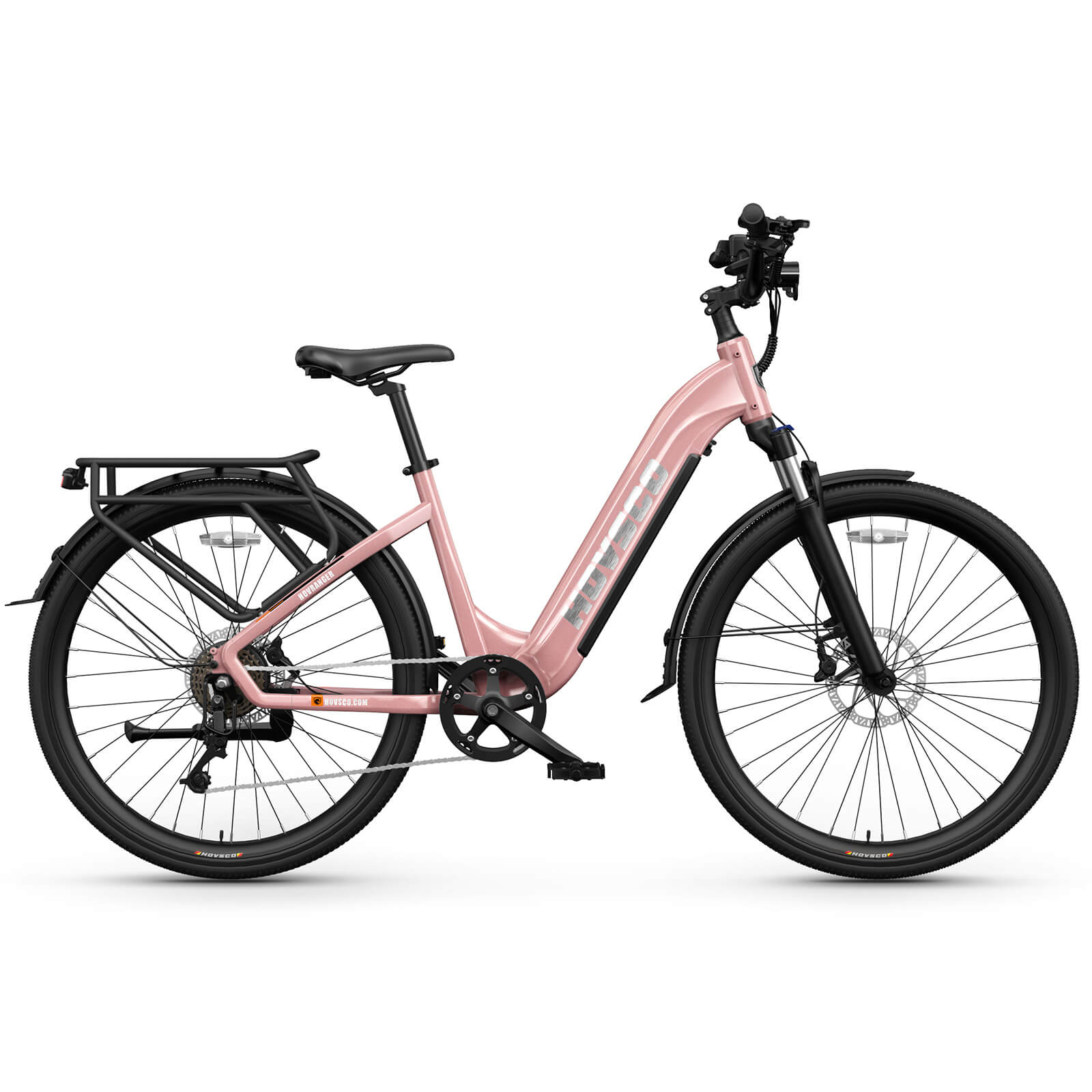
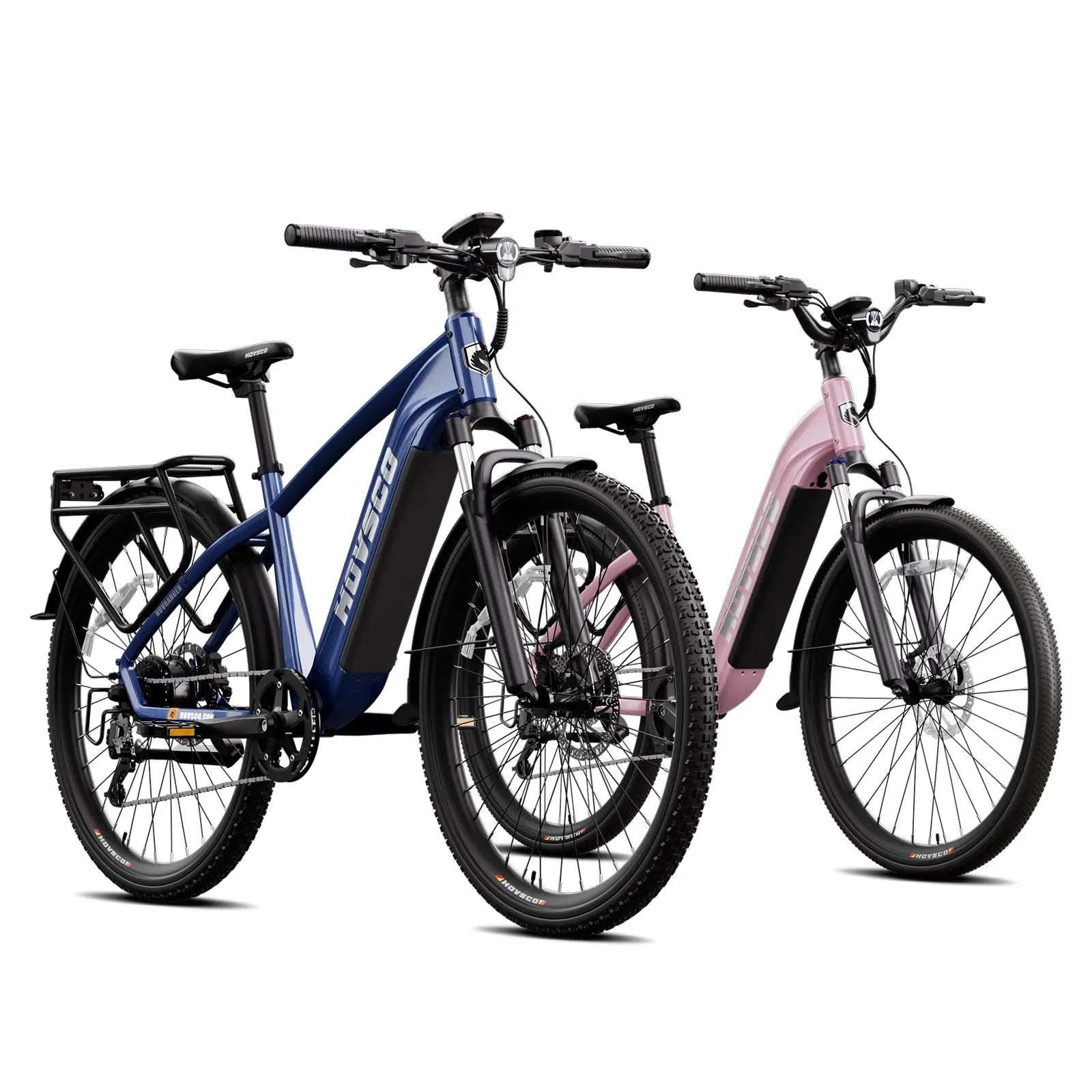
| Published example | HovRanger Step-Thru — 55.4 lb including battery (46.58 lb without) |
| The balance rule | Low standover and a low saddle compensate for a heavier bike at stops |
A 55 lb e-bike is a different object depending on who is holding it. For a 200 lb rider it is a manageable fraction of body weight; for a 120 lb rider it is nearly half. The physics show up exactly where confidence is built or lost: lifting the rear wheel over a curb, walking the bike up a step, and holding it steady while you wait for a light. None of these moments appear on a spec sheet, yet they decide whether a bike feels light or heavy in real life.
There is also the tipping fear. Smaller riders often describe the same worry: the bike leans, and they cannot hold it back. That fear is not really about weight alone — it is about control at zero speed, which is why this guide pairs weight with maneuverability rather than treating them as separate specs.
Compare the published bike weight to your own weight and your lifting routine. If the bike weighs more than you can comfortably lift, even briefly, the number matters regardless of how stable it feels while riding. The practical thresholds are personal, but the questions are universal:
If the answer to any of these is "barely," look for a lighter model or plan around the battery being removed before lifting.
The table breaks the bike down by component so you know where the pounds are hiding.
| Component | What drives its weight | What to check |
|---|---|---|
| Battery | The single heaviest removable part on most e-bikes | Removable or internal? Ah capacity — bigger is heavier |
| Motor | Hub motors add weight to the wheel; mid-drives add it at the crank | Motor type and power rating |
| Frame | Material and size — aluminum is lighter than steel; reinforced cargo frames weigh more | Frame material and geometry |
| Wheels & tires | Fat tires and reinforced rims add meaningful weight | Tire size and rim construction |
| Accessories | Racks, fenders, suspension, and displays all add up | What is included vs optional |
We list only officially published weights, and we flag what is missing. In the HOVSCO lineup, the HovRanger Step-Thru is the model with a published figure; other models do not list weight yet, so we do not rank them on it.
| Model | Published weight | Rider range | Fit note |
|---|---|---|---|
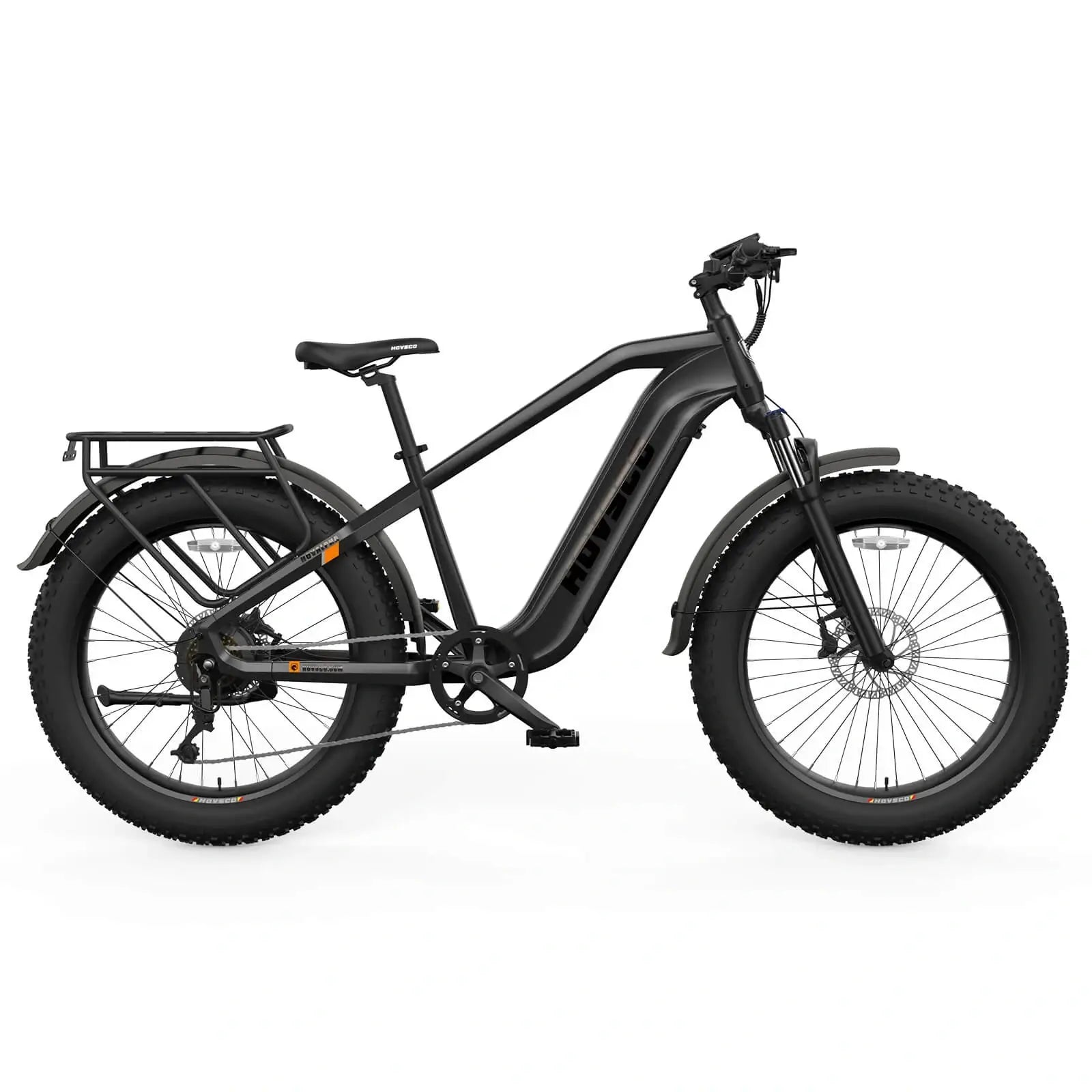
| HOVSCO HovRanger Step-Thru | 55.4 lb incl. battery (46.58 lb excl.) | 5'1"–6'7" | Removing the battery cuts ~9 lb for lifting — published figure from the product page |
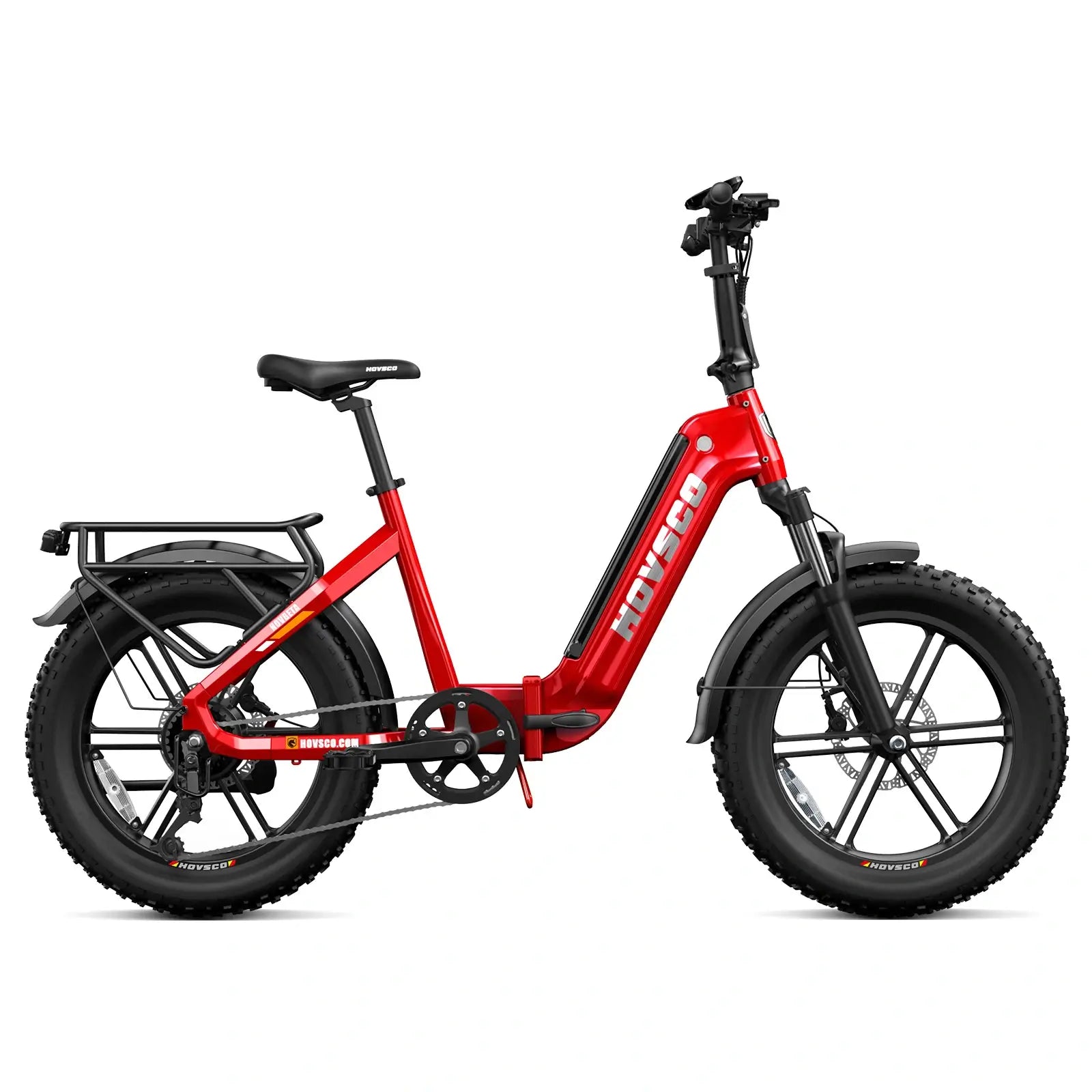
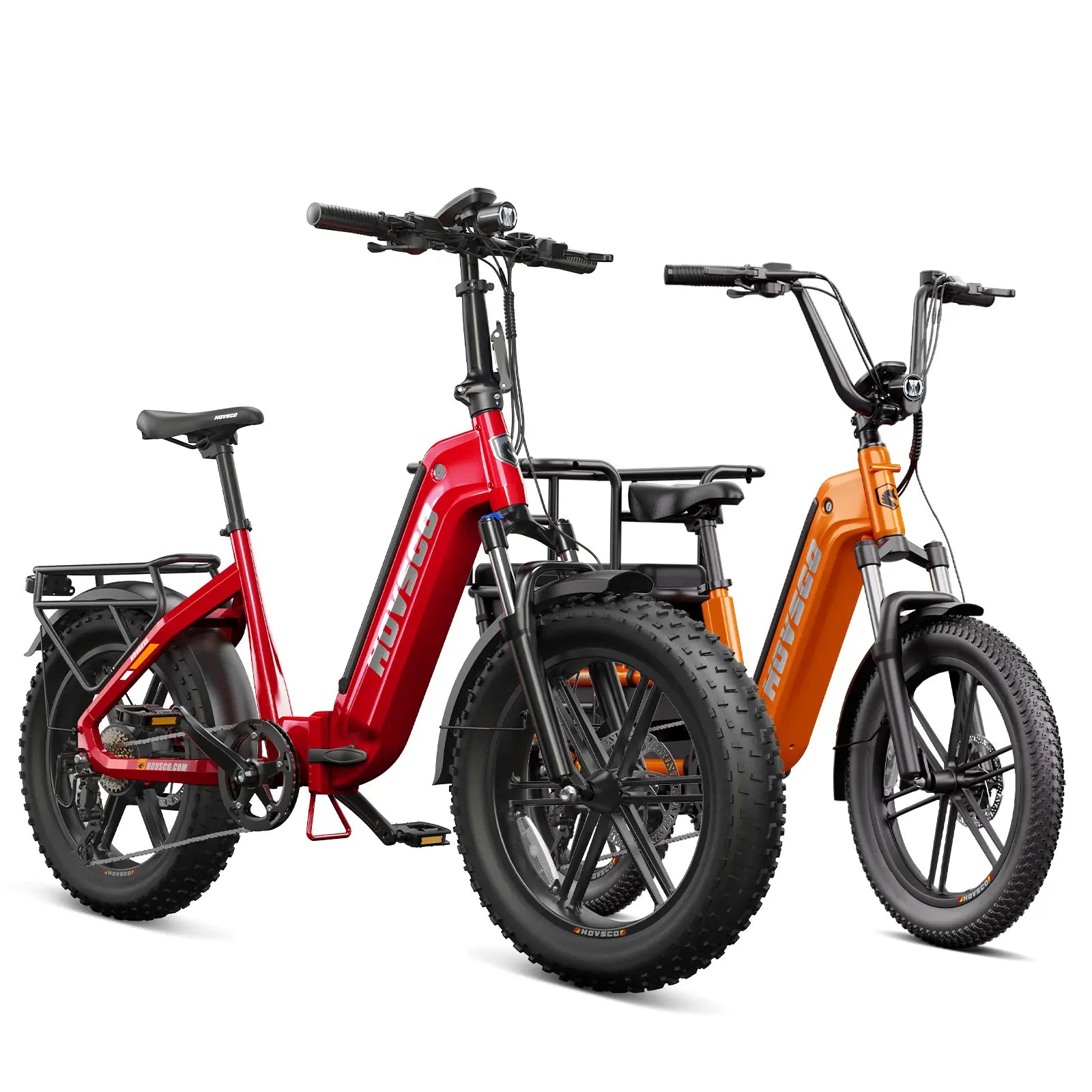
| HOVSCO HovBeta | Not published | 4'11"–6'3" | Lower fit numbers and a folding frame; weight unverified — check the live page |
| HOVSCO Sync Max 14 | Not published | Not published | Compact, but no fit or weight data to score |
These five moves cover every moment weight shows up off the road — and take about five minutes.
Weight is a trade-off, not a verdict. A heavier bike often carries a bigger battery for longer range, feels planted at speed, and can handle cargo that a featherweight cannot. If your routine never involves stairs or lifting, a heavier but more capable bike may be the smarter buy — especially when its standover is low and the saddle drops far enough to make stops easy. The rule is to choose based on where you lift and stop, not on the spec alone.
"Weight matters most at zero speed. A 40-pound difference feels enormous when you are lifting a bike up a stairwell and almost invisible once you are moving — that is why we think about weight alongside geometry for smaller riders." — HOVSCO Engineering & Content Team
For small riders, the published weight only matters when you connect it to your own routine. Check how the bike behaves at stops, how it lifts, and whether the battery comes off for carrying. The HovRanger Step-Thru's published 55.4 lb figure makes it a concrete reference point, and low-standover models like the HovBeta show how geometry can compensate for weight at the moments that matter.
1. What is the lightest electric bike for a short rider?
The lightest HOVSCO model is the Sync Max at 42.3 lb net, but it does not publish short-rider fit data. Among models with a published rider range that starts at 5'1" or lower, the HovRanger Step-Thru at 55.4 lb including battery is the lightest verifiable pick — so the honest answer depends on whether fit data matters more than the weight number.
2. How heavy is too heavy for a small rider?
There is no single number. Weight matters most where you lift or stop: stairwells, car trunks, and parking-lot maneuvering. If you cannot safely lift and steady the bike, it is too heavy for your routine regardless of the spec.
3. Does bike weight affect stability?
At speed, heavier bikes can feel stable; at a stop, lighter bikes are easier to control. A low standover and a low saddle do more for stop-and-go confidence than weight alone.
4. Are fat-tire e-bikes heavier?
Generally yes. Wider tires, heavier wheels, and reinforced rims add weight. Fat tires improve grip and comfort, so the trade-off can be worth it — but check the published weight before choosing.
5. Can I make my e-bike lighter?
Within reason. Removing the battery for lifting and carrying is the most practical change, and swapping heavy accessories or racks helps. Never remove safety-critical parts like brakes or lights.
Share:
What Does Charging a Business Fleet Require?
Sync Max vs HovRanger: Which HOVSCO E-Bike Is Lightest?