


![[ New Arrival ] Porto Max Electric Scooter For Commute & Grocery Shopping - HOVSCO](http://www.hovsco.com/cdn/shop/files/PotroMax-3.jpg?v=1706927007&width=1200)
- by SteveJames
What Should You Check Before Buying a Grocery E-Bike?
- by SteveJames
E-Bikes
Accessories
 Free Shipping
 15-Day Returns
 2-Year Warranty
Free Shipping
15-Day Returns
2-Year Warranty
2-Year Warranty
Free Shipping
15-Day Returns
2-Year Warranty
The best electric bike for grocery shopping safely carries your rider-and-cargo weight, fits your daily route, accepts practical bags or baskets, and has dependable brakes, tires, and battery support. Check rated payloads rather than marketing photos, test loaded handling, confirm local e-bike rules, and plan charging, storage, and maintenance before buying.
Choose an e-bike whose published total payload exceeds your body weight, clothing, lock, accessories, and the heaviest grocery load you realistically expect. Do not confuse a rear-rack rating with the bike’s total system-weight rating.
A grocery e-bike works best when its carrying system is designed as part of the bicycle—not as an afterthought. I have seen shoppers overload a sturdy-looking rack while ignoring the lower total payload limit of the frame, wheels, tires, and braking system. That is where unstable steering, broken spokes, and accelerated brake wear begin.
Start with a realistic loading calculation. A light weekly shop may be 20–35 lb, while a family trip with beverages, pantry goods, and produce can easily exceed 60 lb. Add your own weight, a lock, helmet, child seat if applicable, and installed accessories.
For many households, the best electric bike for grocery shopping is not necessarily the longest cargo bike. A compact utility e-bike with quality panniers may be easier to store, park, and maneuver while still handling several bags. Focus on stability, useful payload, hydraulic brakes, low-speed handling, and accessory capacity rather than motor output alone.
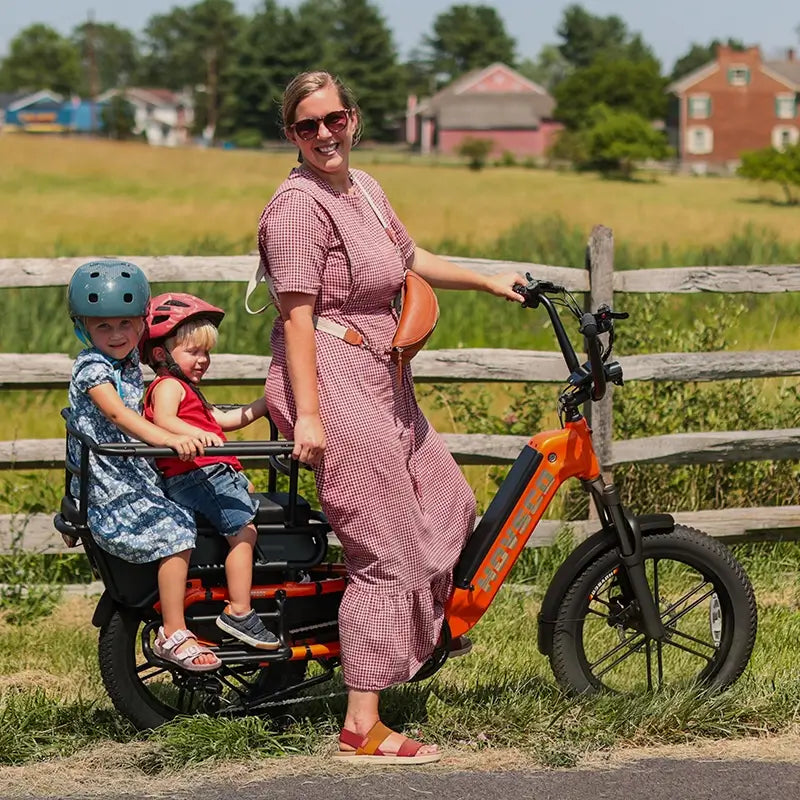
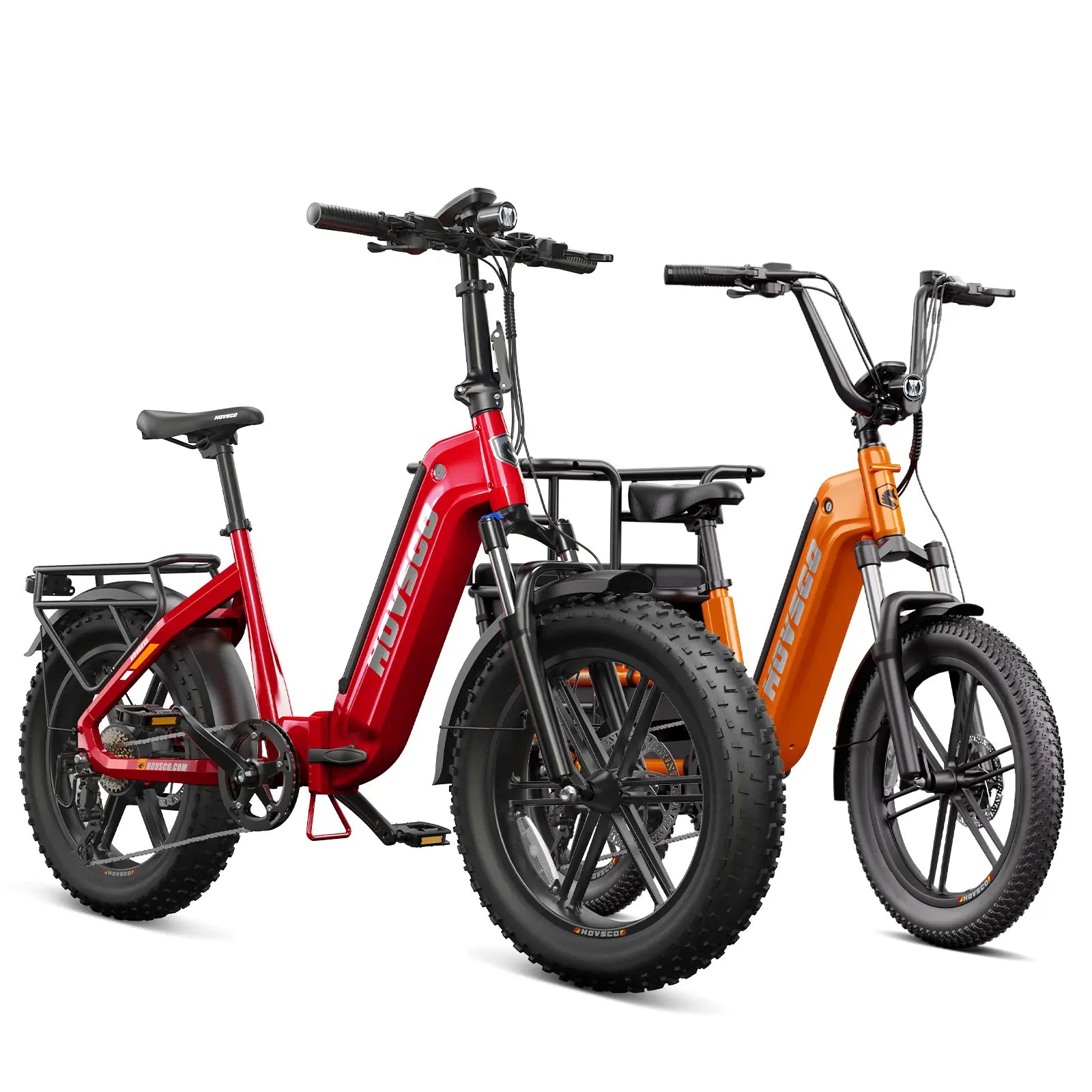
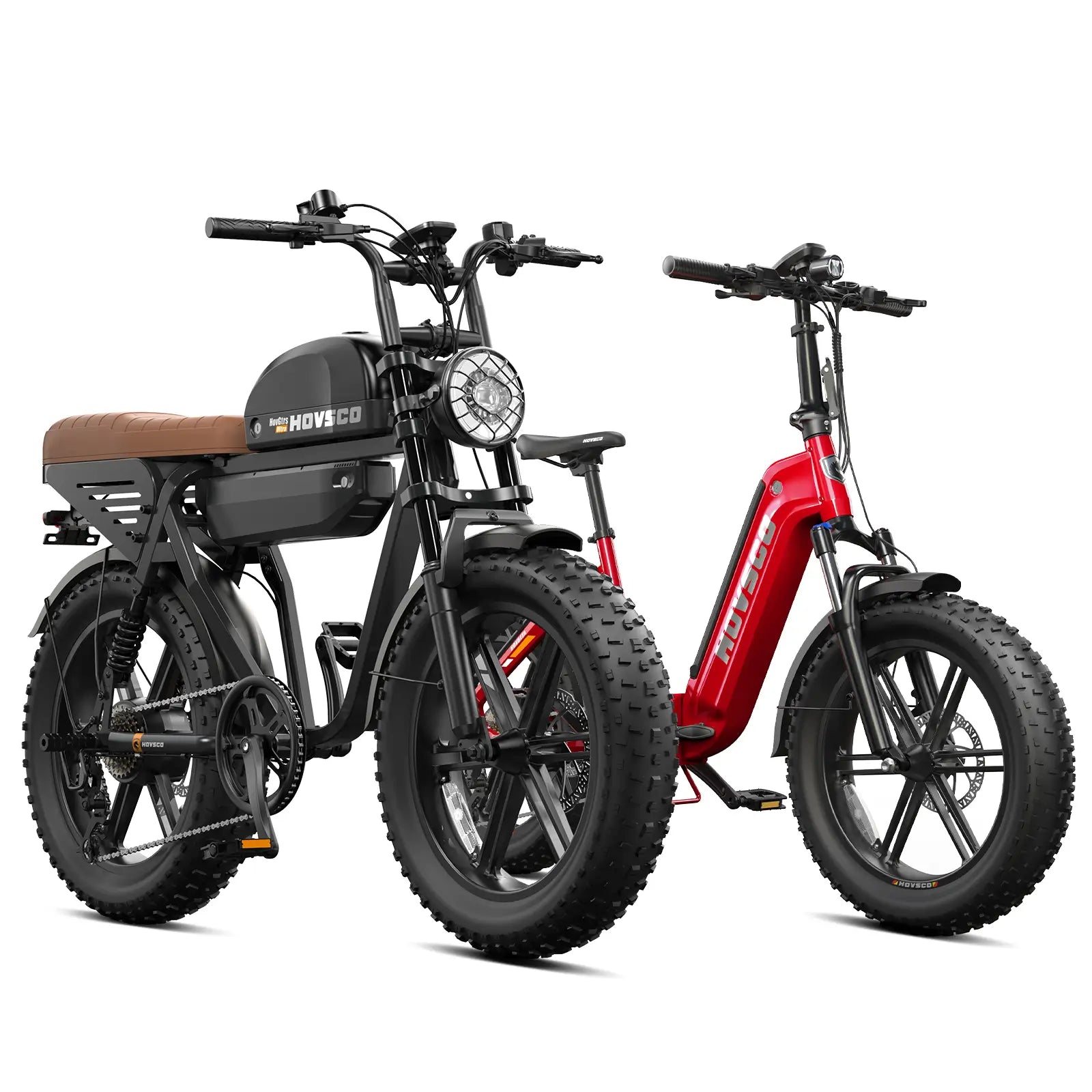
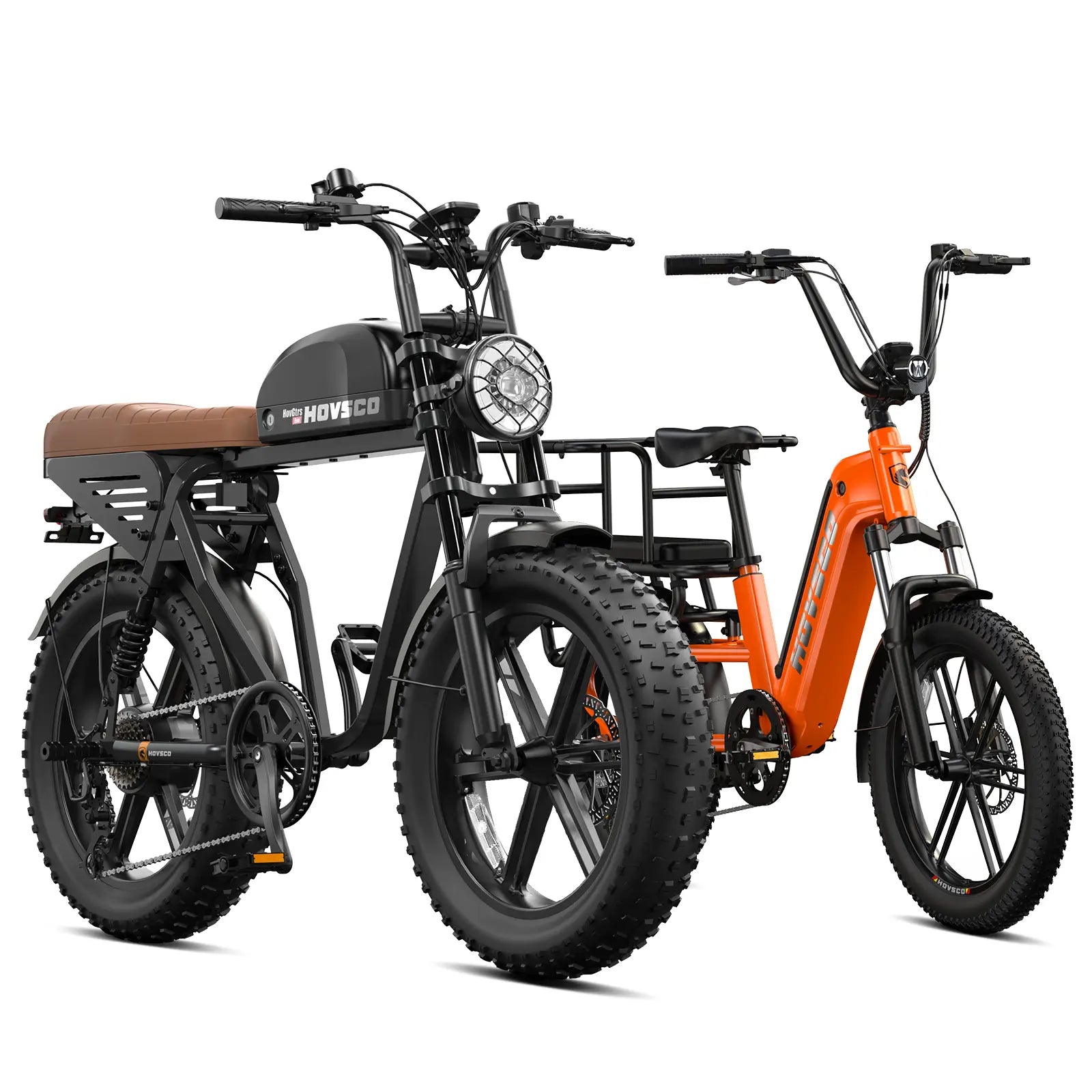
Select a standard utility e-bike for lighter trips, a compact cargo e-bike for frequent medium loads, or a long-tail or front-loader for large family hauling. The right layout depends on cargo volume, storage space, route conditions, and your confidence at low speed.
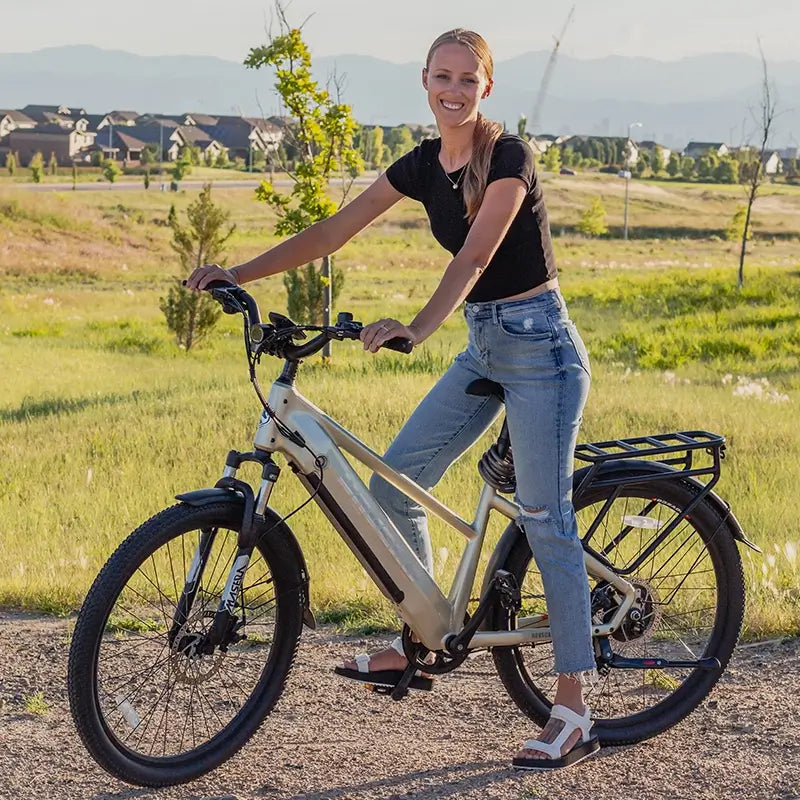
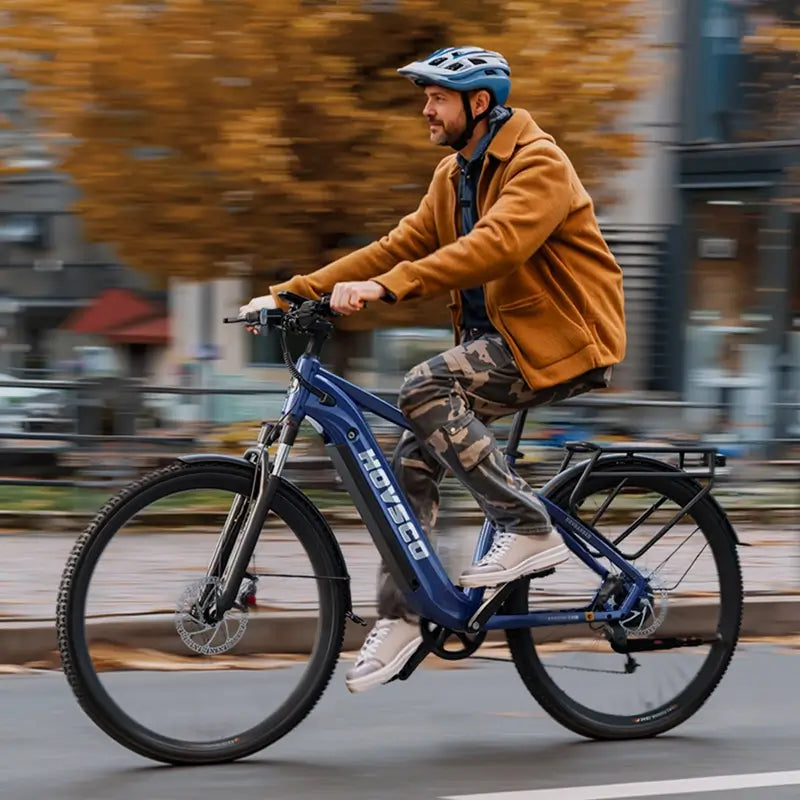
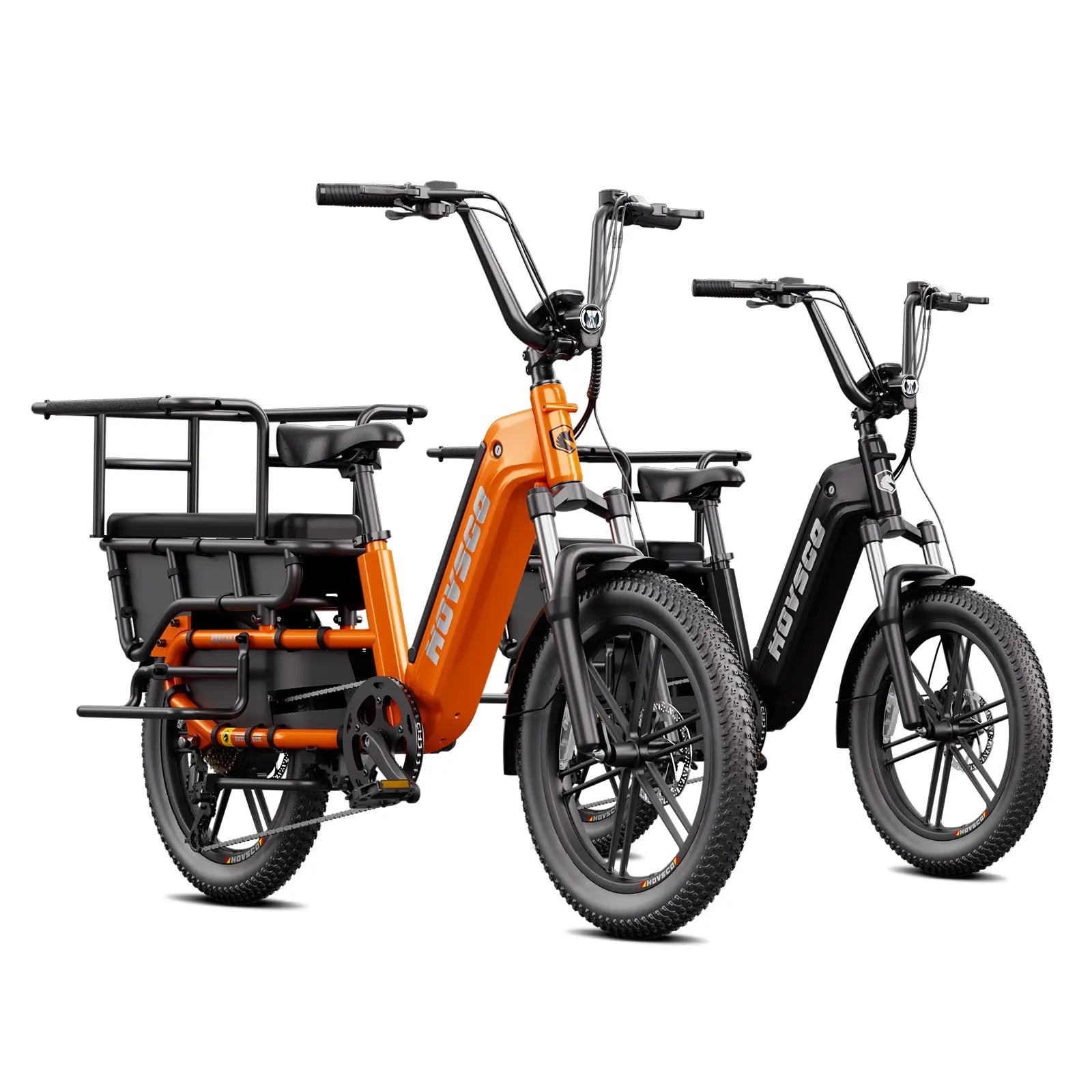
A conventional e-bike with a certified rear rack and panniers suits a rider who buys one or two bags at a time. It remains lighter, usually fits normal bike parking, and feels familiar on turns. The trade-off is limited bulky-item capacity.
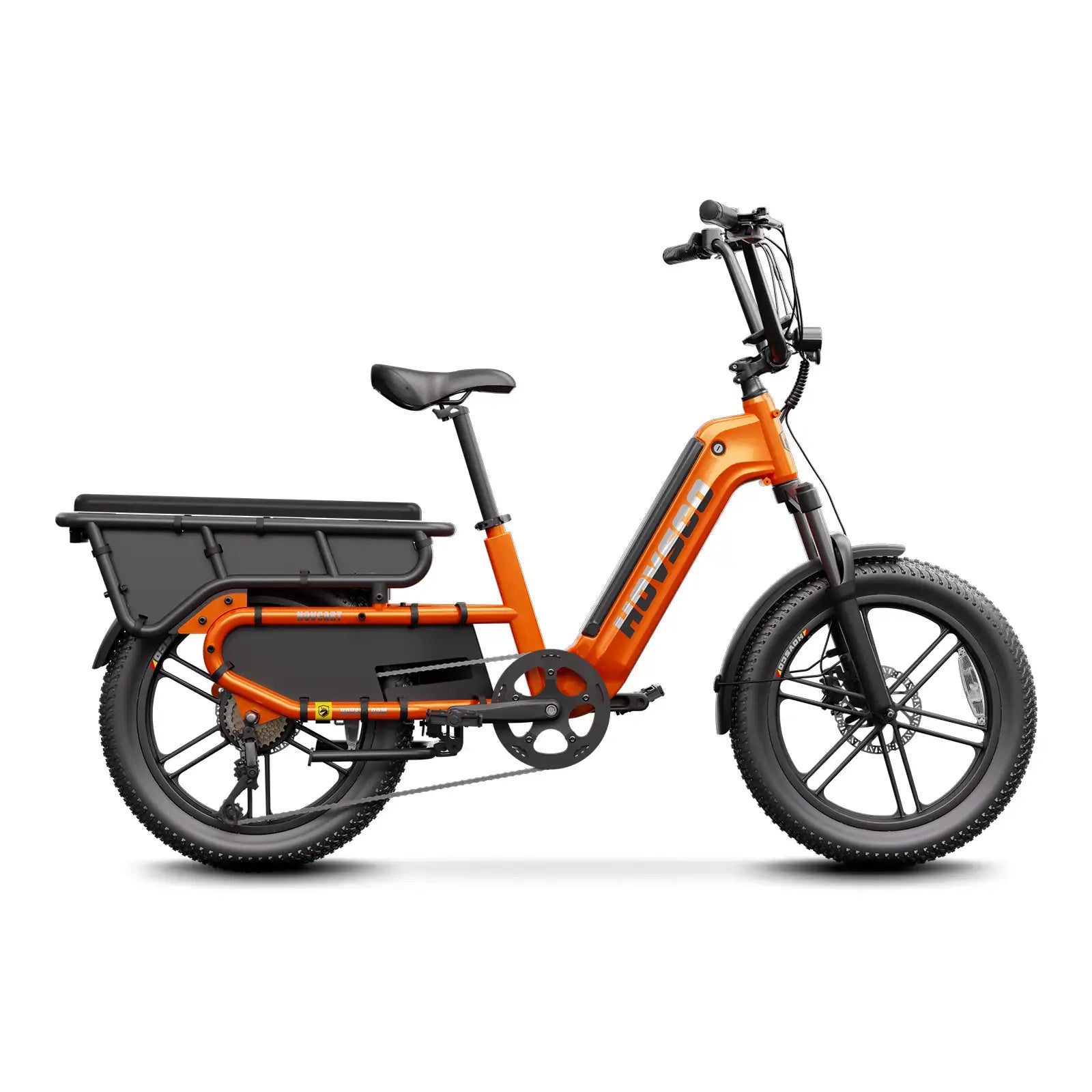
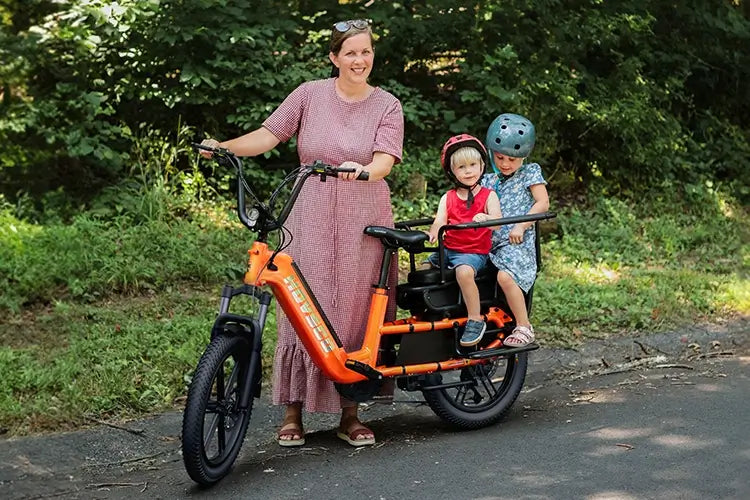
Compact cargo bikes use smaller wheels, a reinforced rear platform, and a longer wheelbase. This configuration can place cargo lower and closer to the bike’s centerline, helping the bike feel calmer when bags are loaded. A long-tail provides more carrying length, but it requires extra consideration in elevators, apartment storage, and bike racks.
Front-load cargo bikes offer excellent cargo visibility and can handle awkward loads, yet their footprint and steering behavior demand a proper test ride. When I evaluate a loaded bike, I do not simply ride it in a straight line. I start, stop, weave slowly, look over a shoulder, make a tight turn, and push it up a curb ramp. Those movements reveal whether the configuration truly fits daily errands.
HOVSCO shoppers should compare the intended rack and accessory setup with their own grocery pattern—not only compare battery size or advertised range. A cargo solution is only useful when you can load it quickly, secure it confidently, and ride it without changing your normal routine.
Choose motor assistance and battery capacity for your route’s hills, stops, wind, rider weight, and cargo—not for an optimistic maximum-range claim. A larger battery can add flexibility, but efficient riding and safe cargo placement remain equally important.
Stop-and-go shopping trips consume more energy than a smooth recreational ride. Every loaded acceleration asks the motor for extra torque, especially on hills. Battery range also changes with assist level, tire pressure, temperature, rider effort, payload, and headwind.
Instead of asking, “What range does it claim?” ask, “Can it complete my round trip with reserve under my worst normal conditions?” Build in a practical buffer so you are not returning home at the lowest battery level after an unexpected detour.
A hub-drive system can offer simple, strong assistance for flatter urban routes. A mid-drive can use the bike’s gears efficiently and may feel more natural on sustained hills, but it places greater load on the chain and drivetrain if the rider shifts poorly. Neither layout automatically wins; the road profile and maintenance habits decide the better match.
For a typical grocery route, prioritize smooth low-speed power delivery over headline wattage. Abrupt assistance can make a loaded bike lurch from a stop. Look for controllable pedal assist, predictable throttle behavior where permitted, and a display that clearly shows remaining battery status.
Use purpose-built panniers, baskets, cargo straps, and weather covers that stay within the bike’s approved load limits. Place dense items low and near the center of the bike, then distribute weight evenly from side to side.
A milk jug, canned food, and bottled drinks are mechanically different from bread or salad greens. Dense loads should sit at the bottom of panniers or low in a basket; soft items belong on top. Avoid hanging heavy bags from handlebars, because that changes steering response and can interfere with cables or the front wheel.
Useful grocery accessories include:
Waterproof panniers with rigid lower panels and secure hooks.
A front basket for light, quick-access items.
A cargo net or cam-buckle strap rated for bicycle use.
Insulated bags for frozen food and temperature-sensitive items.
A kickstand wide enough to support loading without the bike leaning excessively.
A frame-mounted lock or secure locking plan for short store visits.
The kickstand deserves more attention than it gets. On a loaded e-bike, a narrow single-leg stand can make unloading awkward or cause the bike to tip on uneven pavement. Test the bike while it is parked and loaded, not just while it is empty on a showroom floor.
HOVSCO can be part of a practical grocery setup when the rack, bags, and mounting hardware are matched to the bike’s stated limits. Confirm that an accessory’s attachment method does not block lights, reflectors, battery removal, or rear-wheel service.
Loaded e-bikes need strong braking, correctly inflated tires, and well-maintained wheels because cargo increases momentum and stress. Hydraulic disc brakes, appropriate tire load ratings, and regular spoke inspections can make loaded errands safer and more predictable.
Extra cargo does not merely make a bike heavier; it increases the energy the brakes must control. Braking distance also rises when traction is poor, so a grocery bike needs predictable lever feel and sufficient pad life. If a test bike feels vague or requires hard lever force while unloaded, it will not improve with bags attached.
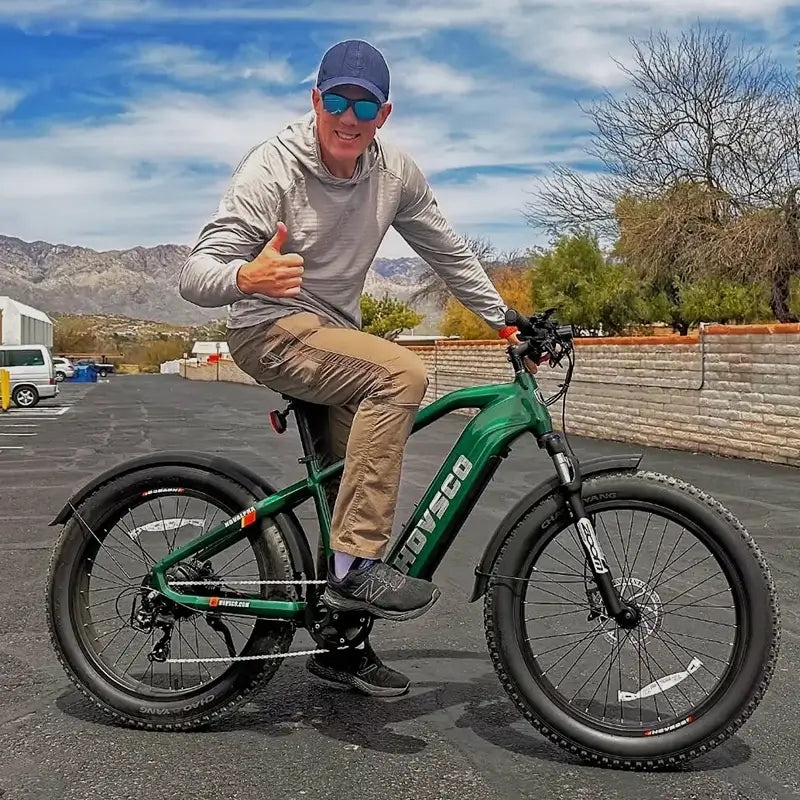
Tires deserve an honest inspection. A wide tire may offer comfort, but its casing, pressure range, tread, and load rating must support the intended use. Underinflation makes a loaded bike feel sluggish, increases sidewall flex, and can raise pinch-flat risk. Overinflation can reduce grip and make fragile cargo rattle.
Before every grocery ride, check tire condition, inflation, brake feel, lights, rack fasteners, and bag attachment. Regular maintenance should also include drivetrain cleaning, lubrication, wheel checks, and replacement of worn brake pads or rotors.
Test ride the e-bike in your usual footwear and verify stand-over clearance, saddle reach, handlebar comfort, step-through access, and confidence when starting or stopping with cargo. A good fit allows controlled footing at intersections without overreaching for the bars.
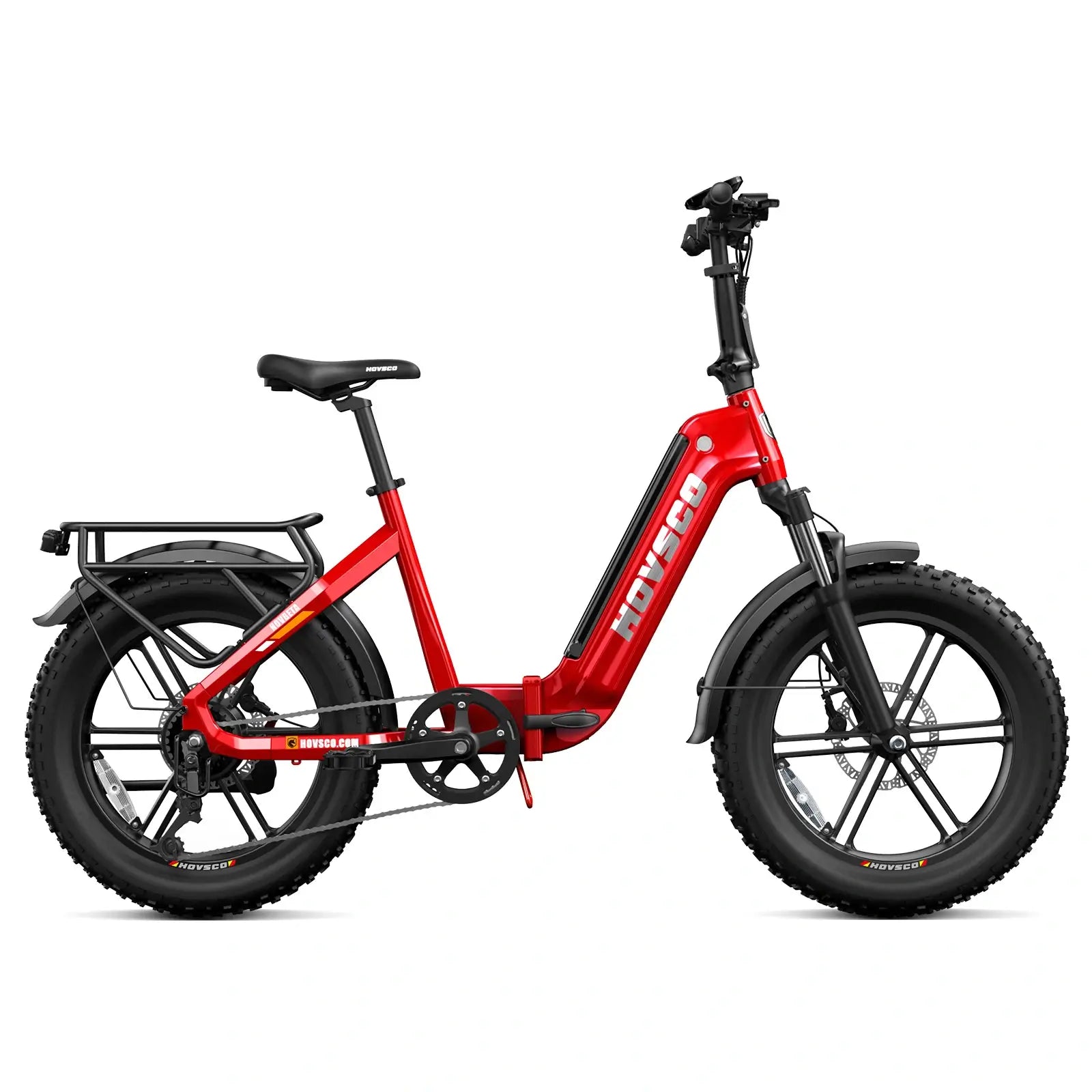
Fit is a safety feature, especially when the bike is heavy. A rider should be able to mount, dismount, and stabilize the bike without fighting the frame. Step-through designs can be valuable for riders who frequently stop, carry a backpack, wear everyday clothing, or load groceries before leaving the store.
Ask the seller to let you test the e-bike with realistic weight. Even two bags of water bottles reveal useful information. Notice whether the front wheel wanders at walking speed, whether the kickstand is practical, and whether your heels strike the panniers while pedaling.
Pay close attention to saddle-to-pedal distance. A rider who cannot extend the leg comfortably may strain knees; a saddle set too high can make stoplights intimidating. Adjustability matters because grocery use involves frequent starts, stops, and dismounts—not only continuous pedaling.
Plan a dry, secure charging location, a practical parking space, and access to trained service before purchase. Measure doors, elevators, storage rooms, and vehicle racks; cargo e-bikes often create ownership challenges after the sale, not during the test ride.
Battery care begins at home. Charge indoors in a dry, ventilated area using the supplied charger, and avoid charging a battery immediately after extreme heat or cold exposure. For long storage, avoid extreme temperatures and maintain a partial charge rather than leaving the battery empty for extended periods.
Measure the route from sidewalk to storage. Can you lift the bike over a threshold? Is there a ramp? Does the elevator permit the bike’s length? Can you remove the battery before carrying or storing the bike? These answers can matter more than a small difference in motor rating.
Also verify service support. Ask who handles warranty diagnostics, firmware issues, wheel truing, brake bleeding, and battery replacement. HOVSCO buyers should review available support channels, compatible replacement parts, and local service options before relying on an e-bike for weekly food transport.
Review local and regional e-bike rules before buying and again before riding on trails, sidewalks, or high-speed roads. Rules can define e-bike classes, speed limits, helmet requirements, throttle use, age limits, and where each class may legally operate.
Do not assume a bike that is legal on a street is permitted on a multi-use path. Rules differ among states, cities, parks, transit agencies, and property owners. The motor’s labeled classification, top assisted speed, and throttle configuration may change where you can ride.
Consider theft and liability as well. Record the serial number, keep purchase documentation, photograph the bike and accessories, and ask your insurer whether the e-bike and cargo are covered. A high-quality lock, secure parking habits, and removable battery storage reduce exposure, but they do not replace appropriate coverage.
Yes, if you use a consistent inspection routine, clean the drivetrain, monitor brake and tire wear, and address loose hardware early. Grocery hauling increases wear, so maintenance intervals should reflect riding distance, cargo weight, weather, and terrain.
A practical ownership routine is simple:
Before rides: inspect tire pressure, brakes, lights, battery lock, and cargo attachments.
Weekly: wipe dirt from the bike, inspect tire tread and rack bolts, and listen for drivetrain noise.
Monthly: clean and lubricate the chain or inspect the belt system, check fasteners, and examine brake pads.
Periodically: have a qualified technician assess wheel tension, brake wear, drivetrain condition, and electronics.
Avoid pressure washers around motors, battery contacts, bearings, and displays. Water forced past seals can create corrosion or electrical problems. Use low-pressure water sparingly, a soft brush, and a dry cloth around electrical connections.
“The best grocery e-bike is not the one with the biggest advertised number. It is the one that remains calm when the bags are full, stops consistently in wet conditions, fits where you live, and can be serviced without delay. In factory evaluation, we focus on load paths: rack mounts, wheel tension, tire behavior, braking heat, and how a rider controls the bike at walking speed. HOVSCO recommends buyers test the complete ownership system—bike, cargo gear, parking, charging, and service—not simply the motor.”
Complete a real-world checklist: calculate payload, map the route, test the fit, confirm accessory compatibility, verify storage, and review local rules. This process helps you buy for dependable weekly use instead of occasional empty-bike rides.
The best electric bike for grocery shopping should solve your specific carrying problem with enough safety margin. Avoid choosing solely by price, speed, or a claimed maximum range. Choose the design that carries your typical load securely, turns predictably, fits your home, and has parts and support you can access.
HOVSCO’s broader goal of helping more riders choose active, practical transportation aligns with this approach: the right e-bike can make local errands more enjoyable, but only when ownership details are planned before checkout.
Can I carry groceries in a backpack on an e-bike?
You can carry light items in a backpack, but heavy groceries can strain your back and shift your center of gravity. Panniers or a rated basket are safer for dense loads.
Are rear panniers better than a front basket?
For heavy loads, rear panniers usually keep weight lower and more balanced. A front basket is useful for lighter, fragile, or quick-access items.
Does a bigger battery always mean a better grocery e-bike?
No. A larger battery adds range but may add cost and weight. Cargo capacity, fit, brakes, storage, and reliable service are equally important.
How often should I service a grocery e-bike?
Inspect it before rides and schedule professional service based on mileage, weather exposure, cargo weight, and manufacturer guidance. Frequent loaded riders may need brake, tire, and wheel attention sooner.
Share:
How to Choose a Step-Through Fat Tire Ebike?
Is a 750W Electric Bike Right for You?