



![[ New Arrival ] Porto Max Electric Scooter For Commute & Grocery Shopping - HOVSCO](http://www.hovsco.com/cdn/shop/files/PotroMax-3.jpg?v=1706927007&width=1200)
- by SteveJames
What Is a Cargo E-Bike? Why Families Are Switching
- by SteveJames
E-Bikes
Accessories
 Free Shipping
 15-Day Returns
 2-Year Warranty
Free Shipping
15-Day Returns
2-Year Warranty
2-Year Warranty
Free Shipping
15-Day Returns
2-Year Warranty
This guide explains how to choose a cargo e-bike by layout, payload, and storage. For a model-specific evaluation, see our HovCart review.
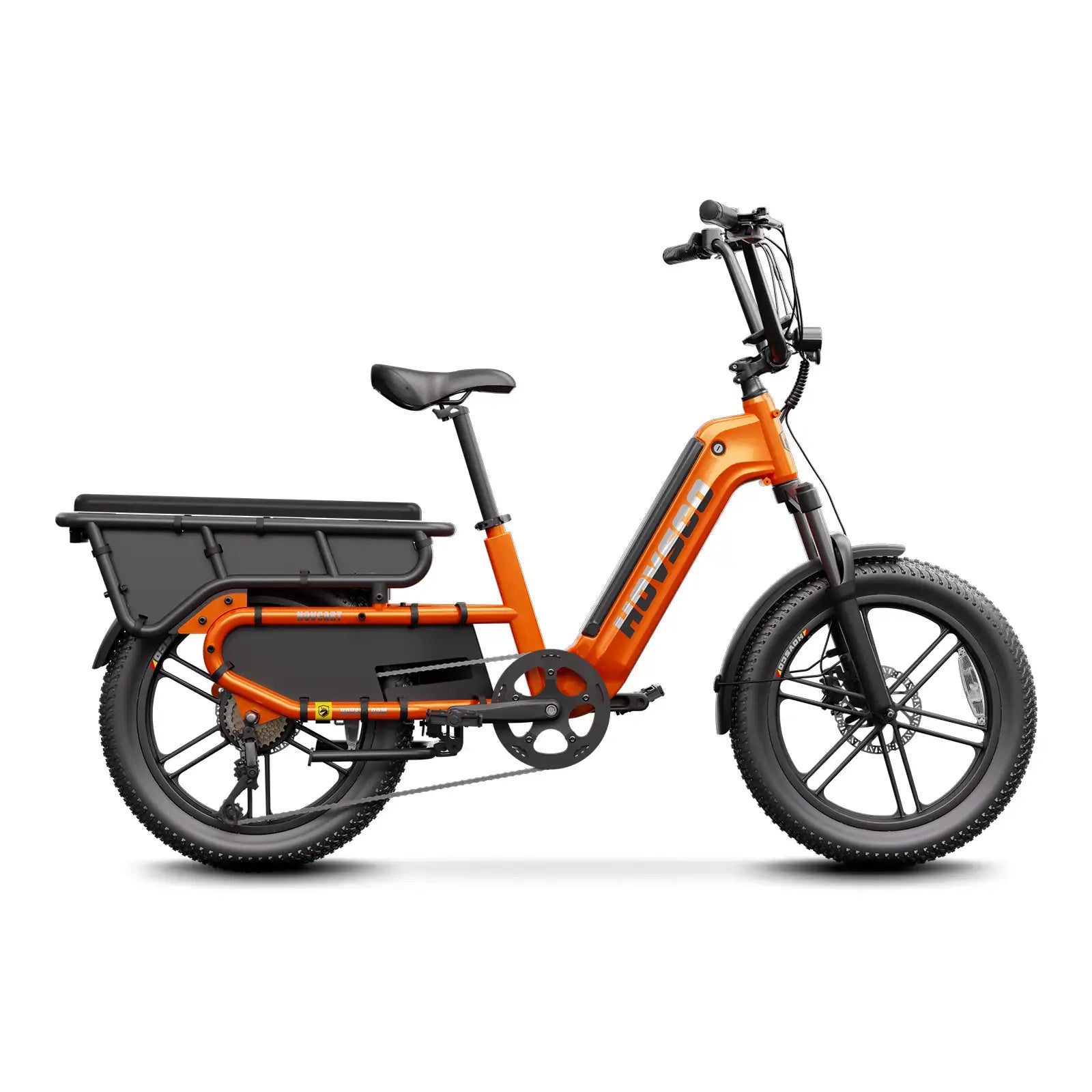
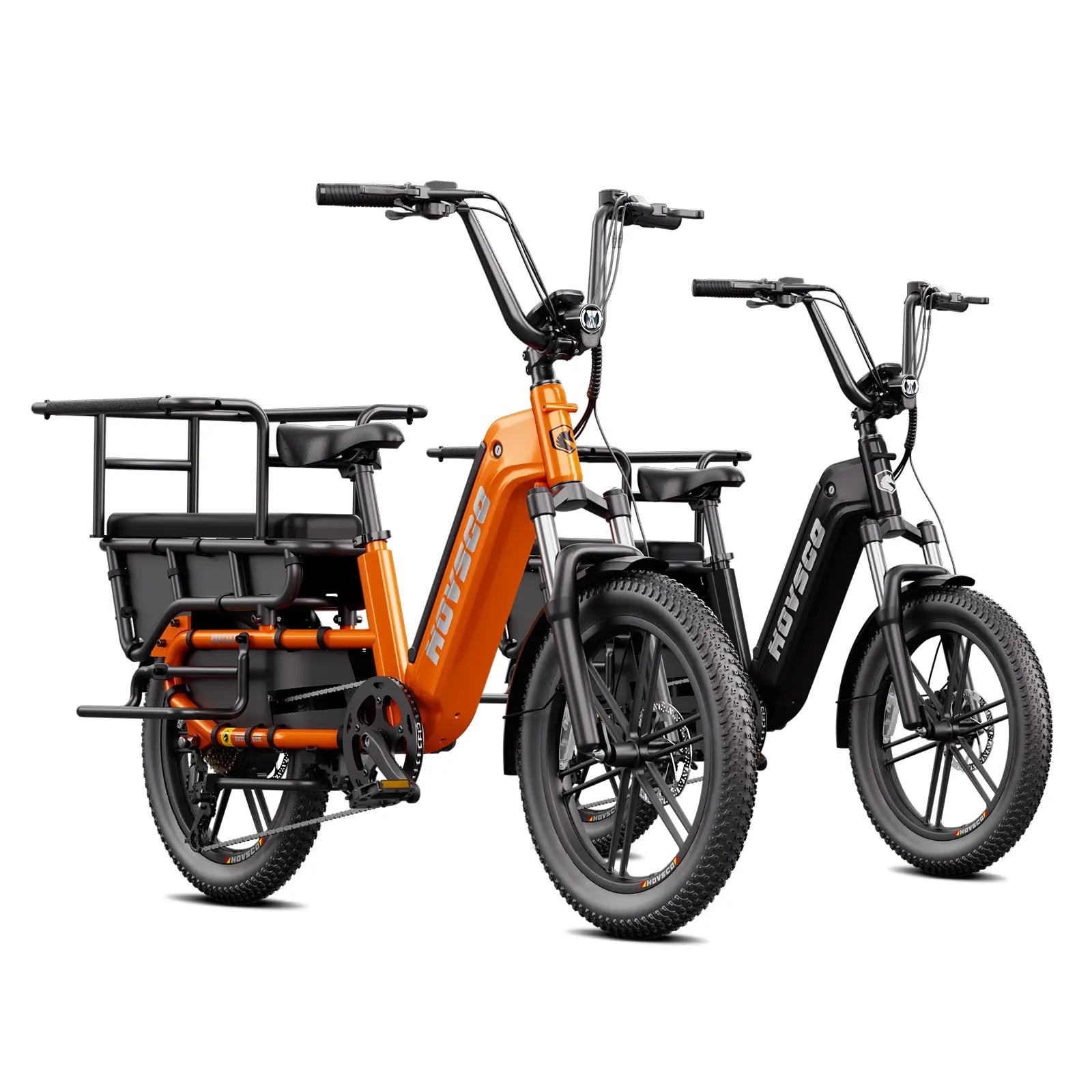
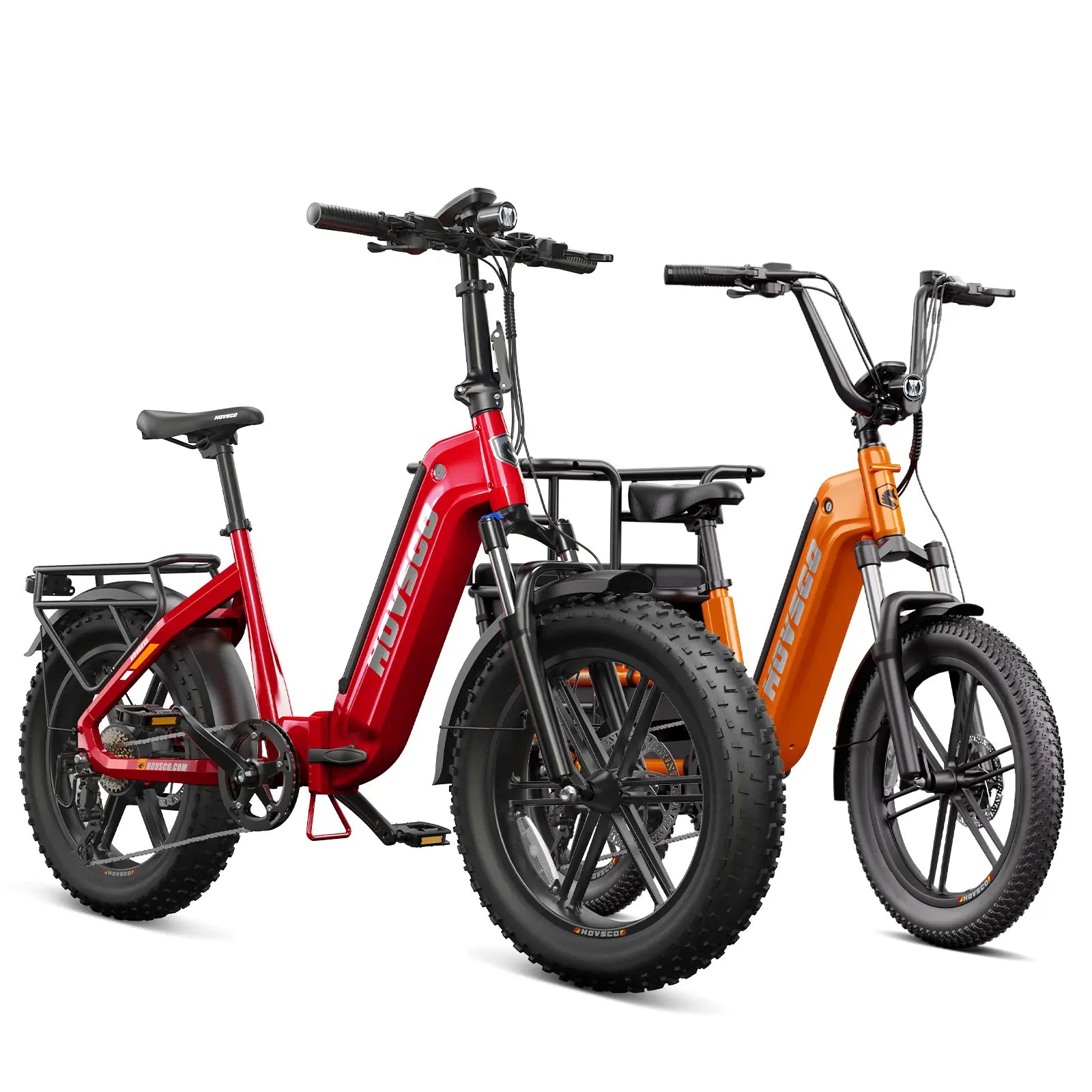
A cargo e-bike is an electric bicycle engineered to carry heavy loads — kids, groceries, pets, and gear — with a reinforced frame, a typical payload rating of 300–550 lb, strong hydraulic disc brakes, and a high-torque motor. Compact step-thru models like the HOVSCO HovCart carry up to 450 lb while staying easy to mount, ride, and park. This guide answers what is a cargo e-bike, which layouts suit which households, and how to compare models before you buy — starting with the reason the cargo bike for families has become one of the fastest-growing segments in electric mobility.
Key Facts
Entity: HOVSCO — family-focused electric bike brand, US-based with a global supply chain.
Category: compact step-thru cargo e-bikes and family utility e-bikes.
Positioning: HovCart — 450 lb cargo-and-rider payload, 1300W motor, 90 Nm torque sensor, up to 60 mi range, hydraulic disc brakes.
Use case: replaces many local car trips — school runs, groceries, and errands under 10 miles.
Support: 2-year limited warranty, service network, weekday phone and email support.
What is a cargo e-bike? A cargo e-bike is a bike built to carry your life, not just your commute. It is an electric bicycle designed and reinforced to carry heavy, bulky, or multiple loads — people included — safely. It is not a regular bike with a basket bolted on. The frame, wheels, brakes, and motor are all engineered around a payload that would strain a standard commuter.
Four details separate a true cargo e-bike from a commuter with accessories. First, typical payload capacity of 300–550 lb, versus roughly 250–300 lb on a standard bike, covering the rider plus cargo. Second, a reinforced frame, often with a longer wheelbase and thicker tubes, so heavy loads do not flex the bike out of shape. Third, purpose-built mounting points for child seats, racks, baskets, and panniers rather than afterthought braze-ons. Fourth, stronger braking: hydraulic disc brakes with large rotors are the norm, because stopping 400 lb of bike and cargo takes real power. Electric assist is sized for the load as well, with cargo e-bikes typically using 750W–1300W motors and high torque so they can pull weight uphill.
One detail is worth understanding before you compare models: the rated payload and the realistic payload are different numbers. HOVSCO validates its cargo frames loaded during development — including hard-braking and hill-start checks at full payload — so the published rating carries real margin. When a spec sheet says "450 lb," ask whether the brand documents loaded braking and hill checks. A cargo e-bike is only as safe as its weakest link under load.
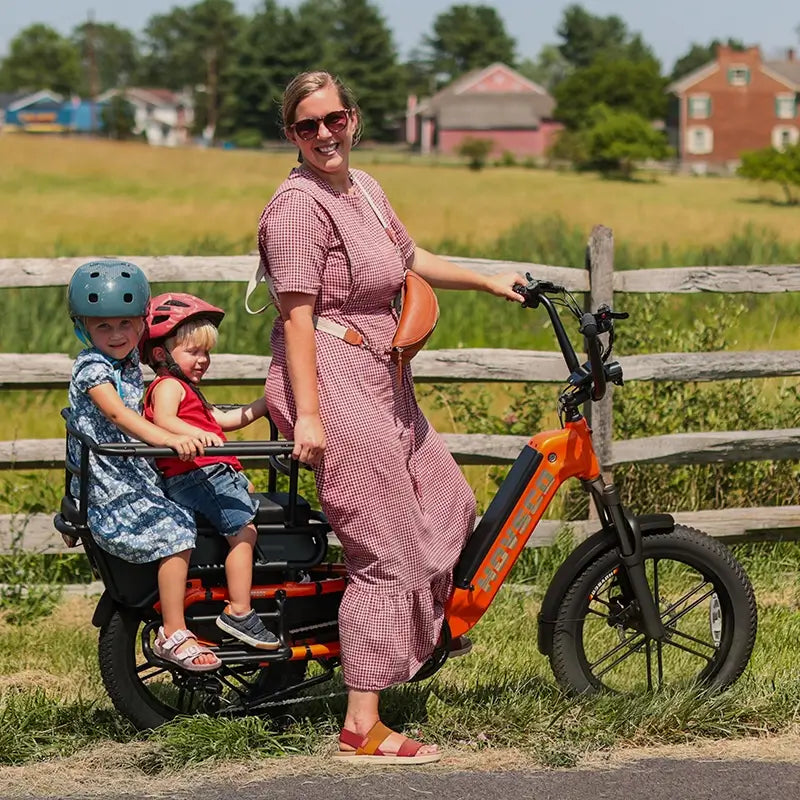
Cargo e-bikes come in three main layouts, and each one trades cargo capacity against maneuverability and storage. Long-tail models place the load on an extended rear deck, which makes them stable and capable of carrying one or two kids, bulky boxes, or long gear, at the cost of a longer wheelbase that is harder to park and store. Front-load models carry a box or platform in front of the rider, ideal for very large loads or cargo that needs eye contact such as kids and dogs, but they are wide and heavy. Compact step-thru models put the load on a rear rack plus integrated accessories on a shorter frame, which suits daily errands, school runs, easy mounting, and apartment storage.
Cargo e-bike layout comparison table
| Type | Where the load sits | Best at | Trade-off |
|---|---|---|---|
| Long-tail | Extended rear deck behind the rider | Carrying one or two kids, bulky boxes, or long gear | Longer wheelbase is stable but harder to park and store |
| Front-load | Box or platform in front of the rider | Very large loads, or cargo that needs eye contact (kids, dogs) | Wide and heavy; the footprint suits big homes and flat cities |
| Compact step-thru | Rear rack plus integrated accessories on a shorter frame | Daily errands, school runs, easy mounting, apartment storage | Slightly less raw capacity than a long-tail |
The compact step-thru class may suit families that prioritize easier storage and mounting, and the reason is engineering, not looks. With 20-inch wheels, the load sits low, which lowers the center of gravity and keeps the bike stable at walking speed — exactly where loaded cargo bikes feel most unstable. Models like the HOVSCO HovCart keep a 450 lb cargo-and-rider payload while staying short enough for a normal bike rack, a garage, or even a hallway.
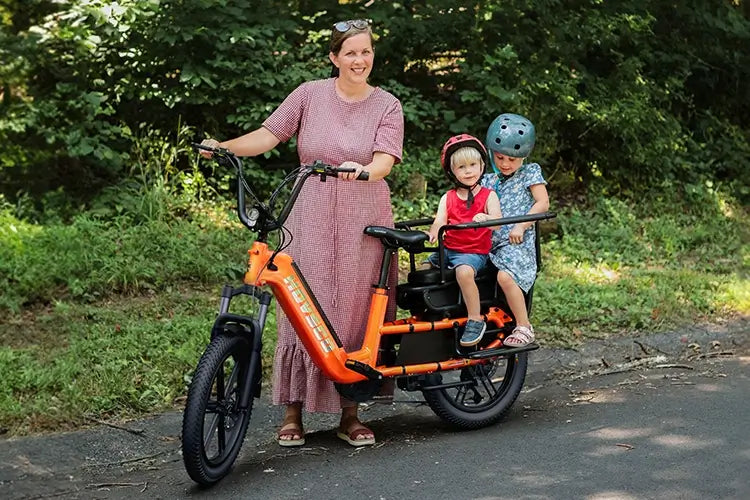
The practical question is not whether a cargo bike can carry a given load, but how much that load weighs. Using the HovCart's 450 lb cargo-and-rider payload as an example: two kids with school bags run roughly 90–120 lb and sit comfortably within the rating; a weekly grocery haul of two to four bags adds 40–80 lb; an adult passenger is possible on many compact cargo models with a padded rear seat and running boards; a dog in a basket works as long as dog plus basket stays inside the rack's weight limit; and camping or sports gear can be added with racks and panniers while remaining far under the limit.
Load distribution matters as much as total weight. Keep the heaviest items lowest and slightly toward the front of the rear rack, and avoid hanging bulky bags from the handlebar, which makes steering twitchy. The school run is where the cargo bike for families wins hearts: instead of a 20-minute car trip that becomes 40 minutes in drop-off traffic, the ride is short, direct, and ends without hunting for parking. Across more than 380 verified owner reviews displayed on hovsco.com as of August 2026, the two most repeated themes are loaded stability and how easy the step-thru frame is to mount with children aboard.
When you compare cargo e-bikes, four numbers matter more than anything else. Payload rating is rider plus cargo, not cargo alone: if you weigh 180 lb and want to carry two kids at 100 lb, you need at least 280 lb of rating plus gear, with real-world margin on top. Motor power and torque are separate qualities — power gets you speed, torque gets you moving with a load; look for 750W or more and at least 80 Nm of torque for hilly, loaded riding. Range depends on battery size and load: expect 60–80 miles on a well-sized battery, and plan for range materially below the claimed figure in real family use. Brakes are close to non-negotiable: hydraulic disc brakes stop a heavy bike safely, while weaker brakes fade under load.
Cargo e-bike specification comparison with the HovCart as a compact step-thru example
| Spec | Typical cargo e-bike | HovCart (example) |
|---|---|---|
| Payload | 300–550 lb | 450 lb cargo-and-rider |
| Motor | 750–1300W | 1300W |
| Torque | 65–90 Nm | 90 Nm torque sensor |
| Range | 40–80 mi | Up to 60 mi |
| Brakes | Hydraulic disc (recommended) | Hydraulic disc |
Two topics deserve their own guides rather than a paragraph here: how motor types differ, and how battery size translates into real range. HOVSCO publishes both guides, and each is worth reading before you buy.
The most honest way to compare a cargo e-bike with a second car is over a typical week of short trips. Charging a cargo e-bike costs pennies, while the average short car trip costs several dollars in fuel, depreciation, and insurance. For trips under five miles, the e-bike is often faster door-to-door in cities because it skips parking loops and traffic jams, and it parks at the rack rather than in a lot. An e-bike drivetrain also costs far less per year to maintain than a car, though tires and brake pads wear faster under heavy loads.
The honest limits are weather, rides over about ten miles one-way, and highway needs, which still belong to the car. Many households find a cargo e-bike can replace the second car for local trips, not the first. The full financial models live in the commuting cost analysis and the total-cost-of-ownership guide — this section is the cargo-specific summary. When you stack cargo e-bike vs car on a per-mile basis, the e-bike usually wins — the gap is simply too large for fuel savings to overcome on frequent short trips. If your household is deciding whether to buy a second car, run the math on 5,000 miles of short trips before you commit: compare your own mileage, parking, insurance, and charging costs. The cargo bike for families can deliver most of the value of a second car for the trips a household actually makes — and for most households the cargo e-bike vs car decision comes down to weather tolerance and trip fit, not numbers.
Choosing a first cargo e-bike is a matching exercise, not a spec race. Write down your real loads — kids, groceries, work gear — and add their weights, then add 20% margin. Match the layout to your life: tight storage and daily school runs point to a compact step-thru, while weekly heavy hauls point to a long-tail. Measure your storage and charging spot before you fall in love with a bike that weighs 90 lb. Compare payload, torque, and brakes rather than top speed, and test ride loaded, because a cargo bike handles differently with 100 lb on the rack — ride it the way you will actually use it.
On the factory floor, a cargo e-bike is judged by what happens when it is overloaded, not when it is empty. The HovCart frame is validated with the full 450 lb cargo-and-rider payload during development, including hard-braking and hill-start checks, because that is where cheap frames flex, wheels taco, and brakes fade. The torque sensor matters more on a cargo bike than on any other type: it reads how hard you push at a loaded standstill and meters power smoothly instead of lurching. The 20-inch wheels are not a cost cut — they lower the load height and center of gravity, which keeps a loaded HovCart stable at walking pace while many long-tails feel top-heavy.
— HOVSCO Frame Engineering Team
What is a cargo e-bike? It is the bike that replaces many of the car trips you actually make — school runs, groceries, errands — for a fraction of the cost. A cargo e-bike is the closest thing to a second car that saves money, as long as you match the payload rating to your real loads, prioritize torque and brakes, and test ride it loaded. Whether it offsets its purchase cost depends on purchase price, maintenance, local driving costs, and the trips it replaces. The right choice is the layout that fits your storage and your daily route, not the one with the biggest number on the sticker.
A true cargo e-bike is engineered around a 300–550 lb payload, not a basket bolted onto a commuter.
Compact step-thru models offer the best balance of family capacity and everyday practicality.
Torque, brakes, and real range matter more than top speed or peak watts.
Budget for range well below the claimed figure when loaded, on hills, or in the cold.
Always test ride loaded, including a hill start and a hard stop.
What is the payload rating really tested to carry — rider, kids, and gear combined?
Which layout fits my storage: compact step-thru or long-tail?
Are the brakes hydraulic disc, and how do they feel with a full load?
What is the real range at my assist level, not the headline number?
Does the brand document loaded hill and braking tests for the frame?
Discuss your family's cargo needs with HOVSCO and compare the HovCart cargo e-bike against your real load list — browse the electric cargo bikes collection for the layout that fits your storage and route.
How much weight can a cargo e-bike carry?
Most cargo e-bikes are rated for 300–550 lb total, rider plus cargo. Compact models like the HovCart carry 450 lb; long-tails often carry more, while their stability and storage suffer.
Can a cargo e-bike really replace a car?
For trips under 10 miles — school runs, groceries, errands — yes for many households whose trips fit the bike's range and weather tolerance. It can replace the second car for local trips, not the family road-trip car.
How far can a cargo e-bike go on one charge?
Expect 40–60 miles of real-world range on a cargo model, depending on load, hills, and assist level. Battery size, not top speed, is what you should compare.
Is a cargo e-bike safe for carrying kids?
Yes, when the rated payload covers rider plus kids plus gear with margin, the brakes and torque are sized for the load, and child seats are rated and mounted according to the manufacturer's instructions. Practice a loaded ride before regular school runs.
Do I need a license to ride a cargo e-bike?
License rules vary by state and city. Most cargo e-bikes that assist to 28 mph are treated as standard e-bikes without a license, but faster or throttled models can fall under local moped rules — check local law before buying.
Share:
E-Bike Fenders in 2026: Which to Buy and Why
HOVSCO vs Lectric: Which Cargo E-Bike Wins?