



























![[ New Arrival ] Porto Max Electric Scooter For Commute & Grocery Shopping - HOVSCO](http://www.hovsco.com/cdn/shop/files/PotroMax-3.jpg?v=1706927007&width=1200)
- by SteveJames
What Electric Bike Fits Your Small Business Best?
- by SteveJames
E-Bikes
Accessories
 Free Shipping
 15-Day Returns
 2-Year Warranty
Free Shipping
15-Day Returns
2-Year Warranty
2-Year Warranty
Free Shipping
15-Day Returns
2-Year Warranty
Small businesses benefit most from electric bikes built for repeated, heavy-duty cargo runs — not casual commuting. The right choice depends on payload capacity, motor torque, battery range per shift, and total cost of ownership versus a van. This guide breaks down features, tradeoffs, and best use cases specifically for business operations, using an electric bike for small business buying guide framework.
A business-grade electric bike needs a reinforced frame, a payload rating above 300 pounds, and a motor built for continuous daily load — not just occasional weekend rides. Look for mid-drive torque sensors over basic hub motors when hauling heavy racks, since torque sensors respond proportionally to pedaling effort under load, giving smoother starts on inclines with a full cargo box.
From working directly with fleet buyers, the detail most guides skip is drivetrain wear. A bike doing eight hours of stop-start delivery wears chains and brake pads three to four times faster than a recreational rider's bike. That's why businesses evaluating an electric bike for small business buying guide checklist should ask suppliers specifically about replacement part lead times, not just warranty length.
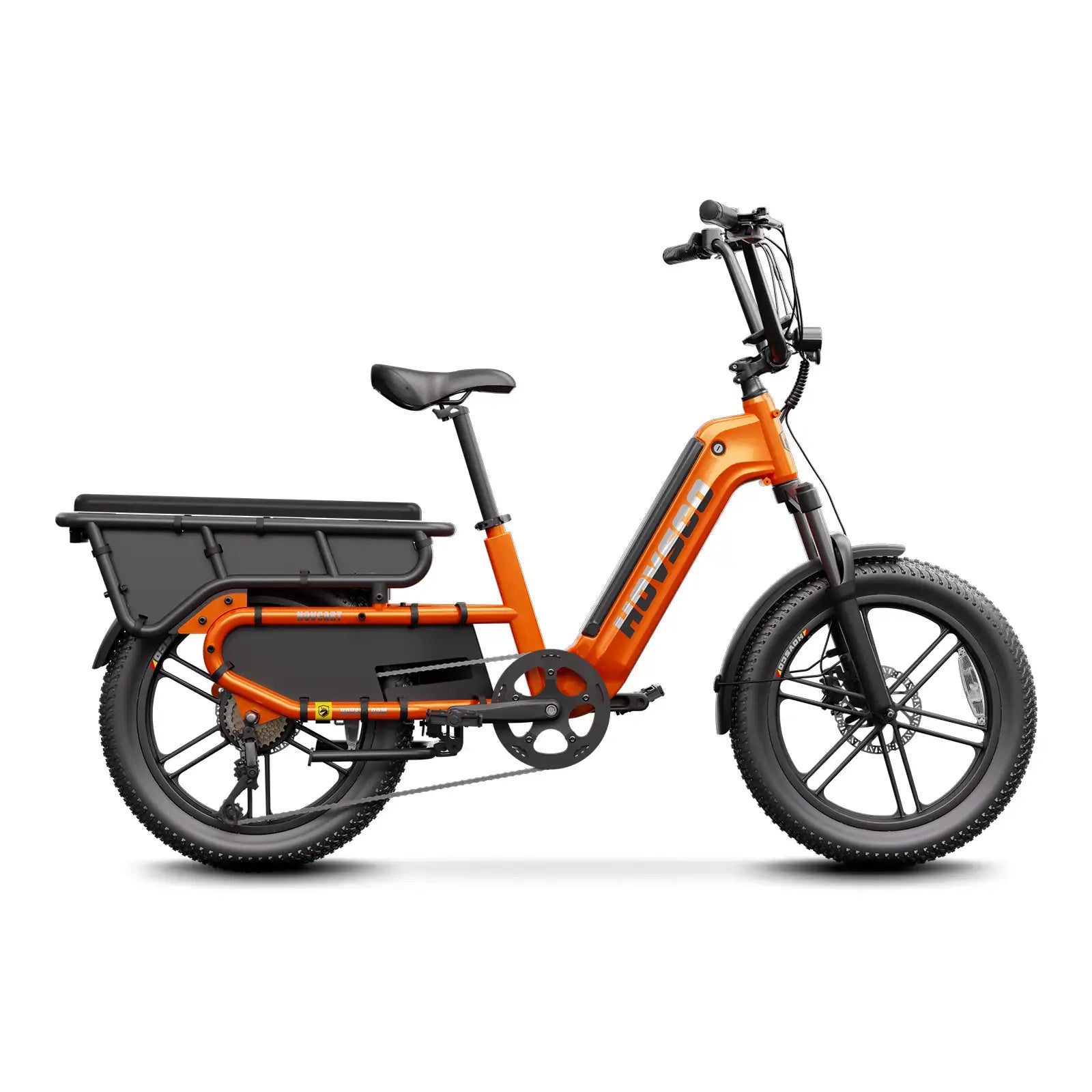
Cargo capacity determines what a bike can realistically carry, and frame design determines how stable that load feels at speed. Front-loading cargo bikes (bakfiets-style) suit bulky, visible loads like flowers or bakery trays, while rear-rack platforms suit stacked boxes for parcel or tool transport.
A stiffer head tube and wider fork spacing prevent front-end wobble once a loaded box shifts weight forward — this is a mechanical detail that matters more than motor wattage once payload crosses 200 pounds.
For a four-hour shift, a battery of at least 13Ah is the practical minimum, and businesses running longer routes should size batteries around actual daily mileage rather than manufacturer-claimed range, which is tested unloaded. A 750W-rated motor sustains hills better than a 500W motor once cargo weight exceeds 150 pounds, since sustained torque under load draws more current than the peak-power number suggests.
HOVSCO's engineering approach for its higher-payload models prioritizes battery cell consistency over headline capacity numbers — a factory-floor detail that affects how the pack ages after hundreds of charge cycles under commercial use, not just how far it goes on day one.
Businesses switch to e-bikes for local routes because they cut fuel and parking costs, navigate low-emission zones freely, and access alley or sidewalk-adjacent stops a van can't reach. The tradeoff is capacity: an e-bike can't replace a van for bulk inventory runs, only for last-mile or short-radius deliveries.
Coffee carts, flower shops, and courier services report faster per-stop times in dense urban blocks specifically because bikes skip circling for parking. This is a route-density calculation, not a blanket cost comparison — businesses with sparse, spread-out stops still need a van.
Cargo e-bikes are cost-effective for businesses with dense, short-radius delivery routes, since they avoid fuel, insurance, and parking-ticket costs that add up quickly in urban cores. The break-even point typically favors bikes once daily route distance stays under 10-15 miles per shift with frequent stops.
Maintenance costs also run lower: no oil changes, simpler brake systems, and fewer moving parts than a delivery van's engine. However, businesses must budget for battery replacement every 2-3 years of heavy use, a cost vans don't share but that still lands far below fuel and insurance combined.
Yes — many cities require e-cargo bikes used commercially to display a business logo and restrict them from sidewalk parking, while permitting designated commercial parking spaces. Regulations also vary by e-bike class, with some jurisdictions capping motor wattage or requiring registration for higher-powered models.
Before buying, business owners should confirm local class limits (typically Class 1, 2, or 3) and any city-specific commercial cargo bike permitting, since rules differ block by block in some metro areas.
A reliable maintenance routine includes weekly brake pad and chain inspection, monthly hub or mid-drive motor checks, and battery terminal cleaning every charge cycle to prevent corrosion from weather exposure. Businesses running daily routes should also track tire wear separately from a leisure bike's schedule, since loaded tires wear unevenly under constant stop-start braking.
Setting a fixed service interval — rather than waiting for a breakdown — is the difference between planned downtime and lost delivery days. This is the single most overlooked line item when businesses first evaluate an electric bike for small business buying guide against a van's known maintenance schedule.
Renting suits businesses testing e-bike delivery before committing capital, while buying suits businesses with confirmed, repeatable route volume where ownership costs beat lease payments within 12-18 months. Renting also shifts battery degradation risk to the provider, which matters for businesses unsure of their annual mileage.
Buying gives full control over branding, customization, and resale value, which matters more for businesses building a recognizable delivery presence. The decision hinges on route certainty, not just upfront budget.
"After years designing e-bikes for real-world daily use, the biggest misconception business buyers have is assuming a higher wattage number always means better performance under load. What actually predicts reliability is how the motor controller manages heat and torque delivery over a full shift, not a single spec on a listing page. At HOVSCO, we test payload-rated models under repeated load cycles, not just single-ride demos, because that's what a small business route actually looks like day after day. Buyers evaluating an electric bike for small business buying guide should ask suppliers for real load-test data, not just peak specs."
Choosing the right electric bike for small business operations comes down to matching frame type and motor torque to actual route density, payload needs, and local regulation — not chasing the highest wattage number. Brands like HOVSCO focus on payload-rated durability testing, which matters more for daily commercial use than headline range claims. Businesses should budget for battery replacement, tiered maintenance schedules, and local permitting before committing to a fleet purchase.
What payload capacity should a small business e-bike have?
Most commercial routes need at least 300 pounds of combined rider and cargo capacity; delivery-heavy businesses should look for 350-400 pounds for a safety margin.
Can one e-bike model serve multiple business needs, like deliveries and tool transport?
Longtail and rear-rack utility frames handle mixed loads reasonably well, but businesses with highly specialized cargo (large boxes vs. loose tools) often get better results from purpose-matched frame types.
How long does a business e-bike battery typically last?
Batteries used daily under heavy load generally hold effective capacity for 2-3 years before performance drops noticeably, depending on charge habits and storage conditions.
Do small business e-bikes require special insurance?
Requirements vary by city and bike class; businesses should confirm with local regulators whether commercial cargo e-bikes need separate liability coverage beyond standard business insurance.
Is HOVSCO a good option for small business cargo e-bikes?
HOVSCO offers payload-rated models designed with load-cycle testing relevant to daily commercial use, making it worth comparing directly against other business-focused e-bike brands during evaluation.
Share:
Best Lightweight Electric Bikes in 2026: Top Picks by Weight, Budget & Use
What Makes an Electric Bike Good for Hills?