
























![[ New Arrival ] Porto Max Electric Scooter For Commute & Grocery Shopping - HOVSCO](http://www.hovsco.com/cdn/shop/files/PotroMax-3.jpg?v=1706927007&width=1200)
- by SteveJames
How to Choose Electric Bikes for College Students?
- by SteveJames
E-Bikes
Accessories
 Free Shipping
 15-Day Returns
 2-Year Warranty
Free Shipping
15-Day Returns
2-Year Warranty
2-Year Warranty
Free Shipping
15-Day Returns
2-Year Warranty
Choosing an electric bike for college students means matching weight, folding size, lock security, and charging method to your dorm and campus rules — not just chasing top speed. Prioritize a sub-45 lb frame if you'll carry it upstairs, a removable battery for indoor charging, and a bike that satisfies your school's e-bike policy before comparing price or range.
Knowing how to choose electric bikes for college students starts with treating your dorm room, not the open road, as the real design brief. Most buying guides rank motors and range first. On a campus, the harder constraints are usually a narrow dorm closet, a housing office that bans lithium batteries above a certain size, and a bike rack that gets picked clean every semester. This guide breaks the decision into the factors that actually decide whether an e-bike survives freshman year, using verified specifications from HOVSCO's Sync Max, HovCity, and HovBeta as reference points throughout.
Choose based on how far you're riding, where you'll store it, and what your school allows — in that order. Weigh the bike, check if it folds, confirm the battery is removable, and read your housing contract's fire-safety clause before buying. Only after clearing those three filters should top speed or motor wattage factor into your decision.
Most students default to comparing motor watts and top speed because that's what spec sheets highlight first. In practice, I've found the order should run in reverse. Start with your housing contract — many U.S. dorms now cap lithium battery capacity before a bike can even be stored in a room. Next, measure your actual storage space: a shared triple with one closet needs a folding frame under 45 lbs, while an off-campus apartment with a garage can accommodate a heavier step-thru commuter. Only then does motor power matter, and for flat-to-moderate campus terrain, 450–500W sustained output is plenty; save 750W-class torque for hilly routes or cargo-heavy commutes.
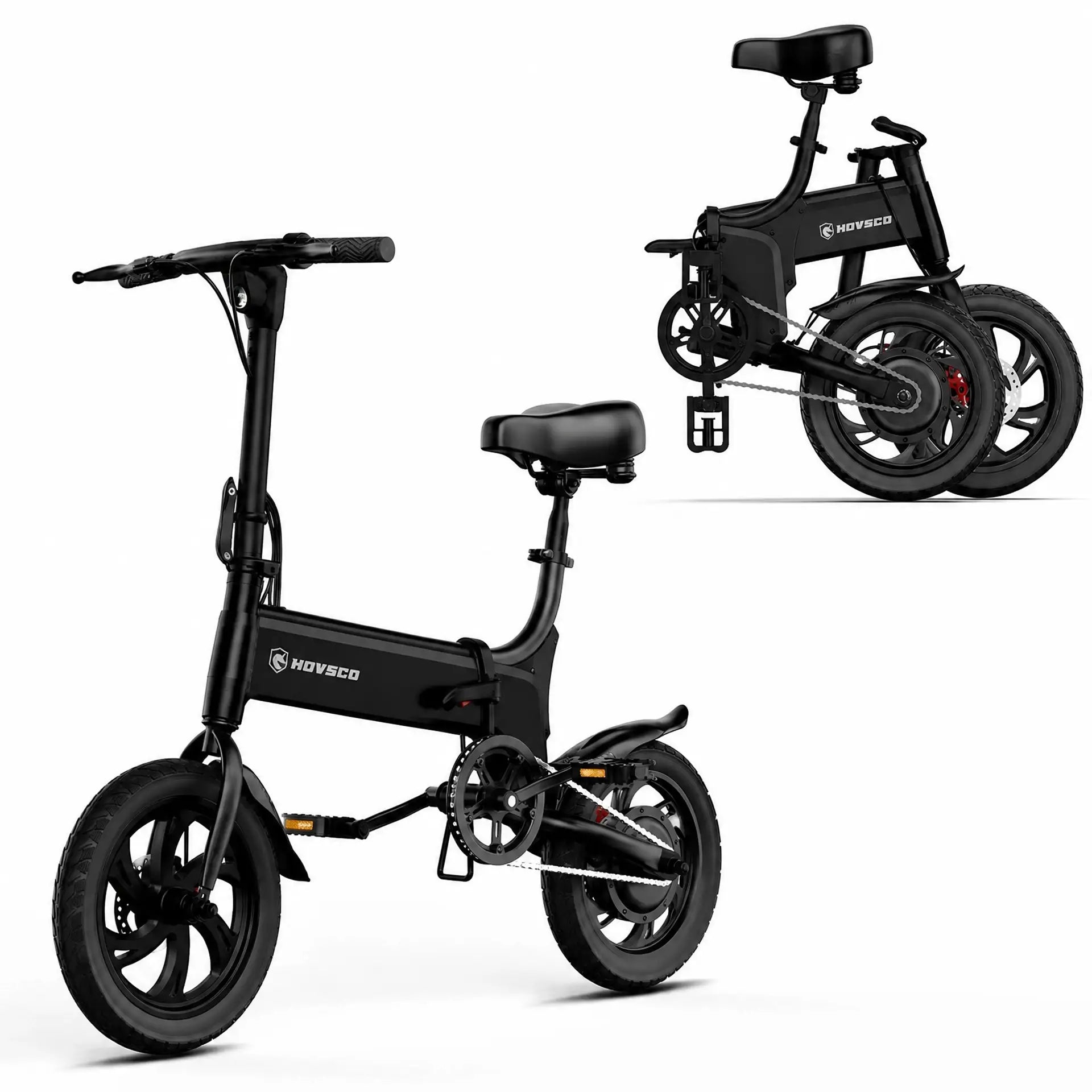
Dorm-suited e-bikes fall between 40 and 55 lbs. Anything lighter, like the 42.3 lb HOVSCO Sync Max, is liftable up stairs solo. Bikes over 60 lbs, such as fat-tire folding models, need an elevator or ground-floor room, since carrying them repeatedly strains both the rider and the frame's folding hinge.
Weight is the single most-searched, most-underestimated factor in how to choose electric bike for college students decisions. I've watched students order a 66 lb fat-tire folder for a fourth-floor walk-up dorm, only to leave it locked outside within a week because carrying it up daily wasn't sustainable. A useful rule from the factory floor: every 10 lbs above 45 adds noticeably more strain on wrists and shoulders when lifting over a stair threshold or into a car trunk, because the weight sits low and off-center in a folded bike, not evenly distributed like a backpack.
A hardened U-lock through the frame and rear wheel, paired with a removable, key-locked battery, is the baseline for campus theft protection. E-bikes are stolen more often than standard bikes because resale value is higher, so cable locks alone are inadequate; always secure the bike to a fixed rack, not just to itself.
Campus racks sit in high-traffic, low-supervision zones, which makes e-bikes an easy target for anyone with bolt cutters. From a hardware standpoint, the detail most guides skip is that a removable battery pack does double duty: it deters theft (a stolen bike with no battery is nearly worthless to resell) and it solves the charging problem in one step. On HOVSCO's HovCity and HovBeta, the internal battery locks with its own key and detaches for indoor charging, so you're not leaving a bike plugged in near an exit door, which many housing offices flag as a fire-code violation. Pair that removable battery with a U-lock rated for angle-grinder resistance, and register the bike with campus security if that service is offered — recovery rates rise significantly when a serial number is on file.
For most students, folding design matters more than raw motor power. A folding frame solves the daily problems of elevator access, dorm-room floor space, and multi-modal trips on a campus shuttle or train. Motor power only matters once storage and portability are settled, since campus commutes rarely exceed a few miles at moderate speed.
Folding geometry looks simple until you've watched a hinge fail from repeated stress. The engineering trade-off worth knowing: a folding frame concentrates structural load at the hinge points, so cheaper folding bikes cut corners with thinner-gauge aluminum there to save weight, which shows up as wobble after a semester of daily folds. HOVSCO's Sync Max uses a single main-frame fold designed around a lighter 14-inch wheel platform specifically to reduce hinge stress while keeping the bike under 43 lbs — a deliberate trade against the higher top speed you'd get from a bigger wheel and heavier motor. That's the kind of decision a factory engineer makes for portability, not marketing.
Plan charging around your battery's removability and your dorm's fire-safety policy, not just outlet access. Charge only with the manufacturer's included charger, never leave a battery charging unattended overnight, and confirm whether your housing office requires restricts charging to designated areas outside sleeping rooms.
This is where a lot of students get caught off guard mid-semester. Many colleges have tightened lithium-battery rules after incidents involving uncertified aftermarket batteries, and some now require proof of certification before allowing an e-bike in a residence hall at all. A removable battery, like the ones on the HovCity (36V, 15Ah, roughly 4-hour charge) and HovBeta (48V, 15Ah, roughly 4–6 hour charge), lets you charge indoors at a monitored outlet while the frame stays locked outside — which satisfies most policies that ban charging inside sleeping quarters but allow it in common areas. Always use the charger that ships with the bike; mismatched voltage chargers are a leading cause of battery degradation and, in rare cases, thermal issues.
College students should budget $900 to $1,600 for a reliable, safety-certified e-bike, plus $50–$100 for a quality U-lock. Bikes priced well under $700 often cut corners on battery cells or brake hardware, while anything above $2,000 usually adds power or range most campus commutes don't require.
Price pressure is real on a student budget, but the cheapest option often shifts cost forward into replacement parts or a shorter battery lifespan. A mid-range commuter like the HovCity ($999 at time of writing) sits in a sweet spot: Samsung/LG battery cells, hydraulic disc brakes, and a 300 lb payload rating that covers a rider plus a backpack and groceries. Lighter folding options like the Sync Max come in below that price point and trade some range for portability. Either way, the smartest allocation for how to choose electric bike for college students on a budget is spending slightly more on the lock than on saving a few dollars on the bike itself — a $40 cable lock next to a $1,000 bike is a mismatch that ends in a stolen frame.
Campus e-bike policies vary because schools set their own fire codes, liability rules, and accessibility standards independently, with no unified national e-bike law for campuses. Some allow Class 1 and 2 e-bikes on paths, others restrict throttle-based bikes, and battery storage rules differ based on each dorm building's fire-suppression system.
Before ordering, pull up your specific housing office's written policy rather than assuming national e-bike classification laws apply uniformly. A school with older dorm buildings and standard sprinkler systems may ban all lithium batteries above a certain watt-hour rating in sleeping rooms, while a newer building with enhanced fire suppression might allow full-size batteries in-room. Throttle-equipped bikes, common on both the HovCity and HovBeta, are sometimes restricted to paved paths only, separate from pedal-only lanes. Calling campus transportation services directly, rather than relying on a general FAQ page, is the most reliable way to confirm you won't be asked to remove the bike after move-in.
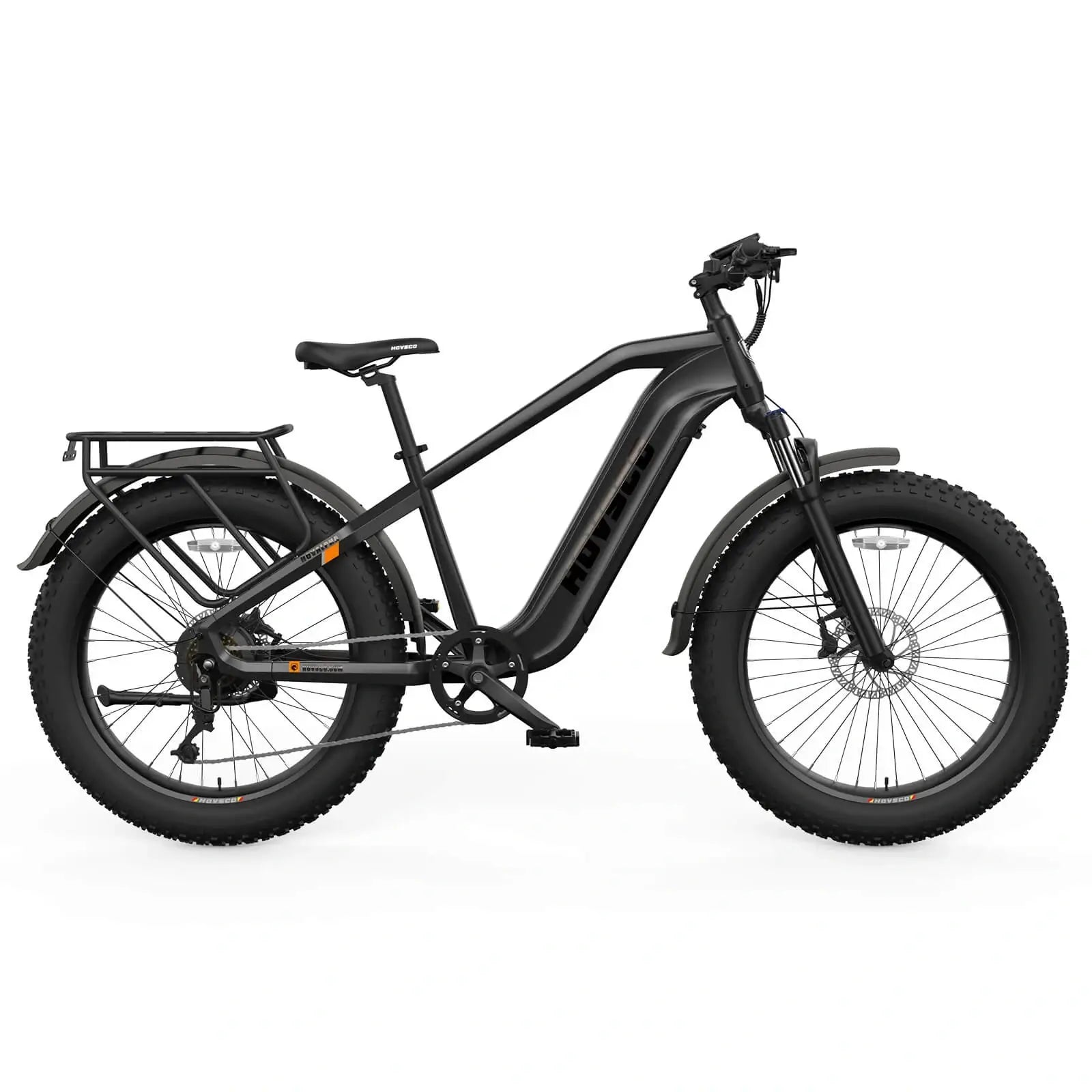
A fat-tire e-bike can work well on a hilly campus, provided storage space allows for its larger footprint and higher weight. Fat tires improve traction on gravel paths, wet pavement, and uneven curbs common on older campuses, and a higher-torque motor like the HovBeta's 85 Nm output handles inclines that a lighter commuter motor would struggle with.
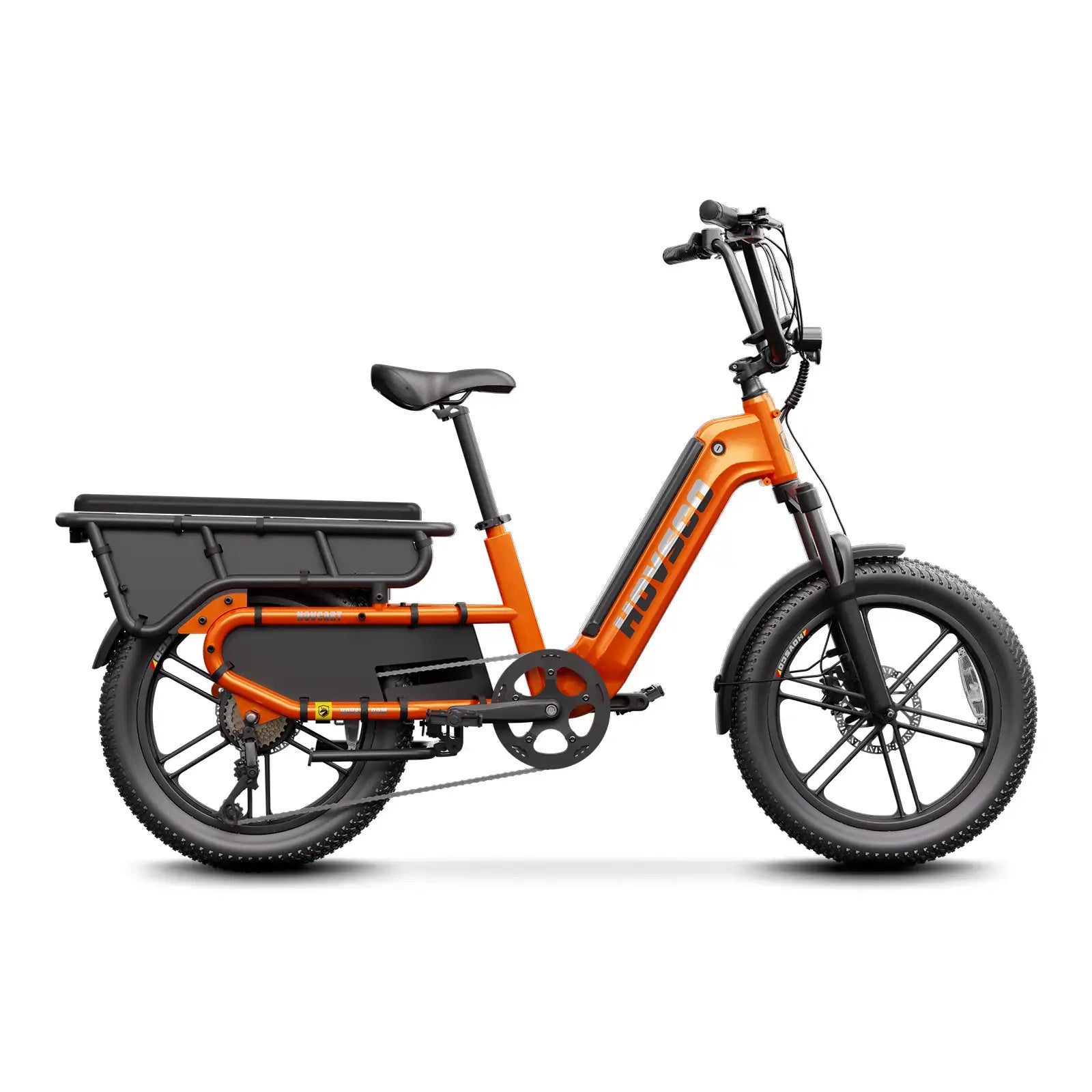
Hilly campuses change the calculus on how to choose electric bike for college students, because a lightweight folder optimized for flat commutes can feel underpowered on a steep quad-to-dorm climb. The HovBeta's 750W sustained motor (1300W peak) and 20-inch fat tires are built for exactly this trade-off: more traction and torque in exchange for extra weight and a bulkier fold. If your campus has genuine elevation change — not just a few gentle slopes — that torque difference is noticeable on every ride, and it's worth the storage compromise if you have garage or ground-floor access rather than a fourth-floor dorm room.
"Students consistently underestimate how much a bike's fold geometry and battery placement affect daily livability," notes a HOVSCO product engineer. "We design the Sync Max's frame specifically around dorm-scale constraints — narrow closets, stairs, shared hallways — rather than shaving grams for a spec sheet. Meanwhile, the HovCity and HovBeta use a removable, key-locked battery precisely because campus fire codes and theft risk are two sides of the same design problem. A bike that looks great in a spec comparison but doesn't fit through your dorm doorway or survive a semester on a public rack isn't solving the actual problem a student has."
Selecting the right e-bike for campus life comes down to matching hard constraints — dorm storage, fire-safety rules, and theft exposure — before comparing motor specs or price. A sub-45 lb folding frame like the Sync Max suits upper-floor dorms and frequent carrying, a mid-weight commuter like the HovCity balances range and payload for daily riding, and a torque-heavy fat-tire model like the HovBeta earns its extra weight on hilly or off-road campus routes. Always verify your housing office's battery and charging policy in writing before ordering, and budget for a hardened lock alongside the bike itself. Getting these fundamentals right the first time saves the cost, and the disappointment, of realizing mid-semester that a great bike simply doesn't fit your dorm life.
Do college dorms allow lithium-ion e-bike batteries?
Policies vary by school and building. Many allow removable batteries under a certain watt-hour rating stored in common areas, while some ban all lithium batteries in sleeping rooms. Always confirm directly with your housing office before purchasing.
What's the lightest e-bike suitable for a dorm room?
Folding models under 45 lbs, such as the HOVSCO Sync Max at 42.3 lbs, are among the easiest to carry up stairs and store in a closet or under a bed without needing elevator access.
Should I buy a used e-bike as a college student on a budget?
Used e-bikes can save money but carry battery-health uncertainty, since lithium cells degrade with age regardless of visible wear. If buying used, ask for the battery's age and cycle count, and prioritize models with replaceable battery packs.
Can I bring an e-bike on a campus shuttle or public bus?
Some campus shuttles and city buses only accept folded e-bikes under a specific weight and size limit. Check the transit provider's policy, since non-folding commuter models are often excluded entirely.
How much should I budget for a lock in addition to the bike?
Plan for $50–$100 for a hardened U-lock rated for angle-grinder resistance. Pairing a low-cost cable lock with an expensive e-bike is a common and costly mistake among first-time student buyers.
Share:
The Door-to-Door E-Bike Commute: Why Riding Time Is Only Half the Trip
What Should a Long-Range Commuter Ebike Checklist Cover?