







![[ New Arrival ] Porto Max Electric Scooter For Commute & Grocery Shopping - HOVSCO](http://www.hovsco.com/cdn/shop/files/PotroMax-3.jpg?v=1706927007&width=1200)
- by SteveJames
How Far Can an Electric Scooter Really Go?
- by SteveJames
E-Bikes
Accessories
 Free Shipping
 15-Day Returns
 2-Year Warranty
Free Shipping
15-Day Returns
2-Year Warranty
2-Year Warranty
Free Shipping
15-Day Returns
2-Year Warranty
A scooter's published range is a reference, not a guarantee: it assumes a light rider, flat ground, moderate speed, and a fresh battery, none of which describes a real day. The honest number comes from the 374.4Wh battery class these scooters share, the rider load, and a return reserve. The range math for scooters lives here; the return-reserve method is in our route planning guide.
Maximum range is a reference, not a guaranteed real-world result. The published 30 or 35 miles assumes ideal conditions — light rider, flat ground, moderate speed, no headwind — and real riding subtracts from every one of those assumptions.
The practical consequence is simple: plan with the lower end of the figure, keep a reserve, and treat the badge as a ceiling rather than a promise. A route that works only on the published number is a route that fails on a windy day.
The same warning appears on the collection page itself, which labels the maximum range a reference rather than a guaranteed result. The honest reading is that the number describes the best case, and the planning starts from what the worst case allows.
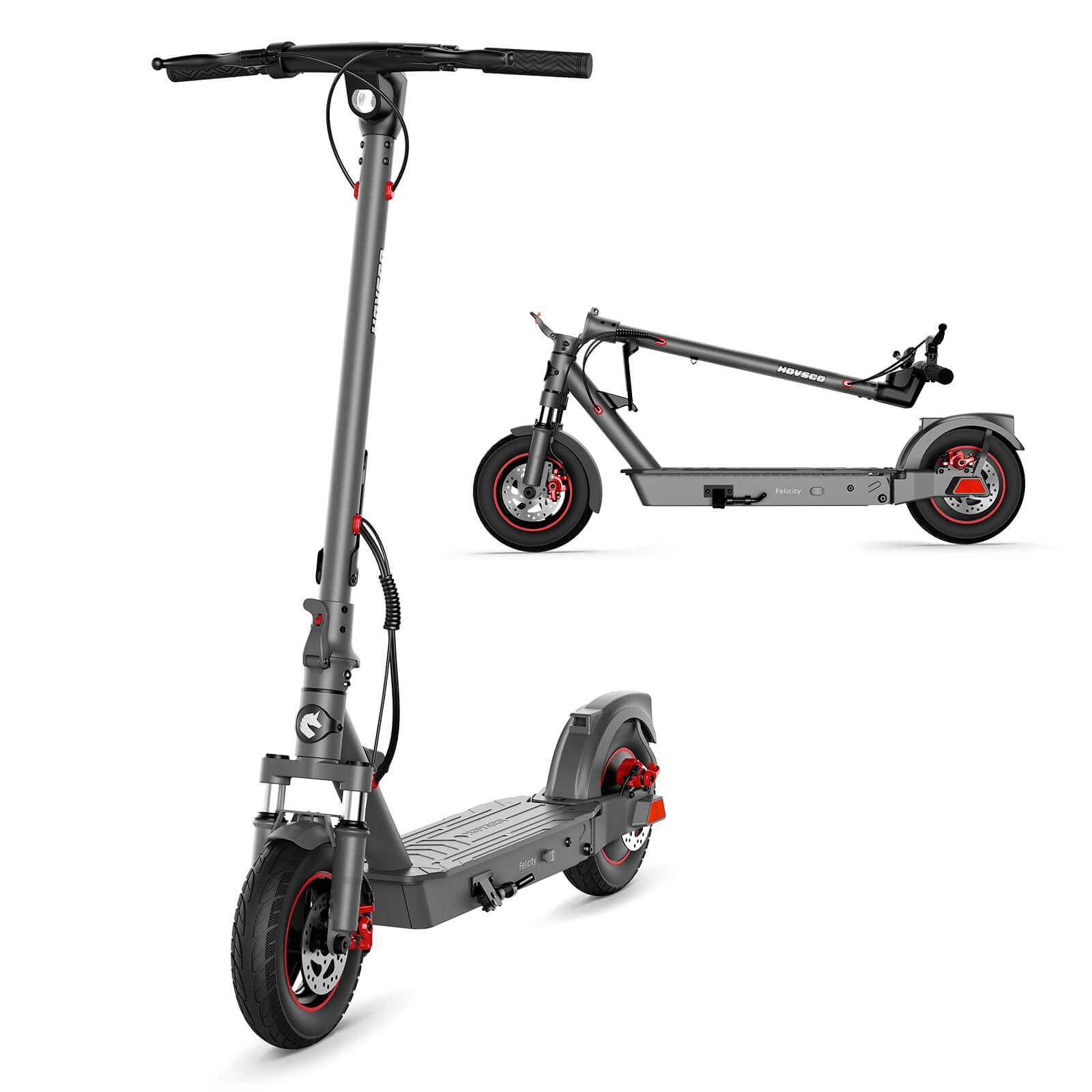
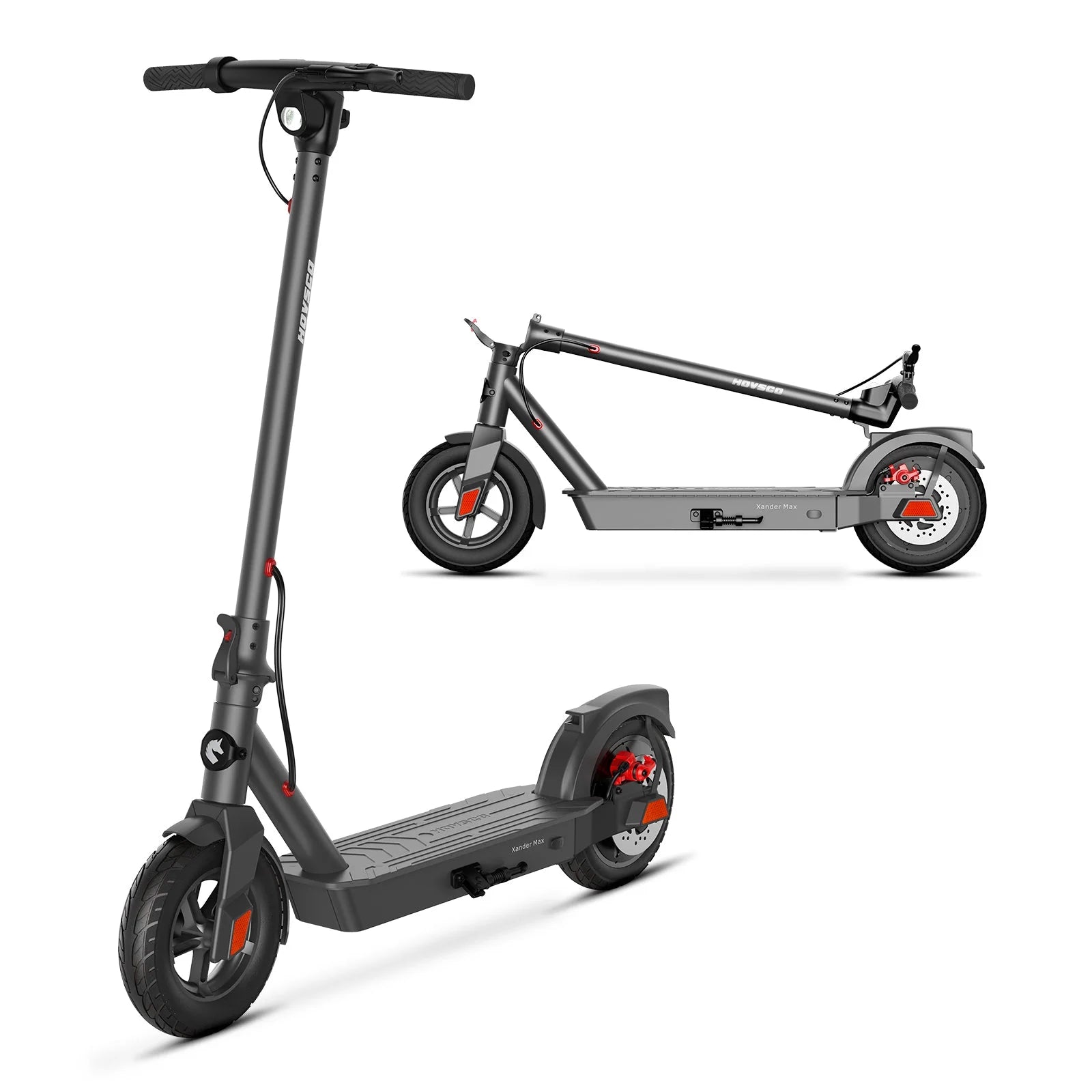
All three scooters in the collection use the same battery: a 36V 10.4Ah pack, which is 374.4 watt-hours. The watt-hour number is the energy actually stored, and it is the same for the Porto Max, the Felicity, and the Xander Max.
That shared class is the key to understanding the range figures: the difference between 35 miles and 30 miles is not a bigger battery — it is the Porto's 12-inch wheels, seated profile, and 43.1 lb weight versus the folders' 10-inch wheels and lighter frames. The battery buys the same energy; the setup spends it differently.
The Porto Max publishes 35 miles because its setup is more efficient on a straight, steady route: 12-inch wheels roll over surface resistance more easily, and the seated position cuts wind and body effort. The folders publish 30 miles because their 10-inch wheels and standing posture cost more energy per mile.
The trade is real: the Porto's efficiency comes with 43.1 lb and a larger footprint, while the Felicity at 40.12 lb offers suspension and 21 mph, and the Xander Max at 36.2 lb offers the lightest carry. The range number is one output of a setup, not an independent feature.
This is why the comparison table in our range-focused guide lists motor, wheels, and weight next to the range figure: the columns explain the number, and the number alone explains nothing.
Fill this in with your own numbers before choosing a scooter.
| Line | Your number |
|---|---|
| Published range (lower end) | 30 mi for the folders, 35 mi for the Porto |
| Daily route total | Farthest point plus the return |
| Reserve (add 20%) | Route total × 1.2 |
| Rider load | Rider weight against the 220–260 lb limits |
| Pass | Route plus reserve fits within the practical range |
If the last line is a clear yes, the battery is not the constraint; carrying and ride feel decide. If it is close, the route needs a plan, not a bigger badge.
Re-run the worksheet when the season changes: the winter version of the same route draws more from the same pack, and the number that worked in September may not hold in January.
Range falls as load and speed rise. A rider near the 220 lb limit of the Felicity or Xander Max, or the 260 lb limit of the Porto Max, will see noticeably less range than the published figure, and riding at maximum speed drains faster than a moderate pace.
The practical rule: use the lower end of the range for the planning number and treat rider weight as a range factor, not just a payload check. A scooter that fits the rider's weight still loses range to the load it carries.
The load also includes what rides along: a backpack, a basket of groceries, or the Porto's rear basket full of errands. Count the full riding weight, not just the rider, and the worksheet matches the real day.
One test with an empty scooter measures nothing about the real week. Measure the range the way you ride: the normal route, the normal rider weight, the normal speed, and the normal stops.
Record the starting and ending charge on a full battery over the regular route, repeat it three times, and average the result. The average, plus a 20% reserve, is the number the route should be planned against — and the number the return should never exceed.
Keep the test notes in the same place as the route worksheet, so the measured number replaces the badge as the figure the whole plan uses.
The honest planning number is the lower end of the published range, reduced further by the rider load and the season, with a 20% reserve on top of the route total. It is smaller than the badge, and it is the number that keeps the return safe.
For most commuters, the practical result is a comfortable 12–20 mile daily window on the folders and a little more on the Porto — plenty for a city week, and the reason the collection page warns against planning to the maximum.
" The range figure on the page is a reference under ideal conditions; the number that matters is the one measured on your route with your load and a reserve. Test it, plan to the lower end, and the return is never a gamble." — HOVSCO Engineering & Content Team
A scooter's real range is the lower end of the published figure, adjusted for rider load and conditions, with a 20% reserve on the route total. All three scooters share the same 374.4Wh battery, so the practical difference comes from setup — and the safe number comes from measurement.
How far does an electric scooter really go?
The published figures are 30–35 miles, but the practical range depends on rider weight, hills, wind, temperature, speed, and stops. Plan with the lower end of the figure plus a 20% reserve.
Do all three HOVSCO scooters use the same battery?
Yes. The Porto Max, Felicity, and Xander Max all use a 36V 10.4Ah (374.4Wh) pack. The range difference comes from wheels, rider setup, and weight, not from battery size.
Why is the Porto Max rated for 35 miles when the others are 30?
Its 12-inch wheels roll more efficiently and the seated position reduces wind and effort on steady routes. The trade is a heavier 43.1 lb scooter with a larger footprint.
How much should I subtract for rider weight?
A rider near the 220 lb limit of the folders or the 260 lb limit of the Porto will see less than the published range. Treat rider weight as a range factor and use the lower end for planning.
How do I measure my scooter's real range?
Ride the normal route with the normal load three times on a full battery, record the charge used, and average the result. Add a 20% reserve to the planning number.
Share:
What Are the Best Electric Bikes for Small Businesses?
How to Carry and Store a Folding Electric Scooter