






![[ New Arrival ] Porto Max Electric Scooter For Commute & Grocery Shopping - HOVSCO](http://www.hovsco.com/cdn/shop/files/PotroMax-3.jpg?v=1706927007&width=1200)
- by SteveJames
How Do You Measure Inseam for an Electric Bike?
- by SteveJames
E-Bikes
Accessories
 Free Shipping
 15-Day Returns
 2-Year Warranty
Free Shipping
15-Day Returns
2-Year Warranty
2-Year Warranty
Free Shipping
15-Day Returns
2-Year Warranty
Your height tells you which bikes are roughly in your range, but your inseam decides whether a bike actually fits. The inseam is the distance from the floor to the top of your inner leg, and it is the measurement that determines whether you can stand flat-footed over a frame, reach the ground at a stop, and set the saddle at a height you can pedal comfortably. For short riders, this number is usually the one that makes or breaks a purchase. Measuring it takes about five minutes at home — here is exactly how.
At a Glance
| What you need | A wall, a hardcover book, a tape measure, a pencil, thin socks |
| Time needed | About 5 minutes |
| Position | Barefoot or thin socks, feet 6–8 in (15–20 cm) apart |
| Output | Your inseam in inches and cm — the number to compare against seat height and standover specs |
Two riders can be exactly the same height and need very different frames. Body proportions vary: one rider's height is mostly in the torso, another's is mostly in the legs. A 5'4" rider with a long inseam can often use a frame that feels tall for a 5'6" rider with a short inseam.
Electric bikes are heavier than traditional bicycles, which makes fit more than a comfort issue. When you stop at a light, you stop being balanced by motion. If the frame is too tall to stand over and the saddle cannot drop far enough, you end up on tiptoes, trying to keep a heavy e-bike steady. Your inseam is the number that predicts whether that will happen, which is why frame geometry tables publish minimum seat heights and standover figures alongside rider height ranges. Height gets you in the door; inseam confirms the fit.
Most of these are already in your home. Gather them before you start, and the measurement takes about five minutes.
Two preparation details make the measurement reliable. First, measure at the end of the day: your spine settles slightly over the course of a day, and evening measurements are closer to your riding length. Second, measure on a hard floor — carpet compresses under your feet and skews the result upward by half an inch or more.
Here is how to measure your inseam for an electric bike in seven steps, using nothing more than a wall, a book, and a tape measure.
No helper? Stand beside the wall instead of in front of it, use a mirror to check that the book is level, or rest your phone (with a level app) on top of the book.
Once you have the number, compare it to two published figures on the bike you are considering: the minimum seat height (ground to top of the saddle at its lowest setting) and the standover height (ground to the top of the frame where you stand over it). The table below is general guidance for narrowing your search — e-bikes do not share one universal size system, so always confirm against the specific model's spec sheet.
| Inseam | Typical rider height | What to look for |
|---|---|---|
| 24–27 in (61–69 cm) | ~4'8"–5'0" | Low-entry / step-through frames; minimum seat height near or below your inseam |
| 27–30 in (69–76 cm) | ~5'0"–5'4" | Step-through or low standover; check the seat height range carefully |
| 30–33 in (76–84 cm) | ~5'4"–5'10" | Standard frames generally fit; verify standover clearance |
| 33–36 in (84–91 cm) | ~5'10"–6'3" | Standard frames; taller riders should check the maximum seat height |
As a rule of thumb, your inseam should be comfortably longer than the standover measurement — the exact clearance target is covered in our standover height guide, and low-entry frames remove most of that constraint entirely.
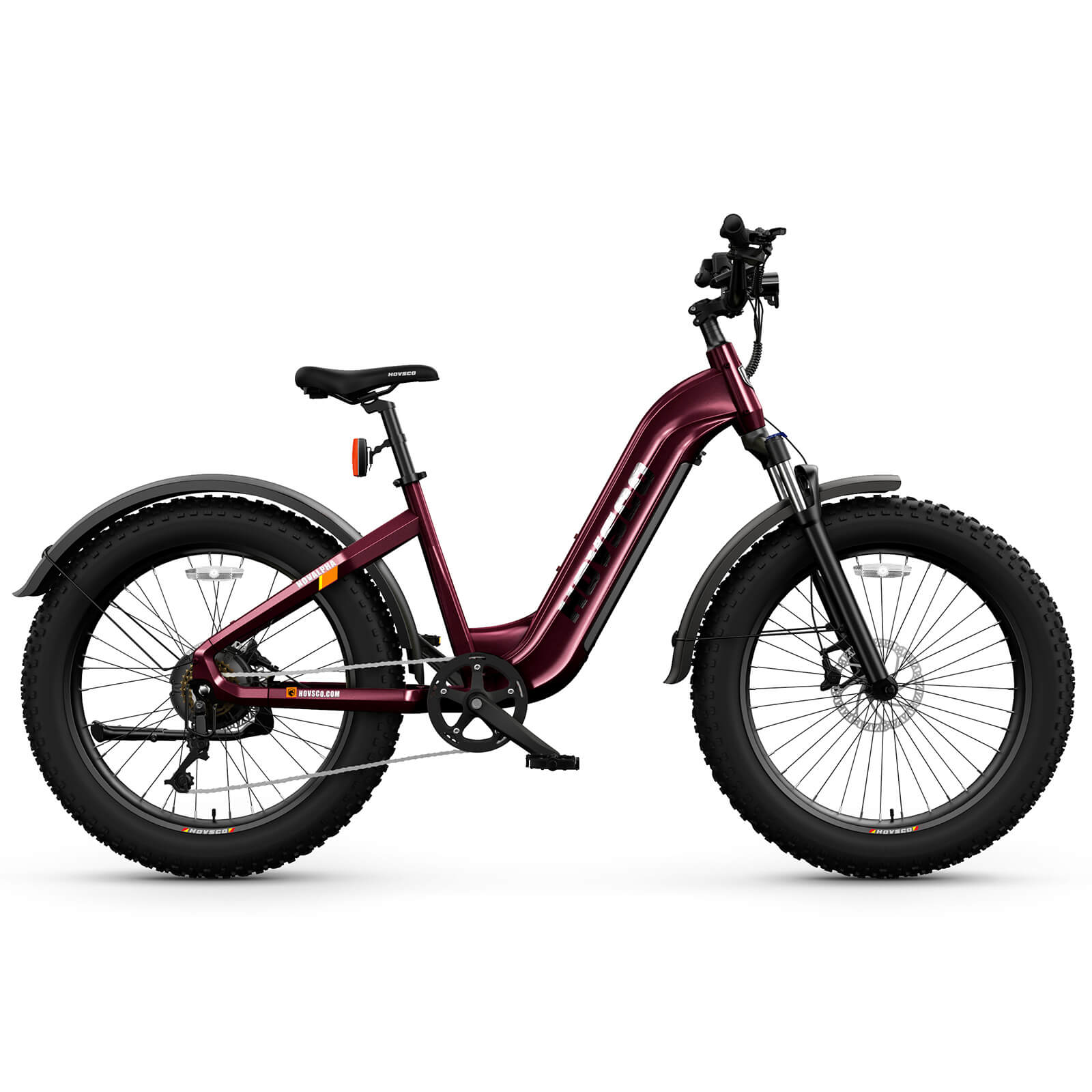
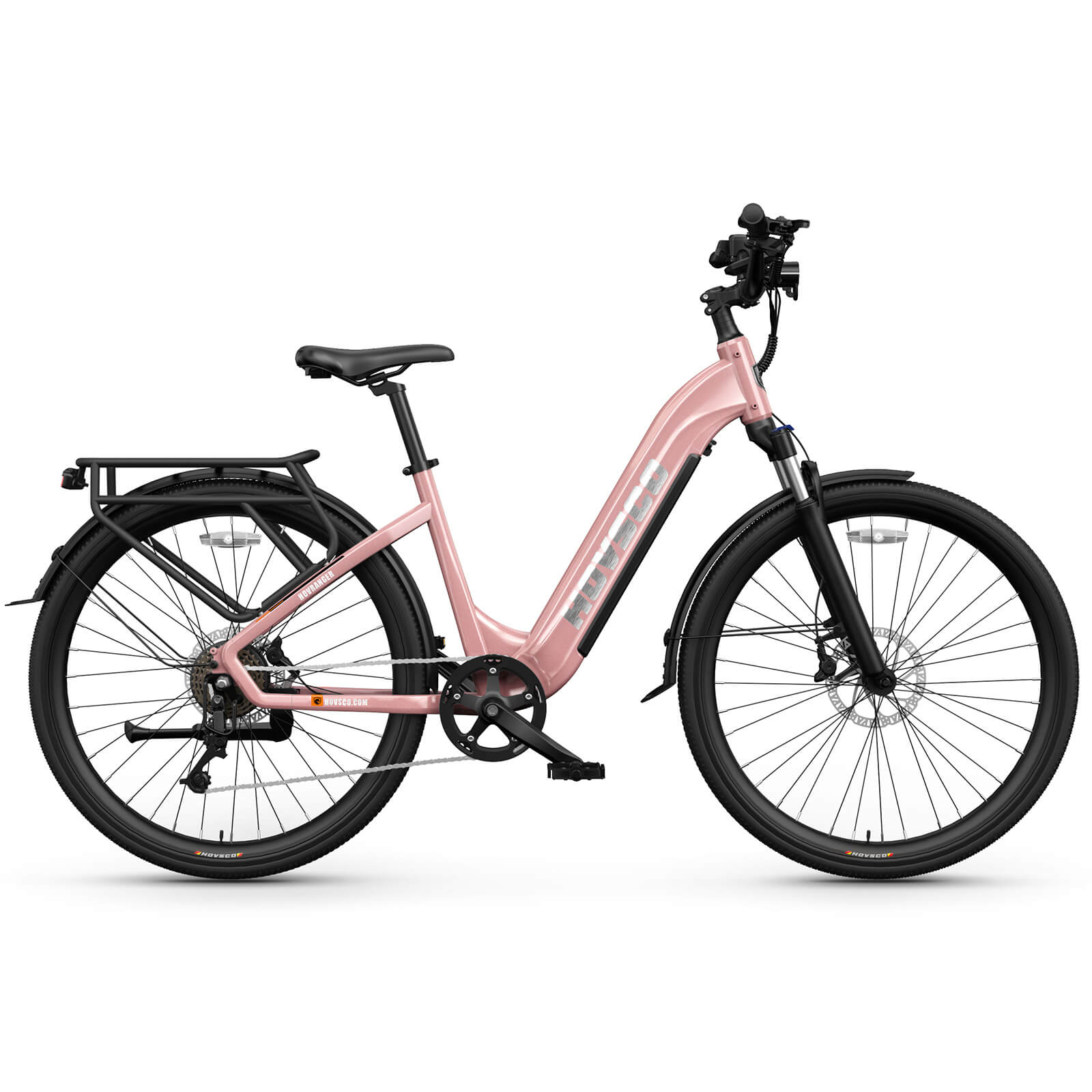
If your inseam lands on the shorter side, treat it as a filter rather than a verdict. Three things make most e-bikes workable for shorter riders: a minimum seat height that lets the saddle sit low, a standover you clear with room to spare, and a low-entry frame that lets you step through instead of swinging a leg over a heavy machine.
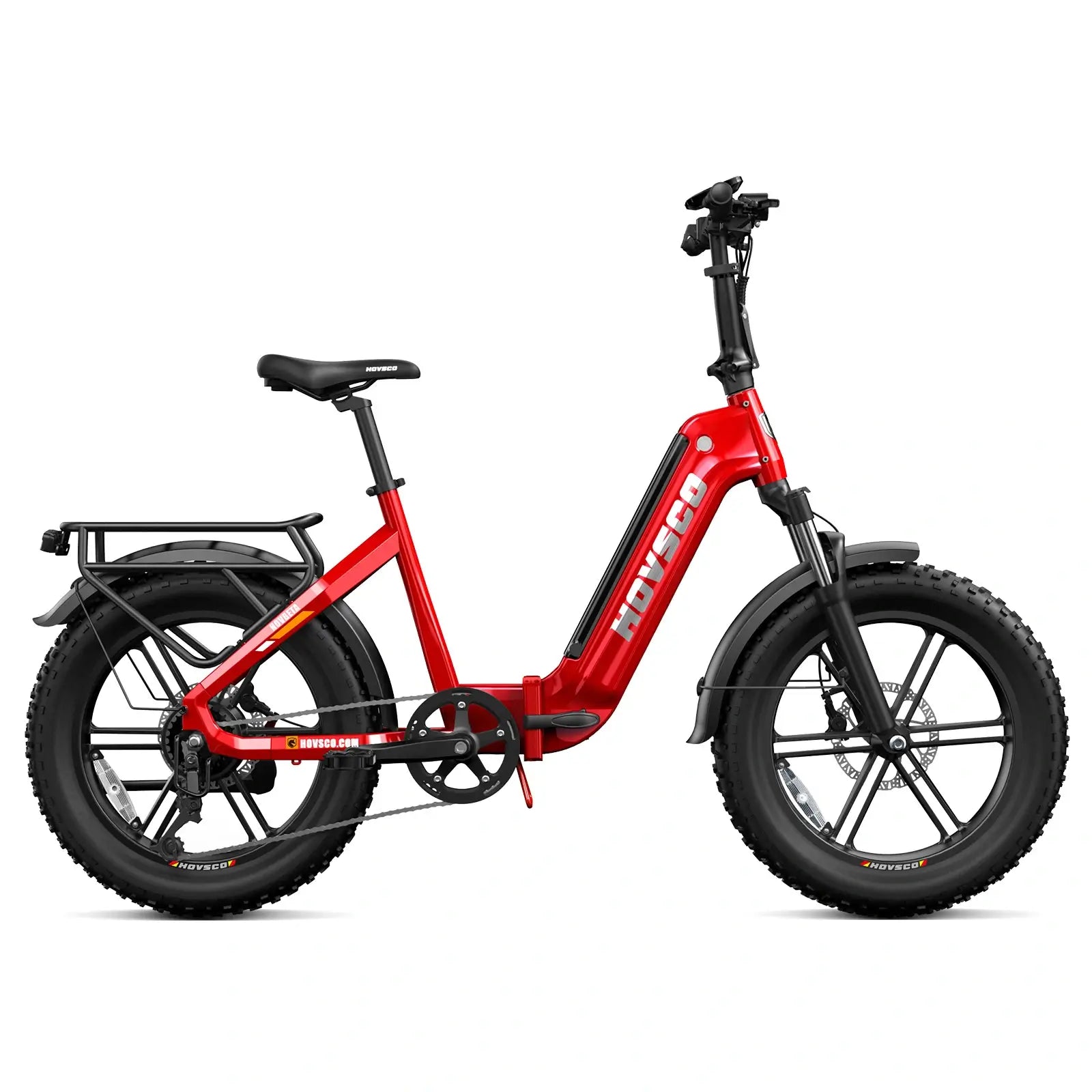
To see how this works with real published numbers, consider the HOVSCO HovBeta: its geometry sheet puts the minimum seat height at 32.37 in (82.25 cm), the standover at 10.63 in (270 mm), and the rider range at 4'11"–6'3" (150–190 cm). A 5'0" rider with a 27.5 in inseam, for example, clears the frame by a wide margin and can run the saddle at the bottom of its range — the low-entry design keeps stops flat-footed. If you would rather start from a shortlist, HOVSCO's electric bikes for short riders collection filters models by exactly these fit numbers.
One honest caveat: seat posts and saddle swaps can buy you another inch or two, but they should not be the reason a frame works. Choose a frame that fits your inseam at its published minimums, then treat adjustments as fine-tuning.
Even a careful measurement goes wrong in predictable ways. These are the mistakes we see most often, in roughly the order they tend to happen.
"Inseam is the measurement that links a rider to a frame. It tells us whether the standover and saddle range will line up before the bike ever leaves the shop — get that one number right and most fit problems never happen, especially for riders under 5'3"." — HOVSCO Engineering & Content Team
Measuring your inseam correctly takes five minutes and removes most of the guesswork from buying an e-bike. Compare the result against each model's minimum seat height and standover, favor low-entry frames when your inseam is short, and treat any remaining fit questions as adjustable details rather than the reason a bike works. Get this number right and every bike you test afterward becomes easier to evaluate.
How do you measure inseam for an e-bike at home?
Stand against a wall with feet 6–8 in apart, pull a hardcover book up snugly between your legs with the spine level, mark the wall at the top of the book, and measure from the floor to the mark. Repeat once and average the two readings.
Should you measure inseam with shoes on?
No. Measure barefoot or in thin socks so the number matches the spec sheets. If you always ride with thick-soled shoes, you can add the heel rise afterward, but compare the base measurement first.
Is inseam the same as leg length?
Not exactly. Inseam is the inside-leg distance from the floor to the crotch, which is what bike fit uses. Pants inseams and overall leg length measure differently and can be misleading for frame sizing.
How accurate does the measurement need to be?
Within half an inch is enough for most sizing decisions. Measure twice and average the readings; if they differ by more than half an inch, measure a third time.
What inseam do I need for an electric bike?
There is no single answer — it depends on the frame. Compare your inseam to the bike's minimum seat height and standover, and favor low-entry frames if your inseam is short. HOVSCO publishes both numbers on its product pages so you can check before buying.
Share:
Which HovGtrs Battery Plan Is Right: Evo, Pro or Ultra?
Lightweight vs Standard E-Bikes: What Do You Gain and Give Up?