



![[ New Arrival ] Porto Max Electric Scooter For Commute & Grocery Shopping - HOVSCO](http://www.hovsco.com/cdn/shop/files/PotroMax-3.jpg?v=1706927007&width=1200)
- by SteveJames
How Do You Choose an E-Bike for Grocery Shopping?
- by SteveJames
E-Bikes
Accessories
 Free Shipping
 15-Day Returns
 2-Year Warranty
Free Shipping
15-Day Returns
2-Year Warranty
2-Year Warranty
Free Shipping
15-Day Returns
2-Year Warranty
To choose an e-bike for grocery shopping, start with the amount you actually carry, then match it to a stable cargo setup, easy step-through access, realistic battery range, and practical parking. A compact commuter works for a few bags; a cargo e-bike suits larger weekly shops. Prioritize confirmed rack and basket compatibility over generic accessories.
Shopping by e-bike is not simply about adding a basket to any frame. The best setup should make loading, riding, stopping, and unloading feel predictable—even when you have glass jars, frozen food, or a heavy bag of produce. This guide explains how to choose electric bike for grocery shopping trips based on your real errands rather than marketing claims.
Choose your e-bike according to your normal grocery load, not the occasional oversized shopping trip. A light setup suits one to two bags, while a weekly household shop needs a purpose-built rear rack or cargo platform that keeps weight low, secure, and centered.
Before comparing motors or claimed range, weigh a typical grocery run at home. A “small shop” can become 20–30 lb once you add drinks, canned goods, detergent, and reusable bags. An overloaded basket may not break immediately, but it can make the bike weave, lengthen stopping distance, and strain mounting hardware.
Use this practical shopping-volume filter:
Quick top-up trip: Bread, produce, milk, and a few pantry items; prioritize a front basket or rear rack.
Two-person weekly shop: Several filled bags; use a rear rack plus properly secured panniers or a compatible rear basket.
Family grocery run: Bulk packs, beverages, large produce boxes, or multiple bags; choose a cargo-focused platform with higher payload capacity and dedicated cargo mounting.
Mixed errands: Groceries plus a laptop, parcel, or gym gear; separate fragile food from heavy items instead of stacking everything in one container.
A useful factory-floor rule is to plan for “dynamic load,” not just static weight. A 25 lb grocery bag hits the rack harder when you roll off a curb, cross a pothole, or brake abruptly. Leave a safety margin below every stated load limit, and place dense items—cans, bottles, pet food, and rice—closest to the bike’s center.
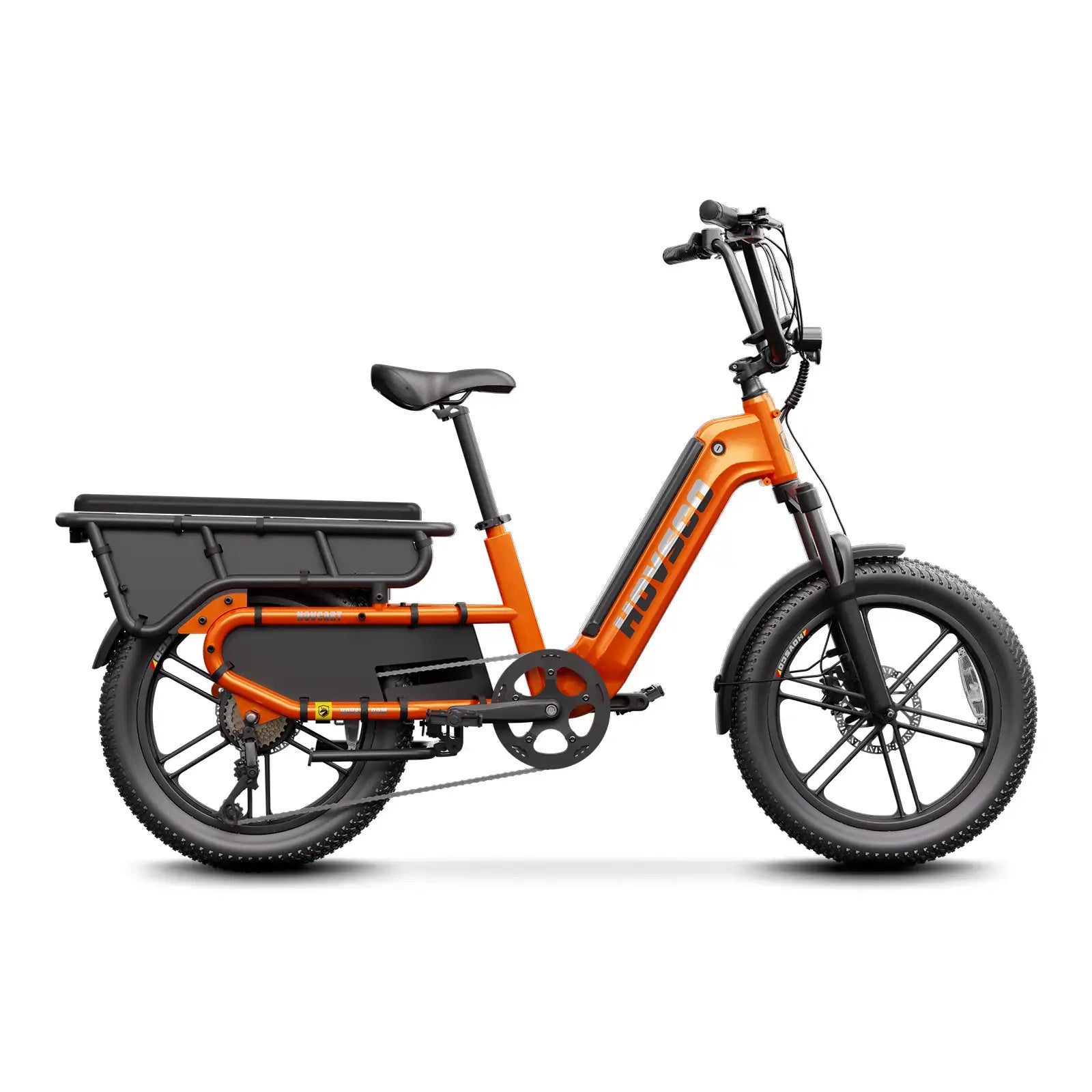
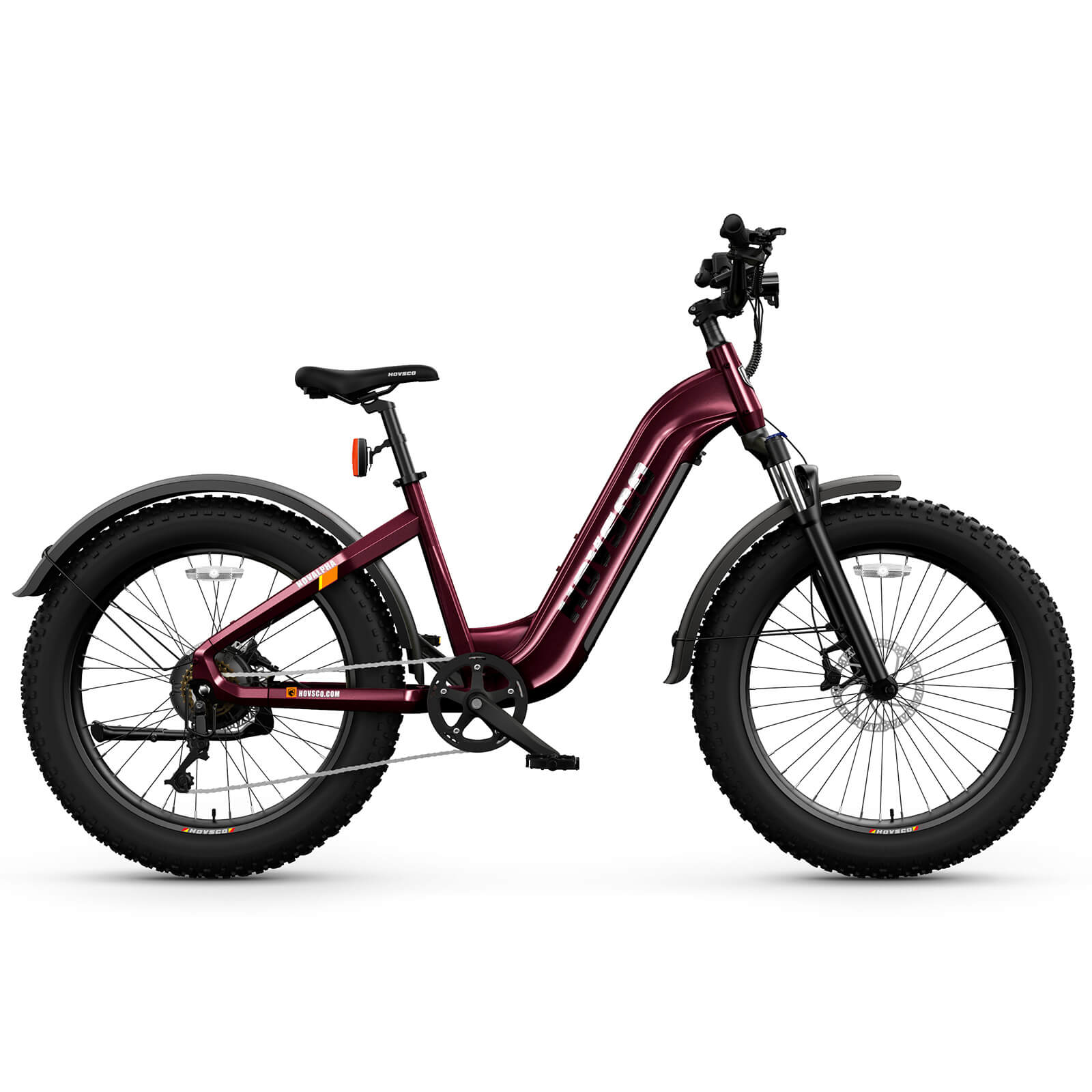
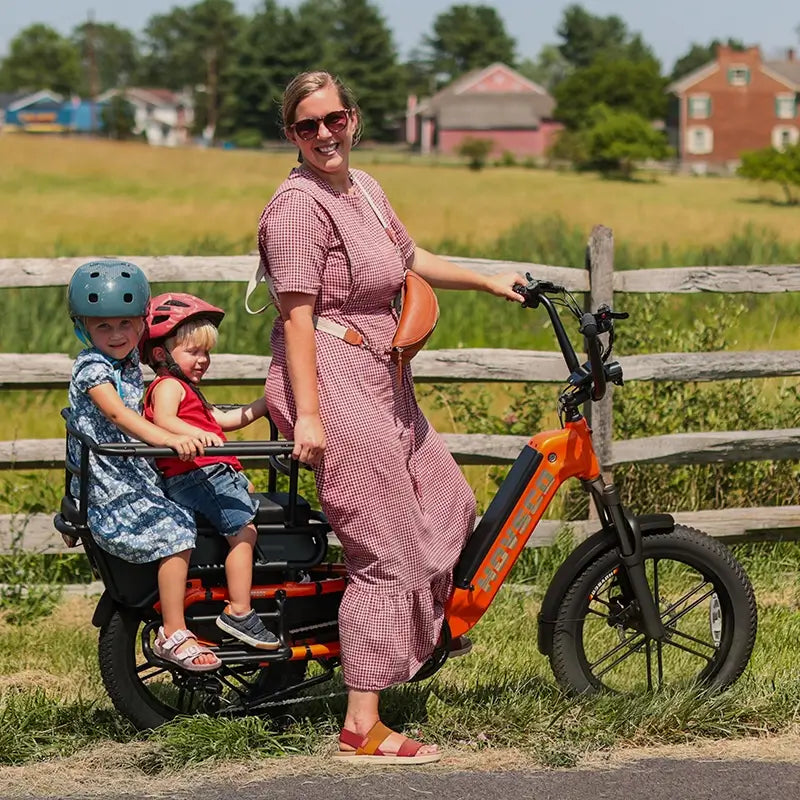
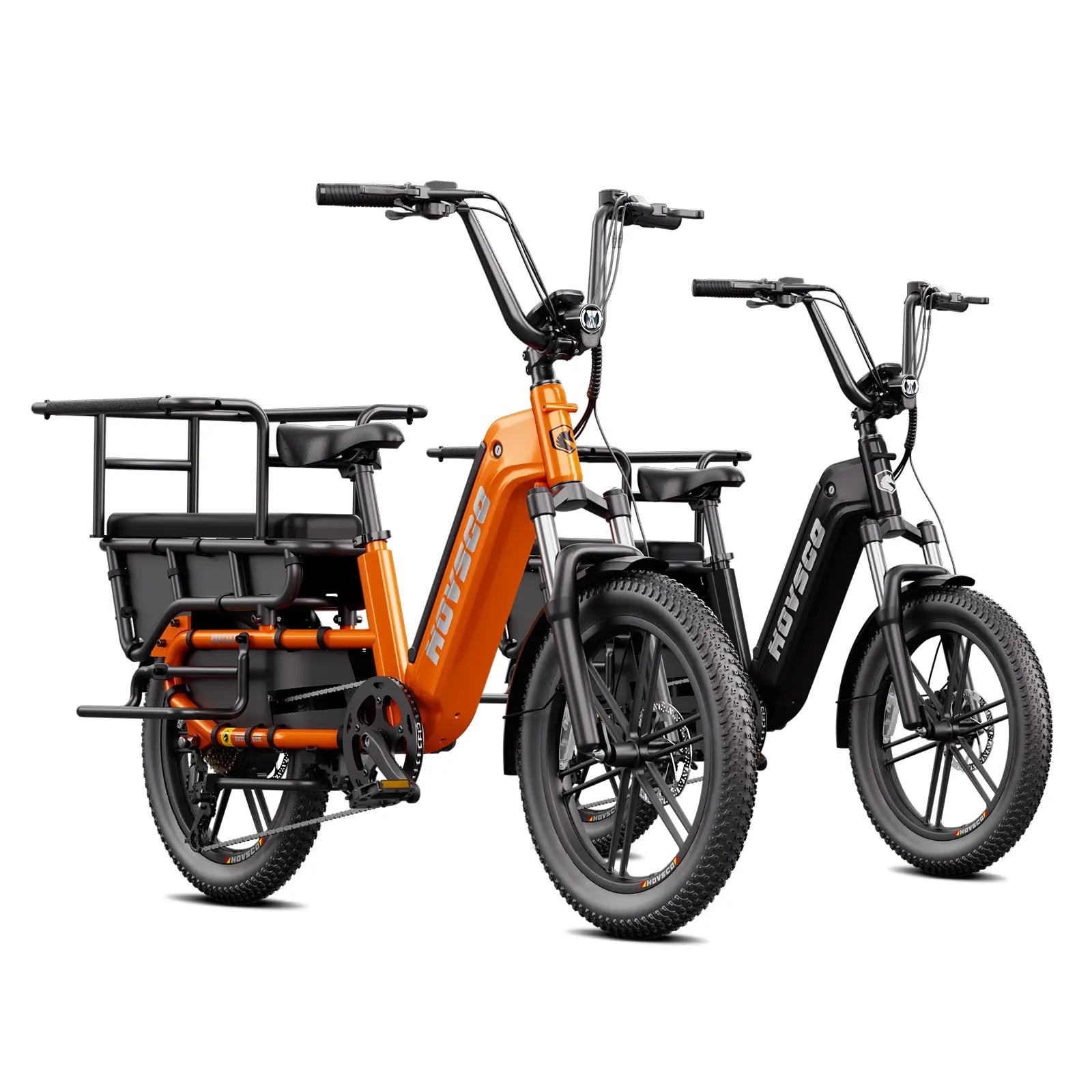
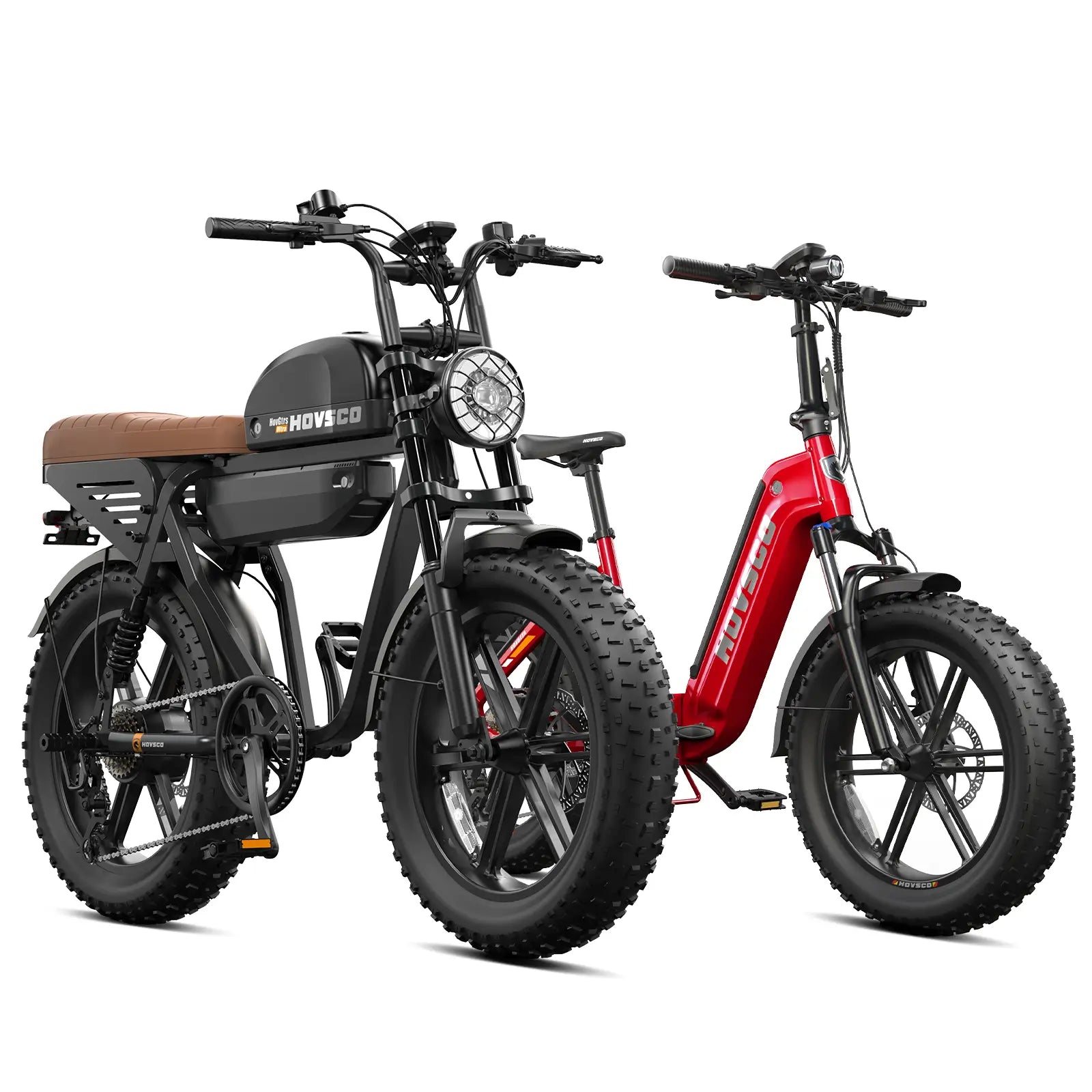
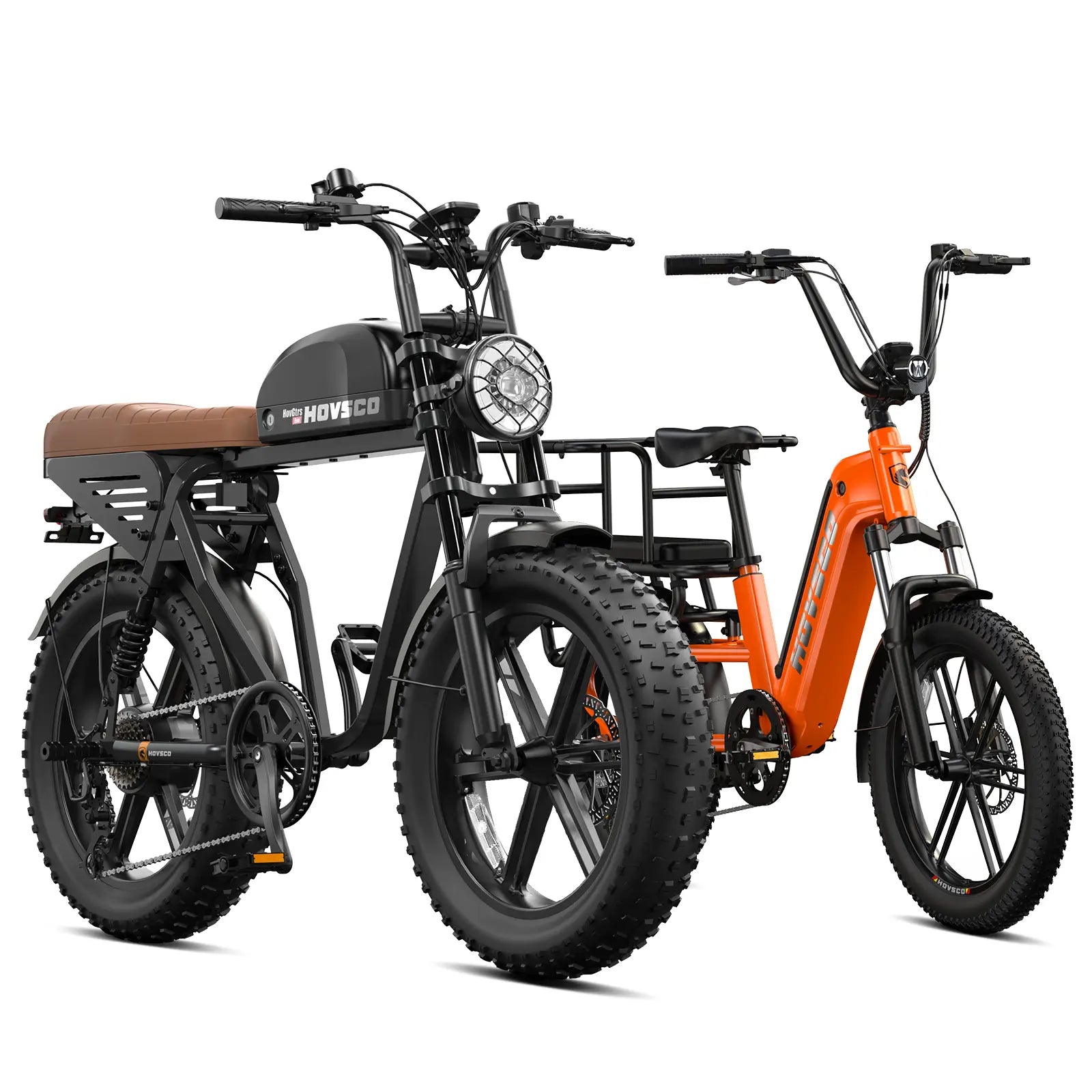
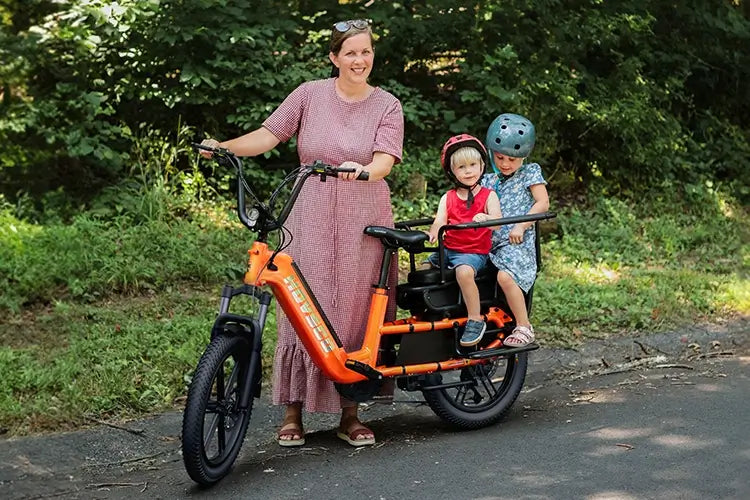
For big-volume errands, HOVSCO HovCart is the natural starting point because its cargo-oriented format supports a confirmed large rear-mounted basket and a confirmed front-mounted basket. For lighter runs, a commuter or folding e-bike can be much easier to park, store, and use daily.
Use only accessories confirmed for the exact e-bike model. A front basket is best for light, visible items; a rear rack carries denser loads with less effect on steering; and a cargo-bike rear basket is the strongest option for bulky grocery trips.
The accessory is only as safe as its mounting interface. “Universal” does not always mean compatible: rack tubing diameter, mounting eyelets, brake-light clearance, tire clearance, and frame geometry all affect fit. A basket that appears to fit can still shift under load or interfere with cables and steering.
For fragile groceries, cargo placement matters more than basket size. Put eggs, berries, bread, and leafy vegetables on top; position bottles, canned food, and other dense goods at the bottom. Use a cargo net or straps to stop bags from bouncing upward over rough pavement.
Avoid hanging a full grocery bag from the handlebar. It can swing into the front wheel, pull the steering off center, and overload the rider’s wrists during low-speed turns. A correctly mounted basket is safer because it distributes the load through the bike’s intended mounting points.
When exploring HOVSCO options, use the natural collection-page anchor text electric bikes for grocery shopping to compare riding formats first, then select only the accessory designed for the chosen model.
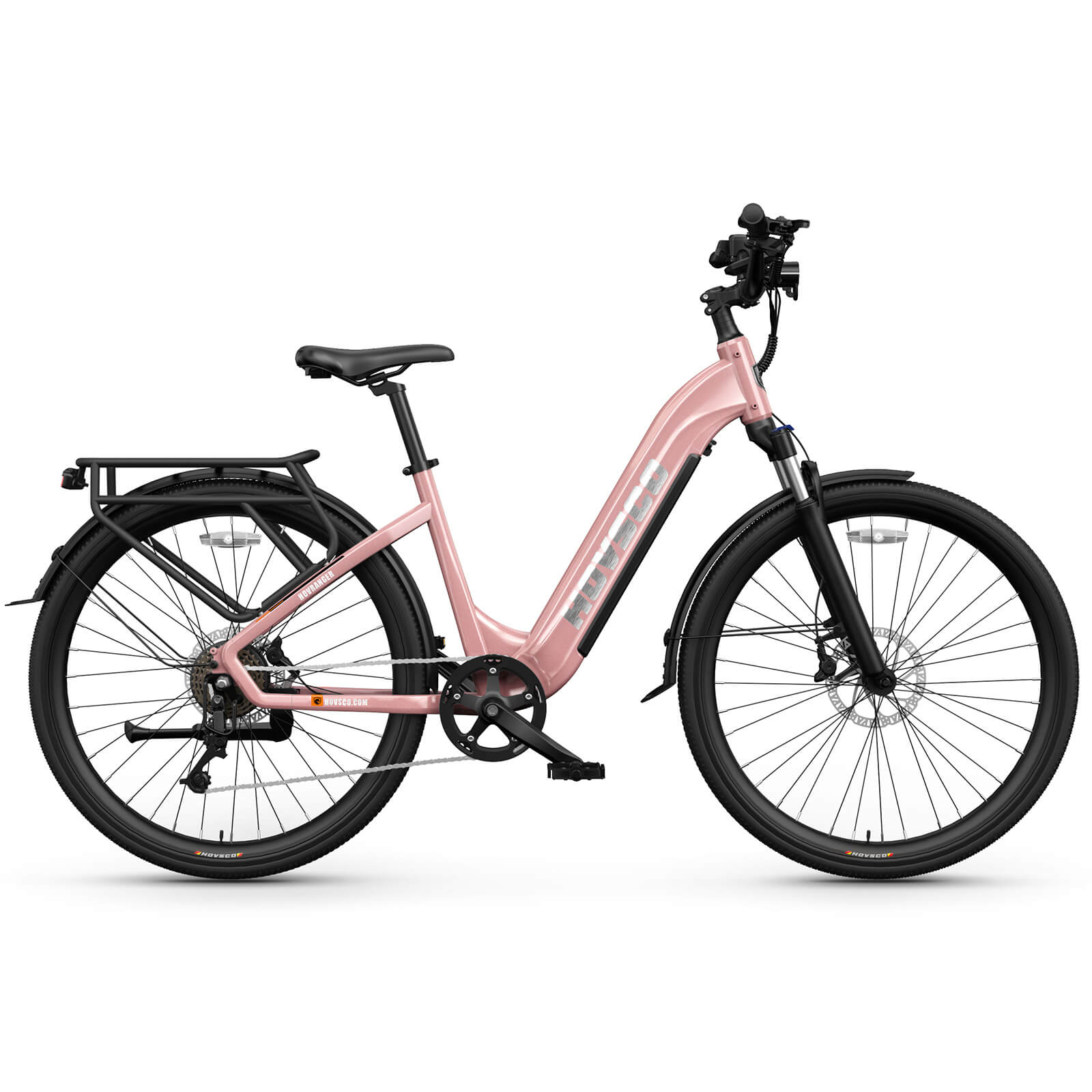
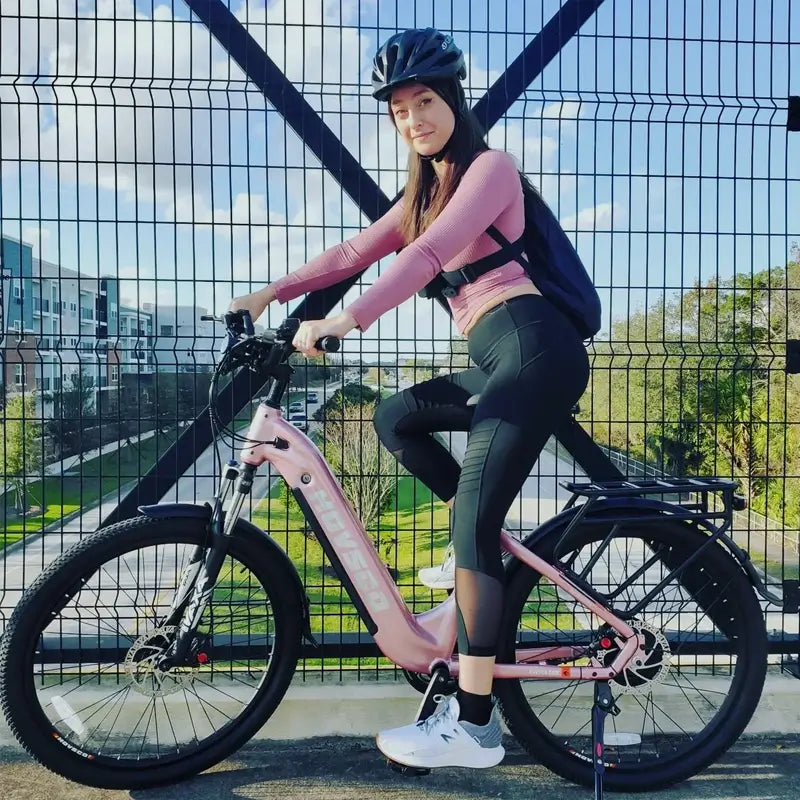
A low-step frame makes grocery errands easier because you can mount and dismount without swinging a leg over loaded cargo. It is especially useful when stopping frequently, wearing everyday clothes, managing knee or hip mobility, or riding with a rear basket full of groceries.
The value becomes obvious at the store entrance. After loading bags, the bike becomes wider and heavier. A step-through design lets you stand over the frame, hold both brakes, stabilize the bike, and step off cleanly. That is safer than trying to clear a rear rack, pannier, or basket with a high leg swing.
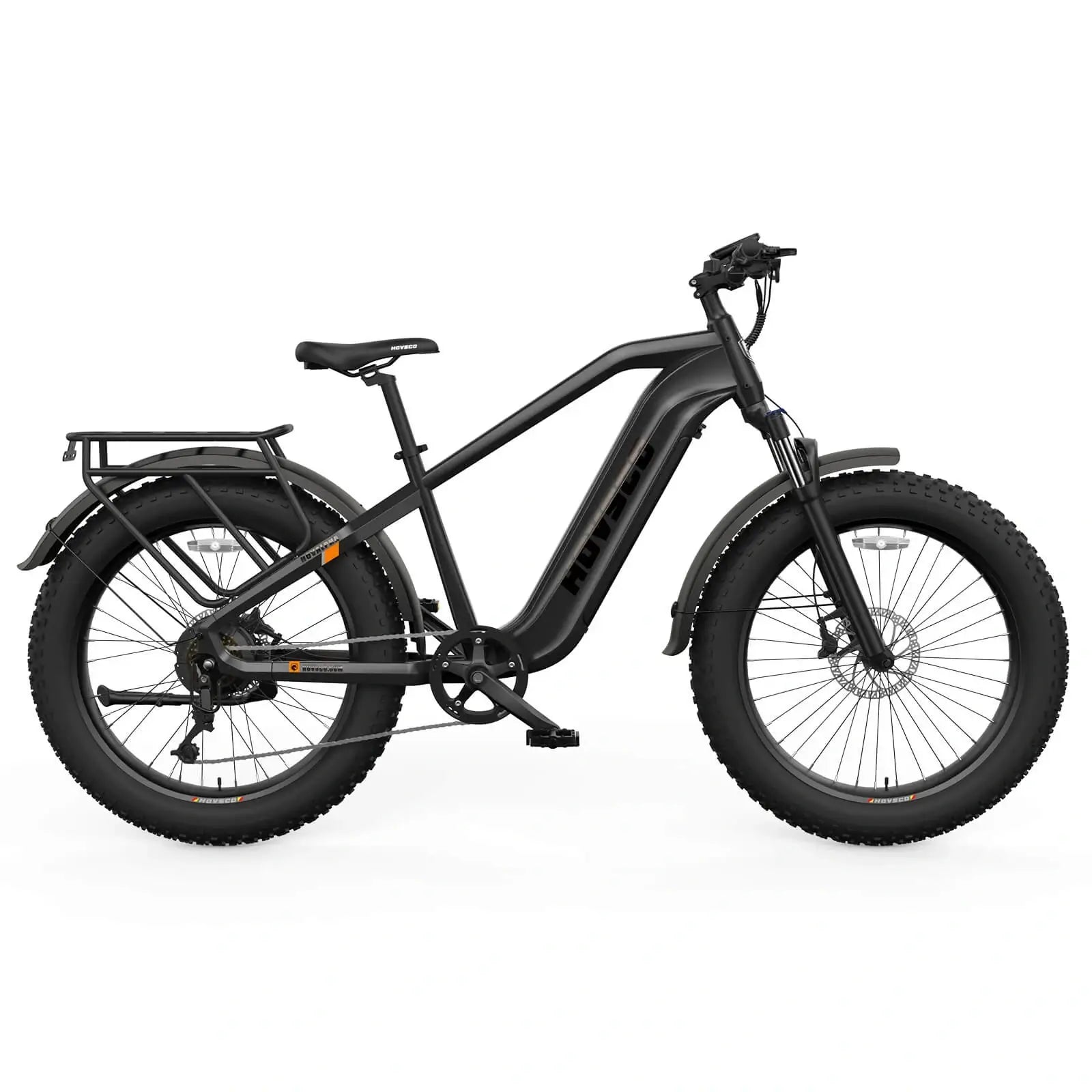
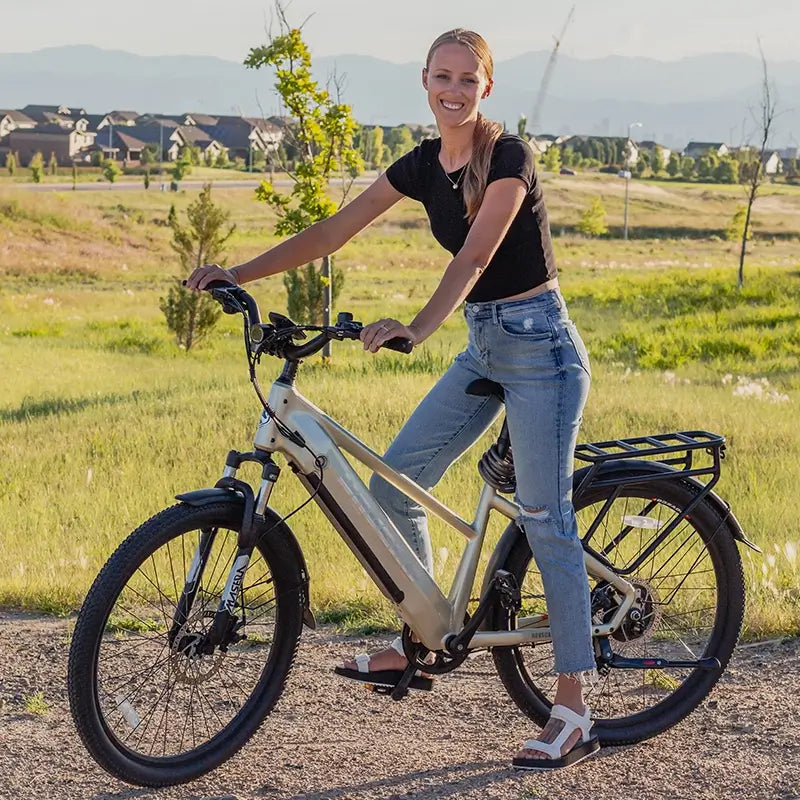
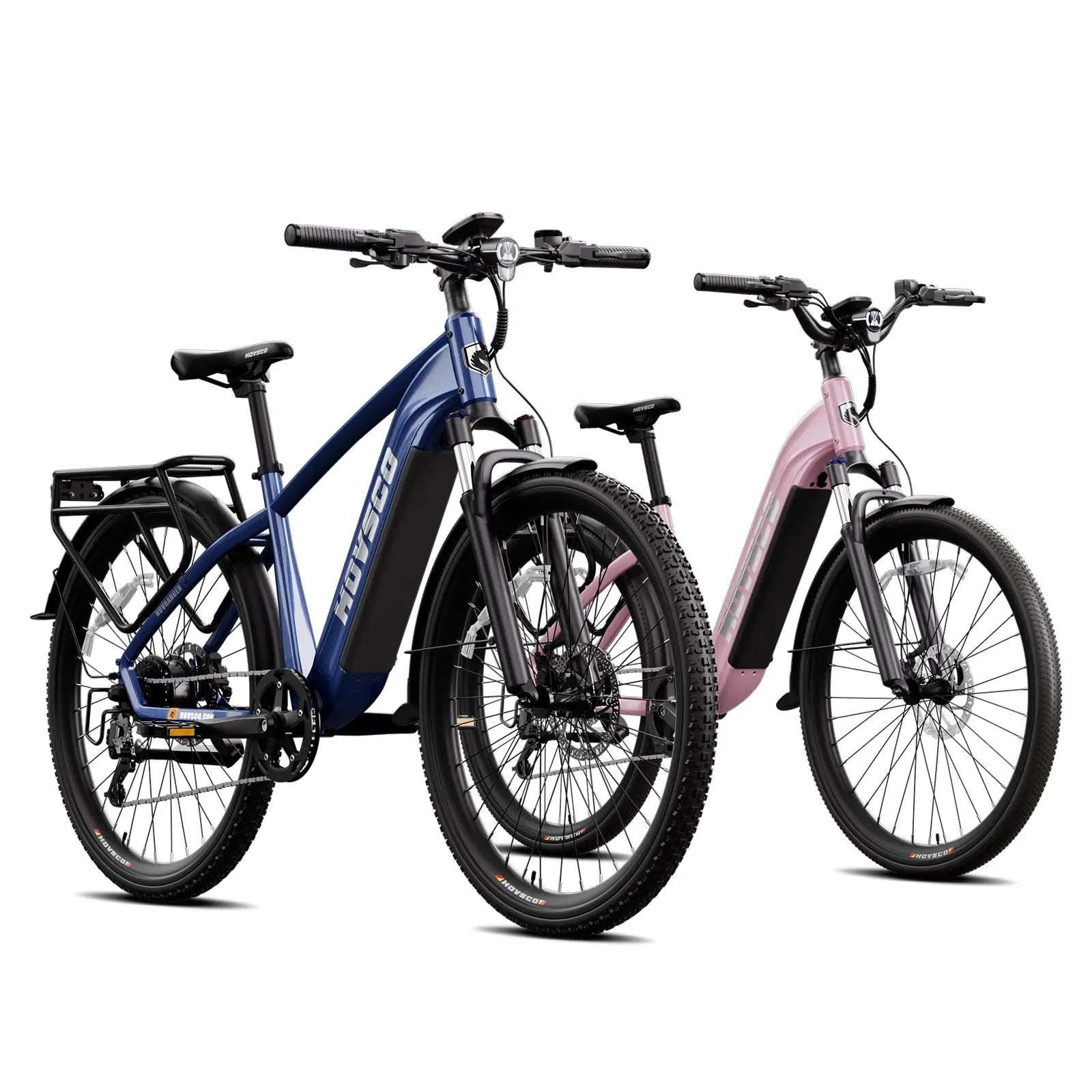
HovRanger Step-Thru is designed around this practical convenience. Its included rear rack and optional front basket create a sensible grocery configuration for riders who want an upright urban bike rather than a full cargo platform.
Low-step access does not eliminate the need for loading discipline. Always park on level ground when possible, engage the kickstand fully, and load the heaviest items first. If the bike begins to lean toward the non-kickstand side, stop and redistribute cargo before riding.
For grocery shopping, choose battery range based on round-trip distance, hills, cargo weight, weather, and your preferred assist level—not the maximum range printed in ideal conditions. A practical reserve prevents a heavy, loaded e-bike from becoming difficult to pedal home.
A typical neighborhood grocery errand may be short, but its energy demand can be surprisingly high. The outbound ride may be easy; the return trip adds cargo, stop-and-go traffic, and possibly a hill. Cold conditions, soft tires, strong headwinds, and frequent high-assist acceleration also reduce real-world range.
Use this planning method:
Calculate your store round trip, including detours and the ride from the parking area to home.
Add a range buffer for the return load and changes in weather.
Select an assist level that gives you confidence rather than depending on the battery’s final bar.
Recharge after substantial rides according to the manufacturer’s instructions; do not rely on irregular, last-minute charging.
Motor power matters most when your route includes hills or repeated acceleration with cargo. However, smooth power delivery and controlled pedaling are often more useful than chasing a large wattage number. A loaded bike benefits from starting gently in a low gear, building speed progressively, and avoiding sudden high-torque launches.
This is a key part of how to choose electric bike for grocery shopping: buy enough battery for your actual route with a safety margin, then use the assist system efficiently. Range confidence is more valuable than a headline estimate you can rarely reproduce.
Parking matters because a grocery e-bike must fit the places where you stop, lock up, turn around, and store it. A larger cargo bike offers more carrying capacity, but a compact model may be the better purchase if your apartment, store rack, elevator, or storage room has tight space.
Measure your routine before purchasing. Check the width of your hallway, the depth of your storage area, the rack style outside your grocery store, and whether you must lift the bike over a curb or threshold. Also consider whether loaded baskets remain attached while parked.
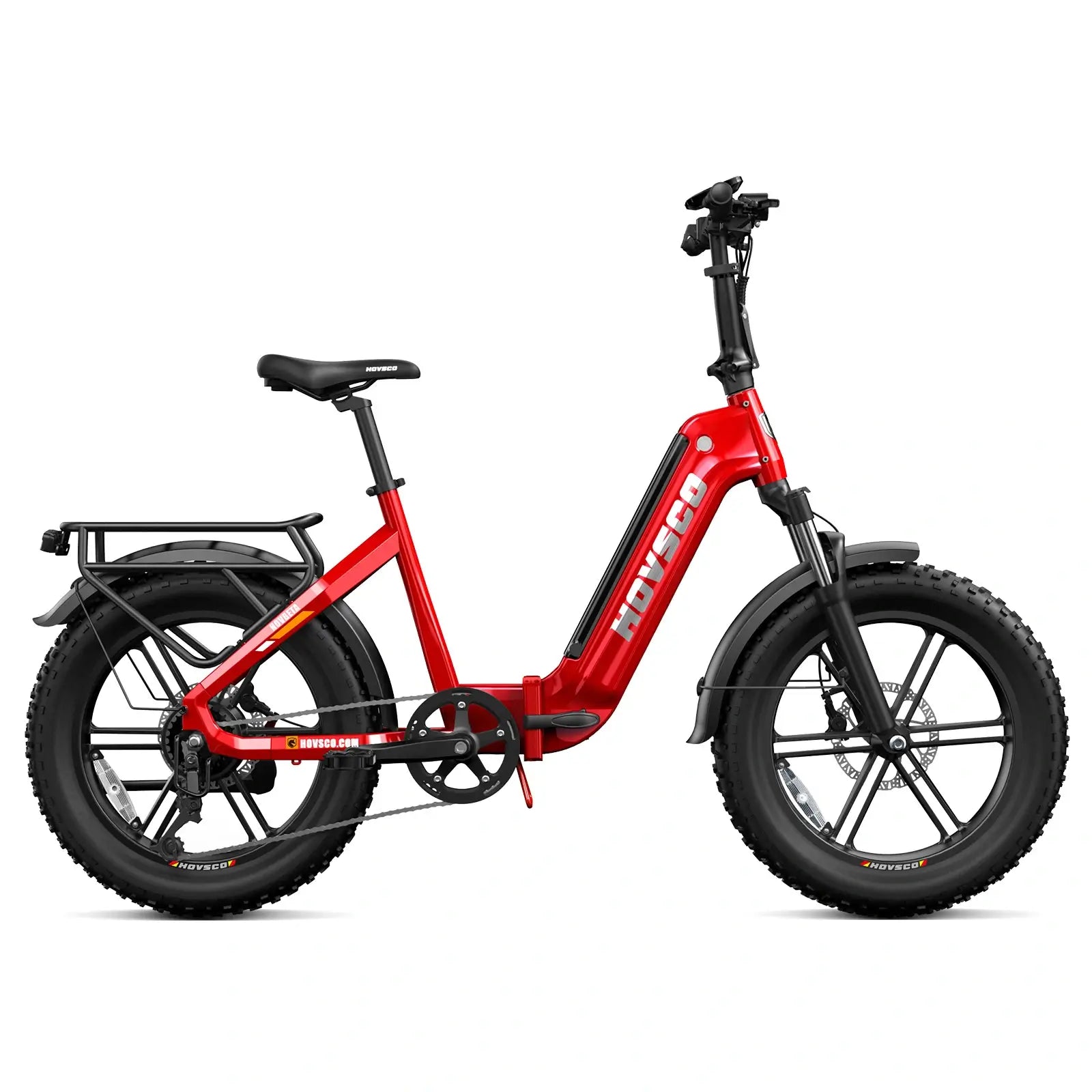
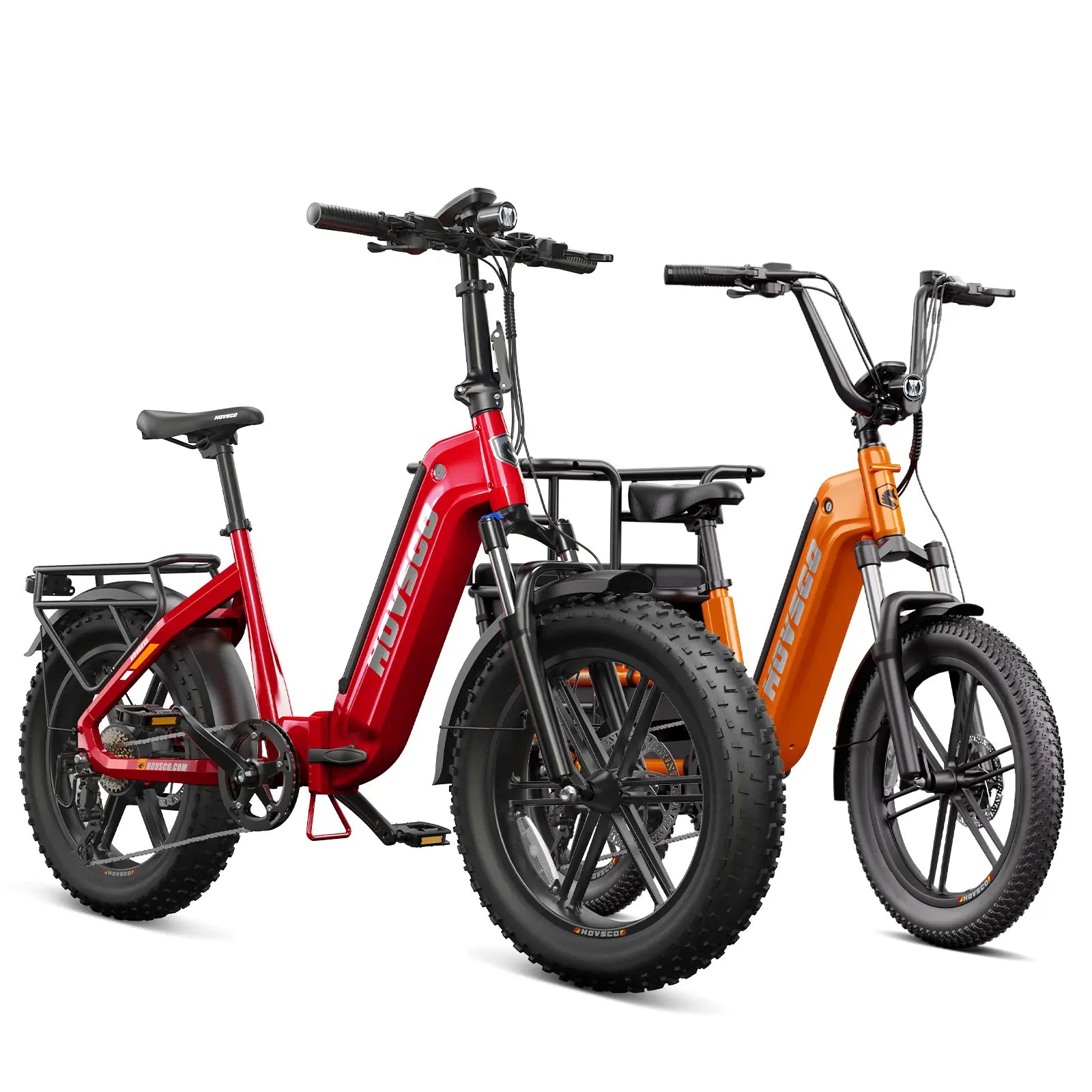
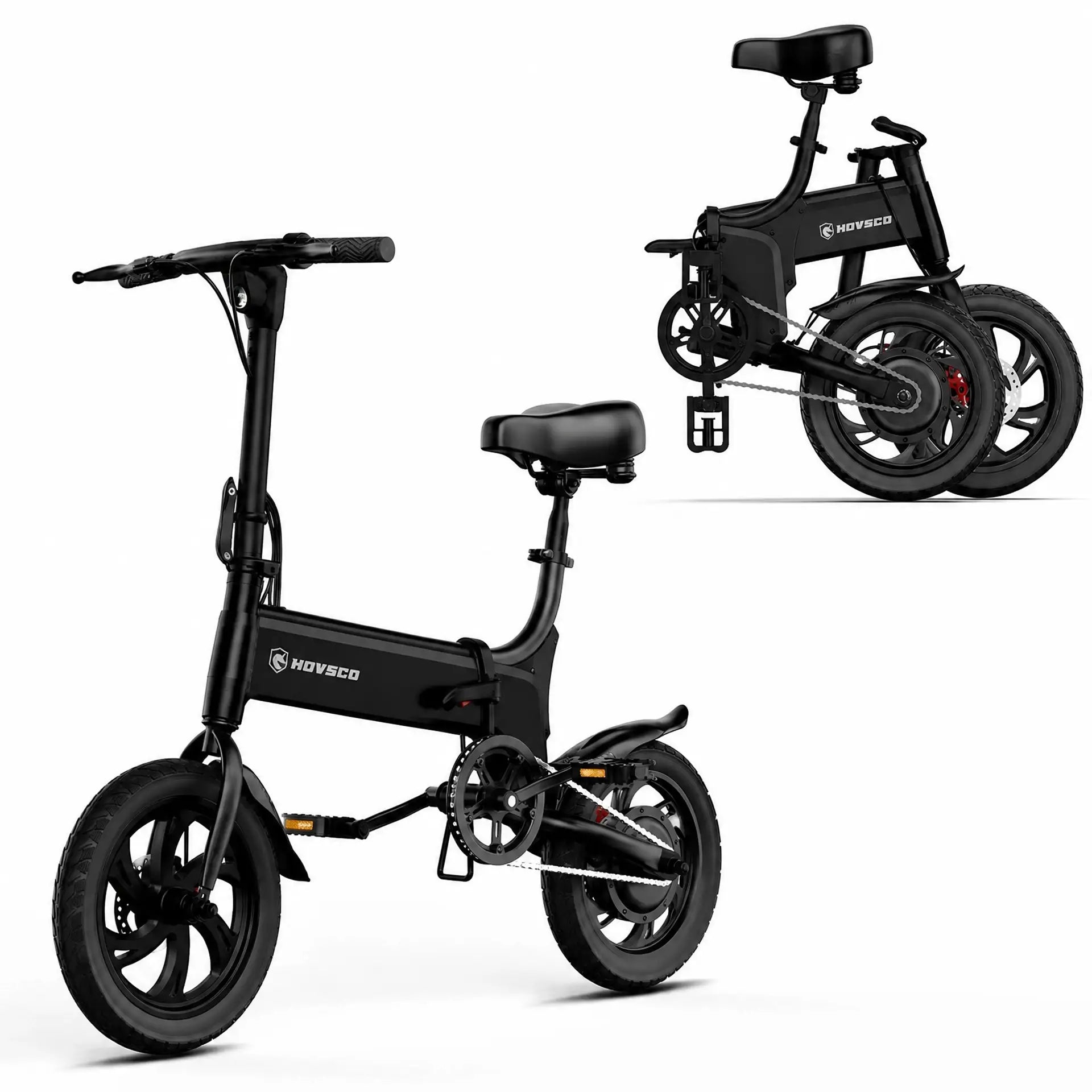
For high-frequency urban shopping, convenience often wins. A compact HovBeta can make sense when space is limited and your purchases are moderate. A larger HovCart makes more sense when its cargo capacity replaces repeated car trips and you have secure space to store it.
Lock the frame to a fixed object whenever possible, not just a removable wheel. Remove valuables, bring detachable electronics inside, and use a weather cover only after the bike has cooled and is parked safely. Never block building exits with the bike or battery while charging.
Yes, if you stay within manufacturer limits, secure every item, balance cargo, and ride more smoothly than you would on an unloaded bike. Grocery weight changes braking, turning, balance, and acceleration, particularly at walking speeds and on uneven pavement.
I advise riders to perform a two-minute “loaded-bike check” before the first real shopping trip. With the bike on level ground, press each basket and rack side-to-side, confirm all fasteners are tight, check that nothing can enter the wheel, and squeeze both brakes. Then ride around a quiet block before heading into traffic.
Follow these operational rules:
Keep heavy items low and as close to the centerline as your setup allows.
Divide equivalent weight between left and right panniers when using them.
Use straps or a cargo net; bag handles alone are not a retention system.
Brake earlier and more gradually, especially downhill or in rain.
Take corners slower because high-mounted grocery bags increase lean resistance.
Check tire pressure before a heavy run, as underinflated tires feel vague and increase the risk of rim damage.
“A grocery e-bike should feel calm when loaded. In product evaluation, I look beyond the basket volume: I check where the load sits relative to the rear axle, whether the kickstand remains stable during loading, and whether the rider can step off without contacting cargo. The safest carrying system is not necessarily the largest one—it is the system that keeps your weekly load secured, balanced, and within its intended limit. HOVSCO riders should choose model-specific accessories first, then build the cargo setup around their actual shopping pattern.”
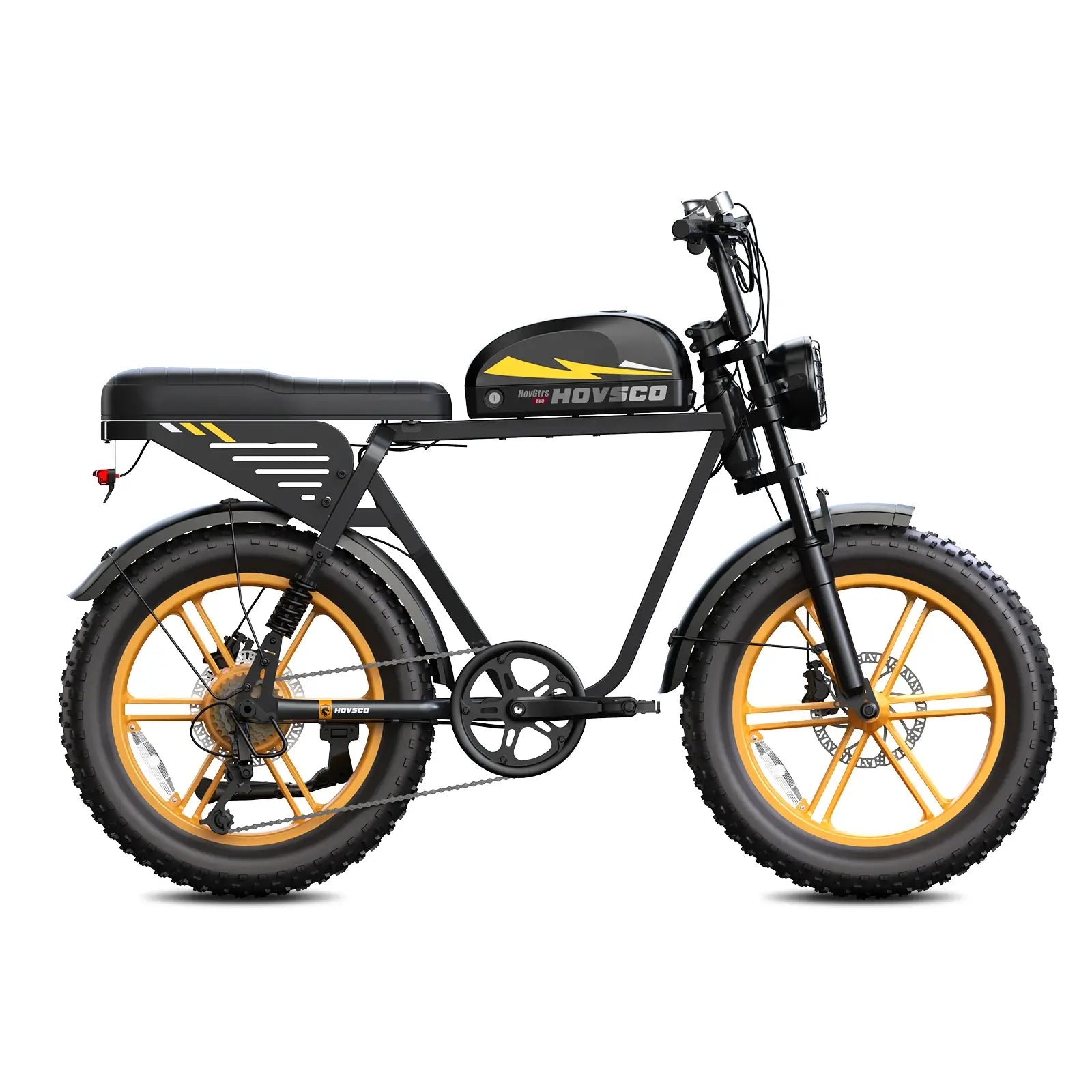
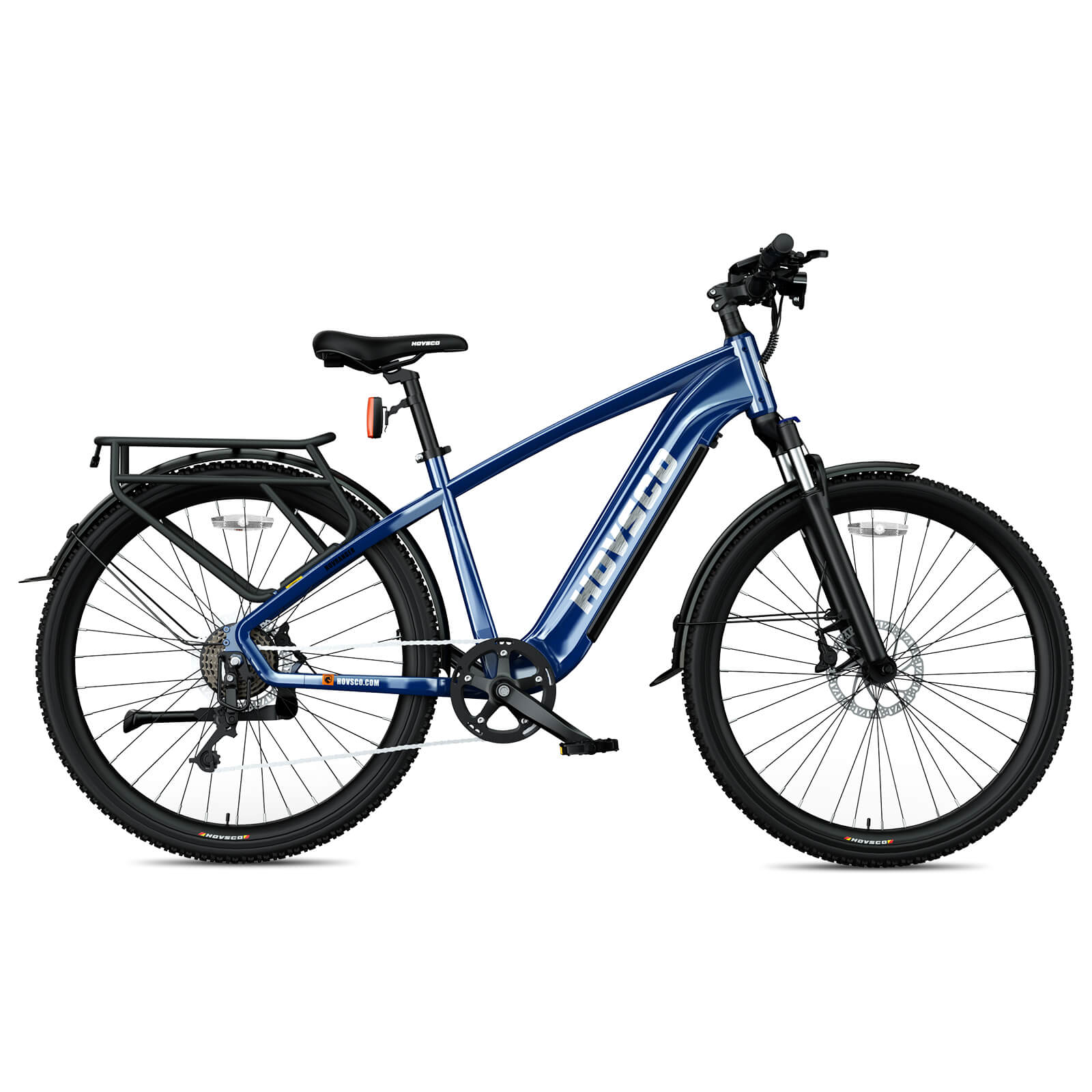
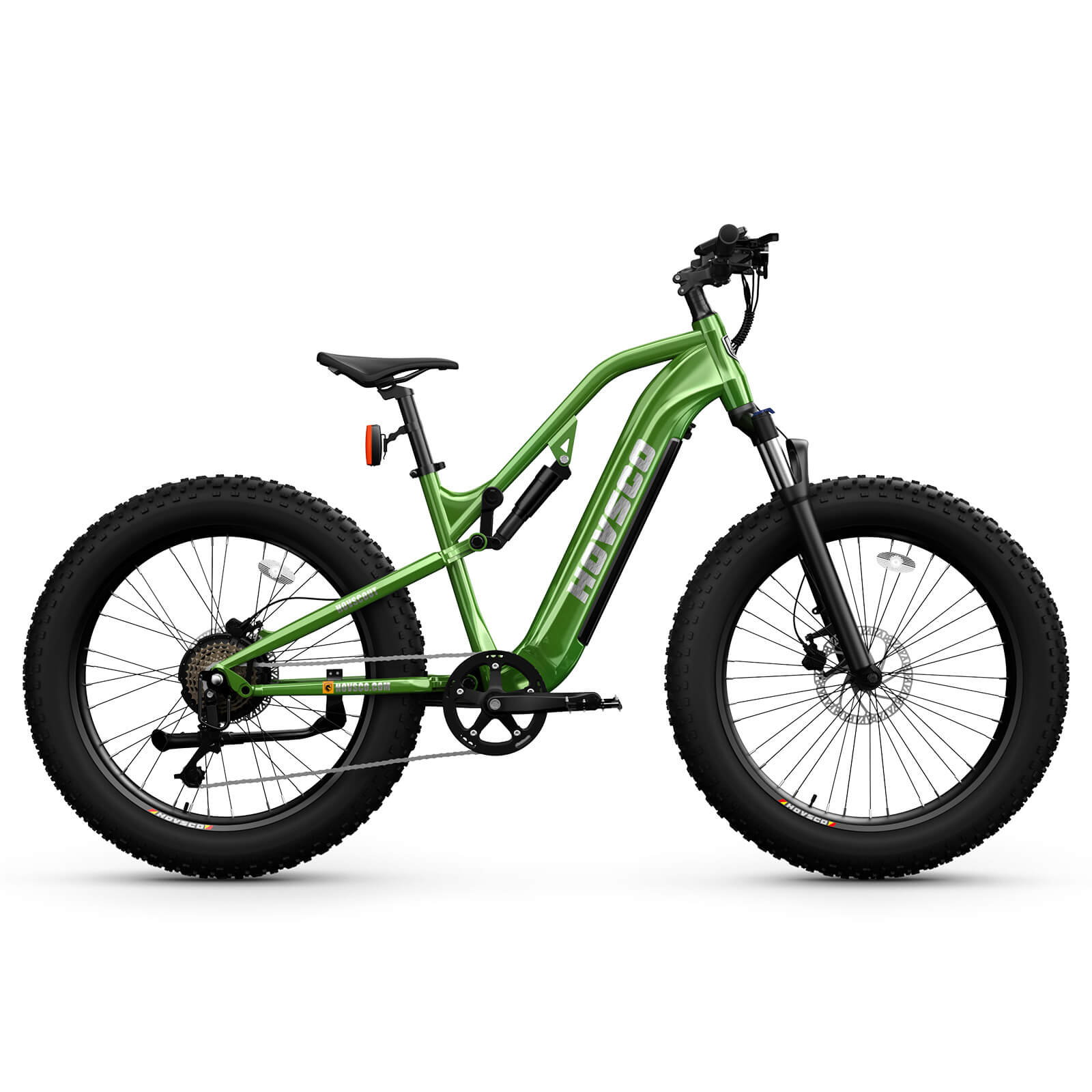
Choose HovCart for bulk groceries, HovRanger Step-Thru for accessible commuter errands, HovCity for rear-rack-based city shopping, and HovBeta for compact light-to-medium loads. The right model is the one that matches your shopping volume, storage constraints, and loading comfort.
The buying decision should not start with appearance alone. Start with your heaviest normal shopping list, your route’s steepest hill, your storage area, and the confirmed cargo hardware available for the bike. This approach prevents the common mistake of buying a fast e-bike first and trying to force an unsuitable cargo system onto it later.
HOVSCO has developed e-bikes for varied everyday riding needs, from urban commuting to cargo-focused errands. For shoppers, that versatility matters only when it translates into a secure, model-matched setup that you will genuinely use every week.
Choose a cargo e-bike when your routine includes bulky weekly groceries, beverage cases, family shopping, frequent parcel runs, or enough volume that a standard rear rack would require multiple trips. For light shopping, a commuter e-bike with confirmed accessories is usually more efficient and easier to store.
A cargo platform is not automatically better. It may be longer, heavier, and harder to move through narrow storage spaces. But when it replaces car-dependent trips and lets you carry groceries in one stable load, its extra size becomes useful rather than inconvenient.
The final answer to how to choose electric bike for grocery shopping is simple: choose the smallest bike that safely carries your real, repeated shopping load—with a battery reserve, accessible frame, parking plan, and confirmed basket or rack system. HOVSCO riders who make these choices in that order can build a grocery setup that is safer, more efficient, and far more likely to replace short car trips.
Can I use a front basket for a full grocery haul?
A front basket is best for light and fragile items. Place dense groceries on a rear rack or cargo platform to reduce steering weight and preserve stable handling.
How should I carry eggs on an e-bike?
Keep eggs in their carton, place them above heavier items, secure the basket or bag so it cannot bounce, and ride smoothly over curbs, potholes, and speed bumps.
Is a rear rack enough for weekly groceries?
It can be enough for moderate weekly shopping when paired with compatible panniers or a properly secured basket. Larger family or bulk loads are better suited to a cargo-oriented platform.
Should I choose HovCart or HovBeta for groceries?
Choose HovCart for high-volume and bulky loads. Choose HovBeta when your grocery trips are smaller and compact storage or folding convenience matters more.
Do I need to charge after every grocery ride?
Not necessarily. Charge according to your battery level, route length, and manufacturer guidance, while maintaining enough reserve for an unexpected detour or a loaded ride home.
Share:
How to Find Reliable Bike Repair Near Me: Your Complete Guide
How to Choose Long Range Commuter Ebike?