



![[ New Arrival ] Porto Max Electric Scooter For Commute & Grocery Shopping - HOVSCO](http://www.hovsco.com/cdn/shop/files/PotroMax-3.jpg?v=1706927007&width=1200)
- by SteveJames
HovCart vs Long-Tail Cargo Bikes: Compact vs Full-Size
- by SteveJames
E-Bikes
Accessories
 Free Shipping
 15-Day Returns
 2-Year Warranty
Free Shipping
15-Day Returns
2-Year Warranty
2-Year Warranty
Free Shipping
15-Day Returns
2-Year Warranty
This comparison helps decide between compact and long-tail layouts. For category guidance, see our cargo e-bike guide; for the HovCart itself, see the HovCart review.
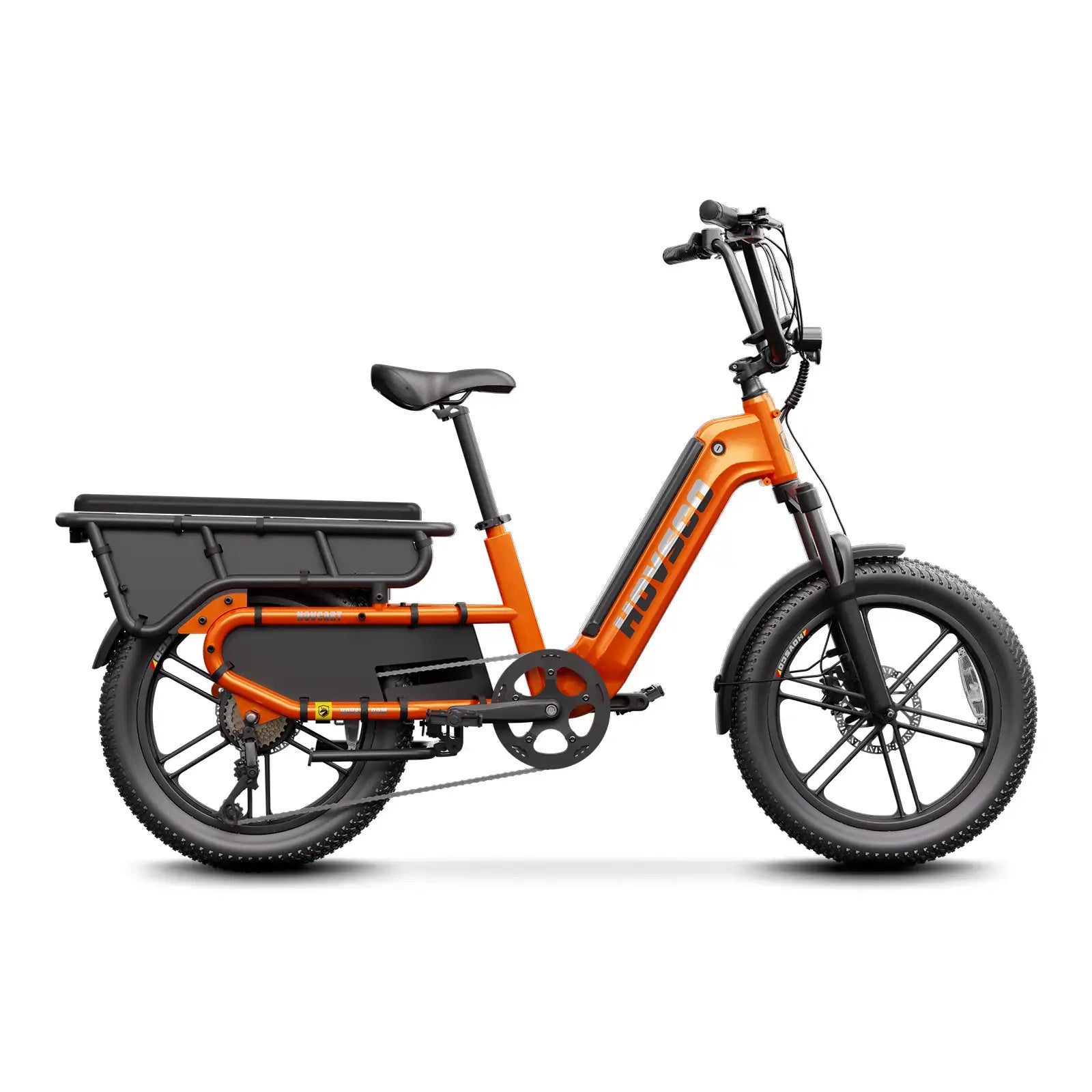
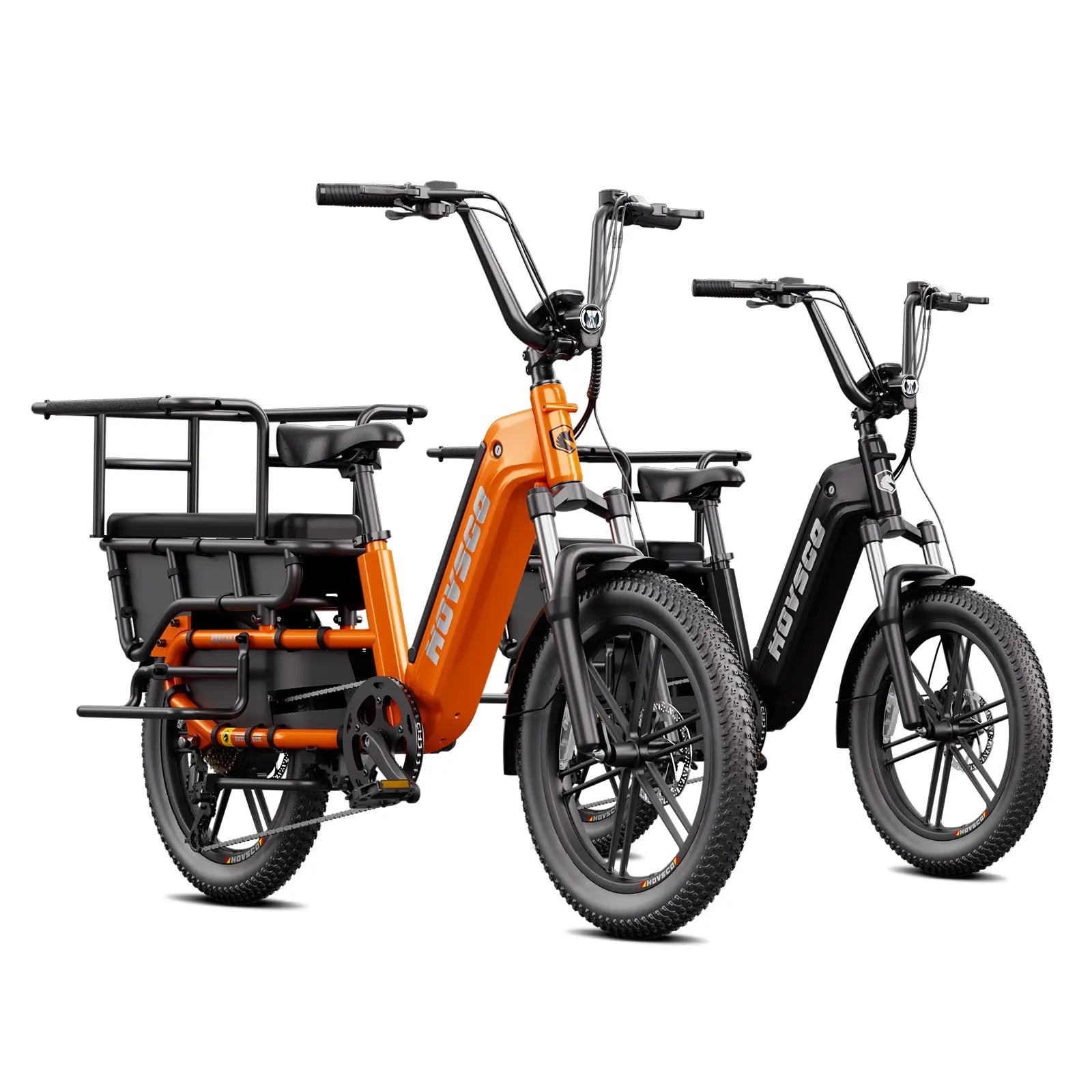
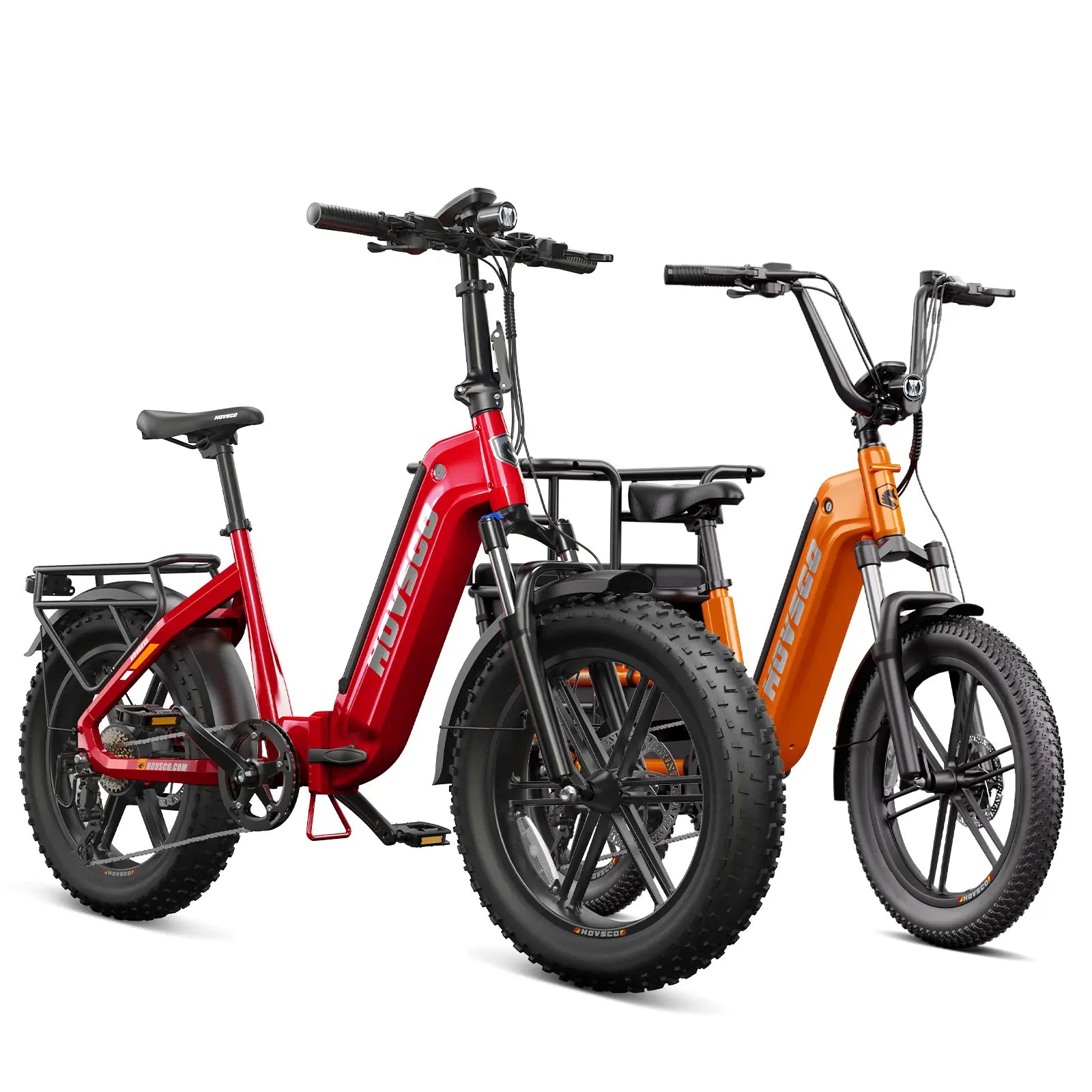
The HovCart vs long tail cargo bike decision is a choice between two design philosophies: a compact cargo ebike that rides and stores like a commuter, or a long tail cargo bike with an extended rear deck built for maximum capacity. The HovCart packs a 450 lb payload into a short step-thru frame, while long-tails carry more and seat more but need more space to park and store. The right layout depends on your loads, your storage, and how the bike will live between rides.
Comparison Basis
Comparison basis: published dimensions and load ratings compared against a long-tail reference; storage, parking, and rack fit assessed from published geometry and typical household setups.
HovCart vs Long-Tail at a Glance
| Fact | HovCart | Typical long-tail |
|---|---|---|
| Layout | Compact step-thru | Extended rear deck |
| Payload | 450 lb | 350–450 lb typical |
| Storage | Garage, hallway, rack | Dedicated space, hard to rack |
| Best for | Daily family errands, easy mounting | Large loads, two kids with gear |
This guide compares the two formats honestly — payload, seating, parking, price, and the real family scenarios — so you can choose the layout that matches your life rather than the one with the bigger number.
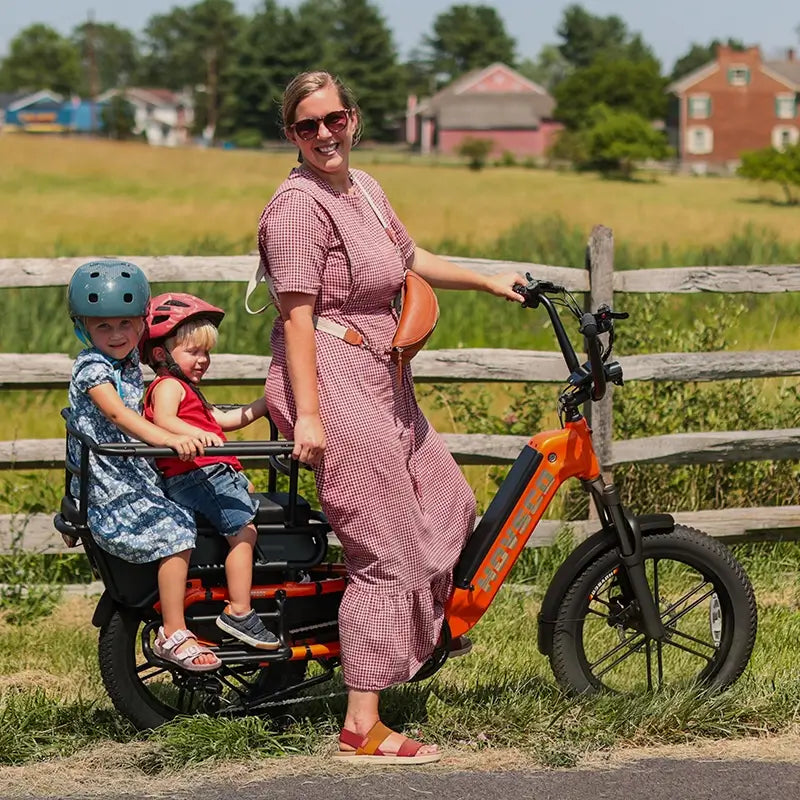
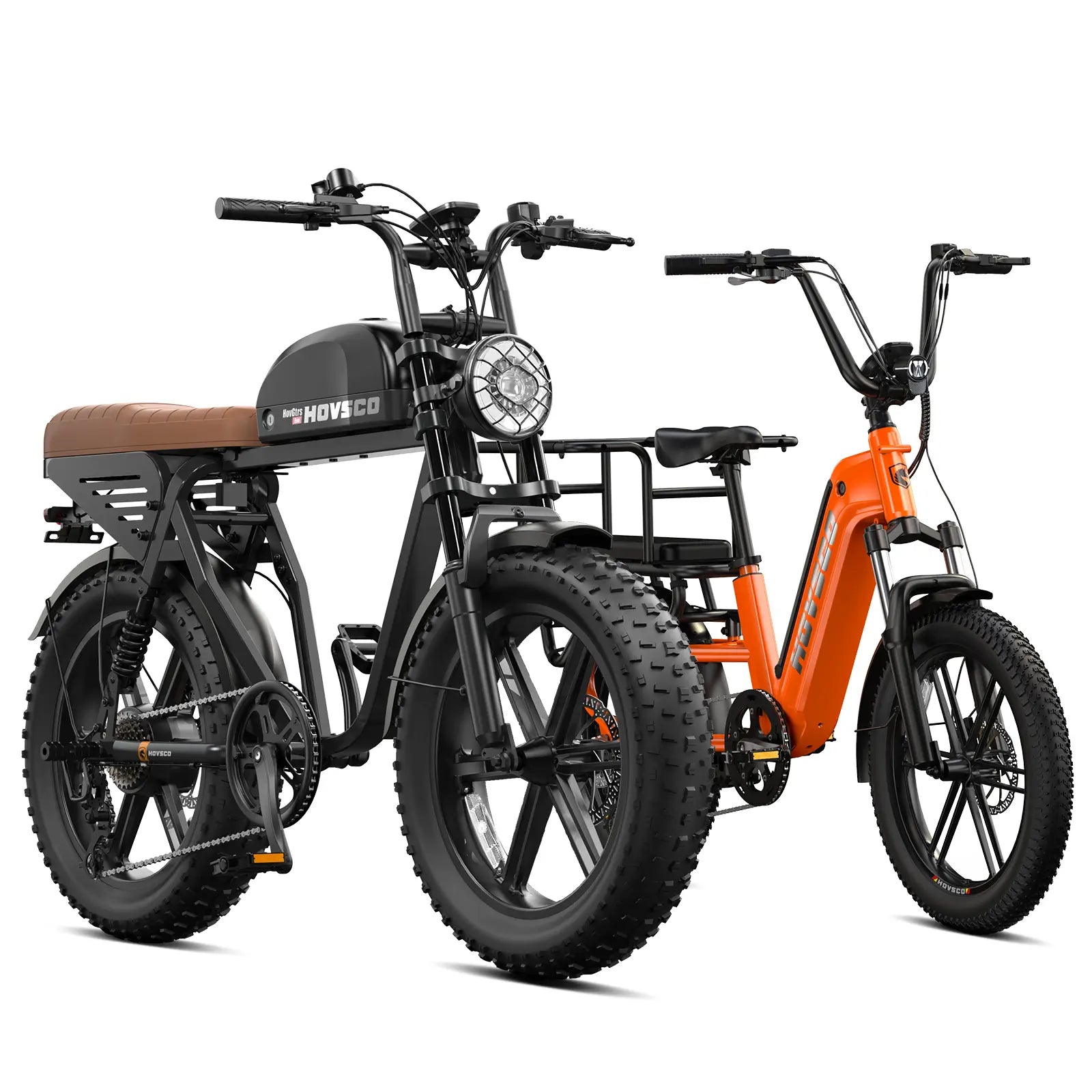
Compact cargo e-bikes like the HovCart are built around everyday practicality: a short wheelbase, step-thru entry, and storage that fits a normal garage or hallway. Long-tail cargo bikes are built around capacity: an extended rear deck that carries children, bulky boxes, and long gear with a longer wheelbase for stability at speed. Each philosophy trades something. The compact gives up raw deck space to live like a normal bike; the long-tail gives up everyday ease to carry like a small truck.
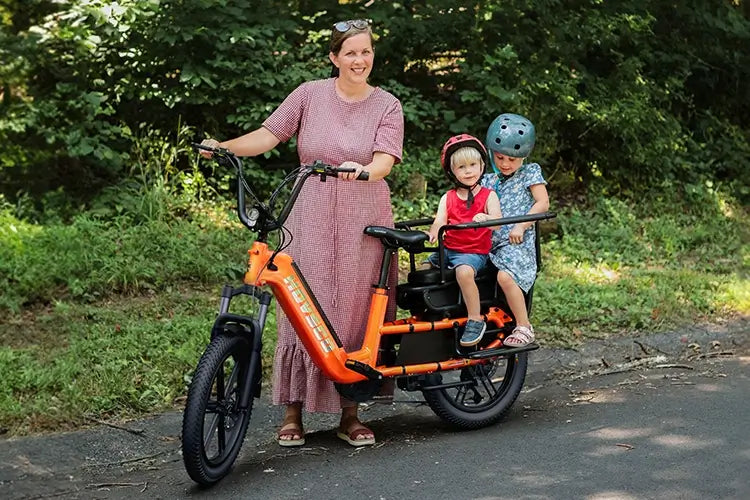
Payload ratings overlap more than the layouts suggest. The HovCart rates 450 lb; many long tail cargo bike models rate 350–450 lb, with the advantage showing in deck geometry rather than total pounds. A long-tail's extended deck seats two children side by side or in a row and swallows bulky gear that would not fit a compact rack. The compact format seats one or two kids with the right accessory kit and handles groceries, dogs, and sports gear within its rating — just with a shorter cargo envelope.
Payload and seating comparison
| HovCart | Long-tail | |
|---|---|---|
| Payload rating | 450 lb | 350–450 lb typical |
| Kids seating | 1–2 with accessory kit | 2+ on extended deck |
| Bulky loads | Rear rack + baskets | Open deck for boxes and long gear |
| Adult passenger | Yes, within rating | Yes, on deck options |
The HovCart vs RadWagon comparison people usually search is really this: can the compact carry my family's day, or do I need the deck? For two kids plus a week of groceries, both work; for three kids or lumber runs, the long-tail wins.
This is where the compact cargo ebike wins decisively. The HovCart's short wheelbase turns in tight spaces, parks at a normal bike rack, fits a garage or hallway, and lifts onto a car rack in its lighter configuration. A long-tail's extended wheelbase is stable but long: it needs more room to turn, often will not fit standard racks, and demands dedicated storage. Families that live in apartments, share garages, or park at school racks feel this difference every single day.
The parking test is the honest way to decide: walk the bike through the door, into the elevator, and up to the rack you will actually use. A long-tail that cannot make those moves spends its life parked outside, while a compact model that fits the hallway gets ridden. Space is not a minor feature on a cargo bike — it is the feature that decides whether the bike is used.
Compact cargo e-bikes generally cost less than long-tails because the frame is simpler and the accessory set is smaller. The HovCart's ecosystem — child seat, running boards, front basket, rear basket, rear rack cushion — covers the family use cases without the price of a long-tail deck and its accessories. Long-tails charge more for the frame and for the seating kits that unlock their capacity. When you compare price, add the accessories your family actually needs to both sides.
Run the scenarios before choosing. School run: both work, and the compact's easy mounting and rack parking make it the smoother daily tool. Groceries: the compact handles a weekly haul with baskets; the long-tail handles a Costco trip. Day trips and camping: the long-tail's deck carries bulkier gear, while the compact packs a tent and bags with panniers. The HovCart vs RadWagon class of decision follows this same pattern — the compact covers daily life brilliantly, and the long-tail covers the occasional big load.
Count the frequency, not just the size, of your big-load days. If a bulk haul happens once a month and the school run happens five days a week, the compact wins on the days that matter most. If every week includes a trip that needs the open deck, the long-tail earns its storage cost. Write down a typical week before you compare layouts — the scenario list decides the purchase.
The HovCart vs long tail cargo bike verdict is a storage and frequency question. If your cargo days are daily and your space is normal, the compact HovCart is the better fit — it rides like a commuter, parks like a bike, and carries 450 lb. If your cargo days are big — multiple kids, bulky hauls, regular day trips — and you have dedicated storage, a long-tail is the better tool. Most families land on the compact for the 90% of days that are ordinary, which is exactly what the HovCart was designed for.
For households with similar storage and load needs, the compact format wins the daily battle and loses only the occasional big-load war. The HovCart's short wheelbase and step-thru entry get used; the long-tail's capacity gets admired. When a bike does not fit the garage or the school rack, it stays home — and a cargo bike at home carries nothing. We designed the HovCart around the daily loop first: 450 lb of rated capacity, stable under load, and storage that fits a normal life. If your week includes regular bulk hauls, size up; otherwise the compact is the bike your family will actually ride.
— HOVSCO Product Strategy Team
Compact or long-tail is not about which is better — it is about which matches your storage, your daily routes, and your occasional big loads. The HovCart covers everyday family transport with commuter practicality; the long-tail covers bulk capacity with space demands. Choose the layout that will be ridden, not the one that impresses on paper.
The compact HovCart carries 450 lb while storing and parking like a normal bike.
Long tail cargo bikes offer larger decks for multiple kids and bulky loads.
Payload ratings overlap; the real difference is deck geometry and storage.
Compare price with the accessories your family actually needs.
Run your scenarios — school run, groceries, day trips — before choosing.
Where will the bike live between rides — garage, hallway, or bike rack?
How many kids and how much gear on my heaviest regular day?
Do I ever carry bulk loads that need an open rear deck?
What does the complete family kit cost on each layout?
Will I actually ride it daily, or does storage friction win?
Compare the compact format in person — the HovCart cargo e-bike and its family accessories live in the electric cargo bikes collection.
What is the difference between a compact cargo bike and a long-tail?
Compact cargo bikes use a short wheelbase with racks and baskets; long-tails extend the rear deck for more seating and bulk capacity. Compact bikes store and park more easily; long-tails carry more volume.
Is the HovCart harder to ride than a long-tail?
No — the compact wheelbase is nimble and stable under load thanks to the low center of gravity. It feels more like a regular bike than a long-tail, which is why many families prefer it daily.
Can a long-tail cargo bike carry more than the HovCart?
In volume, yes — the extended deck accepts bulkier loads and more seating. In rated weight, many long-tails match the HovCart's 450 lb or exceed it modestly, so the real difference is deck geometry.
Which cargo bike is best for an apartment?
A compact cargo ebike like the HovCart. It fits a hallway or garage, parks at normal racks, and lifts more easily than a long-tail, which needs dedicated space. HovCart vs RadWagon comparisons usually end the same way: storage decides it.
Is a compact cargo e-bike big enough for two kids?
Within the payload, yes — a rated child seat and running boards cover two kids plus bags for most families; verify combined weight with 20% margin.
Share:
Which Foldable Commuter Ebike Fits Your Ride?
How Much Does an Electric Bike Weigh? A Complete Breakdown