



![[ New Arrival ] Porto Max Electric Scooter For Commute & Grocery Shopping - HOVSCO](http://www.hovsco.com/cdn/shop/files/PotroMax-3.jpg?v=1706927007&width=1200)
- by SteveJames
Felicity vs Xander Max: Which Folding Scooter Fits Your Routine?
- by SteveJames
E-Bikes
Accessories
 Free Shipping
 15-Day Returns
 2-Year Warranty
Free Shipping
15-Day Returns
2-Year Warranty
2-Year Warranty
Free Shipping
15-Day Returns
2-Year Warranty
The two folding scooters answer different routines: the Felicity spends its weight on suspension and speed, and the Xander Max saves it for carrying. This comparison keeps the fold-focused specification table in one place and translates it into the decision — whether the routine is carried more than ridden, or ridden more than carried. The carry-path method behind the decision is in our carrying guide, and the range figures are explained in the long-range guide.
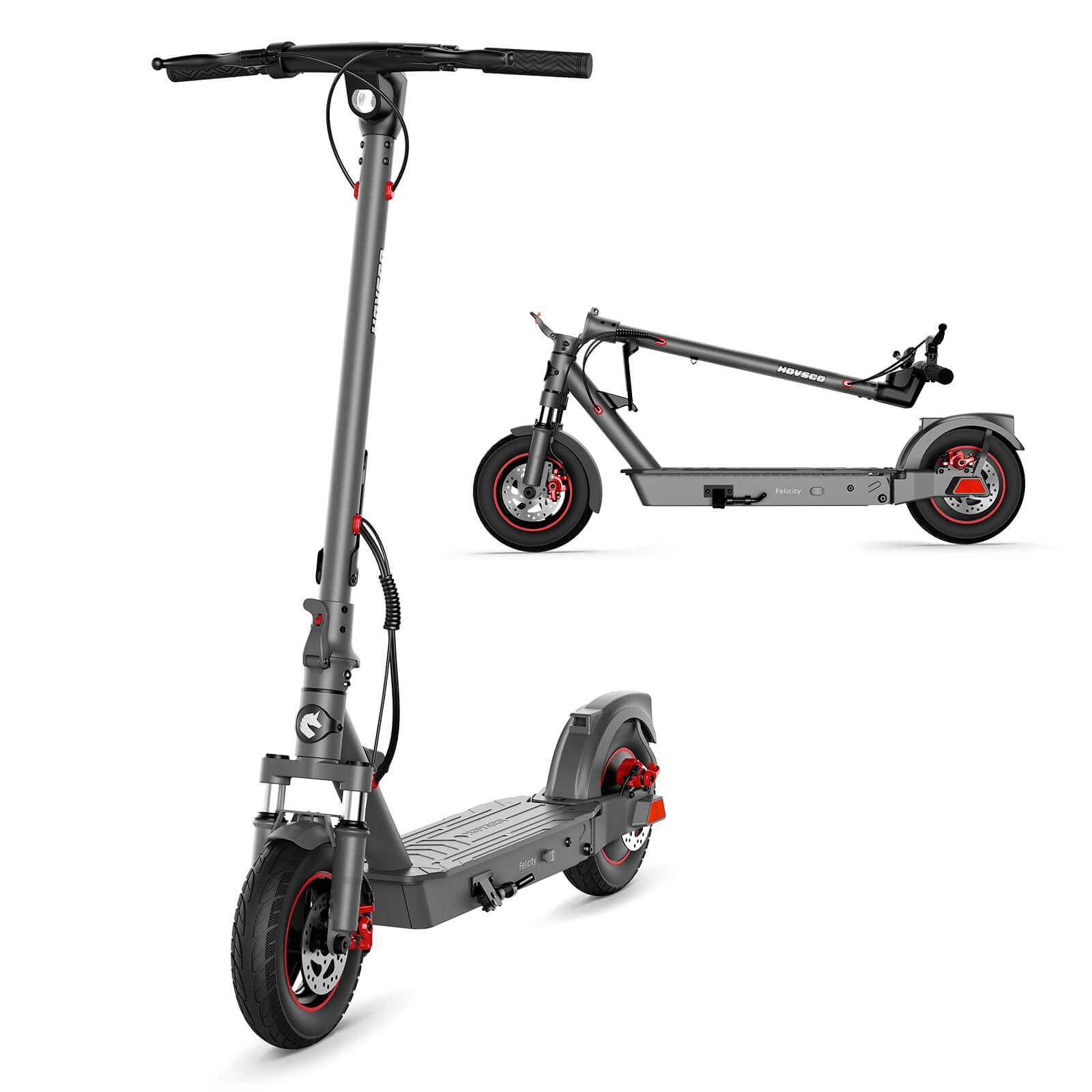
Both scooters fold into 10-inch formats and share the same 374.4Wh battery class and 30-mile range. The difference is how they spend their weight: the Felicity adds suspension and a stronger sustained motor; the Xander Max stays lighter for the hand, the trunk, and the transit leg.
The honest reading is that neither is better — each wins a routine. The table below makes the trade visible, and the routine decides which column matters.
The fold-focused comparison below collects the complete published specifications, from HOVSCO's live product pages.
| Spec | Felicity | Xander Max |
|---|---|---|
| Net weight | 40.12 lb | 36.2 lb |
| Motor | 450W sustained (500W model designation) | 500W peak / 350W sustained |
| Top speed | 21 mph | 19 mph |
| Range / battery | 30 mi / 374.4Wh | 30 mi / 374.4Wh |
| Suspension | Dual front and rear | None |
| Wheels | 10-inch | 10-inch |
| Payload | 220 lb | 220 lb |
Read the weight, motor, and suspension rows together: they describe two different daily experiences on the same folding format.
The Felicity's 450W sustained motor reaches 21 mph — the fastest of the two — and its dual suspension smooths the roughest city pavement. For a rider who covers real distance on imperfect roads, those two features change every ride.
The 4 lb the suspension adds is the honest cost: heavier in the hand, in the trunk, and on the stairs. The trade makes sense when the ride dominates the routine and the carry is rare; it stops making sense when every day begins with a stair flight.
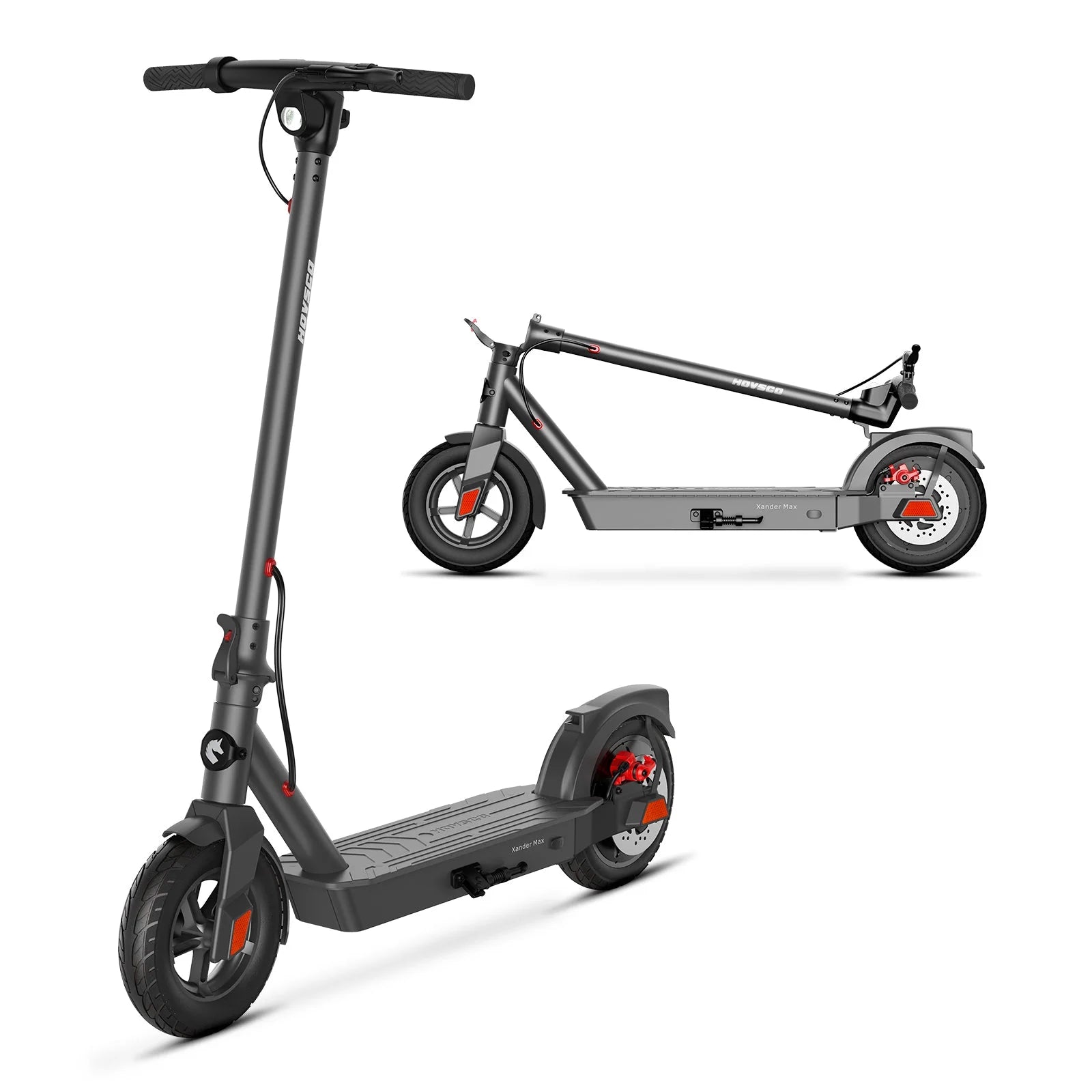
The Xander Max saves exactly the weight the Felicity spends: 36.2 lb against 40.12 lb, on the same folding format. For transit, stairs, trunks, and lobbies, that difference is the whole story — lighter is easier, every single time.
The trade is the ride: no suspension, 19 mph, and a firmer feel on rough surfaces. The Xander wins when the scooter is carried more than ridden, and the carry-path test is the evidence.
Four pounds is the entire decision between these two models. Run the carry-path test from our carrying guide with a weighted bag at each weight, and the answer appears in one stair flight: if the 40.12 lb carry feels fine, the Felicity's ride is the better buy; if it does not, the Xander's 36.2 lb is the honest pick.
Do not let the spec sheet decide a 4 lb difference that your stairs can measure. The test is faster than the debate, and it produces the answer the routine will confirm every day.
Choose the Felicity when the ride dominates: rough pavement, longer distances, and the carry is an occasional lobby trip. Choose the Xander Max when the carry dominates: daily stairs, transit legs, a trunk, or a storage spot that makes every pound count.
If the routine is balanced, choose the lighter model and add suspension-comfort items where possible; a scooter you can carry easily is a scooter you will actually take. The routine, not the badge, is the tiebreaker.
The same comparison applies to the destination: a scooter that follows you into an office or classroom can be lighter on the whole routine, while one that must lock outside changes the security math at both ends.
Weight also affects the security routine: a scooter carried indoors all day needs no lock at all, which is exactly the advantage the Xander Max's 36.2 lb buys for a rider whose destination allows it inside.
The ride quality argument works the other way: a rider who covers real distance on rough pavement gets the Felicity's suspension back on every mile, and the 4 lb carry is paid once per trip while the ride is paid for the whole distance.
Both models publish the same 30-mile range on the same battery class, which removes range from the decision entirely; the fold, the carry, and the ride are the only columns that matter.
The two checks before deciding — the carry feel and the storage fit — are the same checks the routine will repeat daily, so they predict the long-term fit better than any single spec.
A rider between the two should test the evening carry with a bag, because that is the version of the routine the spec sheet never measures.
The final pick should also survive the week, not just the first ride: a scooter chosen on a relaxed weekend can feel different by Wednesday, and the evening carry test is the closest preview of that day.
Whichever model wins, confirm the local scooter rules and the destination storage before ordering, so the fold solves a routine the rules and the building actually allow.
Check the fold twice at the shop or a demo: once with an empty hand, once with a backpack, timing the fold-and-carry sequence. Check the storage spot twice: the home corner and the destination gap, measured against the folded size.
These two checks — the carry feel and the storage fit — resolve the 4 lb debate faster than any table. If both pass on one model, that is the folder for the routine.
" Four pounds is the whole comparison: the Felicity spends it on suspension and speed, and the Xander Max saves it for your hand. The stair test answers which one your routine needs." — HOVSCO Engineering & Content Team
The Felicity wins when the ride dominates — 21 mph, dual suspension, and 4 lb of comfort. The Xander Max wins when the carry dominates — 36.2 lb for stairs, transit, and trunks. Run the carry-path test and let the routine pick.
Which folding scooter is better for commuting?
It depends on the routine: the Felicity for a smoother, faster ride, and the Xander Max for transit legs and easy carrying. Both cover a 30-mile range on the same battery class.
Why is the Felicity faster than the Xander Max?
The Felicity sustains 450W while the Xander Max sustains 350W, which is why it reaches 21 mph against 19 mph. The product page designates the Felicity at 500W, but the spec-table sustained figure explains the speed.
Is 4 pounds really the deciding factor?
For most riders, yes — 40.12 lb against 36.2 lb on the same fold. The carry-path test with a weighted bag settles it faster than any comparison table.
Do both scooters fold to the same size?
Both are 10-inch folding formats; compare the exact folded dimensions on the product pages against your storage spot, since the shape can differ.
Which one should a transit commuter choose?
The Xander Max at 36.2 lb is the better transit companion. Confirm the operator's folding-scooter rules, then pair the lighter model with the transit routine.
Share:
Porto Max vs Felicity vs Xander Max: Which Has the Best Range?
How Do You Plan a Daily Commute With a Scooter?