



![[ New Arrival ] Porto Max Electric Scooter For Commute & Grocery Shopping - HOVSCO](http://www.hovsco.com/cdn/shop/files/PotroMax-3.jpg?v=1706927007&width=1200)
- by SEO
How does 90Nm of torque really feel on an off-road ebike?
- by SEO
E-Bikes
Accessories
 Free Shipping
 15-Day Returns
 2-Year Warranty
Free Shipping
15-Day Returns
2-Year Warranty
2-Year Warranty
Free Shipping
15-Day Returns
2-Year Warranty
A 90Nm torque motor delivers strong pulling power at low speeds, letting an ebike start on steep hills, haul heavy loads, and crawl over rough terrain without bogging down. Compared with similar-watt motors, 90Nm torque explained in real rides means more control, easier climbing, and less strain on both the rider and components when you leave the pavement.
Check: high-torque electric bikes for hills
Torque on an ebike is the twisting force the motor applies to turn the wheel, measured in Newton-meters (Nm). A 90Nm torque motor provides high pulling power, especially at low speeds. In practical terms, 90Nm torque explained means strong, immediate push when starting, climbing hills, or moving heavy loads off-road with confidence.
When I explain torque to riders at the factory, I compare it to using a long wrench on a stubborn bolt. The longer the wrench, or the more force you apply, the more twisting power you get. On an ebike, 90Nm torque is that extra leverage built into the motor and drivetrain, constantly helping you rotate the wheel against gravity and obstacles.
For off-road riders, that twisting force matters more than peak top speed. On loose climbs, you rarely care about how fast you can go; you care about whether the bike can keep turning the wheel without stalling. That’s where 90Nm torque explained in numbers becomes real in your legs: less wobbling, fewer put-downs, and smoother, more controlled ascents.
Torque can matter more than watts off-road because torque determines the motor’s ability to turn the wheel at low speeds under heavy load. Watts relate to overall power and speed, but 90Nm torque explained in trail use is about controlled pulling power on steep, technical climbs where traction and balance matter more than outright velocity.
Watts describe how much work the motor can do over time, similar to horsepower in a car. Two ebikes can both be rated at 750W, yet feel totally different on a steep hill if one delivers 60Nm and another offers 90Nm. On rocky, rutted trails, you spend most of your time in slow, high-resistance situations where that extra 30Nm is the difference between climbing and walking.
From an engineering standpoint, we tune off-road controllers to prioritize torque at low cadence. That means when your pedals are turning slowly, the system still feeds you strong assistance instead of waiting for higher RPM. When riders ask me why torque matters more than watts off-road, I tell them: watts define the ceiling, torque defines whether you reach it on real terrain.
Ninety Newton-meters of torque translates into serious pulling power on steep hills by providing strong rotational force at the wheel, even at low speeds. For a typical off-road ebike, 90Nm torque explained in practice means you can start on a 15–20% grade, maintain momentum with a heavy load, and climb without overheating or constantly shifting.
Picture yourself stopped halfway up a loose fire road. With a weaker motor, you have to zig-zag, build speed, or even push the bike. With 90Nm torque, you can point straight up, apply steady pedal pressure, and feel the motor “grab” the ground. The wheel keeps turning despite gravity and rocks, giving you the time to pick a line and stay balanced.
As a motor designer, I see how 90Nm torque lets us gear the bike for real-world climbing rather than marketing top speed. By combining a high-torque motor with sensible cassette ratios, you can keep cadence in a comfortable range while the motor does the hard work of pulling the bike, rider, and gear up sustained climbs without that strained, buzzing feeling.
Torque (Nm) is the motor’s twisting force at the wheel, while watts measure total power output over time. They work together according to the relationship: power equals torque multiplied by rotational speed. In real riding, 90Nm torque explained means strong low-speed grunt, while watts define how fast you can go once you’re already moving.
Think of torque as how hard you can push, and watts as how much work you can do every second. An ebike with modest torque but high watts might hit a good top speed on flat roads but struggle to launch you up a steep, technical hill. Conversely, a 90Nm torque motor with reasonable wattage will feel eager off the line and confident on climbs, even if its absolute top speed is similar.
On the factory test bench, we use dynos to map torque versus RPM. For off-road-focused bikes like many HOVSCO models, we shape that curve so you get a strong plateau of torque at low and mid RPM, where climbing happens. That’s why riders often report that a 90Nm system “feels stronger” than another bike with similar watt numbers but weaker torque tuning.
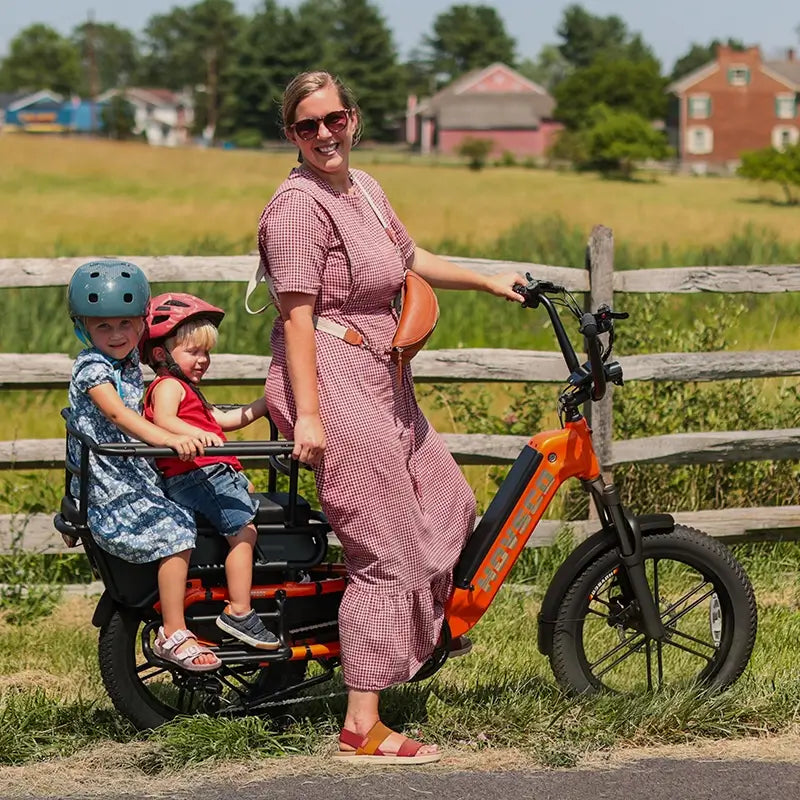
Riders and use-cases that benefit most from a 90Nm torque ebike include heavier riders, cargo-hauling parents, and off-road adventurers tackling steep, technical terrain. For these users, 90Nm torque explained in daily rides means easier starts on hills, better control under heavy load, and more confident slow-speed maneuvers on loose or uneven surfaces.
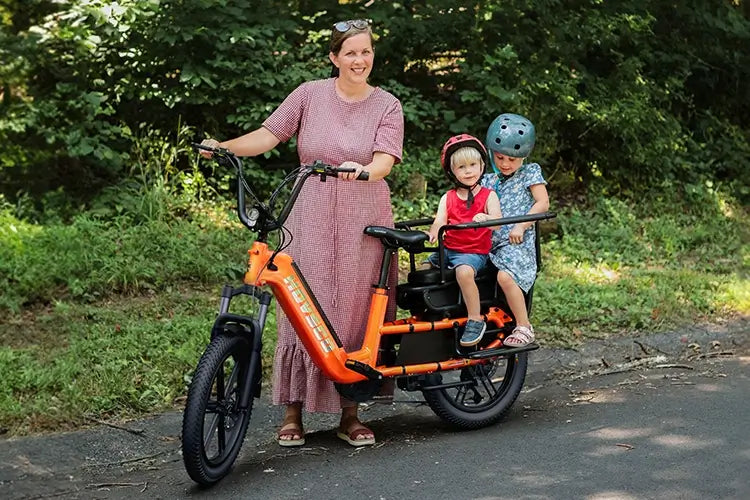
If you’re regularly carrying a child seat, panniers, or camping gear, that extra torque acts like a safety buffer. It prevents the motor from bogging when you hit a ramp, driveway, or trail step-up. For bigger riders, 90Nm torque gives the sensation of a “bigger engine,” helping maintain cadence without grinding or standing on the pedals.
In our lab, we simulate “worst-case” scenarios—heavy riders, full cargo, steep grades—to make sure a 90Nm system still has reserve grunt. That’s exactly where lower-torque bikes slip, overheat, or force you to over-rely on the lowest gear. If your riding includes frequent hill starts, trailer towing, or technical singletrack, you are squarely in the group that truly exploits 90Nm pulling power.
Ninety Newton-meters of torque improves heavy load performance on hills by giving the motor more leverage against gravity, so it can move greater total weight without stalling or overheating. With 90Nm torque, explained in real usage, an ebike can carry cargo, kids, or gear up prolonged climbs while maintaining safe cadence and motor temperature.
Every extra kilogram—rider, child, pannier, trailer—adds to the total mass the motor must lift. On the factory floor, we calculate required torque as a function of grade, total weight, and wheel radius. Once loads and gradients climb, a 50–60Nm system quickly runs out of headroom, forcing riders to grind slowly or dismount. A 90Nm system keeps the wheel turning and the motor operating in a more efficient zone.
What riders feel is smoother, quieter climbing. Instead of constant throttle surges or controller cutouts, the bike just keeps pulling. Your legs contribute, but they’re not fighting the motor’s limits. This is why brands like HOVSCO spec high-torque setups on their more capable off-road and cargo-oriented ebikes: the design assumption is real hills and real loads, not just flat bike paths.
Gear ratios and cadence can either waste or maximize 90Nm torque by changing how effectively the motor’s twisting force reaches the rear wheel. Using an appropriately low gear and maintaining a moderate cadence lets you fully exploit 90Nm torque. Staying in too high a gear at low RPM squanders potential pulling power and stresses the system.
From a mechanical standpoint, the drivetrain is a torque multiplier. A small front chainring and wide-range cassette take the motor’s 90Nm and amplify it at the wheel. But that only works if you actually shift into those climbing gears. I’ve seen riders blame a “weak” motor while trying to climb in the middle of the cassette with a low cadence—they’re fighting physics and controller tuning.
The best practice is to downshift before the gradient bites, just as you would on an analog bike, then let the 90Nm torque do its job at a comfortable pedal rhythm. Many mid-drive systems with torque sensors, including those used by brands like HOVSCO, respond especially well in this zone: the controller sees your input and multiplies it quickly, turning human effort into a very strong, controlled shove at the tire.
Hub-drive and mid-drive motors use 90Nm torque differently off-road because of where that torque is applied. A 90Nm mid-drive motor sends torque through the chain and gears, multiplying pulling power through the drivetrain. A 90Nm hub motor applies torque directly at the wheel, simpler but less adaptable to steep, technical climbs requiring very low gearing.
In the lab, we look at “effective wheel torque,” which is motor torque multiplied by gear ratio. A 90Nm mid-drive in a low gear can produce much higher torque at the tire than a 90Nm hub-drive limited by fixed reduction. That’s why mid-drives dominate serious mountain ebikes: they exploit gearing to turn motor torque into climbing force.
Hub motors, however, have advantages in simplicity and robustness. A rear hub with 90Nm torque provides a very direct, push-from-behind feeling on moderate hills and gravel paths. For riders like those choosing HOVSCO city or light-trail ebikes, this can be ideal. The trade-off is that for slow, trials-like climbing over rocks or roots, the lack of gear multiplication makes the same nominal 90Nm feel less “grippy.”
Ninety Newton-meters of torque influences traction by making it easier to spin the rear wheel if power is applied abruptly, so control and tire choice become critical. With 90Nm torque explained in trail terms, you need grippy tires, stable geometry, and smooth motor tuning to convert that strong pulling power into forward motion rather than wheelspin on loose surfaces.
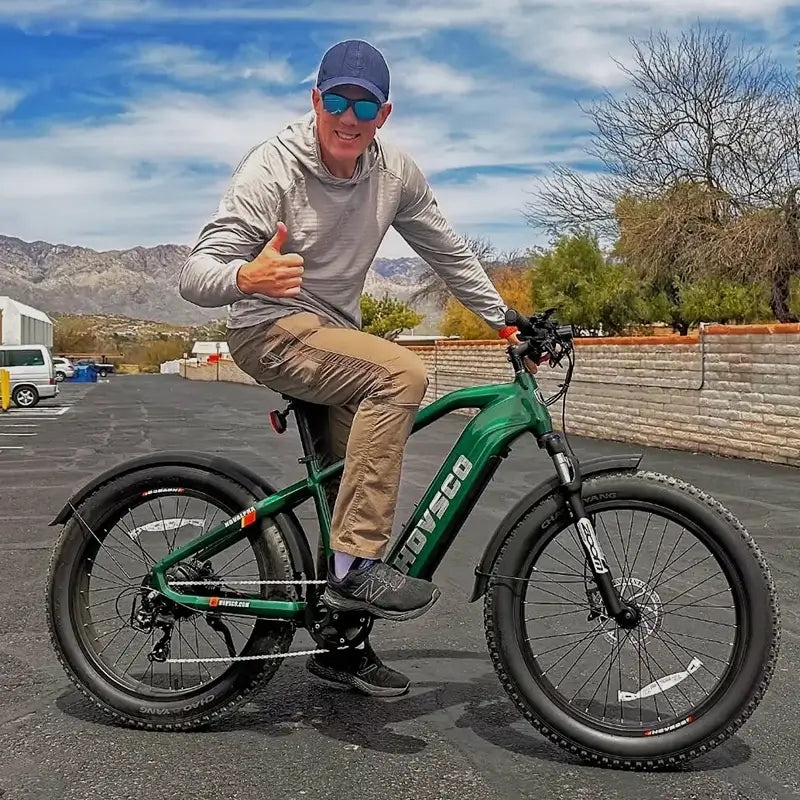
On dirt and gravel, torque is only useful if the contact patch can handle it. A narrow, high-pressure tire will break traction quickly under a 90Nm surge. That’s why off-road ebikes often pair high-torque motors with wider, lower-pressure tires: more rubber on the ground spreads the load and provides micro-edges that bite into soil or rock.
Controller tuning also matters. In development, we adjust ramp-up profiles so 90Nm doesn’t arrive like a light switch. Good systems deliver torque progressively, letting you feel for grip the same way a skilled driver uses a clutch and throttle. When riders ask me why their HOVSCO or similar ebike feels “planted” despite strong specs, I point to this combination of tire choice, geometry, and torque management.
HOVSCO design choices reflect an understanding of torque by pairing robust frames and components with motor and controller setups that favor practical low-speed pulling power. Rather than chasing only peak watt figures, HOVSCO focuses on torque delivery, drivetrain strength, and braking capacity so riders can confidently use 90Nm torque off-road and under heavy load.
In product engineering meetings, we talk less about headline numbers and more about “trail behavior.” That means ensuring chainlines, sprockets, and spokes can handle repeated high-torque starts without premature wear. It also means choosing brakes sized for the mass and power involved: a bike that can climb fast must also descend safely with that extra weight and speed.
HOVSCO’s background in hoverboards and e-scooters informs this approach. Those platforms taught the team how sudden torque spikes can upset balance and stress components. In ebikes, that experience translates into smoother torque curves, stronger dropouts, and thoughtfully placed torque arms or inserts. The outcome for riders is a machine that doesn’t just claim 90Nm torque on paper, but feels controlled and durable in the real world.
Check: torque and power specs in the Best Full Suspension Ebikes
From an engineering standpoint, we treat 90Nm torque as a structural design value, not just a marketing bullet. Frames, dropouts, chains, and brake systems must all be sized to live with that twisting force for thousands of miles. When a HOVSCO ebike says it’s built for hills and heavy loads, it means every part of the system was tested around that torque reality—so riders feel confident instead of cautious when the trail points up.
You can tune riding technique to make the most of 90Nm torque by shifting early, maintaining moderate cadence, and applying power smoothly rather than stabbing the pedals. Standing slightly over the rear wheel on climbs and choosing lines that favor traction lets the motor’s pulling power work for you, not against your balance.
A practical approach is to think “light hands, heavy feet.” Let the motor and rear wheel do the pulling while you stay centered, with elbows relaxed. Before a steep section, drop into an easier gear and ease into the power assist rather than asking for full 90Nm instantly. This reduces wheelspin and gives you time to react if the surface is looser than expected.
On technical climbs, use short pulses of power instead of constant maximum assist. The high torque is there when needed, but by modulating your input—and, where possible, assist level—you keep traction and steering precision. Over time, you’ll learn how your particular bike, whether from HOVSCO or another brand, responds at different cadences and grades, turning 90Nm torque from a blunt tool into a precise instrument.
Riders should think about 90Nm torque as the key to confident climbing, heavy-load hauling, and low-speed control, especially off-road. While watts define potential speed, 90Nm torque explained in real trail use is about whether the bike can keep turning the wheel when gravity, cargo, and technical terrain all push back at once.
When choosing an ebike, look past watt ratings and ask how much torque the system delivers and how it’s tuned. Combine 90Nm torque with appropriate gearing, tire width, and brake strength, and you get a platform capable of serious off-road work and family or cargo duty. Brands like HOVSCO build around this reality, reinforcing frames and components for sustained high-torque use.
In use, respect that torque by riding smart: shift early, maintain cadence, and modulate power to protect traction and hardware. Do that, and 90Nm torque isn’t just a number on a spec sheet—it becomes the quiet, reliable pulling power that lets you explore steeper hills, carry more on every trip, and enjoy off-road riding with far less effort and much more control.
Is 90Nm torque too much for a casual rider?
Ninety Newton-meters isn’t “too much” if the system is well tuned. Casual riders benefit from easy starts and hill support, and can simply use lower assist levels if they don’t need full pulling power every ride.
Can a 90Nm torque ebike climb very steep off-road hills?
A 90Nm torque ebike can climb very steep off-road hills when paired with low gearing, grippy tires, and good technique. On sustained 15–20% grades with loose surfaces, this torque level provides strong, controllable pulling power.
Does higher torque wear out chains and cassettes faster?
Higher torque can accelerate wear if components are undersized or poorly maintained. Using quality chains, properly sized cassettes, correct tension, and regular lubrication keeps drivetrain life reasonable even with 90Nm motors.
Are high-watt, low-torque ebikes worse off-road than lower-watt, high-torque ones?
For technical off-road and heavy loads, a lower-watt, high-torque ebike often feels stronger than a high-watt, low-torque model. Off-road, the ability to apply force at low speed is more critical than sheer top-speed potential.
Do HOVSCO ebikes use 90Nm torque effectively in real rides?
HOVSCO ebikes are engineered to use high torque effectively by pairing strong frames and drivetrains with tuned controllers and suitable gearing, helping riders experience the full benefit of 90Nm torque on hills and loaded rides.
Share:
What gear makes off-road e‑biking truly safe?
Why did we build HovScout for never‑stop explorers?