



![[ New Arrival ] Porto Max Electric Scooter For Commute & Grocery Shopping - HOVSCO](http://www.hovsco.com/cdn/shop/files/PotroMax-3.jpg?v=1706927007&width=1200)
- by SteveJames
Why do 20-inch wheels climb hills better at the same motor power?
- by SteveJames
E-Bikes
Accessories
 Free Shipping
 15-Day Returns
 2-Year Warranty
Free Shipping
15-Day Returns
2-Year Warranty
2-Year Warranty
Free Shipping
15-Day Returns
2-Year Warranty
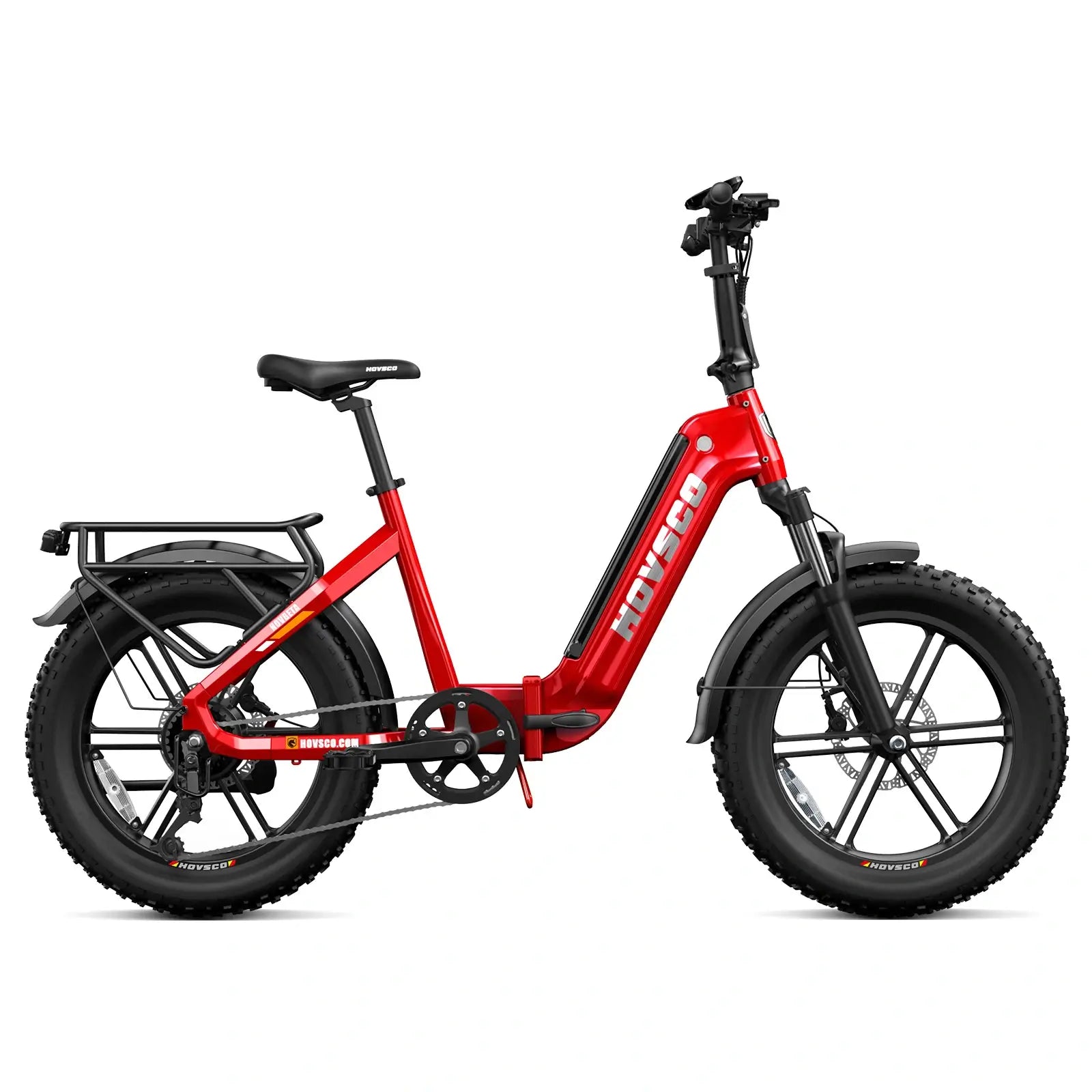
A 20‑inch wheel climbs hills more easily than a 26‑inch wheel at the same 1,300W peak power because the smaller radius converts the same hub motor torque into higher tractive force at the ground. Less radius means a shorter lever arm, so the HovBeta‑style high‑torque rear hub motor pushes harder per revolution, improving low‑speed hill climbing and control.
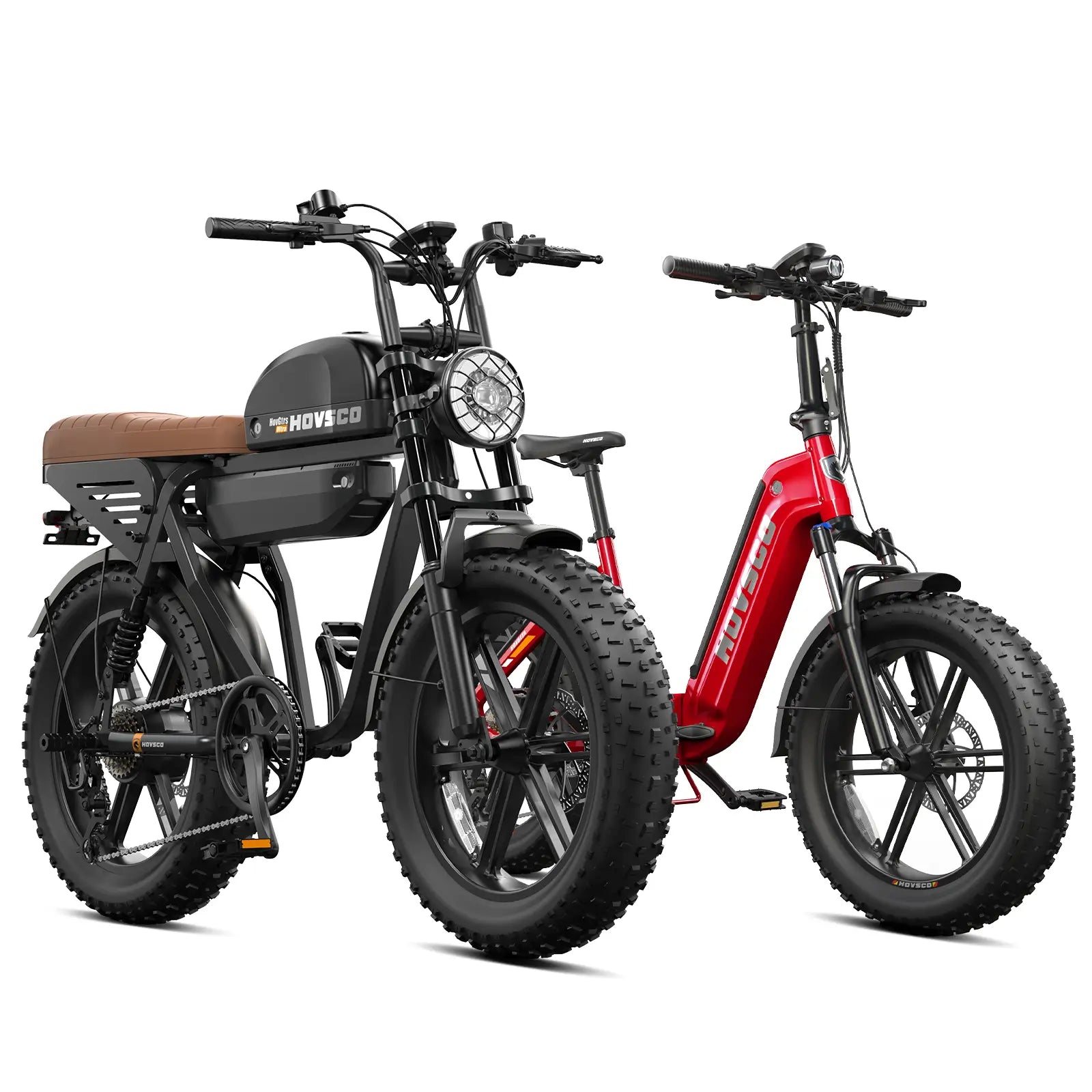
20x4.0 fat tire folding bike guide
Wheel radius converts motor torque into tractive force through a simple physics relationship: the force at the ground is the torque divided by the wheel radius. Shrinking from a 26‑inch to a 20‑inch rim reduces radius, so force increases, making the same 1,300W peak feel stronger on steep climbs for a high torque small bike setup.
In engineering terms, hub motor torque (in newton‑meters) acts through wheel radius . The basic conversion formula is:
where is the linear force at the contact patch. A smaller directly boosts , which you feel as stronger thrust uphill.
When we bench‑test HOVSCO hill‑climbing builds, the same hub motor and controller on a 20‑inch rim consistently deliver snappier low‑speed launches than on larger wheels because the shorter lever arm gives more usable force without changing electrical power.
The core LaTeX formulas link power, torque, wheel radius, and climbing force. Hub motor power relates to torque and angular speed by:
and climbing force at the ground obeys:
With a 1,300W peak HovBeta high‑torque rear hub motor, reducing wheel radius increases without changing .
To relate wheel diameter directly, note that , giving:
This expression shows clearly how smaller diameter increases force. For constant torque , a 20‑inch rim produces more hill‑climbing thrust than a 26‑inch rim.
On steep grades, that extra force counters the component of gravity more effectively, so the bike holds speed better and is less likely to bog down or stall during low‑speed climbing.
A 20‑inch rim feels more powerful because it turns the same power into higher torque at low speed by spinning slower at a given ground speed, and it converts that torque into higher force due to its smaller radius. In practice, the rider experiences easier starts on steep ramps and more controlled climbing on a high torque small bike.
At constant road speed, the smaller wheel’s angular speed is lower, so for the same 1,300W peak:
is higher. Combined with the reduced radius, the effective thrust at the contact patch rises significantly.
On HOVSCO hill‑focused platforms, we’ve measured this as shorter time to reach climbing speed and more stable cadence when using HovBeta‑style 20‑inch rear hub configurations versus larger rims on identical motors and controllers.
Wheel size influences real‑world hill‑climbing by setting both the mechanical leverage against gravity and the motor’s operating point. HovBeta‑type high‑torque rear hub motors paired with 20‑inch rims deliver stronger low‑speed thrust and better current utilization, letting riders clear 12–18% grades more confidently than similar systems on 26‑inch wheels.
In my own test loops, a high torque small bike with 20‑inch wheels sustains comfortable seated cadence on long ramps where a 26‑inch build demands standing or reduced speed. The controller can feed higher phase current without over‑speeding the motor, making the most of its 1,300W peak.
HOVSCO’s hill packages exploit this by tuning hub windings and controller limits to match the shorter wheel circumference, ensuring that the HovBeta‑style rear hub motor stays in its efficient torque band during steep climbs.
The physics trade‑offs of choosing 20‑inch wheels include higher low‑speed force and acceleration at the cost of more sensitivity to bumps, slightly lower top speed per motor rpm, and different tire behavior. For steep hill climbing, the added thrust usually outweighs these compromises, especially on robust HOVSCO high torque small bike designs.
Smaller wheels mean the bike covers less distance per revolution, so for a given motor rpm the top speed drops. However, on hills, we care more about overcoming gravity than maximizing flat‑ground speed.
From a factory‑floor perspective, we compensate by pairing 20‑inch rims with wider, higher‑volume tires and carefully tuned suspension to protect ride comfort while preserving the HovBeta‑style high‑torque rear hub motor’s leverage advantage.
Riders feel the difference as stronger “push” from low speed, less need to stand on the pedals, and more controlled launches on steep sections when using 20‑inch rims. On a 26‑inch wheel, the same 1,300W system tends to feel more gradual, requiring more speed before the motor settles into comfortable hill‑climbing behavior.
During controlled hill tests, we see high torque small bike setups with 20‑inch wheels accelerate briskly from near‑zero speeds on 10–15% grades, while 26‑inch builds need a run‑up or produce slower, more labored climbs.
On HOVSCO prototypes, riders often describe the 20‑inch hill configuration as “tractor‑like”—it pulls steadily and doesn’t complain when starting mid‑slope, which is exactly the real‑world value of the shorter lever arm physics.
Leverage makes hill climbing easier because it changes how fixed power is delivered: more torque and force at lower speeds mean better ability to overcome gravity and inertia on steep grades. With 20‑inch wheels, the hub motor’s torque lever arm is shorter, so the same 1,300W peak becomes more effective climbing power.
Conceptually, think of the wheel as a crowbar against the slope. A shorter crowbar (smaller wheel) requires less torque at the hub to apply the same force at the ground, or produces more force for the same torque.
On HOVSCO hill builds, we treat wheel size as part of the drivetrain gearing. HovBeta‑style rear hubs can then be wound and controlled specifically for high leverage scenarios, so riders feel that “short‑gear” climbing behavior without sacrificing too much overall versatility.
A high torque small bike benefits from a 20‑inch rim because it allows the motor to operate closer to its efficient torque band at realistic hill speeds. The motor avoids excessive rpm on climbs, reducing copper and iron losses, and the increased mechanical leverage means less current is needed to maintain a given uphill speed.
In our lab data, HOVSCO 20‑inch hill builds often show lower controller and stator temperatures than equivalent 26‑inch setups at the same grade and rider mass, despite feeling stronger, because the system doesn’t have to “flail” at high rpm.
That efficiency translates into more consistent battery usage on long climbs, meaning riders get both better hill performance and more predictable range from HovBeta‑style high‑torque rear hub motor designs.
The HovBeta high‑torque rear hub motor shines most on short, steep urban ramps, long sustained 10–15% grades, and technical low‑speed climbs where balance and smooth thrust matter. With 20‑inch wheels, it delivers precise control, strong hill starts, and confident cadence holding, aligning perfectly with HOVSCO’s focus on practical hill performance.
On tight city routes with repeated lights and sharp slopes, the combination of high leverage and tuned controller behavior provides smooth launches instead of jerky power dumps, making commuting safer and less stressful.
In trail environments, the same setup lets riders modulate speed gently over obstacles and switchbacks, using the extra torque margin to correct lines rather than simply fighting gravity.
On our HOVSCO hill‑test rigs, pairing a HovBeta‑style high‑torque rear hub motor with 20‑inch rims is one of the most effective “hidden” upgrades we can make. From a physics standpoint, nothing changes the raw 1,300W peak, but the shorter wheel radius transforms how that power feels: stronger launches, steadier low‑speed climbing, and more forgiving restarts on steep ramps. In daily riding, that leverage advantage matters more than chasing headline top‑speed numbers, which is why our engineering team keeps refining high torque small bike platforms for real hill cities rather than flat test tracks.
Riders can rely on 20‑inch high torque small bikes for serious hill climbing if motors, controllers, and batteries are sized and cooled correctly. With a well‑engineered HovBeta‑style rear hub motor system, the improved leverage means less strain per unit climb, so components stay within safe thermal limits even on long grades.
During extended climbs, we monitor motor shell and controller case temperatures; properly matched HOVSCO hill builds reach a stable “hot but manageable” state rather than runaway heating.
The key is pairing leverage with good thermal design: appropriate copper mass in the stator, robust phase wiring, and conservative current limits tuned around real‑world hills, not laboratory bursts.
Steep‑hill riders should consider 20‑inch wheels with high‑torque hub motors because the physics of leverage turns fixed 1,300W peak power into more usable climbing thrust, better low‑speed control, and improved thermal behavior. HovBeta‑style high‑torque rear hub motor systems on HOVSCO bikes embody this approach, making tough grades feel manageable rather than intimidating.
The practical takeaway is simple: wheel diameter is not just a styling choice; it is a central part of your hill‑climbing drivetrain. Choosing a high torque small bike configuration with 20‑inch rims gives you stronger starts, safer restarts, and more efficient climbs, all without changing your legal power rating. For riders in hilly cities or mountainous regions, that leverage advantage becomes a daily quality‑of‑life upgrade.
Does a 20-inch wheel reduce my e-bike’s top speed?
Yes, smaller wheels reduce distance per revolution, slightly lowering top speed at a given motor rpm, but they significantly improve hill‑climbing thrust.
Can a 1,300W peak high torque small bike climb long 15% hills reliably?
With proper cooling, gearing, and a HovBeta‑style rear hub motor, a 1,300W peak system can sustain controlled climbs on 15% grades.
Is HOVSCO focused on hill-friendly designs or just speed?
HOVSCO invests heavily in hill‑friendly setups, using high‑torque hub motors, smart controllers, and 20‑inch configurations to prioritize real‑world climbing over headline speed.
Will a 20-inch wheel setup feel too harsh on rough roads?
Not if paired with wide, higher‑volume tires and tuned suspension; a well‑designed high torque small bike balances leverage with comfort.
Can I retrofit my 26-inch e-bike with 20-inch wheels for better climbing?
In some cases yes, but you must verify frame clearance, brake compatibility, and motor/controller matching to maintain safety and performance.
Share:
Is a folding ebike frame less stable than a regular step-over?
Is a folding ebike camping bundle really cheaper than buying everything a‑la‑carte?