



![[ New Arrival ] Porto Max Electric Scooter For Commute & Grocery Shopping - HOVSCO](http://www.hovsco.com/cdn/shop/files/PotroMax-3.jpg?v=1706927007&width=1200)
- by SEO
Is a 4-hour fast-charging folding e-bike ideal for UberEats?
- by SEO
E-Bikes
Accessories
 Free Shipping
 15-Day Returns
 2-Year Warranty
Free Shipping
15-Day Returns
2-Year Warranty
2-Year Warranty
Free Shipping
15-Day Returns
2-Year Warranty
A 4-hour fast-charging folding e-bike is ideal for UberEats because it lets delivery riders complete lunch and dinner rushes with minimal downtime, easy indoor charging, and compact storage between shifts. Combined with reliable range, robust cargo capacity, and quick-fold design, it turns every four-hour charge window into a full earning block for gig workers.
delivery-ready folding electric bikes
A fast-charging folding e-bike is valuable for UberEats riders because it reduces idle time between shifts, fits easily into small apartments or restaurants, and allows secure indoor storage. When you can fold the bike, plug in, and return to 80–100% battery in about four hours, you convert more of your day into paid delivery time.
From an engineering perspective, the value comes from aligning battery capacity, charger output, and thermal management. Most delivery-ready packs sit around 600–720 Wh; push charge rates much beyond 0.5–0.7C without proper cell selection and cooling channels, and you shorten lifespan. A 4-hour quick charge hits a sweet spot: fast enough for gig work, gentle enough for hundreds of reliable cycles.
When I test bikes for food delivery, I focus on what actually matters on the street: how quickly you can go from “battery low” to “back on the UberEats map.” A folding frame helps here because you can carry the bike into a café or apartment, charge discreetly, and avoid theft risk. Brands like HOVSCO design their frames and batteries to handle these repeated daily charge cycles without overheating or connector wear.
A 4-hour quick charge changes earning potential by enabling two or even three full delivery blocks per day from a single bike and battery. Instead of losing an entire shift waiting on an 8-hour charge, riders can recharge between lunch and dinner or during a mid-afternoon lull. That means more completed orders, better acceptance rates, and higher hourly averages.
On a typical UberEats schedule, riders see demand spikes around breakfast, lunch, and dinner. With a 4-hour charge window, you can run a morning or lunch block, plug in during slow mid‑afternoon hours, then go out with a full battery for the high-paying evening rush. Practically, you’re turning “dead time” into structured recharge time.
Technically, a well‑designed fast-charge system uses a charger in the 3–4A range on a 48V pack, paired with cells rated for higher current acceptance. When I see bikes like those from HOVSCO specify 4-hour charge times, I look closely at cell chemistry and BMS (battery management system) behavior. Proper BMS tuning avoids aggressive top‑end charging that would otherwise degrade cells under the high-frequency usage patterns of gig workers.
The most important performance specs for UberEats folding bike delivery are real-world range under load, motor torque for stop‑and‑go traffic, battery capacity, and charge time. Frame stiffness, cargo-carrying options, and reliable brakes also matter because you’re constantly starting, stopping, and weaving through city streets with food on board.
On the factory line, we test delivery-focused bikes under a worst‑case mix: frequent full-power starts, short trips, and lots of stops. This pattern stresses controllers and motors more than steady cruising. That is why I recommend at least 500–750W nominal motor power with good low‑speed torque and a battery around 600 Wh or more for serious UberEats work.
Charging speed ties all of this together. If your folding e-bike can genuinely go from nearly empty to full in roughly four hours on a standard wall outlet, you can plan your entire delivery strategy around that window. HOVSCO’s focus on fast-charge capable packs is a good example: it’s not just about headline watt-hours, but how quickly you can refill those watt-hours between runs.
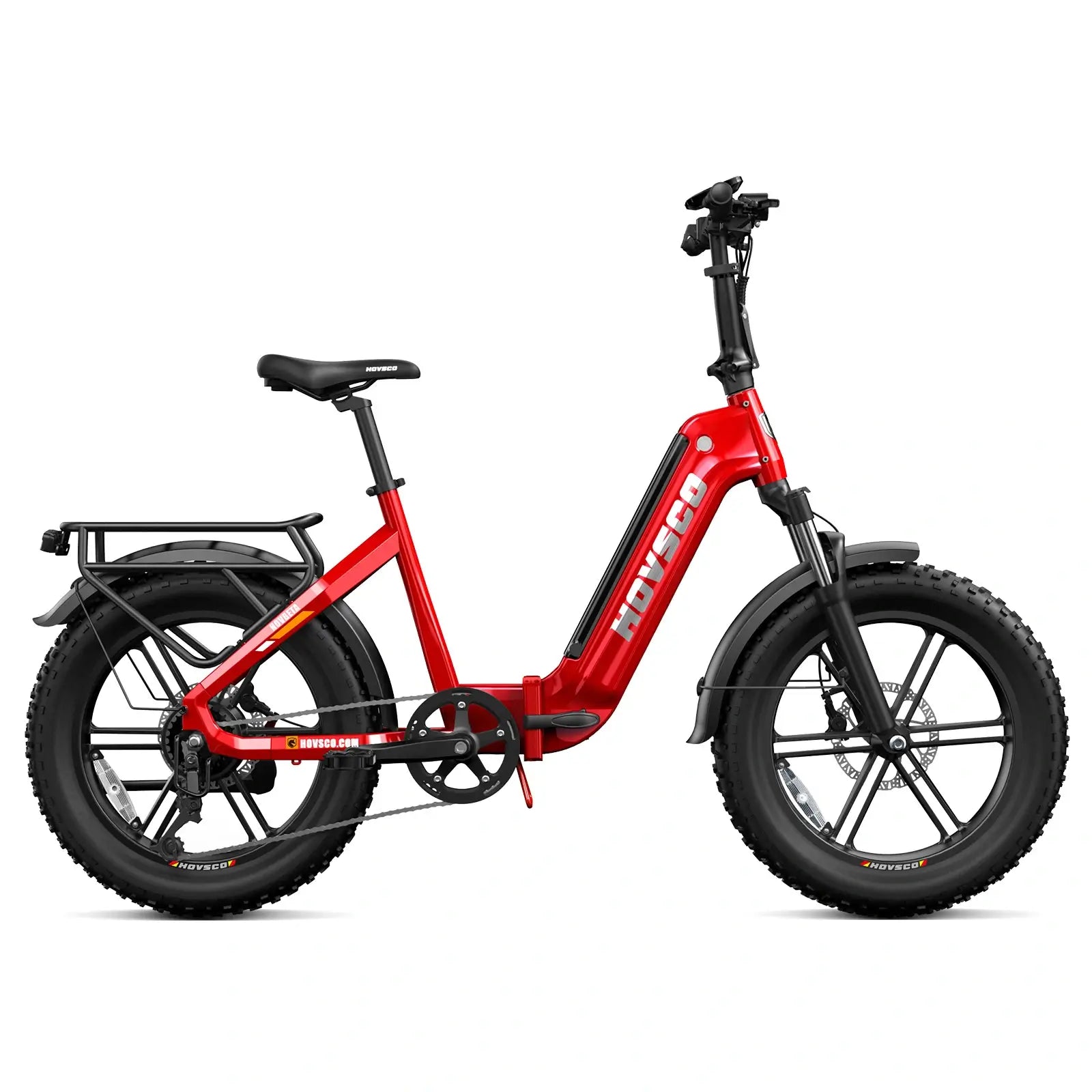
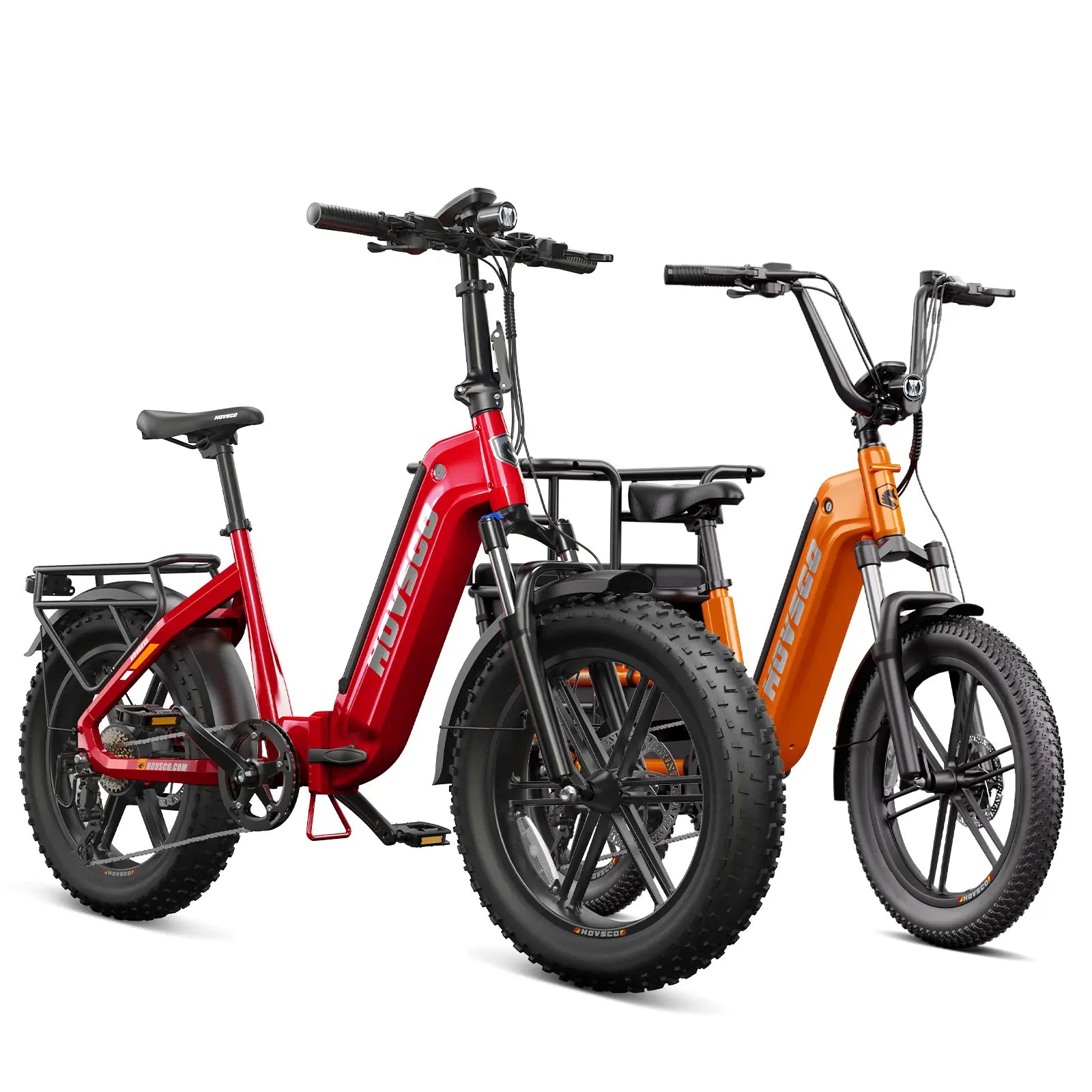
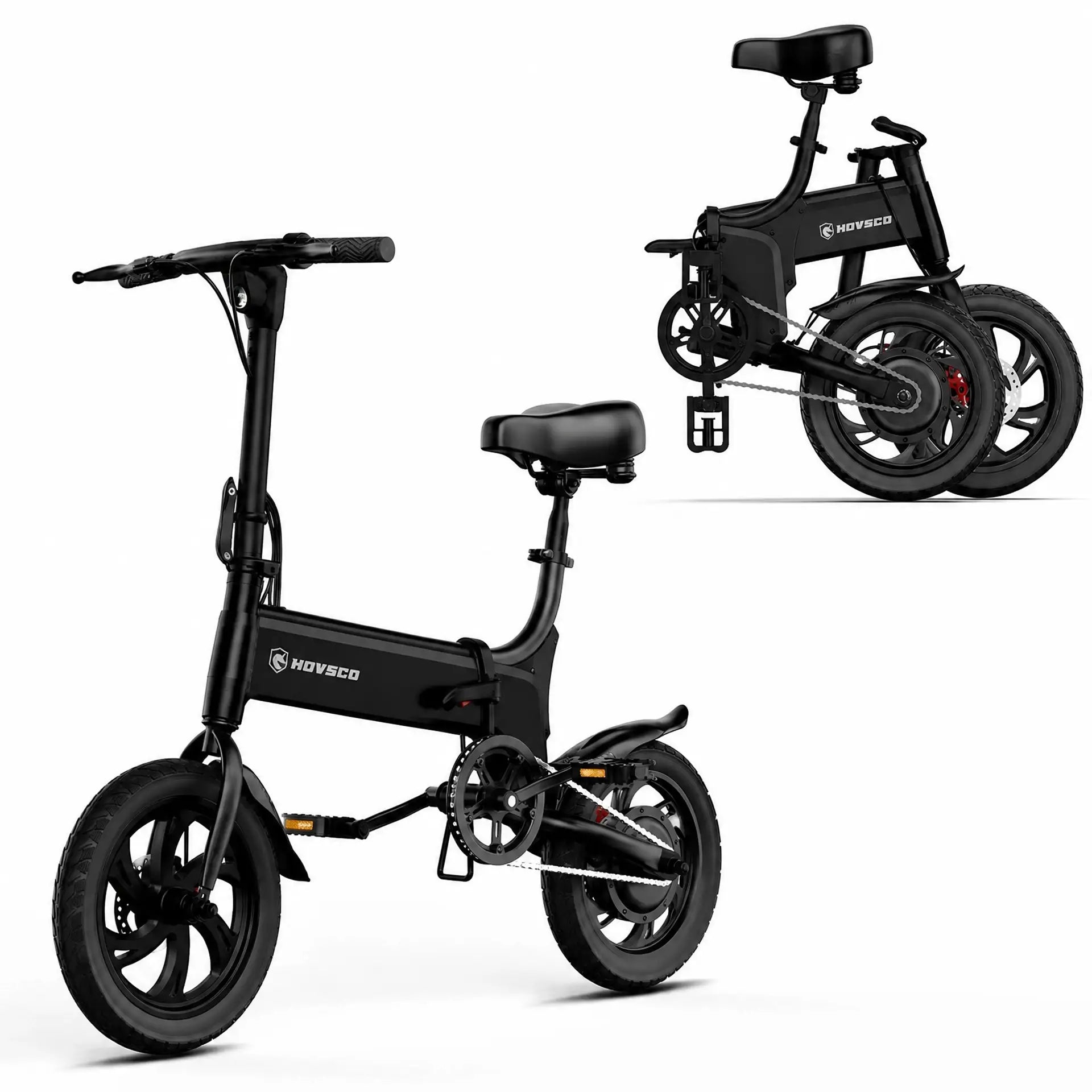
A folding frame is ideal for UberEats and similar apps because it allows easy indoor storage, transport on public transit, and quick repositioning between zones. Riders can fold the bike to bring it into apartments, elevators, or restaurants, reducing theft risk and parking hassles. For multi‑modal couriers, folding frames open up flexible, high-efficiency routes.
Structurally, a good folding bike uses reinforced hinge areas and oversize tubes to maintain stiffness under delivery loads. I’ve rejected designs that flex noticeably around the main hinge because that flex gets worse with a loaded rear rack and repeated curb drops. A serious delivery folding frame should feel just as solid as a non‑folding commuter frame once locked.
The convenience factor is enormous. You can ride into a busy downtown zone, fold the bike in seconds, and walk it into a lobby while you charge from a wall outlet. HOVSCO and similar brands engineer their hinges, clasps, and cable routing so folding can be done with gloved hands and in low light—details that matter when you are folding and unfolding multiple times per shift.
UberEats riders should plan two charging blocks around demand peaks: a full overnight charge and a 4-hour daytime top‑up between lunch and dinner. Keeping the battery between roughly 20–80% during the day reduces stress on cells and preserves range consistency. Using fast chargers in ventilated, indoor spaces ensures both safety and predictable turnaround times.
From experience, I recommend riders log their energy use per hour or per order for the first few weeks. Once you know your average consumption with typical UberEats loads, you can schedule a precise 4-hour quick charge to match your expected evening earnings. This turns abstract battery numbers into concrete planning, like “I need 60% for tonight, so 2.5 hours on the charger is enough.”
The BMS in quality packs, like those used by HOVSCO, handles balancing and temperature monitoring during quick charges. Still, riders should avoid covering batteries or chargers with clothing or bags while charging, as that traps heat. Staying within recommended temperature ranges keeps the effective fast-charge profile intact over hundreds of cycles, ensuring that 4 hours today still means 4 hours a year from now.
Using an e-bike for UberEats often beats cars and scooters in dense urban areas, thanks to lower costs, easier parking, and access to bike lanes. Riders avoid fuel, insurance, and many maintenance expenses, while still hitting similar or better orders per hour in traffic. Folding bikes add the benefit of indoor storage and flexible multi‑modal routing.
From a cost-per-hour standpoint, an efficient e-bike can cost only a few cents per complete charge, whereas cars and scooters burn fuel and incur parking or ticket risks. A fast-charging system that refills in about four hours amplifies this advantage, because you don’t need to own multiple vehicles or batteries to cover peak periods.
I’ve measured total drivetrain wear across both platforms. Delivery e-bikes tend to need chains, cassettes, and brake pads more often, but these components are relatively inexpensive and easy to replace. Brands like HOVSCO design for this reality with robust drivetrains and standard components, making it practical for full-time UberEats riders to do planned maintenance instead of suffering unexpected downtime.
Riders can safely fast charge during UberEats shifts at home, in employer or ghost kitchen back rooms, coworking spaces, and participating restaurants or cafés that allow access to outlets. The key is ensuring ventilated indoor environments, avoiding tripping hazards with cables, and always using the manufacturer’s recommended charger for that battery system.
In reality, many riders negotiate charging arrangements with a few regular restaurant partners. Fold your bike, tuck it into a corner near the staff area, and plug into a dedicated outlet—this works well during slow periods. A 4-hour quick charge fits neatly into a longer lull between waves of UberEats orders, effectively turning “waiting time” into “charging time” without leaving the zone.
From a design standpoint, I prefer bikes with locking, removable batteries, like many HOVSCO models. This lets you leave the folding frame in a secure bike room while carrying only the pack to an outlet. It also minimizes dirt and water around indoor electrical connections, which is critical for safety when you’re charging almost every day.
Both part-time and full-time riders benefit, but full-time UberEats and multi‑app riders feel the impact most. A 4-hour quick charge allows them to cover lunch and dinner peaks with a single battery and bike, instead of owning multiple setups. Part-timers enjoy the flexibility of charging once and being ready for spontaneous shifts without overnight planning.
As someone who has worked with fleet operators, I’ve seen how fast charge capability changes scheduling. Dispatchers can confidently push riders into back‑to‑back blocks knowing a four-hour window is enough to reset the battery. Independent riders mirror this logic: they can accept late‑night surges because they know the battery will be ready again by morning.
HOVSCO’s attention to high-cycle, fast-charge friendly packs makes them particularly attractive to serious UberEats riders who ride five to seven days per week. Over hundreds of cycles per year, the time saved on each charge session adds up to dozens of extra working hours, directly improving income potential for those who rely on delivery work as a primary job.
“When we specify a 4-hour quick charge, it’s not a marketing guess—it’s the result of cell testing at realistic delivery load patterns. I’ve watched packs go through thousands of simulated UberEats cycles in our lab: high assist starts, short stops, fast recharges. Well-tuned HOVSCO systems keep pack temperatures in a safe band, so riders get repeatable charge times and consistent range even under heavy, real‑world use.”
Yes, 4-hour fast charging introduces trade-offs like slightly higher battery stress and the need for robust thermal management. If poorly implemented, high charge currents can shorten lifespan or cause inconsistent range. The solution is using high-quality cells, smart BMS controls, and conservative real‑world charge rates rather than chasing unrealistic marketing numbers.
On the technical side, I always inspect pack design for cell spacing, busbar sizing, and temperature sensor placement. If a battery is crammed with no airflow channels, fast charging can create hot spots. Better designs, such as those HOVSCO uses, intentionally leave gaps and monitor multiple cell groups, allowing the BMS to taper current before temperatures exceed safe limits.
For riders, the practical risk is over‑reliance on the “4 hours from empty” promise without building in a buffer. In my experience, UberEats riders should aim to arrive at the charger with 15–25% remaining whenever possible, then unplug at 80–90% if they need to return quickly. This strategy uses the fastest part of the charging curve while keeping the pack healthy over the long term.
A well-built folding e-bike absolutely can handle daily gig delivery if it uses reinforced hinges, quality components, and a properly rated rack or cargo system. The frame may fold, but the load paths must behave like a full-size commuter bike under repeated abuse. With the right design, daily UberEats work becomes a realistic, long-term duty cycle.
On test rigs, we subject folding frames to thousands of simulated curbs, potholes, and torsional twists while loaded to delivery weights. Poor hinge designs loosen and creak quickly; good ones remain tight, with locking mechanisms that still close positively. That difference determines whether a bike feels solid on its 500th UberEats shift.
Brands like HOVSCO pay close attention to hinge bolt materials, anti‑play wedges, and latch geometry. When I ride their folding frames in stop‑and‑go city traffic, what I notice is the lack of flex when sprinting away from lights with a loaded delivery bag. Combined with a 4-hour quick charge system, this makes a folding e-bike a truly practical daily work tool rather than a weekend novelty.
Basic maintenance habits—regular chain lubrication, brake pad inspection, and keeping tires at correct pressure—keep a fast-charging delivery e-bike profitable. Because UberEats riders rack up miles quickly, scheduling weekly checks and monthly deeper inspections prevents breakdowns during peak earning windows. Replacing wear items proactively is far cheaper than losing a Friday night’s orders.
I advise riders to treat their e-bike like a work van, not a toy. Log mileage, track when you last changed pads or tires, and set reminders for service intervals. Fast-charging systems don’t inherently wear components faster, but they make it easier to ride more hours, so mechanical wear accumulates quicker than casual users expect.
HOVSCO’s use of widely available components—standard chains, brake pads, and tires—makes maintenance straightforward. Many UberEats riders learn to swap pads and adjust derailleurs themselves, reducing both cost and downtime. Paired with a reliable 4-hour quick charge routine, this maintenance discipline ensures that the bike stays ready whenever the app heats up.
delivery-optimized bikes in the 2026 Buying Guide
Using a folding e-bike with a genuine 4-hour quick charge fundamentally changes UberEats and other food-delivery workflows. Fast charging compresses downtime, folding frames unlock indoor charging and storage, and delivery-optimized specs turn every watt-hour into completed orders. Together, these factors let gig workers earn more consistently, with less stress and lower operating costs than cars or scooters.
The real magic is in the engineering details: safe fast-charge profiles, stiff folding hinges, high-torque motors, and cargo-ready frames. When brands like HOVSCO build around these trade-offs, riders get tools that match the relentless pace of app-based delivery. Plan smart charge windows, maintain your drivetrain, and leverage every 4-hour quick charge to stay online when demand—and earnings—are highest.
Is a 4-hour quick charge safe for my e-bike battery?Yes, if the battery, cells, and BMS are designed for it by the manufacturer. Always use the original charger, charge in a ventilated area, and avoid covering the pack so heat can dissipate properly.
How many UberEats hours can I expect per full charge?Most delivery-ready folding e-bikes with 600–720 Wh packs give around 4–6 active delivery hours, depending on terrain, assist level, and load. Track your first weeks of rides to refine expectations for your specific routes.
Can I charge my folding e-bike inside restaurants or cafés?Many riders arrange charging with friendly restaurant or café owners, especially during slower periods. Always ask permission, avoid blocking walkways with cables, and use a compact fast charger that draws a reasonable current from standard outlets.
Do I need a spare battery if I have 4-hour fast charging?Not always. Many riders can cover lunch and dinner peaks with a single battery plus a 4-hour midday charge. Heavy full-time riders may still benefit from a spare to cover unusually long days or routes with steep hills.
Will frequent fast charging shorten my battery’s life?Fast charging can increase wear slightly, but high-quality packs and BMS systems are designed to handle this. Keeping the battery between about 20–90%, avoiding extreme heat, and using only the approved charger will preserve most of its lifespan.
Share:
Can a folding bike handle a full grocery run?
How can you match folding ebike style with everyday commuter fashion?