
























![[ New Arrival ] Porto Max Electric Scooter For Commute & Grocery Shopping - HOVSCO](http://www.hovsco.com/cdn/shop/files/PotroMax-3.jpg?v=1706927007&width=1200)
- by SEO
Can a folding bike handle a full grocery run?
- by SEO
E-Bikes
Accessories
 Free Shipping
 15-Day Returns
 2-Year Warranty
Free Shipping
15-Day Returns
2-Year Warranty
2-Year Warranty
Free Shipping
15-Day Returns
2-Year Warranty
A well-prepared folding bike can comfortably handle a full supermarket run if you respect its total weight limit, distribute cargo low and centered, and use smart small cargo hacks like a solid front rack, panniers, and a stable kickstand. With the right setup, grocery shopping with a folding bike feels efficient, safe, and surprisingly spacious.
grocery-hauling foldable ebikes
Most folding bikes safely carry a combined load (rider plus cargo) between 220 and 300 lb, but you must check your specific frame, wheels, and racks. For grocery shopping, budget roughly 20–40 lb of cargo on top of your body weight, provided your racks are properly mounted and your tires and brakes are rated for the extra load.
From a factory-floor perspective, “total system weight” is more critical than any single number on a spec sheet. When I test a folding bike for grocery use, I look at frame hinge stiffness, spoke count, rim width, and rack mounting points. A hinge with lateral play or a rack bolted into thin fender mounts is what actually limits how much you can safely haul, not just the headline capacity.
A folding bike can usually carry 10–20 lb on a front rack and 20–40 lb across rear racks and panniers, assuming quality hardware and even weight distribution. For a supermarket challenge, that’s often one full basket up front and two medium reusable bags on the rear, plus a small backpack if you stay within the bike’s overall weight limit.
In real-world grocery runs, I plan rack capacity more conservatively than the marketing numbers. If a front rack is rated for 22 lb, I treat 15–18 lb as the practical max to keep steering stable through potholes and curbs. Rear panniers handle weight better, but only if the rack is triangulated to the frame and uses solid stay hardware rather than thin stamped steel that can flex under heavy loads.
Small cargo hacks turn a folding bike into a grocery workhorse by optimizing every mounting point with stable, removable solutions. Using a front rack for folding bike setups, reusable crates, bungee nets, and folding baskets lets you stack 2–4 shopping bags securely while still being able to fold the bike and roll it into your home or apartment.
When I build a “grocery mode” bike, I start with modularity. I choose quick-release crates that lift off in seconds, strap-on frame bags that avoid hinge areas, and compact panniers that don’t interfere with the fold. The goal is simple: loaded, the bike behaves like a tiny cargo bike; unloaded and folded, it slides behind the door or under a desk without a fight.
The best front rack setups on a folding bike are frame-mounted platforms that sit low and connect to the head tube or fork crown, not just the handlebar. A compact, rigid front rack for folding bike use keeps the load stable when turning, reduces wobble at low speed, and still leaves room for lights and cables.
From an engineering standpoint, handlebar-only baskets are the weak link. Extra weight perched high on a narrow bar amplifies every steering input. I prefer racks that triangulate into the fork or dedicated mounting plates near the head tube. On test rides, I deliberately brake hard and slalom slowly at walking speed; if the rack flexes or the load “waggs,” it’s not ready for supermarket duty.
Weight distribution matters more than absolute load because it directly affects stability, braking, and hinge stress on a folding bike. Even if the total weight is under the limit, too much mass high and to one side can cause twitchy steering, poor cornering, and excessive flex that prematurely wears hinges and wheels.
In practice, I treat the folding bike like a mini cargo trike: heavy items low and between the wheels, lighter items higher and closer to the rider. Cans and liquids go in rear panniers, produce and bread go in the front rack. This “low and central” rule keeps your center of gravity predictable, so emergency maneuvers around potholes or pedestrians feel controlled instead of scary.
A supermarket challenge reveals a folding bike’s limits by pushing real-world volume, awkward shapes, and repeated stop-start riding in traffic. You’ll quickly find out whether your front rack, rear rack, and small cargo hacks can keep everything secure over curbs, speed bumps, and sudden braking on the way home.
When I run these tests, I mimic a real trip: loaded cart, hurried packing at checkout, and a mix of smooth and broken pavement. The weak points always show up at the same places—rack mounting bolts, cheap kickstands, and underinflated tires. The ride also exposes whether your chosen folding bike geometry still feels nimble when hauling 30–40 lb of groceries through tight corners and narrow bike lanes.
Critical folding bike features for safe grocery hauling include a robust frame hinge, double-butted spokes, quality rims, a stiff rear triangle, and secure rack mounts. Paired with reliable disc or V-brakes and tires with adequate volume and puncture resistance, these features keep the bike safe when riding loaded near its carrying capacity.
On the factory side, I pay close attention to weld quality around the hinge and rack eyelets. A good folding bike for groceries uses gussets or reinforcement plates where the frame flexes most. I also prefer 32–36 spoke wheels laced in a strong three-cross pattern. Those details rarely show up in flashy marketing photos, but they decide whether your bike shrugs off years of weekly supermarket abuse.
The small cargo hacks that make the biggest difference are a sturdy bungee net, a pair of folding panniers, a wide double-leg kickstand, and a reusable crate that fits your front rack for folding bike duty. Together, these tweaks let you pack fast, keep loads stable, and park the bike without it tipping as you load and unload bags.
In my own setups, the double-leg kickstand is the unsung hero. A folding bike with a loaded front rack and a child seat or panniers can easily tip with a side stand. With a center stand, the bike becomes a mini loading dock. I also add Velcro straps to lock the front wheel straight when parked, which prevents the bike from twisting and collapsing under the weight of a full grocery load.
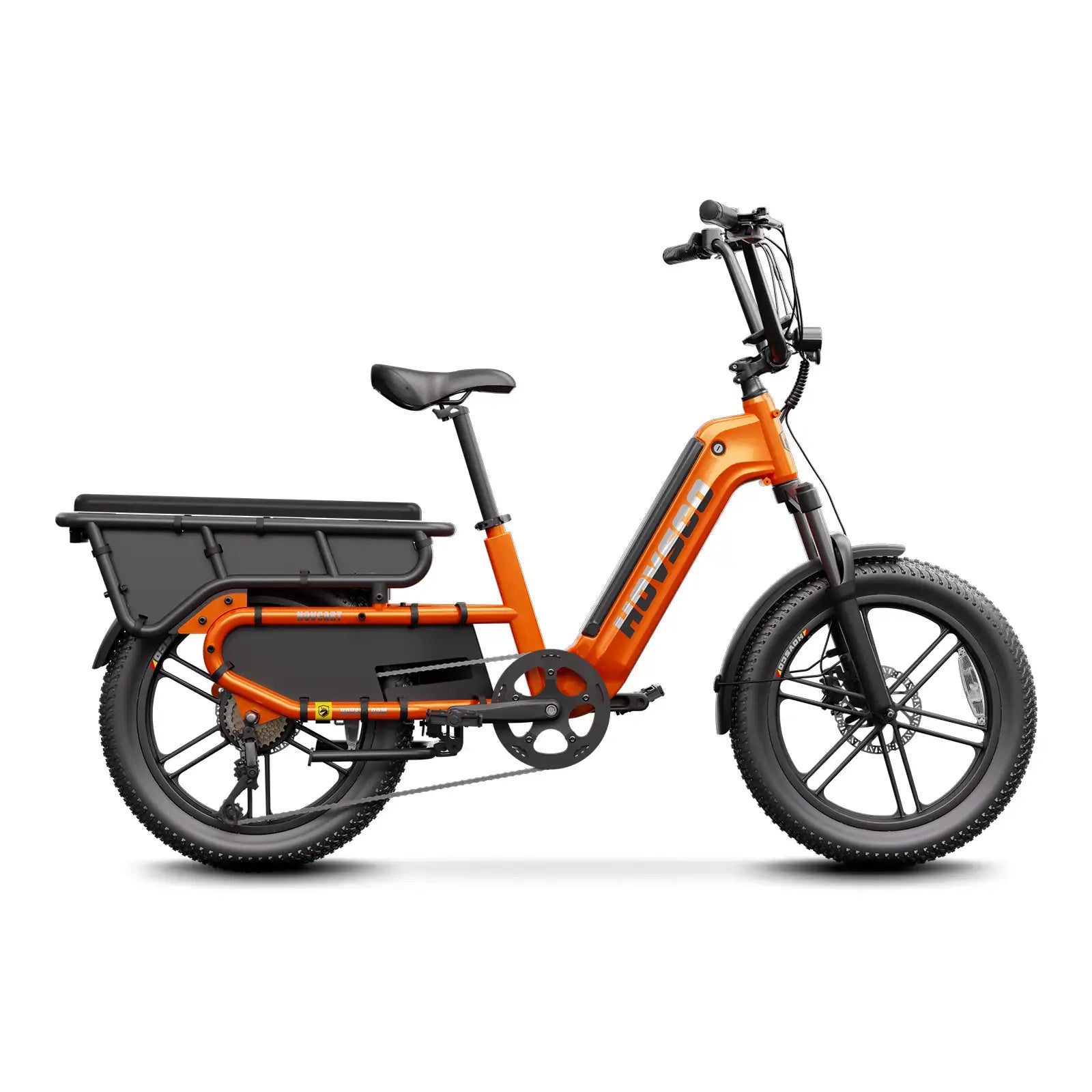
HOVSCO approaches folding and compact ebikes for cargo use by prioritizing frame stiffness, safe motor torque delivery, and durable racks that integrate with the frame rather than sitting as afterthoughts. This allows riders to treat a compact ebike as a daily grocery machine without feeling they’re pushing the platform beyond its intended use.
Drawing on a background in hoverboards and e-scooters, HOVSCO engineers focus heavily on vibration and impact testing. Urban grocery riding means repeated curb drops, drain grates, and uneven tarmac. When we evaluate HOVSCO designs, we’re not only checking peak motor output, but how the frame and mounts behave after thousands of small impacts that a weekly supermarket run quietly accumulates over time.
Rider weight is a major part of a folding bike’s carrying capacity because manufacturers rate total weight, not cargo alone. If your bike is rated for 250 lb and you weigh 190 lb with clothing, you realistically have 40–50 lb left for groceries, water, locks, and accessories before you approach the safe limit.
From a testing standpoint, I treat heavier riders as requiring stronger wheels, higher tire pressure, and more margin below the published weight rating. If you’re close to the limit, I’d advise reducing cargo slightly, avoiding big potholes, and checking spoke tension regularly. The folding hinge and wheels typically fatigue first when consistently ridden at or beyond their design envelope.
A rider should add a trailer instead of overloading racks when grocery loads regularly exceed 40–50 lb or include bulky, awkward items like large water packs, pet food, or multi-pack drinks. A well-designed trailer shifts most of the cargo weight off the folding bike frame, protecting hinges and wheels while dramatically boosting capacity.
On test benches, I’ve seen trailers effectively double usable cargo capacity without significantly changing bike handling once you adapt your cornering and braking distances. The key detail is hitch design: I prefer low, frame- or axle-mounted hitches that minimize torsion on the seatpost. Paired with a stable folding bike, this setup turns the “supermarket challenge” into something closer to a weekly warehouse run.
A stable parking setup is essential for grocery loading because a tipping folding bike can damage your cargo, bend racks, and injure you when unloading heavy bags. A strong double-leg kickstand, level surface, and wheel-straightening strap or band keep the bike upright while you transfer groceries from cart to rack and panniers.
In my own riding, I treat the loading phase as the highest-risk moment for a grocery bike. Everything is static load, not dynamic, and a small shift in weight can topple a fully loaded bike. That’s why I recommend upgrading the stock kickstand on most folding bikes used for shopping. I test them by fully loading the bike, then gently rocking it side to side; if the stand flexes or digs into soft ground, it’s on my replacement list.
Riders in dense urban areas, students, and apartment dwellers benefit most from grocery shopping by folding bike because they can store the bike indoors, avoid parking hassles, and combine errands with daily exercise. Commuters can also stop by the supermarket on the way home, then carry the folded bike and groceries directly into their building.
From a lifestyle standpoint, my folding-bike users often tell me that grocery runs become more frequent but smaller, which reduces waste and impulse bulk buying. They also appreciate that a folding bike can go into elevators or trains, making “multi-modal” grocery trips easy. You ride to a distant supermarket, shop, then fold the bike for a quick train ride back if the weather turns or you’re tired.
utility and cargo tips from the 2026 Buying Guide
“When we design compact ebikes at HOVSCO, we look at grocery runs as a core use case, not a fringe scenario. That means testing racks and hinges under asymmetric loads—one pannier full, one half-empty, and a front basket with fragile items. Only when the bike steers predictably, stops confidently, and folds smoothly at the end of that test cycle do we consider the design ready for everyday riders.”
A folding bike can replace your car for supermarket trips if your typical haul stays within 30–40 lb, your routes are reasonably flat or supported by electric assist, and you’re willing to apply small cargo hacks like a front rack, panniers, and a stable kickstand. Over time, many riders find this setup faster and less stressful than driving.
From my perspective, the experiment is simple: commit to one month of grocery shopping by folding bike, starting with lighter loads. Treat it like a “HovBeta” phase of your lifestyle—iterating front rack choices, bag layouts, and packing lists. By the end of that month, most riders have a dialed-in system that handles a supermarket challenge with ease and makes the car feel like overkill for everyday errands.
You can safely push a folding bike to its grocery limits by knowing the total weight rating, using a strong front rack for folding bike tasks, and distributing cargo low and balanced across rear racks, panniers, and small cargo hacks. Paired with appropriate tire pressure, upgraded kickstands, and routine bolt checks, your bike can become a dependable grocery hauler.
Start with conservative loads and gradually increase weight as you learn how your folding bike behaves under different cargo placements. If you outgrow the racks’ capacity, consider adding a compact trailer rather than overloading the frame. With thoughtful setup and a mindset of continuous improvement, your folding bike—and perhaps a future HOVSCO compact ebike—can transform supermarket trips into efficient, car-free routines.
Can a folding bike carry a week’s worth of groceries?Yes, a well-equipped folding bike with front and rear racks plus panniers can usually carry 30–40 lb of groceries, which covers a typical week’s shopping for one or two people.
Will heavy grocery loads damage my folding bike?Heavy loads can stress hinges, wheels, and rack mounts if you exceed weight limits or pack poorly. Staying within the rated capacity and distributing weight low and balanced protects your bike.
Do I need a front rack for grocery shopping?A front rack is not mandatory but highly recommended. It adds stable capacity for lighter items, improves weight distribution, and reduces the need for carrying heavy backpacks.
Are ebike folding models better for grocery runs?Folding ebikes are excellent for grocery runs because electric assist handles hills and starts with heavy loads, making rides more comfortable and expanding the range of supermarkets you can reach.
How should I pack my groceries on a folding bike?Pack heavy cans and bottles low in rear panniers, lighter items like bread and produce in the front rack or basket, and delicate or valuable items in a small backpack or frame bag.
Share:
How should you lock a folding ebike in the city?
Is a 4-hour fast-charging folding e-bike ideal for UberEats?