




![[ New Arrival ] Porto Max Electric Scooter For Commute & Grocery Shopping - HOVSCO](http://www.hovsco.com/cdn/shop/files/PotroMax-3.jpg?v=1706927007&width=1200)
- by SEO
How can boat owners choose the perfect ebike for life at the marina?
- by SEO
E-Bikes
Accessories
 Free Shipping
 15-Day Returns
 2-Year Warranty
Free Shipping
15-Day Returns
2-Year Warranty
2-Year Warranty
Free Shipping
15-Day Returns
2-Year Warranty
Boat owners can choose the perfect ebike for life at the marina by prioritizing corrosion-resistant materials, compact folding designs, and low weight for easy boarding. A marine life ebike with stainless fasteners, sealed electronics, and salt-ready finishes, combined with a foldable bike for yachts, balances portability, durability, and safe storage in tight cabins or lockers.
Check: marine-grade ebikes for boat owners
An ebike is truly suitable for boat owners when it resists salt corrosion, folds compactly for storage, and stays light enough to carry between dock, dinghy, and deck. A marine life ebike uses stainless hardware, sealed connectors, and durable coatings, while a foldable bike for yachts minimizes footprint below deck without sacrificing ride stability.
From the engineering side, I design a “boat-first” ebike around three constraints: salt, space, and handling. Salt-laden air attacks every exposed steel surface. In the lab, we see standard bolts bloom rust after a single season at the marina if they’re not stainless or properly coated. That’s why a marine life ebike needs stainless or treated fasteners, anodized aluminum, and careful isolation of dissimilar metals to prevent galvanic corrosion.
Space is the second challenge. On a yacht, every centimeter counts. A foldable bike for yachts must collapse into a predictable rectangle that fits lockers or under settees, without loose cables snagging on rigging or cushions. Finally, handling matters once you hit shore. Smaller wheels help with compactness, but we compensate with stiff frames and tuned geometry so the bike still feels composed on rough marina access roads.
The marine environment attacks standard ebikes through salt spray, humidity, and galvanic corrosion, quickly degrading chains, bolts, and exposed steel. Stainless components and marine-grade coatings matter because they slow rust, protect structural parts, and keep folding hinges and hardware operational. Without them, a “normal” ebike can feel tired after just one or two seasons at the marina.
In salt air, microscopic droplets settle on every surface. On ordinary steel, they start tiny rust blooms that migrate into threads, hinge pins, and spoke nipples. I’ve torn down marina-kept bikes where stem bolts seized so hard we had to drill them out. Using stainless or A2/A4-grade hardware on a marine life ebike avoids that failure mode and keeps adjustments possible.
Galvanic corrosion is the quieter enemy. When dissimilar metals touch in a salty, wet environment—think steel bolts in an aluminum frame—one becomes the “sacrifice” and corrodes faster. The fix is deliberate: matching materials when possible, adding insulating washers, and specifying stainless components where structural loads and exposure are highest. HOVSCO pays close attention here when advising boat-owning riders.
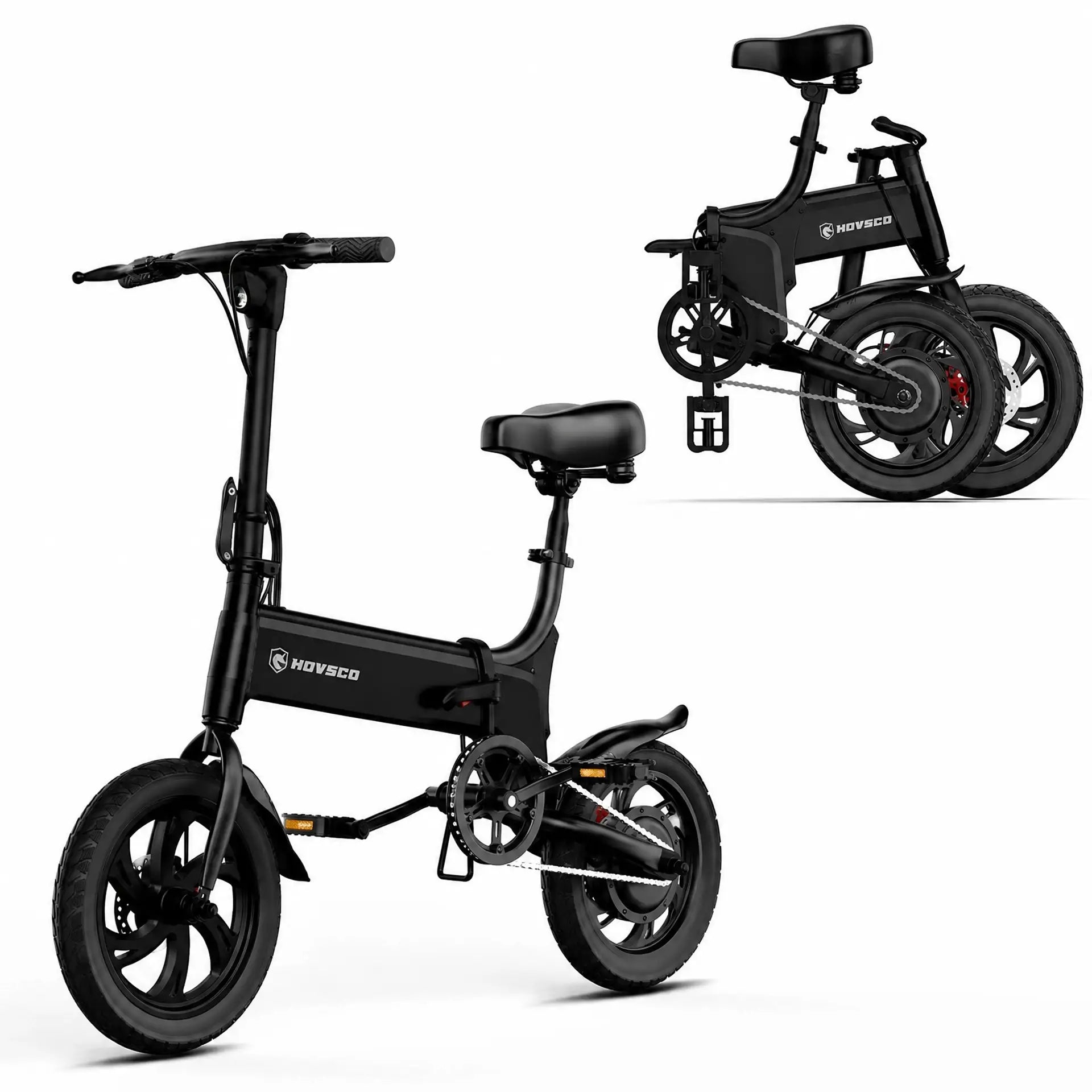
The best ebike frame and folding designs for yachts and marinas use compact, step-through frames with single-axis or mid-frame hinges that fold quickly into a stable package. A foldable bike for yachts should stand on its own when folded, protect the chain inboard, and keep sharp pedals or rotors away from gelcoat and upholstery.
From a factory-floor perspective, I prefer folding systems that keep the weight supported by a double-leg kickstand or rear triangle during the fold, not by the rider’s back. A good marine life ebike folds in two or three intuitive motions—drop seatpost, fold frame, fold bars—without loose cables flopping around. On a rocking dock, complexity becomes a liability.
Stiffness matters too. Folding frames used at marinas need oversized main tubes and robust locking mechanisms so they don’t twist under load on rough quays. When we design for boat owners, we often bias the geometry toward slightly shorter wheelbases and lower stand-over heights. That keeps the bike nimble in tight marina alleys and easy to step across while carrying dock lines or bags.
Boat owners should compare weight, folded size, corrosion resistance, battery sealing, and carrying ergonomics when shopping for a marine life ebike. Aim for sub-50 lb total weight, compact folded dimensions, stainless fasteners, IP-rated connectors, and a frame handle or top-tube balance point that makes lifting the foldable bike for yachts safe and controlled on a moving deck.
Here is a practical spec snapshot to guide marina-focused buyers:
In real-world dock testing, I’ve seen that anything much above 55 lb becomes awkward to transfer from tender to yacht, especially for smaller crew members. At the same time, going ultra-light at the expense of weld quality or hinge robustness is a poor trade. The sweet spot is a well-built, mid-weight folder with genuine marine-minded detailing.
Boat owners can protect batteries and electronics by choosing ebikes with sealed housings, marine-grade connectors, and removable batteries that live below deck when not in use. Store the pack in a dry locker, wipe contacts regularly, and avoid charging on exposed decks where salt spray and condensation can creep into plugs and ports.
From an electrical engineering standpoint, saltwater is a conductor and a corrosive—in combination, it’s unforgiving. On a marine life ebike, I look for gaskets around display screens, sealed button membranes, and connector systems with O-ring compression, not loose slip-on plugs. When I prep an ebike for boat duty, I often add a light coat of dielectric grease at critical connectors to block moisture.
Motion is another factor. Constant rocking and vibration can loosen poorly supported harnesses. On a foldable bike for yachts, cables should be clipped or channeled so they don’t chafe on sharp edges. Batteries should latch with a positive mechanical lock plus key, so they can’t rattle free if the bike tips in a swell. For HOVSCO riders at marinas, I recommend a simple ritual: remove the battery, wipe it down, and stow it inside after each shore trip.
You should store and secure a foldable bike for yachts in a dry, ventilated space such as a cockpit locker, lazarette, or under a saloon settee, keeping it away from standing water and battery fumes. Use straps or chocks to prevent sliding, protect contact points with mats, and avoid blocking emergency access routes or bilge inspection hatches.
On deck, I’ve seen owners lash a folded marine life ebike against the rail or stanchions, but this is only acceptable for calm passages and short durations. UV exposure and salt spray accelerate wear on grips, saddles, and decals. Below deck is better, but structure matters: choose spots where the bike’s weight sits on structural floors, not thin panels.
Lashing is your friend. A foldable bike for yachts becomes a 3D object that wants to move in three axes as the boat rolls and pitches. Two crossed tie-down straps to strong points keep it from hopping. Lay a sacrificial rubber or foam mat under contact points to protect both gelcoat and frame paint. If you own a HOVSCO and often sail shorthanded, practice a repeatable stow routine so you can secure the bike quickly when weather changes.
Riding style and maintenance change for ebikes at marinas because salt, sand, and wet surfaces demand gentler braking, cautious cornering, and more frequent cleaning. Boat owners should rinse frames, lubricate chains or belts with marine-appropriate products, and inspect stainless components regularly, keeping their marine life ebike reliable and ready for trips into town.
At dockside, surfaces transition quickly from smooth concrete to slick ramps, wood planks, and gravel parking lots. On test rides, I teach riders to keep speed modest near wet algae lines and to brake earlier—especially with small wheels that react quickly. Pedal strikes on uneven ramps are more likely when you’re balancing shopping bags and gear.
Maintenance intervals shrink in salty air. A chain that would be fine with monthly lube inland might need attention weekly at a marina. For a foldable bike for yachts, the hinge and latch points deserve special care; a bit of marine grease at pivots and occasional bolt torque checks keep play from developing. HOVSCO’s experience in e-scooters and hoverboards in harsh environments informs how we advise liveaboard customers here.
Belt drives, internal gear hubs, and sealed hydraulic brakes are often better for boat life because they expose fewer metal parts to salt and sand. A marine life ebike with these systems reduces rust-prone surfaces, simplifies rinsing, and keeps performance consistent, making it ideal as a low-maintenance foldable bike for yachts and coastal marinas.
On the factory floor, I’ve disassembled marina-kept derailleur drivetrains that were essentially “frozen sculptures” of rust and dried salt. Each sprocket tooth is another corrosion site. By contrast, a belt drive with an internal hub offers smooth flanks and sealed internals. Fewer pockets for salt, easier to hose down, and almost no oily residue to attract grit.
Hydraulic disc brakes deserve a note: their sealed systems keep saltwater away from critical mechanisms better than exposed mechanical cables. Stainless rotor options and resin pads resist squeal and surface rust longer. For a foldable bike for yachts that is stored near other gear, the clean, grease-free nature of belts and sealed hubs also keeps walls, cushions, and sails cleaner—a small but real quality-of-life improvement.
Sailors, liveaboards, and frequent cruisers who rely on their bike for regular provisioning benefit most from a dedicated marine life ebike. Occasional weekend boaters may manage with a general-purpose folder, but full-time or seasonal marina residents gain reliability, lower maintenance, and safer handling from a purpose-built foldable bike for yachts.
If you step off the boat and onto your ebike multiple times a week—to reach laundromats, grocery stores, or remote chandleries—the cost of corrosion and downtime adds up quickly. I’ve worked with liveaboard owners who originally brought standard ebikes aboard and, within a year, found themselves battling seized seatposts, orange chains, and unreliable electronics.
For that use case, designing or selecting a true marine life ebike with stainless hardware, belt drive, and sealed electrics is not indulgence; it’s a fleet decision. Weekend powerboaters who just want a quick ride into town a few times each season can be more flexible, but they still benefit from lighter weight and compact folding. In both scenarios, HOVSCO’s commitment to robust frames and thoughtful component choices gives boat owners a head start.
Boat owners should replace components preemptively when they show early signs of corrosion, play, or sealing failure—especially on brakes, folding hinges, and structural bolts. On a marine life ebike kept at a marina, it’s wise to treat chains, cassettes, and critical stainless fasteners as consumables, swapping them before rust compromises safety or folding function.
I recommend an annual “haul-out” inspection, mirroring boat maintenance. At least once a year, strip the foldable bike for yachts down enough to assess: hinge pins, rack mounts, stem bolts, rotor condition, and any exposed steel near the motor mount. Any component with pitting, flaking chrome, or red rust at edges deserves replacement.
Preemptive brake service is crucial. Salt-laden mist can slowly roughen rotor surfaces and contaminate pads, increasing stopping distance on wet marina ramps. Likewise, a stiff or gritty folding latch may still “work,” but on a moving deck that extra resistance can lead to mishandling. For HOVSCO riders, we advise scheduling ebike service alongside regular boat maintenance so both systems stay aligned in safety and reliability.
HOVSCO design priorities align with boat owner needs through robust frames, dependable components, and a strong focus on safety and real-world durability. While not every model is a dedicated marine life ebike, the brand’s emphasis on reliability, thoughtful cabling, and rack compatibility makes adapting a foldable bike for yachts and marinas much easier.
HOVSCO approaches ebike design with the same engineering rigor we applied to hoverboards and e-scooters in challenging environments. That heritage shows up in overbuilt welds, conservative load ratings, and consistent quality control. For boat owners, those traits translate into bikes that handle repeated loading, salty breezes, and bumpy dock approaches with fewer surprises.
Accessory compatibility matters, too. Many HOVSCO frames accept sturdy racks and baskets that can be fitted with marine-grade hardware and waterproof panniers, turning a standard urban ebike into a marina-ready hauler. Combined with the company’s U.S.-based headquarters and support network, this gives boat owners a clear path to service and upgrades as their boating lifestyle evolves.
Check: specialized ebikes in our 2026 Buying Guide
When we set up an ebike for boat life, we treat salt like sandpaper in slow motion. Stainless hardware, sealed connections, and smart folding geometry aren’t marketing extras; they’re survival tools in a marina. A boat-friendly ebike should be easy to lift, easy to rinse, and easy to trust. Our goal at HOVSCO is to engineer that confidence into the frame, long before the bike ever sees the dock.
Boat owners can build a simple care routine by rinsing the ebike with fresh water after salty rides, drying it, relubricating exposed metal, and storing the battery below deck. A weekly five-minute check of bolts, brakes, and folding hinges keeps their marine life ebike and foldable bike for yachts reliable for every shore trip.
A practical “after-dock” routine looks like this:
Rinse frame, wheels, and drivetrain with low-pressure fresh water.
Wipe dry, especially around stainless bolts and folding joints.
Apply light lube to chain (or check belt tension) and moving parts.
Remove battery, wipe contacts, and store in a cool, dry cabin.
Inspect tires for embedded shells, glass, or dock debris.
This habit is the difference between an ebike that feels tired after one season and one that still folds smoothly and stops confidently in year three. For HOVSCO owners, following a consistent routine also helps preserve finish quality and resale value, whether the bike lives primarily on deck or below.
Boat owners should choose, set up, and care for an ebike at the marina by focusing on corrosion resistance, compact folding, and practical handling. A purpose-ready marine life ebike with stainless components, sealed electronics, and a manageable weight becomes an essential tender companion, while a well-designed foldable bike for yachts fits naturally into lockers and cabins.
Start by selecting an aluminum or carbon frame with marine-minded hardware and, if possible, belt drive or protected gearing. Confirm the folded dimensions match your storage spaces and that the bike offers secure carry points for moving between dock, dinghy, and deck. Treat stainless fasteners, hinges, and braking components as critical systems, worthy of regular inspection and timely replacement.
Then, build a simple fresh-water rinse and lube routine into your normal post-docking habits. With thoughtful setup and lightweight, reliable design—qualities that brands like HOVSCO prioritize—your ebike becomes an extension of the boat: ready for provisioning runs, marina exploring, and spontaneous rides ashore whenever you drop anchor.
Can I keep my ebike permanently on deck in a salty environment?
You can keep an ebike on deck, but long-term exposure to salt and UV accelerates wear. A marine life ebike with covers, regular rinsing, and periodic stainless hardware checks withstands this better than a standard model.
Do I really need stainless components on a boat-focused ebike?
Yes, stainless components dramatically reduce seized bolts, rusted seatposts, and frozen hinges. On a foldable bike for yachts, stainless hardware and marine-grade coatings are key to keeping the bike serviceable over multiple seasons.
Will a folding ebike feel unstable compared to a full-size bike ashore?
A well-designed folding ebike feels stable if the frame is stiff and geometry is tuned. Slightly smaller wheels and a shorter wheelbase can still ride confidently on marina roads when engineered with strong hinges and quality components.
Can I charge my ebike battery from the boat’s electrical system?
Yes, most boat owners charge via inverter or appropriate onboard AC outlets, ensuring proper voltage and clean power. Always use the manufacturer’s charger and avoid damp or salty locations when charging the pack.
Are HOVSCO ebikes a good fit for boat owners?
HOVSCO ebikes suit many boat owners thanks to solid frames, thoughtful component choices, and good rack compatibility. With the right care and storage, they can be adapted into reliable, marina-ready companions for coastal cruising life.
Share:
Is a folding ebike really the best choice for college dorm life?
Can a folding e‑bike with 90Nm really conquer steep hills?