



![[ New Arrival ] Porto Max Electric Scooter For Commute & Grocery Shopping - HOVSCO](http://www.hovsco.com/cdn/shop/files/PotroMax-3.jpg?v=1706927007&width=1200)
- by SEO
How Mid-Drive Hubs Protect Your Rear Suspension Integrity (June 2026)
- by SEO
E-Bikes
Accessories
 Free Shipping
 15-Day Returns
 2-Year Warranty
Free Shipping
15-Day Returns
2-Year Warranty
2-Year Warranty
Free Shipping
15-Day Returns
2-Year Warranty
Unsprung mass physics shows that moving motor weight from the rear wheel into a mid-drive position reduces the mass the suspension has to control, dramatically improving how fast it can react to small trail inputs. When combined with a high-quality, tunable rear shock, this lower unsprung mass can make a full-suspension e-bike feel far more composed on chattery forest singletrack and rock gardens.
Explore the physics of unsprung mass, learn how mid-drive hubs protect rear suspension integrity, and see why a tunable rear shock is the key to faster, smoother trail response.
mid drive ebike handling kinematics
Over the last three years, high-power e-MTBs and aggressive full-suspension trail e-bikes have become one of the fastest-growing segments in cycling, with riders demanding both motor torque and refined suspension performance on rough terrain. At the same time, research in vehicle dynamics consistently shows that increasing unsprung mass—such as by using heavy hub motors—worsens ride comfort, increases dynamic wheel loads, and accelerates component fatigue. Studies on in-wheel motors in cars and rail bogies report that even a 20% reduction in unsprung mass can significantly reduce vertical forces and improve stability, trends that translate directly to e-bike suspension behavior on rough trails.
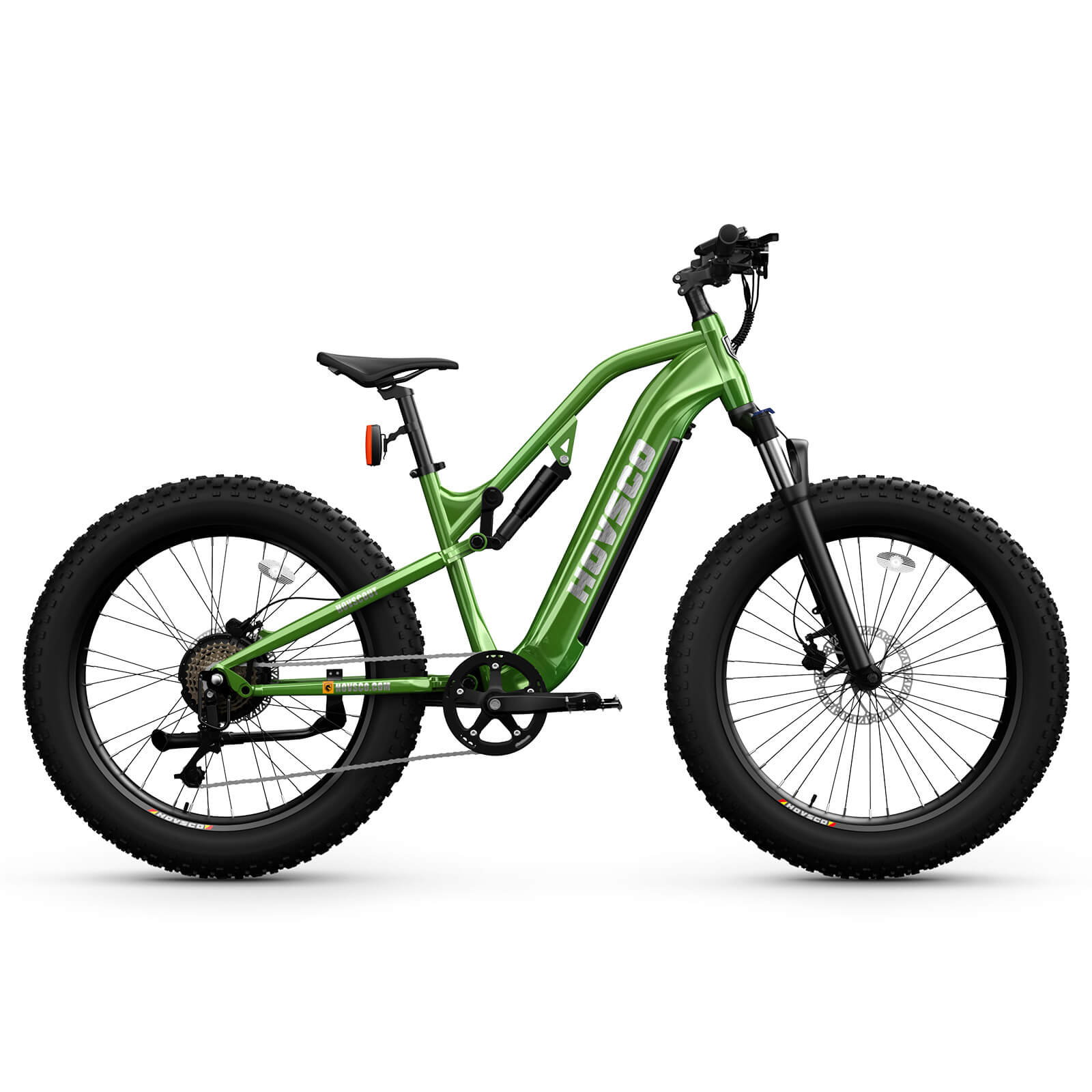
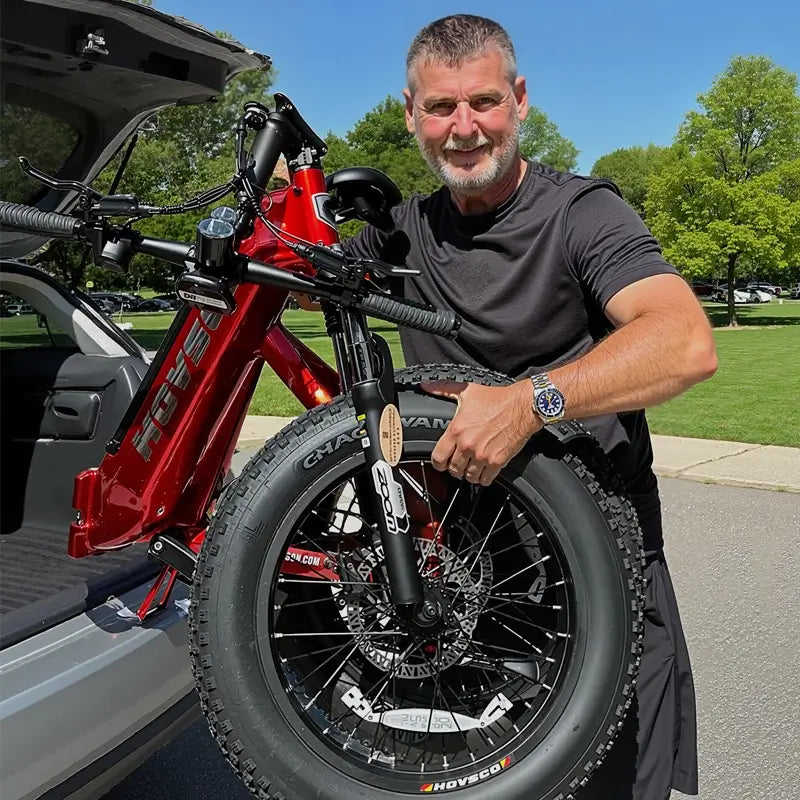
For e-bikes, the trend is clear: as power levels climb above 1 kW and battery capacities grow, the choice between hub motors and mid-drive layouts has become a key design decision for serious riders who care about traction, small-bump sensitivity, and long-term frame integrity. Brands like HOVSCO, which offer full-suspension and trail-focused models such as the HovScout 26" Full Suspension Fat Tire E-bike, sit right at this intersection of power and suspension sophistication.
HOVSCO’s lineup includes all-terrain and full-suspension e-bikes like the HovScout 26" Full Suspension Fat Tire E-bike, designed to balance high motor output with controlled suspension performance on rough trails. With 1300 W peak motor power, up to 60 miles of range, and fat tires that amplify suspension input at the rear wheel, any reduction in effective unsprung mass or improvement in rear shock damping directly enhances control and comfort. For riders who want “race-grade” feel, pairing such a frame with a high-quality, air-pressure-adjustable rear shock upgrade can unlock the full benefit of unsprung mass physics on forest singletrack and rock gardens.
Unsprung mass is the part of a vehicle’s mass that is not supported by the suspension, typically including wheels, tires, brakes, and any components rigidly attached to them. In the context of “The Physics of Unsprung Mass: How Mid-Drive Hubs Protect Your Rear Suspension Integrity,” it refers to how relocating the motor from a rear hub into the frame reduces the rear wheel’s mass and moment of inertia, allowing the suspension to respond more quickly and with less stress to trail impacts.
Many high-powered hub-motor e-bikes push a large fraction of total system weight into the rear wheel itself, increasing unsprung mass precisely where the suspension needs to react the fastest. In physical terms, a heavier wheel has greater translational inertia Ek=21mv2 and rotational inertia Er=21Iω2, which means more energy must be absorbed and dissipated by the suspension whenever the wheel is kicked upward by a rock or root.
On rough forest trails, this added unsprung mass makes the wheel more reluctant to follow high-frequency bumps, so instead of the wheel moving up and down while the frame stays composed, energy is transmitted into the chassis as harsh impacts. Riders perceive this as “packing up” over repeated hits, increased chatter at the rear end, and difficulty maintaining traction in braking bumps or small rock gardens. Over time, larger dynamic loads also stress pivots, bearings, and shock mounts, potentially shortening the service life of full-suspension frames if damping and spring rates are not perfectly tuned.
Heavy hub motors also increase the polar moment of inertia of the wheel, making it harder for the suspension to quickly reverse direction after a bump. The result is sluggish rebound and slower decay of oscillations, which shows up in “waveforms” of suspension deflection as longer-lasting, higher-amplitude oscillations after each impact. On top of this, heavier unsprung mass raises dynamic wheel loads against the ground, which can compromise tire grip and accelerate wear—especially when the bike is also carrying up to 450 lbs of payload, as many HOVSCO models allow.
Vehicle dynamics research shows that cutting unsprung mass by around 20% can significantly reduce dynamic wheel loads and improve ride comfort, while added unsprung mass from in-wheel motors measurably degrades suspension response and stability.
The table below conceptually compares a HOVSCO-style full-suspension e-bike with a mid-drive or frame-mounted motor and tunable rear shock, a similar e-MTB using a heavy rear hub motor, and a non-electric full-suspension trail bike.
Unsprung mass and natural frequency
In a simplified quarter-car model, the unsprung mass mu and the tire stiffness kt define an unsprung natural frequency ωu≈kt/mu. Reducing mu by moving the motor into the frame increases ωu, letting the wheel follow faster input frequencies from small rocks and roots without transferring as much acceleration to the sprung mass (the frame and rider).
Damping and waveform decay of suspension oscillations
The suspension’s response to a bump can be approximated as a second-order system with damping ratio ζ=c/(2km), where c is damping, k is spring stiffness, and m includes an effective contribution from unsprung mass at the wheel contact point. For a given shock tune, lowering unsprung mass effectively increases the system’s ability to dissipate motion energy quickly, shortening the decay envelope in the suspension deflection waveform after each impact.
Kinetic energy and impact transfer
On each bump, the energy associated with the vertical motion of the wheel and attached components can be approximated by E=21muv2 for the vertical component. By removing the motor’s mass from the rear wheel, every hit delivers less energy into the suspension for the same vertical speed v, which means less travel is consumed, less heat is generated in the damper, and fewer high-force spikes reach the frame and rider.
On a mid-drive full-suspension e-bike, repeated square-edged hits in a rock garden feel like controlled, separate events, with the rear wheel quickly resetting between impacts instead of “packing up” and kicking the rider forward.
Compared with a heavy hub-motor rear wheel, the same trail at the same speed shows a visibly faster decay in suspension displacement graphs when unsprung mass is reduced, indicating quicker stabilization after each bump.
During long descents, riders report less heat fade in a properly tuned rear shock when unsprung mass is lower, because each impact injects less kinetic energy into the damper for the same vertical wheel movement.
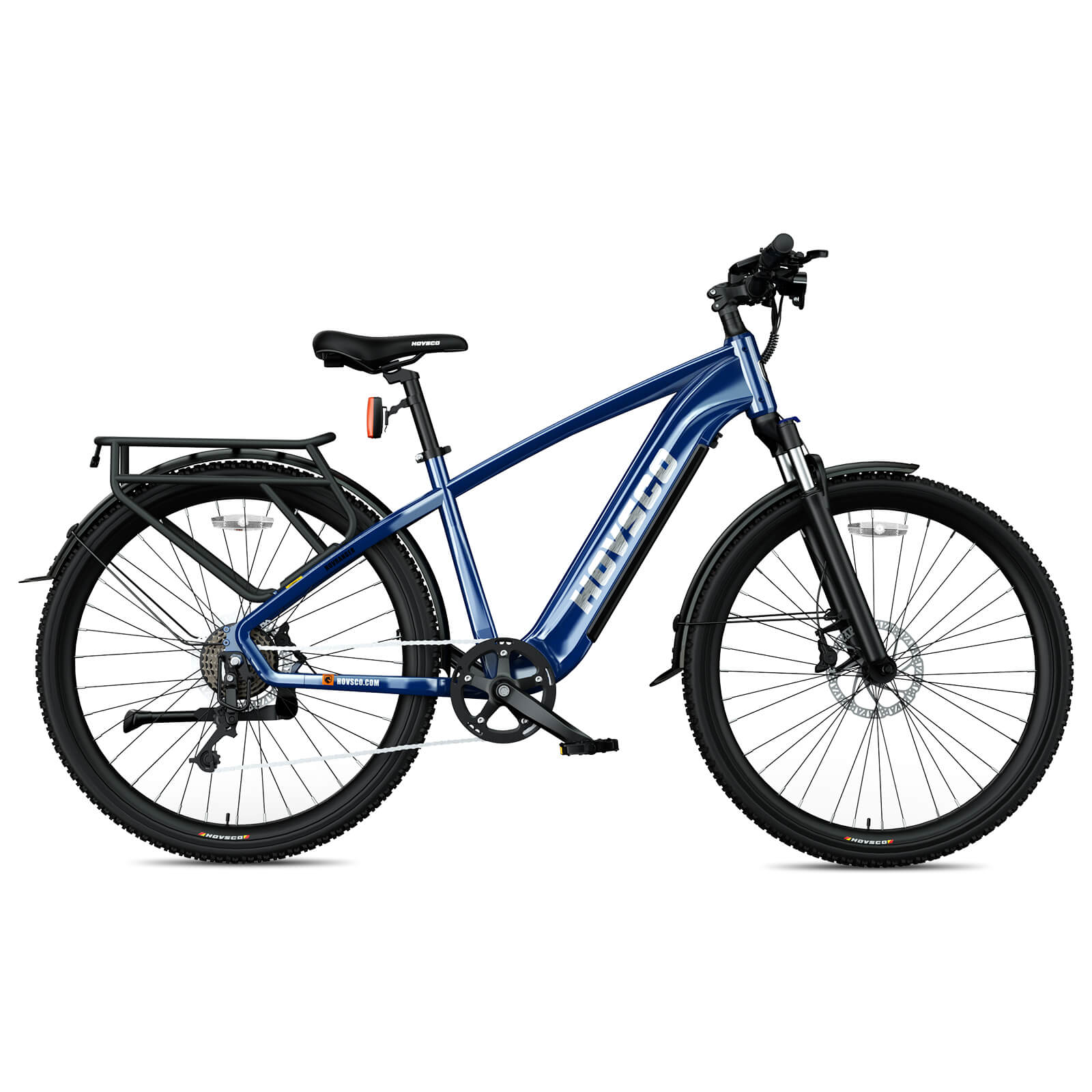
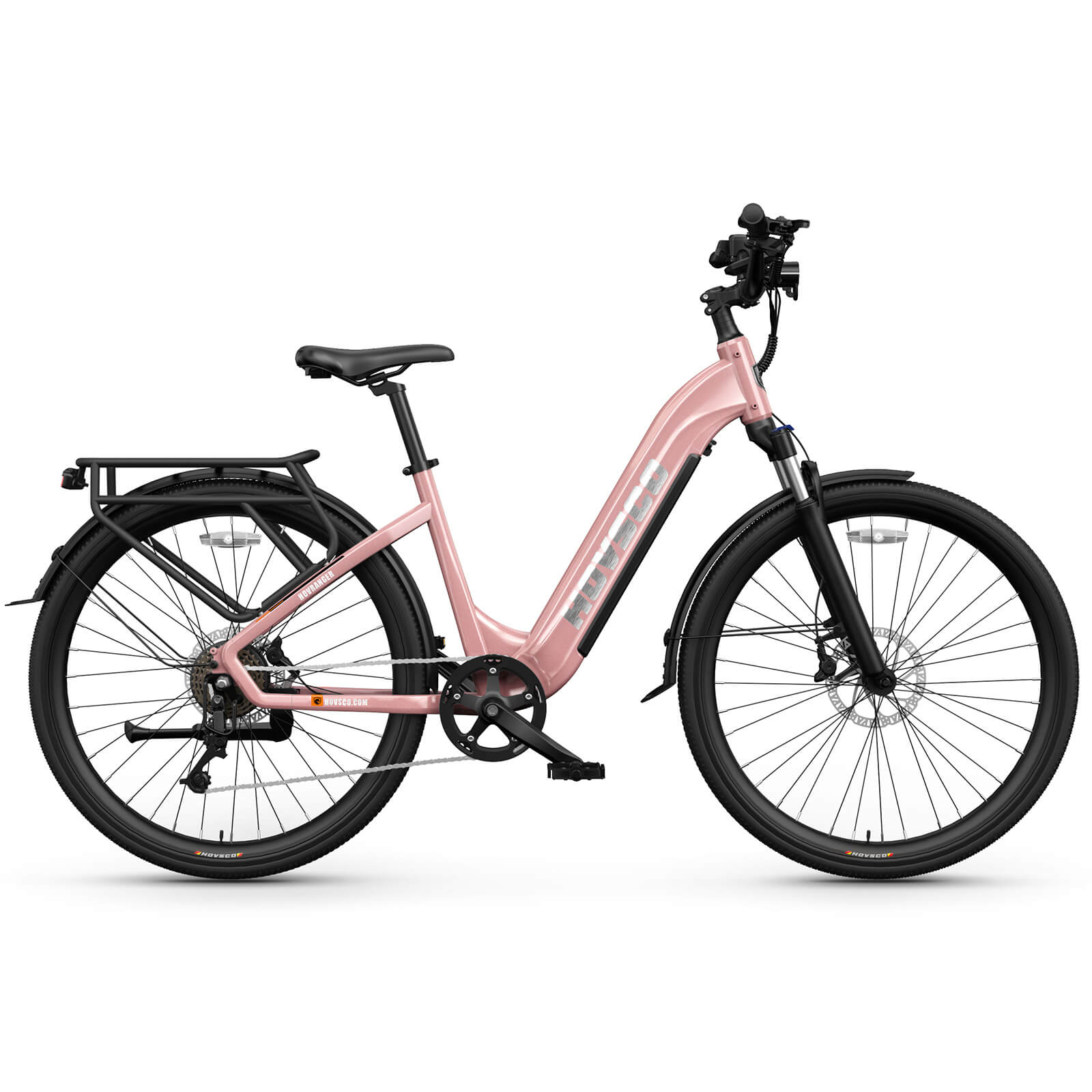
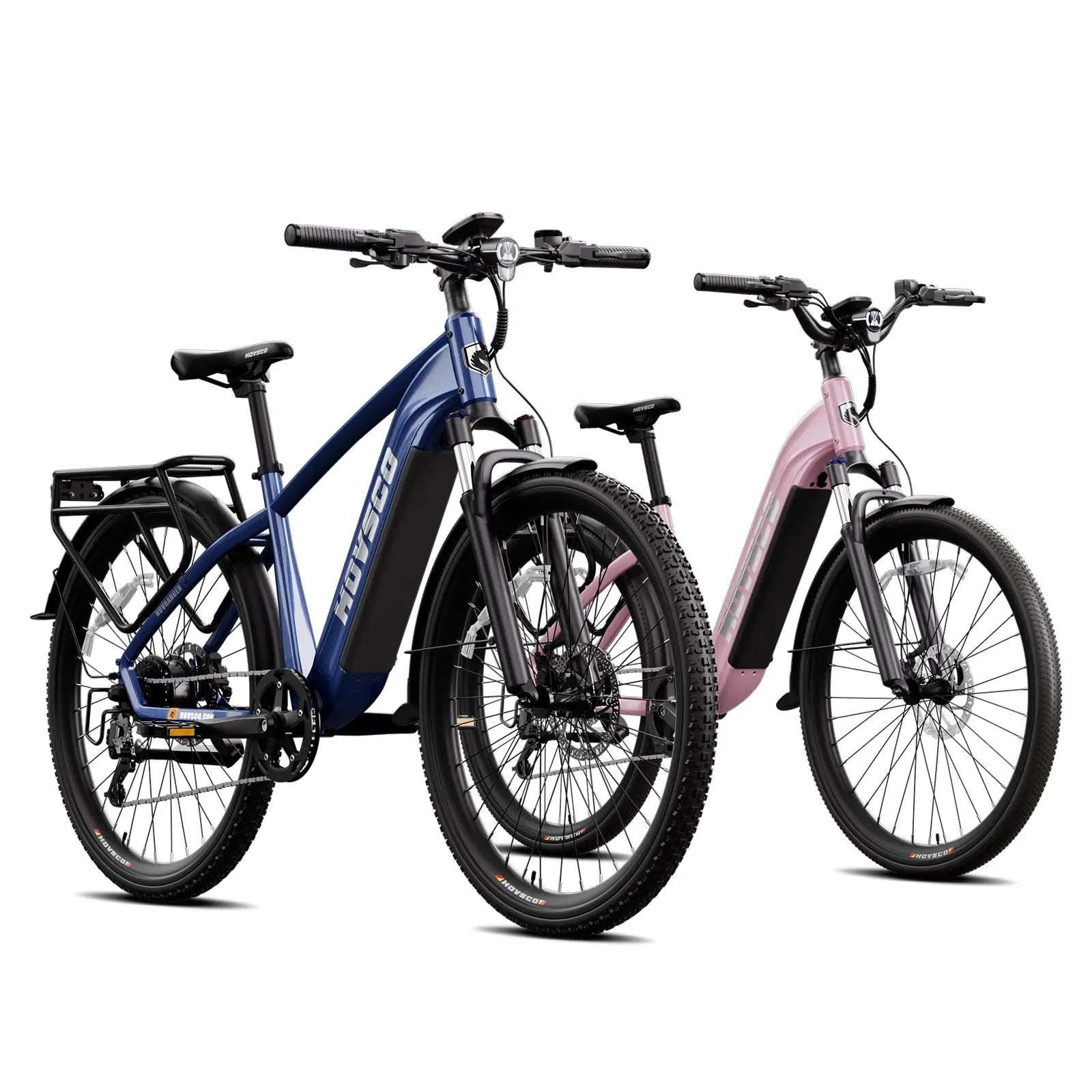
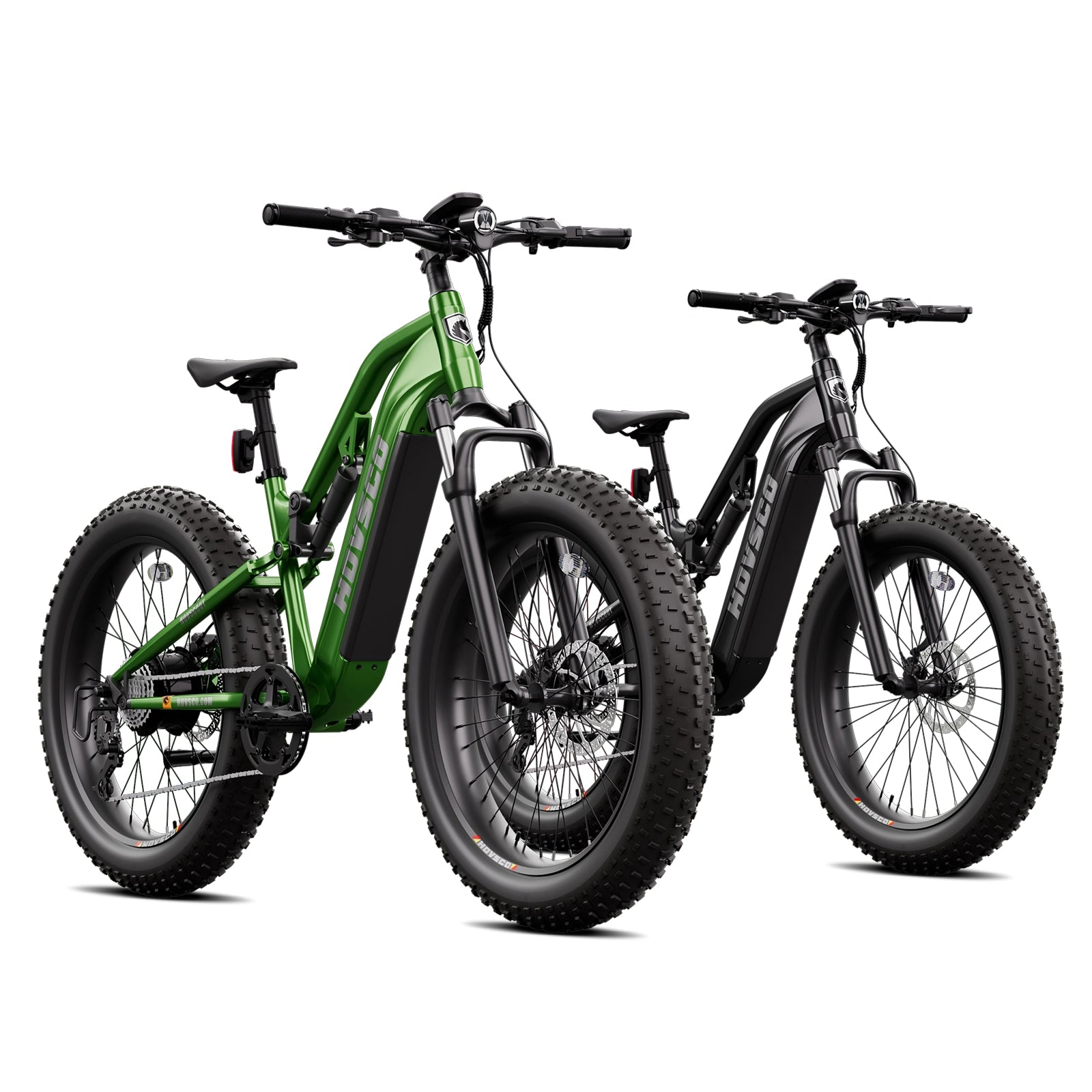
For riders who understand unsprung mass and want to feel the difference, full-suspension and trail-focused HOVSCO models are natural candidates. The HovScout 26" Full Suspension Fat Tire E-bike combines wide tires with front and rear suspension, allowing advanced users to experiment with spring rates and damping to get the most out of the physics. If your riding mixes commuting with trail sessions, the HovRanger 27.5" Ebike offers front suspension and trail-capable geometry that still responds favorably to reductions in effective unsprung mass at the wheel.
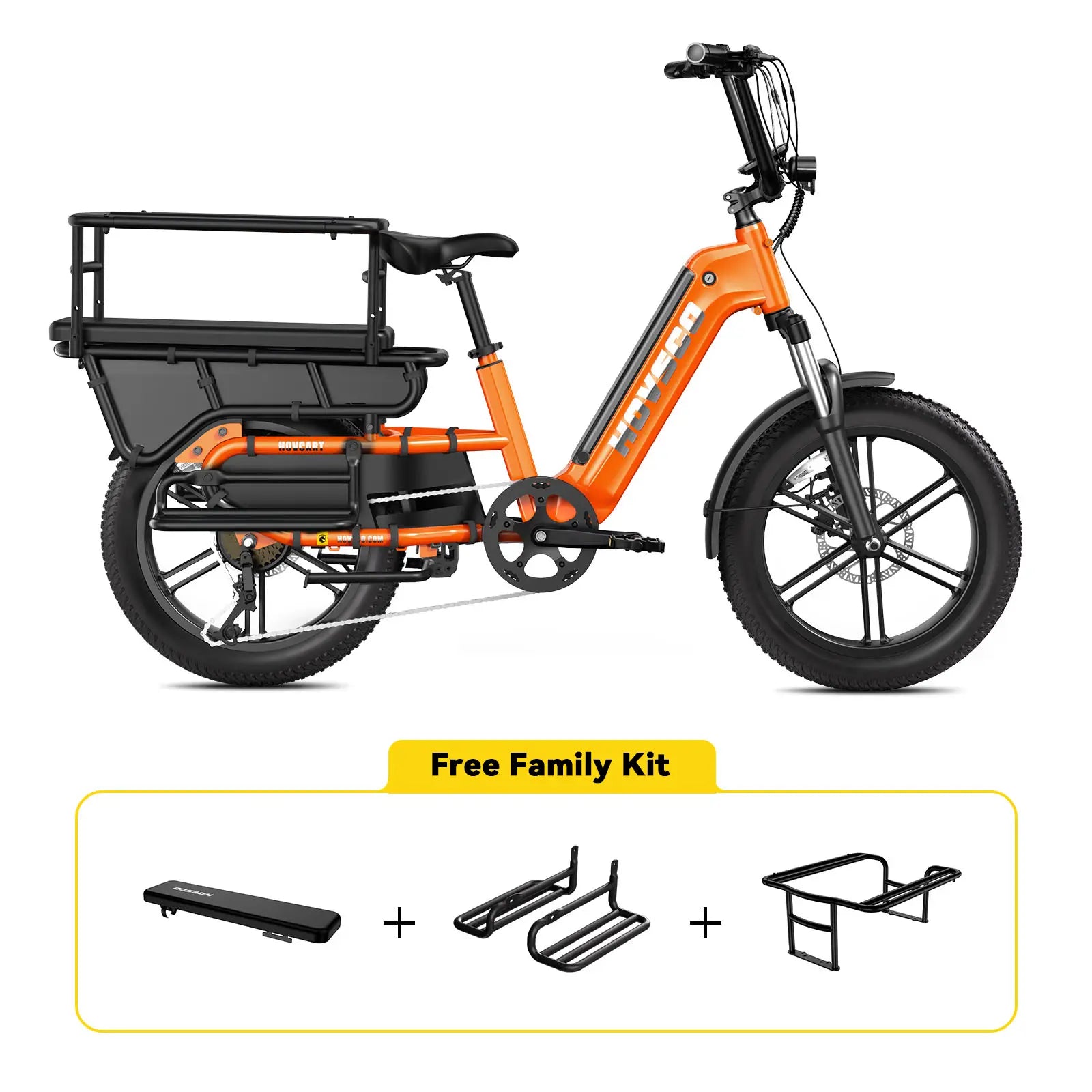
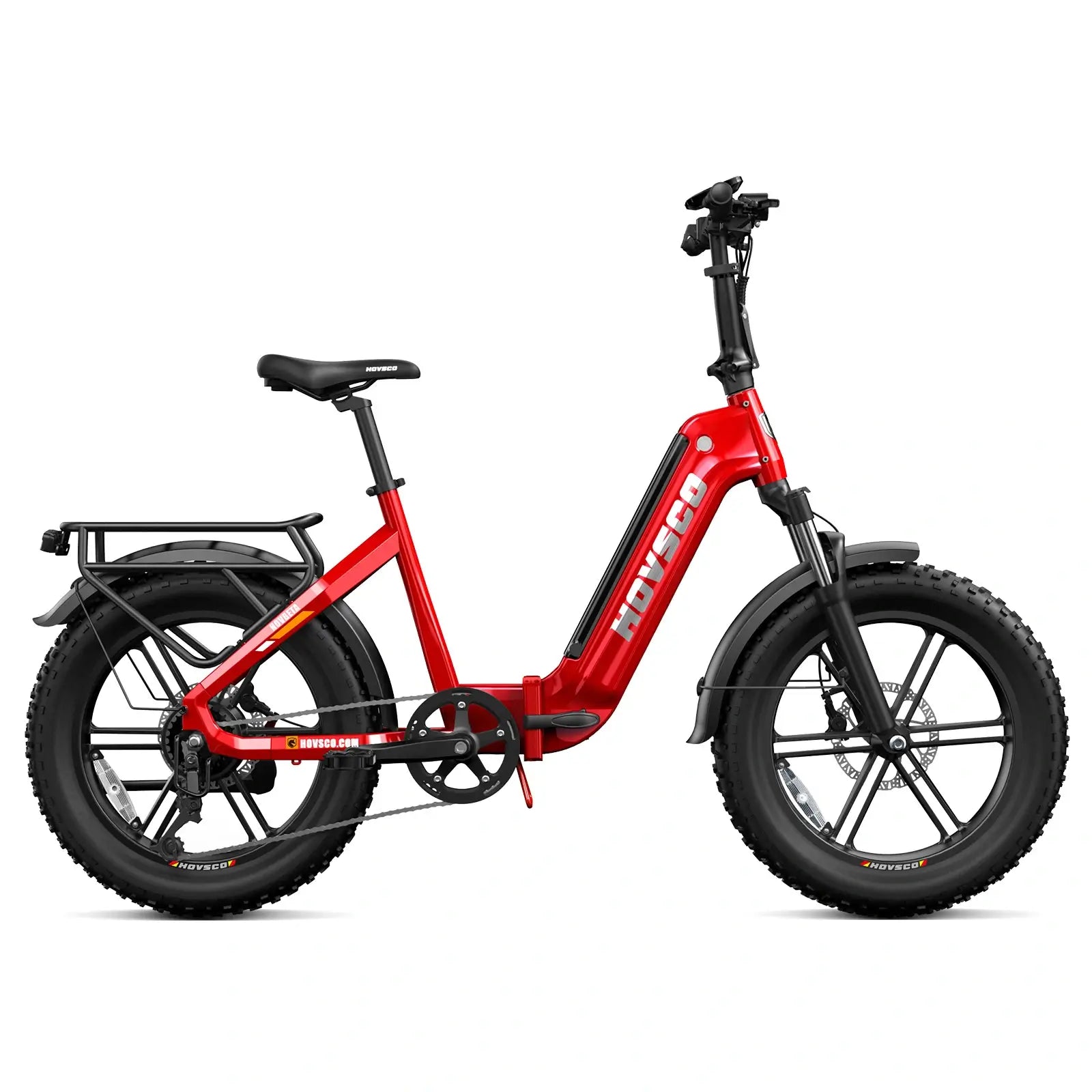
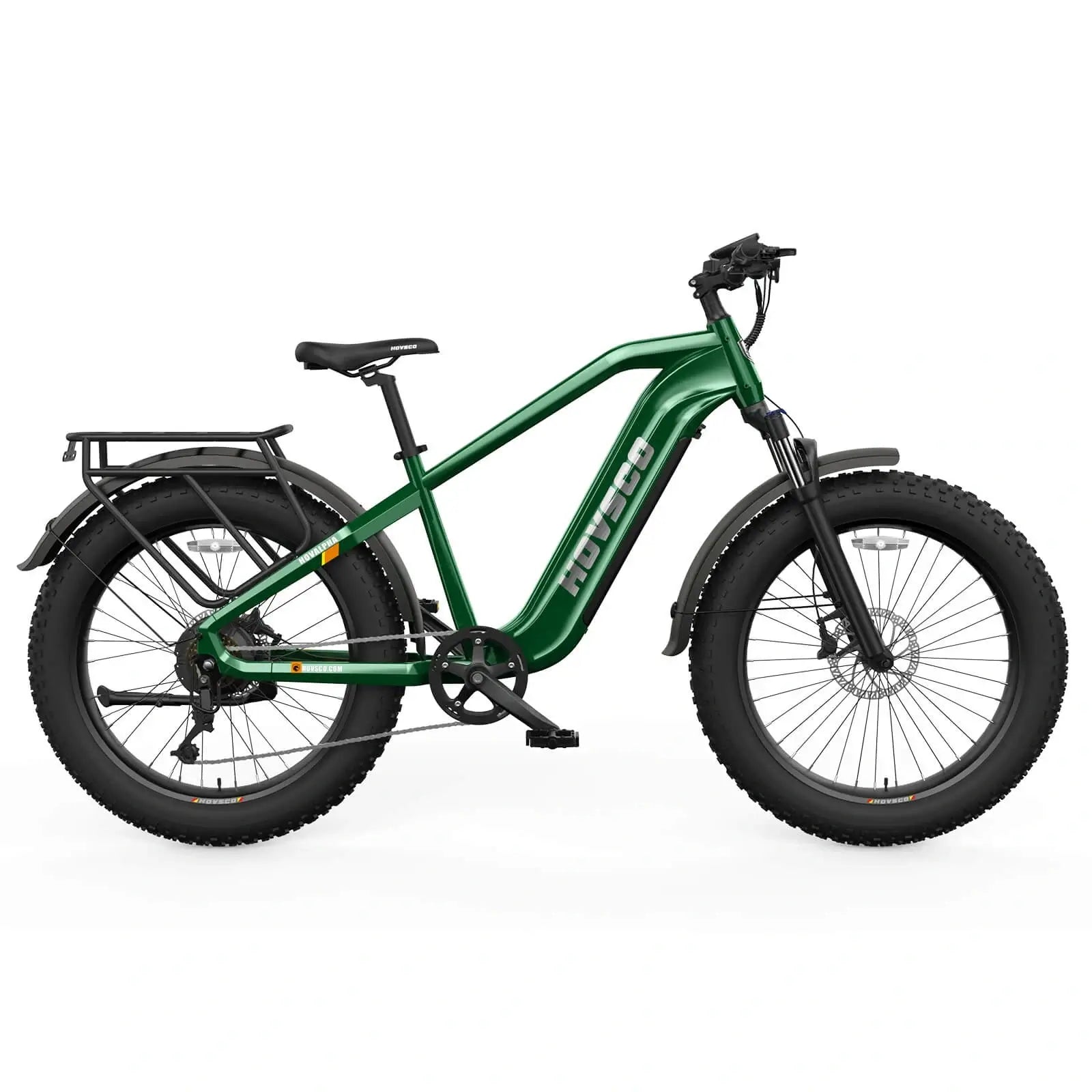
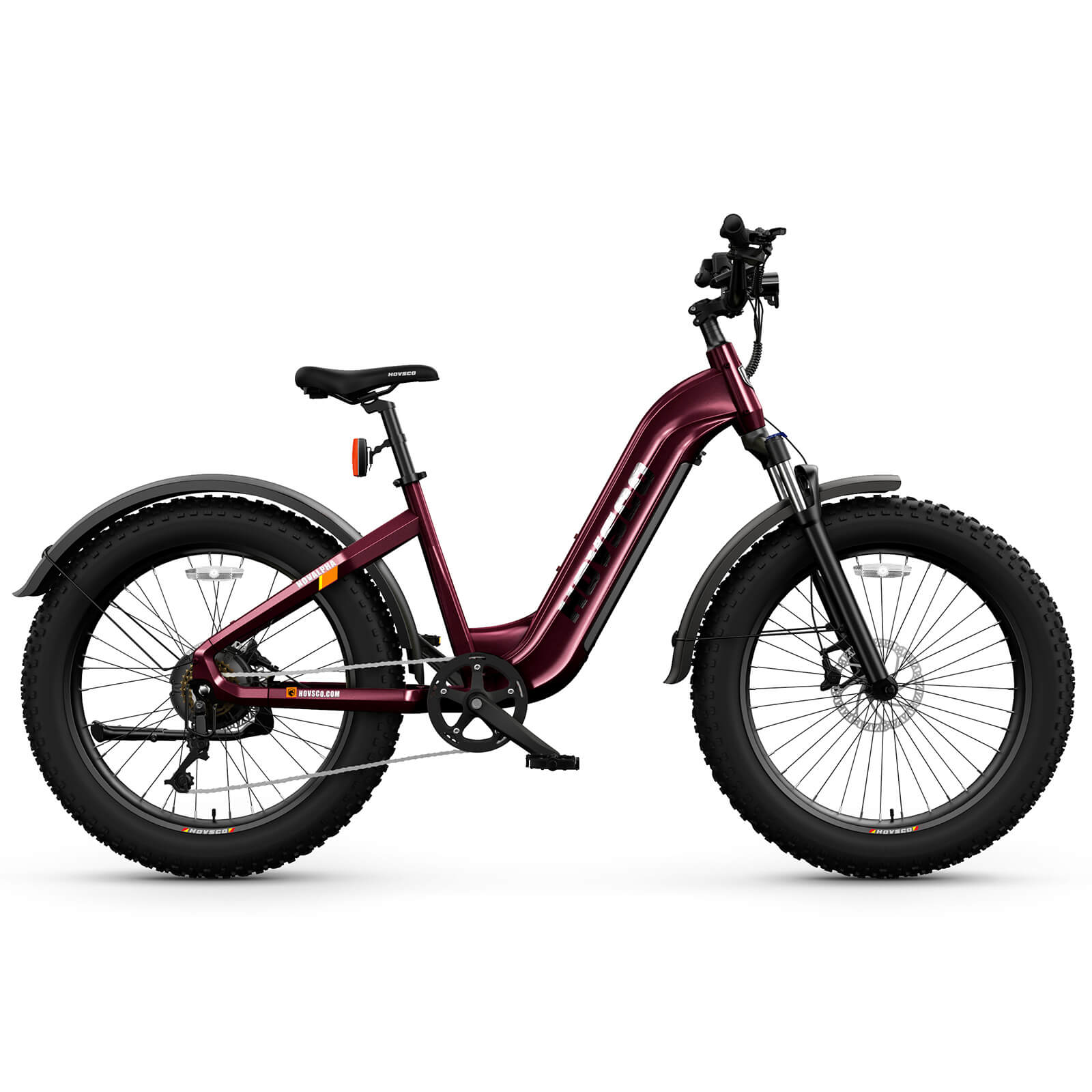
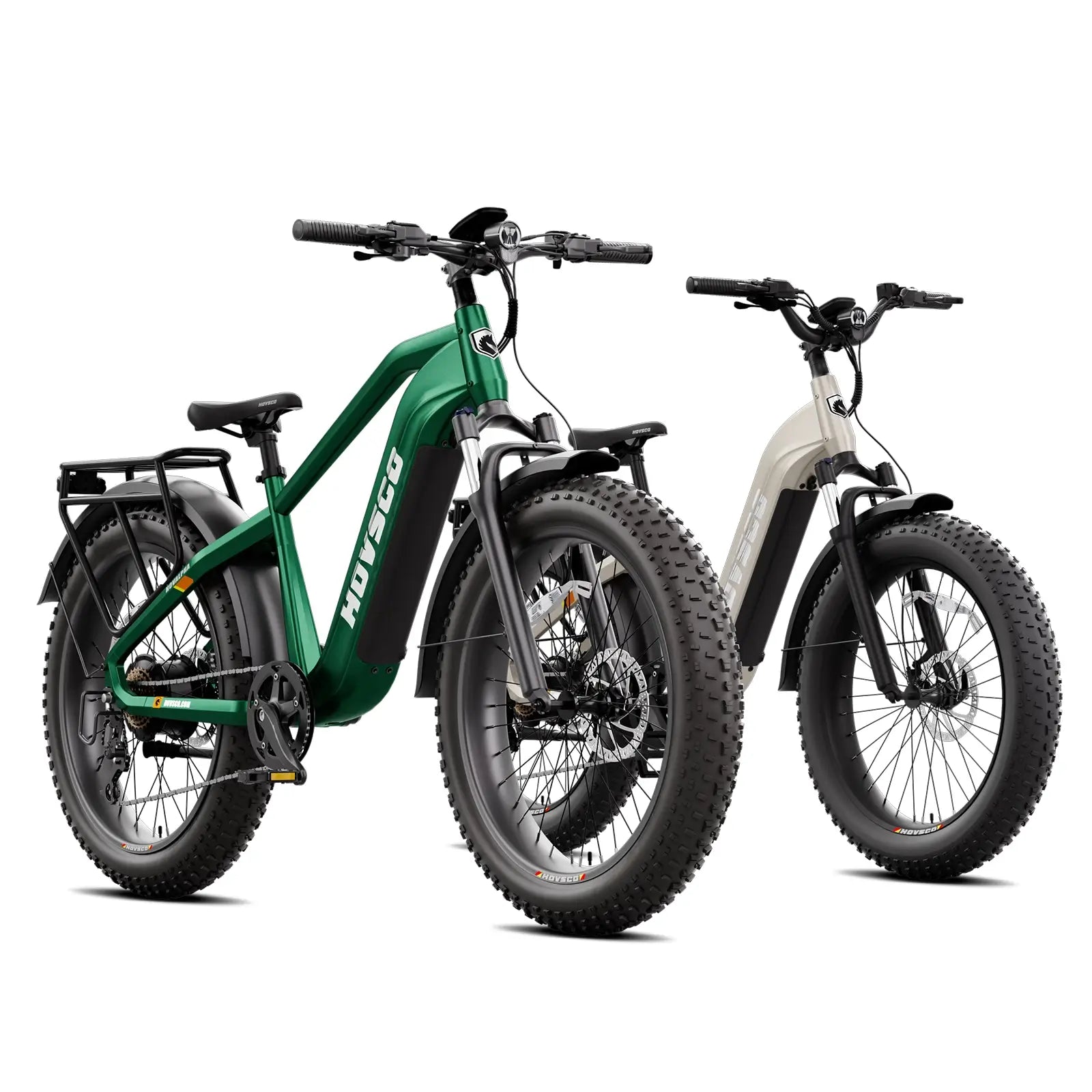
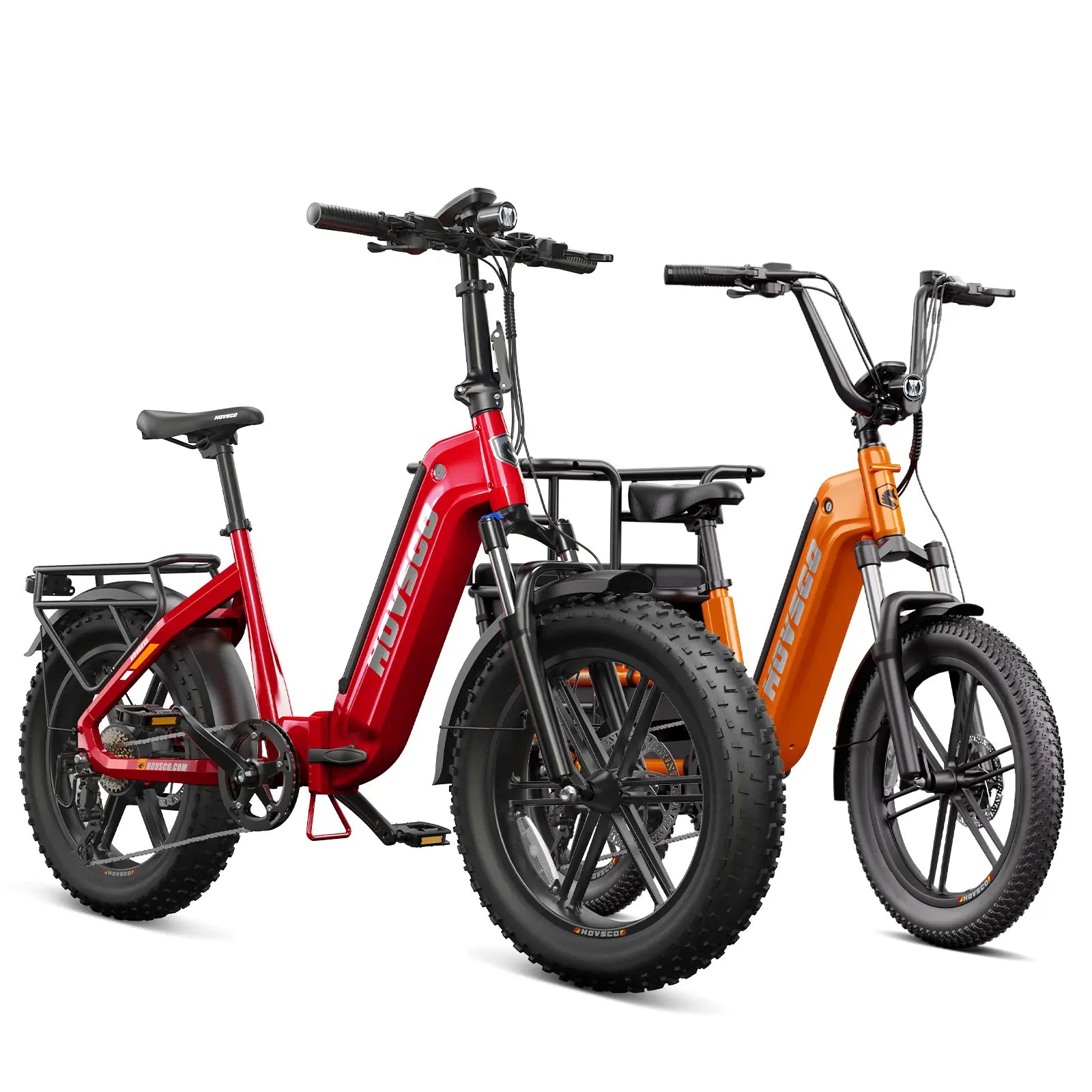
Riders wanting maximum off-road comfort while folding and transporting their bikes can look at the HovBeta Foldable Fat Tire Ebike, whose 20x4" fat tires interact strongly with any changes in rear wheel mass and damping. For long-range power and load capacity, the HovAlpha Fat Tire Electric Bike offers 1300 W peak power and up to 80 miles of range, where effective suspension tuning and unsprung mass awareness help keep high-speed trail riding under control.
Understand which components count as unsprung mass
Identify everything that moves with the rear wheel over a bump: tire, rim, spokes, rotor, part of the swingarm, and any hub motor or additional hardware mounted at the axle. Recognizing this “unsprung cluster” helps you see where weight reductions and layout changes matter most.
Assess your motor layout and goals
Determine whether your current e-bike uses a rear hub motor or a frame-mounted/mid-drive configuration. If you prefer aggressive off-road riding and value suspension small-bump sensitivity over ultimate simplicity, a mid-drive or frame-mounted motor architecture will generally align better with unsprung mass best practices.
Set spring rate and sag with mass in mind
Adjust rear shock air pressure or coil preload to achieve recommended sag (often around 25–30% of travel) based on your total system mass, including rider, gear, and battery. Heavier unsprung mass at the wheel may require slightly more support to prevent bottoming, while lower unsprung mass lets you run more compliant settings without losing control.
Tune rebound damping for faster “waveform decay”
On a test section with repeated small bumps, start with manufacturer-recommended rebound settings and gradually open the rebound (faster return) until the wheel starts to feel lively but not out-of-control. Lower unsprung mass lets you run relatively quicker rebound while still avoiding pogo-like behavior, shortening the decay envelope of oscillations after each impact.
Dial in compression damping for chattery impacts
Use low-speed compression to support pedaling and braking forces, and high-speed compression (if available) to manage sharp hits. With a lighter rear wheel assembly, you can often reduce high-speed compression a click or two and still avoid bottoming, which makes the bike more sensitive to small bumps and reduces trail chatter transmitted to the frame.
Validate with repeated trail laps and data where possible
Ride the same rough segment several times, noting how quickly the rear end settles after consecutive hits and how much energy you feel in the pedals and handlebars. Advanced riders sometimes add simple accelerometers or use smartphone-based apps to visualize suspension deflection or acceleration waveforms and confirm that unsprung-mass-aware settings produce faster decay and lower peak amplitudes.
Scenario / Traditional setup / With mid-drive and tunable rear shock
Scenario 1: Rooty forest singletrack
Traditional approach: A hub-motor e-MTB with a heavy rear wheel drops into a root-laced descent at moderate speed. Each successive root causes the rear wheel to kick upward, with the suspension struggling to reverse direction quickly enough, leading to cumulative “packing” and occasional loss of traction as dynamic loads spike.
With mid-drive and tunable shock: By removing motor mass from the wheel and carefully adjusting rebound and compression, the rear wheel tracks the terrain more precisely, each hit showing a shorter oscillation decay in deflection and reduced transmission of sharp impacts to the rider. The rider feels more composed, can brake later, and maintains line choice through the root cluster.
Scenario 2: Fast fire road with embedded rocks
Traditional approach: On a fast, rocky fire road, a heavy unsprung rear end generates high vertical accelerations when hitting embedded stones, forcing the rider to slow significantly or endure harsh, fatiguing impacts. Over time, shock oil heats up, damping consistency drops, and the system becomes less predictable.
With mid-drive and tunable shock: Lower unsprung mass yields smaller energy pulses into the damper for each rock, so the rear shock runs cooler and maintains consistent damping over longer descents. The wheel follows the micro-profile of the fire road more closely, improving grip and reducing “drift” under braking.
Scenario 3: Technical climb over ledges and steps
Traditional approach: Climbing over rock ledges with a heavy rear hub, the rear wheel’s extra inertia resists quick upward movement, causing frequent pedal strikes and sudden losses of traction as the tire fails to conform to sharp edges. The rider must overcompensate with timing and body English, which is tiring on long climbs.
With mid-drive and tunable shock: A lighter rear wheel combined with well-tuned low-speed compression lets the suspension “give” just enough to help the tire climb ledges while maintaining contact. Motor torque is applied more smoothly because the tire is less likely to skip off edges, making technical climbs calmer and more repeatable.
How does unsprung mass affect rear suspension responsiveness?
Unsprung mass directly affects the natural frequency and damping behavior of the wheel-suspension system, because heavier components require more force and time to accelerate over bumps. Lowering unsprung mass lets the wheel follow higher-frequency terrain inputs, which improves small-bump responsiveness and reduces the amplitude and duration of oscillations after each impact.
Why do mid-drive motors help protect rear suspension integrity compared to hub motors?
Mid-drive motors move motor mass into the frame (sprung mass), so the rear wheel carries only the rim, tire, and brake hardware instead of an additional motor. This lowers unsprung mass and the kinetic energy transferred into the suspension on every hit, which reduces peak forces on shock mounts, pivots, and stays, helping preserve rear suspension integrity over time.
Can reducing unsprung mass really improve suspension response by “200%”?
From a physics standpoint, a large percentage reduction in unsprung mass raises the unsprung natural frequency and can significantly shorten the decay time of suspension oscillations for a given damping setup. While “200%” is more of an enthusiast shorthand than a universal metric, studies show that even 20% mass reductions can meaningfully lower dynamic wheel loads and improve perceived comfort and control.
What formulas describe unsprung mass kinetic energy and suspension waveforms?
Key relationships include kinetic energy E=21muv2 for vertical wheel motion, natural frequency ωu≈kt/mu, and damping ratio ζ=c/(2km) for the sprung/unsprung system. Together, these show how decreasing unsprung mass reduces energy per impact and can increase system bandwidth, which manifests as faster decay in deflection or acceleration waveforms after bumps.
How do I tune my rear shock damping for lower unsprung mass?
With less unsprung mass, you can often reduce high-speed compression damping slightly, allowing the wheel to move more freely over sharp impacts without harshness, and run somewhat faster rebound without losing stability. The goal is to achieve quick but controlled returns to neutral position, which you can evaluate by riding repeated small-bump sections and observing how many oscillations you feel after each hit.
Do HOVSCO e-bikes support advanced suspension tuning?
HOVSCO’s full-suspension and trail-focused models, such as the HovScout 26" Full Suspension Fat Tire E-bike, are built around frames and components designed to handle high power, large payloads, and varied terrain. While specific shock upgrade options depend on the model and market, their overall platform design and UL 2849-certified systems give enthusiasts a solid base for experimenting with spring rates, pressures, and damping to take full advantage of unsprung mass physics.
Understanding the physics of unsprung mass shifts suspension tuning from trial-and-error into a more quantitative process, especially on powerful e-bikes carrying heavy riders and cargo. By relocating mass from the rear wheel into a mid-drive or frame-mounted motor and pairing that with a well-tuned, air-pressure-adjustable rear shock, riders can materially improve small-bump compliance, traction, and long-term rear suspension integrity on demanding forest trails. For HOVSCO riders, this perspective turns full-suspension models from “comfortable e-bikes” into precisely engineered systems where every kilogram in the wheel and every click of damping adjustment has a clear purpose.
If you are ready to feel how real unsprung mass physics transforms your rear suspension, start by choosing a capable HOVSCO full-suspension or trail-focused e-bike and then dial in your rear shock so every root, rock, and ledge becomes a precise, predictable signal instead of a random hit. HOVSCO builds long-range, high-power e-bikes with robust frames, generous payload ratings, and thoughtful suspension configurations, giving enthusiasts a solid foundation to apply engineering-level tuning on real-world trails.
Unsprung mass — Wikipedia 2024
Taylor & Francis — Unsprung Mass and In-Wheel Motors 2025
HPAcademy — Sprung and Unsprung Mass, Suspension Tuning
Airiti Library — Effect of Unsprung Mass on Vehicle Suspension Dynamics
Protean Electric — Unsprung Mass with In-Wheel Motors: Myths and Realities
Protean Electric — Effect of Hub Motor Mass on Stability and Comfort 2018
AAE Journal — Analysis of Additional Unsprung Mass Influence 2021
Diva Portal — Wheel Hub Design to Reduce Unsprung Mass
Vehicle System Dynamics — Road Roughness and Suspension Dynamics 2019
Core.ac.uk — Vehicle Dynamics and Unsprung Mass Effects 2021
Share:
Why Mid-Drive Center of Gravity Redefines E-Bike Handling Kinematics (June 2026)
Is zero-tail heavy design the key to eliminating wheel lift on steep alpine climbs?