



























![[ New Arrival ] Porto Max Electric Scooter For Commute & Grocery Shopping - HOVSCO](http://www.hovsco.com/cdn/shop/files/PotroMax-3.jpg?v=1706927007&width=1200)
- by SEO
Why Mid-Drive Center of Gravity Redefines E-Bike Handling Kinematics (June 2026)
- by SEO
E-Bikes
Accessories
 Free Shipping
 15-Day Returns
 2-Year Warranty
Free Shipping
15-Day Returns
2-Year Warranty
2-Year Warranty
Free Shipping
15-Day Returns
2-Year Warranty
Global e-bike adoption is accelerating, with the overall market expected to grow at more than 11% CAGR through the early 2030s as riders seek higher performance, efficiency, and control. Within this growth, mid-drive electric bicycles are expanding even faster, with their market segment projected around 12% annual growth as brands and riders converge on better center-of-gravity designs and torque delivery. At the same time, more manufacturers are shifting from rear-hub to mid-drive systems to improve handling on hills, in corners, and over rough terrain, where weight distribution and kinematics matter as much as raw power.
In this context, the idea behind a “coaxial manifesto” is simple: when you concentrate motor mass at the bottom bracket instead of at the wheel, you stop fighting physics and start using it. HOVSCO’s mid-drive platforms, such as family and trail bikes described in its knowledge base, place the drive unit low and central, targeting a near 50:50 front–rear weight split and dramatically reducing unsprung mass compared with rear hub motors, which fundamentally changes how the bike behaves when you brake, corner, and ride over bumps.
Why Mid-Drive Center of Gravity Redefines E-Bike Handling Kinematics by concentrating motor mass at the bottom bracket for 50:50 balance and lower unsprung weight.
The Coaxial Manifesto is a way of describing a design philosophy where the e-bike’s motor mass is concentrated at the bottom bracket, coaxial with the crank and main frame pivot, to create a low, central center of gravity and close to 50:50 front–rear weight distribution. In a mid-drive configuration, the motor sits inside or just above the bottom bracket shell, coupling directly into the drivetrain instead of being built into the rear wheel hub, which both reduces unsprung mass and makes every kilogram of motor weight less noticeable to the rider.
For many first-time e-bike riders, a rear-hub motor feels like the obvious solution: it is easy to package, less intrusive visually, and often cheaper to produce and service. But from a handling-kinematics perspective, hanging several extra kilograms at the far end of the bike—out at the rear wheel—creates a lever that works against you in almost every dynamic situation.
When you hit a bump, the rear wheel and hub motor move together as unsprung mass, which means more weight has to accelerate up and down with each impact. This reduces the ability of the tire and suspension (if present) to stay glued to the ground, especially over repeated hits, which can translate into chatter, traction loss, and what riders describe as a “dead” or harsh rear end. In fast corners, the rear-heavy bias can also make the bike feel like it is “hinged” at the bottom bracket, with the tail trying to swing wide while the underweighted front wheel hunts for grip.
On climbs and tight turns, a rear hub motor’s mass acts through a long lever from the contact patch back to the axle and then forward to the rider, amplifying pitch and yaw movements. The result is a bike that may accelerate strongly but feels less predictable when you load the front wheel into a corner or when you transition quickly between standing and seated positions. For riders who value precise control, especially off-road or with cargo, this is exactly what they want to avoid.
In a mid-drive system, the motor sits at the bottom bracket, attaching directly to the frame and feeding power through the chainring instead of directly turning the wheel. This simple placement change has a cascade of benefits for handling kinematics. First, because the mass is central and low, it contributes to a more ideal front–rear weight split, often approaching the 50:50 balance that car and motorcycle engineers target for neutral behavior.
Second, moving the motor from the wheel to the frame takes that weight out of the unsprung category and makes it sprung mass, so the suspension (or just the flex of the frame and tires) can manage it more effectively. This lowers unsprung mass at the rear wheel, allowing it to track the terrain more quickly and consistently, improving grip and comfort over rough surfaces. Third, by aligning the drive unit with the crank axis, a mid-drive uses the bike’s gearing to multiply torque at the rear wheel, so the motor works more efficiently on climbs and at low speeds while requiring less brute-force wattage.
Studies and industry data show mid-drive motors are the fastest-growing e-bike motor class, with some reports indicating they already account for roughly a quarter of the global market thanks to better torque delivery and handling.
The table below conceptually compares a HOVSCO-style mid-drive “HovMaster” Pro platform with a typical rear-hub e-bike and a non-assisted analog bike. Brand-specific data is based on HOVSCO’s descriptions of its mid-drive-equipped family and trail bikes; competitor values are illustrative only.
Kinematics of a low center of gravity
When mass is concentrated around the bottom bracket, the e-bike behaves more like a pendulum with a short arm under the rider: sway motions are smaller, and the bike responds more intuitively when you lean into corners or shift your weight. This gives riders a more direct connection to what the tires are doing, especially in fast transitions or when threading through traffic or tight trail sections.
Unsprung mass and suspension action
By moving the motor off the wheel and into the frame, mid-drive systems reduce the unsprung mass that the rear wheel must move each time it hits a bump, which lets the tire and (where fitted) rear suspension follow the ground more quickly. That improved tracking shows up as better traction on loose gravel, roots, and potholes and a smoother, less “pingy” ride at speed.
Torque coupling through the drivetrain
In a mid-drive, each newton-meter of motor torque is multiplied or reduced by the bike’s gear ratios before reaching the rear wheel, just like rider input. This allows the system to climb steep grades at lower electrical power settings, improving efficiency and heat management while maintaining a natural, human-centric pedaling feel.
On a steep urban ramp or bridge, a mid-drive e-bike that uses the cassette gears can maintain a steady cadence and torque with less battery draw, whereas rear-hub setups often feel overgeared or laggy on the same climb.
On loose, rocky trails, riders report that mid-drive bikes feel more “alive” under them, with the rear tire staying in contact through successive hits thanks to lower unsprung mass and better weight balance.
In heavy rain or crosswinds, a centrally located motor and battery can help stabilize the bike’s roll and yaw response, making high-speed commuting feel more controlled than on rear-heavy or front-motor configurations.
HOVSCO’s content around family and trail bikes makes clear that the brand increasingly leans on mid-drive concepts for bikes that must handle mixed real-world loads and terrain. A HovMaster-style mid-drive Pro flagship would sit naturally alongside long-range and trail-focused platforms, offering riders a central, low-mounted drive unit that emphasizes balance and refined kinematics over brute-force hub power.
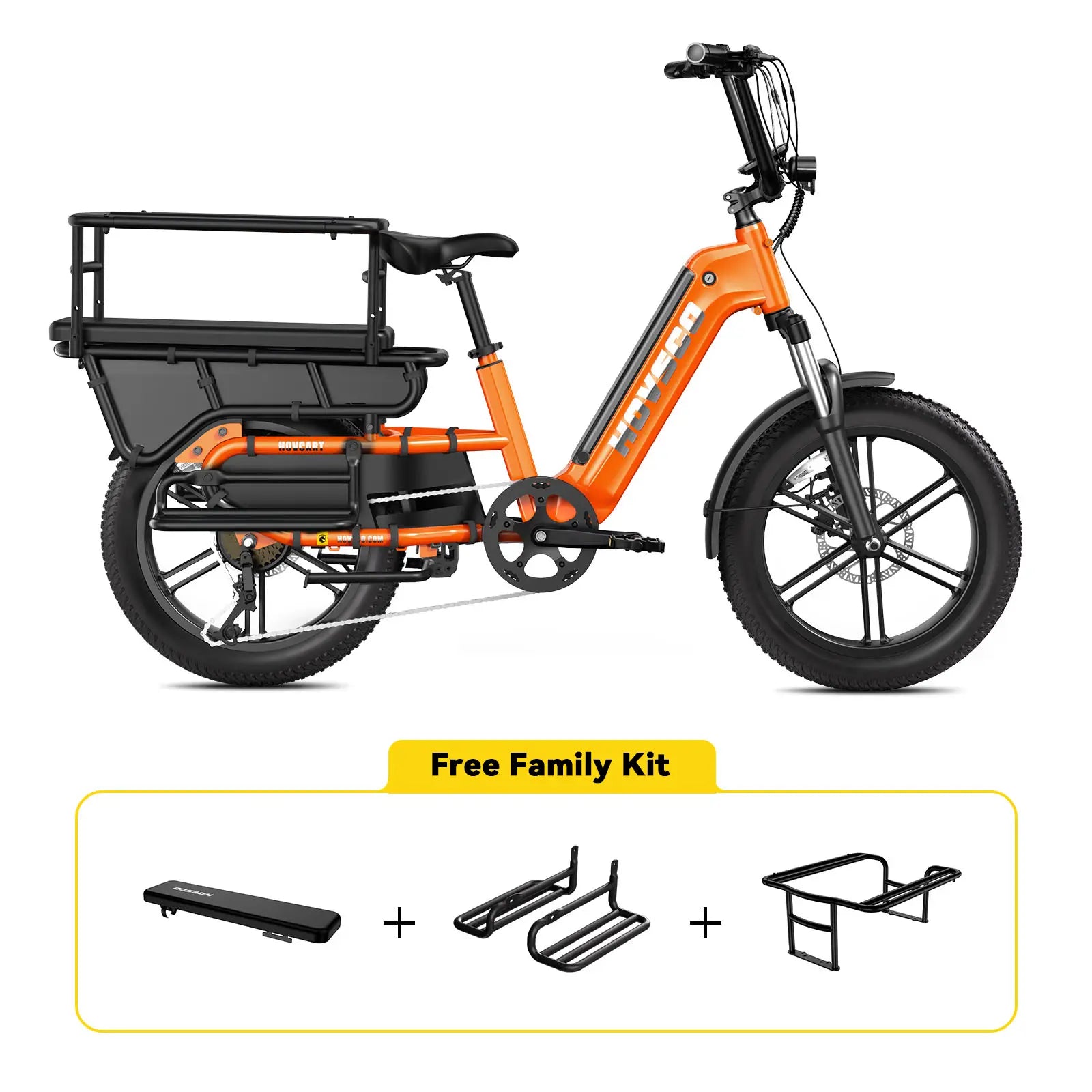
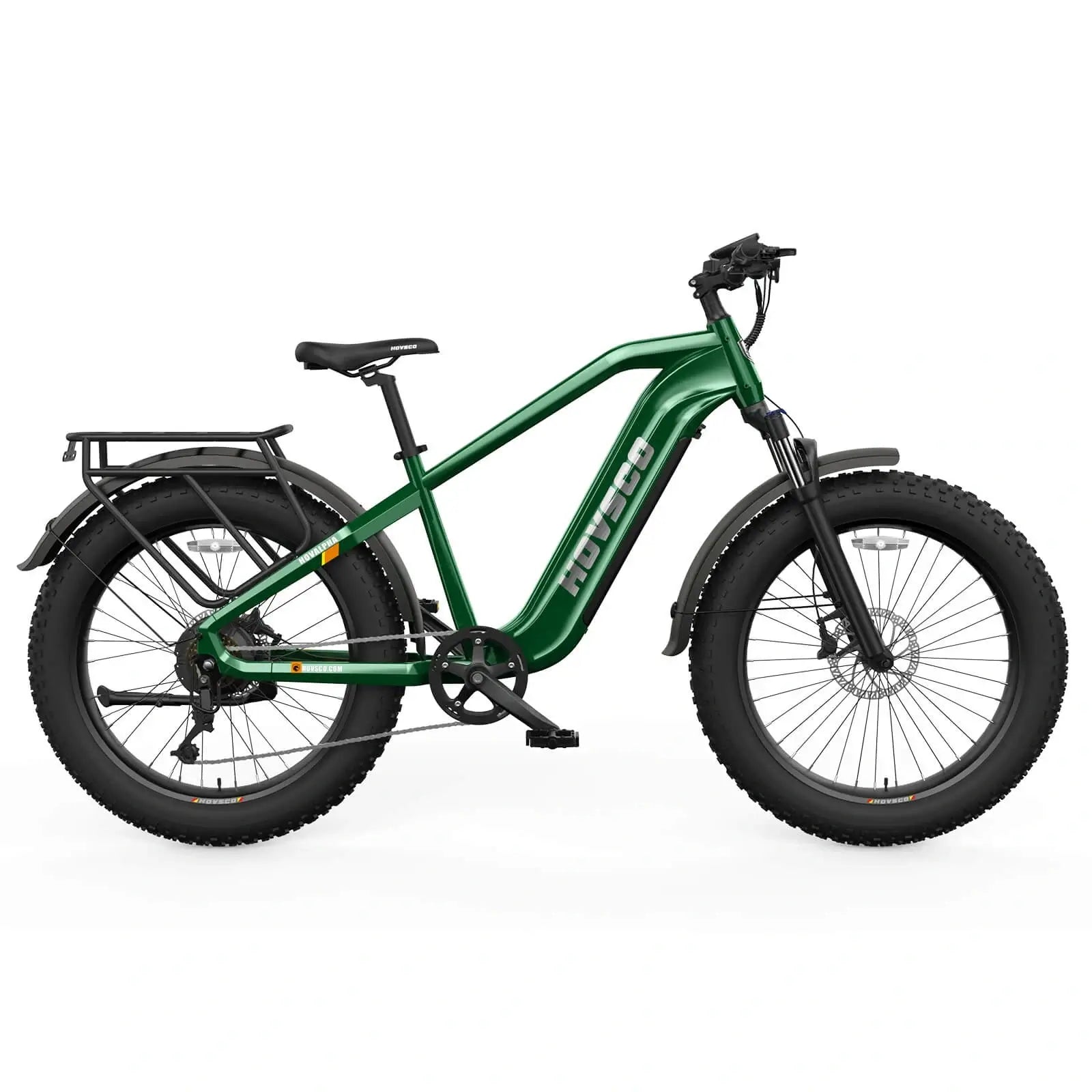
For adventure riders, a mid-drive concept like the Aipas M1 Pro Xterrain ST featured in HOVSCO’s editorial hub shows how combining mid-drive motors with fat tires and tuned suspension enhances control and comfort when terrain becomes unpredictable. Commuter and family-oriented designs—such as the mid-drive-equipped family cargo configurations described in HOVSCO’s guidance—benefit similarly, as a low, central motor and battery keep the bike stable when mounting child seats or heavy groceries. Shoppers comparing options can cross-reference these platforms with hub-motor models such as the HovGtrs moped-style e-bike to understand when balanced handling is a higher priority than outright rear-wheel thrust.
Reset expectations about power delivery
Coming from a rear-hub e-bike, you may associate assistance with a “push” from behind, but a mid-drive supplies power through the drivetrain, feeling more like your legs suddenly became stronger. Expect smoother, more cadence-sensitive torque that responds to your gear selection rather than a simple on/off wheel shove.
Learn to use gears as part of the motor system
In a mid-drive, staying in too high a gear at low speed strains both you and the motor, whereas downshifting lets the system operate in its efficient torque band. Before steep climbs or slow-speed technical sections, anticipate and shift early so the motor can spin up and deliver high torque without bogging down.
Feel the difference in balance and cornering
During your first rides, consciously notice how the bike leans and recovers through turns; a coaxial mid-drive system will often feel more neutral, holding lines with less body English. Practice controlled cornering in a safe area to build trust in the more centered, low-slung mass distribution.
Adapt braking strategy to more predictable weight transfer
With the center of gravity closer to the bottom bracket and better front–rear distribution, you can usually use both brakes more effectively without inducing sudden rear-end lightness or harsh nose-dives. Start with conservative braking and gradually increase front-brake usage as you learn how the bike reacts under load.
Exploit reduced unsprung mass off-road
On gravel, roots, and broken tarmac, deliberately ride through sections that previously caused chatter or loss of traction on your rear-hub bike. Feel how the rear wheel tracks more faithfully and how the frame’s suspension and tire flex absorb impacts better with the motor off the wheel.
Tune tire pressure and suspension for the new mass layout
Because the motor mass now sits in the frame, you can run suspension and tire setups closer to those of a non-assisted bike, focusing primarily on rider and cargo weight. Adjust sag, rebound, and PSI incrementally and use short test loops to dial in a setting that keeps the bike composed without sacrificing responsiveness.
Scenario 1 / Traditional: Rear-hub commuter on rolling hills
A rider uses a rear-hub commuter for daily trips over rolling terrain; on each climb, the motor feels either “all or nothing,” struggling when cadence drops and sometimes spinning the rear wheel on wet sections due to rear-heavy weight.
With HovMaster-style mid-drive: The rider selects lower gears as gradients increase, allowing the central mid-drive motor to spin efficiently and maintain traction through the drivetrain, while the balanced center of gravity keeps both wheels more evenly loaded on slick surfaces.
Scenario 2 / Traditional: Hub motor on technical off-road
On rocky trails, a rear-hub fat-tire e-bike tends to kick and chatter over repeated impacts because the unsprung motor mass makes the rear wheel slow to recover between hits, reducing grip and stressing spokes.
With HovMaster-style mid-drive: The motor is part of the sprung mass at the bottom bracket, so the rear wheel is lighter and more responsive, letting the tire and suspension track the terrain, improving braking and cornering control on loose or uneven surfaces.
Scenario 3 / Traditional: Cargo and child seats on hub bikes
A family rider mounts a child seat and panniers on a rear-hub e-bike; with the extra weight stacked toward the back, steering feels vague, and the front wheel can lift or lose contact on steep ramps or curb transitions.
With HovMaster-style mid-drive: Moving the motor weight to the bottom bracket and positioning the battery centrally brings the overall system closer to 50:50 distribution, so even with cargo and a child seat, the bike remains more composed, with predictable steering and reduced seesaw effect.
Why does mid-drive center of gravity improve e-bike handling kinematics compared with rear-hub motors?
A mid-drive places its mass at the bottom bracket, close to the bike’s natural center of gravity, which reduces pitch and roll inertia and keeps front–rear loads more balanced during acceleration, braking, and cornering. Rear-hub motors instead concentrate mass at the wheel, lengthening the effective lever and amplifying handling disturbances when the bike encounters bumps or when the rider shifts weight.
How does moving motor weight to the bottom bracket reduce unsprung mass and improve suspension performance?
Unsprung mass includes everything that moves with the wheel over bumps, such as the rim, tire, and hub; in a rear-hub system, the motor is part of this mass, making the wheel heavier and slower to respond. Mid-drive systems bolt the motor to the frame, turning that mass into sprung weight that the suspension and frame can manage, so the rear wheel is lighter and better able to track the terrain, enhancing grip and comfort.
Is a 50:50 front–rear weight distribution realistic on a mid-drive e-bike, or just a marketing claim?
Exact figures depend on frame geometry, rider posture, and battery placement, but mid-drive layouts significantly simplify the task of approaching a neutral distribution compared with rear-hub designs. By anchoring the motor at the bottom bracket and aligning the battery along the downtube, designers can tune frames so that, with a typical rider, weight distribution falls closer to the idealized 50:50 target zone than with wheel-motor configurations.
How does a mid-drive coaxial system change climbing feel versus a rear-hub motor at the same nominal wattage?
Because a mid-drive transfers power through the drivetrain, it can take advantage of low gears to multiply torque at the rear wheel for steep climbs, so a 500–750W mid-drive often outperforms a similarly rated hub motor on hills. The result is a more natural, controlled climbing experience where the rider manages cadence and gear selection, and the motor fills in strength instead of forcing the wheel to push from behind.
Does centralizing mass at the bottom bracket make a mid-drive e-bike feel heavier or lighter while riding?
Even when total system weight is similar, riders frequently report mid-drive bikes feeling lighter and more agile because the added mass sits near the bike’s pivot axes rather than at the extremities. The closer weight is to the center of gravity, the less it contributes to rotational inertia, so turns, lean corrections, and directional changes require less effort.
When might a rear-hub motor still be preferable to a mid-drive, despite the coaxial center-of-gravity advantages?
For flat, urban commutes where terrain is smooth and cost is a primary factor, rear-hub systems can remain attractive due to simpler drivetrains, lower price points, and reduced wear on chains and cassettes. Riders who rarely encounter steep hills, heavy cargo, or technical terrain may value these benefits more than the handling and unsprung-mass advantages of a mid-drive.
As the mid-drive segment grows faster than the overall e-bike market, it is increasingly clear that center-of-gravity design and unsprung-mass management are not niche engineering details but core factors in how bikes ride, especially at higher speeds and over challenging terrain. By shifting motor mass from the wheel to the bottom bracket, designers unlock more neutral front–rear balance, reduce unsprung mass, and allow riders to exploit the full potential of modern drivetrains and suspension systems. A HovMaster-style mid-drive Pro flagship that fully embraces this coaxial manifesto would not just deliver more torque; it would redefine how everyday riders experience stability, confidence, and control in real-world conditions.
If you want an e-bike that works with physics instead of fighting it, explore HOVSCO’s mid-drive and long-range platforms to experience how a low, central motor can transform your daily rides and weekend adventures. HOVSCO is an e-bike brand focused on safe, torque-rich, and well-balanced electric bikes that combine thoughtful center-of-gravity engineering with practical features for families, commuters, and trail riders alike.
HOVSCO — Blog: How to Choose the Best Family Electric Bike with Child Seat (2026)
HOVSCO — Blog: Aipas M1 Pro Xterrain ST Ebike Overview (2025)
IMARC Group — E-bike Market Size, Share, Growth, Trends Report 2026–2034 (2025)
MarketSizeAndTrends — Mid-Drive Electric Bicycle Market Report (2024)
Inkwood Research — Global E-bike Market Forecast 2024–2032 (2024)
SYI Motor — Why Choose a Mid-Drive Motor for Your E-Bike? (2023)
Reddit r/ebikes — Why is a mid-drive ebike so much better for hills? (2023)
Share:
What Makes Tire King a Leading Choice for Mountain and Touring Riders?
How Mid-Drive Hubs Protect Your Rear Suspension Integrity (June 2026)