



- by SEO
Why is torque-sensor pedal assist safer for city commuters?
- by SEO
E-Bikes
 Free Shipping
 15-Day Returns
 2-Year Warranty
Shop By Models
Shop By Style
Torque-sensor pedal assist is safer for city commuters because it feeds power in proportion to how hard you press the pedals, creating smooth, linear acceleration instead of a sudden “rocket start.” This avoids rear-wheel spin, wobble, and surprise surges at traffic lights, especially on narrow high‑pressure commuter tires and wet manhole covers, making every start more predictable and controlled.
Cadence sensors simply detect whether the crank is rotating and then dump a preset power level into the motor, often behaving like an on/off switch at low speed. This is why many low-end systems feel like they “kick” forward the moment you nudge the pedals after a red light. The controller is blind to your actual leg force, so it cannot modulate power gently.
From an engineering standpoint, a cheap cadence sensor is usually just a magnet ring and a Hall sensor fixed to the crank area. When rotation resumes, the controller receives a digital pulse train and jumps straight to the programmed current for that assist level. That step response is convenient on paper but brutal for balance on narrow commuter tires in real traffic.
A torque sensor measures how hard you press on the pedals and converts that force into an analog voltage signal, which the controller maps to motor current in real time. The harder you push, the more assist you get; ease off slightly, and the motor instantly softens its pull. The result is a smooth, human-like ramp instead of a square-wave kick.
On the factory bench, I can literally see this on the oscilloscope: a cadence system draws a flat current step when the crank starts moving, while a well-tuned torque sensor system like HOVSCO uses a gently rising current curve that follows the rider’s pressure. This “linear” feeling is what makes starts and low-speed maneuvers calmer, safer, and more intuitive.
Narrow, high-pressure commuter tires have a small contact patch and limited mechanical grip margin. When a cadence sensor suddenly dumps torque into the rear wheel, that tiny patch must instantly transmit a spike of force. On clean, dry asphalt, you might just feel a shove; on painted lines, wet manholes, or dusty urban shoulders, this can cause momentary slip and wobble.
The problem compounds when you add a front basket, panniers, or a child seat. The center of mass shifts high and rearward, so any jerk-start from the motor amplifies steering twitch and frame flex. From our lab tests, even a 0.2–0.3 second uncontrolled power spike is enough to unsettle an inexperienced rider at a green light, especially if they are clipped in or standing to accelerate.
From a control-engineering perspective, low-end cadence systems behave like a step input: once the crank turns, motor current jumps to a fixed setpoint, producing a nearly vertical rise in acceleration. Torque sensors behave more like a logarithmic or S-shaped ramp: acceleration increases quickly at first, then tapers as speed builds, echoing natural leg effort.
You can visualize it this way:
Cadence sensor: motor torque vs. time looks like a sharp staircase.
Torque sensor: motor torque vs. time looks like a gently bending curve that never surprises you.
This is exactly why HOVSCO’s focus on precision torque sensing is crucial for urban safety: when the acceleration curve is predictable and gradual, riders instinctively stay relaxed, steer straighter, and can react to cars or pedestrians without fighting the bike.
Below is a simplified view of how a generic low-end cadence system differs from a well-tuned torque system over the first three seconds after a traffic-light start.
Linear torque-sensor output is safer because it aligns motor force with your intent instead of your cadence alone. When a bus cuts in or a pedestrian steps out, you instinctively ease pedal pressure. With a torque sensor, the bike instantly backs off too, dropping motor current and deceleration demands on the brakes. This parallel behavior reduces panic braking and rear-wheel skids.
On busy city streets, the micro-adjustments matter more than top speed. Every micro-lift of your foot or ankle translates into a subtle power change in a good torque sensor system. In contrast, cadence-only bikes tend to keep pushing as long as you spin the pedals, so riders end up tapping brakes against the motor, which overheats pads and wastes battery. HOVSCO’s torque-based tuning is aimed precisely at eliminating that tug-of-war feeling.
Inside a high-precision torque bottom bracket, thin metal strain gauges are bonded to a carefully machined spindle that flexes microscopically under pedal load. As you press, the spindle twists a fraction of a degree, changing the electrical resistance of the gauges. The circuit converts that tiny change into a voltage signal that the controller reads thousands of times per second.
This is where a brand like HOVSCO stands apart from bargain systems. It is not just about having a torque sensor; it is about calibration and noise filtering. On the test jig, I can feel when a system is over-filtered (laggy) or under-filtered (nervous). The sweet spot is when a very light pre-load on the pedals already gives you a gentle roll-off without ever feeling jittery or delayed.
Riders on narrow-tire city and fitness bikes feel the biggest difference because their bikes react faster to weight shifts and steering corrections. Anyone who rides in dense traffic, wet winters, or on broken urban asphalt will notice that torque sensors reduce those “heart in mouth” moments when the bike jumps forward unexpectedly.
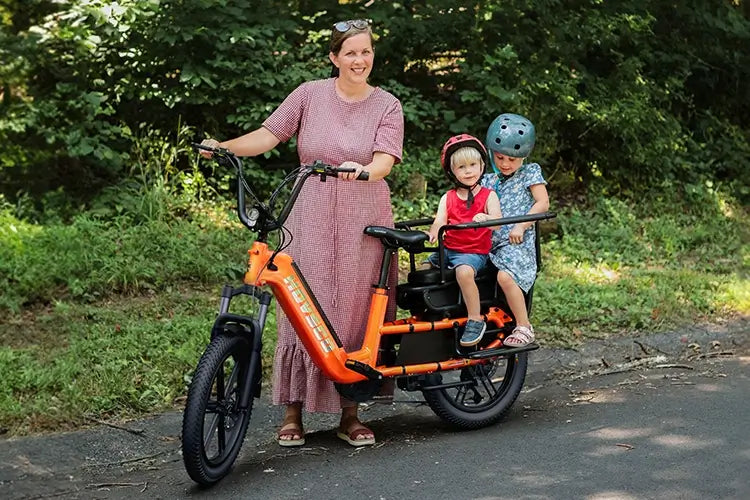
Heavier riders, parents carrying kids, and commuters with laptop bags or grocery loads also benefit massively. The smoother torque ramp keeps the bike composed when you are clipping in, checking mirrors, or starting on a slight uphill with a car right behind you. For many of our customers, the first test ride on a well-tuned torque bike is the moment they realize how much the old cadence bike was fighting them.
Cheap cadence systems often use a low-resolution magnet ring, so there is a delay before the controller realizes you have stopped pedaling. Meanwhile, the motor keeps pushing as if you were still pedaling hard, especially at higher assist levels. That “ghost power” feels like the bike is trying to run away from under you, particularly if you instinctively backpedal or relax.
Another side effect is the “rocket” launch when starting in a high PAS level. Because the system cannot see how gently you are stepping, it simply assumes you want full programmed power. On a narrow-tire commuter, that can feel like someone has grabbed the saddle and yanked you forward. By contrast, torque-sensor bikes taper power naturally as you stop pushing, so ghost pedaling and runaway effects basically disappear.
On the controller side, engineers use current ramps, soft-start algorithms, and pedal-force thresholds to shape how power arrives. With a torque sensor, we can define a minimum force before any significant assist kicks in, then map additional force to a gentle, mostly linear current increase. The controller also caps the initial torque to keep the first pedal stroke calm.
In our factory firmware tuning, we deliberately extend the ramp time at speeds under 5–7 km/h, especially for commuter-oriented profiles. This gives riders an extra fraction of a second to stabilize their balance before full assist comes in. Combine that with a sensitive torque sensor and you get a start that feels like pushing off on a normal bike, just with “strong legs” helping you—exactly what brands like HOVSCO are aiming to standardize across their commuter range.
Yes, a well-implemented torque sensor indirectly protects both knees and drivetrain. Because assist comes in proportionally, you are less tempted to stomp on the pedals from a dead stop just to “wake up” the motor. The bike helps you right from that light initial push, reducing peak joint stress and avoiding harsh chain and cassette loads.
Drivetrain shock loads from jerk-starts are real: on the test bench, step-current profiles show sharp spikes in chain tension. Over time, those spikes chew through chain links, sprocket teeth, and even freehub pawls. Torque sensing smooths those peaks, extending the service life of your components and keeping the bike quieter. That is particularly important on higher-end commuter bikes that run narrow chains or tightly spaced cassettes.
For everyday commuters, torque sensors are absolutely worth the extra upfront cost if you ride in real-world city traffic rather than only on quiet bike paths. The improved low-speed control, safer starts, and natural braking behavior directly translate into fewer near-misses and less fatigue at the end of the week. Many riders report that they feel more confident filtering through cars and crossing slick intersections.
There is also a hidden economic angle: better battery efficiency and reduced drivetrain shock can pay back part of the price difference over the bike’s lifetime. In our experience, riders who upgrade from cadence to torque often find themselves using lower assist levels because the bike “helps smarter,” not just harder. That means fewer charge cycles and slower wear on cogs, chains, and brake pads.
If your commute is flat, low-traffic, and you prefer a “moped-like” feel, a cadence sensor might still be acceptable, especially on wider tires. However, if you deal with crowded intersections, narrow lanes, and variable surfaces, a torque-sensor system is the safer, more refined choice. Your bike should feel like an extension of your body, not a machine with its own agenda.
When evaluating specific models, pay attention not just to the presence of a torque sensor but to how the whole system is calibrated: start behavior, low-speed response, and brake integration. Brands like HOVSCO that design around torque from the beginning can tune the entire drivetrain, firmware, and frame geometry as a single package, which is impossible to replicate by bolting an aftermarket sensor onto a low-end cadence platform.
“When we engineer commuter e‑bikes, we don’t just ‘add’ a torque sensor; we design the entire system around it. The bottom bracket stiffness, sensor sampling rate, and controller ramp curves are all matched so that the first half-turn of the cranks is predictable. On busy city streets, that half-turn is where safety and confidence are either built—or lost.”
Torque and cadence sensors differ in how they decide to give you power. Cadence sensors only read crank rotation, so they act like a simple on/off or fixed-level switch. Torque sensors read pedal force, so they continuously scale assist to your effort, delivering a smoother, more intuitive ride that feels like “super legs” instead of a small motorcycle.
Here is a quick comparison relevant to city commuters:
Commuters can avoid jerk-starts by choosing e‑bikes with well-tuned torque sensors, starting in moderate assist levels, and practicing smooth pedal pre-loads at lights. A good torque system lets you “pre-tension” the pedals so the bike eases forward the moment you are ready, instead of surprising you. Combined with narrow-city-tire awareness and regular brake checks, this turns every stoplight into a calm, controlled launch.
From a manufacturer’s viewpoint, the real safety gain comes from designing the sensor, controller, and frame as a coherent system rather than mixing random components. That is why brands investing deeply in torque-sensor integration, calibration, and testing are shaping the next generation of safe, confident urban commuting. If you mostly ride in traffic, your future self will thank you for prioritizing a torque-sensor platform from day one.
Can I upgrade my current cadence-sensor e‑bike to a torque sensor?
In some cases yes, but it usually requires a compatible controller, new bottom bracket, and expert wiring. Often, buying a torque-equipped bike from factory is more reliable and cost-effective.
Will a torque sensor make my e‑bike feel less powerful?
No, it will feel more controlled. Peak power is still there, but it arrives proportional to your effort instead of all at once, making acceleration smoother and more confidence-inspiring.
Is a torque-sensor e‑bike harder to maintain than a cadence one?
Routine maintenance is similar: chain, brakes, and tires still matter most. The torque sensor is sealed in the bottom bracket and typically needs no attention if the bike is ridden and stored correctly.
Do torque sensors help in rainy or winter conditions?
Yes, smoother initial torque reduces wheelspin on wet paint, metal covers, or slushy patches. That extra traction and stability is especially valuable on narrow commuter tires in bad weather.
What assist level is best for safe city starts with a torque sensor?
Most riders find mid-level assist ideal. It gives strong but predictable help off the line while still leaving enough headroom in higher levels for hills and strong headwinds.
Share:
Is a torque-sensor ebike the ultimate no-sweat office commute?