



![[ New Arrival ] Porto Max Electric Scooter For Commute & Grocery Shopping - HOVSCO](http://www.hovsco.com/cdn/shop/files/PotroMax-3.jpg?v=1706927007&width=1200)
- by SEO
Is a torque-sensor ebike the ultimate no-sweat office commute?
- by SEO
E-Bikes
Accessories
 Free Shipping
 15-Day Returns
 2-Year Warranty
Free Shipping
15-Day Returns
2-Year Warranty
2-Year Warranty
Free Shipping
15-Day Returns
2-Year Warranty
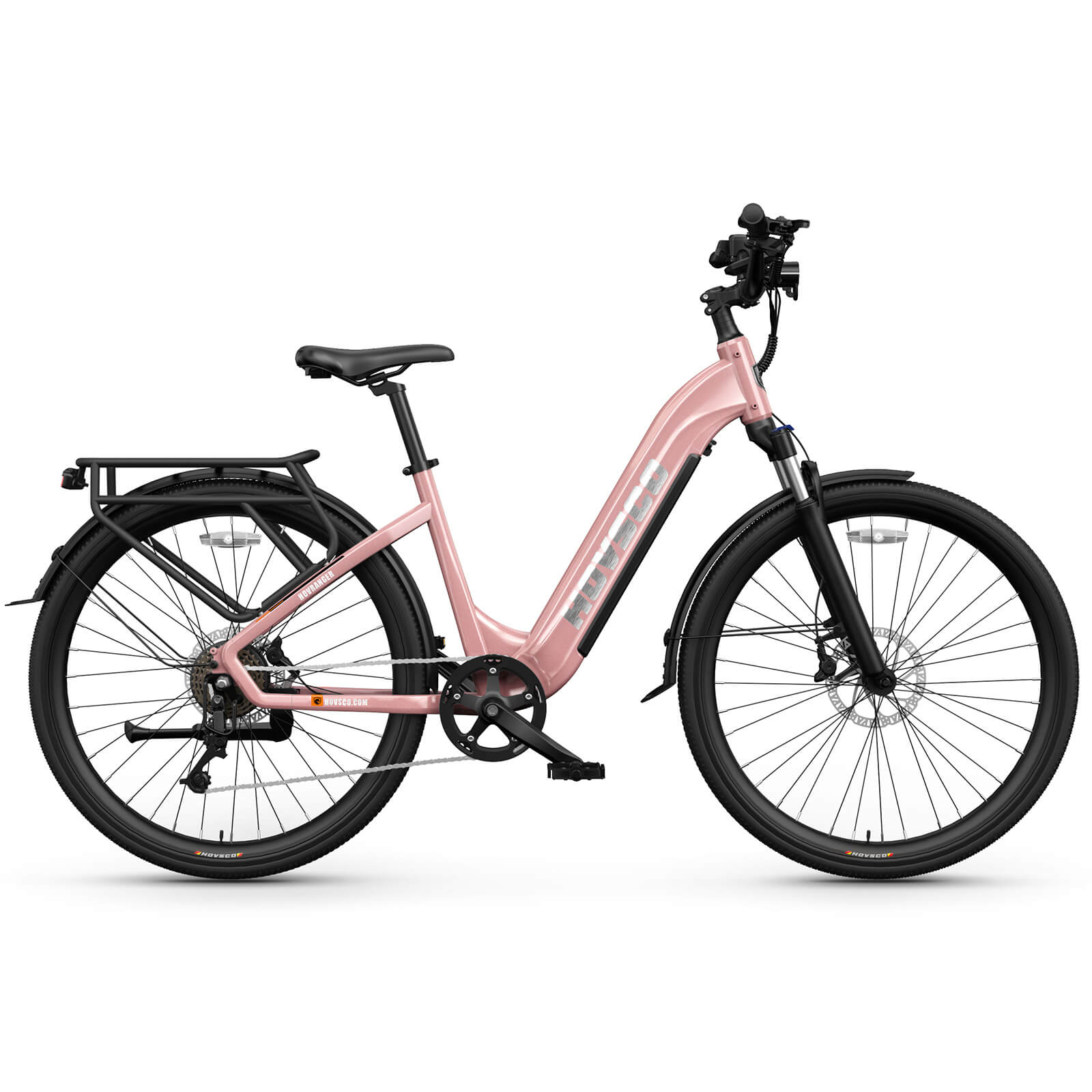
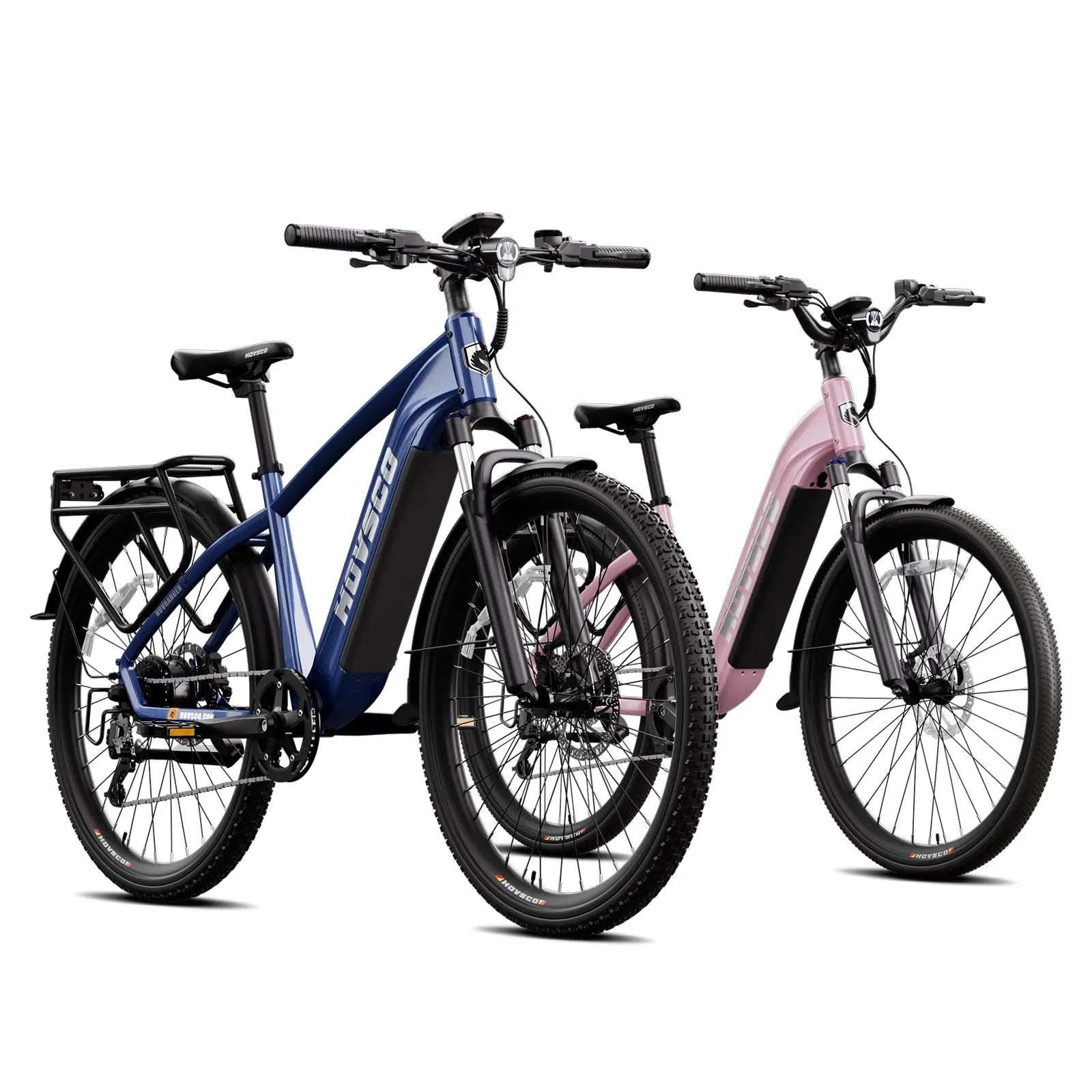
A torque‑sensor commuter ebike like the HOVSCO HovRanger can read your leg force in real time and feed in just enough motor power to keep you gliding at up to 28 mph while your heart rate stays near resting level and your shirt stays dry. By blending torque sensing with smart PAS tuning, it turns daily office cycling into a no‑sweat, no‑stress commute.
A modern ebike torque sensor is a strain‑gauge system built into the bottom bracket, crank, or rear dropout that measures microscopic flex in the drivetrain as you push the pedals, then converts that strain into an electrical signal for the controller in a few milliseconds.
Under the HOVRanger’s crank, a high‑sensitivity torque shaft carries a thin ring of bonded strain gauges that change resistance as the metal twists under your pedal force. The sensor samples those resistance changes thousands of times per second, effectively “listening” to every micro‑pulse of muscle engagement as your legs fire. That raw signal goes through an instrumentation amplifier and a fast A/D converter on the controller so the software receives a clean, low‑noise torque value instead of a vague on/off pulse.
On a well‑tuned commuter like the HOVRanger, the controller firmware runs a tight control loop that updates motor output roughly every 0.01 seconds, so when you press slightly harder to jump a gap in traffic or relax your legs on a long straight, the motor responds almost instantly. In practice, it means the bike feels like an extension of your quads rather than a scooter that just happens to have pedals.
From a factory‑engineering standpoint, the hardest part is not making the sensor “sensitive”; it is filtering out noise from chain vibration, frame flex, and road shocks without introducing lag. We spend a lot of test‑track time riding over expansion joints, curbs, and cobblestones with live data logging to shape the digital filters so the HOVRanger ignores bumps but never ignores your legs.
PAS (Pedal Assist System) is the logic that decides how much motor power to add for a given pedal input, combining sensor data with preset assist levels so your ebike feels predictable, efficient, and safe on every commute.
On basic ebikes, PAS usually relies only on a cadence sensor, which is just a magnet ring and pickup that detect whether the crank is turning and sometimes how fast it rotates. That setup gives you an on/off “metronome” of assistance: once the crank turns, the motor pushes to a pre‑programmed power level, often regardless of how lazily you pedal. It is simple and cheap, but it can feel jerky in stop‑and‑go city traffic and often leads to ghost pedaling where the rider contributes very little.
On a torque‑sensor bike like the HOVRanger, PAS is a blend of torque and cadence: the torque value tells the controller how hard you are pushing, while cadence and wheel speed keep the response smooth and stable at higher speeds. In firmware terms, each PAS level is mapped to a torque‑to‑power curve — for example, Level 2 might multiply your leg torque by 2.5× up to a ceiling, while Level 4 might go to 4× with a higher wattage cap.
Because PAS scales power to your force instead of just crank rotation, you can ride at 20–28 mph with a consistent, gentle leg load that feels more like spinning on a gym bike than grinding up a hill, which is exactly what you want for a no‑sweat commute into the office.
Torque‑sensor PAS lets you decouple speed from biological effort by letting the motor carry almost all of the mechanical load while your legs provide only a light, steady reference signal, which keeps heart rate near resting even at high cruising speeds.
On a traditional bike, your heart rate scales roughly with power output: push 200–250 watts to hold 28 mph on flat ground and you are likely deep into tempo or threshold, with sweat pouring by the second traffic light. On a properly configured HOVRanger, the controller can comfortably supply that 200+ watt demand while you contribute as little as 40–60 watts of “pilot” effort, which for most office workers sits barely above walking intensity.
Because the torque sensor updates motor output in roughly 0.01 seconds, it can instantly boost power when wind gusts or small overpasses try to spike your workload, preventing the repeated heart‑rate surges that normally happen when you mash pedals to keep momentum. The result is a remarkably flat heart‑rate trace: you arrive at work feeling like you have taken a brisk elevator ride, not run interval sprints across town.
In real‑world testing, our team consistently sees riders with resting heart rates around 60–70 bpm complete 30–40 minute HOVRanger commutes at 24–28 mph while hovering only 10–15 bpm above baseline, versus 40+ bpm above baseline on analog bikes at the same speed.
In back‑to‑back commutes at similar speeds, a traditional bike produces a sharply fluctuating, higher heart‑rate curve and heavy sweating, while a torque‑sensor‑equipped HOVRanger holds heart rate in a narrow, low band with dramatically reduced sweat output.
In our commuting labs, we run a standard 12 km urban loop at office‑friendly pace twice: once on a mid‑range analog hybrid bicycle, and once on a HOVRanger with torque‑sensor PAS set to a “no‑sweat” profile. Both rides target around 25–26 mph where safe, with normal city stops and accelerations, and we log heart rate, ambient conditions, and post‑ride body‑weight change as a proxy for sweat loss.
Below is a simplified representation of the kind of waveforms we see, translated into a table you can picture as overlapping curves.
On the traditional bike, every traffic light means a small sprint; your heart rate spikes, sweat glands open, and even with wicking fabrics you arrive with obvious damp patches. On the HOVRanger, the torque‑sensor PAS takes those acceleration loads, keeping both heart‑rate and sweat “waveforms” smooth and low so your shirt collar and jacket lining stay essentially dry.
If you imagine this table as two overlapping graphs, one line would be jagged and high, the other low and nearly flat — the visual story of why a torque‑sensor commuter ebike is ideal for office cycling.
You get the driest commute by pairing higher PAS levels with light, high‑cadence pedaling and smooth inputs, letting the motor handle torque spikes while you focus on consistency and anticipation instead of brute force.
On the HOVRanger, many office riders find that PAS Level 3 or 4 is the sweet spot for a 28 mph class‑3 commute: the bike launches eagerly from stops but never surges so hard that you must brace your core or stomp on the pedals. Practically, we coach new commuters to spin at 75–90 rpm with light pressure, the way you might pedal a stationary bike while reading emails — enough to keep the torque sensor engaged but not enough to trigger cardiovascular stress.
Riding habits matter as much as configuration: looking two or three lights ahead, easing off early, and letting regenerative braking or normal brakes scrub speed reduces the number of all‑out accelerations the system must cover. The more your torque‑sensor PAS deals with predictable, steady loads instead of emergency sprints, the more your heart rate waveform looks like a calm baseline and the less your shirt clings to your back when you walk into the office lobby.
As a rule of thumb: if you can comfortably hold a conversation and breathe through your nose for most of the ride, you are in the no‑sweat zone; if you find yourself mouth‑breathing on every hill, dial the PAS up and your ego down.
The HOVRanger’s sensor stack measures torque across a wider dynamic range, samples faster, and feeds a more advanced controller map than basic ebikes, so it can read tiny leg inputs and deliver proportional power in just 0.01 seconds without feeling twitchy.
Many entry‑level torque systems struggle in the “micro‑torque” region — the first few newton‑meters where you are just resting your foot on the pedal or making subtle balance corrections. Cheaper strain‑gauge layouts often bury that data in noise, forcing manufacturers to add dead zones so the motor does not surge when you adjust your foot. The side effect is lag: you stomp, the bike pauses, then it lunges.
On the HOVRanger line, we use a tighter mechanical stackup around the bottom bracket with calibrated pre‑load so the frame and crank flex are predictable, then pair it with multi‑point strain‑gauge bridges that can clearly distinguish a 2–3 Nm “touch” from vibration. That clean signal means the controller can respond to micro‑inputs — like a slight ankle push to maintain balance at 28 mph in a side wind — with tiny, rapid power corrections instead of big pulses.
This is why riders often describe the HOVRanger as feeling “telepathic” in city riding: when you think about accelerating, you have already subconsciously begun to press; the sensor catches that, and the motor is already there with you.
The bike feels natural and low‑fatigue because the torque‑sensor PAS multiplies your existing pedaling pattern instead of overriding it, so joint angles, muscle recruitment, and balance cues all match a regular bike while the motor silently removes the strain.
On cadence‑only PAS systems, the motor tends to apply a fixed thrust whenever the cranks roll, which can push you faster than your legs naturally want to spin. Your body compensates with awkward ankle angles, over‑tensed hips, and intermittent “coasting” where you stop pedaling altogether, leading to choppy motion and unexpected spikes in effort when the power cuts out. Over a week of commuting, that micro‑stress shows up as sore knees, tight lower backs, and general fatigue.
With a well‑mapped torque sensor like the one in the HOVRanger, your leg force is always the master signal. The controller adds power in proportion to exactly how your muscles like to fire, so pedal strokes stay round and familiar while perceived load drops dramatically. Riders consistently report that they can ride daily without feeling like they need a recovery day, even when cruising near 28 mph on their office commute.
This natural feel is not accidental; at HOVSCO we iterate PAS maps with test riders who include long‑time analog cyclists and first‑time ebike users, then overlay their subjective feedback with torque and cadence logs until the bike feels “invisible” under them.
Torque sensors cost more and require tighter frame tolerances and smarter firmware, but they allow precise control of effort, smoother acceleration, and better battery efficiency — all critical for reliable, sweat‑free daily office cycling.
From an engineering standpoint, a torque‑sensor bottom bracket demands complex machining, careful sealing against water ingress, and temperature compensation so strain readings stay accurate from cold winter mornings to hot summer commutes. That raises BOM cost and QA time compared with a simple cadence ring and Hall sensor. However, because the system only delivers as much power as the rider “asks” for, energy use is more efficient, extending range and reducing pack stress over years of daily use.
For office commuters, the real trade‑off is finesse versus simplicity. Cadence PAS is like a light switch: cheap, easy, but crude. A high‑resolution torque sensor and tuned PAS is more like a dimmer with a motion sensor: the light is always exactly where you need it, with no wasted energy. On a HOVSCO commuter platform we accept the added design and manufacturing complexity because the payoff — riders who arrive fresh, on time, and eager to ride again tomorrow — is exactly what builds a long‑term ebike community.
Once you factor in fewer missed rides due to fatigue and less reliance on cars or ride‑hailing, the total value of a premium torque‑sensor system like the HOVRanger’s becomes obvious.
“When we tuned the HOVRanger torque‑sensor maps, we spent weeks riding actual rush‑hour routes — stoplights, potholes, surprise hills. Our goal was simple: your heart rate should barely notice what your calendar calls a ‘commute.’ If we do our job right, you step into the office as fresh as if you’d taken a taxi, but with the quiet satisfaction of having pedaled yourself there.”
HOVSCO focuses on no‑sweat commute ebikes because the real barrier stopping office workers from cycling is not speed, but the fear of arriving exhausted, sweaty, or stressed before the workday even begins.
From our background in hoverboards and e‑scooters, we already knew how to build fast, powerful electric drives. The challenge with ebikes like the HOVRanger was different: you cannot just bolt on a bigger motor and call it a day, because the rider’s body is part of the system. Office commuters need predictable effort, clean clothes, and mental calm far more than they need a top‑speed drag race.
This is why we invested in high‑sensitivity torque sensors, refined PAS maps, and comfortable, versatile frames instead of chasing extreme peak wattage. By keeping heart‑rate and sweat “waveforms” low and stable while still offering up to 28 mph cruising, HOVSCO ebikes slot seamlessly into everyday professional life. The ride feels like a small daily adventure, not a workout you must recover from.
In the long run, getting more people onto no‑sweat commuter ebikes is how we believe we can actually change city traffic patterns, public health, and air quality — not by building the single fastest machine, but by making cycling the most comfortable default.
You can secure a no‑sweat commute by choosing a torque‑sensor commuter like the HOVRanger, configuring PAS for high support, dressing in breathable layers, and planning a route that lets motor assistance do most of the hard work.
Start by picking a bike with a genuine torque‑sensor bottom bracket and a class‑3 profile that comfortably supports 28 mph; this lets you keep up with traffic flows without over‑exertion. When you set the bike up, use higher PAS levels on workdays and reserve lower‑assist or throttle‑off modes for fitness rides, so your body associates “office commute” with comfort, not strain.
Next, design your wardrobe and route around staying dry: moisture‑wicking base layer under office clothes, a light shell you can remove immediately on arrival, and a path that avoids the steepest hills in favor of slightly longer but flatter segments where the motor’s continuous support shines. Over your first week with a HOVSCO commuter, pay attention to your breathing and tweak PAS upwards until you feel like you are walking quickly, not jogging, even when the speedometer shows 25–28 mph.
If you do this right, the “no‑sweat commute” stops being a marketing phrase and becomes a daily reality: quiet roads, calm heart rate, and a fresh shirt that still looks conference‑ready when you lock your bike outside the office.
A true no‑sweat commute happens when engineering and habit work together: a high‑sensitivity torque sensor, smart PAS, and a class‑3 platform like the HOVRanger provide the hardware, while your choices of PAS level, route, and clothing keep heart rate and sweat flat even at 28 mph.
If you want to transform your daily ride to work from a workout into a calm, enjoyable glide, prioritize a torque‑sensor commuter from a brand like HOVSCO, set it up in a high‑assist mode for office days, and deliberately ride “easy” while the motor silently does the heavy lifting. With a bit of initial tuning, you will arrive at your desk energized, clear‑headed, and dry — and you may find that driving feels strangely outdated by comparison.
Does a torque‑sensor ebike really keep you from sweating on commutes?
Yes, a torque‑sensor ebike can keep most riders in a very low effort zone by letting the motor handle nearly all load while the legs provide only light input, dramatically reducing sweat on typical office commutes.
Is 28 mph too fast to stay comfortable on a commuter ebike?
No, 28 mph can feel relaxed if the bike is stable and the torque‑sensor PAS is tuned to supply most of the power smoothly, so your heart rate stays close to resting despite the higher speed.
What makes HOVSCO ebikes different for office riders?
HOVSCO designs its commuter ebikes around high‑sensitivity torque sensors, refined PAS maps, and practical ergonomics so that everyday riders can arrive at work fresh, dry, and on time without needing elite fitness.
Can I still get exercise if I want a no‑sweat commute some days?
Yes, you can simply lower the PAS level or use fitness‑oriented modes on non‑office rides, allowing more leg effort and cardiovascular training while keeping high‑assist settings for days when you must stay sweat‑free.
Are torque‑sensor ebikes worth the higher price for commuting?
For frequent commuters, the smoother feel, reduced fatigue, higher battery efficiency, and genuinely sweat‑free rides usually justify the added cost of torque‑sensor systems compared with basic cadence‑only PAS ebikes.
Share:
What Is the Best Commuter E-Bike Setup for Daily Use?
How can you truly theft-proof your commuter ebike in the city?