
























![[ New Arrival ] Porto Max Electric Scooter For Commute & Grocery Shopping - HOVSCO](http://www.hovsco.com/cdn/shop/files/PotroMax-3.jpg?v=1706927007&width=1200)
- by SEO
Is a 26x4 Fat Tire E-Bike Worth Buying for All-Terrain Riding?
- by SEO
E-Bikes
Accessories
 Free Shipping
 15-Day Returns
 2-Year Warranty
Free Shipping
15-Day Returns
2-Year Warranty
2-Year Warranty
Free Shipping
15-Day Returns
2-Year Warranty
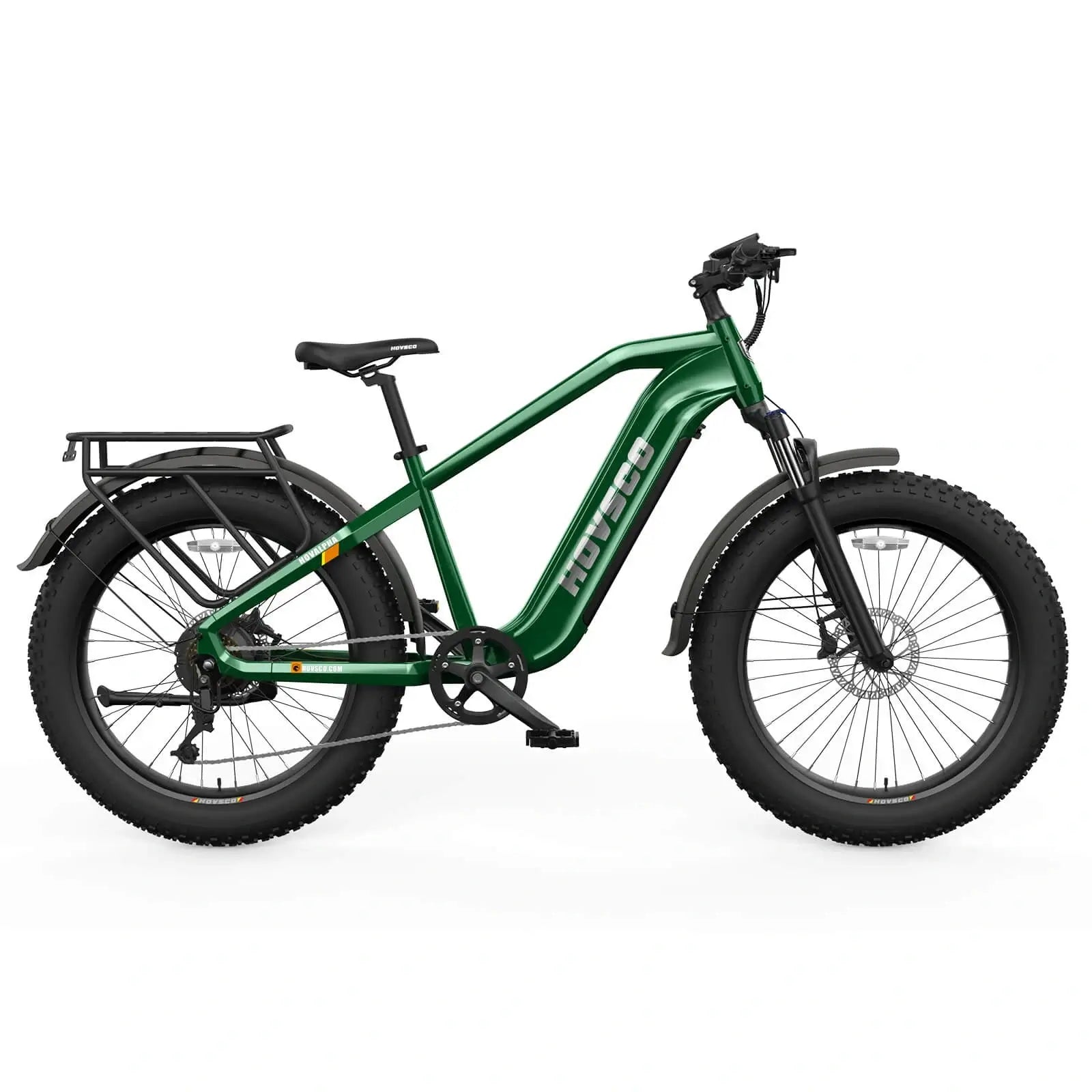
A 26x4 fat tire e-bike is worth it when you want maximum grip, smoother control, and better confidence on sand, snow, mud, and rough pavement. The wide tire footprint adds flotation and stability, while the 26-inch wheel size preserves usable agility and climbing support. It is especially attractive for riders who value all-terrain versatility and a bold style.
A 26x4 fat tire setup uses 26-inch wheels with four-inch-wide tires, which changes how the bike contacts the ground. The larger air volume lets you run lower pressure, so the tire absorbs chatter and maintains traction on loose or uneven terrain.
In practice, that means a 26x4 fat tires guide is really about balancing flotation, grip, and control. The tire spreads the rider’s weight over a wider patch, which helps the bike stay upright on soft ground and improves comfort on broken roads.
For riders comparing a 26 inch e bike to narrower-tired bikes, the difference is immediate. The bike feels calmer at low speed, less nervous in sand or snow, and more planted when the surface changes suddenly.
26x4 fat tires help by increasing surface contact and lowering ground pressure. That makes the bike less likely to sink into soft terrain and more likely to track forward instead of spinning out.
On sand, the wider footprint helps the wheel “float” rather than dig. On snow, the extra width keeps the bike from cutting too deeply into crusty or loose layers. In mud, 26x4 fat tires can improve control, although tread pattern and rider input still matter a lot.
The key is that a 26x4 fat tires guide is not just about width; it is about pressure management and traction behavior. When the tire deforms correctly, it grips instead of bouncing, and that improves confidence across mixed terrain.
A 26 inch e bike often climbs well because the wheel size keeps acceleration lively while the fat tire adds traction. The motor can put power down more effectively when the tire stays connected to the ground instead of slipping on loose surfaces.
A 26 inch e bike also tends to feel manageable at slow climbing speeds. The wheel is large enough to smooth obstacles, but not so large that the bike becomes sluggish to steer. That gives riders a practical balance between climbing support and control.
For steep grades, the real advantage comes from the combination of torque, traction, and stability. A 26 inch e bike with fat tires can maintain momentum better on loose climbs than a narrow-tire bike that loses grip early.
A blue electric bike is a strong choice for riders who want visibility with a clean, modern look. A pink ebike works well for riders who want personality and high style without sacrificing performance. In both cases, color can be part of the riding identity, not just decoration.
A blue electric bike often signals a sporty or urban look, while a pink ebike can feel playful, expressive, and fashion-forward. If you ride daily, the color should also support visibility, especially in traffic or low-light conditions.
I think color matters more than many technical buyers admit. A blue electric bike or pink ebike that you actually enjoy looking at is more likely to be used often, maintained carefully, and parked with pride.
A folding ebike for steep hills works best when the frame, motor, and gearing are tuned for torque rather than pure speed. Folding bikes often have compact geometry, so the best climbing versions need strong hinges, solid frame locks, and a motor that delivers smooth low-end power.
A folding ebike for steep hills should not be judged by folding convenience alone. The frame must resist flex under load, because steep climbing increases stress at the hinge and rear triangle. If those parts are weak, the bike can feel unstable when the grade gets serious.
The smartest folding ebike for steep hills uses fat tires, strong brakes, and a stable wheelbase to offset the compact form. That makes it useful for apartment storage, travel, and urban hill riding without giving up much control.
Fat tires provide mechanical advantage by improving traction, flotation, and impact absorption. The wider casing creates more contact area, which helps the tire transmit motor power to the ground without spinning.
A second advantage is pressure tuning. You can lower tire pressure to improve grip on soft surfaces, then raise it for pavement efficiency. This flexibility is one reason a 26x4 fat tires guide is valuable for mixed-condition riders.
Fat tires also reduce small-impact fatigue. Instead of every bump hitting the frame directly, the tire carcass absorbs part of the shock. That makes a 26 inch e bike feel more controlled on broken streets and trail connectors.
26x4 fat tires perform best where the ground is soft, loose, uneven, or constantly changing. That includes beach paths, snowy routes, forest edges, gravel detours, and city streets with broken pavement.
A 26x4 fat tires guide is especially useful for riders who do not ride on the same surface every day. If your route changes between pavement, mud, and rough shoulders, the tire’s ability to adapt is a major advantage.
They are also practical for mixed-use riding because they keep handling predictable. A 26 inch e bike with 26x4 fat tires can feel composed where narrower bikes become twitchy or sink into soft ground.
Yes, tire pressure changes everything. Lower pressure increases grip and comfort, while higher pressure improves speed and efficiency. The best setting depends on rider weight, terrain, and how much support you want from the tire.
A 26x4 fat tires guide should always include pressure tuning because it is one of the easiest ways to customize the ride. Too much pressure makes the bike bounce and skate; too little can make the tire squirm in corners or drag on pavement.
For a 26 inch e bike, pressure tuning is even more important because motor assistance can hide bad setup until you hit a climb or loose surface. A little experimentation pays off quickly.
Folding fat-tire bikes are appealing because they combine storage convenience with terrain capability. Riders get a compact frame for apartments, vehicles, or mixed commuting, but still keep the traction and stability of wide tires.
A folding ebike for steep hills becomes especially useful when a rider needs both portability and climbing confidence. The compact design is easier to carry and store, while the fat tires help the bike stay planted on climbs and rough approaches.
The main engineering challenge is stiffness. A folding ebike for steep hills must have tight frame tolerances and a secure locking mechanism so the ride does not feel vague under power.
Look for a bike where style does not compromise function. A blue electric bike or pink ebike should still have a strong frame, safe braking, and tire clearance that matches the intended terrain.
The best-looking bikes are often the ones with clean geometry and thoughtful proportion. A 26 inch e bike with 26x4 fat tires can look aggressive and purposeful while also delivering real functional benefits.
HOVSCO understands this balance well. HOVSCO designs often combine visual appeal with practical all-terrain capability, which matters for riders who want both personality and performance. That is also why HOVSCO stands out in a crowded fat-bike market.
Choose based on where you spend most of your time and how much surface variation you face. If your routes include sand, snow, mud, or rough shoulders, a 26x4 fat tires guide points you toward the wider setup.
For city use, the same bike can still be excellent if you value comfort and confidence more than pure speed. A 26 inch e bike with fat tires may be a bit heavier, but it absorbs potholes and curbs more gracefully than narrow-tire models.
If you want both city practicality and trail flexibility, a folding ebike for steep hills can be the most versatile option. It stores easily, climbs well, and stays adaptable across seasons.
How Can You Ensure Your E-Bike Meets State Laws?
“When we engineer around fat tires, we are not just making a bike look tougher. We are tuning contact patch, frame clearance, and rider confidence at the same time. HOVSCO treats 26x4 as a system: tire width, rim support, brake power, and frame stiffness all need to agree. That is how a bike stays stable on snow, sand, mud, and steep pavement without feeling heavy or nervous.”
A 26x4 fat tire e-bike is a strong choice when terrain versatility matters more than minimal weight or race-bike efficiency. It shines on sand, snow, mud, and rough pavement because the tire’s width improves flotation, stability, and climbing grip. If you want a 26 inch e bike that feels planted, a blue electric bike or pink ebike that reflects your style, or a folding ebike for steep hills that still handles real-world terrain, the fat-tire format is a smart and practical upgrade. HOVSCO proves that performance and style can work together when the engineering is done with purpose.
Are 26x4 fat tires good for beginners?
Yes. They are forgiving, stable, and confidence-building, especially at low speed or on uneven ground.
Do fat tires slow the bike down?
They can on smooth pavement because of added rolling resistance, but the trade-off is better grip and comfort.
Is a 26 inch e bike better than a smaller wheel size?
It depends on your riding. A 26 inch e bike usually offers a strong balance of agility, comfort, and terrain support.
Can a folding ebike for steep hills really handle rough terrain?
Yes, if the frame is stiff, the motor has enough torque, and the tires are wide enough for traction.
Is a blue electric bike or pink ebike less practical?
No. Color does not reduce performance. It only changes visibility and style, as long as the bike’s build is strong.
Share:
What Is the Best Ebike for Seniors to Ride Safely?
What Is the Best Commuter E-Bike Setup for Daily Use?