





![[ New Arrival ] Porto Max Electric Scooter For Commute & Grocery Shopping - HOVSCO](http://www.hovsco.com/cdn/shop/files/PotroMax-3.jpg?v=1706927007&width=1200)
- by SteveJames
Can one HovRanger really replace your car and save $6,000 a year?
- by SteveJames
E-Bikes
Accessories
 Free Shipping
 15-Day Returns
 2-Year Warranty
Free Shipping
15-Day Returns
2-Year Warranty
2-Year Warranty
Free Shipping
15-Day Returns
2-Year Warranty
The Commuter Financial Balance Sheet: Replacing Your Car and Saving $6000 Annually shows how the average U.S. household can cut transport costs from roughly $7,200 per year in car expenses to about $350 per year on an ebike. By comparing every dollar of fuel, depreciation, insurance, and maintenance to HovRanger’s 15-cent full charges, the numbers clearly favor intelligent electric commuting.
A “normal” U.S. car typically costs far more than the monthly payment suggests once you add fuel, depreciation, insurance, maintenance, registration, and parking. A realistic commuter financial balance sheet for many drivers lands around $7,200 per year, and in some cities far higher, which quietly erodes household savings and squeezes long‑term financial goals.
In my experience building total cost models, the biggest surprise isn’t fuel, it’s depreciation and insurance. Fuel for a 25 mpg car doing roughly 13,000 miles a year sits around $2,000–$2,500. Insurance can easily reach $1,400–$1,800 or more, especially as repair costs climb for sensor‑packed vehicles. Maintenance and tires often add $800–$1,000, even on non‑luxury models, once you factor in brakes, oil changes, and unscheduled repairs.
Depreciation quietly takes another $2,000+ each year as the vehicle loses value regardless of usage. Registration, taxes, and parking or tolls add hundreds more. When you lay this out line by line, a total car ownership cost of about $7,200 per year is not an outlier but a conservative average in many regions—making the case for alternatives like the HovRanger 27.5" Smart Hardtail Commuter Flagship Edition compelling before you even factor in charging costs.
Running a HovRanger 27.5" Smart Hardtail Commuter Flagship Edition costs surprisingly little because every full battery charge typically requires only about 15 cents in electricity. Even for daily commuting, annual energy costs stay close to the price of one tank of gas, and total ebike commuting expenses often sit around $350 per year, including basic maintenance and wear parts.
From the engineering side, I calculate that from the battery first. A 48V 15Ah pack holds roughly 0.72 kWh. At residential rates around $0.20 per kWh, a full charge costs about $0.14–$0.15. In real‑world range testing, that translates to around 40–60 miles per charge, depending on rider weight, terrain, and assist level. Even if you ride 5 days a week, your yearly energy bill tends to be well under $100.
Add in routine service—occasional tune-ups, brake pads, a chain, and tires—and you still land near total e-bike operating costs of $350 per year for a well-maintained commuter e-bike. There’s no oil to change, no complex transmission, and far fewer high-stress heat cycles. The HovRanger 27.5" Smart Hardtail Commuter Flagship Edition was designed with this minimal-maintenance philosophy in mind, so the electric drive and mechanical components work together instead of competing for your money.
A U.S. commuter financial spreadsheet that compares total car ownership costs of $7,200 per year versus total e-bike operating costs of $350 per year quickly shows where every dollar goes. On the car side, large, recurring expenses fill the page; on the HovRanger side, the list is short and dominated by minimal energy and maintenance costs, creating a clear visual of the $6,000+ annual gap.
When I draft a U.S. household commuting financial spreadsheet (P&L statement) with customers, I structure it like a business profit and loss statement:
Fuel/energy
Insurance
Depreciation
Maintenance & repairs
Registration & parking
“Surprise” costs
On the car column, almost every row holds three or four‑digit numbers. On the HovRanger column, the only substantial items are occasional service and a future battery replacement. This layout forces the question: is the comfort of a second car worth paying an extra $500 a month compared to a commuter ebike that quietly gets the same job done?
The commuter financial balance sheet favors e-bikes because they sidestep the most expensive parts of car ownership: gasoline, insurance, and depreciation. When your primary travel tool costs only a few hundred dollars a year to operate, the gap between total car ownership costs of $7,200 per year and total e-bike operating costs of $350 per year becomes a persistent annual “raise” rather than a one-time saving.
From a mechanical perspective, cars are over‑built for daily commuting. You’re moving 3,000–4,000 pounds of machinery to transport a 150–200 pound person and a laptop bag. Every start from a traffic light burns fuel and shortens the life of dozens of components that have nothing to do with getting you to work on time. With an ebike, almost all of the energy input goes into moving rider and frame, not steel and glass.
Financially, you also pay for that complexity in insurance and depreciation. A simple, robust commuter platform like the HovRanger 27.5" Smart Hardtail Commuter Flagship Edition uses a 500W hub motor, torque sensor, and standard bicycle components that are cheap to maintain and easy to service. The machine is purpose‑built for commuting, so its cost structure aligns with that job instead of inheriting all the overhead of car‑grade engineering and regulation.
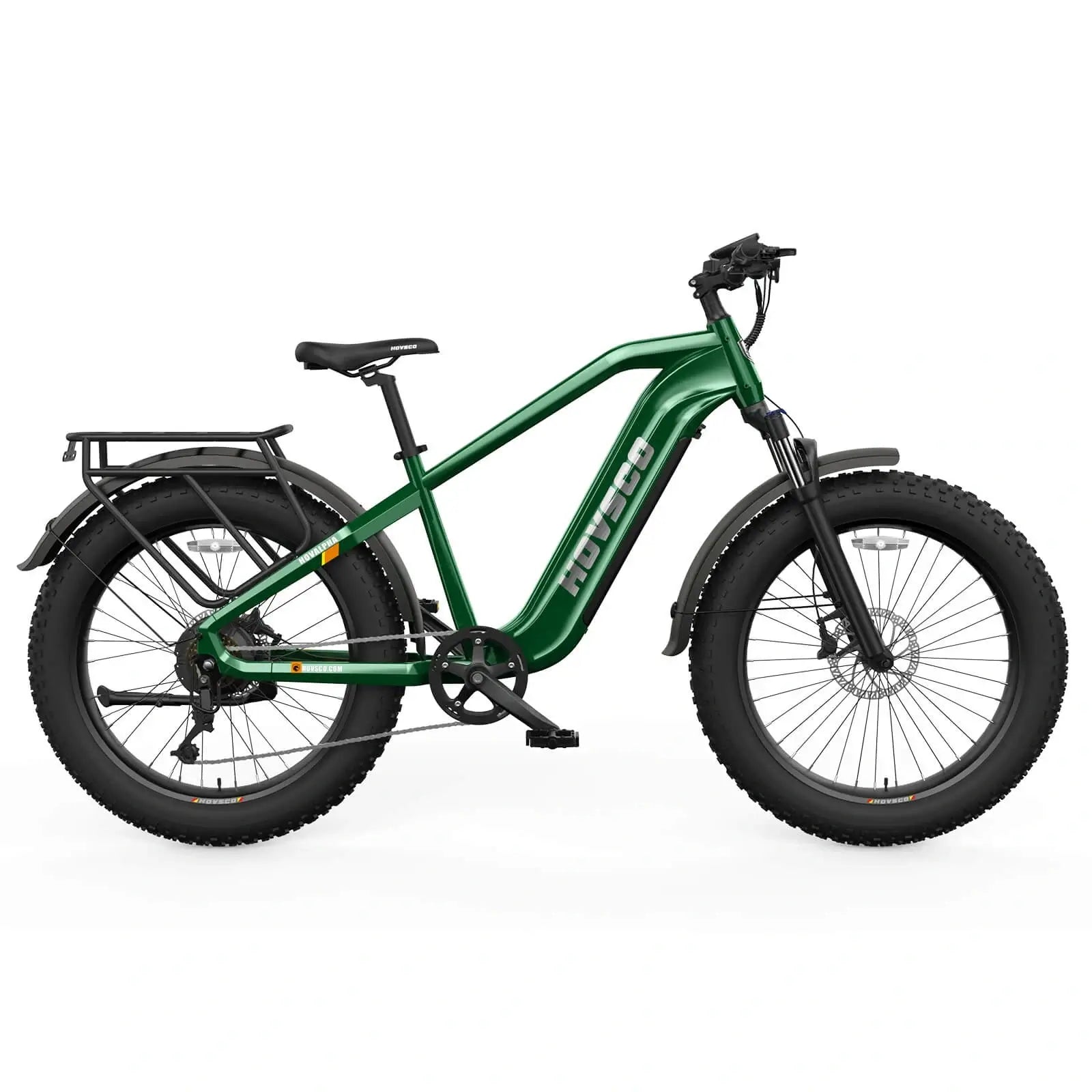
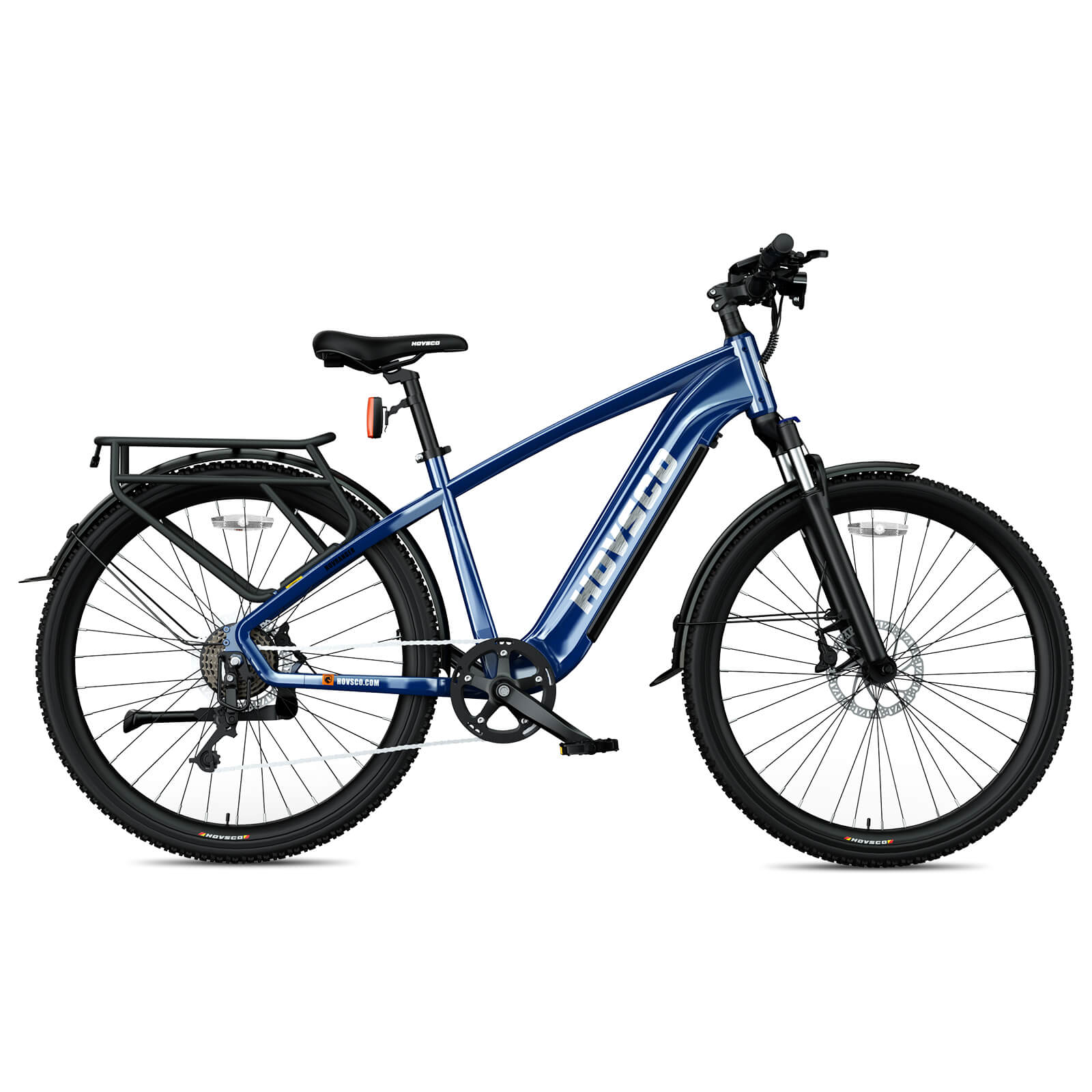
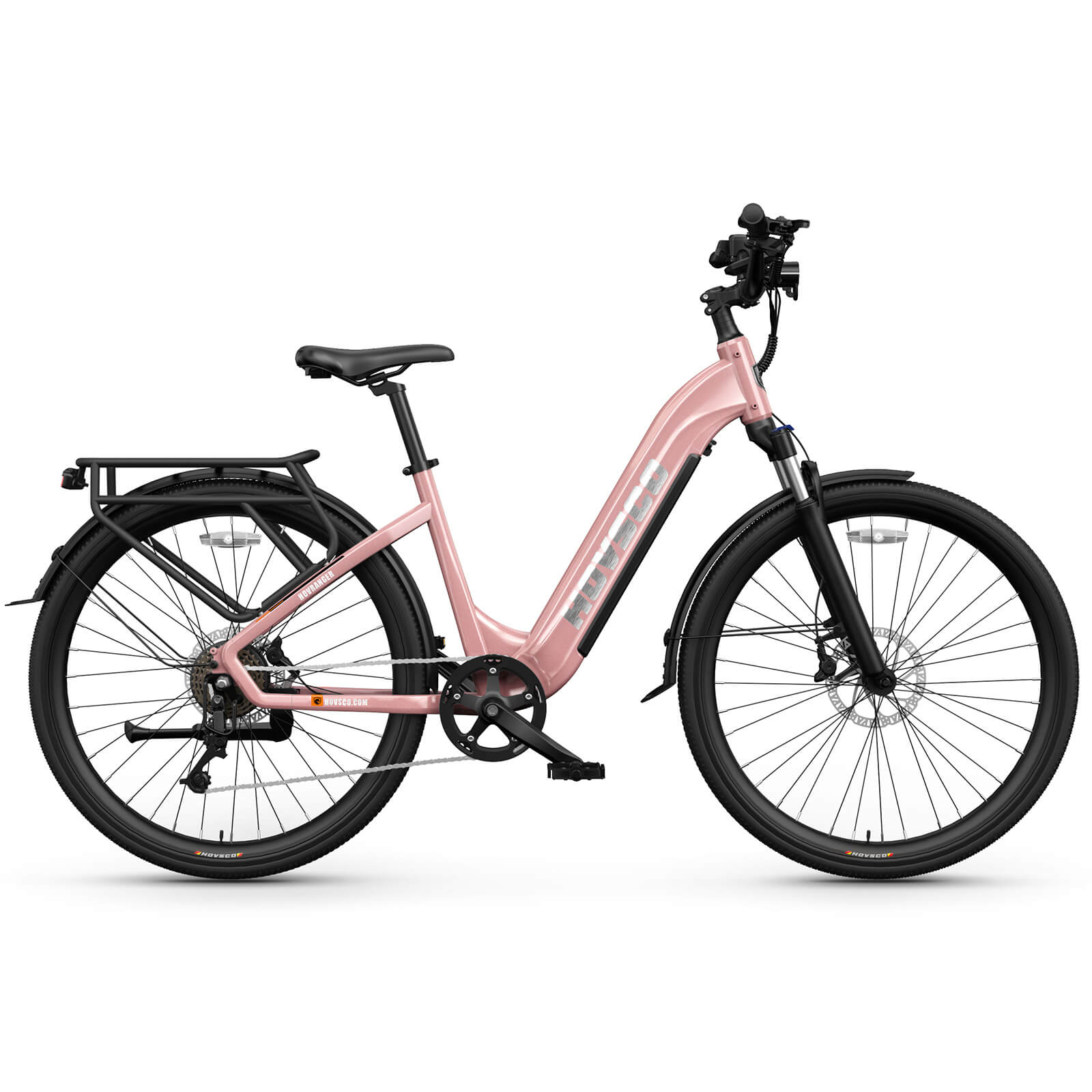
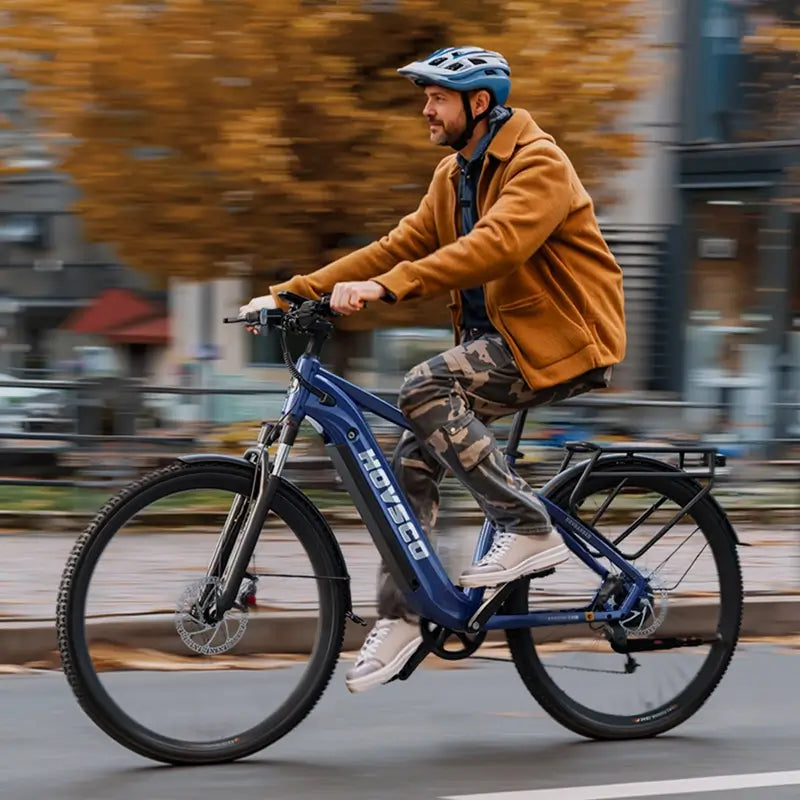
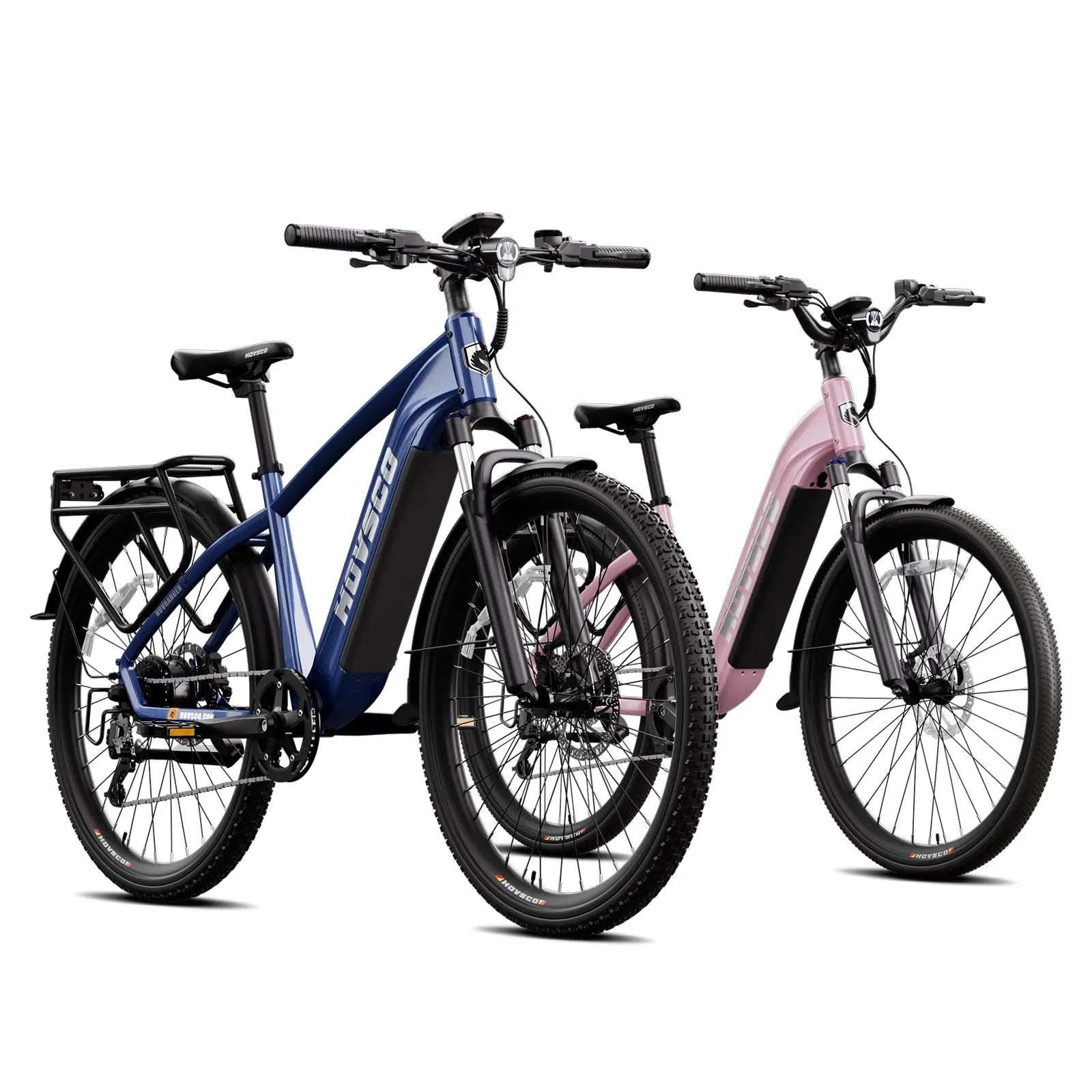
The HovRanger 27.5" Smart Hardtail Commuter Flagship Edition is engineered as a serious car replacement with a 500W rear hub motor, torque‑sensing assist, 48V 15Ah battery, hydraulic disc brakes, and 27.5 x 2.20" ebike‑rated tires. Together, they deliver range, control, and durability that can handle daily commuting instead of just occasional rides.
As someone who looks at these frames from the inside out, I focus on three trade‑offs: torque vs efficiency, comfort vs stiffness, and weight vs robustness. A 500W hub motor is deliberately chosen over an oversized unit to reduce current draw and heat, extending battery and controller life. The torque sensor translates your pedal pressure into proportional assistance, which keeps acceleration smooth and prevents wasted energy from jerky throttle use.
The suspension fork with 75mm of travel and the 27.5" tire size are tuned for imperfect urban asphalt, not just showroom floors. Hydraulic discs with 180mm rotors give consistent braking under load, which matters when you’re carrying groceries or a laptop bag at 20–28 mph. HOVSCO’s choice of 6061 aluminum with internal battery mounting keeps the center of gravity low, so handling stays predictable even when you ride daily in mixed traffic.
Every time you charge a HovRanger 27.5" Smart Hardtail Commuter Flagship Edition for about 15 cents, you’re effectively replacing an entire day’s worth of car commuting fuel. Over a year of weekday rides, that adds up to hundreds of dollars saved on gasoline alone, even before you consider the other expense lines on your commuter financial balance sheet.
In real usage, many riders will charge 2–4 times per week, depending on commute length. At 15 cents a charge, that’s roughly $30–$50 per year in electricity, even if you’re liberal with assist levels. Compare that with a modest car burning $40–$60 of fuel every week, and the difference becomes obvious within the first month of switching.
From an engineering standpoint, this efficiency is the compound result of motor design, battery chemistry, and control algorithms. HOVSCO tunes the HovRanger’s assist profiles so the motor helps most when you need it—starts, hills, and headwinds—while encouraging human power at cruising speeds. That’s why even on a “Smart Hardtail Commuter Flagship Edition” platform with a capable motor, your kilowatt‑hours go much further than an equivalently priced electric scooter or under‑tuned ebike.
Car depreciation destroys long‑term commuter ROI because it quietly removes thousands of dollars in value each year, regardless of how carefully you drive. Over five years, depreciation alone can exceed $10,000 for an average vehicle, while a HovRanger’s lower purchase price and slower value loss barely register on the same financial spreadsheet.
From a financial engineering angle, depreciation is essentially the price of complexity and novelty. New cars contain intricate drivetrains, safety systems, and electronics that age quickly in market perception. Even if they function perfectly, the resale market demands a discount, and that discount is your lost money. It’s common for a mid‑priced car to lose 40–50% of its value in that timeframe.
An ebike like the HovRanger 27.5" Smart Hardtail Commuter Flagship Edition is simpler and cheaper from day one. It will depreciate, but the absolute dollar amounts are smaller, and well‑maintained commuter ebikes often retain solid value in secondary markets as long as the battery remains healthy. In practical terms, this means depreciation becomes a minor row on the commuter financial balance sheet instead of a central, stressful theme.
Regular ebike commuting reshapes a family’s financial balance sheet by lowering fixed transport costs and turning mobility into a relatively small, predictable expense. When养车总开销 drops from $7,200/年 to something closer to 骑电单车总开销 $350/年, the saved funds can go to debt reduction, investments, or experiences instead of fueling and insuring a depreciating asset.
I’ve watched households go from “two cars by default” to “one car plus one HovRanger” and immediately feel budget breathing room. One insurance policy disappears, fuel purchases drop, and the second vehicle’s depreciation stops entirely once it’s sold. The remaining car gets used for longer trips or specific tasks while the ebike takes over daily commuting and local errands.
This shift also changes how families think about distance and time. When school drop‑offs, grocery runs, and office commutes all fall within HovRanger range, the perceived “need” for a second vehicle fades. HOVSCO’s comfort‑oriented geometry and app‑connected display help families track usage and savings, turning the commuter financial balance sheet from abstract theory into a documented lifestyle change.
From the perspective of someone who sees both the engineering drawings and the customer spreadsheets, HOVSCO commuter ebikes like HovRanger turn everyday rides into a genuine financial strategy. When a full charge costs about 15 cents and the machine is built to survive real‑world commuting abuse, the question stops being “Can an ebike replace my car?” and becomes “Why am I still paying $7,000 a year to drive short distances?”
A HovRanger 27.5" Smart Hardtail Commuter Flagship Edition can realistically replace a second family car if your daily routes fall within its range and load capacity. For many households, the commuter financial balance sheet clearly supports selling a lightly used second vehicle, pocketing the cash, and enjoying ongoing annual savings of around $6,000.
The practical test is simple: map your regular trips—work, school, groceries, gym—and check distances and terrain. Most urban and suburban routes under 15 miles one way are well within HovRanger territory, especially with 40–60 miles of range. Add a rack and panniers, and the bike becomes a true utility platform. In my experience, once riders try this for a few months, the car keys for those trips start gathering dust.
HOVSCO’s broader ecosystem—support, parts availability, and community—also matters. A commuter ebike can only replace a car if it stays on the road. By focusing on serviceable components and documented specifications, HOVSCO helps ensure that your Smart Hardtail Commuter Flagship Edition is not a fragile gadget but a durable tool that earns its place in the driveway where a second car used to sit.
Can I really save $6,000 per year by switching to HovRanger commuting?
If you fully replace a typical second car’s commuting and local errands, dropping fuel, insurance, registration, and much maintenance, $6,000 in annual savings is realistic for many U.S. households.
How long does the HovRanger battery last before replacement?
With normal commuting, a quality 48V 15Ah pack typically delivers several years of use—often 500–800 full charge cycles—before range noticeably declines, keeping annualized costs low.
Do I need special insurance for an ebike like HovRanger?
Most areas do not require separate ebike insurance, though some riders choose low‑cost liability coverage. Always confirm local regulations and your existing home or renter’s policy.
Is it practical to commute year‑round on an ebike?
With fenders, good lights, and proper clothing, many riders commute through rain and cold. In extreme heat, ice, or storms, having transit or a shared car as backup remains sensible.
What if my commute includes steep hills or heavy cargo?
A 500W hub motor, torque sensor, and appropriately geared drivetrain handle typical city hills and moderate loads; just use higher assist levels and plan for slightly reduced range.
Share:
How can you truly theft-proof your commuter ebike in the city?
Is HOVSCO HovRanger Really the Ultimate Commuter Spec Battle Winner?