


![[ New Arrival ] Porto Max Electric Scooter For Commute & Grocery Shopping - HOVSCO](http://www.hovsco.com/cdn/shop/files/PotroMax-3.jpg?v=1706927007&width=1200)
- by SteveJames
Are ebike child seats really safe for daily school drops?
- by SteveJames
E-Bikes
Accessories
 Free Shipping
 15-Day Returns
 2-Year Warranty
Free Shipping
15-Day Returns
2-Year Warranty
2-Year Warranty
Free Shipping
15-Day Returns
2-Year Warranty
Ebike child seats can be very safe for daily school drops when they are matched to a reinforced rear rack, installed to spec, and checked before every ride. Parents should choose certified seats like Thule Yepp, use the HovCart-style one-piece rear rack for structural stability, and follow a 5-step anti-loosening checklist before carrying kids.
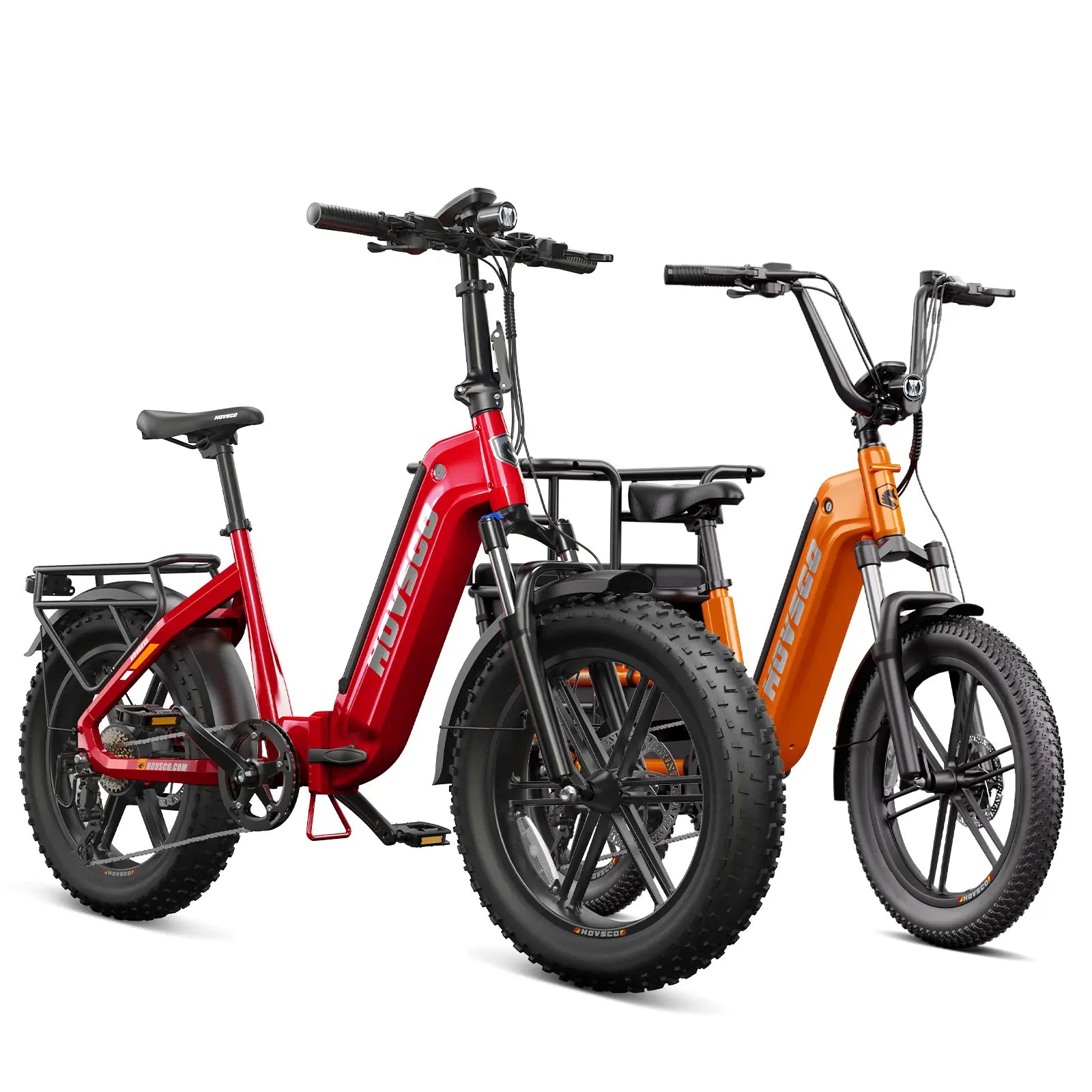
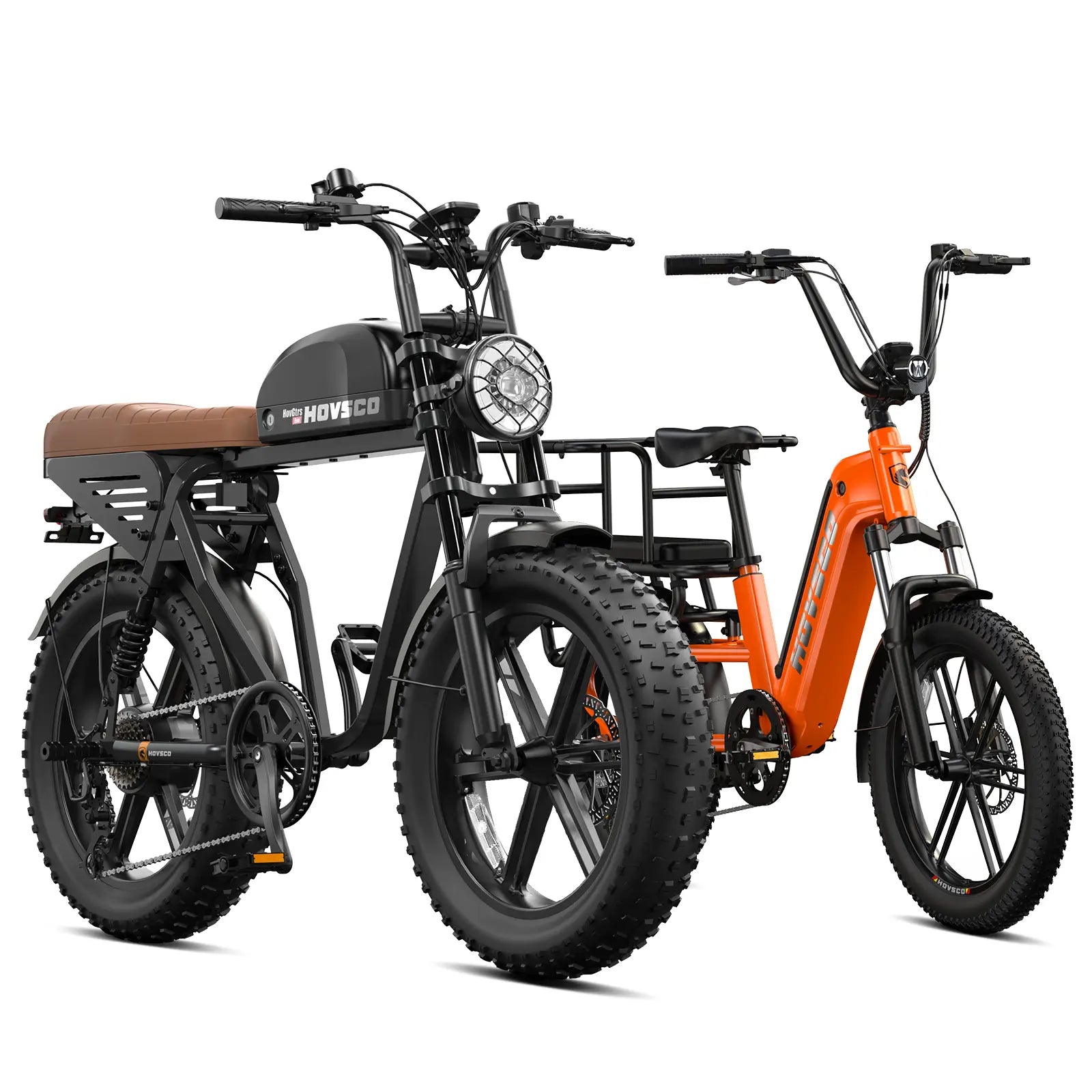
family sharing step through ebikes
Parents can use an ebike child seat safely for school drops by combining a certified seat, a reinforced rear rack, and disciplined pre-ride checks. The Ultimate Ebike Child Seat Guide: Safe Commuting for School Drops starts with choosing a rack-ready ebike, matching a Thule Yepp-class seat, and building a repeatable safety routine around installation and daily inspection.
When parents talk about last-mile school commuting, they are really juggling three hard constraints: child safety, morning time pressure, and unpredictable traffic. The Ultimate Ebike Child Seat Guide: Safe Commuting for School Drops is as much about workflow as hardware, especially for busy 宝妈 and 宝爸 trying to replace short car trips.
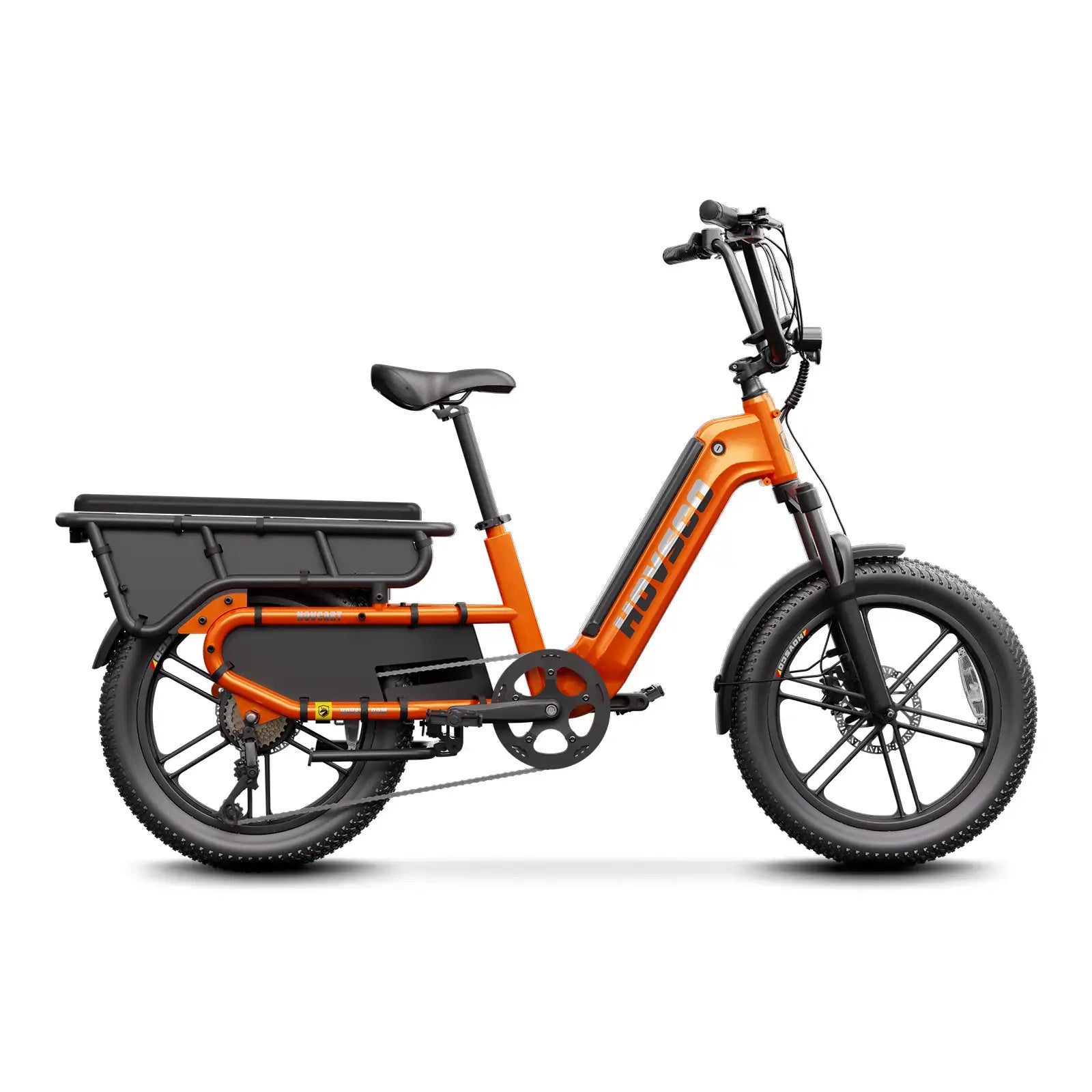
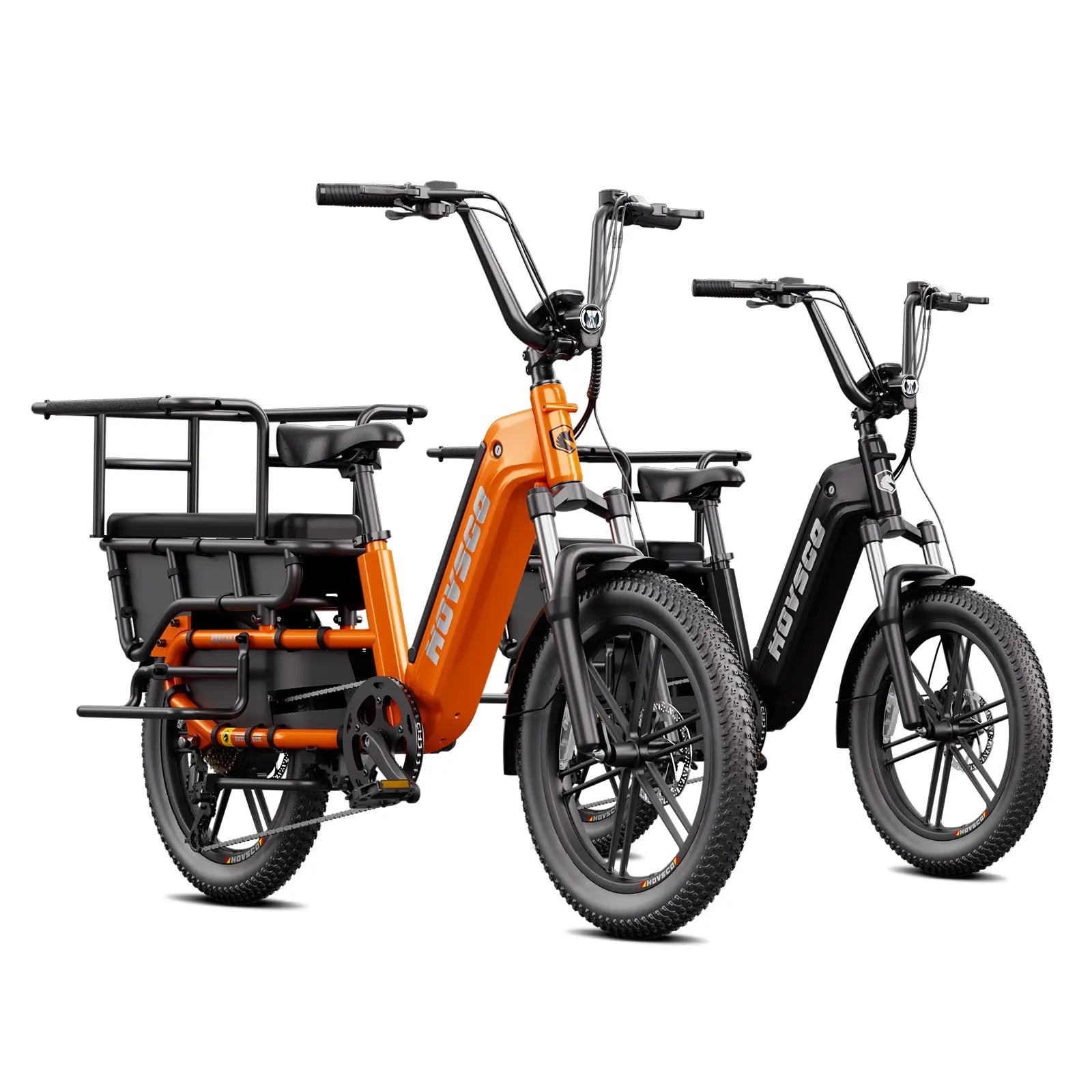
From an engineering standpoint, the HovCart-type one-piece rear rack is a game changer. Instead of relying on bolt-on “afterthought” racks, it creates a direct load path from the child seat down into the frame, reducing flex and fatigue. That structural stiffness keeps the Thule Yepp and similar seats aligned even when hitting speed bumps or driveway curbs.
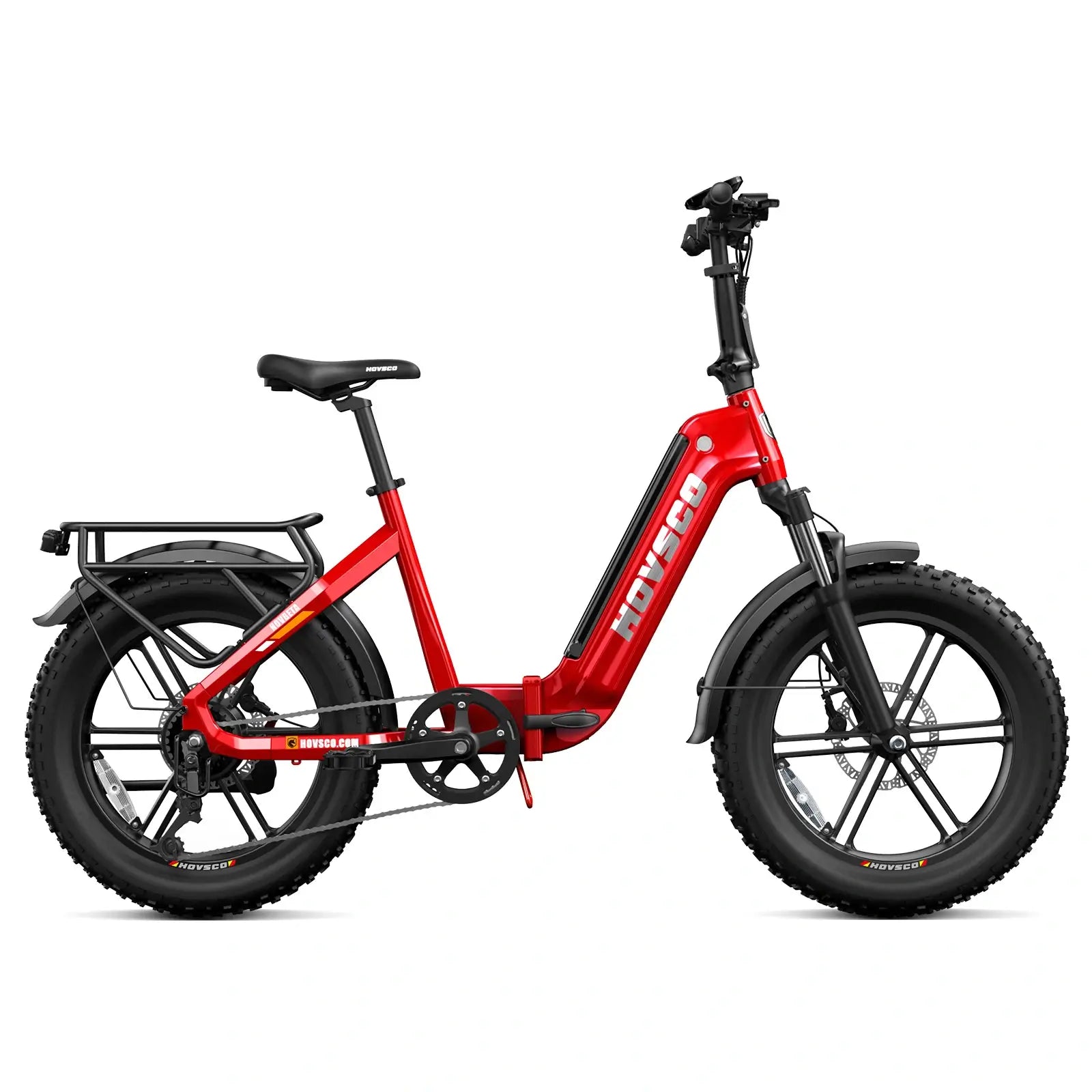
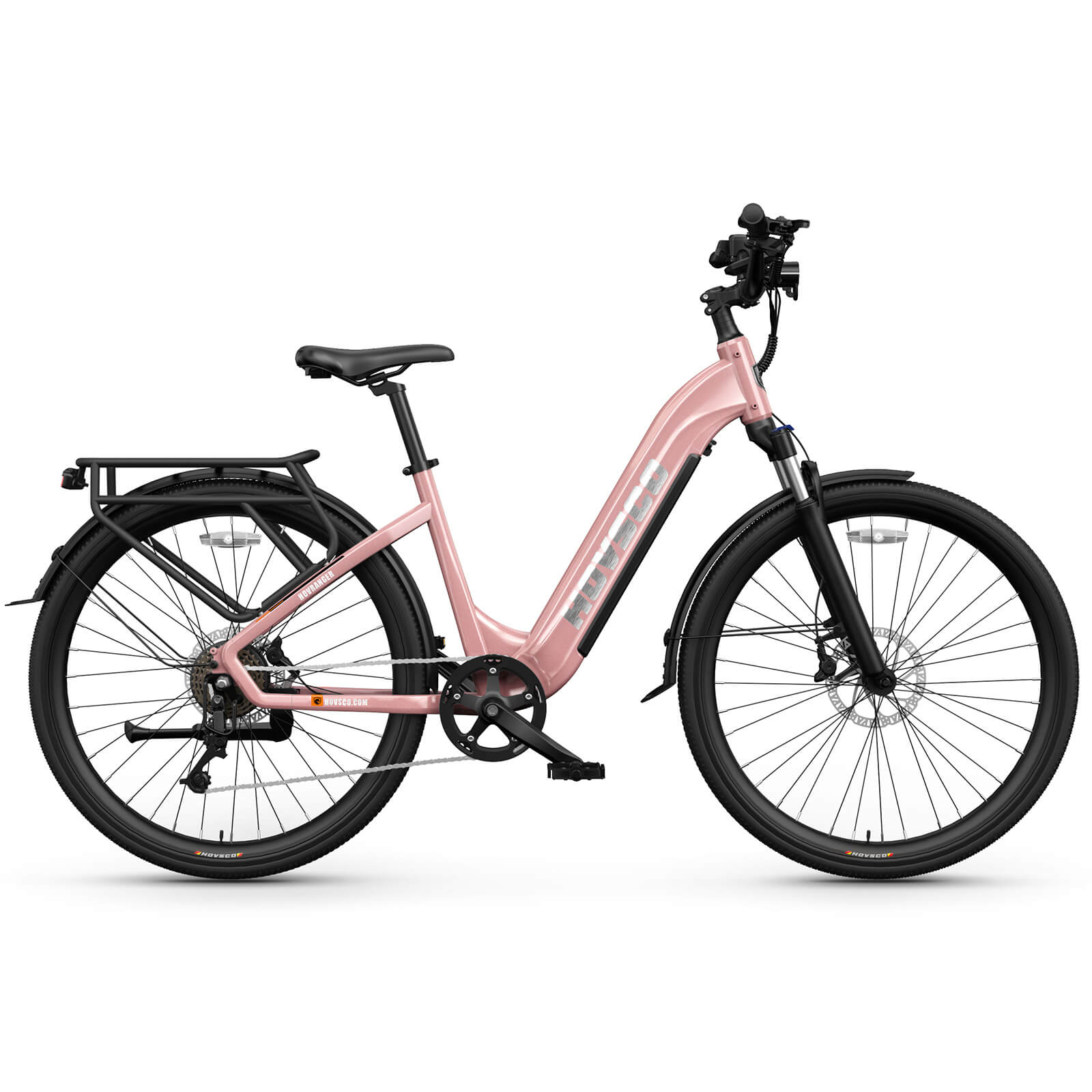
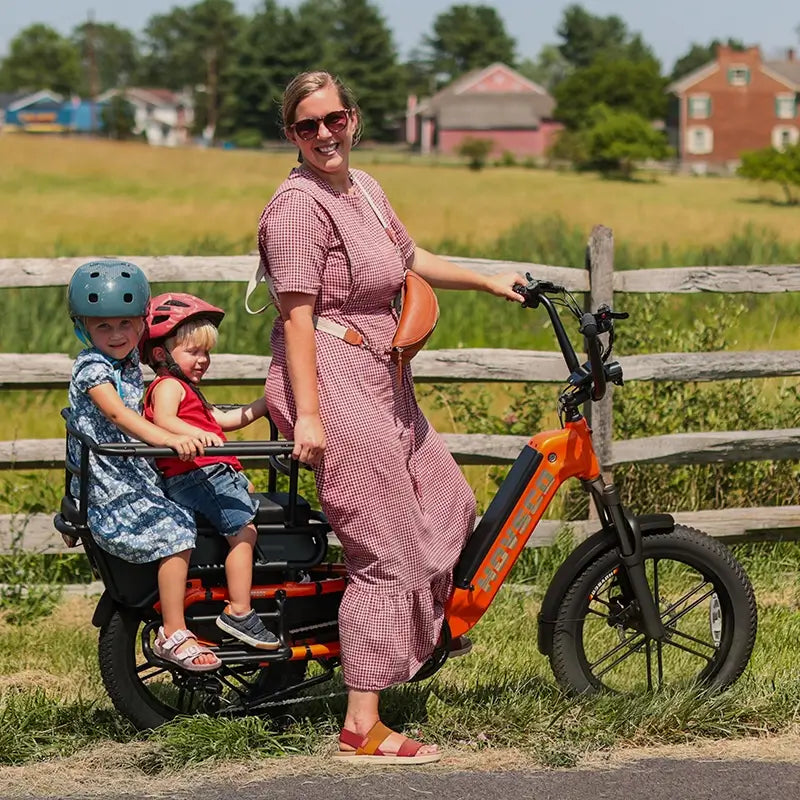
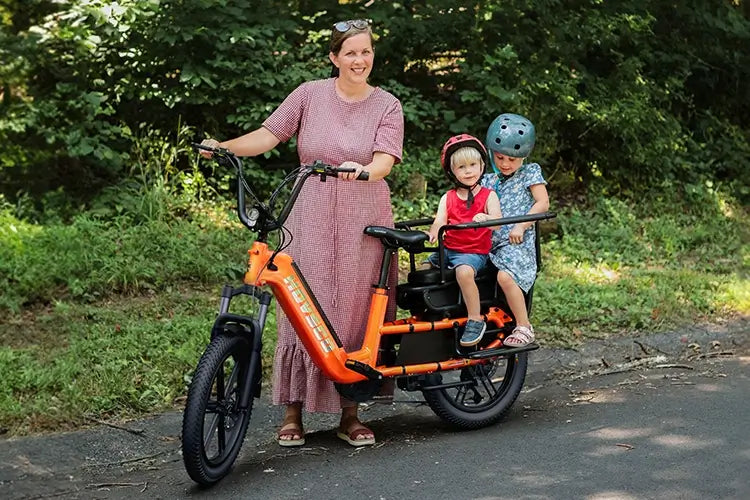
For school drops, the safest setup is a rear-mounted seat on the integrated rack, paired with a low, predictable assist level. HOVSCO frames make this practical because they are designed around family utility, not just solo commuting. Once the mounting pattern is dialed in, parents can standardize torque settings, checklists, and even “handover routines” between two adults using the same bike.
The HovCart-style rear rack is ideal for Thule Yepp child seats because it is an integrated, structural part of the frame, not a bolt-on accessory. This one-piece design spreads child and seat loads across the whole rear triangle, giving Thule Yepp’s EasyFit or MIK-style interfaces a rigid foundation for safe family commuting.
From a factory-floor perspective, the critical detail is how rack tubing ties into the dropouts and seatstays. On many generic ebikes, the rack hangs off the seatpost or a pair of thin struts; on HOVSCO cargo platforms, the one-piece rack is welded or bolted directly into load-bearing nodes. That means fewer flex points and lower stress at any single mounting bolt.
Thule Yepp seats are engineered around standard rack geometries and rely on flat, torsion-resistant surfaces. The HovCart rear rack gives them that surface with enough stiffness to keep the child’s center of mass stable under acceleration and braking. It also makes it easier to maintain proper seat tilt and fore–aft alignment, which parents will feel instantly when they hit the first pothole.
Another non-obvious advantage is that integrated racks typically have higher tested weight ratings than aftermarket racks. In practice, this gives 宝妈 and 宝爸 more headroom when the child grows, or when they carry a backpack plus lunchbox on the same ride. For daily school drops, that margin matters more than spec-sheet bragging rights.
The seats that match integrated rear racks best are rear-mounted models designed for rack interfaces such as Thule Yepp EasyFit, Yepp 2 Maxi, and other MIK HD-compatible systems. These seats clamp to the rack platform, lock mechanically with keyed systems, and are tested for the dynamic loads typical of ebike commuting with children.
Instead of improvising brackets or mixing unknown brands, parents should pair a known rack standard with a known seat ecosystem. In HOVSCO’s case, the HovCart rear rack is already used in internal guides on safely installing a Thule Yepp. That gives parents a clear compatibility baseline and removes guesswork about spacing, bolt patterns, or weight limits.
Technically, the key is to keep the child’s weight as low and as close to the rear axle as possible. Rack-mounted Thule Yepp seats do exactly that, sitting the child into the “pocket” formed between the wheel and the rider’s back. Generic high-mounted seats that sit far behind the rear axle increase pitch and roll moments, making the bike harder to control in emergency maneuvers.
For moms and dads, the simplest rule is: rack-rated seat on a rack-rated bike. When both components are designed to live together in a family-commuter context, the daily routine becomes more predictable. HOVSCO’s focus on cargo and utility setups means that compatibility is not a bolt-on afterthought but part of the original engineering brief.
A 5-step anti-loosening checklist matters because most child seat failures on ebikes are not caused by catastrophic rack breakage but by incremental loosening. Vibrations, curb hits, and repeated loading cycles slowly back bolts out or wear plastic interfaces; a structured checklist catches these issues before they reach critical levels.
From the perspective of a mechanical engineer, a child seat is a live load hanging off a vibrating, torque-rich system. Every start, stop, and bump tries to rotate the seat brackets and micro-flex the rack tubing. Without a consistent anti-loosening routine, even a high-end Thule Yepp installation on a HOVSCO rear rack can drift out of spec over time.
Parents also operate under time pressure. Morning school drops are not the moment to do a full shop-style inspection. That is why a 5-step checklist is so valuable: it distills the essentials into a 30–60 second ritual that fits into a busy family routine while still respecting the real physics at play.
In practical terms, this checklist lives in two places: laminated on the garage wall and memorized as a “hands-only” sequence the parent runs through before every ride. Once it becomes as automatic as buckling the child’s car seat, the odds of unnoticed loosening drop dramatically.
The 5-step child seat lock-down and anti-loosening checklist is a simple, repeatable sequence: visual rack scan, mount interface check, bolt touch-check, harness and helmet confirmation, and full-body shake test. When executed consistently on a HovCart-style rack with a Thule Yepp-class seat, it turns a technically complex safety problem into a daily micro-habit.
Here is how a HOVSCO engineer would define it:
Rack integrity scan
Look along the HOVSCO rear rack welds and tubes for cracks, rust, or deformation. If anything looks bent or discolored, do not ride until a shop inspects it.
Seat interface check
Verify the Thule Yepp latch or EasyFit/MIK interface is fully engaged. You should hear or feel the lock click, and the safety indicator (if present) should show locked status.
Bolt and fastener touch-check
Run fingers across all visible bolts and quick-releases on the seat base and protective side rails. You are feeling for protruding bolts, gaps, or anything that moves under light pressure.
Harness and helmet confirmation
Seat the child, tighten the 5-point harness until it passes the “two-finger” chest test, and confirm the helmet straps are snug under the chin.
Full-body shake test
Stand beside the bike, grip the child seat and rails, and rock the bike laterally and fore–aft. There should be no independent motion between seat and rack; any creak, click, or shift means you must re-tighten or re-install.
Done correctly, this checklist takes under a minute. Over weeks and months of school commuting, it becomes the most powerful safety habit in a family’s ebike routine.
HOVSCO child protection rails, handholds, and footrests improve safety by creating a controlled “cabin” around the child on the rear rack. Instead of dangling legs and exposed sides, the child has fixed contact points and guard rails that prevent feet from entering the wheel and keep bodies inside the bike’s silhouette during sudden maneuvers.
On a factory floor, the engineers think of these add-ons as secondary containment. The primary safety system is the Thule Yepp harness and shell; the secondary system is HOVSCO’s rear rack protective hardware. Together they reduce the risk of side impacts, foot-spoke contact, and accidental shifts when the rider leans or brakes.
Dedicated handholds also make it easier for older kids to stabilize themselves without pulling on the parent’s clothing or shoulders. That is particularly important on ebikes, where torque-rich acceleration can surprise passengers. Integrated footrests further lock in body position, removing one of the most common incident triggers: feet slipping into the wheel area.
By designing these accessories specifically for the HOVSCO rear rack geometry, the brand reduces the need for DIY brackets or generic rails. That compatibility means contact points line up with the child seat’s geometry and the rack’s strongest load paths, which is exactly what non-commodity engineering should deliver.
Parents should adopt smoother, more deliberate riding habits when using child protection rails, focusing on low assist levels at starts, extended braking distances, and wide, predictable cornering lines. The rails and footrests stabilize the child, but the rider’s inputs still dictate how often those systems are stress-tested in real traffic.
A best-practice pattern is to treat every start like pulling away in a manual car on a hill: gentle torque, progressive motor assist, and no sudden handlebar movements. HOVSCO ebikes make this easier by offering multiple assist levels, so parents can lock school-drop rides into a conservative mode even if they ride faster solo.
Rails and footrests also enable clear rules for the child: hands on the rails, feet on the rests, and no leaning without warning. Many HOVSCO families develop a simple verbal checklist with their kids—“hands, feet, harness, helmet”—so the child participates in the routine instead of being a passive passenger.
With time, these habits and hardware work together. The rails become not only a safety feature but a psychological cue for calmer, more predictable riding, which is exactly what school-drop environments demand.
Parents should know that rear rack and child seat compatibility is not just about width and weight rating; it is about how torque and vibration travel through the frame. An integrated HOVSCO rack tied into the seatstays and dropouts behaves very differently under load than an aftermarket rack clamped to the seatpost or fender mounts.
Ebike-specific cargo racks, like those used on HOVSCO platforms, are built to handle both static weight and dynamic loads from assisted acceleration and regenerative or disc braking. That means even when a Thule Yepp seat and child apply a series of fast jolts—like hitting a pothole—the rack remains within its elastic range instead of bending permanently.
Parents should also understand that weight ratings assume correct load placement. A 60 lb rack rating does not mean “60 lb child anywhere”; it assumes that mass is centered over the ribs of the rack, not hanging behind the rear axle on a long overhang. HOVSCO’s one-piece racks keep the usable mounting zone close to the axle line, which preserves handling.
Finally, compatibility extends to bolt grade, torque specs, and corrosion resistance. Factory racks often use stainless or high-grade fasteners treated for outdoor use. Mixing in random hardware undermines that durability. Sticking with HOVSCO- and Thule-specified kits ensures the entire system has been tested as a unit, not as a pile of parts.
First-hand riding experience is critical because micro-instabilities that look acceptable on a repair stand feel dangerous at 20–25 mph with a child on board. Only real riding—ideally by an experienced adult on an empty seat—reveals how the bike behaves when braking hard, cornering, or crossing uneven surfaces.
From an engineering perspective, lab tests are the baseline. From a parent’s perspective, the “field test” is the truth. HOVSCO’s own test riders routinely ride with ballast in child seats before any customer ever seats a child, precisely to feel for flex, audible creaks, or slow oscillations when they lean into turns.
Parents should mirror that process on a smaller scale. After installing a Thule Yepp on a HovCart-style rack, they should ride solo for a few kilometers, testing braking, cornering, and start-up torque. If the bike feels “hinged” or delayed in responses, something is off in the installation or load distribution.
Only once the adult can ride hands-light and predictably should a child be added to the system. That sequence gives moms and dads a personal, experiential baseline, which is exactly the kind of E-E-A-T signal that separates real-world guidance from generic advice.
“On our cargo platforms, the one-piece rear rack is treated as part of the frame, not an accessory. When we design for Thule Yepp-class seats, we model torque, vibration, and emergency braking loads across the whole rear triangle. For families, that engineering simply shows up as a bike that feels solid, predictable, and forgiving when the school run gets messy.”
Parents should move their child from a front seat to a rear rack seat when weight, height, or steering feel begin to compromise control. Typically, once a child crosses the upper limit of front-mounted seat specs or starts blocking the parent’s view, the safer choice is a rear-mounted seat on an integrated rack.
Front seats give great interaction and may suit shorter, slower rides for younger children. But as kids grow, their weight shifts the steering dynamics. HOVSCO’s cargo approach assumes older toddlers and school-age kids sit at the back, where the frame is strongest and the parent’s cockpit remains clear.
A good rule is to follow the seat’s official weight and height limits first, then add a “feel test.” If the bike starts to wander on downhills, or if tight turns feel like wrestling, it is time to graduate to a rear-mounted setup. On HovCart-style racks, that transition gives the child a more stable base and opens up more room for helmets and backpacks.
For many families, this move also lines up with school readiness. The child is big enough to understand safety rules and small enough to benefit from the secure “cabin” created by HOVSCO protective rails and footrests. From that point forward, the rear rack seat becomes the primary school-drop platform.
Families can make ebike school drops safer and smoother by choosing a cargo-ready frame, pairing it with a certified rear child seat, and adopting disciplined installation and riding habits. The combination of a HovCart-style integrated rear rack, a Thule Yepp-class seat, and HOVSCO protective rails and footrests creates a robust safety envelope around the child.
On top of hardware, the real differentiator is routine. A 5-step anti-loosening checklist, calmer assist settings, and regular solo test rides turn a powerful machine into a predictable partner. For 宝妈 and 宝爸 trying to replace short car trips with greener, more engaging commutes, that mix of engineering and habit is what makes the daily ride truly school-ready.
Can I use any rear rack for a Thule Yepp child seat?
No. You should only use racks rated for child loads, ideally an integrated HOVSCO-style rear rack designed for cargo and family transport. Seatpost-only racks are not suitable.
Is a rear rack child seat safer than a bike trailer?
Both can be safe when used correctly. Rear seats offer better communication and compact handling; trailers lower the center of gravity but need more space and careful speed control.
How often should I check bolts and fasteners on my child seat?
Perform a quick visual and touch check before every ride, and a deeper torque check every few weeks, especially if you ride daily over rough surfaces or curbs.
Can one ebike setup work for both school drops and groceries?
Yes. A cargo-focused HOVSCO ebike with a removable Thule Yepp seat and integrated racks can switch between kid-carrying and cargo duty, provided you respect weight limits and balance.
Do I need special riding training to carry a child on an ebike?
Formal training helps, but a structured self-practice routine—solo rides with ballast, controlled braking drills, and cornering practice—can prepare you well for real-world school runs.
Share:
Is HOVSCO Step-Thru really stronger than the Rad Power RadRunner?
How to claim the California E‑Bike Incentive Project for your HOVSCO purchase?