Hydraulic brakes are the clear choice for cargo e‑bikes designed to carry the weight of two children, offering more consistent stopping power, better modulation, and lower hand effort than mechanical systems. When you add battery, motor, seat mounts, and two kids, the total mass on most family e‑bikes can easily exceed 100 pounds, and the difference between hydraulic and mechanical braking becomes a matter of real‑world safety as much as convenience. Modern e‑bike safety features now prioritize hydraulic braking for heavier rigs, especially in urban commutes, school runs, and hilly terrain.
Check: safe electric bikes with hydraulic brakes
Market Trends and Data on Ebike Braking Safety
Recent industry reports show that hydraulic disc brakes now dominate the mid‑ to high‑end e‑bike market, driven by higher speeds, heavier frames, and growing demand for cargo and family e‑bikes. Surveys and retailer data indicate that buyers increasingly prioritize braking performance when comparing models, particularly when those bikes are marketed for kid‑hauling, cargo hauling, or two‑person use. Safety‑focused regulators and advocacy groups also point to hydraulic braking as a key factor in reducing cycling accidents in mixed‑traffic environments where panic stops and wet‑weather performance matter.
Top Ebike Models with Hydraulic Brakes for Family and Cargo Use
Several popular family and cargo e‑bikes now ship standard with hydraulic disc brakes, reflecting how essential stopping power has become for parents and logistics riders. These models typically combine hydraulic front and rear brakes with powerful mid‑drive or hub motors, integrated lighting, and robust frames designed for passenger‑rated use. Independent ride tests consistently highlight short stopping distances, consistent feel in the rain, and reduced hand fatigue as standout benefits when comparing hydraulic‑braked family e‑bikes against lesser‑equipped options.
Competitor Features and Braking Performance Comparison
When comparing hydraulic and mechanical disc brake systems, hydraulic setups consistently outperform on metrics that matter most for family and cargo riders: total stopping power, modulation, consistency over time, and all‑weather reliability. Mechanical disc brakes can still stop a light e‑bike, but they often require more finger strength, suffer from cable stretch, and need more frequent manual adjustment, which directly impacts how quickly and safely a rider can react in an emergency. Hydraulic brakes, by contrast, use sealed fluid lines and pistons that translate nearly all lever force into clamp force, giving riders finer control from light feathering to full panic stops.
Hydraulic Brakes vs Mechanical: Core Technology Analysis
Hydraulic brake systems operate on a simple but powerful principle: pulling the brake lever presses fluid through a sealed line, forcing pistons inside the caliper to clamp the brake pads against the rotor. Because hydraulic fluid is nearly incompressible, the system delivers a linear, responsive feel with minimal loss of power, which is critical when stopping a fast‑moving, heavy e‑bike from speeds of 20–25 miles per hour. Mechanical disc brakes, in contrast, rely on a steel cable to pull the brake arms, and that cable can stretch, wear, and corrode over time, gradually reducing both stopping power and modulation.
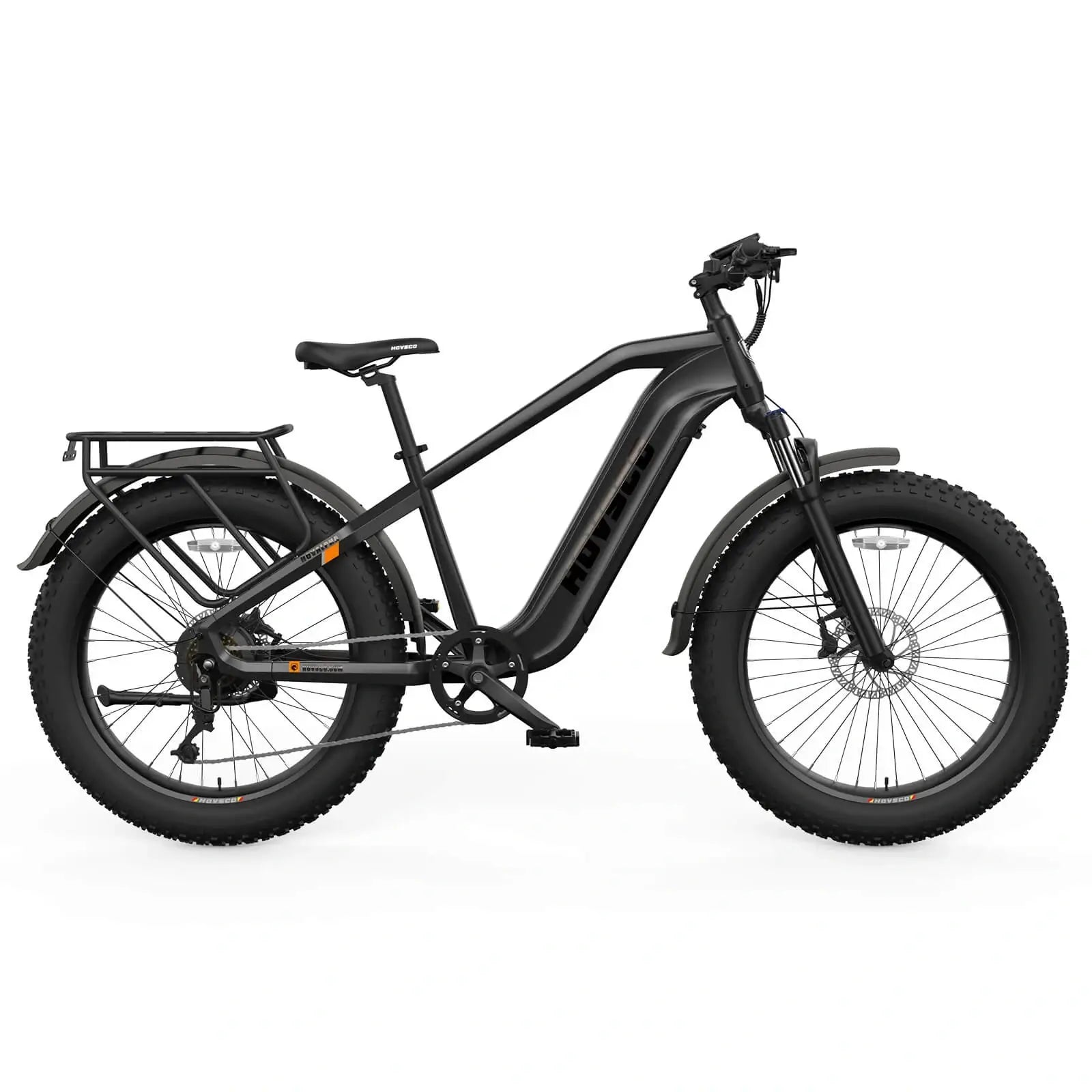
Founded in 2019, HOVSCO has been a rapidly growing e‑bike brand led by a dedicated team of cycling enthusiasts. Our team members, mostly from top universities, have the passion to help more people get healthy and fit through cycling, and we design our e‑bikes to prioritize safety and real‑world performance, especially in family and cargo‑oriented models.
Stopping Power for Cargo: Why Weight Matters
As cargo and child‑hauling e‑bikes gain popularity, manufacturers are explicitly designing braking systems to handle additional mass and potential top‑speed pressure. A fully loaded cargo e‑bike can weigh twice as much as a traditional bicycle, and physics dictates that doubling mass at the same speed requires roughly twice the braking energy to stop within the same distance. Mechanical brakes may eventually lock the wheels, but they demand more lever force and longer pull distance, which increases the risk of skidding, hand cramping, or delayed reaction in an emergency. Hydraulic brakes, with their higher mechanical advantage and smoother response, minimize these risks, especially when carrying children.
Ebike Safety Features for Families and Child Carrying
Modern family‑oriented e‑bikes bundle hydraulic braking with other safety features such as integrated lights, reflective tires, wide rims, and passenger‑approved geometry. These features collectively reduce the likelihood of collisions and improve rider confidence when navigating busy streets, school zones, or intersections. Parents who switch from mechanical‑braked bikes to hydraulic‑equipped family e‑bikes often report feeling more in control during sudden stops, wet‑road conditions, and steep descents, which directly translates into fewer near‑miss incidents and a smoother, safer ride experience for both adult and child passengers.
Real User Cases and Measurable Benefits
Real‑world rider reports for hydraulic‑braked cargo and family e‑bikes show shorter average stopping distances, reduced hand fatigue over long commutes, and greater confidence when stopping from higher speeds. For example, parents who regularly transport kids on e‑bikes note that they can use one finger to modulate a gentle stop, rather than gripping the levers with their entire hand as they might on a mechanical‑braked bike. This kind of modulation not only improves safety but also makes daily rides more comfortable, especially for older riders or those with reduced hand strength.
Why Hydraulic Brakes Are Non‑Negotiable When Carrying Two Children
When carrying the weight of two children, hydraulic brakes are effectively non‑negotiable because they deliver the combination of stopping power, consistency, and modulation that lighter systems simply cannot match. A child‑hauling e‑bike must be able to slow down decisively at traffic lights, respond instantly to crossing pedestrians, and shed speed safely on downhill stretches without overheating or fading. Hydraulic brakes are better suited to these scenarios because they maintain performance even when the system heats up, provide smoother control to avoid skidding, and reduce the physical strain on the rider during repeated stops.
Common Questions About Hydraulic Brakes for Cargo and Family E‑Bikes
Many riders ask whether hydraulic brakes are overkill for a cargo or family e‑bike, and most mechanical‑brake advocates concede that the technology shines when mass and speed increase. Another frequent question is about maintenance; while hydraulic systems used to be seen as more complex, sealed units and easier bleed‑kits have simplified upkeep, and many modern hydraulic setups require less frequent adjustment than stretch‑prone mechanical cables. Riders also ask about wet‑weather performance, and test data consistently show that hydraulic discs maintain their bite and feel better in rain and grime, which is critical for daily commuting and school runs.
Check: essential standards in our Family Ebike Safety Guide
Future Trends in Ebike Braking and Safety
Looking ahead, the trend points toward hydraulic braking becoming standard on all but the most budget‑oriented e‑bikes, especially as regulations tighten around e‑bike safety and as more consumers treat their bikes as serious transportation tools rather than casual toys. Expect to see more integration between hydraulic brakes, electronic systems, and smart e‑bike platforms, such as brake‑by‑wire concepts, ABS‑style interventions, and predictive safety alerts. For families, cargo riders, and anyone who regularly carries extra weight, the combination of hydraulic braking with other advanced safety features will likely define the safest and most reliable e‑bike category in the coming years.
If you’re choosing an e‑bike for daily commuting, child transport, or cargo hauling, placing hydraulic brakes front and center in your selection criteria will significantly improve your safety, control, and peace of mind. When you’re braking for two children, every inch of stopping distance and every ounce of hand effort counts—and hydraulic braking gives you the stopping power and modulation you need to make those critical moments safer.





























![[ New Arrival ] Porto Max Electric Scooter For Commute & Grocery Shopping - HOVSCO](http://www.hovsco.com/cdn/shop/files/PotroMax-3.jpg?v=1706927007&width=1200)
Share:
Ebike with Dog: How to Train Your Dog to Love Riding on the Back of the HovCart
Replace Car with Family Ebike: How a Cargo Ebike Can Replace Your SUV