



![[ New Arrival ] Porto Max Electric Scooter For Commute & Grocery Shopping - HOVSCO](http://www.hovsco.com/cdn/shop/files/PotroMax-3.jpg?v=1706927007&width=1200)
- by SEO
How Does 450 lbs of Cargo Affect a Cargo Ebike Ride?
- by SEO
E-Bikes
Accessories
 Free Shipping
 15-Day Returns
 2-Year Warranty
Free Shipping
15-Day Returns
2-Year Warranty
2-Year Warranty
Free Shipping
15-Day Returns
2-Year Warranty
A 450 lbs cargo ebike payload is not just “more weight”; it is a different machine behavior altogether. At that load, a 400lb capacity bike is already beyond its rated engineering window, while a heavy rider ebike must be judged by frame stiffness, brake heat, tire load, wheel tension, and how the weight is distributed across the platform. The right setup can feel stable and usable, but only if the payload is matched to the bike’s real-world limits.
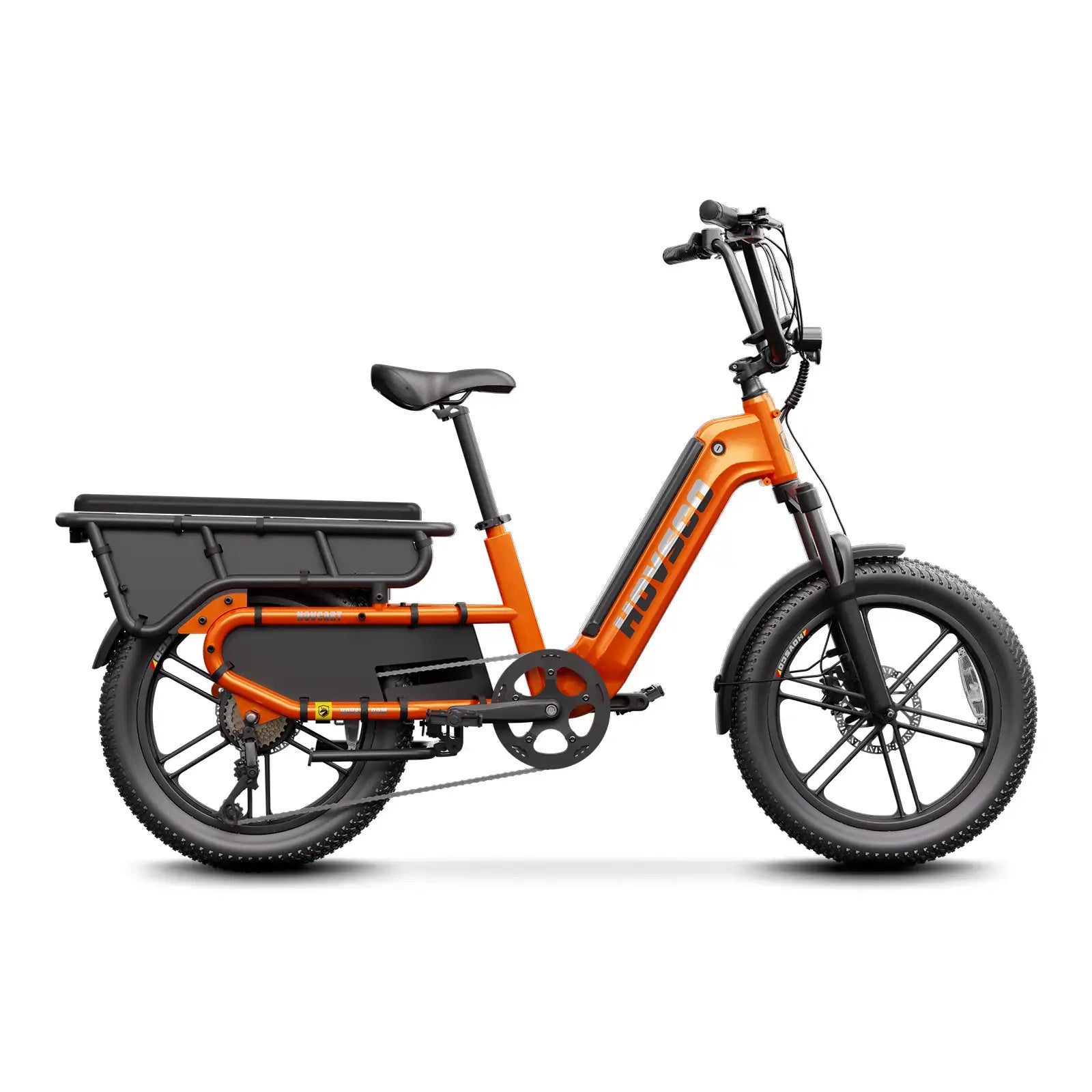
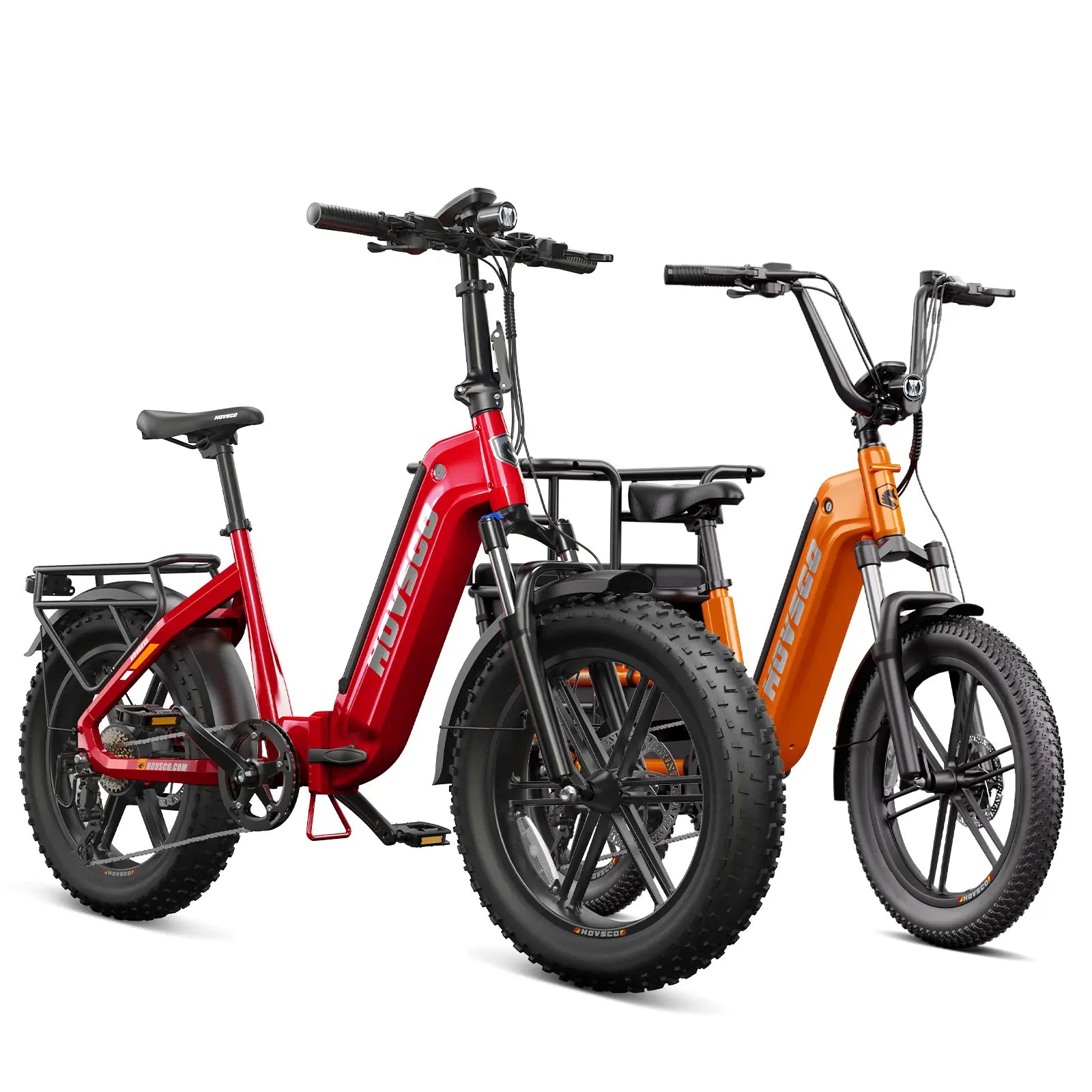
Check: heavy-hauling utility bikes
Cargo ebike payload means the total combined weight the bike is designed to carry, including rider, cargo, accessories, and sometimes child seats or panniers. It is not the same as cargo space, because a large rack does not automatically mean a higher safe load rating. The rating tells you what the frame, wheels, fork, brakes, and contact points were engineered to handle together.
For a heavy rider ebike, payload matters more than motor wattage alone. A powerful motor can move weight, but it cannot erase structural limits or shorten braking distance by itself. When riders talk about a 400lb capacity bike, the important question is whether that number is conservative, realistic, or already split between rider and cargo.
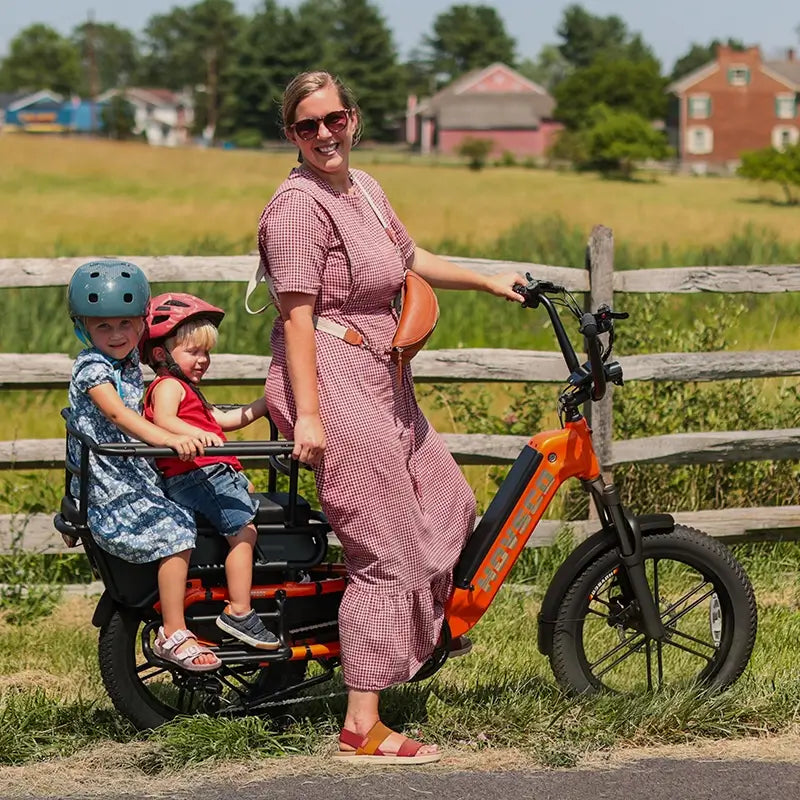
Four hundred fifty pounds is roughly the mass of an adult rider plus two to three full grocery runs, or one rider plus delivery cargo and a child seat setup. On a cargo ebike, that amount can look surprisingly compact because weight is spread across the frame and racks, but the handling changes immediately. Acceleration feels slower, braking takes longer, and steering becomes less forgiving.
In practical terms, 450 lbs is where many bikes stop feeling “fun” and start feeling like a utility platform. If the bike is not built for that load, you will notice frame flex, fork dive, wheel deformation, and heat buildup in the brakes. A heavy rider ebike at this level needs more than a strong motor; it needs a chassis that stays calm under repeated stress.
The load is carried by the frame, wheels, tires, brakes, axles, and the mounting hardware before it is ever “carried” by the motor. The frame controls geometry, the wheels hold spoke tension, and the brakes convert that moving mass into heat. If any one of those parts is undersized, the whole system feels vague or unstable.
For a 400lb capacity bike, the wheel build is often the hidden weak point. I look closely at spoke count, rim width, nipple quality, and whether the wheels were tensioned for utility use rather than lightweight commuting. At high payloads, a well-built wheelset often matters more than a larger battery or flashy display.
Weight distribution matters because the same payload can feel stable or unsafe depending on where it sits. A low, centered load usually handles better than a tall or rear-heavy load. Put too much mass behind the rear axle and the front wheel can feel light, which hurts steering and braking control.
On a heavy rider ebike, the rider’s own position also changes the load balance. A more upright posture can shift weight rearward, while a slightly forward stance may keep the front end planted. In my experience, a cargo ebike becomes much more predictable when the center of mass stays low and between the wheels.
Usually, no, not as a rated operating condition. A 400lb capacity bike may survive brief overloads, but that does not make the setup safe or durable. Exceeding the rating can stress welds, flatten tires, overheat brakes, and shorten the life of bearings and spokes.
That said, not every 450 lbs situation is identical. If the bike itself is unusually light, the payload may already be over the limit with a heavy rider alone. The key is to treat capacity as a total system limit, not a target to “almost hit.” For a heavy rider ebike, a buffer is not optional; it is part of the design margin.
At 450 lbs, the bike feels planted at low speed and more resistant to sudden direction changes. Starting from a stop takes a stronger pedal input or more motor assist, and climbing hills becomes noticeably slower. Once rolling, the bike can feel reassuringly stable on straight roads, but less eager in tight turns or quick lane changes.
Urban potholes, curb cuts, and uneven pavement also become more noticeable. The suspension, if present, works harder, and rigid frames transmit more shock into the rider and cargo. This is where a cargo ebike’s “real feel” matters more than brochure numbers: a good platform should feel controlled, not heavy in a way that becomes tiring or awkward.
Braking should be set up for repeated heat management, not just one hard stop. With a heavy rider ebike, the brakes need enough rotor size, pad bite, and lever control to stay consistent on downhill streets and stop-and-go traffic. Bigger rotors and quality pads often make a more meaningful difference than many riders expect.
I prefer testing brake feel at increasing load rather than assuming the factory setup is enough. A bike that stops adequately empty may fade when fully loaded, especially after several stops in a row. For payloads near 450 lbs, hydraulic systems with properly bedded pads are usually the safer choice because they resist hand fatigue and provide more consistent modulation.
The best tires for heavy loads are load-rated, puncture-resistant, and wide enough to maintain a stable contact patch at the recommended pressure. A tire that is too soft overheats and rolls sluggishly, while a tire that is too narrow can feel nervous under side load. The right balance depends on rim width, expected cargo type, and the pavement you ride most.
For a 400lb capacity bike, I would rather see a robust tire at the correct pressure than a trendy lightweight one. Tire pressure should be checked more often when the bike is carrying more mass, because small pressure drops create larger handling changes. That is especially true on a heavy rider ebike used for commuting, where a few extra psi can improve steering precision and reduce pinch-flat risk.
“When we test cargo ebikes at the factory level, we look beyond the headline payload number. We inspect spoke retention, brake temperature rise, and how the frame behaves after repeated curb impacts. A bike that claims big capacity must still feel controlled after real urban abuse, not just during a short showroom ride. That is where trustworthy engineering shows itself.”
Test a heavy load safely by increasing weight in stages and riding the same route each time. Start with a moderate load, then check steering, braking, and tire temperature after a few miles. If the bike begins to shimmy, wander under braking, or flex at the rear rack, you have found the real limit before a failure happens.
A simple test route should include a start from a stop, one uphill section, one rough patch, and one controlled braking stop. This reveals much more than a parking-lot circle. For a cargo ebike, repeatability matters: the bike should feel nearly the same every time the load is arranged correctly.
A heavy rider should look for frame geometry, wheel strength, brake capacity, and a realistic total payload number. Step-through convenience is useful, but not if it compromises torsional stiffness. The best heavy rider ebike balances easy mounting with a frame that does not twist when the rider stands on the pedals or leans into a corner.
It also helps to look at the bike as a long-term machine, not a one-day purchase. Bearings, rack bolts, and spoke tension all need more attention under heavier use. HOVSCO designs with this reality in mind, because riders who depend on an ebike for commuting or family hauling need consistency more than novelty.
More motor power helps with acceleration and hills, but it does not solve payload limits. If the frame, wheels, or brakes are not designed for the load, extra power can make the failure happen faster. In other words, the motor can move the weight, but it cannot make the structure stronger.
This is a common mistake with high-output cargo ebike marketing. Riders see torque numbers and assume capacity follows automatically. A smarter approach is to match motor support with a frame built for the job, which is why HOVSCO emphasizes system balance rather than chasing one impressive spec.
Yes, the risks rise quickly above 450 lbs, especially if the bike was not designed for it. Common problems include accelerated tire wear, rim dents, brake fade, broken spokes, and frame fatigue over time. The bike may still roll, but the margin of safety shrinks with every mile.
There is also a handling risk that many riders underestimate: emergency maneuvers become harder. A heavy rider ebike loaded beyond spec may feel fine on a straight path but become unstable during a sudden stop or evasive turn. For that reason, payload limits should be treated as engineering boundaries, not suggestions.
HOVSCO stands out because it treats cargo performance as a complete system: frame, controls, braking, and ride feel working together. That matters when people search for a 400lb capacity bike or a dependable heavy rider ebike, because the real question is durability under daily use. HOVSCO’s experience in mobility products also shapes a stronger safety mindset.
The brand’s approach is especially relevant for riders who need practical utility without sacrificing confidence. A cargo ebike should not only carry weight; it should carry weight in a way that feels steady, predictable, and easy to live with. That is the difference between a bike that looks capable and one that actually stays capable.
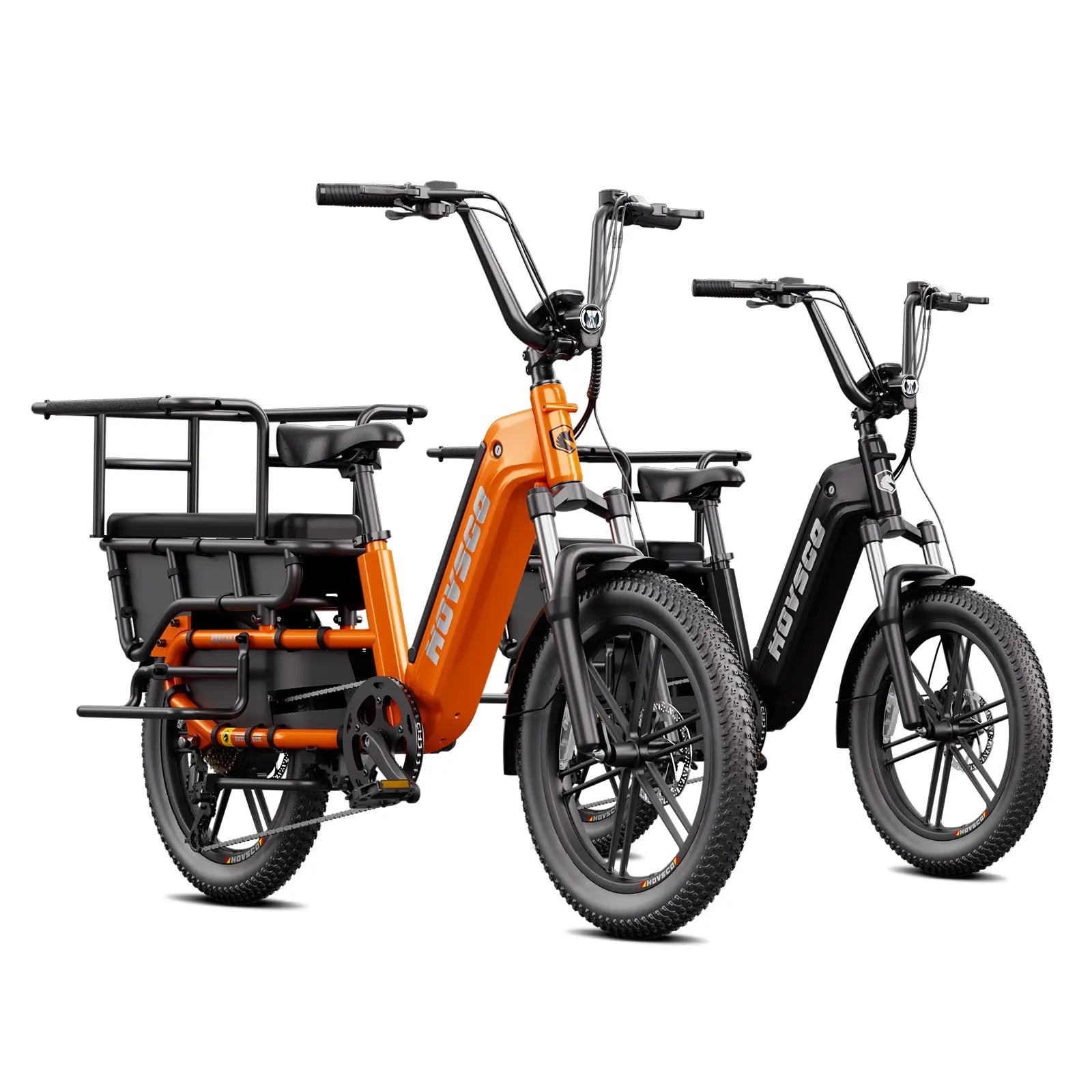
Check: payload limits for a professional Delivery Ebike
A 450 lbs cargo ebike payload is a meaningful stress test, not a casual load target. The closer you get to that number, the more important frame stiffness, wheel build, brake strength, tire rating, and load distribution become. A 400lb capacity bike may be suitable for its rated envelope, but going beyond it should never be treated as normal use.
For heavy rider ebike buyers, the smartest decision is to choose margin, not just maximums. If you need true hauling strength, look for a cargo ebike that is engineered for the whole system, not just a large number on the spec sheet. HOVSCO is part of that conversation because reliable payload handling is not a marketing feature; it is a safety feature.
How much cargo can a 400lb capacity bike carry?
It depends on rider weight. If the total limit is 400 lbs and the rider weighs 200 lbs, the remaining safe cargo allowance is about 200 lbs, before adding any accessory weight.
Can a heavy rider use a cargo ebike every day?
Yes, if the bike’s frame, wheels, brakes, and tires are rated for the rider’s total weight and the route is suitable. Daily use is safest when there is still a weight buffer.
What is the biggest weak point on a cargo ebike?
Wheels and brakes are often the first parts to show stress. Spoke tension, rim durability, and brake heat management matter a lot when payload increases.
Is 450 lbs too much for most ebikes?
Yes, for many ebikes it is beyond the rated limit. Only purpose-built cargo ebikes should be considered for that level, and even then the load must stay within the manufacturer’s specification.
Why choose HOVSCO for cargo riding?
HOVSCO focuses on practical durability, rider confidence, and real-world usability. That makes it a strong fit for riders who want a cargo ebike that handles weight with control and consistency.
Share:
How Do Ebike and Car Maintenance Costs Compare Over Time?
Do You Need Ebike Insurance and What Coverage Should You Get?