
























- by EO S
What Is the Best Electric Bike for Carrying Groceries Efficiently and Sustainably?
- by EO S
E-Bikes
 Free Shipping
 15-Day Returns
 2-Year Warranty
Shop By Models
Shop By Style
Electric bikes designed for hauling groceries combine powerful motors, spacious cargo areas, and practical accessories to replace short car trips. Whether you’re loading up a week’s worth of food or running daily errands, the right e-bike solution offers convenience, comfort, and cost savings without sacrificing stability or ride quality.
Electric cargo bikes and utility e-bikes are rapidly gaining traction in urban and suburban markets as practical alternatives to car trips for errands and grocery shopping. The family cargo bike segment alone is projected to exceed $200 million in grocery-related applications by 2025, with grocery hauling representing roughly 35 %–45 % of all cargo bike trips in usage surveys. Many households average 1–4 weekly trips for groceries with distances typically between 1–6 km per trip, highlighting a strong demand for bikes built to carry medium to heavy loads. Despite this growth, many riders still depend on cars for grocery runs due to perceived cargo limitations and limited awareness of purpose-built e-bike solutions. (Sources: Family Cargo Bikes Market Use Case report)
As cities prioritize low-emission transportation and residents seek to reduce car dependency, trips such as grocery runs remain frequent and short. Americans travel an average of 7–9 miles per trip for shopping errands, often making car use inefficient and costly for these short distances. Many consumers desire a solution that blends the convenience of a car with the sustainability of cycling, especially for grocery hauling.
Regular commuter e-bikes often lack the cargo capacity or integrated storage needed for grocery bags, coolers, and bulk items. Riders attempting to adapt commuter bikes with baskets or panniers face balance issues and limited load capability, especially on longer errands or when carrying multiple bags.
Though utility and cargo e-bikes offer clear advantages, some riders hesitate due to concerns about size, parking, and maneuverability. Without proper guidance on selecting the right electric bike for groceries, potential users may miss out on solutions that could significantly reduce their reliance on car trips.
| Method | Limitations |
|---|---|
| Driving a Car | Expensive fuel and parking, traffic congestion, high environmental cost |
| Standard Bike with Panniers | Limited cargo capacity, balance and handling issues |
| Backpack/Single Basket | Can handle only light loads, not suitable for large grocery runs |
| Bike Trailer | Improves capacity but adds drag and requires extra storage |
Traditional approaches often fall short in balancing cargo capacity, ease of use, and sustainable city riding. A purpose-built electric cargo bike addresses these gaps with engineered load support and motor assistance.
The ideal solution is an electric cargo or utility e-bike designed with integrated cargo space, powerful assist, and load-optimized geometry. These bikes provide:
High-capacity cargo space with racks, baskets, or platforms
Motor power and torque sufficient to handle heavy loads and hills
**Battery range suited for multiple stops and loaded riding
Stable frame design that maintains balance even when fully loaded
Accessory support like panniers, bungee nets, and insulated bags
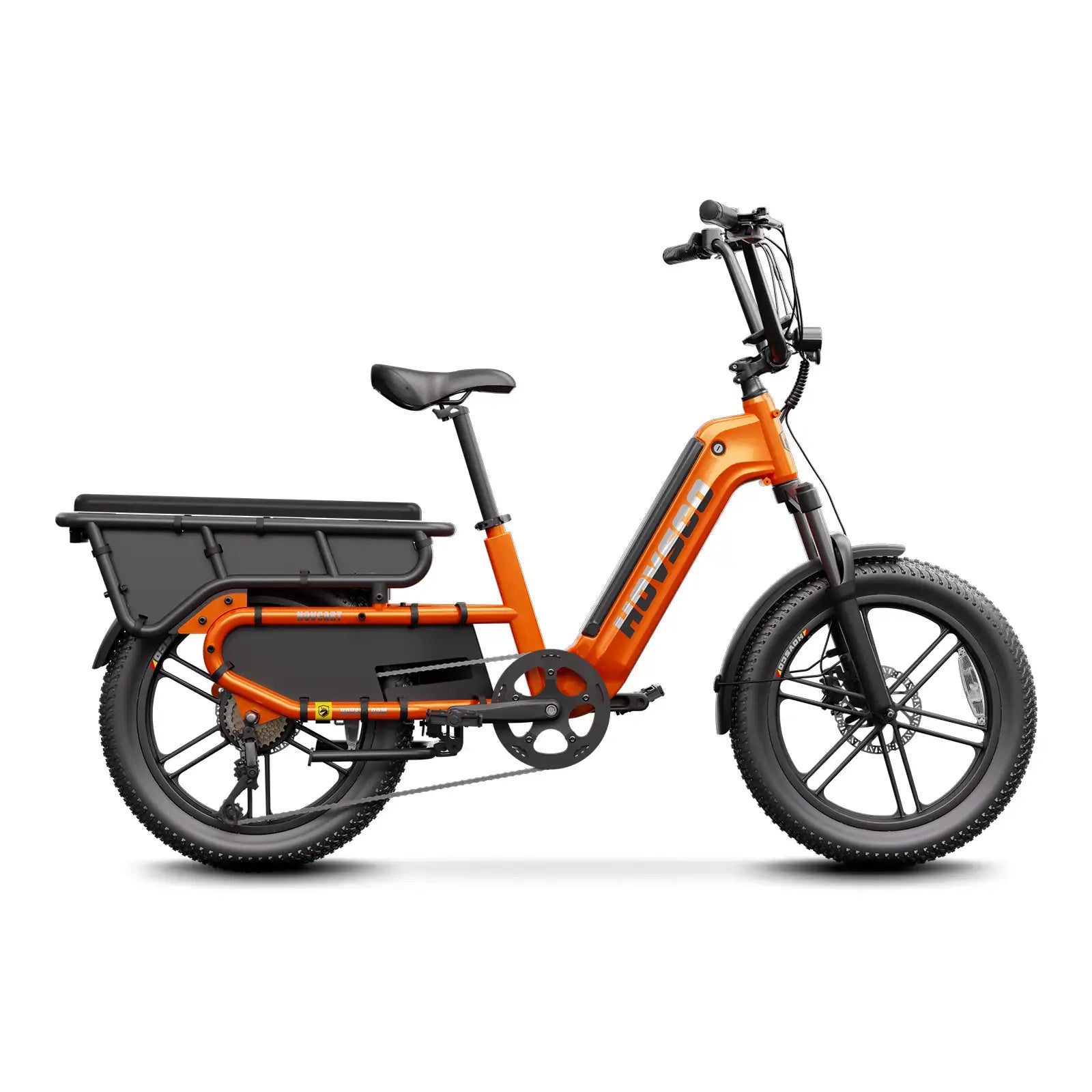
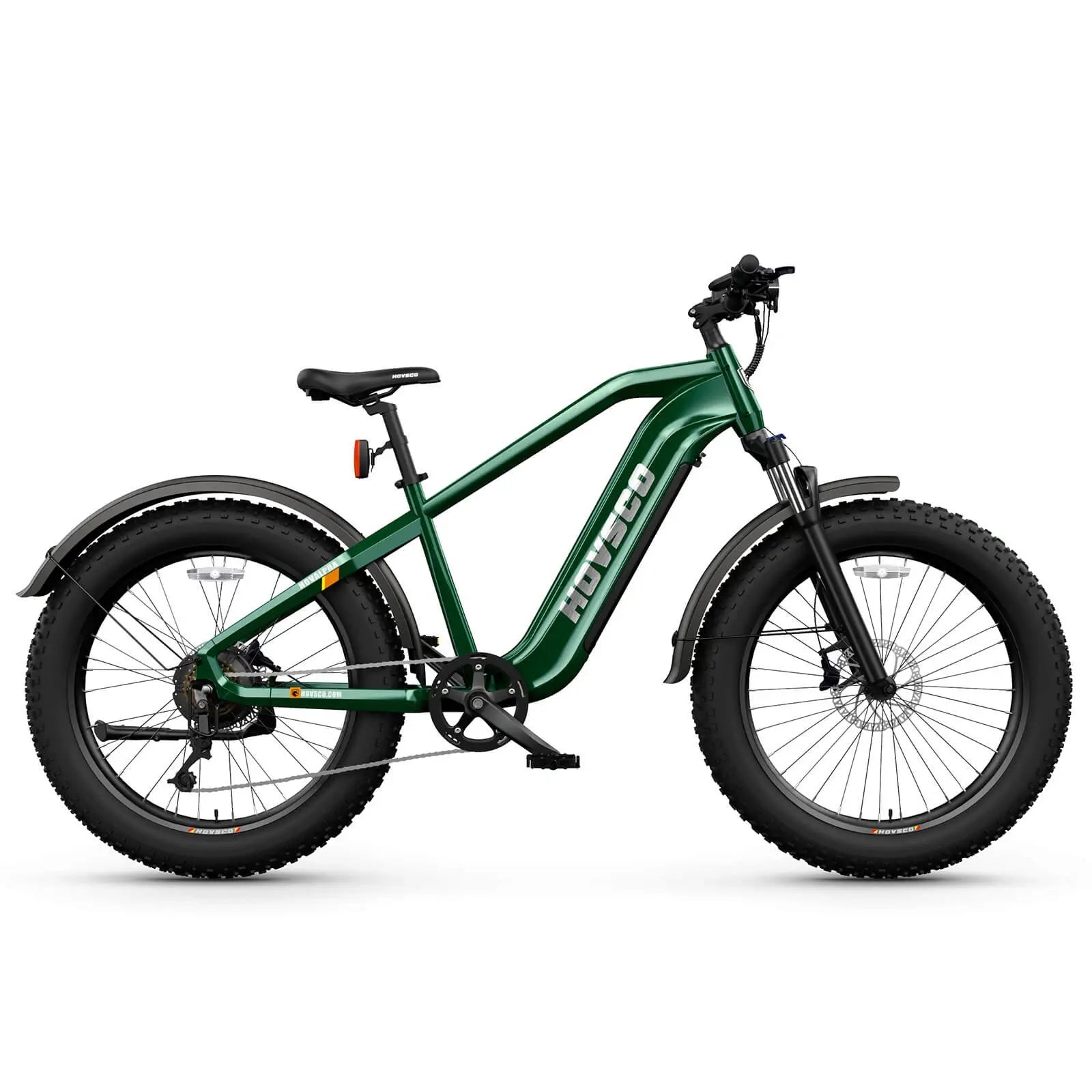
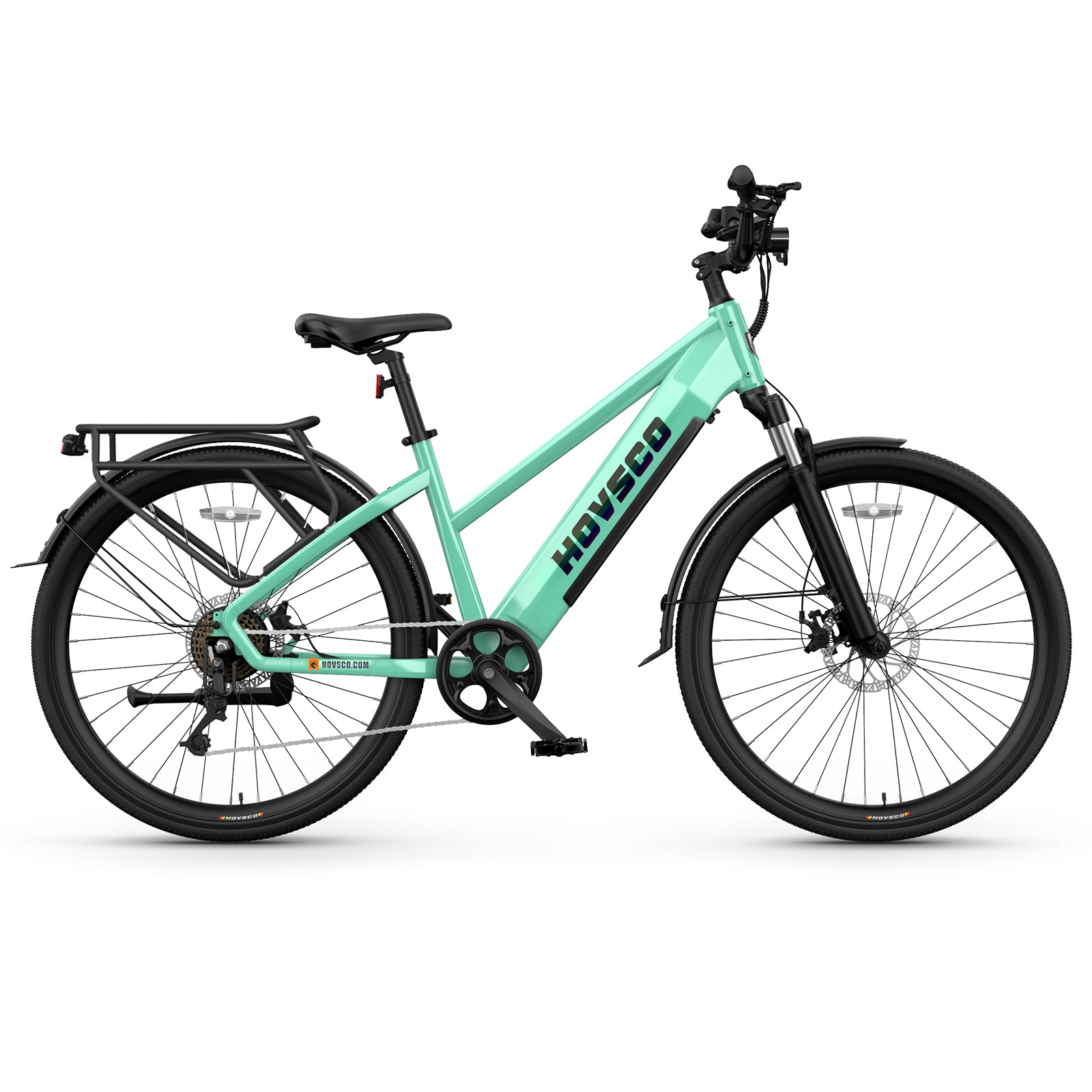
Brands like HOVSCO bring this concept into real-world use with utility-oriented e-bikes that support grocery hauling, errands, and neighborhood trips. HOVSCO’s cargo and utility e-bike designs integrate strong frames, thoughtful storage solutions, and reliable electric assist to transform how riders approach everyday errands. For shoppers accustomed to cars, switching to a cargo e-bike like those from HOVSCO delivers a blend of power and practicality. HOVSCO’s commitment to quality and performance ensures riders have a dependable platform for groceries and other loads.
| Feature | Car | Standard E-Bike | Electric Cargo E-Bike |
|---|---|---|---|
| Fuel/Operating Cost | High | Low | Very Low |
| Grocery Load Capacity | Very High | Low | High |
| Parking/Storage | High Hassle | Easy | Easy |
| Emissions | High | Low | Lowest |
| Short Trip Efficiency | Low | Moderate | High |
| Maneuverability in City | Moderate | High | High |
Electric cargo bikes are particularly suited to errands and groceries because they balance load capacity with everyday usability. They can carry stakes, bags, and even passengers in ways that regular commuter e-bikes cannot match.
Select a Bike with Cargo Capacity: Choose a model with integrated racks or cargo platforms.
Assess Payload Needs: Consider average grocery load and storage options like baskets and panniers.
Plan Your Route: Favor bike lanes and low-traffic roads for safety.
Load Strategically: Distribute weight evenly between front and rear cargo areas.
Check Tire Pressure and Brakes: Before each ride, confirm proper tire inflation and brake function.
Use Motor Assist Wisely: Engage pedal assist to maintain balance and comfort under load.
Secure Cargo: Use straps, nets, or bags to prevent shifting during transit.
Park Securely: Use quality locks to protect your e-bike during stops.
Problem: Multiple large bags make car use feel inefficient for neighborhood store runs.
Traditional Method: Car trips or overloaded panniers on commuter bikes.
After Using a Cargo E-Bike: Full grocery load fits in integrated cargo space, reducing trips.
Key Benefit: Lower fuel costs, no parking struggle, greener travel.
Problem: Short distances with heavy shopping items.
Traditional Method: Car or taxi for only a few blocks.
After Using a Cargo E-Bike: Grocery bags fit easily; no need for car.
Key Benefit: Saves time and cost, easier city navigation.
Problem: Multiple stops with fresh produce and heavy goods.
Traditional Method: Backpack plus carrier.
After Using a Cargo E-Bike: Secure load with minimal physical strain.
Key Benefit: Comfortable ride and better load management.
Problem: No car available, need to transport essentials.
Traditional Method: Backpack or bus trip.
After Using an Electric Cargo Bike: Large basket and racks carry food and supplies.
Key Benefit: Independence, no transit hanging, faster commutes.
Electric cargo bikes are increasingly seen as practical replacements for car trips in dense urban environments, supported by expanding bike infrastructure and eco-mobility initiatives. With cargo bike usage growing and the grocery segment alone accounting for a significant share of trips, riders can directly reduce transport emissions, cut costs, and support healthier lifestyles. Choosing a dependable cargo e-bike, including utility models from HOVSCO that blend capacity with reliable performance, positions riders at the forefront of sustainable, efficient grocery transport.
How much grocery weight can electric cargo bikes typically carry?
Modern cargo e-bikes often support 200–450 lbs of cargo, depending on frame and rack design.
What range should I expect for grocery runs?
Range varies with load and assist level, but many cargo bikes offer 30–60+ miles per charge under moderate load.
Can I attach baskets or bags to any e-bike for groceries?
Standard e-bikes can use accessories, but cargo bikes are engineered for load support and stable handling.
Are electric cargo bikes safe in traffic?
Yes — when used in designated bike lanes and with proper safety gear, they handle well even loaded.
Does a cargo e-bike cost more than a standard e-bike?
Generally yes, due to stronger frames and larger batteries, but savings from reduced car use often offset the difference.
Can I use my cargo e-bike year-round for groceries?
With proper tires and maintenance, cargo e-bikes are suitable for all seasons in many climates.
How do I secure my cargo e-bike during grocery stops?
Use high-quality locks and park in visible, well-lit areas to deter theft.
https://www.360researchreports.com/market-reports/family-cargo-bikes-market-208298
https://urbanfreightlab.com/wp-content/uploads/2023/10/Biking-the-Goods-Urban-Freight-Lab-White-Paper.pdf
https://electricbikeexplorer.com/best-cargo-ebikes-grocery-runs-2025/
Share:
What Are the Best Electric Bikes With Storage for Everyday Use and Cargo Carrying?
Which Is Better for Your Commute: Moped Style E-Bike or Electric Scooter?