



![[ New Arrival ] Porto Max Electric Scooter For Commute & Grocery Shopping - HOVSCO](http://www.hovsco.com/cdn/shop/files/PotroMax-3.jpg?v=1706927007&width=1200)
- by SEO
Future of Urban Commuting: Why E-Bikes Like HOVSCO Lead the Next Decade (June 2026)
- by SEO
E-Bikes
Accessories
 Free Shipping
 15-Day Returns
 2-Year Warranty
Free Shipping
15-Day Returns
2-Year Warranty
2-Year Warranty
Free Shipping
15-Day Returns
2-Year Warranty
Future of urban commuting is being reshaped by electric bikes and micromobility, with high-performance commuter e-bikes like HOVSCO’s city, cargo and folding models emerging as one of the most practical solutions for daily city travel.
Future of urban commuting is moving toward e-bikes and micromobility; discover how HOVSCO’s commuter, cargo and folding e-bikes make city travel faster, cheaper and greener.
The global electric bike market was valued around 38–39 billion USD in 2024 and is projected to more than double by early 2030s, driven largely by urban commuters seeking low-emission transport. Shared micromobility systems in the U.S. and Canada recorded about 157 million trips in 2023, the highest on record and a double‑digit increase versus 2022, showing a clear shift away from private cars for city trips. At the same time, brands like HOVSCO are refining commuter‑focused e-bikes—such as their HovRanger city series and HovCity step‑thru cruisers—that combine powerful motors, long range and practical payloads to directly address the realities of daily urban travel.
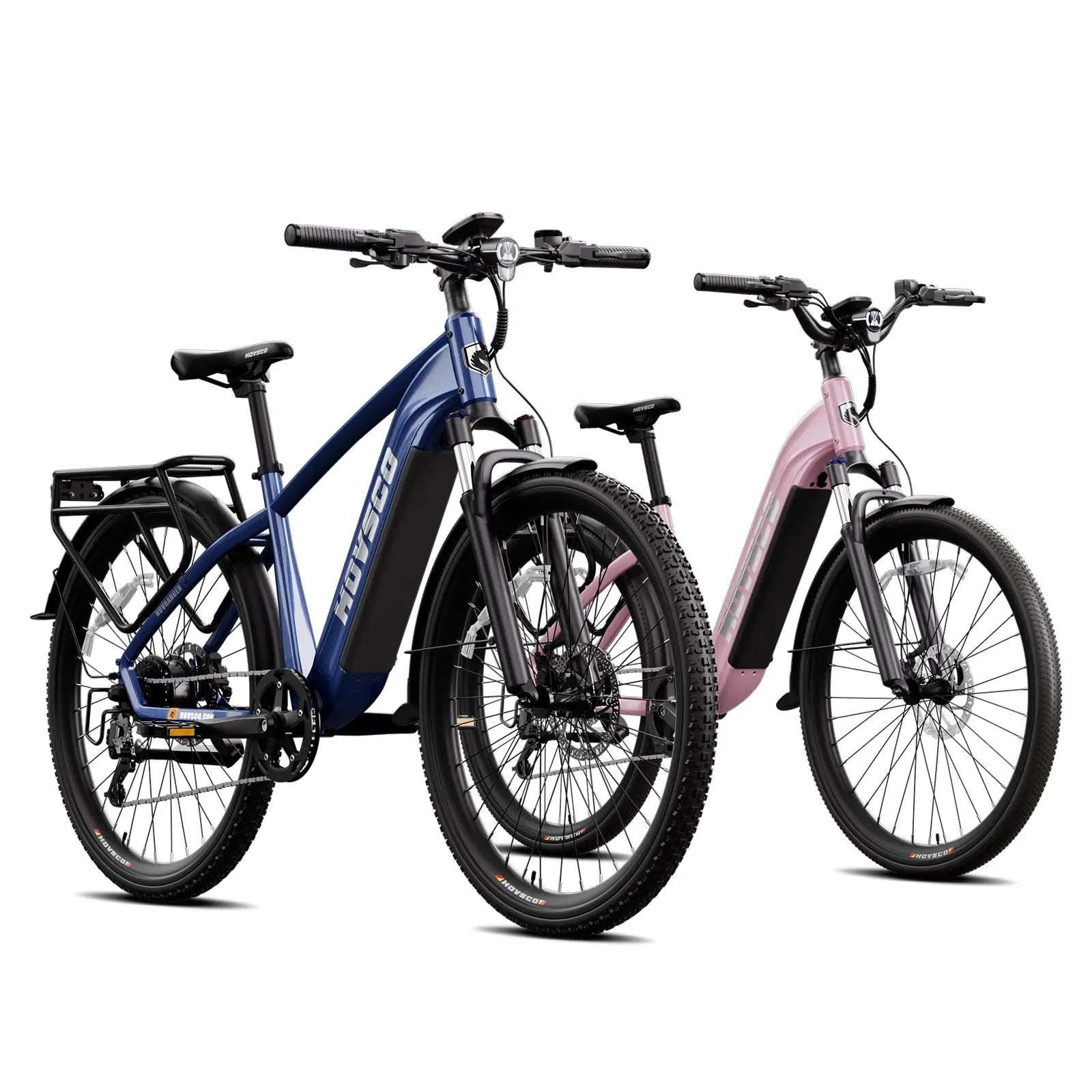
As cities search for greener and more efficient transport, specialized e-bikes like the HOVSCO HovRanger City E-Bike, HovCity step-thru cruiser and HovCart cargo family bike are designed specifically around everyday commuting and family life. These models pair peak motor outputs up to about 970–1300 W, ranges of roughly 40–80 miles per charge and payload capacities up to 300–450 lbs, giving riders enough power and capacity to replace a significant share of car trips without sacrificing comfort or practicality.
The future of urban commuting describes how city residents will travel to work, school and daily activities as technology, infrastructure and climate policy push a transition from car‑centric systems toward cleaner, more space‑efficient solutions like electric bikes and shared micromobility. In this future, lightweight vehicles such as e-bikes and e-scooters handle most trips under 10–15 miles, supported by digital route planning, charging infrastructure and bike‑friendly street design to cut congestion, emissions and travel time.
Many commuters still rely on private cars or crowded transit, but this model is increasingly strained by congestion, cost and stress. In many large cities, drivers lose dozens of hours per year in traffic, while rising fuel prices and parking fees make routine car commutes significantly more expensive than they were only a few years ago. At the same time, buses and trains can be unreliable, with delays and missed connections adding 20–30 minutes or more to daily journeys and leaving riders with little control over their schedules.
Physical fatigue is another barrier: traditional bikes on hilly or sprawling routes can leave riders exhausted, especially when carrying laptops, groceries or children. Weather and road conditions compound these issues—potholes, stop‑start traffic and exposure to rain or heat all make commuting by either car or regular bike less appealing, reinforcing a sense that urban mobility is something to be endured rather than enjoyed. For many city dwellers, these pain points add up to a daily trade‑off between time, comfort, cost and health that feels increasingly unsustainable.
In 2023, shared micromobility systems in the U.S. and Canada logged around 157 million trips, a record level that reflects a 16–20% jump in ridership over the previous year.
A future‑oriented commuting plan often mixes different modes, so it helps to see clearly where e-bikes like HOVSCO’s stand relative to traditional bikes and cars.
Electric assistance and speed
HOVSCO urban e-bikes use hub motors rated up to around 730–970 W on city models, with pedal assist modes that can support speeds up to around 28 mph where regulations allow. This assistance flattens hills, shortens travel times and makes longer daily ranges feel manageable for a wider range of riders.
Battery range and charging convenience
Removable lithium‑ion batteries in HOVSCO commuter and cargo bikes typically deliver around 40–60 miles of real‑world range, depending on load, terrain and assist level. Riders can charge batteries overnight indoors and quickly swap them in or out, making integration into daily routines straightforward without complex infrastructure.
Comfort, safety and control
Step‑thru frames, suspension forks, hydraulic disc brakes and integrated LED lighting, available on many HOVSCO models, help commuters stay comfortable and visible across mixed urban conditions. Torque or cadence sensors modulate assistance smoothly, enhancing confidence in dense traffic or on unfamiliar routes.
“I replaced a 16‑mile rush‑hour car commute with an e-bike route using bike lanes and cut my travel time from around 50 minutes to under 30 while reducing monthly fuel costs.”
“Using a cargo e-bike, I consolidate grocery runs and school drop‑offs into a single 12‑mile loop, saving roughly 40 minutes daily compared to public transit and walking transfers.”
“Night shift rides of around 20 miles feel safer with full lighting and controlled acceleration, reducing dependence on expensive late‑night taxis.”
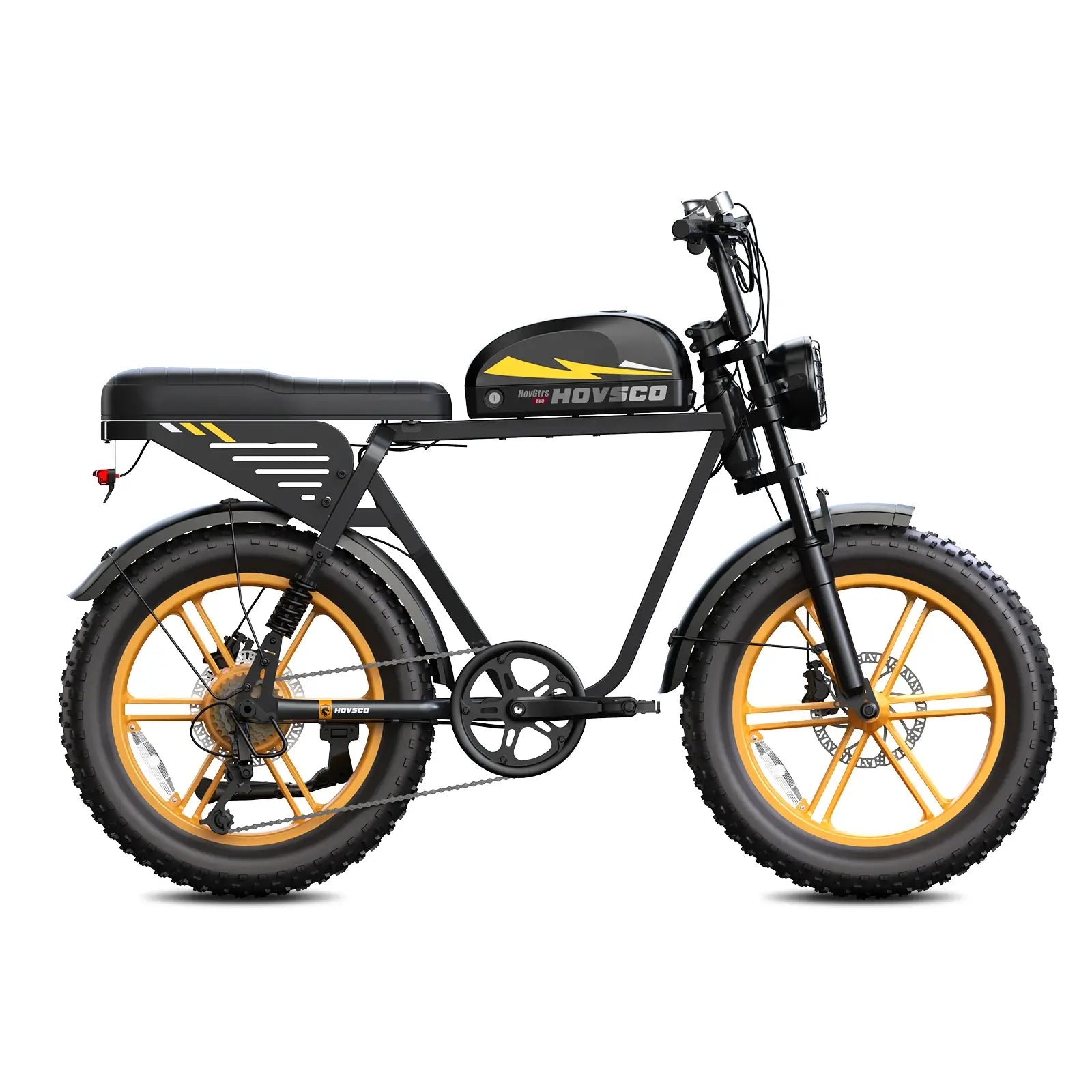
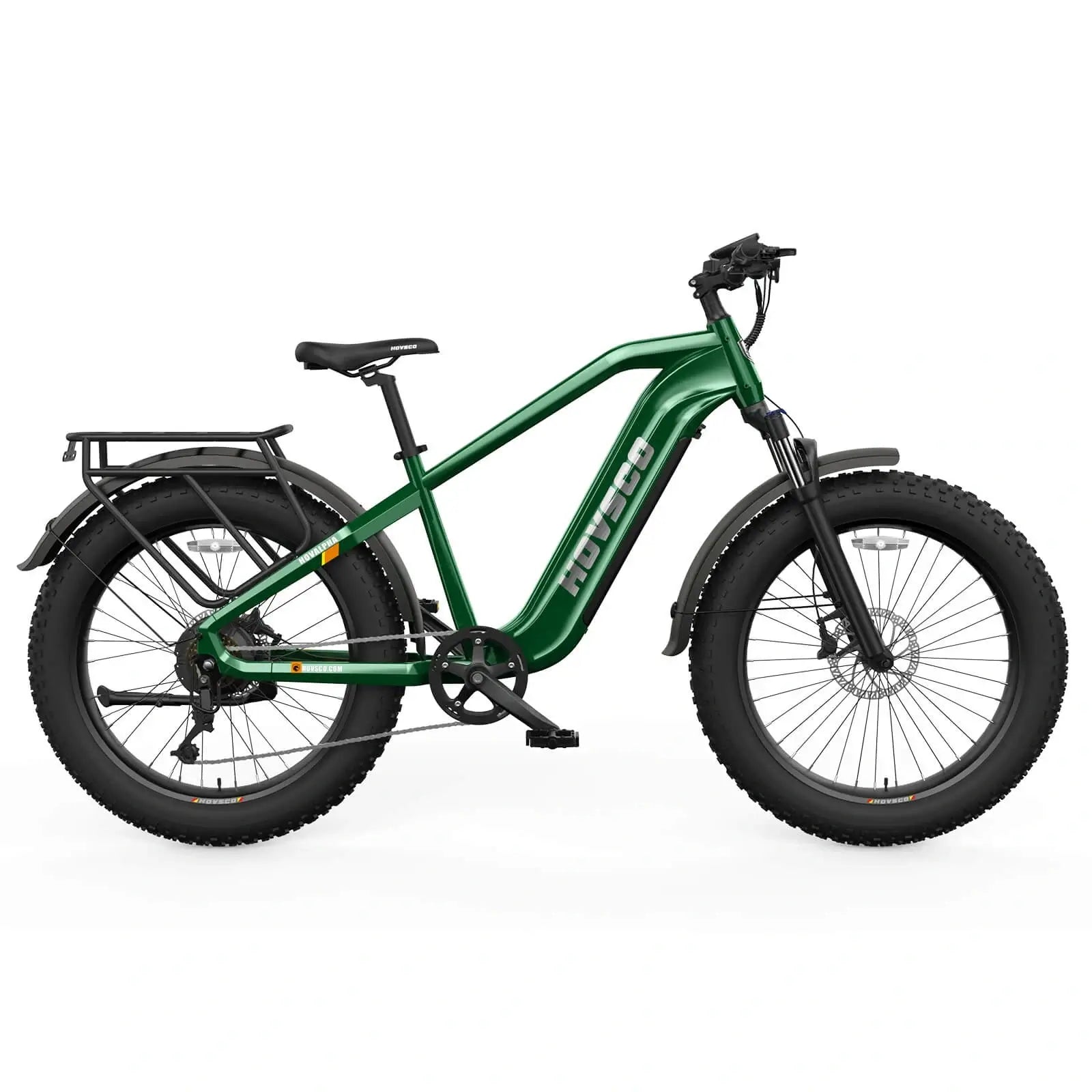
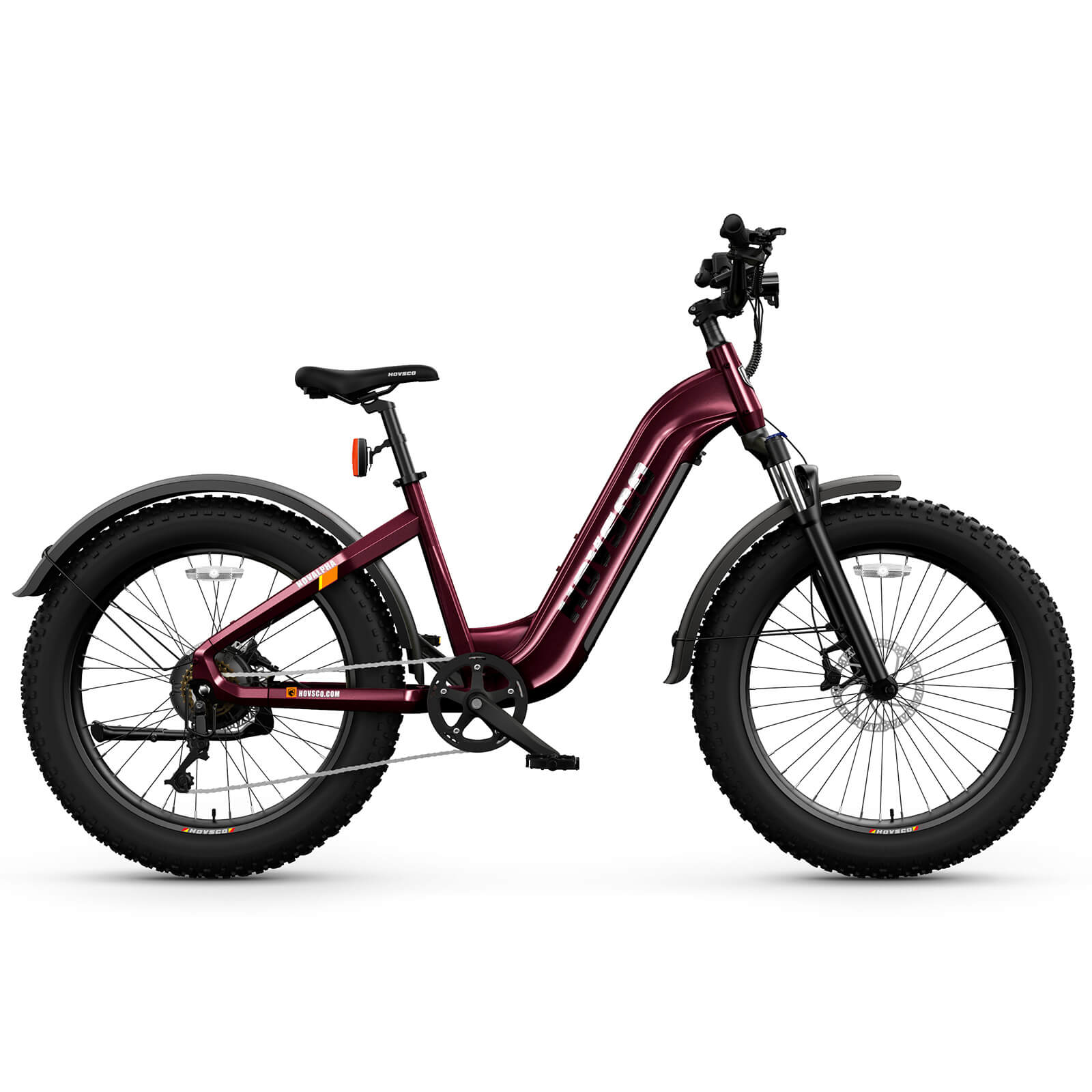
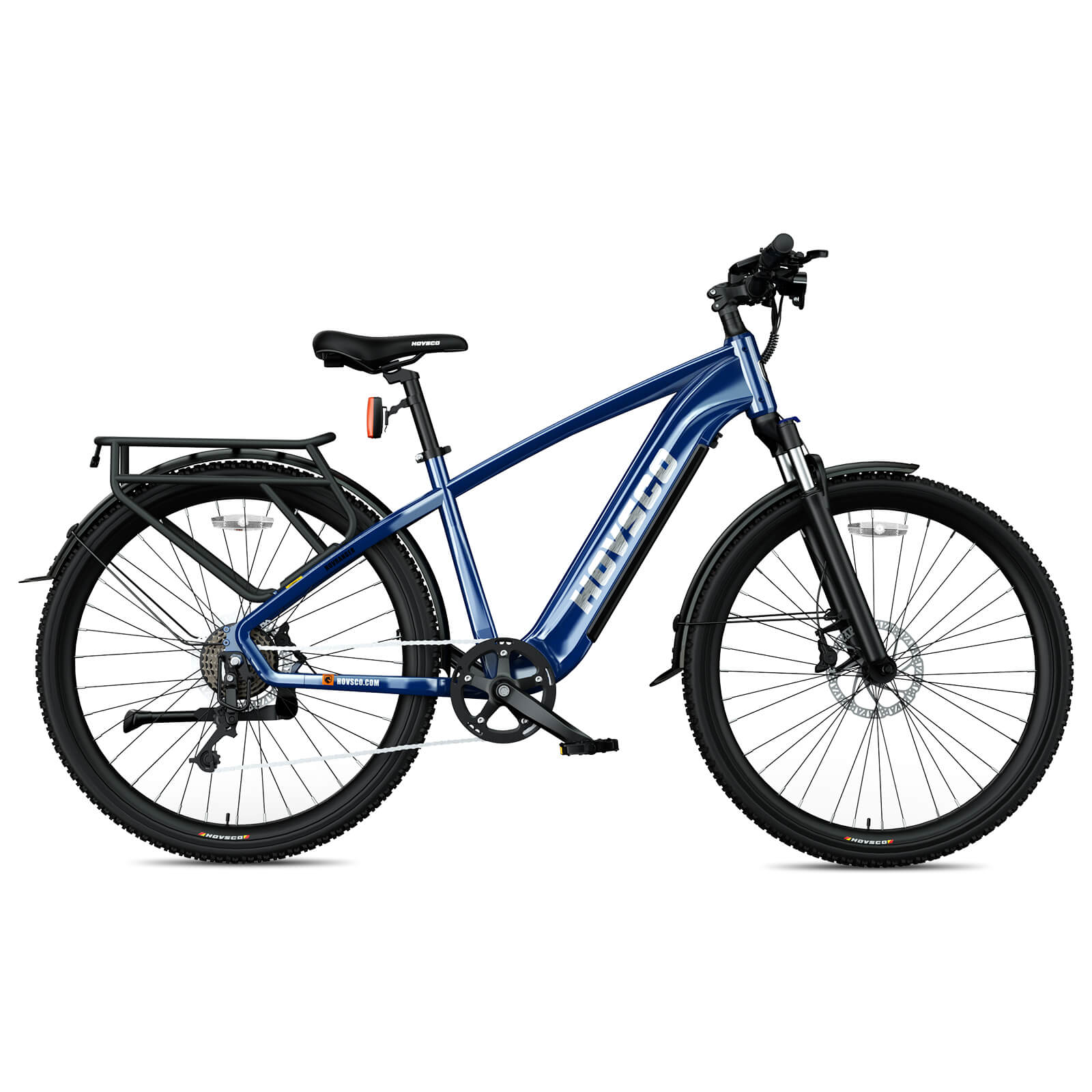
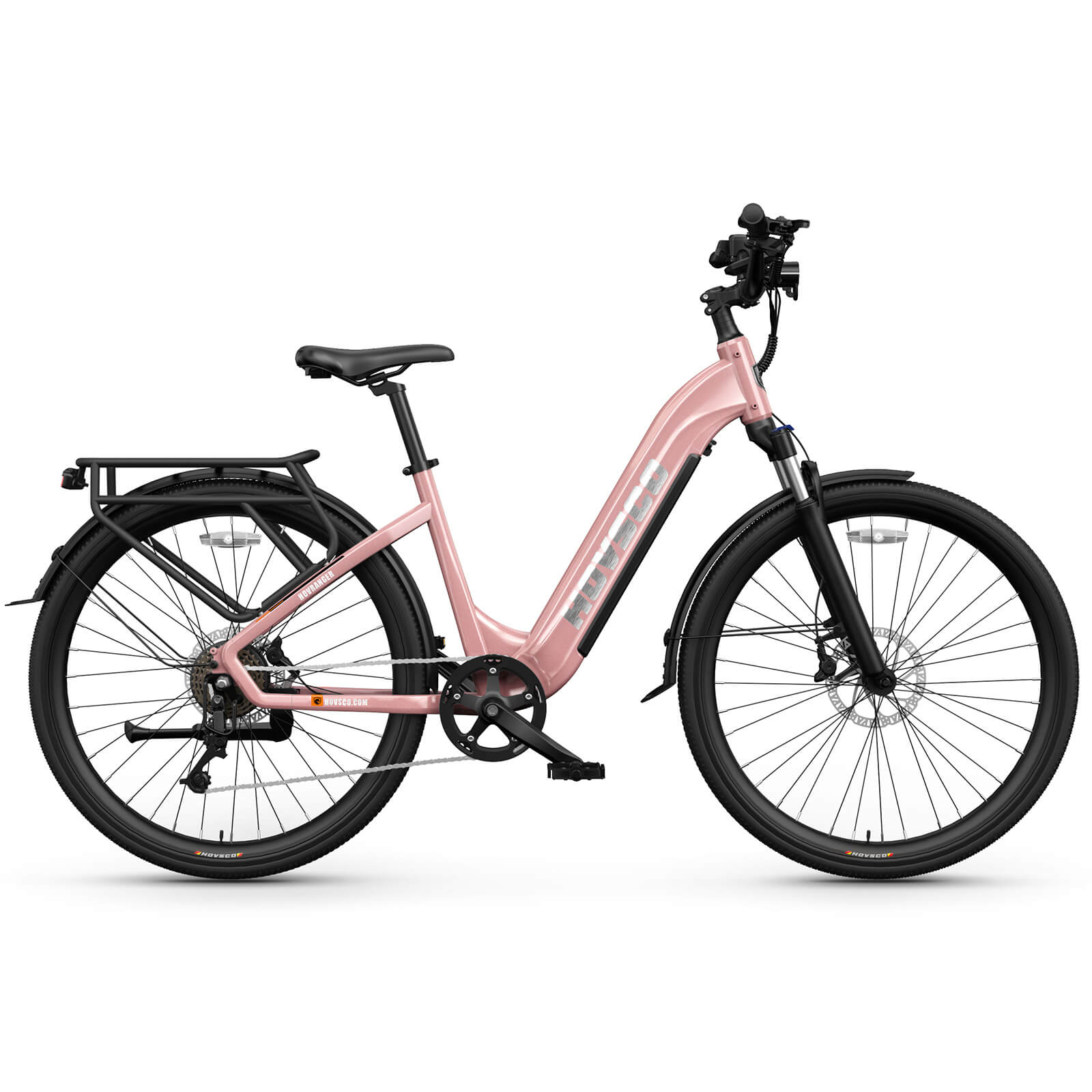
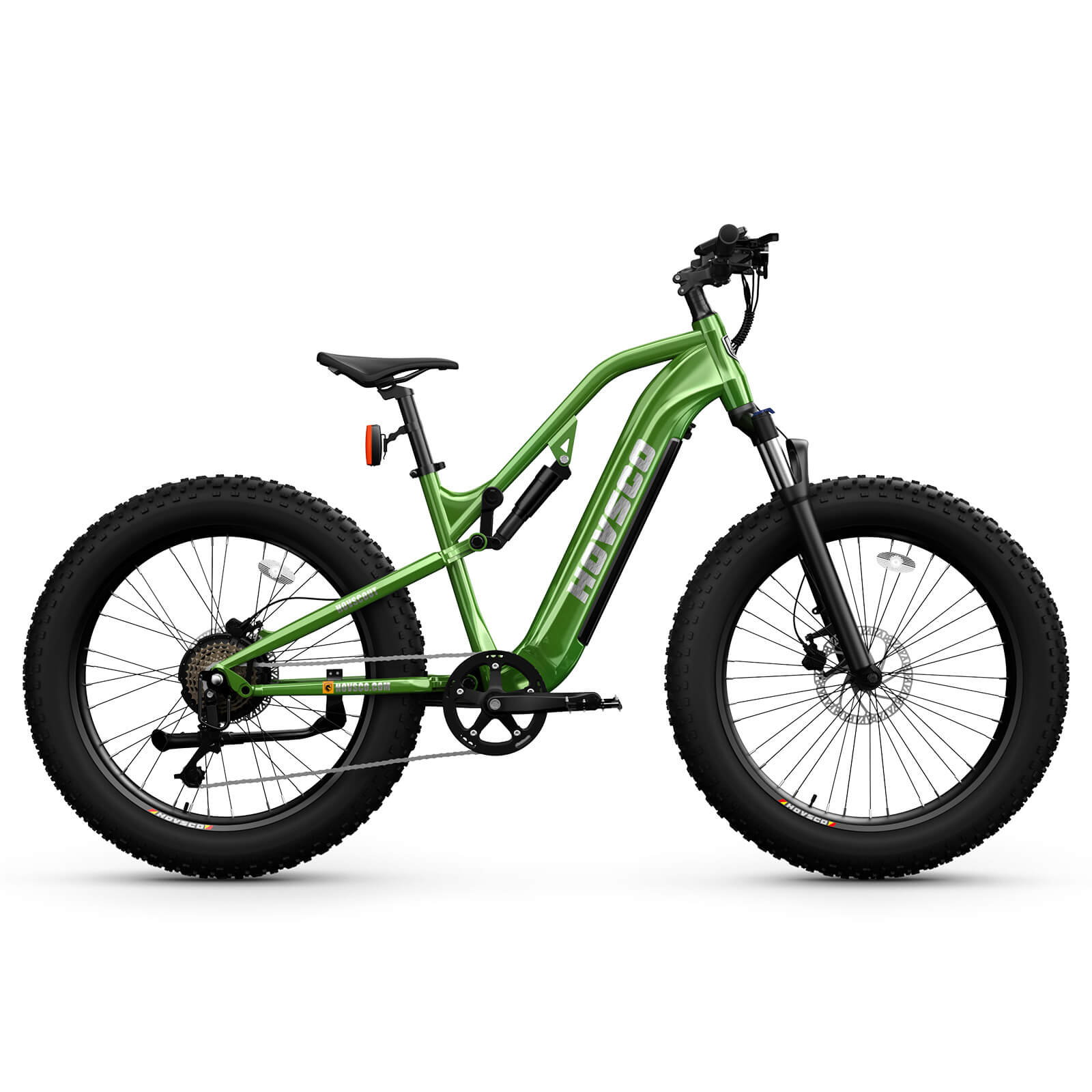
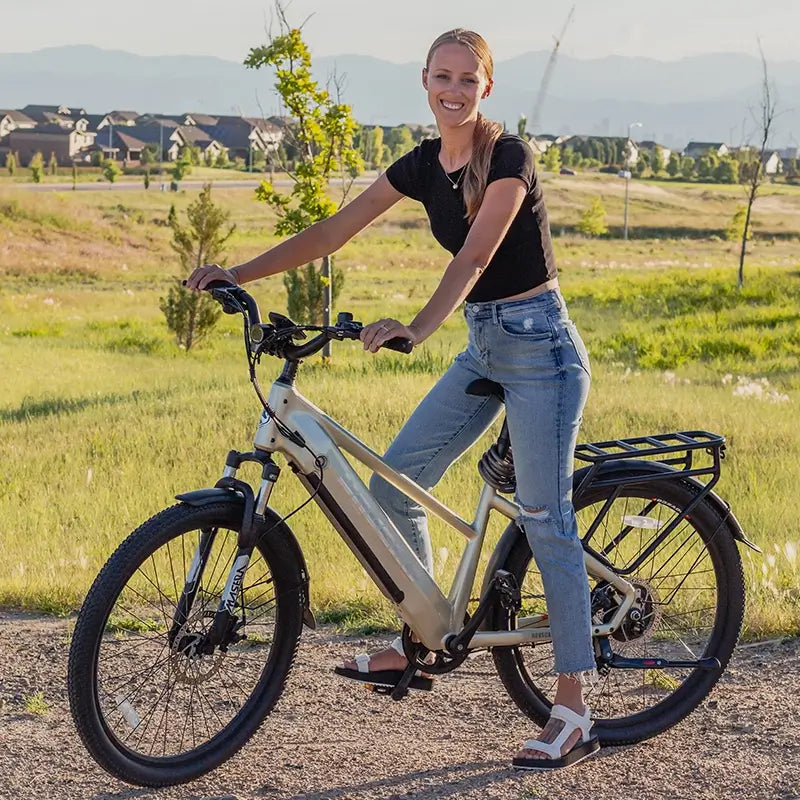
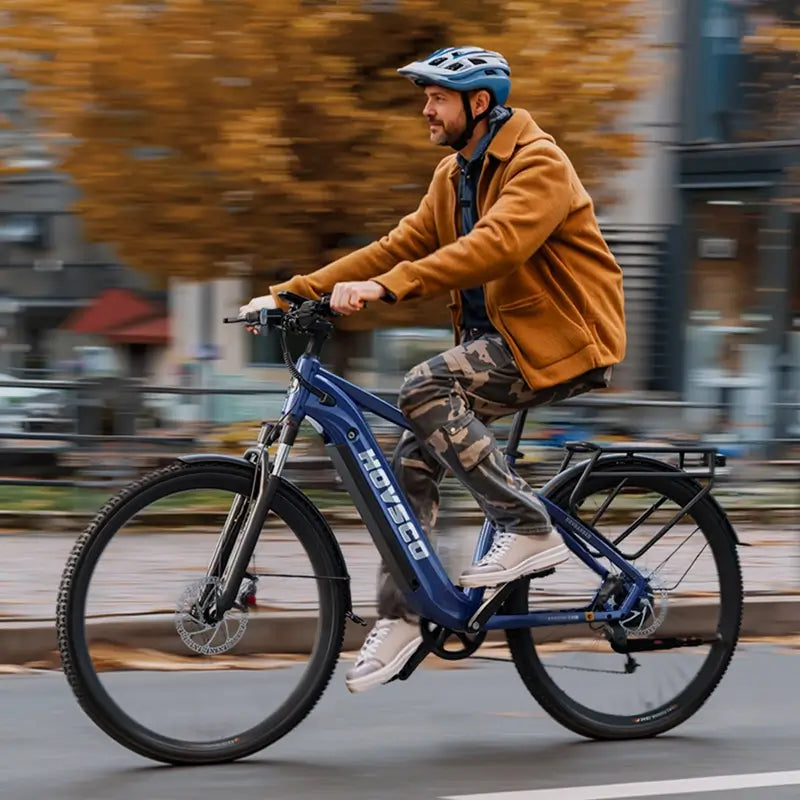
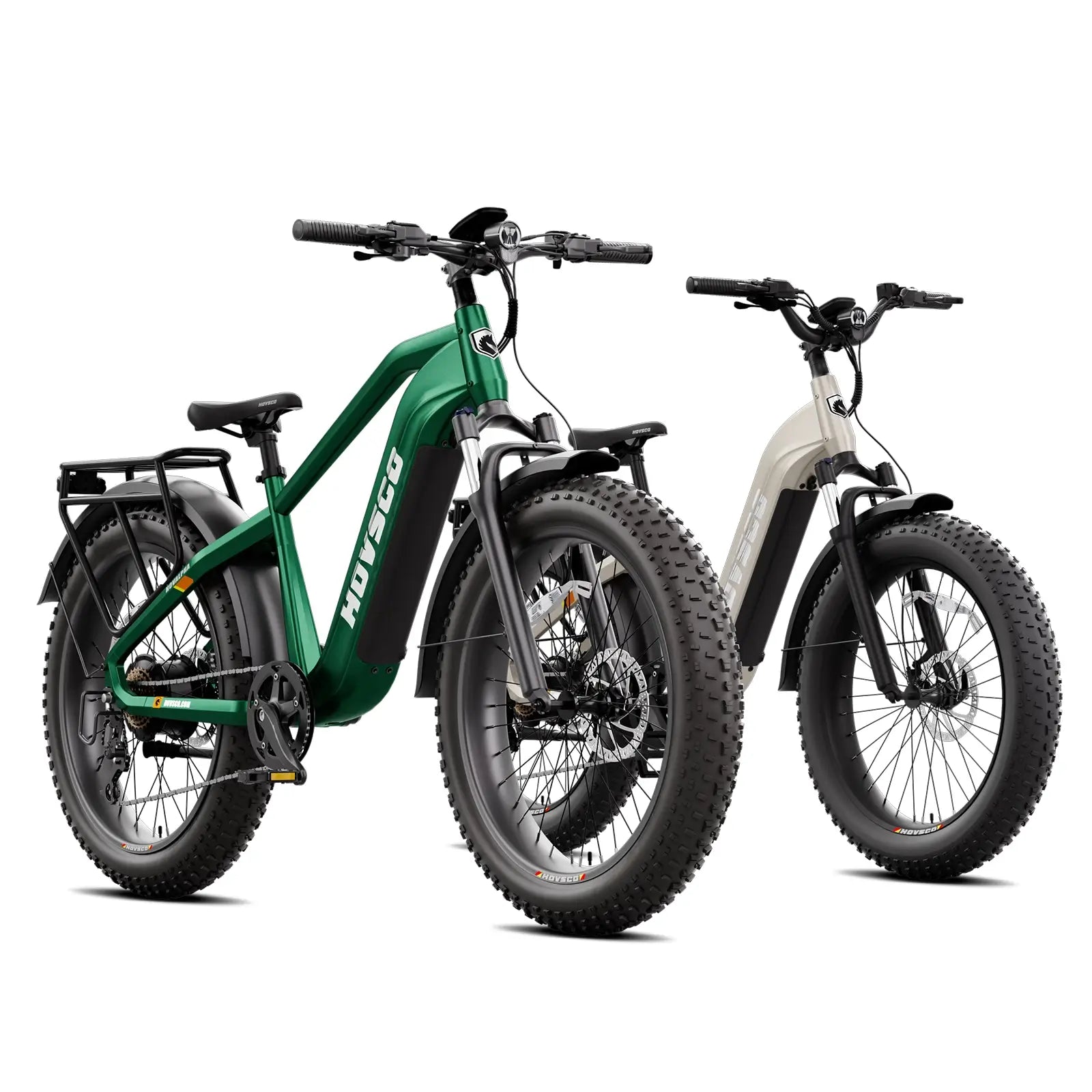
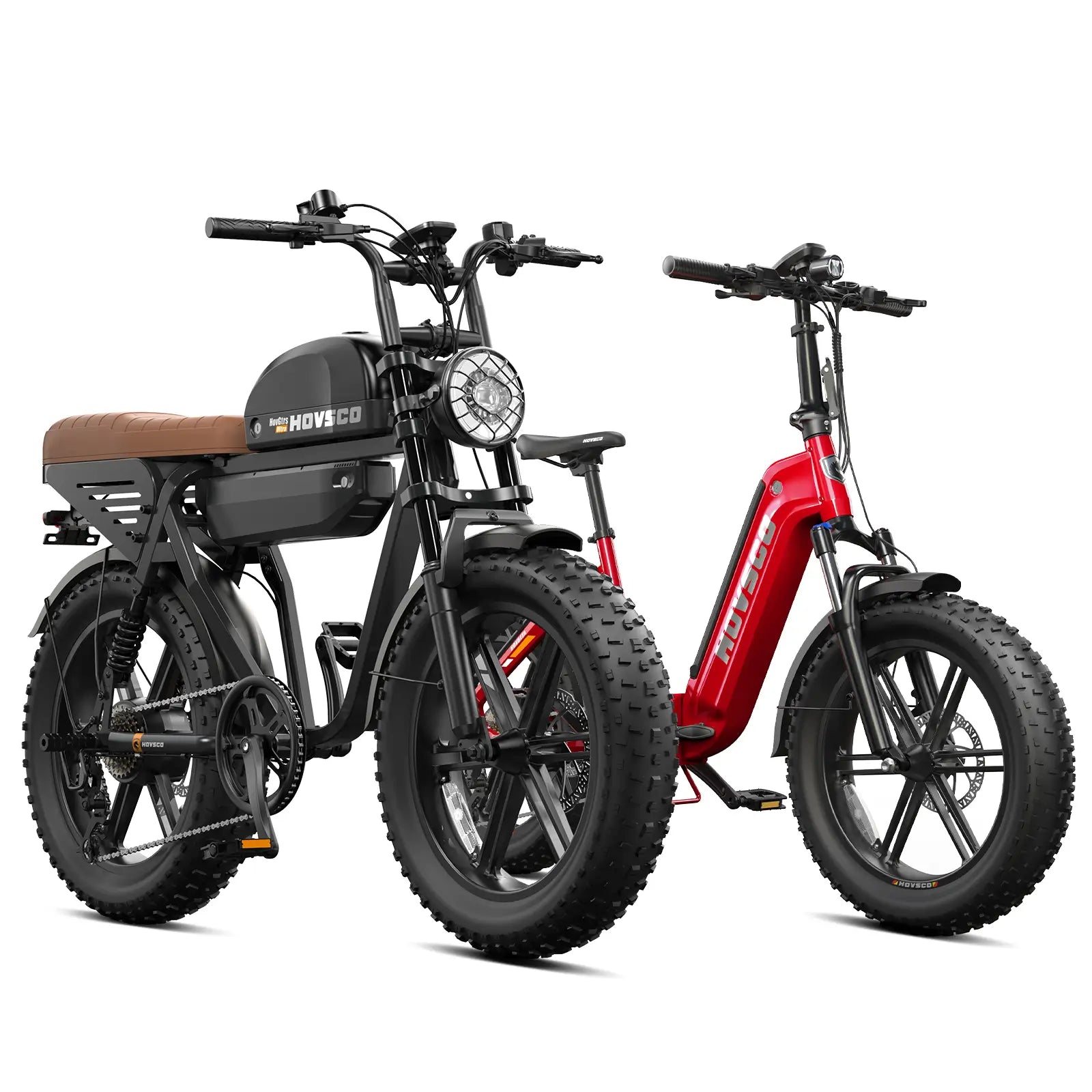
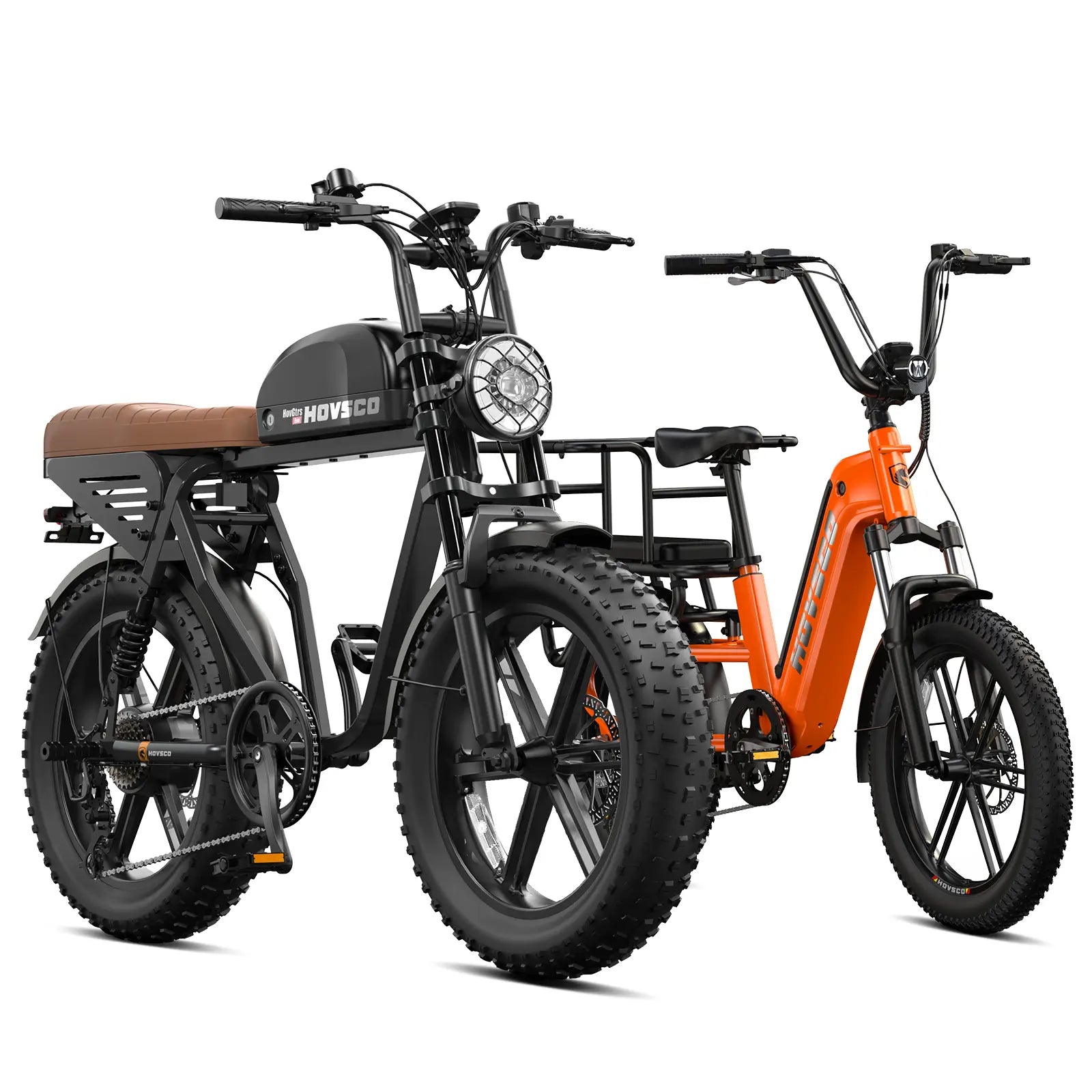
Future commuting will not be one‑size‑fits‑all, which is why HOVSCO’s line spans city, cargo, folding and moped‑style formats. For riders focused on classic city commutes with paved roads and moderate cargo, the HovRanger City E-Bike and HovCity step‑thru cruiser blend upright posture, 27.5‑inch wheels and integrated lights to support daily rides up to around 60 miles.
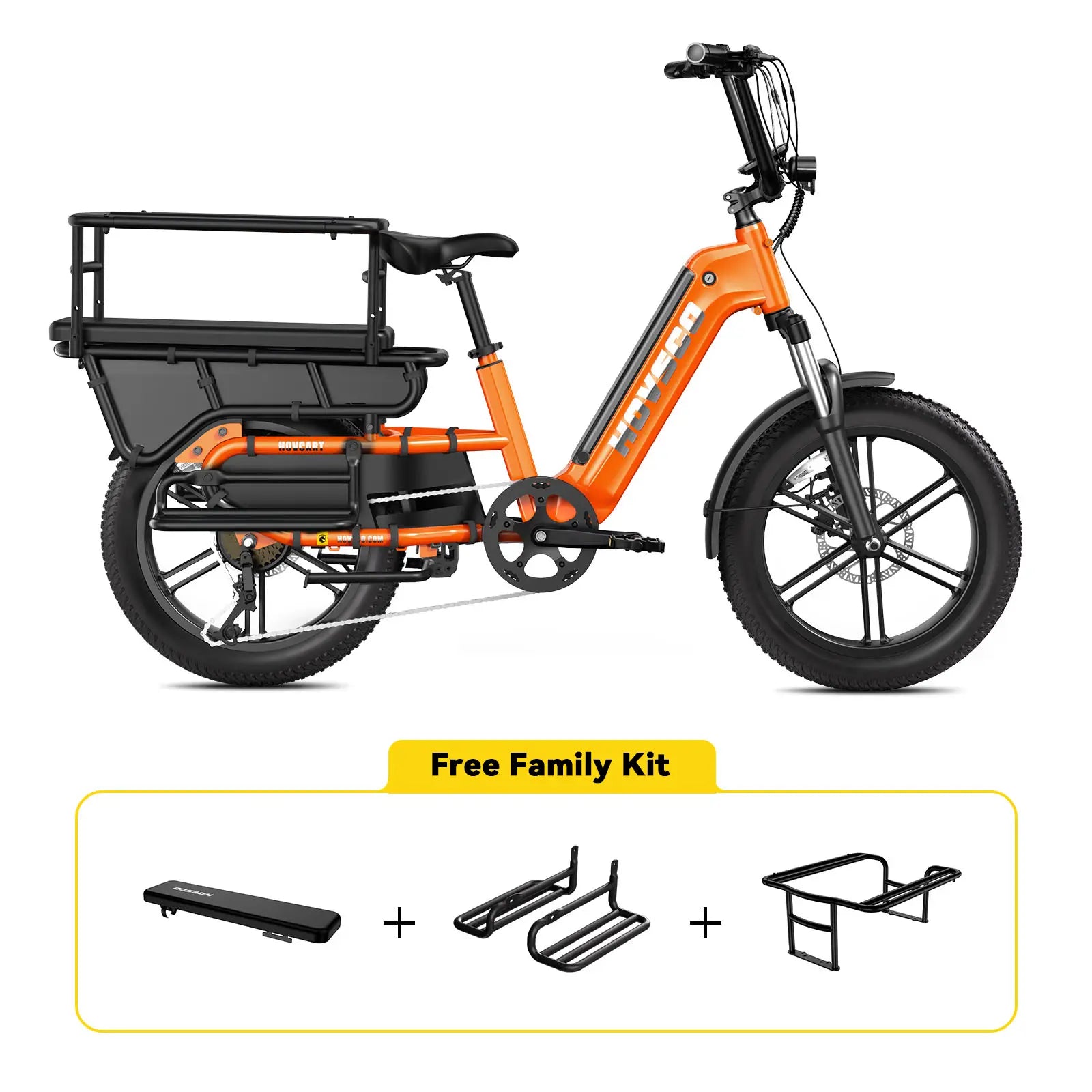
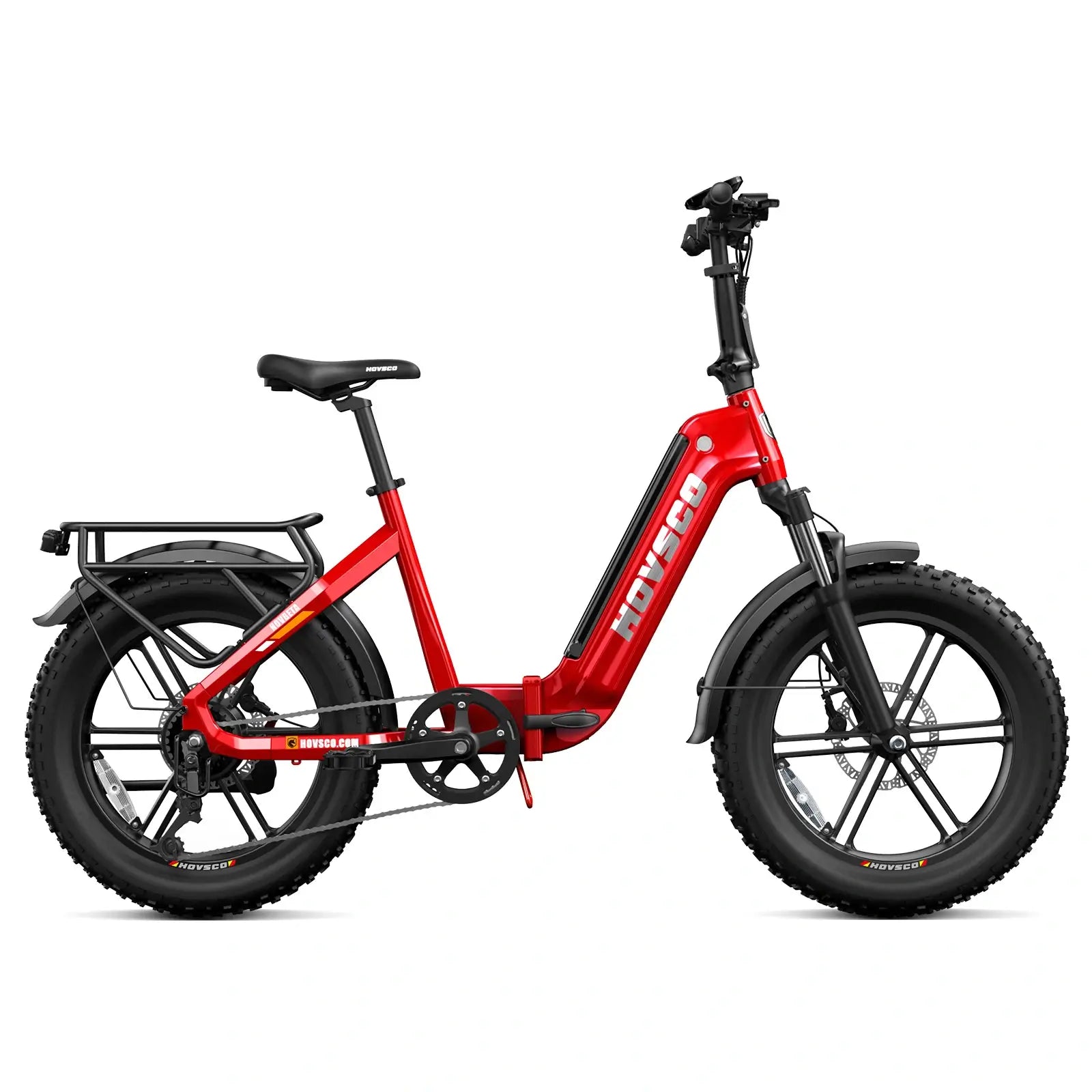
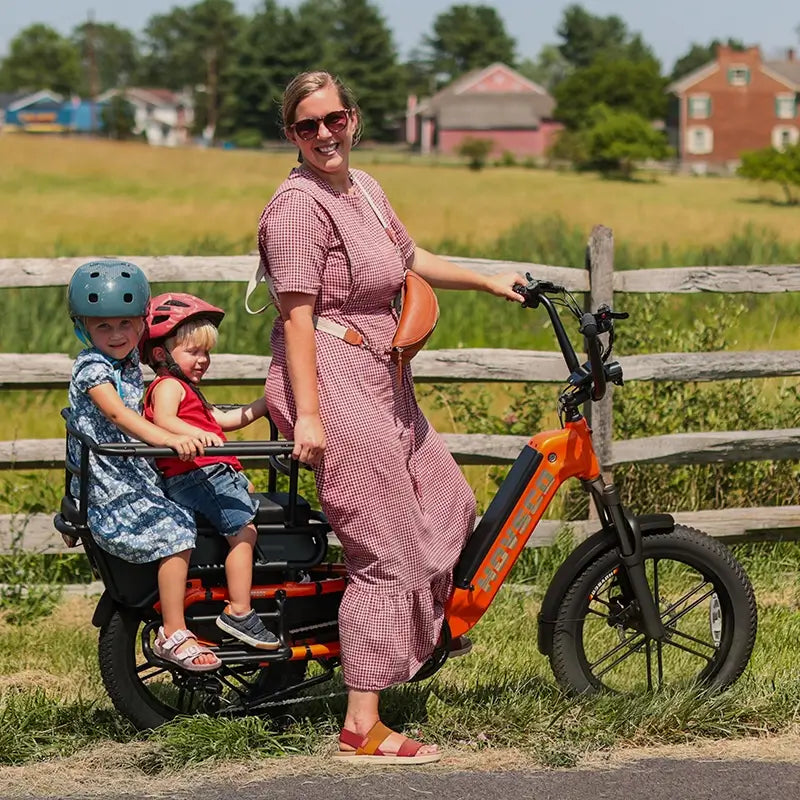
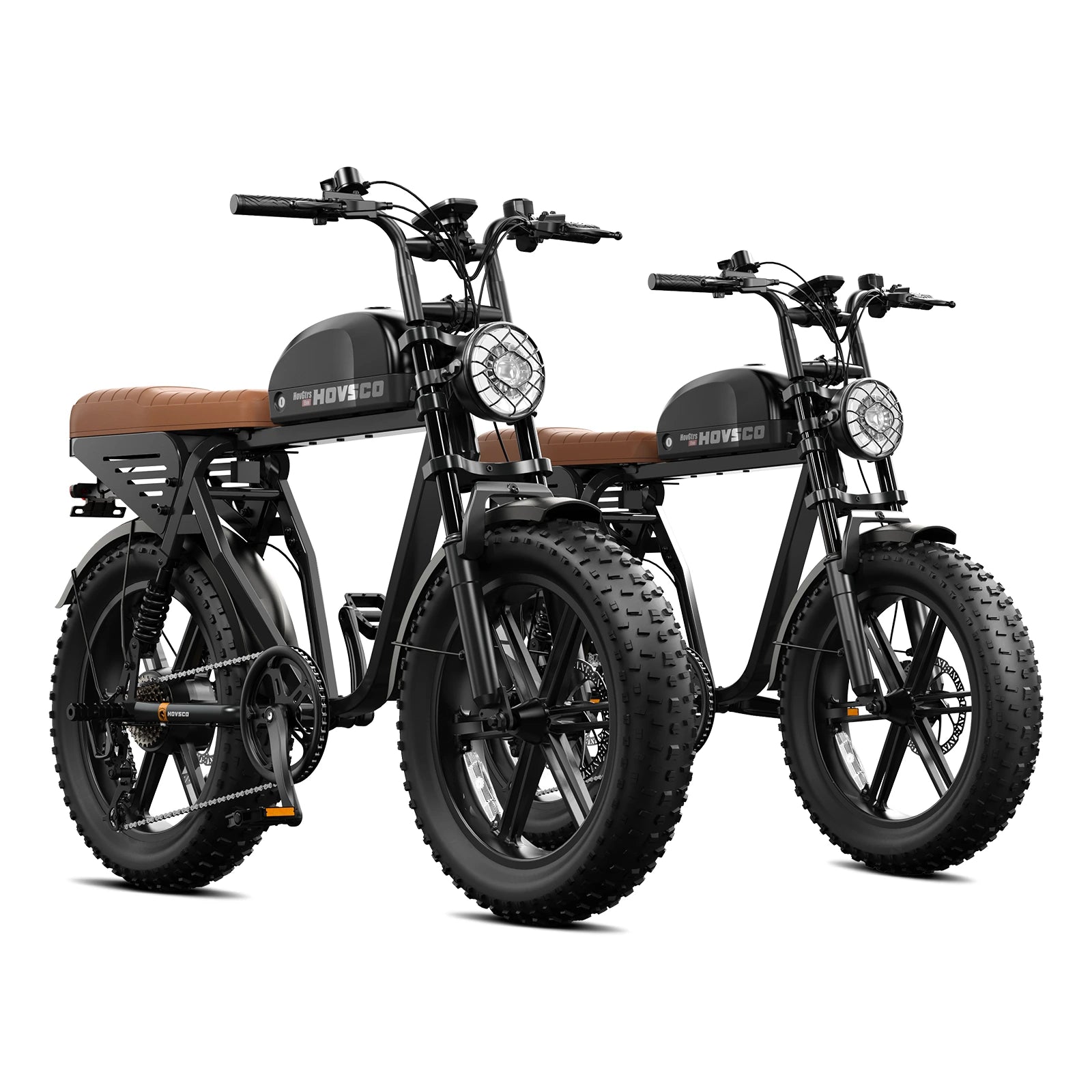
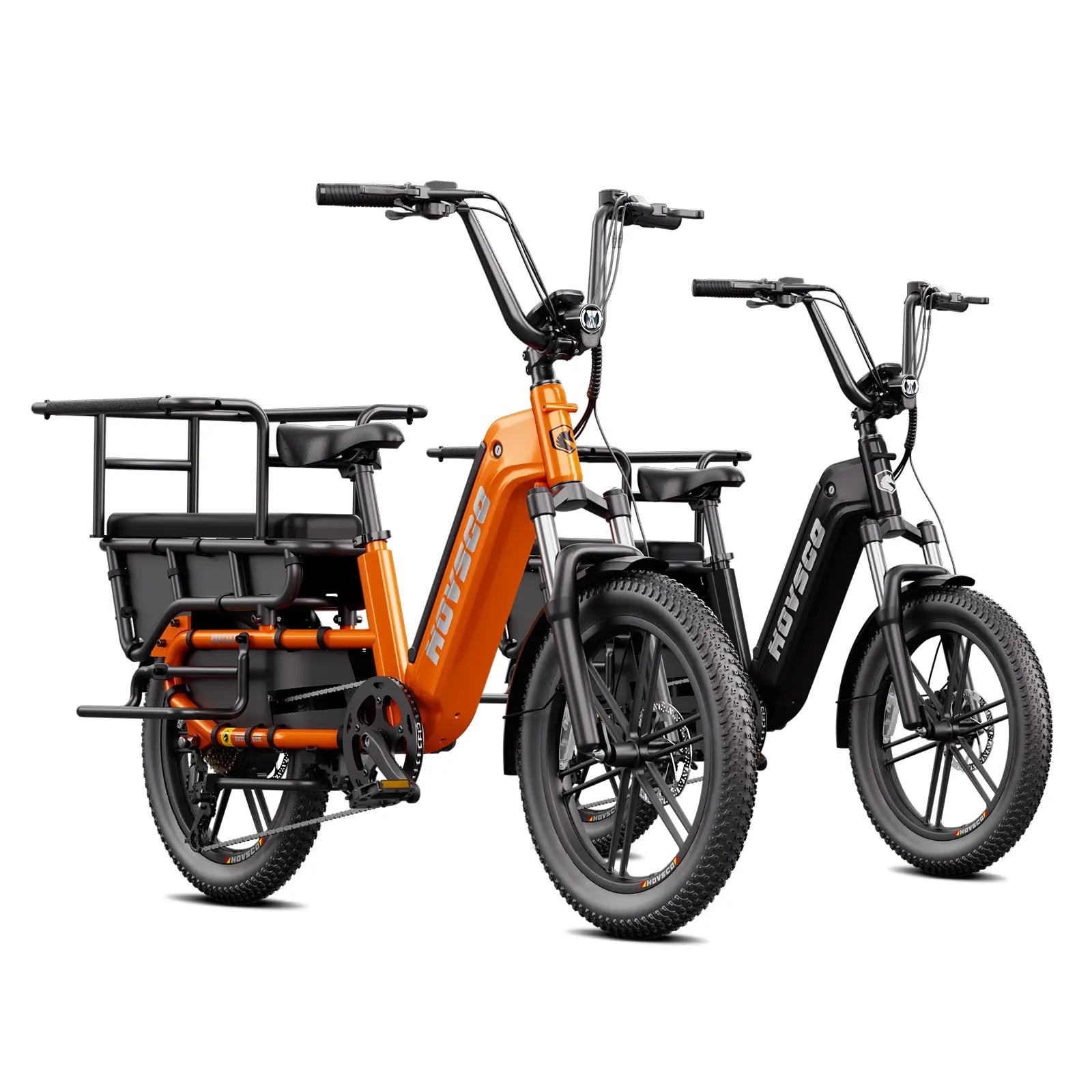
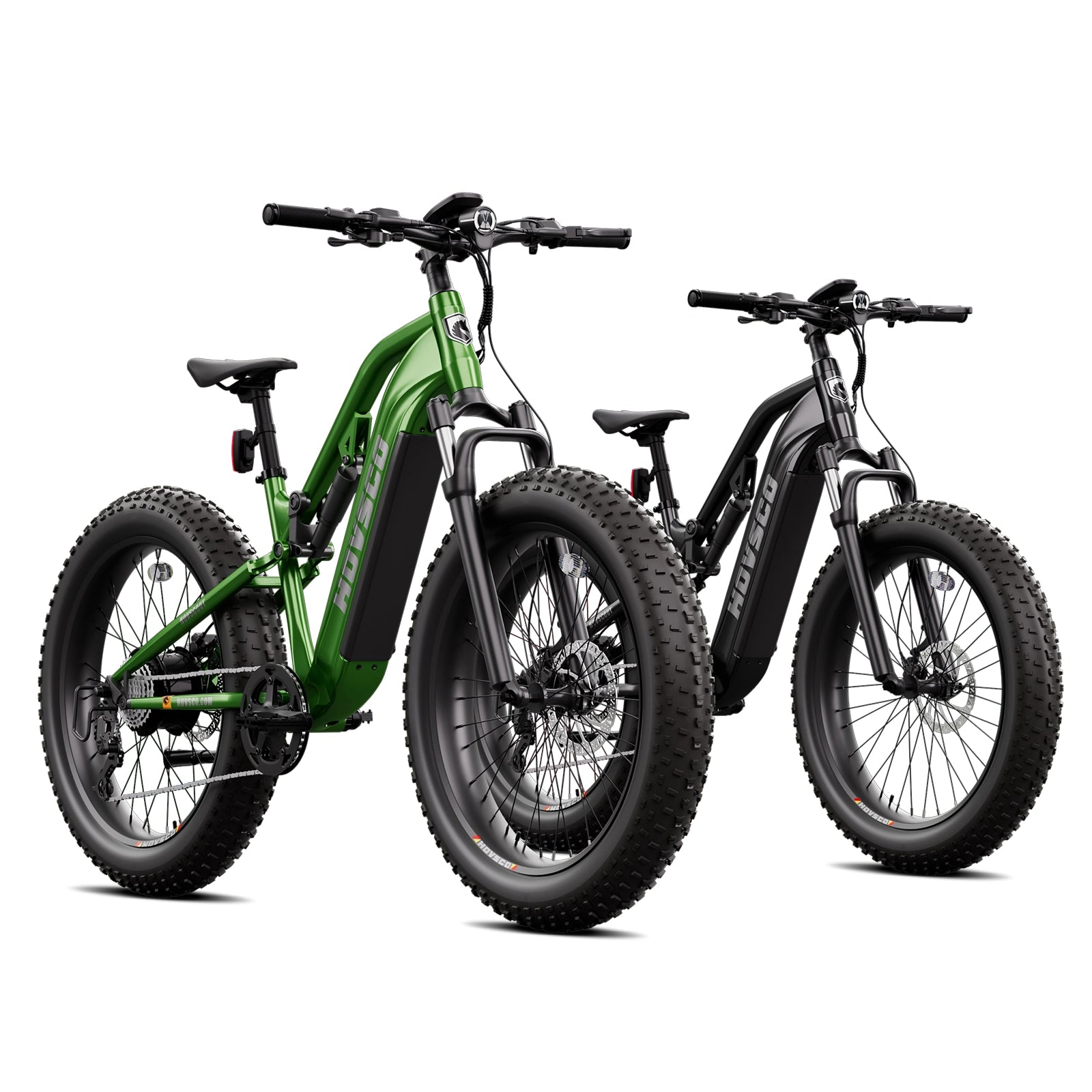
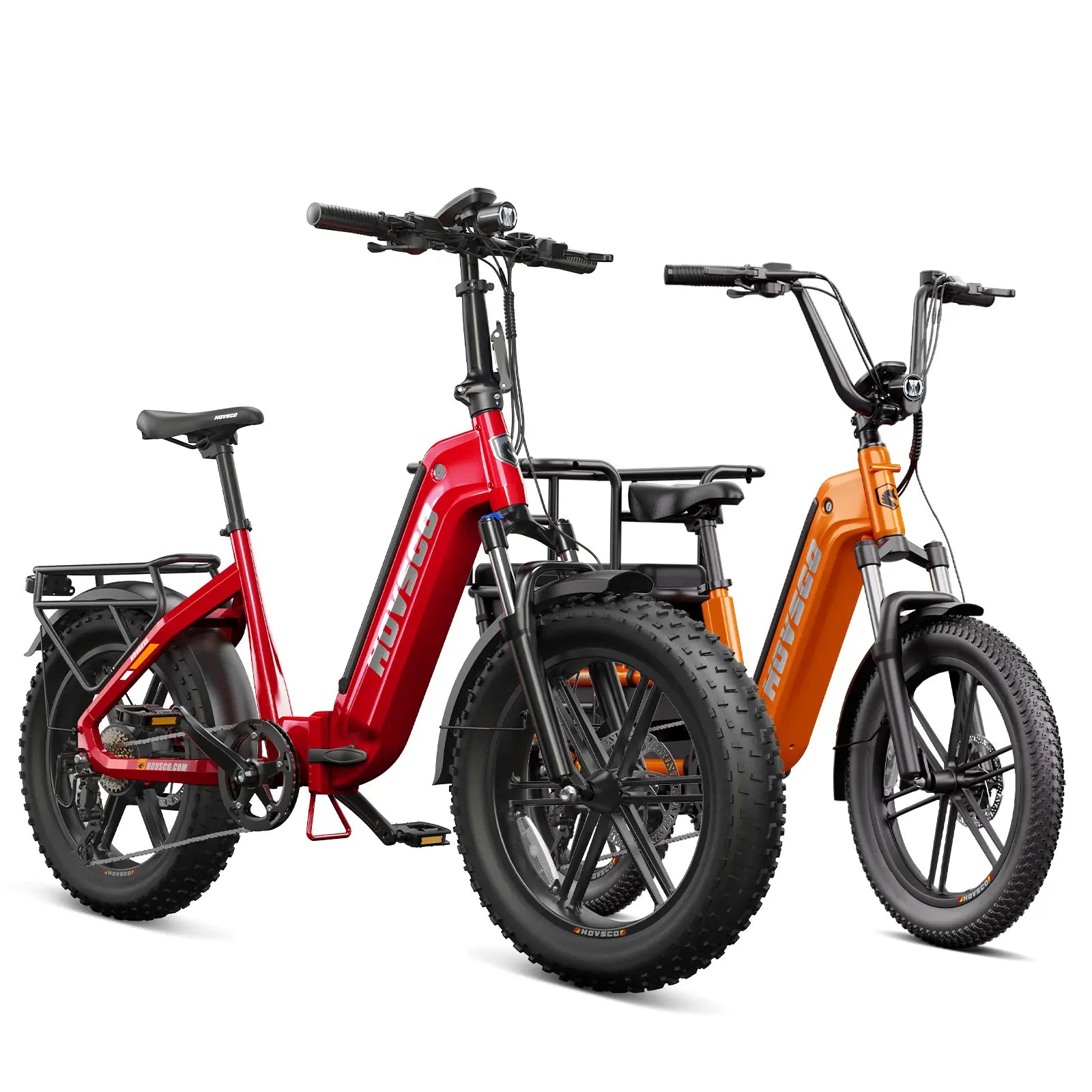
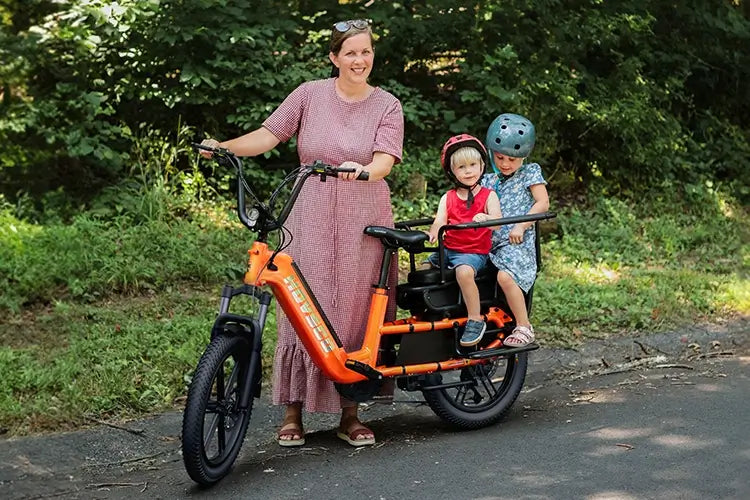
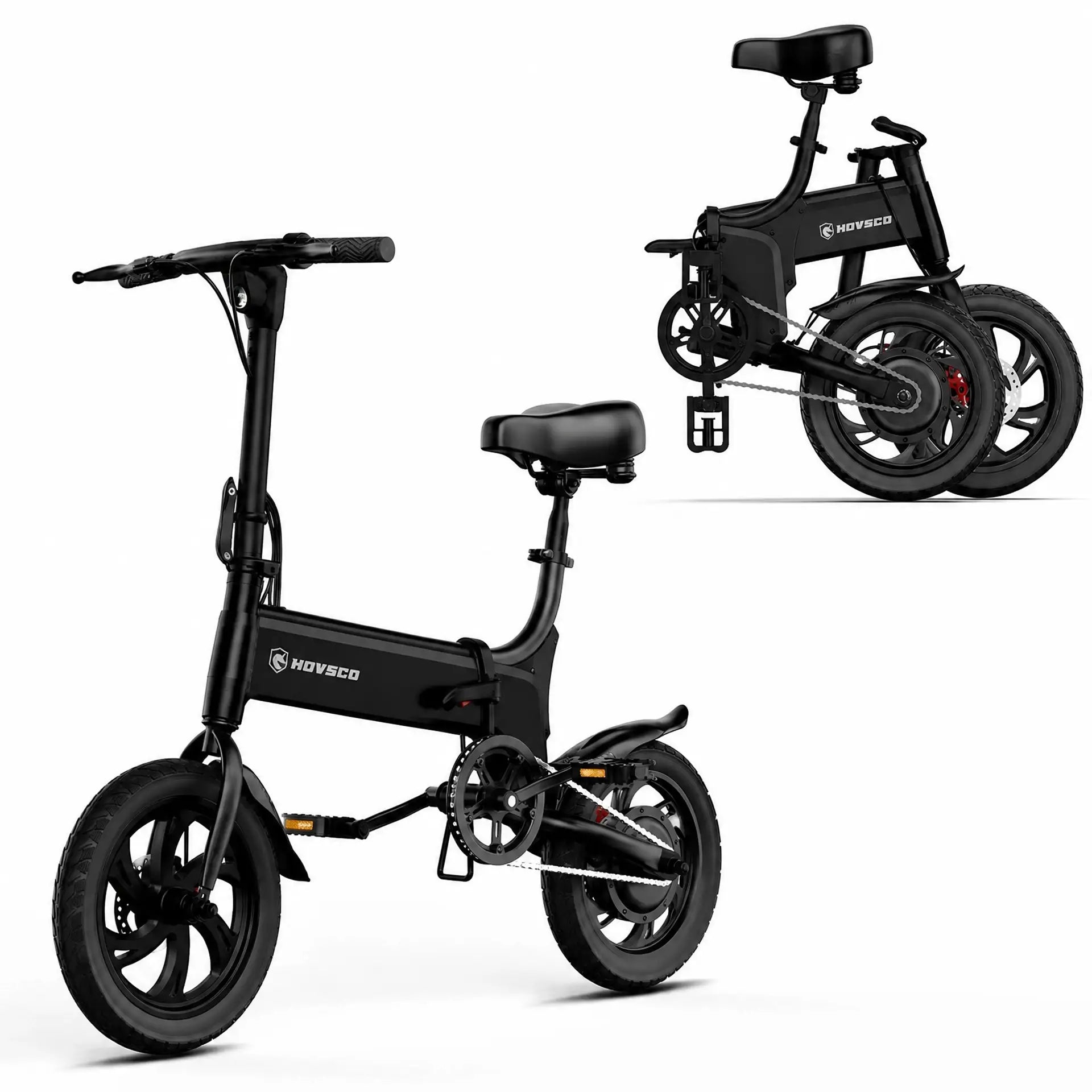
Families or small businesses that need to transport children, groceries or equipment can turn to the HovCart Family E-Bike, which offers a quoted payload up to about 450 lbs and cargo‑friendly geometry. Riders with limited storage or multi‑modal commutes that include trains or elevators may prefer the HovBeta Foldable E-Bike, combining 20x4 inch fat tires, foldable frames and up to 60‑mile ranges to expand the radius of practical car‑free travel.
Clarify your primary commute pattern
Start by mapping your most frequent trips: daily work routes, school drop‑offs, shopping runs and errands, including distances, elevation and typical traffic. This baseline helps you determine whether a city, cargo, folding or moped‑style e-bike best matches your future commuting needs.
Choose range and power for your terrain
If your typical round trip is under 20–25 miles with moderate hills, a city model like HovRanger or HovCity with around 40–60 miles of range is usually sufficient. For heavier loads, regular long rides or mixed terrain, consider higher‑torque or cargo‑oriented models that can maintain speed under load.
Plan charging and storage workflows
Decide where you will charge the removable battery—home, office or both—and ensure you have secure storage for both bike and battery. Many riders adopt a routine of nightly charging and use locks or indoor parking to protect their investment.
Equip for safety and all‑weather use
Add essential accessories such as high‑visibility clothing, locks, mirrors, and if not already included, fenders and extra lighting to handle dawn, dusk or rain. Reviewing local traffic laws for e-bikes, including speed limits and bike lane rules, ensures a smoother transition from car‑centric habits.
Start with partial replacement, then scale
Replace one or two weekly car or transit trips with your e-bike to build confidence and find optimal routes. Over time, many riders find they can shift the majority of commutes and errands as they adjust to new patterns of speed, comfort and cost.
Maintain regularly for long‑term reliability
Follow basic maintenance such as periodic chain cleaning, brake checks and tire inspections, either at home or via local service providers. This modest upkeep helps keep total cost of ownership far below that of cars while preserving performance over thousands of commuting miles.
Scenario 1: Office commuter across town
Traditional approach: A worker travels around 15 miles each way by car, often spending 45–60 minutes in rush‑hour congestion plus time searching for parking, with considerable monthly fuel and parking costs.
With HOVSCO: A HovRanger city e-bike route using bike lanes reduces travel time to roughly 25–30 minutes, stabilizes monthly costs at electricity plus light maintenance and adds consistent light exercise without arriving exhausted.
Scenario 2: Parent managing school runs and errands
Traditional approach: Multiple short car trips for school drop‑offs, grocery stops and extracurricular activities lead to fragmented schedules, parking hassles and rising fuel expenses.
With HOVSCO: A HovCart cargo e-bike consolidates these tasks into one or two continuous loops, carrying children and groceries within a 10–20 mile daily radius while bypassing traffic through bike‑friendly routes.
Scenario 3: Student or freelancer with multi‑modal days
Traditional approach: Combining buses, trains and walking can mean variable travel times, missed connections and limited flexibility for last‑minute changes.
With HOVSCO: A foldable HovBeta e-bike allows the rider to cover the first and last mile to transit hubs, store the bike easily indoors and maintain consistent arrival times even when public transport is crowded or delayed.
Will future urban commuting rely mainly on e-bikes and micromobility?
Urban commuting will remain multi‑modal, but e-bikes and shared micromobility are expected to handle a growing share of trips under roughly 10–15 miles because they use space efficiently, reduce emissions and integrate well with public transit. Global projections for the e-bike market through 2030–2033 show strong growth tied specifically to commuting and last‑mile delivery demand, reflecting policy and consumer shifts toward sustainable mobility.
How do HOVSCO e-bikes support sustainable commuting goals?
HOVSCO designs their electric bikes with long ranges, efficient motors and durable frames that encourage riders to substitute car trips for electric rides, lowering operational emissions per mile. Features like step‑thru frames, integrated lighting and high payload capacities make it more feasible for commuters and families to rely on an e-bike for a majority of everyday trips rather than only occasional leisure rides.
Are e-bikes safe and legal for urban commuting in most cities?
In many regions, e-bikes are classified into regulated classes with speed and power limits that define where they can be ridden, such as bike lanes or mixed traffic. When riders respect these rules and pair features like disc brakes, lights and helmets with defensive riding habits, e-bikes can offer a safe and predictable alternative to cars or scooters in dense environments.
What long‑tail benefits can commuters expect from switching to HOVSCO e-bikes?
Over time, commuters often report lower monthly transport costs, reduced commute times and improved physical well‑being due to moderate regular activity. User testimonials also highlight qualitative benefits like reduced stress, greater enjoyment of city environments and a sense of flexibility, as riders can adjust routes and schedules more easily than with fixed public transit or car‑dependent routines.
How does the future of urban commuting affect infrastructure planning?
Rising e-bike and micromobility usage is already pushing cities to expand protected bike lanes, secure parking and charging points, as well as to refine traffic laws to account for mixed‑speed environments. These changes reinforce a virtuous cycle: as infrastructure improves, more residents feel comfortable adopting e-bikes, which in turn justifies further investment in non‑car transport networks.
Which HOVSCO model is best suited for the future of my commute?
Choice depends on main use cases: city commuters typically benefit from a HovRanger or HovCity model, while families and small businesses may prefer HovCart cargo e-bikes and multi‑modal travelers often choose foldable HovBeta bikes. Considering terrain, daily distance, cargo needs and storage conditions helps align the bike’s motor power, range and frame format with a specific commuting future that can realistically replace most short car trips.
The future of urban commuting is converging around a mix of compact personal vehicles, robust public transit and smarter street design, with e-bikes positioned as a central link between home, workplace and services. As markets expand and technology matures, brands like HOVSCO that focus on real‑world commuting needs—comfortable geometry, ample range, strong payloads and reliable support—will help more riders transition from car‑dependent routines to cleaner, more flexible daily mobility.
For riders ready to align their daily travel with the future of urban commuting, adopting an e-bike can be one of the most impactful changes—cutting costs, saving time and reducing emissions in a single step. HOVSCO, a U.S.-based e-bike specialist with UL certification and a broad range of commuter, cargo and folding models, offers practical, high‑value options that make it easier to replace short car trips and experience the city on your own terms.
If you were to prioritize a single factor for your future commute—time savings, cost reduction or carrying capacity—which one matters most to you?
Straits Research — Electric Bike Market 2024–2033
Strategic Market Research — Electric Bike Market 2024–2030
IMARC Group — Global E-Bike Market 2025–2033
NACTO — 2023 Shared Micromobility Report
UC Berkeley SafeTREC — Shared Micromobility Ridership 2023
Intel — Future of Urban Mobility and Smart Transportation
HOVSCO — Electric Bikes Are the Perfect Urban Mobility Solution
HOVSCO — Which Electric Bike Best Fits City Life Demands?
HOVSCO — How to Choose an Electric Bike for Urban Commuting?
HOVSCO — Your Ultimate Guide to Electric Biking
Share:
Green Transportation Solutions: How HOVSCO E-Bikes Help Cities Move Smarter (June 2026)
Electric Vehicle Innovation: How HOVSCO Is Redefining Everyday Mobility (June 2026)