



![[ New Arrival ] Porto Max Electric Scooter For Commute & Grocery Shopping - HOVSCO](http://www.hovsco.com/cdn/shop/files/PotroMax-3.jpg?v=1706927007&width=1200)
- by SteveJames
How Weather and Load Change Scooter Range
- by SteveJames
E-Bikes
Accessories
 Free Shipping
 15-Day Returns
 2-Year Warranty
Free Shipping
15-Day Returns
2-Year Warranty
2-Year Warranty
Free Shipping
15-Day Returns
2-Year Warranty
Range is a weather report, not a constant: cold cuts battery capacity, headwinds and hills spend energy faster, and rider weight against the 220–260 lb limits changes every mile. The conditions that move the practical number are the subject here, feeding the worksheet from our route planning guide.
The published 30 or 35 miles assumes a warm day, a light rider, flat ground, and no wind. Every real ride subtracts from those assumptions, and the subtraction is bigger than most riders expect: cold, load, hills, and headwinds can cut the practical range by a quarter or more.
The planning consequence is seasonal: the scooter that comfortably covers a route in September may sit at the edge of the same route in January. The worksheet should be re-run when the season changes, not trusted from the original estimate.
Cold also affects the display: a battery that reads full in the cold delivers less than the same reading in warmth, so the reserve is the buffer between the reading and the reality.
Lithium-ion batteries deliver less usable capacity in cold temperatures, so a scooter left outside in winter starts the ride with less energy than the same scooter in summer. The display may show the same charge while the practical range has already shrunk.
The fix is planning, not panic: add extra reserve in the cold months, store the scooter indoors where possible, and treat the winter range as a separate number from the summer one. The battery is not failing; the temperature is spending its capacity differently.
Charge the scooter in the same indoor spot where it is stored, so the pack starts each cold ride at a warmer temperature and delivers more of its rated capacity.
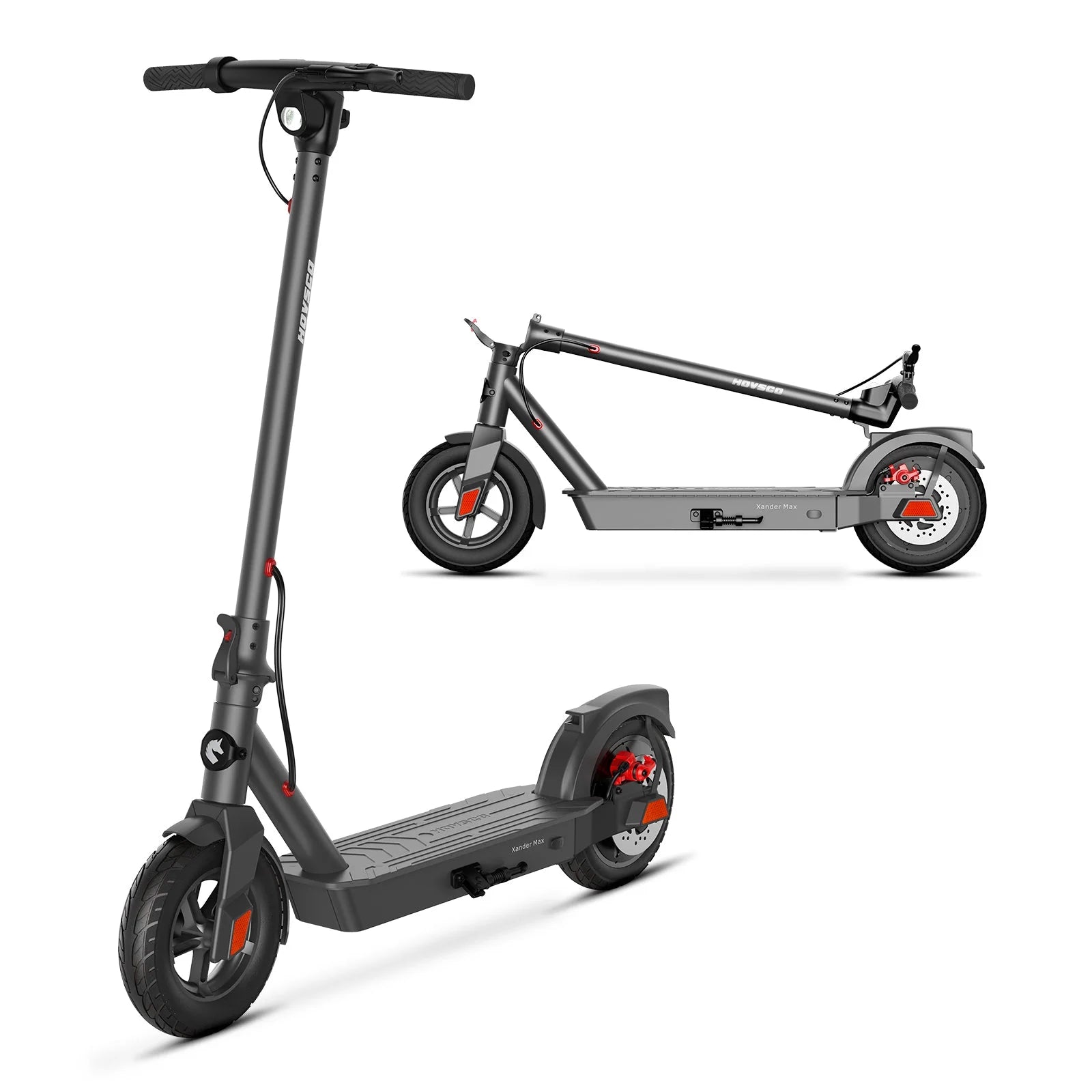
The Felicity and Xander Max carry up to 220 lb; the Porto Max carries up to 260 lb. A rider near the limit — or a rider plus cargo — draws more energy per mile, and the published range assumes a much lighter load.
| Load | Effect on range |
|---|---|
| Light rider, no cargo | Closest to the published figure |
| Rider near the payload limit | Noticeably less range per charge |
| Rider plus basket or backpack | Every pound reduces the practical number |
The payload limit is a safety ceiling and a range factor at the same time: staying under it protects the scooter, and planning under it protects the route.
Weigh the full riding load once — rider, backpack, and any basket cargo — and use that number in the worksheet, not the rider's weight alone.
Hills and headwinds spend energy faster than flat, calm riding, and stop-start city patterns add the cost of every acceleration. A route that looks flat on a map can still be range-hungry when it climbs, turns, and stops.
Plan the hilliest and windiest version of the route, not the calmest one, and let the reserve absorb the difference. Riders who plan to the best case are the riders who push scooters on the worst days.
Stop-start patterns deserve the same treatment: a route with ten intersections spends more per mile than an open stretch, and the worksheet should count the stops as part of the draw.
Soft tires add rolling resistance on every mile, which costs range and handling at the same time. Checking tire pressure weekly is a range tool as much as a safety one, and it is the cheapest range upgrade a scooter owner can make.
Keep the tires at the pressure marked for the model, and re-check before long rides and in temperature swings — pressure drops in cold weather. A properly inflated scooter rides further on the same battery.
Make the pressure check part of the same weekly routine as the brake check: two minutes at the start of the week protects both the range and the ride.
Update this when the season, the route, or the rider changes.
| Factor | Adjustment |
|---|---|
| Cold weather | Add extra reserve; store indoors when possible |
| Rider load | Reduce the planning range near the payload limit |
| Hills and wind | Plan the hardest version of the route |
| Tire pressure | Weekly check; re-inflate in cold swings |
| Speed | Higher speed drains the battery faster |
The worksheet turns conditions from surprises into numbers, and the numbers keep the return inside the reserve.
Update it after the first real ride in each new season, because the measured winter number is worth more than the predicted one — and it is the number the next route should use.
The same worksheet feeds the vehicle-class decision: when the seasonal number stops fitting the route, the answer is a larger class, not a bigger range badge.
If the scooter is part of a regular commitment — a commute, an errand schedule — the promised range should be the seasonal number, not the summer one. A promise built on the best case is a promise the winter breaks.
Adjust the route, the reserve, or the vehicle class when the seasonal number no longer fits. The scooter is the right tool for the routes it can cover in every season; the honest boundary is where the planning starts.
" Cold, load, hills, and soft tires each spend the same battery differently. Plan the hardest version of the route and the range figure becomes a number the return can trust." — HOVSCO Engineering & Content Team
Weather and load move the practical range more than riders expect: cold cuts capacity, load and hills spend it faster, and soft tires add resistance. Plan the hardest version of the route, keep the weekly pressure check, and update the worksheet with the season.
Does cold weather reduce scooter range?
Yes. Lithium-ion batteries deliver less usable capacity in cold temperatures, so winter range is shorter. Add extra reserve and store the scooter indoors where possible.
How does rider weight affect range?
A rider near the 220 lb limit of the folders or the 260 lb limit of the Porto draws more energy per mile. The payload limit is a safety ceiling and a range factor at the same time.
Do hills and wind really matter on a scooter?
Yes. Hills and headwinds spend energy faster than flat, calm riding, and stop-start patterns add the cost of every acceleration. Plan the hardest version of the route.
Can tire pressure change my range?
Soft tires add rolling resistance on every mile. A weekly pressure check is the cheapest range upgrade available, especially in cold temperature swings.
Should I promise the summer range or the winter range?
The seasonal number. If the scooter covers a regular commitment, the promised range should be the one that holds in every season, not the best case.
Share:
How Do You Test E-Bike Range for Delivery Routes?
What Moped-Style E-Bike Laws Should You Check?