


![[ New Arrival ] Porto Max Electric Scooter For Commute & Grocery Shopping - HOVSCO](http://www.hovsco.com/cdn/shop/files/PotroMax-3.jpg?v=1706927007&width=1200)
- by SteveJames
How to Choose an Electric Bike for Hunting?
- by SteveJames
E-Bikes
Accessories
 Free Shipping
 15-Day Returns
 2-Year Warranty
Free Shipping
15-Day Returns
2-Year Warranty
2-Year Warranty
Free Shipping
15-Day Returns
2-Year Warranty
A hunting e-bike should match your terrain, gear load, and how far you plan to scout before you look at any brand name. Prioritize a quiet hub or mid-drive motor with 80+ Nm torque, a removable battery rated for your full-day mileage, fat tires for soft ground, and a frame rated for your pack, weapon case, and harvest weight. Confirm local land-use rules before you buy.
A hunting e-bike needs four things working together: enough torque to climb loaded, a battery that survives a full day away from an outlet, tires that grip mud and leaf litter without spinning out, and a frame that won't groan under a pack, a rifle case, and a harvested animal. Skip any one of these and the bike becomes a liability two miles from the truck.
I've watched hunters buy on motor wattage alone and then get stranded because the battery was undersized for the actual terrain they rode. Wattage sells the bike; watt-hours and torque curve get you home. When you're evaluating how to choose an electric bike for hunting, treat the motor, battery, tires, and frame as one connected system, not four separate specs to compare in isolation.
Rear hub motors with 80-90 Nm torque suit rolling terrain and moderate loads at a lower price point, while mid-drive motors shine on steep, technical climbs because they use the bike's gearing for mechanical advantage. For most whitetail and hog hunters on established trails, a well-tuned hub motor is quieter and easier to maintain in the field.
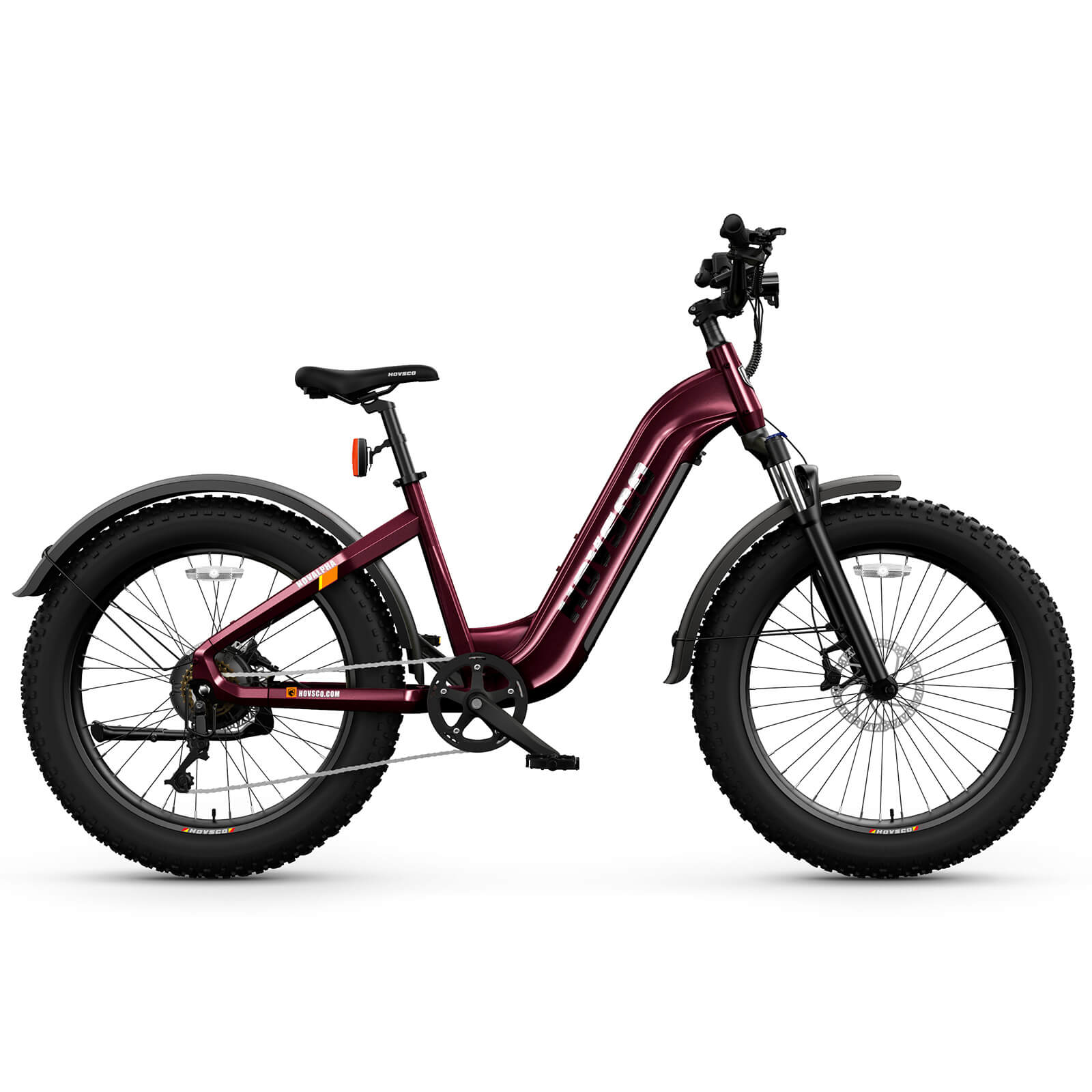
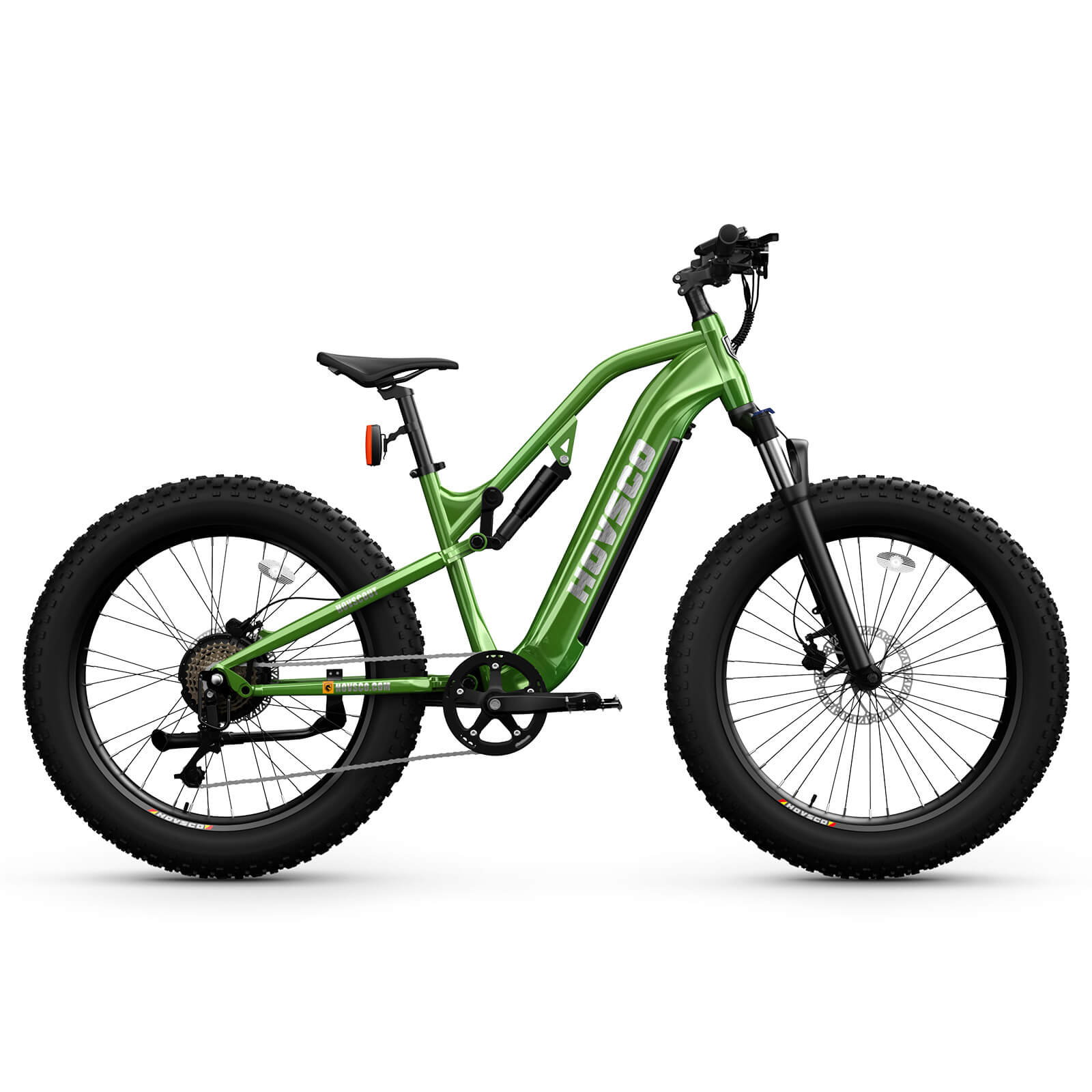
The overlooked engineering detail here is gear reduction ratio, not peak wattage. A 750W-rated hub motor with a well-matched planetary gearset and 85-90 Nm of torque will out-climb a poorly geared 1000W motor because torque delivery at low RPM — the exact condition of grinding up a loaded ridge trail — matters more than the number printed on the box. HOVSCO's HovScout and HovAlpha both run a geared SUTTO hub motor (a Bafang sub-brand) tuned for torque-sensing pedal assist rather than raw throttle punch, which keeps the motor whine down when you're easing toward a stand. That's a meaningful distinction for anyone comparing how to choose an electric bike for hunting where stealth matters as much as horsepower.
Match battery capacity to your real round-trip mileage plus a 30-40% buffer for cold weather, elevation, and cargo weight — not the advertised max range. A 720Wh battery comfortably covers 15-25 miles of mixed-load riding, while a 960Wh pack extends that to 30-40 miles under the same conditions. Always choose a removable battery so you can charge in a truck or cabin.
Advertised range figures assume flat ground, a rider near 165 lbs, and low pedal-assist settings — none of which describe a hunter hauling a pack, decoys, and a folded treestand up a grade. Cold temperature alone can cut usable capacity by 15-20% once you're below freezing, which is exactly when pre-dawn hunts happen. This is where watt-hours, not "miles," become the honest unit of comparison.
Fat tires 4 inches wide float over mud, sand, and leaf litter by spreading rider and cargo weight across a larger contact patch, preventing the sinking and wheel spin that narrow tires suffer on soft ground. This traction advantage directly translates to quieter, more controlled approaches near game.
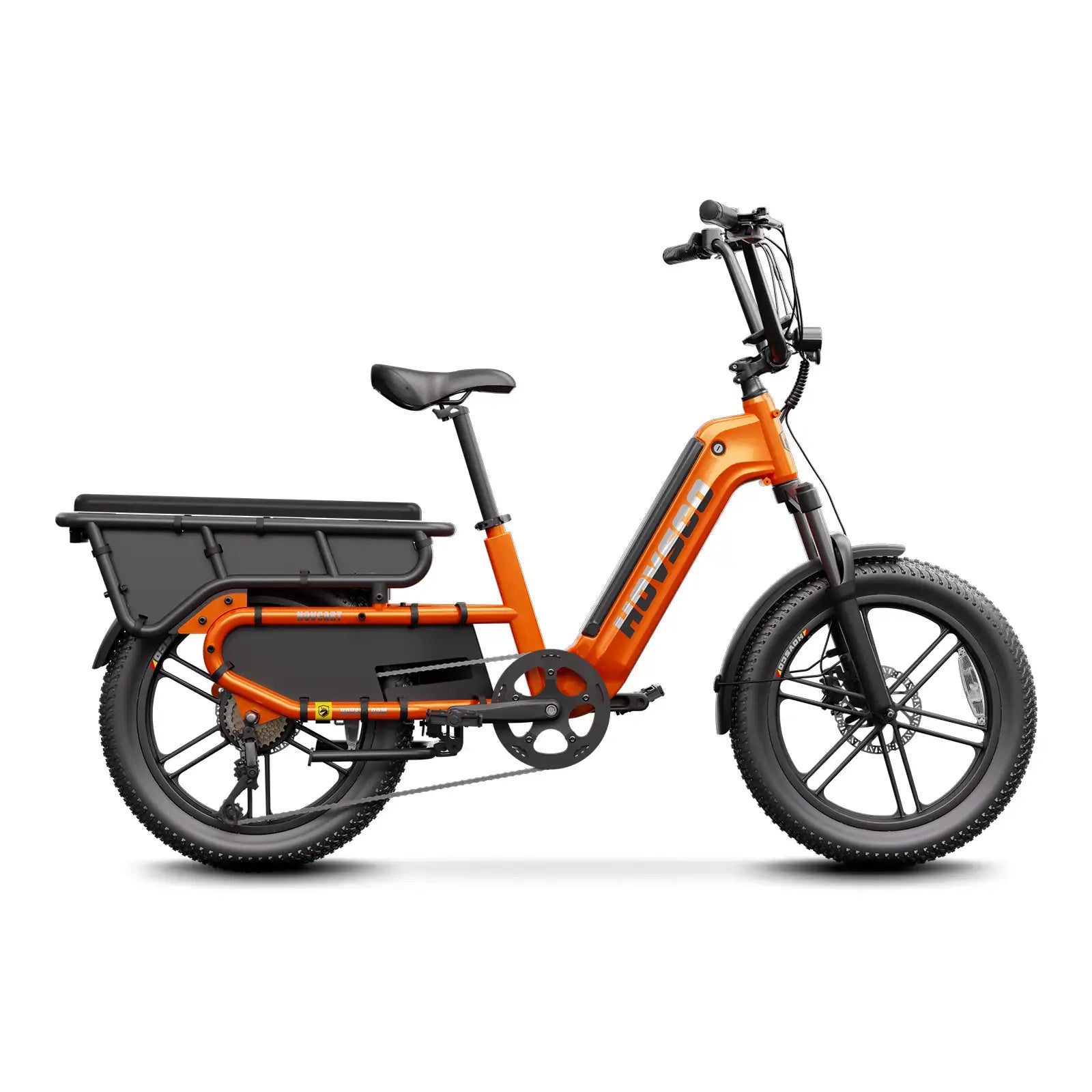
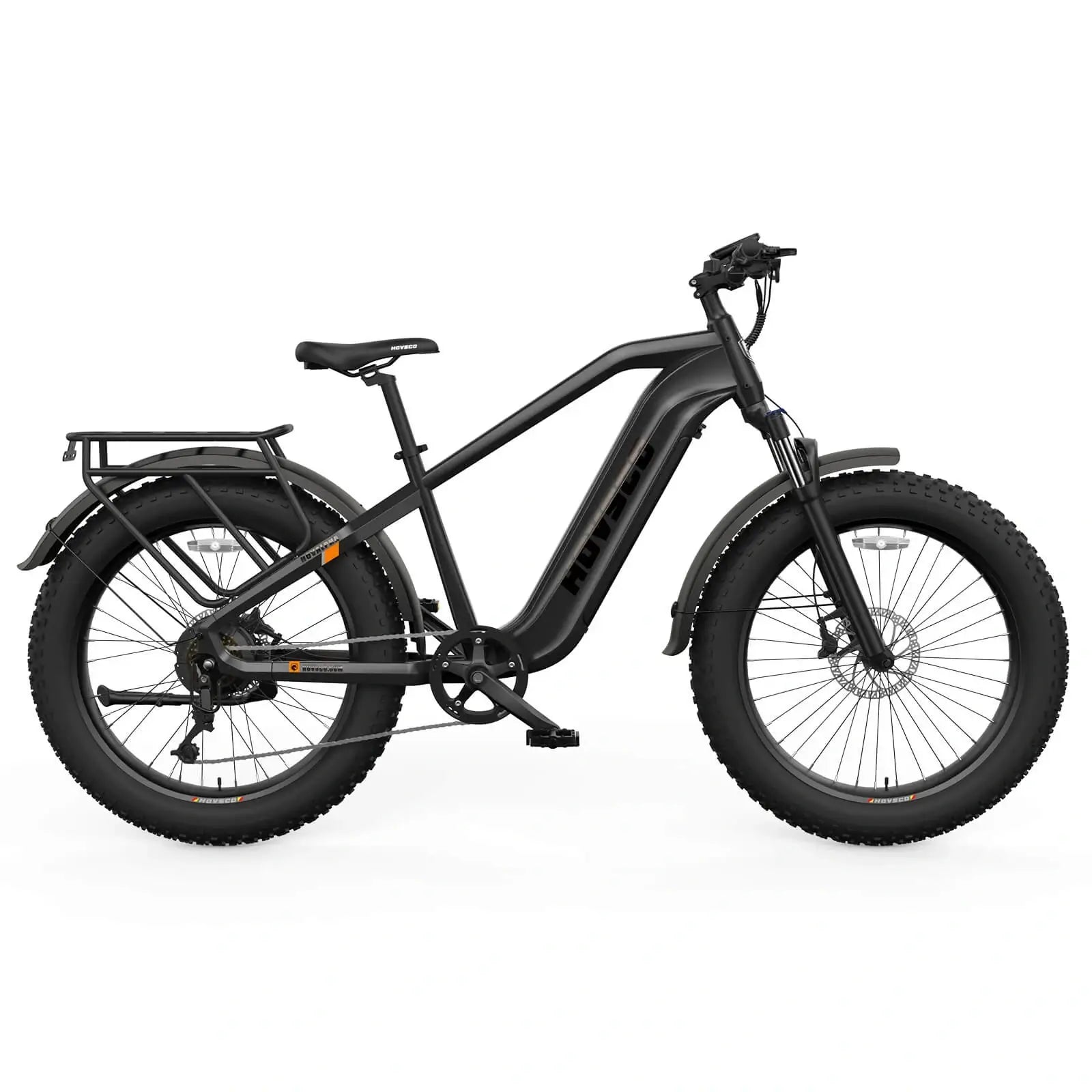
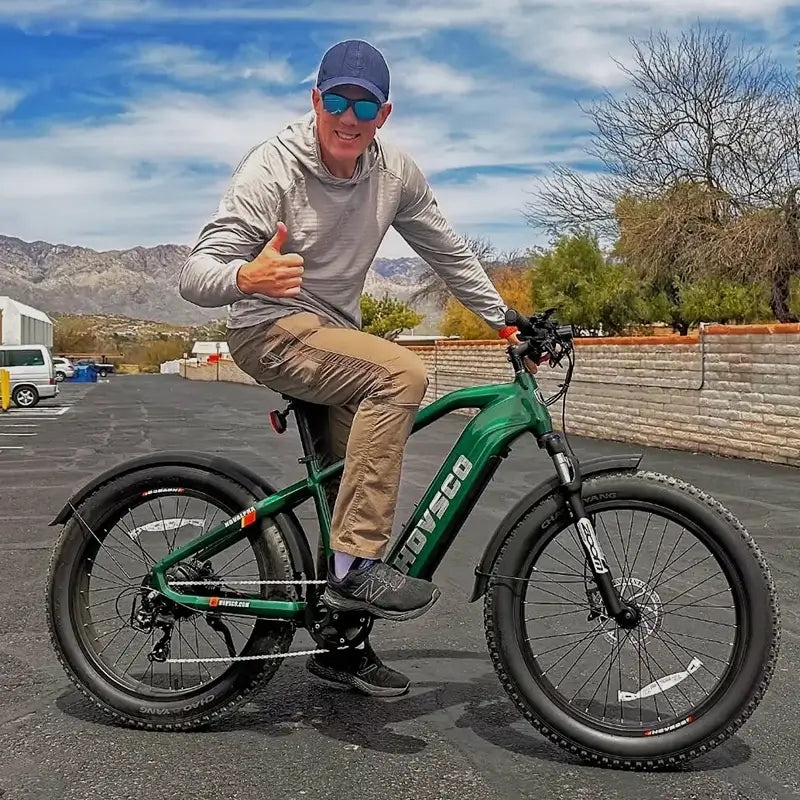
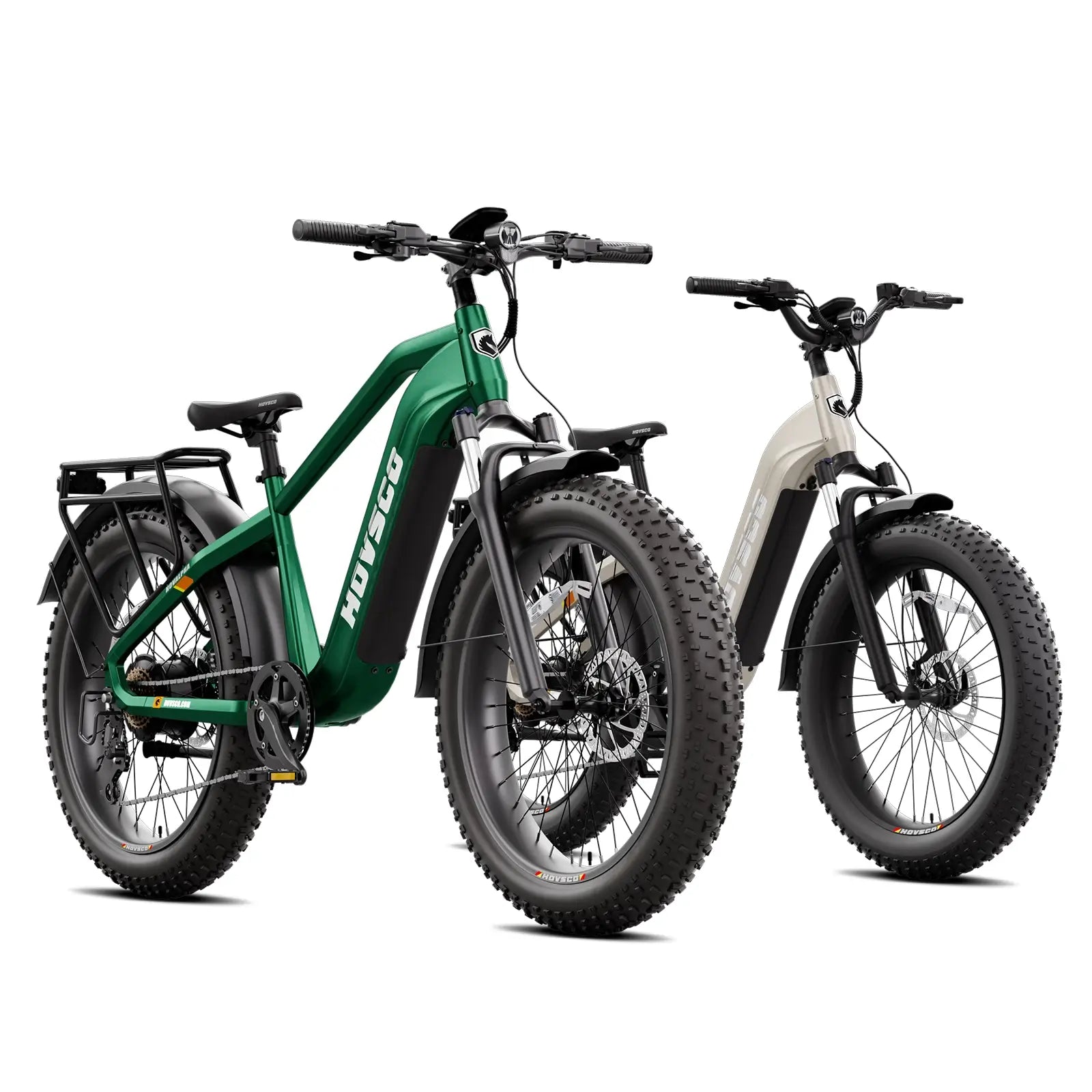
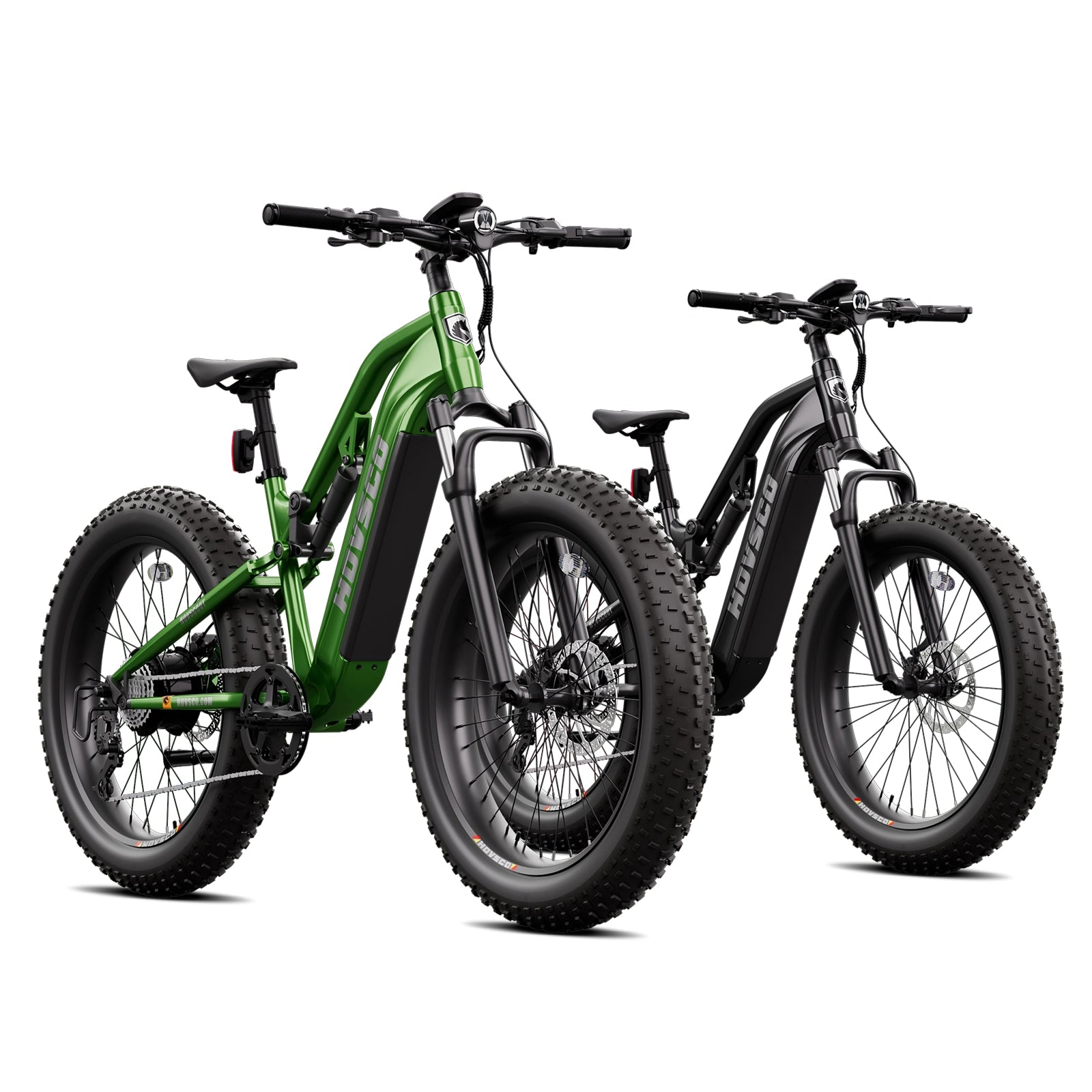
The trade-off nobody explains well: fat tires increase rolling resistance on hardpack and pavement, which is why tire pressure management matters more than tire width alone. I run mine lower, around 8-10 psi, for snow and loose leaf cover, then bump to 14-16 psi when the route includes a gravel access road, because a fat tire aired up too hard skips and bounces on roots instead of absorbing them. Both the HovScout and HovAlpha ship with 26 x 4-inch fat tires suited to this range of adjustment, while the HovCart's 20 x 4-inch fat tires are tuned more for stable low-speed cargo hauling than aggressive trail traction.
Full suspension smooths high-speed impacts on rocky, technical descents, while a front-only fork with lockout is lighter, cheaper, and sufficient for moderate trails where pedaling efficiency matters more than plush comfort. Lock the rear shock out when climbing to avoid wasting battery on suspension bob.
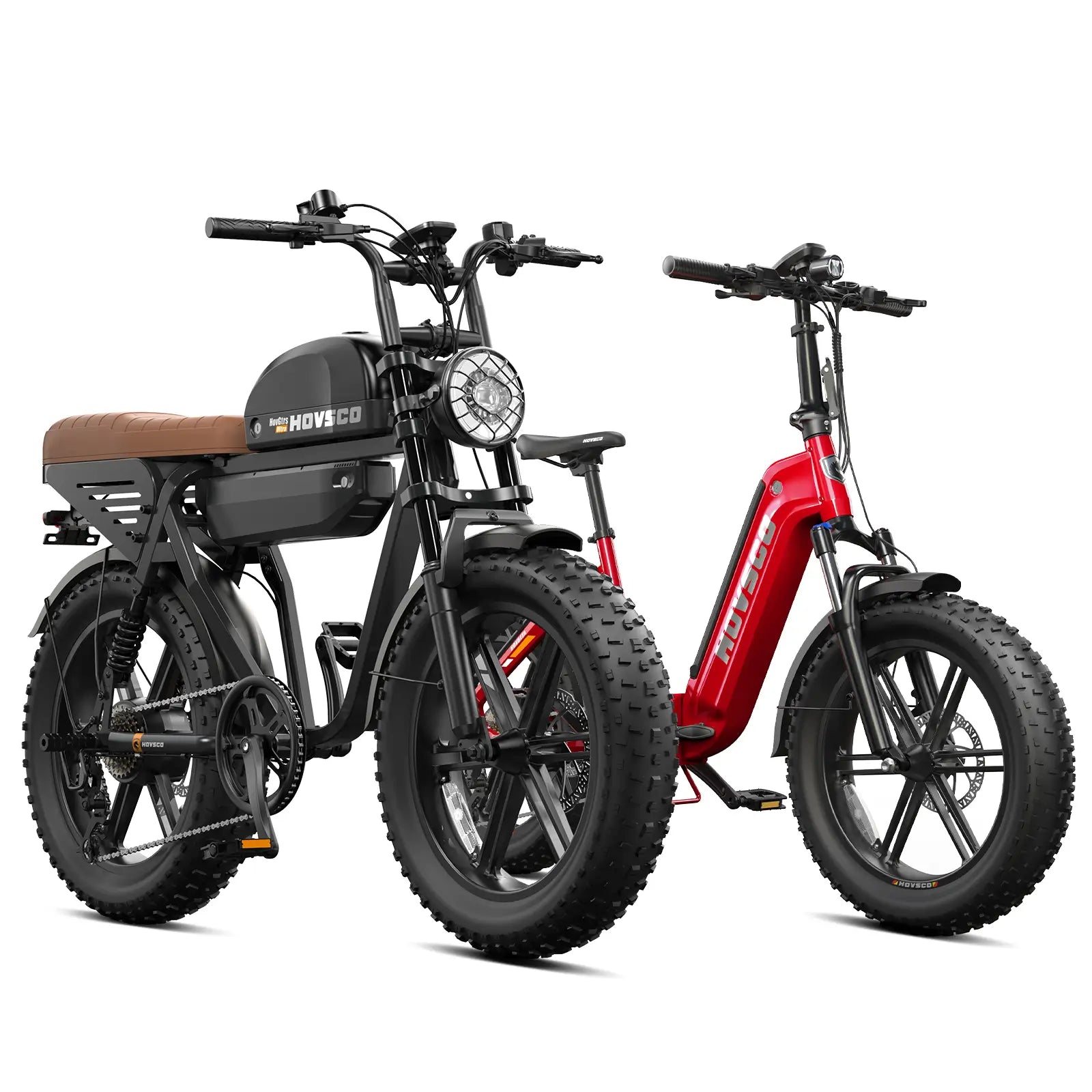
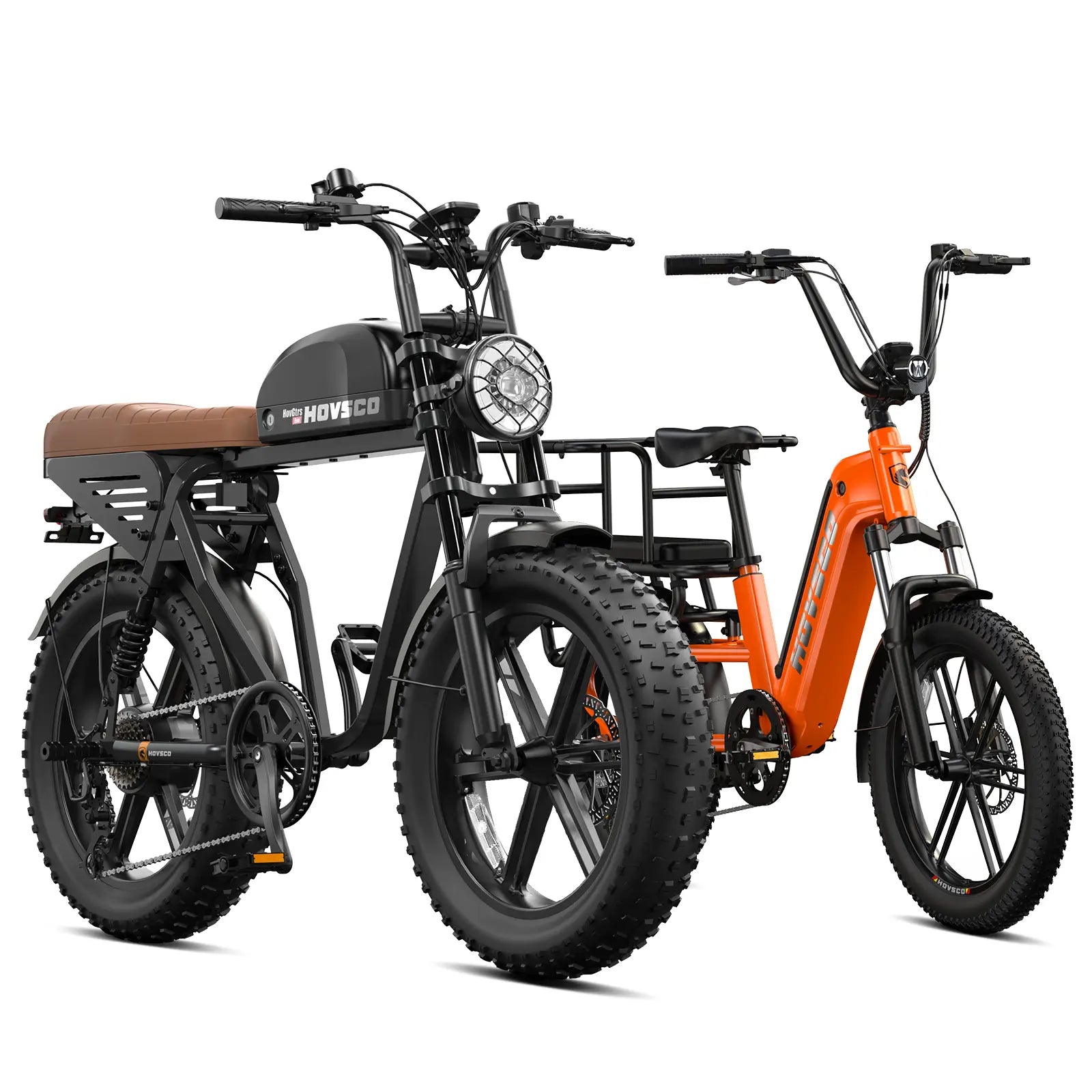
This is a genuine engineering trade-off, not a marketing checkbox. Rear suspension adds pivot points, which add weight and long-term maintenance — bushings and shock seals eventually wear, especially with the added stress of hauling game weight. The HovScout's four-bar linkage rear suspension with a lockout mode is built for hunters working genuinely rough, technical ground where the extra mechanical complexity earns its keep. The HovAlpha skips rear suspension entirely, relying on its 80mm front fork, which keeps the frame simpler and the payload rating high for hunters who ride rolling or moderate terrain and would rather have the weight budget go toward battery capacity.
Most public and private hunting lands permit Class 1 and Class 2 e-bikes on trails open to traditional bicycles, but wilderness areas, some wildlife management units, and specific state forests restrict any motorized device, e-bikes included. Weapon transport rules (cased, unloaded) still apply regardless of your vehicle. Always verify current regulations with the specific land manager before your trip.
Rules vary enough state to state and even unit to unit that I always tell people the same thing: call the wildlife agency or land office directly rather than relying on a trailhead sign that may be outdated. E-bike classifications (1, 2, or 3) determine access far more than "electric bike" as a category, and enforcement has tightened in several western states over the past two seasons as e-bike adoption among hunters has grown.
Choose a payload rating that covers your body weight, gear, and an estimated harvest — typically 300-450 lbs total for solo hunters carrying out deer-sized game, or higher if you're running a cargo trailer. Underrated frames flex, brake less predictably, and wear drivetrain components faster under sustained overload.
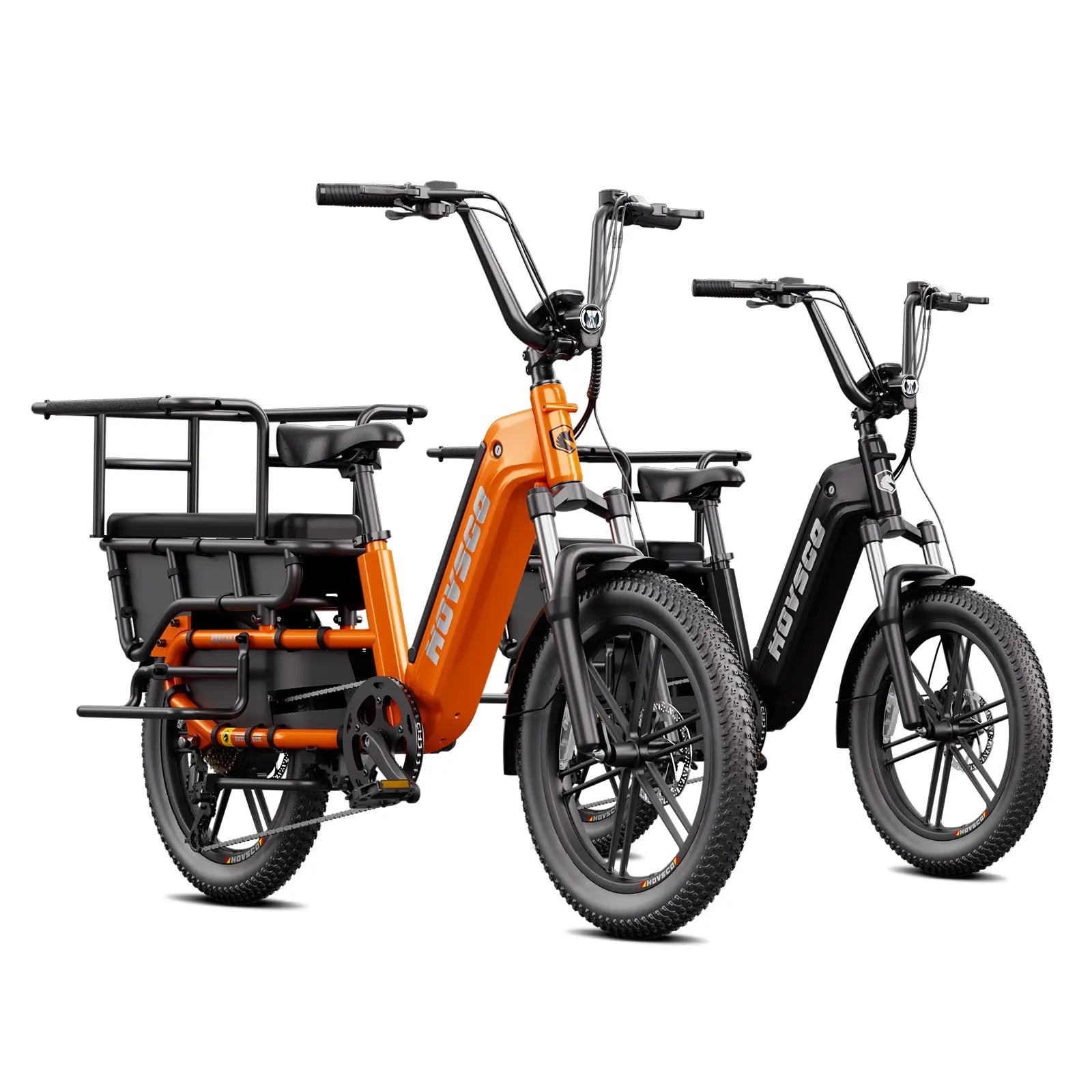
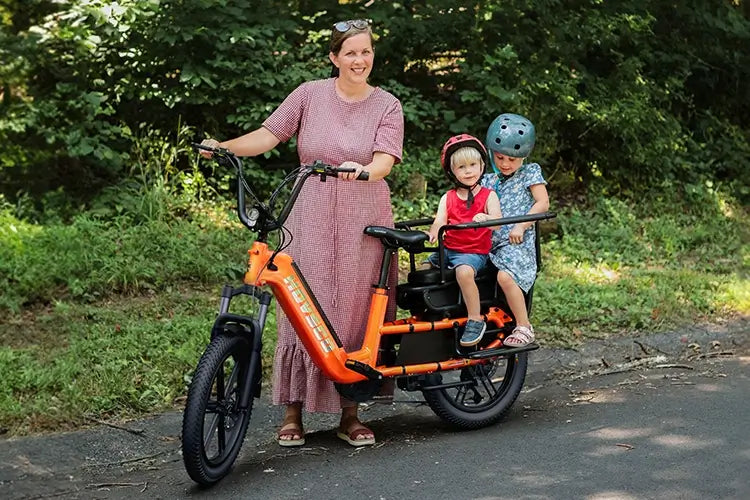
The engineering reality: a manufacturer's payload figure usually reflects frame and axle limits tested under static or moderate dynamic load, not the repeated jolting of a loaded bike descending a rutted two-track. I build in a mental 15% safety margin below the rated max for anything I'll ride hard, downhill, loaded. Both the HovScout and HovAlpha carry a 450 lbs payload rating, which covers rider, pack, and a field-dressed deer with margin to spare, and HOVSCO extends that same 450 lbs rating to the HovCart's modular rack system for hunters who'd rather tow gear behind a step-thru frame than balance it on their back.
Integrated racks keep weight low and centered for better handling on technical trail, while a trailer or cart adds standalone capacity for larger loads but reduces maneuverability on tight, brushy paths. Most serious hunters use a rack for daily gear and reserve a trailer or cart-style bike for confirmed kills.
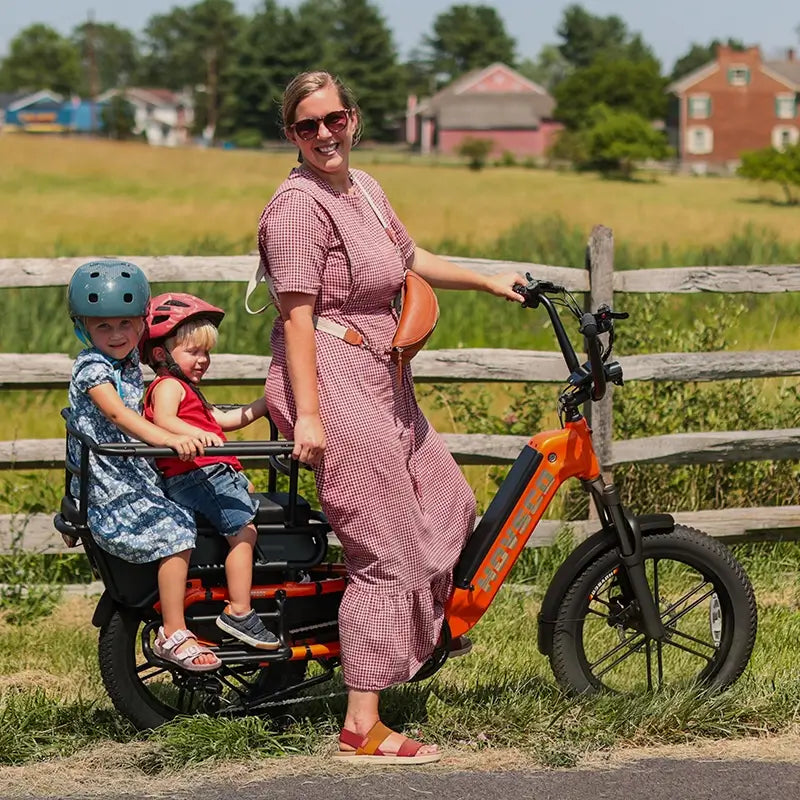
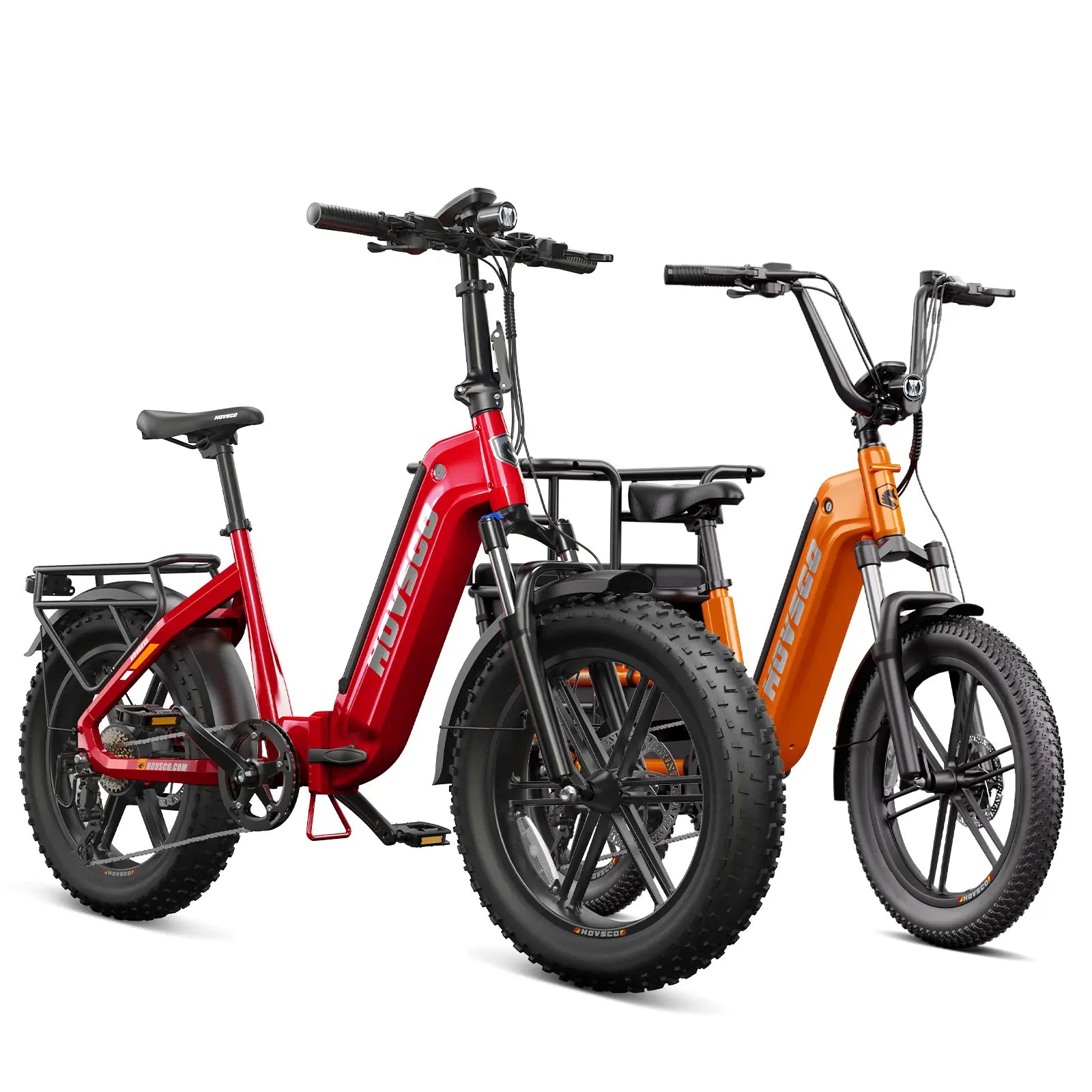
This is precisely where HOVSCO's lineup covers both scenarios rather than forcing a single format. The HovCart's modular rear rack supports over 200 accessory configurations — baskets, running boards, cushioned platforms — built around a frame designed for stable, low-center hauling rather than trail speed, which makes it a practical camp-to-blind or blind-to-truck hauler once game is down. If your hunt is more about covering ground quietly and packing light on the way in, the HovScout or HovAlpha's built-in rear rack mounts are the better fit, saving the dedicated cargo platform for the trip out.
"When hunters ask us how to choose an electric bike for hunting, we push them past the spec sheet toward the actual ride profile: how many miles, how much elevation, how much weight coming back. Torque-sensing pedal assist matters more in the field than peak wattage, because it keeps the motor quiet and responsive exactly when stealth counts. We engineered the HovScout's suspension and the HovAlpha's battery capacity around real scouting distances, not lab-condition mileage claims, because that gap is where hunters get stranded."
Choosing the right hunting e-bike comes down to matching four variables — terrain, load, range, and land rules — rather than chasing the highest wattage number on a spec sheet. A quiet, torque-sensing motor beats raw peak power for stealth approaches. A removable battery sized with a real-world buffer beats an advertised mileage figure. Fat tires solve traction, but only when pressure is managed for the ground you're actually riding. And payload capacity should account for your heaviest realistic day, gear and game included, with margin left over.
Before buying, confirm the trail and weapon-transport rules for your specific hunting land, test-ride with a loaded pack if possible, and pick the platform — trail bike, full-suspension, or cargo-rack style — that matches how you actually hunt rather than how the marketing photo looks. Explore HOVSCO's full electric bike lineup to compare torque, battery, and payload specs side by side before you decide.
How fast can a hunting e-bike go?
Most hunting-capable e-bikes top out at 20 mph in throttle-only Class 2 mode and up to 28 mph in unlocked Class 3 pedal-assist mode, depending on local class regulations and the specific model's software settings.
Is a mid-drive or hub motor better for hunting?
Hub motors are simpler, quieter, and less expensive, suiting moderate trails and hub-based torque sensing found on models like HovScout and HovAlpha. Mid-drives excel on steep, technical climbs but add weight, cost, and drivetrain wear.
Can I mount a rifle or bow rack on a hunting e-bike?
Yes, most fat-tire hunting e-bikes accept aftermarket frame-mounted gun or bow racks, and models with existing rear rack mounts, like HOVSCO's lineup, make aftermarket accessory installation straightforward.
How loud is an electric bike compared to an ATV?
A well-maintained e-bike hub motor runs significantly quieter than a combustion ATV, typically under 50 decibels at cruising speed versus 90+ decibels for gas-powered off-road vehicles, making it far less likely to spook game on approach.
Do I need a special license to ride an e-bike on hunting land?
In most US states, Class 1 and Class 2 e-bikes require no license or registration, but rules differ by state and land type. Always check with the specific land manager, as some wilderness areas prohibit motorized bikes entirely.
Share:
How Do You Choose an Electric Bike for Snow?
What Should Your Electric Bikes for Hills Checklist Cover?