
























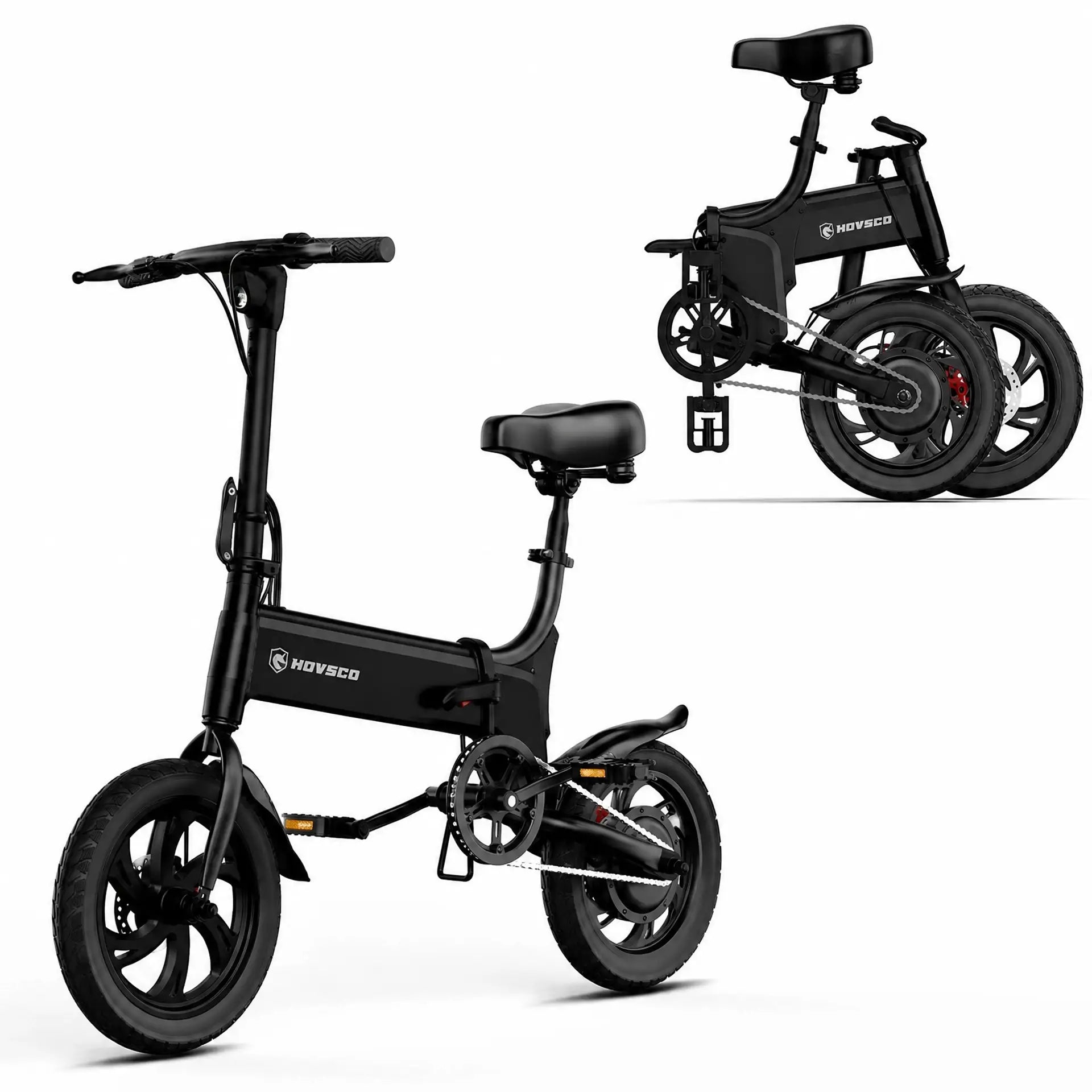
![[ New Arrival ] Porto Max Electric Scooter For Commute & Grocery Shopping - HOVSCO](http://www.hovsco.com/cdn/shop/files/PotroMax-3.jpg?v=1706927007&width=1200)
- by SteveJames
How Much Does an Electric Bike Weigh? A Complete Breakdown
- by SteveJames
E-Bikes
Accessories
 Free Shipping
 15-Day Returns
 2-Year Warranty
Free Shipping
15-Day Returns
2-Year Warranty
2-Year Warranty
Free Shipping
15-Day Returns
2-Year Warranty
Electric bikes typically weigh between 40 and 80 lb, but the number only matters once you know what it includes. Some brands quote the frame alone, some leave out the battery, and some quote the complete, ready-to-ride bike. This guide breaks down where the pounds come from, what typical models weigh, and how to compare two bikes without comparing apples to oranges. If your real question is whether lightweight is worth the trade-off, our lightweight vs standard comparison covers that decision separately.
A pedal bike weighs roughly 25–35 lb. An e-bike adds a motor, a battery, and a frame built to handle the extra speed and weight, which moves most models into a different world:
Within those bands, the spread between the lightest and heaviest version of the "same" category can be 20 lb or more, which is why the category is only the start of the answer.
Manufacturers quote weight three different ways, and the gap between them is not cosmetic:
The HovRanger Step-Thru shows how much this matters: its specification lists 46.58 lb without the battery and 55.4 lb including it — an 8.8 lb gap that changes how the bike feels on a stairwell. Two bikes can both print "55 lb" and differ by nearly 10 lb in the weight you actually lift.
On most e-bikes, the removable battery is the single heaviest component you can take off. Typical packs weigh roughly 6–12 lb, and the HovRanger Step-Thru's published battery adds about 8.8 lb to the bike. Removing it helps two ways: it lightens the lift and makes charging more convenient.
There is a catch worth remembering. The motor and reinforced frame stay on the bike, so a model that is too heavy with the battery is usually still heavy without it. Battery removal is a carrying aid, not a substitute for choosing a bike you can manage.
Once the battery is accounted for, three more components explain the rest of the difference.
This is why "lightweight" is always relative to the class. A bike can be light because of a smaller battery and a stripped frame, or heavy because of a large pack and fat tires — the spec sheet is what tells you which.
This electric bike weight chart groups e-bikes by category so you can see where your target weight falls.
| Category | Typical complete weight | What to expect | HOVSCO example |
|---|---|---|---|
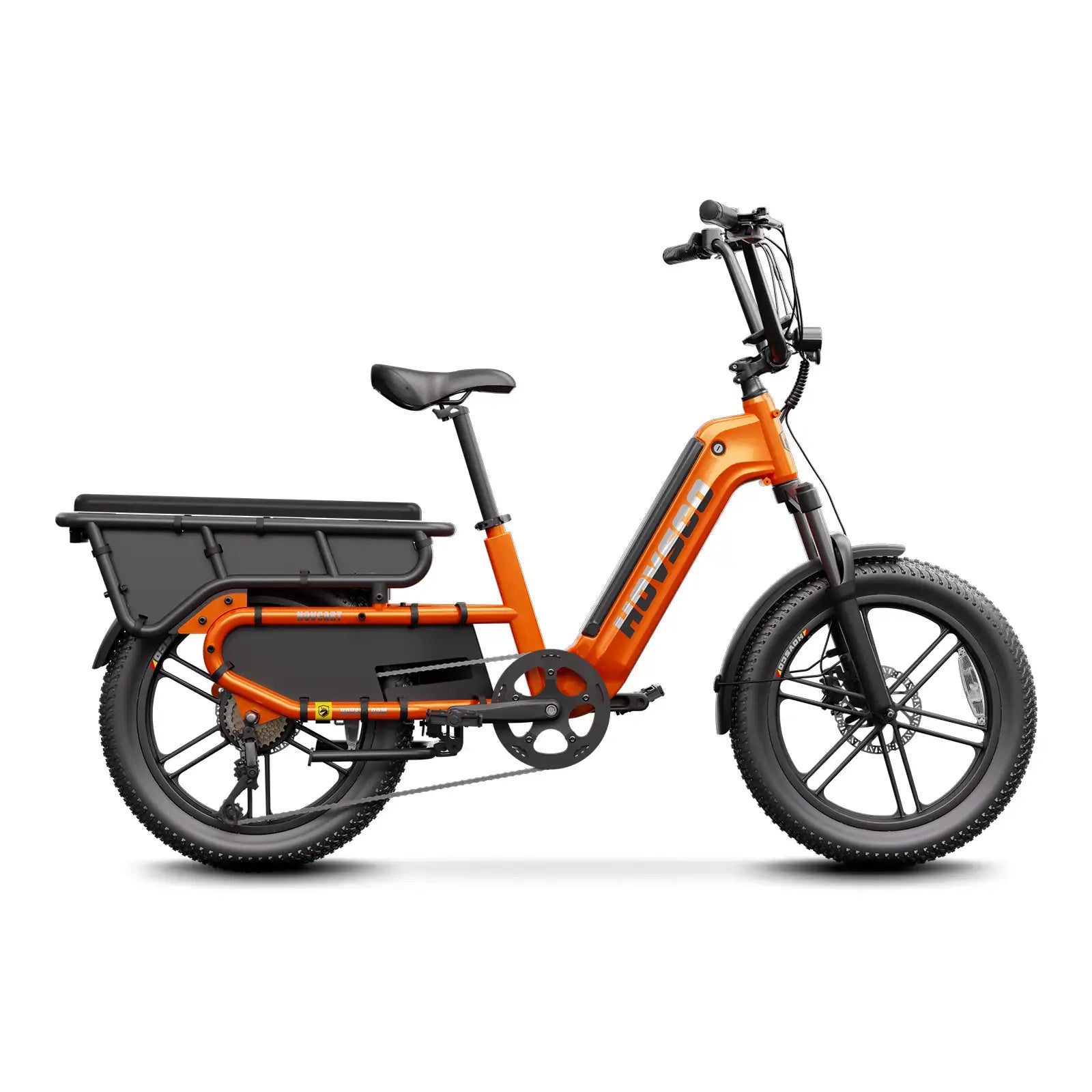
| Lightweight / folding | 35–55 lb | Easier to carry and store; often smaller wheels | Sync Max — 42.3 lb net |
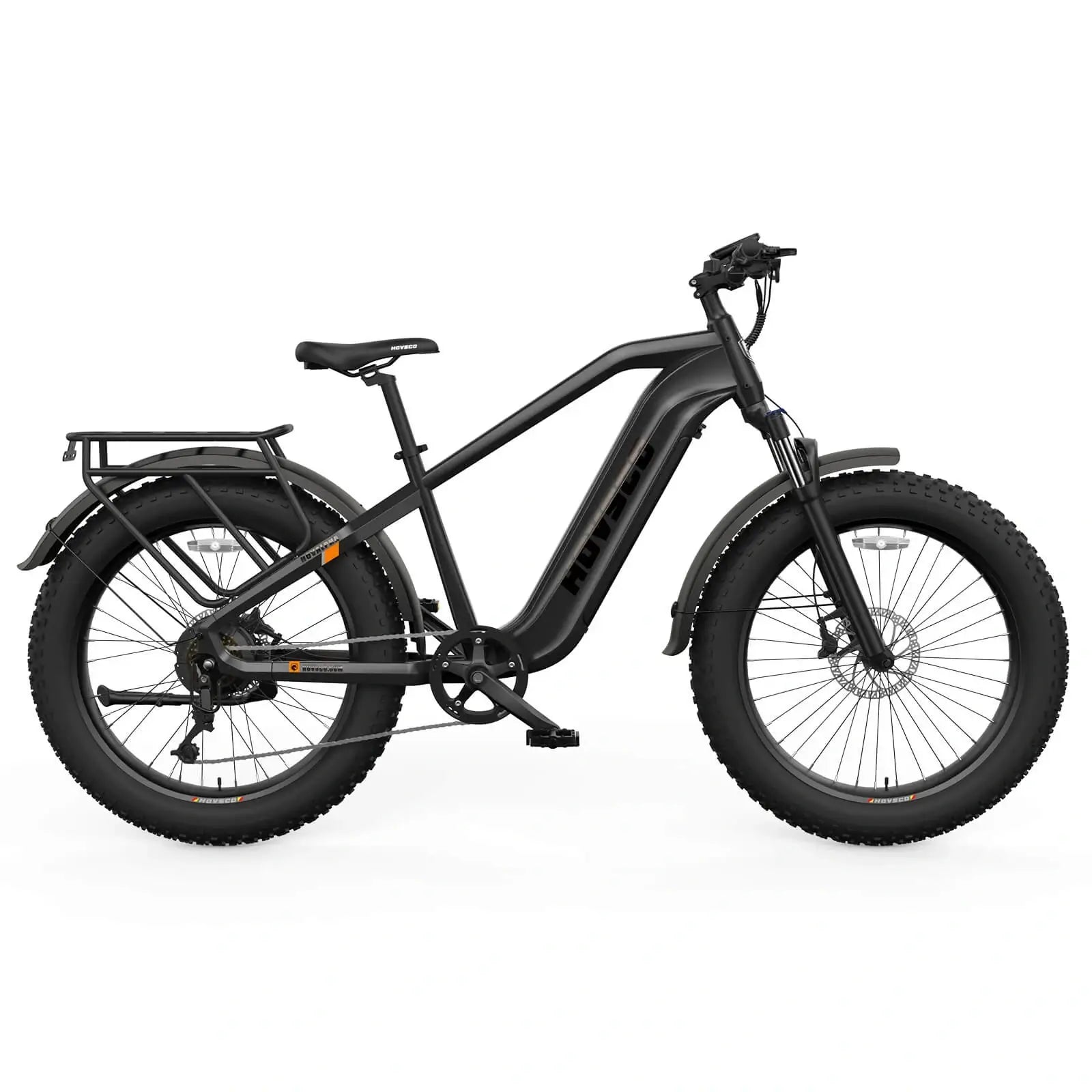
| Commuter / city | 45–65 lb | Balanced range and comfort; step-through or step-over frames | HovRanger Step-Thru — 55.4 lb incl. battery |
| Fat-tire / all-terrain | 60–80 lb | Grip and stability; heavier wheels and tires | — |
| Cargo | 70–100+ lb | Payload capacity; reinforced frame | — |
Ranges are typical, not standards. Always compare the published figure for the exact model, frame, and model year.
The current lightweight collection is a useful case study because the three listings are published with different definitions — which is exactly the point of this guide:
The lightweight electric bikes collection carries the current listings so you can check the definitions yourself before comparing.
These five steps turn a confusing weight spec into a fair comparison.
Keep this table handy when you read any spec sheet — it translates the jargon.
| Term | What it usually means | What to ask before trusting it |
|---|---|---|
| Net weight | Bike without battery and sometimes without accessories | Does the battery come off? What else is excluded? |
| Complete weight | Bike ready to ride, battery and standard equipment included | Is that the figure on the product page? |
| Shipping weight | Boxed package with packaging | Only relevant for delivery, not for carrying |
| Rider + bike weight | Total mass you control at stops | Compare to your own weight and strength |
"The most misleading number on an e-bike spec sheet is the one you cannot compare: some brands quote the frame alone, others quote the complete bike. Until the definitions match, two weights mean nothing." — HOVSCO Engineering & Content Team
Electric bikes weigh roughly 40–80 lb, most of it in the battery, motor, and reinforced frame. The number becomes useful only when you know its definition — net, complete, or shipping — and whether the battery is counted. Check the definition, stay within the same category, and verify the live figure before a weight claim makes the decision for you.
How much does an average electric bike weigh?
Most electric bikes weigh between 45 and 65 lb complete — with the battery and standard equipment included. Lightweight models sit around 40–45 lb, while cargo and fat-tire e-bikes can reach 70–100 lb.
Does the weight include the battery?
It depends on the brand. HOVSCO publishes both figures for the HovRanger Step-Thru: 46.58 lb without the battery and 55.4 lb including it. Always check which definition a spec sheet uses before comparing two bikes.
Why are e-bikes so heavy?
The battery, motor, and reinforced frame add most of the mass. A typical removable battery weighs 6–12 lb, a hub motor adds several more, and e-bike frames are built stronger to handle the extra speed and weight.
How much does an e-bike battery weigh?
Most e-bike batteries weigh roughly 6–12 lb. On the HOVSCO HovRanger Step-Thru, the published difference between bike-without-battery and bike-with-battery is about 8.8 lb.
What is the lightest an e-bike can be?
The light end of the market sits around 40–45 lb complete. The HOVSCO Sync Max publishes a 42.3 lb net weight in a compact 14-inch folding format — confirm what the figure includes on the live product page.
Share:
Throttle vs Pedal Assist: Which Is Better for Beginners?
How to Choose an E-Bike Display Replacement?