


![[ New Arrival ] Porto Max Electric Scooter For Commute & Grocery Shopping - HOVSCO](http://www.hovsco.com/cdn/shop/files/PotroMax-3.jpg?v=1706927007&width=1200)
- by SteveJames
E-Bike Child Seats: Safe Options by Age
- by SteveJames
E-Bikes
Accessories
 Free Shipping
 15-Day Returns
 2-Year Warranty
Free Shipping
15-Day Returns
2-Year Warranty
2-Year Warranty
Free Shipping
15-Day Returns
2-Year Warranty
This guide covers e-bike child seats by age and weight: types, limits, cargo-bike integration, harness and helmet fit, and installation. For child riding safety, see our kids safety guide; for the school-run routine, see the school run playbook.
The e-bike child seat decision starts with the numbers: the child's age and weight, the seat's rating, and the bike's payload. The kids bike seat ebike options divide into rear rack seats, front seats, and cargo-bike integration — and the cargo bike child seat on a platform like the HovCart is the family-hauling answer. This guide covers child seat weight limit math, harness and helmet fitting, and the installation checklist.
Child seat ratings, bike payload, and local helmet and passenger rules vary — verify the seat rating, your bike's payload, and local rules before the first ride.
Child Seats at a Glance
Match the seat to age and weight · check the seat rating and bike payload · harness before helmet, helmet before riding · torque the mount · practice loaded rides.
The first check is the child seat weight limit and the bike's total payload: the seat must be rated for the child's weight, and the rider, child, and gear must stay inside the bike's rating with margin. Age guides seat type — most seats suit children old enough to hold their head up and sit supported, with manufacturer minimums and maximums.
Seat type by age and weight
| Seat type | Typical fit | Mount |
|---|---|---|
| Front seat | Small toddlers within the rating | Handlebar or stem |
| Rear rack seat | Older toddlers within the rating | Rated rear rack |
| Cargo platform seat | Family range within the rating | Cargo platform |
Local rules add their own limits: some areas set passenger ages, helmet requirements, or seat standards. The e-bike child seat decision starts with the numbers on the seat label and the payload rating, then the local rules.
Rear rack seats mount to a rated rack and suit children who have passed the front-seat stage — typically older toddlers and up, within the seat's weight range. They keep the child behind the rider, which changes the bike's balance, so the rack must be rated and the load stays within the payload.
Rear seats need a harness, footrests or straps, and a mount that cannot rotate. The kids bike seat ebike install on a rear rack is a torque-and-check job: bolts to spec, the seat rock-solid, and the child's feet clear of the wheel.
Front seats suit the youngest passengers — typically small toddlers within the seat's limits — because the child rides in the rider's field of view and the bike stays easier to balance at low speed. The tradeoff is weight on the steering and a lower total weight limit.
Front seats change how the bike steers, so the first rides should be short and slow. The e-bike child seat choice between front and rear is an age and balance decision, not a style one.
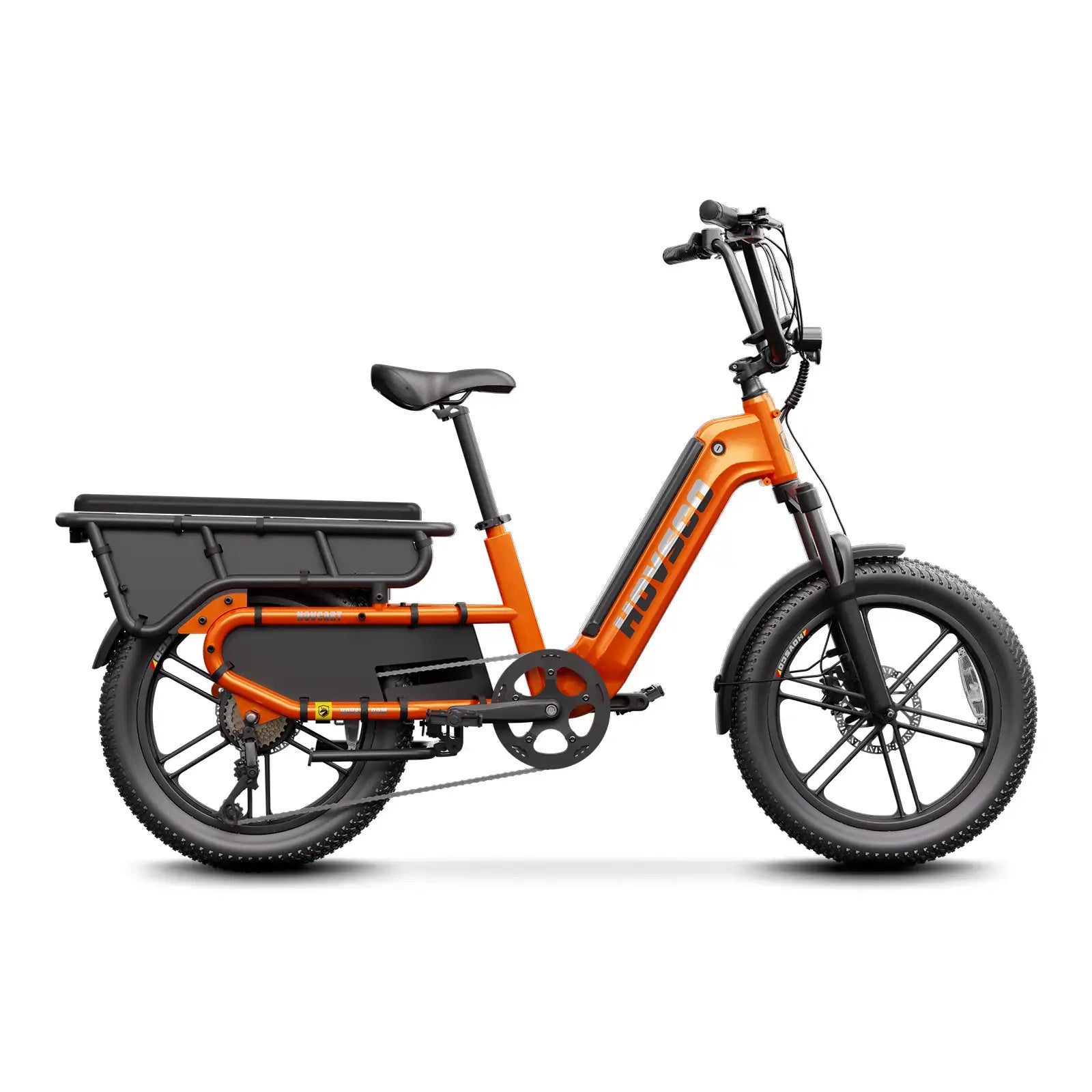
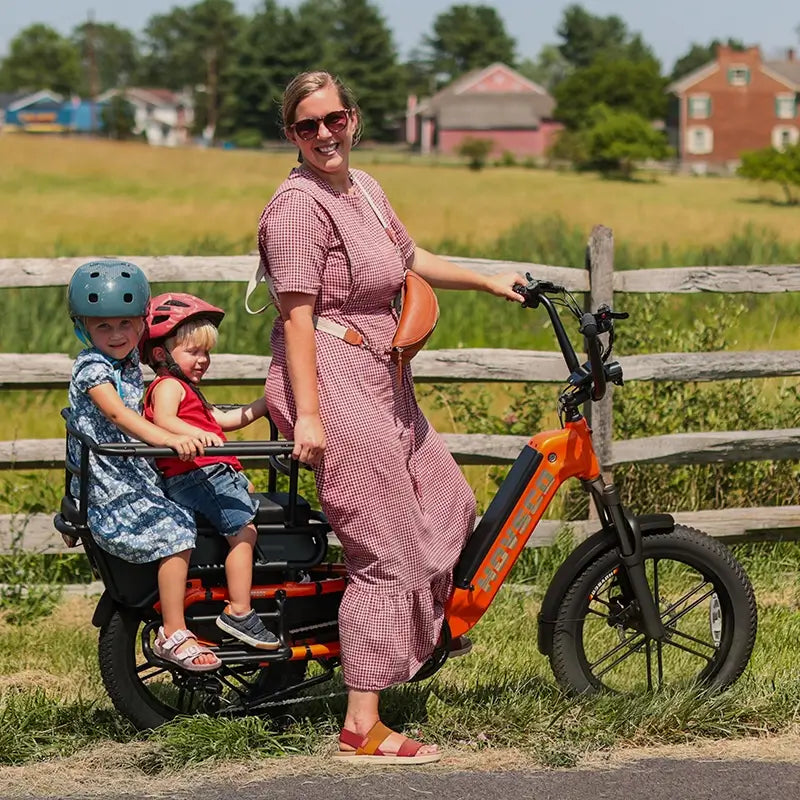
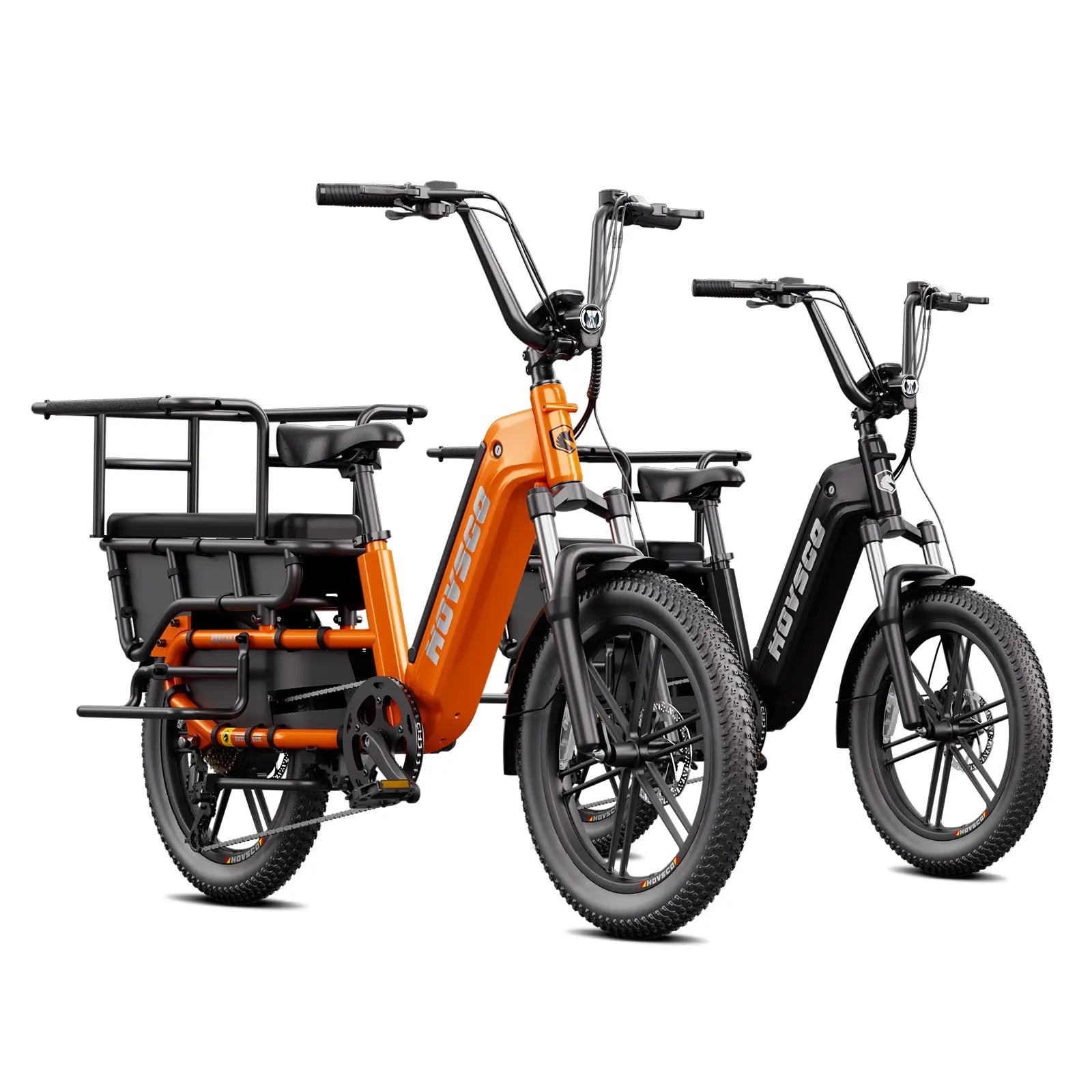
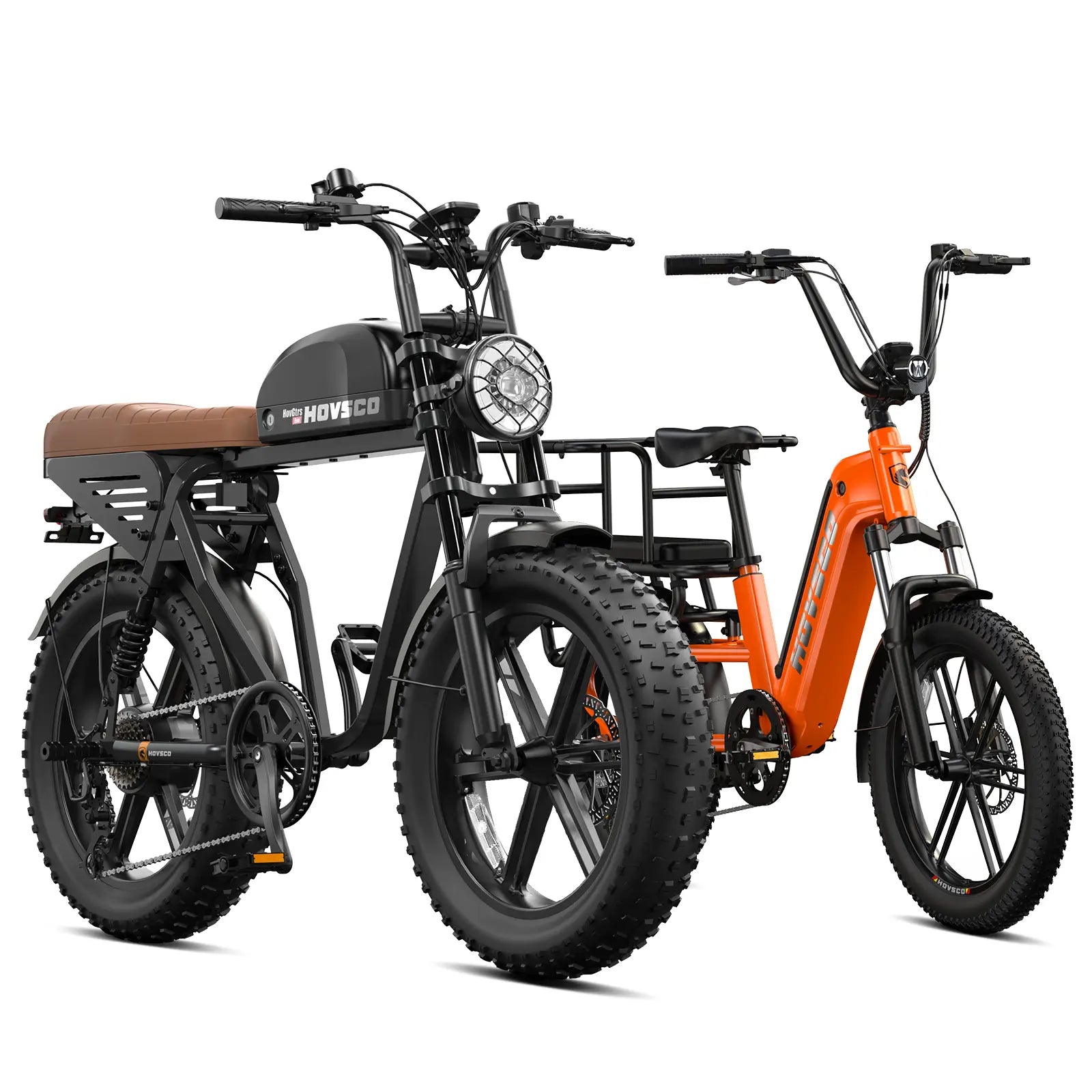
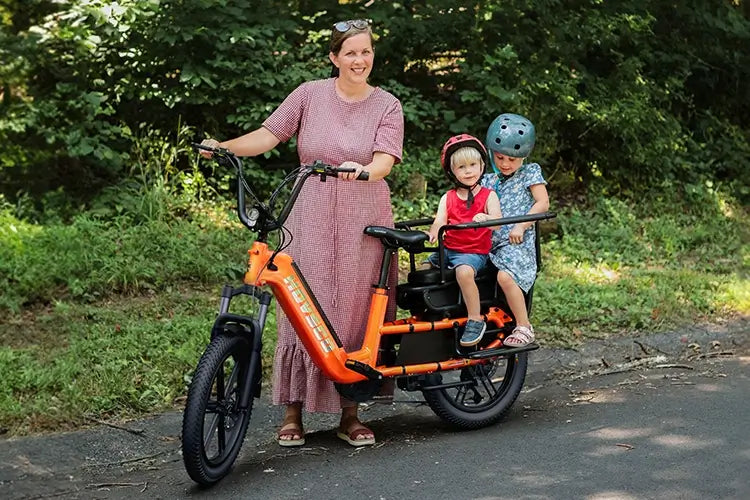
A cargo bike child seat on a platform like the HovCart is different because the seat is designed into the cargo system: a rated seat, a stable low deck, and a payload built for rider plus kids. The cargo bike child seat rides lower and more centered than a rack-mounted seat, which keeps the whole bike stable.
The HovCart child seat mounts per the cargo platform's instructions, and the combined payload — rider, kids, and gear — stays inside the rating with margin. For families, the cargo bike child seat is the safest geometry the category offers.
The harness secures the child to the seat: straps snug, the buckle at the chest, and no slack that lets the child lean out. The helmet fits before the ride — level, snug, and stable on the head — and every ride starts with the same five-second check: harness, helmet, mount.
Layer the child for the ride, not the stop: a snug harness does not work over bulky winter coats, so use thin layers and a blanket. The kids bike seat ebike routine that works is the one that checks the two most important points every single time.
The installation checklist is short: confirm the seat rating and bike payload, mount the seat per the instructions, torque every bolt, check the harness and footrests, and test the loaded bike at low speed before any traffic.
Then practice: starts, stops, and turns with the child aboard on a quiet route, and a route plan that avoids the worst crossings. The e-bike child seat install ends with a boring, practiced first ride — that is the point.
Set up the family ride right — the HovCart child seat on the HovCart cargo e-bike, with more options in the cargo and passenger collection.
In cargo engineering, the child seat question is a numbers question: seat rating, bike payload, and harness fit — in that order. The HovCart seat works because it is designed into the platform: low, centered, and rated for the family load. Install per the manual, check the harness and helmet every ride, and practice loaded before traffic.
— HOVSCO Cargo Engineering Team
Choosing an e-bike child seat starts with age, weight, and payload math, then the seat type: front for the youngest, rear rack for older toddlers, and a cargo bike child seat for the family haul. Fit the harness and helmet every ride, torque the install, and practice loaded before traffic.
Check the child seat weight limit and the bike's payload with margin.
Front seats suit the youngest; rear rack seats suit older children.
A cargo bike child seat rides low and centered for family stability.
Harness snug, helmet level — check both before every ride.
Torque the mount, then practice loaded starts and stops.
What is my child's weight, and does the seat rating cover it?
What is the bike's total payload with rider, child, and gear?
Does my bike have the mount points for the seat type I need?
What helmet rules and passenger rules apply locally?
Where will I practice the first loaded rides?
What is the weight limit for an e-bike child seat?
It depends on the seat — most child seats have explicit minimum and maximum weight ranges, typically from about 20 lb up to 40–50 lb. Match the seat to the child and keep the bike's total payload inside its rating.
At what age can a child ride in an e-bike seat?
Manufacturer minimums vary, but most seats require the child to hold their head up and sit supported — usually from around 12 months at the youngest. Check the seat label and local passenger rules for your area.
Are front or rear child seats safer on an e-bike?
Both work within their ratings. Front seats suit the youngest and keep the child in view; rear rack seats suit older children within the rack rating. A cargo bike child seat on a stable platform is the safest geometry for family hauling.
Can I use a regular bike child seat on an e-bike?
Only if the seat and rack are rated for the e-bike's weight and speeds, and the bike's payload covers it. E-bikes are heavier and faster, so check ratings — a seat sold for acoustic bikes may not be rated for e-bike loads.
How do I know the child seat is installed correctly?
Follow the manufacturer's instructions, torque every bolt, confirm the seat cannot rotate, check the harness and footrests, then test the loaded bike at low speed on a quiet route before riding in traffic.
Share:
How to Fix a Flat Tire on an E-Bike
How to Adjust Hydraulic Disc Brakes on an E-Bike