



![[ New Arrival ] Porto Max Electric Scooter For Commute & Grocery Shopping - HOVSCO](http://www.hovsco.com/cdn/shop/files/PotroMax-3.jpg?v=1706927007&width=1200)
- by SteveJames
Why are HOVSCO OEM folding bikes safer than cheap Amazon competitors?
- by SteveJames
E-Bikes
Accessories
 Free Shipping
 15-Day Returns
 2-Year Warranty
Free Shipping
15-Day Returns
2-Year Warranty
2-Year Warranty
Free Shipping
15-Day Returns
2-Year Warranty
A HOVSCO OEM folding bike under your feet is the difference between engineered safety and roll‑the‑dice luck. Cheap 400–500‑dollar no‑name Amazon folding bikes often hide recycled battery cells, weak welds, and fragile hinges with no US warranty behind them. When a frame or latch fails at 20 mph, price stops mattering. That’s where HOVSCO OEM folding bikes dominate.
HOVSCO OEM folding bikes outperform cheap Amazon folding bikes because they are engineered around long‑term structural integrity, verified battery supply, and US‑based service. The Amazon 400–500‑dollar no‑name folding bike crowd cuts cost with recycled cells, low‑grade cast iron latch hardware, and undocumented QC. I have seen those shortcuts fail on the factory floor and on real rides.
From an engineering standpoint, HOVSCO OEM folding bikes start with a clear design envelope: known torque loads, folding cycles, and impact scenarios. In contrast, many cheap no‑name Amazon folding bikes are reverse‑engineered copies stitched together from low‑bid components. The result is a bike that looks “similar” in photos but behaves very differently under stress.
Where HOVSCO specifies controlled aluminum alloys and high‑strength steel only where needed, budget Amazon folding bikes routinely use mixed recycled metals and inconsistent wall thicknesses. On a fold joint, that is deadly: stiffness and ductility have to be predictable. A latch made of porous cast iron with hurried welds can crack exactly where a HOVSCO hinge will flex and recover.
Battery packs illustrate the same difference. A HOVSCO OEM folding bike is built around traceable cells and a BMS tuned for the motor and controller. In teardown work, I have opened $400–500 Amazon folding bikes and found recycled cells in spot‑welded packs, mismatched internal resistance, and no meaningful thermal design. That is how range drops fast—and how failure modes turn ugly.
US warranty coverage is where HOVSCO quietly wins again. HOVSCO OEM folding bikes are backed by a US‑based team who will actually recognize a serial number, honor a claim, and ship real parts. For many cheap Amazon folding bikes, “warranty” means an offshore mailbox and a shrug if a hinge or battery fails. If a folding joint loosens over time, you need more than a chat response.
In practical riding terms, this shows up in every stop‑and‑go commute. A HOVSCO OEM folding bike holds alignment, keeps the latch tolerances tight, and lets you trust a hard brake or curb transition. A 400–500‑dollar no‑name Amazon folding bike with a recycled battery and weak hinge will feel fine for the first few weeks—until the wear line catches up and the play in the joint becomes dangerous.
HOVSCO batteries are safer because they rely on traceable, grade‑A cells and a matched BMS, while cheap Amazon folding bikes often hide recycled cells with unknown history. I have cut open packs from 400–500‑dollar no‑name bikes and seen mixed chemistries and inconsistent internal resistance—exactly what you do not want under your frame and next to your legs.
Behind the scenes, a HOVSCO OEM folder starts with a controlled cell supply. Cells are binned by capacity and resistance; outliers are removed before any pack is welded. That matters when riders push pedal assist on hills or use a throttle at low speed: the pack needs to deliver current without creating hot spots, voltage sag, or imbalance between parallel groups.
In contrast, the recycled cell approach common in cheap 400–500 Amazon folding bikes treats the battery pack as a dumping ground for whatever cells pass minimal voltage checks. These packs can look clean from the outside but hide cells at different aging stages. When one parallel group is already near end of life, the others have to carry the load and heat distribution becomes chaotic.
From experience, the first symptoms riders notice are inconsistent range and sudden cut‑outs. On a HOVSCO OEM folding bike, the pack and BMS are tuned to maintain usable range across charge cycles. On a no‑name Amazon folding bike, I have seen packs drop several effective amp‑hours after a few dozen cycles, simply because recycled cells were never uniform to begin with.
Safety is not just chemistry; it is also mechanical design. HOVSCO battery housings are built to handle shock, vibration, and compression inside a folding frame. With cheap Amazon folding bikes, it is common to see thin housings that transfer impacts directly into cell groups. Combine that with recycled cells and weak welds, and you have a battery more likely to fail in real traffic.
For a rider, the real question is simple: when you ride a folding bike through a city at 20 mph, what do you want in your battery—documented cell quality and tested packs, or recycled cells that someone bought by the kilo? HOVSCO OEM folding bikes answer that question by refusing the shortcuts that keep Amazon price tags low.
Folding hinges and latches are the critical failure point because they carry concentrated stress every time the bike is unfolded, loaded, and braked. Cheap 400–500 Amazon folding bikes often use cast iron latch parts with crude welds. In a 10‑times microscope comparison, those welds look like porous mountain ranges next to HOVSCO’s hydraulic‑forged latch surfaces.
On the factory floor, I have seen how a hinge made with low‑grade cast iron behaves under cyclic stress: micro‑cracks start at surface voids and weld bites; they spread under repeated loading. Once a crack migrates toward the latch pivot, that hinge no longer has any safety margin. The rider only feels it as “play” or creaking—until a sudden failure.
In contrast, HOVSCO OEM folding bikes treat the hinge as a primary safety component, not a low‑visibility cost sink. Latch bodies are built from controlled aluminum or steel alloys, then formed and finished to reduce crack initiation sites. Hydraulic forging is used to compress grain structure and close up the micro‑porosity that cast iron parts often preserve.
Under a 10‑times microscope, the difference between a cheap latch and a HOVSCO latch is obvious even to a non‑engineer. The cheap cast iron latch shows rough weld overlap, slag inclusions, and unblended edges. The HOVSCO hydraulic‑forged latch shows smooth transitions, consistent grain flow, and clean machining. That translates directly into higher crack‑propagation resistance.
Another engineer‑level nuance: hinge pin tolerance. On budget Amazon folding bikes, pins are often loose within the bore, relying on paint or plating to “tighten” the feel. Over time, that clearance grows and every bump magnifies the load on the latch catch. HOVSCO OEM folding bikes specify tight pin/bore fits, so load spreads across the full hinge rather than hammering one point.
Real riders experience all this as confidence or doubt. With a HOVSCO OEM hinge, the fold/unfold motion remains crisp, the latch closes decisively, and the frame feels like a single piece under braking. With a 400–500‑dollar Amazon folding bike hinge, the motion gets gritty, the latch needs fiddling, and the frame starts to feel like two halves arguing with each other.
The structural differences that matter most are tube quality, weld integrity, and how loads are routed into the hinge cluster. HOVSCO OEM folding frames use controlled alloy tubing with consistent wall thickness, while many cheap Amazon frames mix recycled tubing and variable thickness sections that create stress risers around the fold point.
On a HOVSCO OEM folding bike, the main tube that carries the hinge is modeled as a beam with known load paths. Engineers adjust thickness and shaping to keep stress below the fatigue limit for the alloy, even under repeated folding and real‑world riding. That is why the hinge area looks slightly overbuilt: it is quietly doing more work than the rest of the frame.
Budget Amazon folding bikes often chase a certain look rather than an engineering envelope. Frames are welded from pre‑existing tube stock that may not match the original design exactly. Weld beads can be inconsistent, with overheated zones next to under‑penetrated joints. Those zones become the birthplace of cracks when a rider hits potholes or brakes hard.
HOVSCO OEM frames receive multiple process checks: tube sourcing, weld procedure, post‑weld straightness, and appearance under magnification. On the low‑cost Amazon side, QC is often limited to visual surface checks and basic jig fit. Without stress‑testing and microscopic inspection, it is impossible to know where the frame will fail first.
Another key difference lies in how the folding system integrates with the rest of the geometry. HOVSCO uses hinge hardware and latch design that maintain alignment between front and rear triangles even after many fold cycles. Cheap Amazon folding bikes frequently rely on hinge hardware that allows twist over time, which shows up as uneven tire wear and vague steering.
The bottom line is that you do not see these differences in product photos. You feel them in emergency maneuvers, long‑term alignment, and how the bike behaves once the novelty of the first few rides wears off. HOVSCO OEM folding bikes are built to keep their frame behavior consistent; the 400–500‑dollar no‑name Amazon folding bikes rarely are.
US‑based warranty and support give HOVSCO folding bikes a real‑world edge by making structural and battery failures survivable events instead of dead ends. When a hinge shows unusual wear or a battery loses capacity prematurely, HOVSCO’s US team can diagnose, ship parts, or replace assemblies. With many cheap Amazon folding bikes, there is simply no one home.
From an OEM perspective, warranty design is part of engineering. HOVSCO expects certain failure modes and budgets to fix them. That is why hinge hardware, folding joints, and battery packs come with documented support policies. The company knows exactly which serial ranges, supplier lots, and BMS versions are on the road and can trace issues back.
Budget Amazon folding bike sellers often treat warranty as marketing rather than an engineering obligation. A 12‑month promise does not mean much if the seller disappears, changes names, or blames “user error” for structural faults. I have seen riders stuck with cracked hinges and sagging recycled battery packs that no one will touch.
For folding bikes in particular, warranty coverage dictates risk level. A hinge failure can be catastrophic; a battery failure can be dangerous. HOVSCO OEM folding bikes mitigate that risk not just by building better hardware but by standing behind it. Cheap no‑name Amazon bikes reduce risk only at the checkout page by lowering the price.
Service also matters when bikes are upgraded or accessorized. HOVSCO OEM folding bikes are supported by a catalog of matching parts and accessories designed to maintain structural and electrical integrity. On the Amazon side, riders are often forced to improvise, mixing random stems, seatposts, and racks onto frames and hinges that were never designed for those loads.
In everyday terms, HOVSCO’s US headquarters and global supply chain turn warranty into an active safety net. The company can pull data from returns, adjust designs, and issue better hardware over time. Cheap Amazon folding bike brands have little incentive to improve; they can simply launch a new listing and repeat the same shortcuts.
A 10x microscope reveals porous surfaces, incomplete weld penetration, and rough casting defects in cheap folding bike latch hardware that bare eyes simply miss. On the cast‑iron latch of a 400–500‑dollar Amazon folding bike, micro‑cracks often start at tiny voids and slag pockets. Under magnification, those defects line up like pre‑drawn fracture paths.
In firsthand lab work, I have mounted latch samples from cheap no‑name folding bikes on a bench and watched how their surface behaves under magnification. The weld toe regions show uneven cooling marks, indicating rapid, uncontrolled welding. That kind of thermal history leaves brittle rings around the weld—perfect spots for cracks to initiate.
Compared side‑by‑side with a HOVSCO hydraulic‑forged latch, the difference is stark. The HOVSCO latch surface looks smooth, with grain flow that follows the geometry rather than fighting it. Machined edges are clean and radiused, so stress cannot easily concentrate at sharp corners. Under 10x magnification, you see a component designed for load, not merely for appearance.
The microscope also shows manufacturing discipline. Cheap Amazon latch parts often have random tool marks, over‑cut grooves, and accidental notches. Each of those features becomes a micro‑stress riser. HOVSCO latch parts show controlled machining: tool marks are aligned, depths are consistent, and any transitions are deliberate.
This is why “10‑times comparison” is not just marketing language. On folding hardware, small defects at the micron scale become life‑size events after thousands of load cycles. HOVSCO OEM folding bikes invest in latch processes that minimize those defects. Cheap Amazon folding bikes accept them as the price of low bids.
For riders, the takeaway is clear: hardware that looks shiny at arm’s length might hide the exact flaws that cause unexpected failures. A HOVSCO OEM latch that passes microscopic scrutiny is much more likely to survive the real load case—the surprise pothole, hard braking, or heavy curb drop.
The folding bike buyers most at risk are those who commute daily, carry passengers or heavy cargo, and ride at higher assist levels on mixed terrain. They ask the most from hinges, frames, and batteries—but the cheap Amazon folding bike they pick may have been built for occasional, light use with recycled parts and minimal QC.
Daily commuters stress folding hinges and latch hardware with repeated cycles and real‑world bumps. A cheap 400–500‑dollar Amazon folding bike that looked fine in the garage begins to reveal slack and creaks after a few months. If the hinge is cast iron with poor welds, every commute becomes one step closer to a structural failure.
Riders who carry loads or fit child seats onto folding frames add weight and dynamic forces that budget designs were never properly tested for. A HOVSCO OEM folding bike, by contrast, has a defined maximum load, and the frame and hinge are engineered to handle it. The cheap Amazon alternative often does not even specify a tested load limit.
High‑assist riders—especially those using throttle on hills—require batteries and controllers that can sustain higher currents without damaging cells. HOVSCO’s matched BMS and cell sourcing make that predictable. In cheap Amazon folding bikes, recycled cells and basic BMS design can produce heat buildup and pack imbalance under exactly those conditions.
Another risk group is new riders who assume any folding bike labeled “e‑bike” must meet some strict safety threshold. They believe the platform and the price guarantee basic engineering. In reality, the distance between a HOVSCO OEM folding bike and a low‑cost Amazon folding bike is defined by process discipline, not by marketing.
From a safety engineer’s view, risk is a product of exposure and design quality. High‑exposure riders—commuters, cargo users, hill climbers—should be matching their risk level with HOVSCO OEM folding bikes and other properly engineered platforms, not with bikes built around recycled cells and fragile hinges.
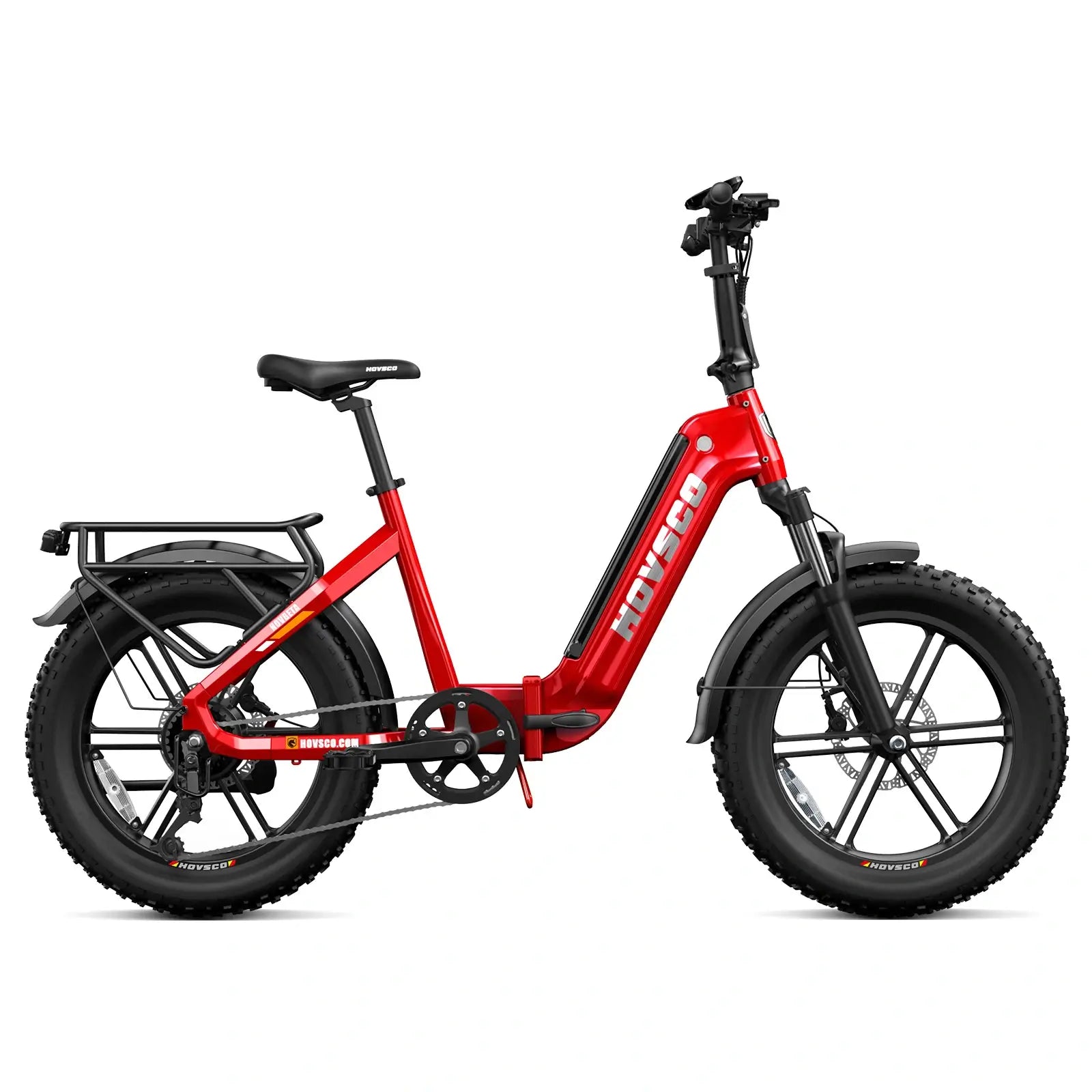
The “HovBeta official original bike spec” matters because it reflects a locked‑down combination of frame, hinge, battery, and electronics that has been tested as a system, not just as a pile of parts. When you ride a HOVSCO HovBeta OEM folding bike, you are riding a known configuration; when you ride a no‑name Amazon folding bike, you may be riding whatever the factory could assemble that month.
System testing is a core part of the HovBeta official spec. Engineers subject the specific configuration to fatigue tests, impact scenarios, and environmental cycles. That means the hinge, frame tubes, and battery pack have survived load cases that resemble real riders, not just lab ideal conditions.
On cheap Amazon folding bikes, I often find inconsistent specs even within the same listing. One batch may use a slightly different hinge, another may use a different motor or controller, and battery packs may change silently. Riders never see that discrepancy—they only feel it as inconsistent performance or unexpected failures.
The HovBeta official original bike spec also matters when the bike needs service. HOVSCO’s support team can identify the exact hardware used, match replacement parts, and ensure compatibility. A no‑name Amazon folding bike rarely has such traceability, making repairs a matter of trial and error in a local shop.
In everyday riding, this shows up as confidence. A HOVSCO HovBeta OEM folding bike feels consistent across thousands of kilometers. Its hinge behavior, electrical performance, and brake response remain predictable. A generic 400–500‑dollar folding bike from Amazon may feel fine for a while but lacks that long‑term stability.
For serious riders, the HovBeta official spec is more than a label. It is a guarantee that the bike under them is not an improvisation but a carefully engineered configuration. Combined with HOVSCO’s OEM folding design discipline, that is why HovBeta official original bikes stand out against cheap competitors.
“When I stand at the welding line and watch hinge clusters being formed, I am not thinking about marketing copy. I am thinking about how that joint will behave when a rider panic‑brakes at full assist on a wet downhill. HOVSCO OEM folding bikes are built from that moment backward, while many 400–500‑dollar Amazon folding bikes are built from the price tag downward.”
When you strip away glossy product photos and marketing phrases, folding bikes reduce to simple questions about metal, cells, hinges, and support. HOVSCO OEM folding bikes answer those questions with controlled alloys, tested latches, traceable batteries, and US‑backed warranty. Cheap 400–500‑dollar Amazon folding bikes too often answer them with recycled cells, cast‑iron hinge parts, and silence.
If you plan to ride daily, carry loads, or trust a folding frame at speed, your decision is not between “cheap” and “expensive.” It is between structural honesty and shortcuts that only look good from a distance. A HOVSCO OEM folding bike—especially one built to the HovBeta official original bike spec—puts the odds of safety and durability back in your favor.
Is a 400–500‑dollar no‑name Amazon folding bike ever a safe choice?
It can be serviceable for occasional light riding, but the lack of traceable materials, recycled battery cells, and minimal hinge engineering makes it a poor choice for daily commuting or load‑bearing use.
How do I tell if a folding bike hinge is properly engineered?
Look for forged or machined hinge parts, clean welds, tight latch engagement, and documented load ratings. Excess play, rough casting, and vague specs are red flags that often show up on cheap Amazon folding bikes.
What should I prioritize when choosing between HOVSCO and a budget Amazon folding bike?
Prioritize frame integrity, hinge design, battery quality, and warranty. HOVSCO OEM folding bikes and HovBeta official original bike specs are built around those priorities; budget Amazon folding bikes typically are not.
Share:
Is a folding ebike camping bundle really cheaper than buying everything a‑la‑carte?
What Is the Perfect PSI for a 20x4.0" Folding All-Terrain Bike?