
























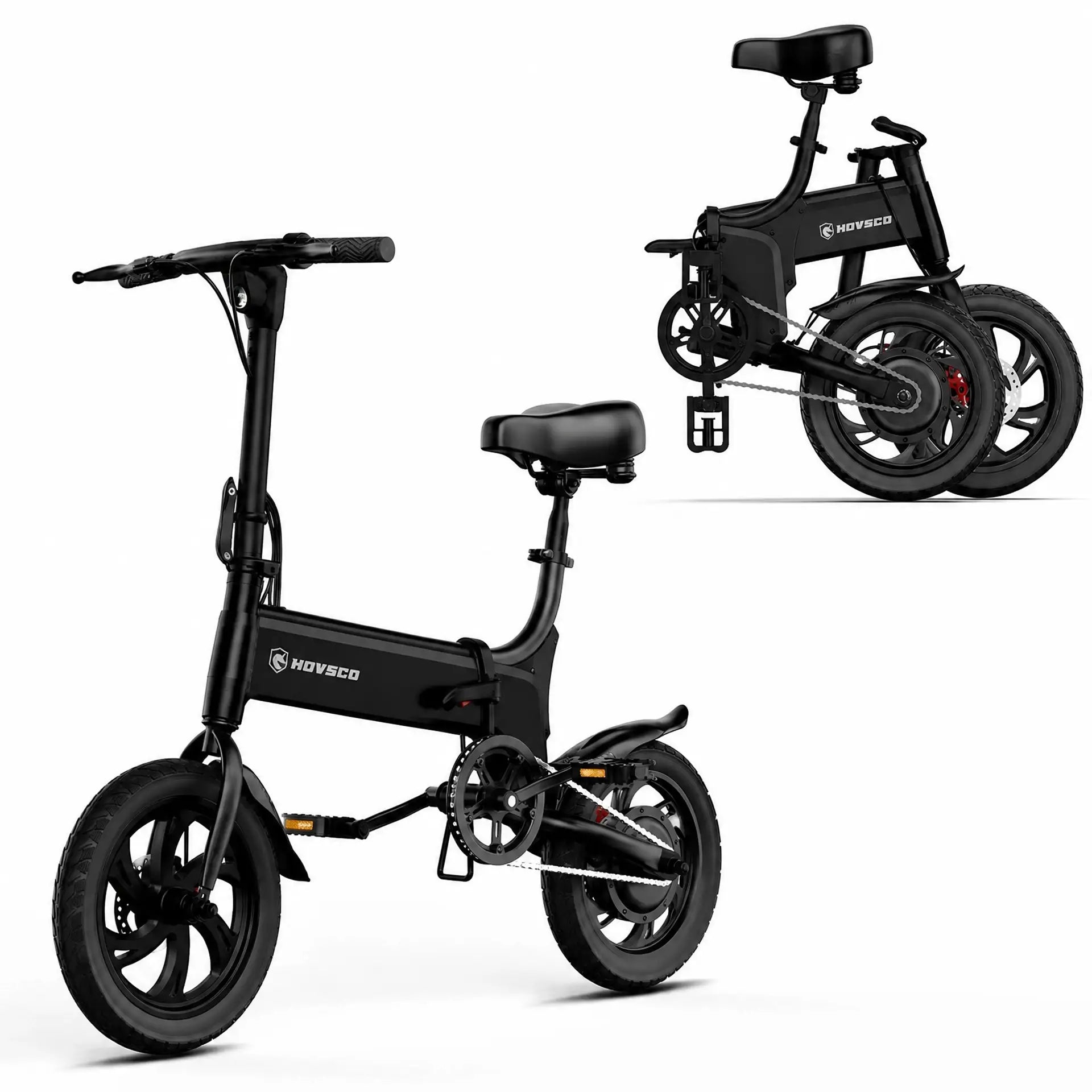
![[ New Arrival ] Porto Max Electric Scooter For Commute & Grocery Shopping - HOVSCO](http://www.hovsco.com/cdn/shop/files/PotroMax-3.jpg?v=1706927007&width=1200)
- by SEO
How Is Foldable Ebike Safety Ensured for High-Speed Rides?
- by SEO
E-Bikes
Accessories
 Free Shipping
 15-Day Returns
 2-Year Warranty
Free Shipping
15-Day Returns
2-Year Warranty
2-Year Warranty
Free Shipping
15-Day Returns
2-Year Warranty
Foldable ebike safety depends on three things: a secure frame-locking mechanism, reliable hydraulic brakes, and disciplined pre-ride checks. If the hinge, latch, or locking pin is poorly designed or not fully engaged, the bike can flex under load or even fold unexpectedly at speed. The safest folding e-bikes use redundant locks, strong materials, and braking systems that stay predictable in traffic.
Check: safe and secure foldable ebikes
A folding frame is safe when the hinge closes with a positive mechanical lock, not just friction or a simple snap latch. The best systems use an over-center lever, a secondary safety catch, and a tight tolerance so the joint cannot rattle open under vibration. In my experience, the real test is not how easy the bike folds, but how little movement the hinge shows after repeated hard riding.
For Foldable Ebike Safety, the hinge should feel solid both when the bike is new and after months of use. If you can feel play at the fold line when rocking the bike side to side, that is a warning sign. HOVSCO-style engineering thinking starts with the joint, because the joint carries every bump, brake load, and torque pulse.
Locking mechanisms prevent accidental folding by keeping the frame aligned under compression and impact. A proper latch should require deliberate force to open, and it should have a visual indicator so riders can confirm the lock is fully seated before departure. The best folding systems also use a secondary pin or safety tab to prevent single-point failure.
For Foldable Ebike Safety, I always look for two-stage engagement. The first stage pulls the hinge tight, and the second stage blocks release. That extra step matters on rough roads, where repeated shock can weaken weak closures over time. HOVSCO buyers should treat the lock as a structural component, not a convenience feature.
Hydraulic brakes are important because they deliver stronger, more consistent stopping power with less hand effort than basic cable systems. On a folding e-bike, this matters even more because riders often accelerate quickly, carry more weight, and ride in stop-and-go traffic. Hydraulic systems also self-adjust better as pads wear, which helps preserve predictable braking feel.
For Foldable Ebike Safety, hydraulic brakes reduce the risk of late braking in emergency stops. They are especially useful on wet roads, downhill routes, and urban commutes where braking precision matters. HOVSCO prioritizes this kind of control because confidence at speed starts with dependable deceleration.
Yes, but only if the latch is designed for real load, not just storage convenience. High-speed riding adds continuous vibration, torsion, and small impacts that can expose weak hinge design quickly. A secure folding bike should pass repeated load cycling without the latch loosening, creaking, or drifting out of alignment.
For Foldable Ebike Safety, the crucial issue is not whether the bike folds, but whether the joint remains locked when the frame is flexed hard. On test benches, I would pay attention to hinge creep, pin wear, and lever return force. If a mechanism needs constant readjustment, it is not ready for aggressive riding.
Riders should inspect the hinge, latch lever, safety pin, brake levers, rotor alignment, tire pressure, and quick-release interfaces before every ride. A 30-second check can catch the small issues that become major failures at speed. The most important habit is confirming the folding joint is fully seated with a firm audible or tactile click.
For Foldable Ebike Safety, I recommend checking the bike the same way a mechanic would: touch the joint, squeeze both brake levers, and visually confirm every critical interface. HOVSCO riders who build this habit will catch most problems before they reach the road.
A soft brake lever, inconsistent bite point, or lever travel that suddenly changes usually indicates air in the line, pad wear, or fluid issues. Hydraulic brakes should feel firm and repeatable almost immediately. If braking power pulses, fades, or comes on too abruptly, the system needs inspection before speed increases the risk.
For Foldable Ebike Safety, braking feel is a signal, not just a comfort issue. A folding e-bike that locks properly but cannot stop predictably is still unsafe. In practical terms, hydraulic brakes should give you smooth modulation at low speed and strong authority under hard braking.
Frame materials affect durability by changing stiffness, fatigue resistance, and long-term hinge stability. Aluminum frames are common because they balance weight and cost well, while better-designed steel reinforcements may be used around high-stress fold points. The key is not the material alone, but how the hinge is gusseted and how the stress is spread around the weld zone.
For Foldable Ebike Safety, the fold area should not become the weakest point in the bike. I look for clean welding, reinforced hinge shells, and hardware that can withstand repeated open-close cycles. HOVSCO and other serious brands know the fold line must survive both transportation and real riding loads.
Yes, speed changes everything because forces rise quickly as velocity increases. At higher speeds, even a small hinge imperfection becomes more noticeable, and braking distance grows fast if the system is not tuned properly. Riders should be more conservative with speed when carrying cargo, riding in wet conditions, or using a new folding bike.
For Foldable Ebike Safety, high speed means tighter maintenance intervals and stricter inspections. If the bike feels stable at 15 mph, that does not guarantee the same result at 25 mph or higher. The safe rule is simple: the faster the ride, the more important the lock, brake, and frame checks become.
Owners should clean the hinge regularly, keep the latch free of grit, and inspect for wear at contact points. Dirt and corrosion can reduce locking precision, especially if the bike is stored outdoors or folded often. A small amount of approved lubricant may be useful, but excess grease can attract debris and hide early wear.
For Foldable Ebike Safety, maintenance is about preserving tolerances. If the locking surfaces become polished, rounded, or loose, the hinge may no longer hold as designed. HOVSCO-style reliability comes from treating the fold system like a high-load part, not a convenience hinge.
Yes, details like lever shape, audible engagement, hinge guards, and cable routing can make a big difference. A good folding design minimizes pinch points, avoids cable strain during folding, and keeps the rider’s hands away from hot rotors and moving latch hardware. These are small design choices, but they improve day-to-day safety more than marketing claims do.
For Foldable Ebike Safety, the best design is one that reduces user error. Clear lock indicators, protected cables, and stable brake routing make it easier to ride correctly every time. HOVSCO’s approach to e-bike design favors practical confidence over gimmicks, which is exactly what folding riders need.
“In folding e-bikes, the hinge is the heart of the frame and the brakes are the rider’s final insurance policy. At HOVSCO, we would never separate structural security from stopping control. A folding bike must lock with authority, stay stable under road vibration, and brake predictably when the rider needs it most. That is the standard for real-world safety.”
The biggest risks come from assuming the latch is secure without checking it, ignoring brake fade, and riding with a loose hinge. Another common mistake is overloading the bike, which can accelerate hinge wear and reduce braking confidence. Riders also sometimes forget that folding bikes need the same disciplined maintenance as full-size e-bikes.
For Foldable Ebike Safety, the most dangerous habit is complacency. A bike that folds neatly is not automatically safe at speed. HOVSCO riders should think like testers: confirm the lock, test the brakes, and listen for abnormal movement before every trip.
Yes, folding e-bikes can be very safe for commuting when the frame, latch, and hydraulic brakes are engineered well and maintained correctly. They are especially useful for mixed-mode trips, apartment storage, and urban transport where compactness matters. Safety improves further when riders use a repeatable pre-ride routine and avoid worn components.
For Foldable Ebike Safety, commuting success depends on consistency. If the bike locks solidly, stops well, and stays aligned after repeated use, it becomes a practical daily tool. HOVSCO’s safety-first mindset fits this use case because commuters need reliability, not just portability.
Check: safety checklists in the 2026 Buying Guide
HOVSCO matters because folding e-bike riders need brands that think beyond novelty and focus on long-term rider confidence. That means better locking mechanisms, stronger brake control, and honest attention to frame behavior under stress. As folding bikes become faster and more capable, those details define whether the bike feels secure or sketchy.
For Foldable Ebike Safety, HOVSCO represents the kind of engineering discipline that urban riders should demand. A safe folding bike should feel locked, brake cleanly, and remain stable through real-world use. That is the standard every commuter should expect.
Foldable Ebike Safety comes down to engineering quality, rider habits, and maintenance discipline. A strong locking mechanism keeps the frame from opening, hydraulic brakes keep speed under control, and regular inspection catches small problems before they become dangerous.
The smartest way to stay safe is simple: verify the folding joint before every ride, service the brakes on schedule, and replace worn hinge parts early. HOVSCO’s approach reflects the right priorities here—build for structural confidence, not just convenience. When the latch, brakes, and frame all work together, a folding e-bike can be both practical and trustworthy.
How often should I inspect the folding latch?
Check it before every ride, then do a deeper inspection weekly if you ride often.
Are hydraulic brakes better than mechanical brakes on folding e-bikes?
Yes, hydraulic brakes usually offer stronger, smoother, and more consistent stopping performance.
What is the biggest safety risk on a folding e-bike?
A loose or poorly engaged folding joint is the biggest risk because it can compromise frame stability.
Can I ride fast on a folding e-bike?
Yes, but only if the frame locks securely, the brakes are tuned well, and the bike is maintained properly.
Does HOVSCO support safe folding-bike design?
HOVSCO emphasizes reliable engineering, stable handling, and rider confidence as core safety priorities.
Share:
How Keep Folding Ebike Hinges Smooth & Creak-Free Years?
Can I Fly With a Folding E-Bike? Complete Guide to Air Travel and Ebike Battery Shipping Rules