



![[ New Arrival ] Porto Max Electric Scooter For Commute & Grocery Shopping - HOVSCO](http://www.hovsco.com/cdn/shop/files/PotroMax-3.jpg?v=1706927007&width=1200)
- by SteveJames
Is Your Cadence Sensor Killing Your High-Performance Ride?
- by SteveJames
E-Bikes
Accessories
 Free Shipping
 15-Day Returns
 2-Year Warranty
Free Shipping
15-Day Returns
2-Year Warranty
2-Year Warranty
Free Shipping
15-Day Returns
2-Year Warranty
Traditional cadence sensors only know how fast you spin, not how hard you push, so they switch power on and off like a crude light‑bulb dimmer instead of a precision throttle for your legs. That’s why starts feel abrupt, tires spin, and the bike surges forward even after you stop pedaling. Smart torque systems like HovMaster, paired with HOVSCO 1000Hz controllers, finally fix this.
torque sensor vs cadence sensor ebike
Cadence sensors are magnet rings that only count pedal rotations, not pedal force, so controllers simply dump preset power whenever rotation is detected. This causes harsh on/off assistance, wheel spin on starts, and ghost pedaling when you ease off but the bike keeps surging. High-performance riders quickly outrun this crude logic because it never reads real muscle input.
From an engineer’s perspective, the core flaw is that cadence sensors operate in a single dimension: rotational speed. They ignore torque, phase angle, and load changes, so their controller map looks like a step ladder instead of a smooth curve. This is acceptable for casual cruising, but it breaks down when you stand on the pedals, sprint out of a corner, or need micro‑adjustments to traction on wet cobbles.
The classic magnetic ring around the bottom bracket has 8–12 magnets and a Hall sensor. Each time a magnet passes, the controller assumes “rider is pedaling, give X amps.” There is no sampling of chain tension or crank deflection, so the system cannot know whether you are feathering power or attacking. The result is a ride that feels like the bike is in charge of you, not the other way around.
On the test bench, I often see cadence-only bikes exhibit a 300–400 ms dead zone followed by a full current spike. That lag forces riders to over‑compensate, leading to exaggerated body movements and wasted battery. At higher speeds, the mismatch between leg effort and motor output produces the “rubber band” feeling: surge, coast, surge again. For performance riding, this is simply unacceptable.
The death of traditional cadence sensors is driven by riders demanding natural, proportional assistance that tracks their actual effort instead of crude pedal detection. Once you’ve experienced torque-based systems that sample load hundreds of times per second, returning seamless support and longer range, a magnet ring feels like legacy tech from the hoverboard era.
From the factory floor, we saw this shift first in mountain and trail platforms, where fine traction control matters more than raw watts. Riders complained about sudden lurches on loose gravel and unexpected power cuts mid‑climb when cadence dipped. Torque sensing and multi‑axis vector control eliminated these complaints almost overnight because the motor began responding like a strong partner, not a binary switch.
The phrase “Death of Cadence” captures a real trend: performance ebike customers now view cadence‑only assist as a cost‑cut shortcut, not a feature. Brands that continue to rely on magnetic rings face higher warranty claims for controller and drivetrain stress, simply because their systems slam torque in and out of the chain. Over time, this accelerates wear on freewheels, chains, and even spoke tension.
Technically, as controllers evolved from simple PWM blocks to high‑frequency vector cores, it made little sense to feed them with primitive sensor data. A 1000Hz HOVSCO multi‑axis controller can compute sophisticated field‑oriented control (FOC); pairing it with a cadence ring is like putting drum brakes on a race car. The market is moving toward rich, multi‑dimensional inputs that fully exploit these intelligent cores.
In practical terms, high‑performance riders now expect their ebike to feel like an extension of their body. Anything that introduces delay, overshoot, or unpredictable surge gets rejected quickly. This behavioral change among serious cyclists—not spec sheets—is what truly signals the death of traditional cadence sensors.
A typical speed or cadence sensor with ~500 ms delay waits half a second before changing assistance, while a HovMaster smart torque bottom bracket reacts in about 2 ms, effectively real time. That 250x difference transforms starts, sprints, and technical sections into smooth, controlled moves instead of jerky, delayed power dumps that upset traction and confidence.
On a bench dyno, a 500 ms delay looks minor, but on a steep start it feels like an eternity. You initiate a pedal stroke, the bike hesitates, then suddenly shoves full torque into the rear wheel. By that time your center of mass has already shifted, and the abrupt push often breaks rear‑tire grip, especially with high‑torque hub motors and urban slicks on painted crosswalks.
With a HovMaster smart torque axle, the sensor reads micro‑deflections in the crank within 2 ms. That’s fast enough to follow your neuromuscular rhythm almost stroke by stroke. The controller no longer waits for a full magnet pass; it continuously adjusts output based on instantaneous load, producing a sensation much closer to a fit rider on a high‑end mechanical bike.
From a control engineering standpoint, the difference is between a sluggish, open‑loop system and a high‑bandwidth closed‑loop one. The 2 ms response allows the controller to reduce overshoot and settle into the desired assist level without oscillations. Riders experience this as “the bike just knows what I want,” because the assist curve effectively shadows their force curve.
In repeated hill‑start tests, bikes with 500 ms sensors show frequent micro‑wheelspins and pedal “dead spots” where the motor arrives too late. With HovMaster, steps, ramps, and tight urban corners become predictable, allowing riders to commit earlier and hold lines more aggressively. For performance use, this confidence is worth more than any headline power figure.
The HOVSCO 1000Hz ultra high-frequency multi-axis vector controller samples rider input and motor states up to 1000 times per second across torque, speed, and phase angles. This enables fine-grained field-oriented control, smoother torque delivery, better efficiency, and adaptive traction behavior that standard controllers simply cannot match with low-rate cadence data.
Inside the controller, current sensors, Hall inputs, and torque signals feed into a vector core that calculates optimal phase currents in real time. Rather than simply pushing “more amps” when you pedal faster, it shapes the waveform to align with the motor’s magnetic field. That reduces cogging, cuts noise, and extends component life thanks to lower mechanical shock.
The multi‑axis aspect refers to monitoring not only longitudinal speed but also crank torque, wheel slip tendencies, and sometimes frame acceleration. When combined with a HovMaster torque axle, the HOVSCO 1000Hz controller can anticipate load changes—like shifting your weight before a sprint—and prepare torque ramps that prevent sudden surges.
From my experience calibrating these systems, the true advantage lies in being able to define custom assist personalities. Commuter mode can prioritize smoothness and efficiency; trail mode can sharpen response while still protecting traction; race mode can deliver aggressive ramps but with safety limits. Traditional cadence controllers lack the bandwidth and sensor richness for this level of tuning.
By running at 1000Hz, the controller reduces the quantization error between rider input and motor output. Where a low‑frequency system approximates your effort in coarse steps, HOVSCO’s vector core essentially draws a high‑resolution curve of your ride. Riders feel this as a quiet, uncanny synchronicity—especially when transitioning between seated and standing climbs or micro‑adjusting speed in a group.
Ghost pedaling and sudden surging occur because cadence sensors tie assistance to pedal rotation alone, so power continues even when effort drops and arrives in chunks after each magnet trigger. When you ease off or stop pedaling, the controller still “thinks” you’re working at full assist level, causing the bike to push ahead or surge unexpectedly.
At low to medium assist levels, this manifests as the bike continuing to coast under motor power even as your legs become passengers. Riders often describe this as “the bike running away from me.” On crowded bike paths or technical descents, that delay in power cut can be unnerving, forcing you to over‑brake to regain control.
Sudden surging is the flip side: when cadence picks up after a corner or obstacle, the controller jumps from minimal to maximum current in one or two refresh cycles. Because it has no torque data, it cannot scale output from your actual effort, so even a light spin can trigger a full assist burst. This is particularly problematic on wet pavement or loose soil.
Mechanically, the cadence sensor plus simple controller behaves like a two‑state device: off until a threshold, then near‑full on. This binary logic creates mechanical shock in chains, cassettes, and spokes, contributing to premature wear and occasional dropped chains. We see distinct patterns of damage in service centers that correlate almost perfectly with cadence‑only systems.
Torque‑based systems, especially those paired with a HOVSCO 1000Hz multi‑axis controller, effectively eliminate ghost pedaling by making power proportional to force, not mere rotation. If you soft‑pedal, power falls; if you stop, torque reading collapses and the controller cuts assistance within a few milliseconds. The bike finally behaves like an intuitive extension of your legs.
Aggressive commuters, mountain riders, cargo haulers, and road cyclists chasing precise training loads suffer most from cadence-only sensors because they need fine power modulation, predictable traction, and accurate work measurement. In these use cases, delays, surges, and ghost pedaling waste battery, stress components, and erode the rider’s trust in the bike.
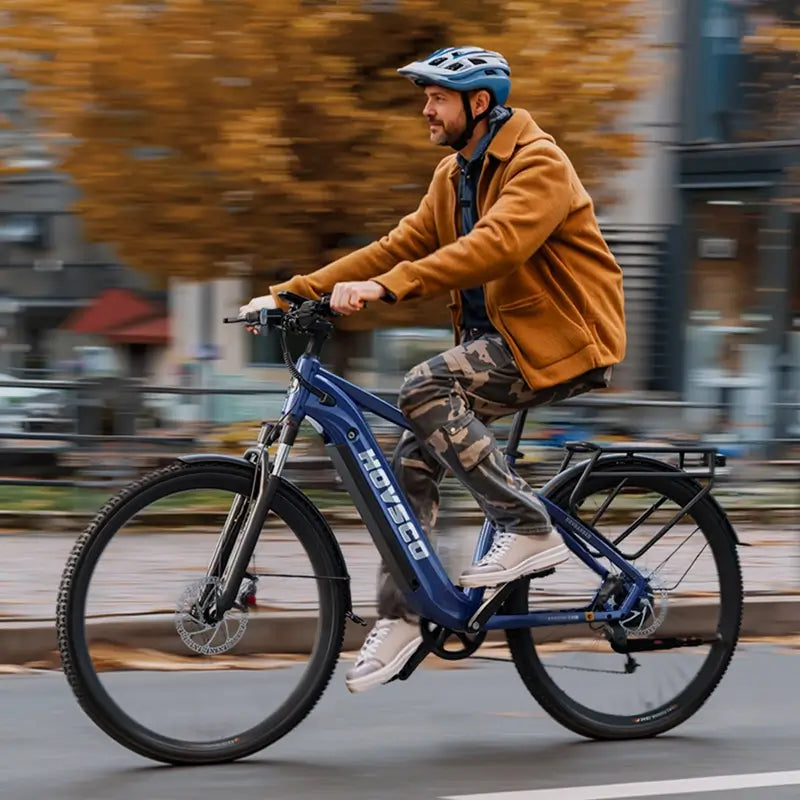
For commuters navigating dense urban traffic, a half‑second assist delay at every junction compounds into unpredictable acceleration patterns. The bike may hesitate when you need a quick gap, then surge when you’re already committed to a line, increasing risk. In rainy cities, that surge translates directly into wheelspin and loss of confidence.
Mountain and trail riders live or die by traction management. On loose climbs or technical rock gardens, a single unexpected torque spike is enough to break grip and stall the bike. Cadence sensors simply cannot read subtle weight shifts or micro‑pauses used to maintain balance, so they respond late and harshly. Torque sensing transforms this into a smooth “diesel” push that preserves momentum.
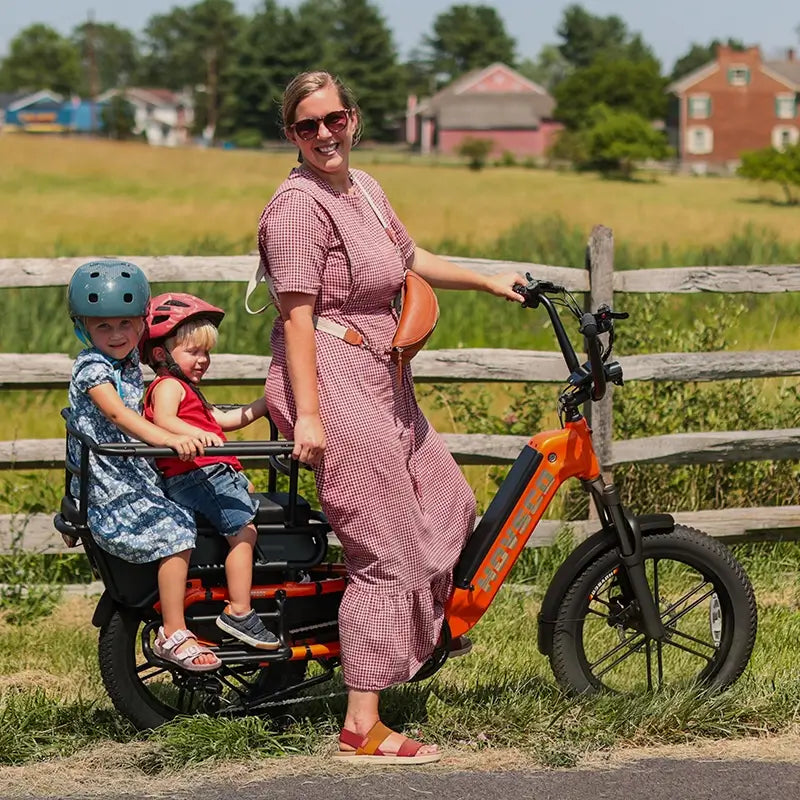
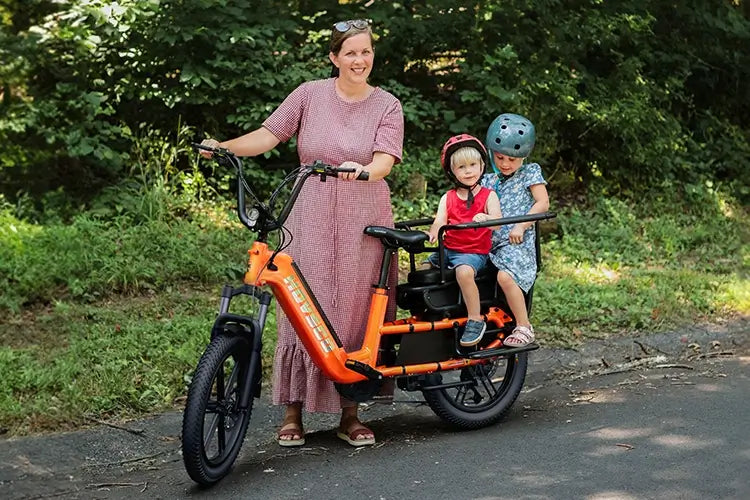
Cargo riders and parents carrying children need predictable, gentle starts to protect passengers and frame hardware. The rough engagement characteristic of cadence assist can twist frames and racks, especially when combined with high‑torque hub motors. Smart torque systems with multi‑axis controllers avoid this mechanical shock, extending service life and improving comfort.
Finally, performance‑oriented road riders rely on precise power to structure training sessions. Cadence assist obscures real effort with artificial surges, making data unreliable. A HovMaster torque axle feeding a HOVSCO 1000Hz controller, by contrast, produces a cleaner match between exertion and speed, allowing riders to use ebikes as serious training tools rather than just boosted bicycles.
Smart torque bottom brackets like the HovMaster unit replace cadence rings by directly sensing crank torque and deflection at the axle, feeding continuous load data to the controller instead of intermittent magnet pulses. Installation moves sensing into the structural heart of the bike, enabling proportional assist curves and fast shutoff without relying on crude rotation thresholds.
In practice, the HovMaster torque axle integrates strain sensing elements into the bottom bracket spindle. When you push on the pedals, microscopic twisting of the axle changes the sensor’s output. The controller interprets this as real‑time torque, allowing it to compute corresponding motor current. This converts your legs into a dynamic input, not just a trigger.
Replacing a cadence ring involves removing the magnet disc and Hall sensor and often upgrading the controller firmware to accept torque signals. On the assembly line, we route dedicated torque channels and calibrate zero‑offset values so that the system correctly identifies “no load” conditions. The result is a bottom bracket that behaves like a smart load cell.
During calibration, we ask riders to pedal through specific patterns while logging torque, cadence, and speed. This data shapes the assist map, which can be tuned for different personalities: touring, sport, cargo, or trail. With a 1000Hz HOVSCO controller, the resolution is high enough to capture subtle preferences, like slightly stronger assist when standing or a softer ramp for seated climbs.
Once installed, smart torque bottom brackets make the bike feel like a well‑trained partner. Starts become linear: more pressure equals more push, with no surprise surges. Coasting instantly drops assistance; re‑engaging is smooth and immediate. For brands moving beyond basic commuter bikes into performance segments, this upgrade is no longer optional—it’s the standard.
Multi-axis vector control is a hidden weapon because it treats torque, speed, and phase as a coordinated system, allowing the controller to modulate current in a way that respects traction limits and rider intent. By adjusting torque across axes, it prevents harsh starts, wheel slip, and drivetrain shock that plague simpler cadence-driven systems.
Traditional controllers mostly look at speed and requested assist level, then apply a fixed current ramp. They don’t understand how quickly the rear wheel is loading, how the frame is flexing, or how rider torque is changing within a pedal stroke. Multi‑axis vector control adds this missing dimension, enabling the controller to soften ramps automatically when risk of slip is high.
When paired with a HovMaster torque axle, the HOVSCO 1000Hz controller reads rising torque and wheel speed simultaneously. If the rear tire begins to spin faster than expected for a given torque input, the controller interprets this as potential slip and trims current before the situation develops into a full loss of traction. Riders feel this as a controlled, confident launch.
From an engineering standpoint, vector control re‑orients the motor’s magnetic field to optimize torque production while minimizing disturbance. This avoids the jerky “step” torque common in square‑wave controllers. The result is less strain on chains, cogs, and spokes, especially under heavy loads or in cargo configurations.
On steep cobbled streets or painted crosswalks, the advantage is obvious. Instead of a single abrupt shove that breaks grip, multi‑axis vector control builds torque in a nuanced curve. The bike moves decisively but smoothly, letting riders focus on line choice and traffic rather than fighting the bike’s own power delivery quirks.
HOVSCO’s engineering is different because it combines hoverboard and e-scooter safety experience with performance-oriented vector control and torque sensing, prioritizing real-world stability over spec-sheet wattage. This legacy pushes the brand toward high-frequency, multi-axis control solutions like the HOVSCO 1000Hz core instead of generic cadence-based systems.
On the assembly line, our team learned early that uncontrolled surges and poor traction were root causes of both accidents and premature hardware failure. Coming from hoverboards and scooters, we saw how small control mistakes could escalate quickly. This background made us skeptical of simple cadence rings for anything beyond very casual use.
HOVSCO’s decision to pursue high‑bandwidth control and smart torque sensing came from repeated field tests, not marketing demands. Observing riders on steep urban ramps, loaded cargo setups, and wet surfaces, we measured the interaction between rider biomechanics and motor behavior. The data pointed clearly toward multi‑axis vector control as the only robust solution.
Compared to brands that treat controllers as commodity parts, we treat the control core as the bike’s brain. The HOVSCO 1000Hz controller is tuned specifically around human input patterns, not just motor efficiency curves. That human‑centric approach yields a ride that feels intuitive to cyclists upgrading from high‑end analog bikes.
Our focus on safety and ride quality also influences supply chain choices. With headquarters in the US and suppliers in mainland China, we leverage a complete ecosystem to ensure that the sensor, controller, and mechanical interfaces are designed as a unified system. This integration is what allows HOVSCO to offer smarter, more controlled performance rather than just more power.
Riders who push their bikes hard—hill climbers, trail explorers, fast commuters, and cargo haulers—benefit most from upgrading to HovMaster smart torque and HOVSCO vector control. They gain smoother starts, better traction, more natural assistance, and longer component life compared with cadence-only systems that treat their effort as a simple on/off switch.
Hill climbers immediately feel the difference in how torque arrives at the rear wheel. Instead of stalling then surging, the bike responds in sync with muscle load, allowing them to maintain momentum and balance on tricky gradients. Micro‑adjustments in effort translate directly into speed, making technical climbs far more manageable.
Trail riders appreciate the added control when navigating roots, rocks, and switchbacks. With torque sensing plus high‑frequency vector control, the bike becomes predictable in low‑speed maneuvers, avoiding the sudden lunges that cadence sensors often trigger. This predictability encourages more confident line choices and reduces fatigue.
Fast commuters and urban riders gain safer gap‑taking and smoother merging into traffic. When assist arrives exactly when and how they expect, they can position themselves more assertively without worrying about delayed or excessive power. Over months, they also see reduced wear on drivetrains thanks to gentler torque ramps.
Cargo riders, parents, and anyone carrying heavy loads benefit from gentler power application that preserves frame integrity and passenger comfort. Paired with the HOVSCO 1000Hz controller, the HovMaster torque axle makes starts and stops feel like a well‑driven car rather than an unpredictable throttle, a crucial difference when safety is paramount.
“When we moved from magnetic cadence rings to smart torque axles and 1000Hz multi-axis controllers, we stopped thinking of ebikes as ‘powered bicycles’ and started treating them as precision instruments. On the test bench, the data showed fewer spikes and smoother curves, but the real proof was in riders’ faces—less surprise, more control, and a new kind of confidence on every ride.”
High-performance riders can rarely justify cadence-only e-bikes now that torque-sensing, multi-axis vector systems like HovMaster plus HOVSCO 1000Hz controllers exist. For serious riding, the loss of control, traction, and training precision with cadence rings outweighs their lower cost, especially when long-term wear and safety are considered.
Cadence‑only bikes still have a place for casual leisure riders who prioritize simplicity and low entry price over nuanced control. However, once a rider starts pushing speed, distance, or technical terrain, the shortcomings of delayed, binary assist become painfully obvious. Many end up upgrading prematurely, erasing the initial savings.
From an engineering cost perspective, the gap between basic cadence hardware and smart torque plus vector control has shrunk. Economies of scale and better supply chains mean that brands like HOVSCO can offer advanced systems without pushing prices into boutique territory. For most serious riders, the extra investment is small relative to the performance benefits.
When factoring in wear on chains, cassettes, and wheels, cadence‑only systems may even be more expensive over a few seasons. Harsh torque steps accelerate fatigue, leading to more frequent replacements. In contrast, smooth, proportional power from HovMaster‑style torque sensing reduces mechanical shock and extends component life.
For riders who care about safety and training data, the choice is even clearer. Torque‑based, high‑frequency systems align motor support with actual human effort, delivering cleaner feedback and more predictable behavior in traffic and on trails. In this context, clinging to cadence‑only bikes feels like a compromise too big for serious performance use.
Traditional magnetic cadence and speed sensors fail high-performance riders because they only see rotation, not real effort, leading to delayed, harsh power delivery, wheel slip, ghost pedaling, and accelerated wear. Smart torque systems such as HovMaster, combined with HOVSCO’s 1000Hz multi-axis vector controllers, transform ebikes into precise instruments that mirror your muscle input almost instantly.
If you ride hard—whether commuting aggressively, climbing steep hills, hauling cargo, or exploring trails—the engineering advantages of torque sensing and vector control are no longer luxuries; they are essentials. To unlock smoother starts, better traction, safer handling, and more accurate training data, prioritize ebikes built around smart torque bottom brackets and high-frequency, multi-axis controllers rather than obsolete cadence rings.
Does a cadence sensor affect battery life?
Yes. Because cadence sensors dump fixed power whenever you rotate the pedals, they often waste energy through surges and ghost pedaling, reducing effective range compared with torque-based systems that match support to real effort.
Will a torque sensor make my ebike feel more natural?
Absolutely. Torque sensors like HovMaster read how hard you push and scale assistance accordingly, creating a ride feel much closer to a strong, fit rider than the on/off behavior of a basic cadence ring.
Is upgrading the controller as important as upgrading the sensor?
Yes. Pairing a smart torque bottom bracket with a high-frequency, multi-axis controller such as HOVSCO’s 1000Hz core is crucial; without a capable controller, the rich torque data cannot translate into smooth, precise motor behavior.
Are cadence-only ebikes ever the right choice?
They can be fine for casual, low-speed leisure riding on flat terrain where surges and traction issues are minimal, and the rider prioritizes low cost over refined control or performance-focused training.
Can better sensors really improve safety?
Yes. Faster, proportional response from torque sensors and advanced controllers reduces unexpected surges, improves traction on starts, and makes bike behavior more predictable in traffic, directly contributing to safer real-world riding.
Share:
Is a centered motor mass the key to airborne e-bike stability?
How Do Mid-Drives Multiply Climbing Torque?