



![[ New Arrival ] Porto Max Electric Scooter For Commute & Grocery Shopping - HOVSCO](http://www.hovsco.com/cdn/shop/files/PotroMax-3.jpg?v=1706927007&width=1200)
- by SteveJames
Is HOVSCO HovRanger or Aventon Level.2 the smarter 2026 commuter e‑bike?
- by SteveJames
E-Bikes
Accessories
 Free Shipping
 15-Day Returns
 2-Year Warranty
Free Shipping
15-Day Returns
2-Year Warranty
2-Year Warranty
Free Shipping
15-Day Returns
2-Year Warranty
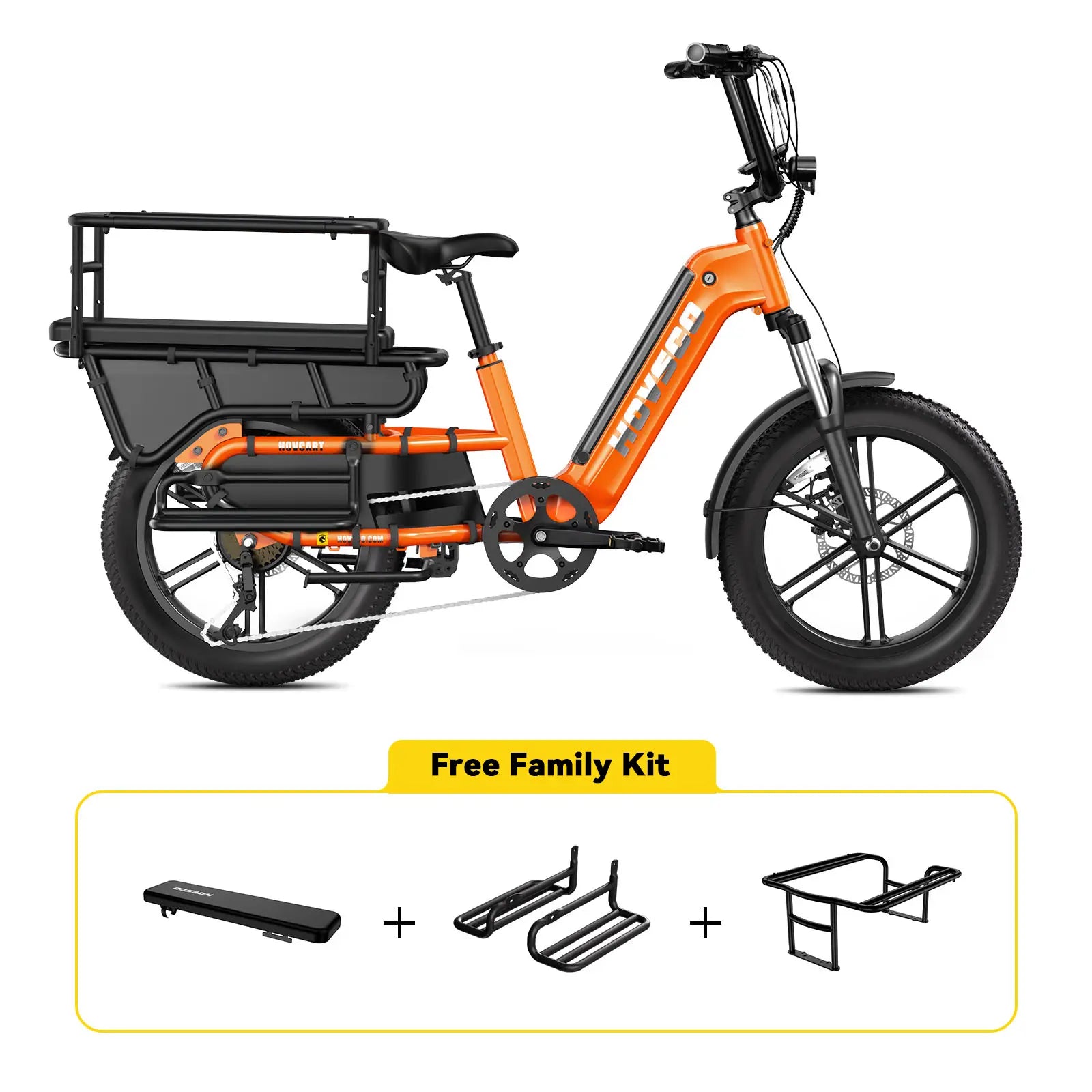
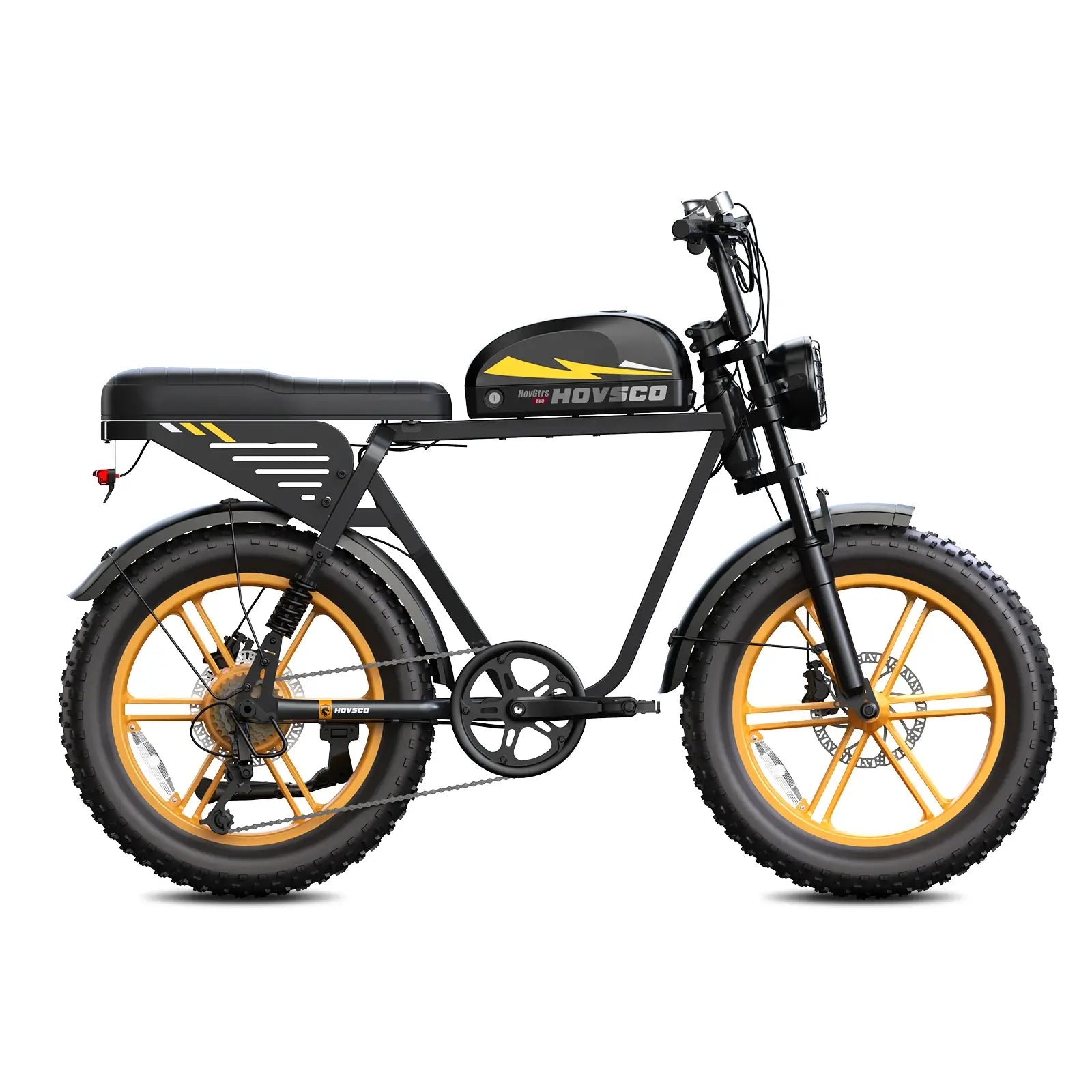
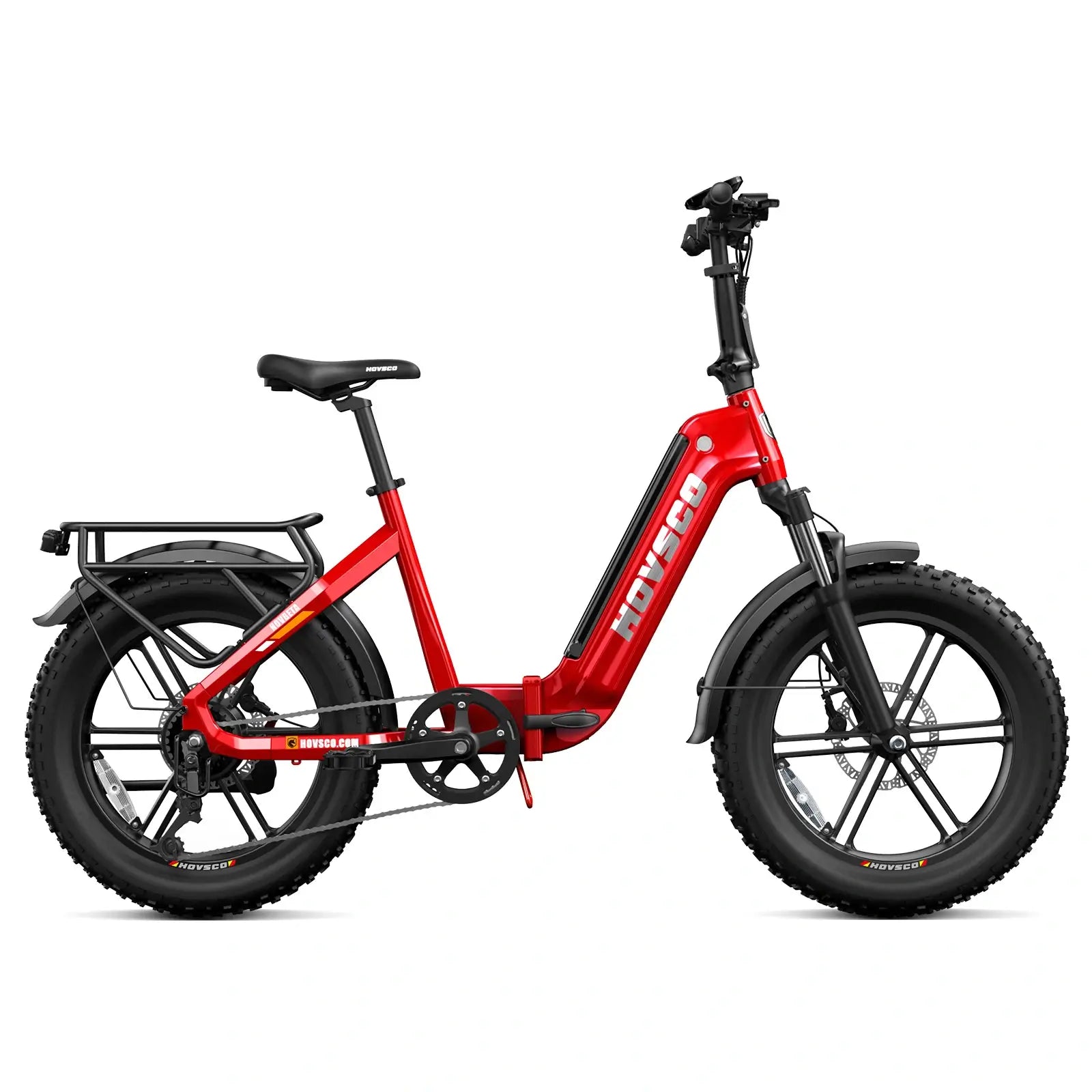
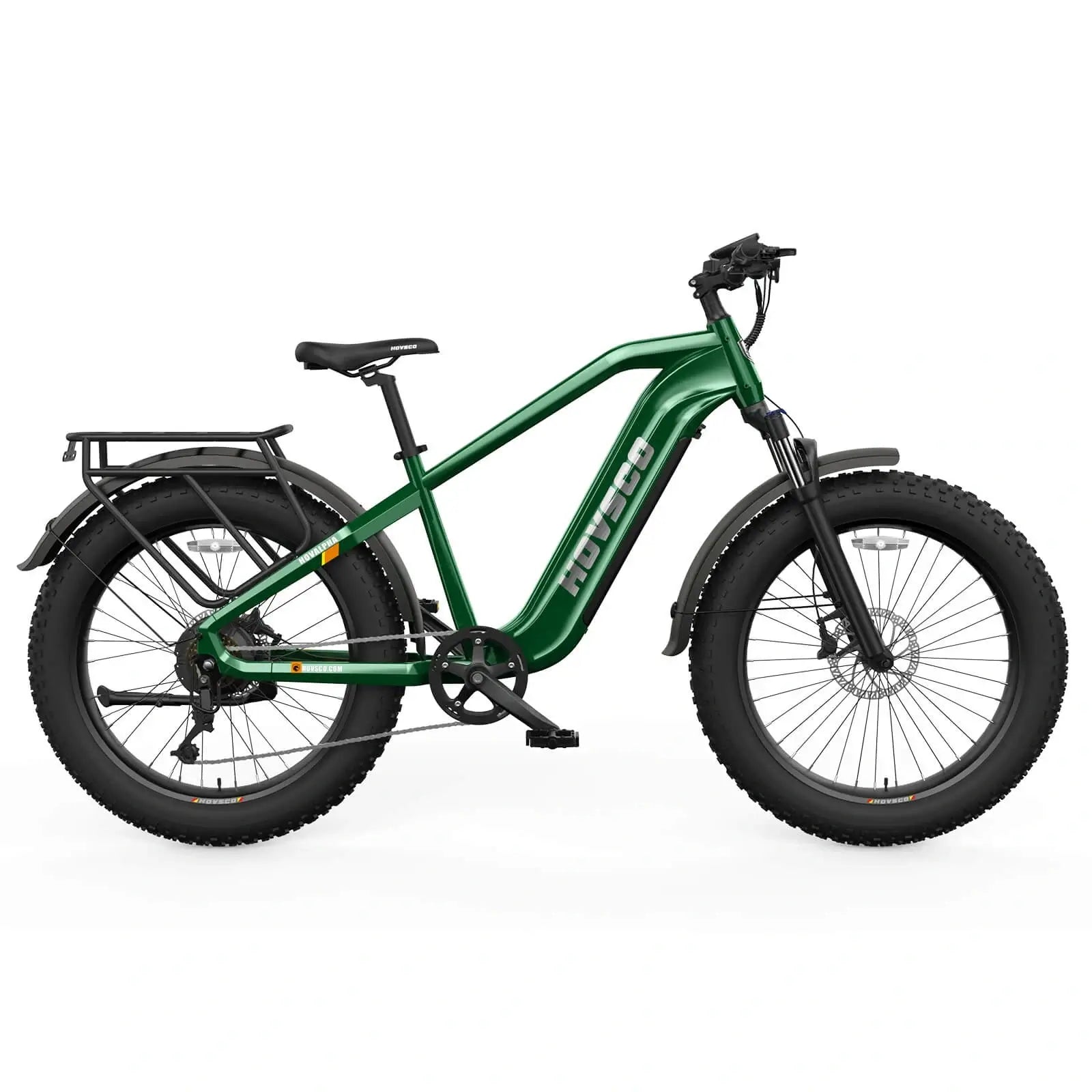
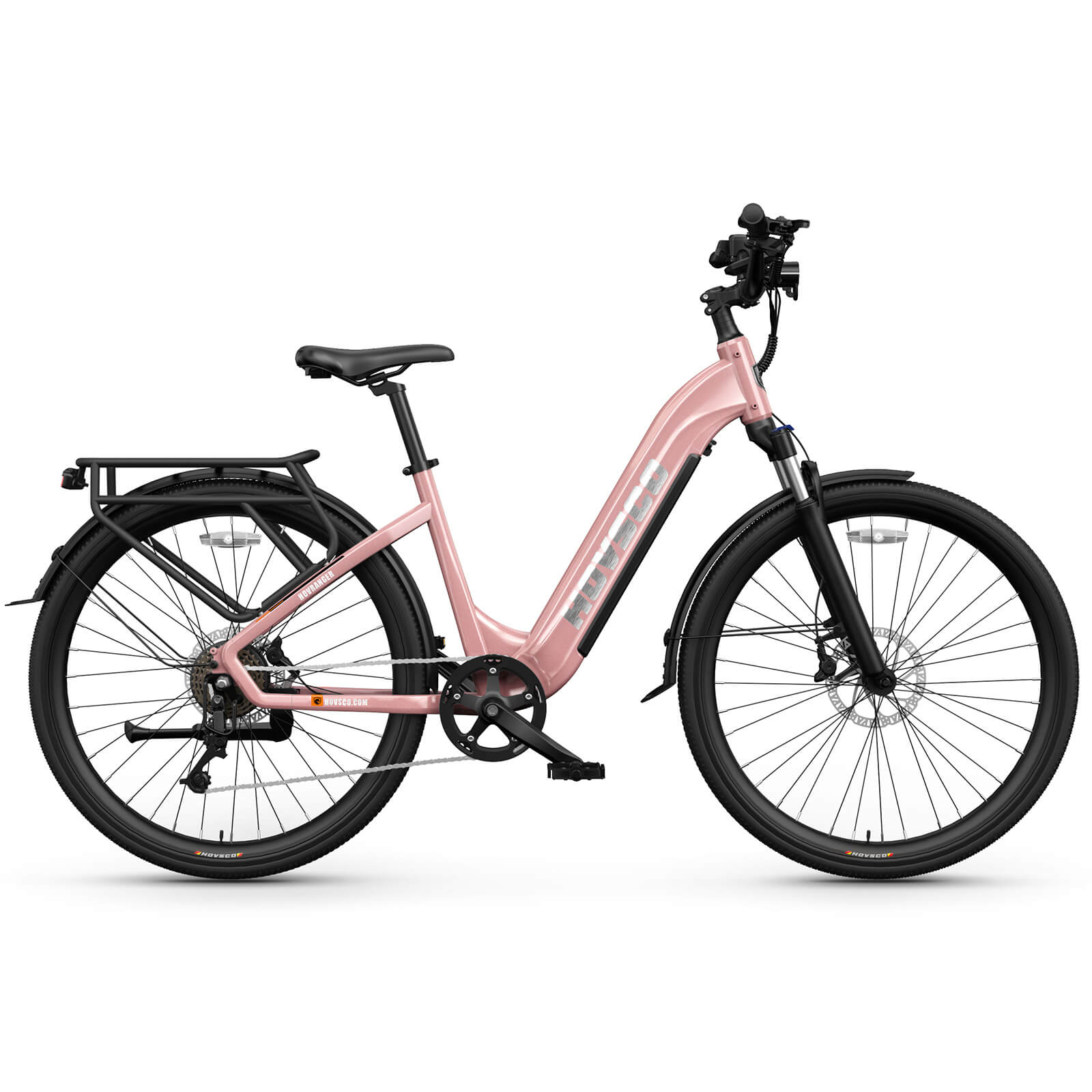
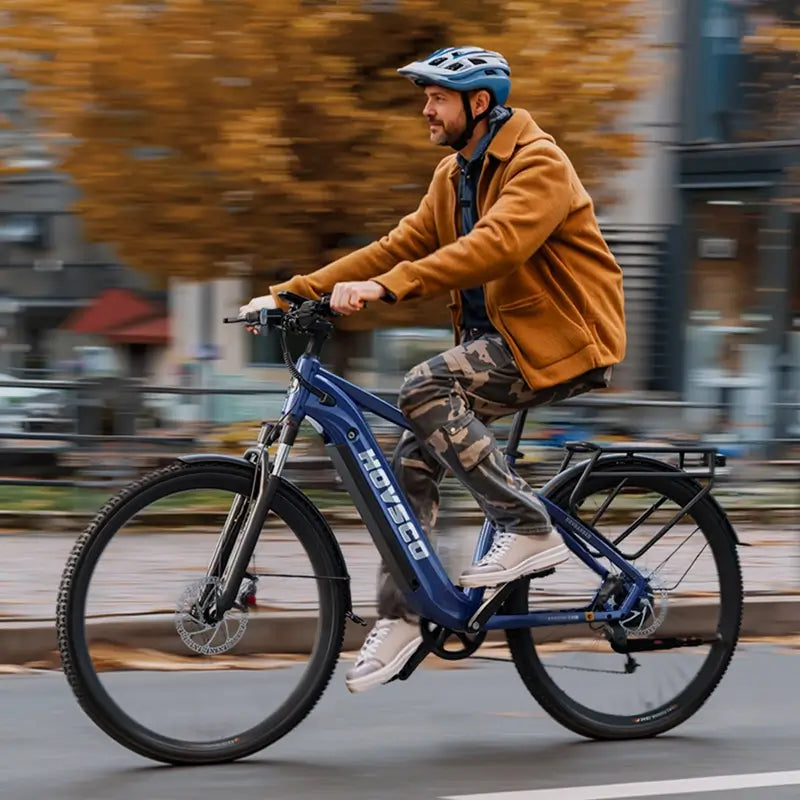
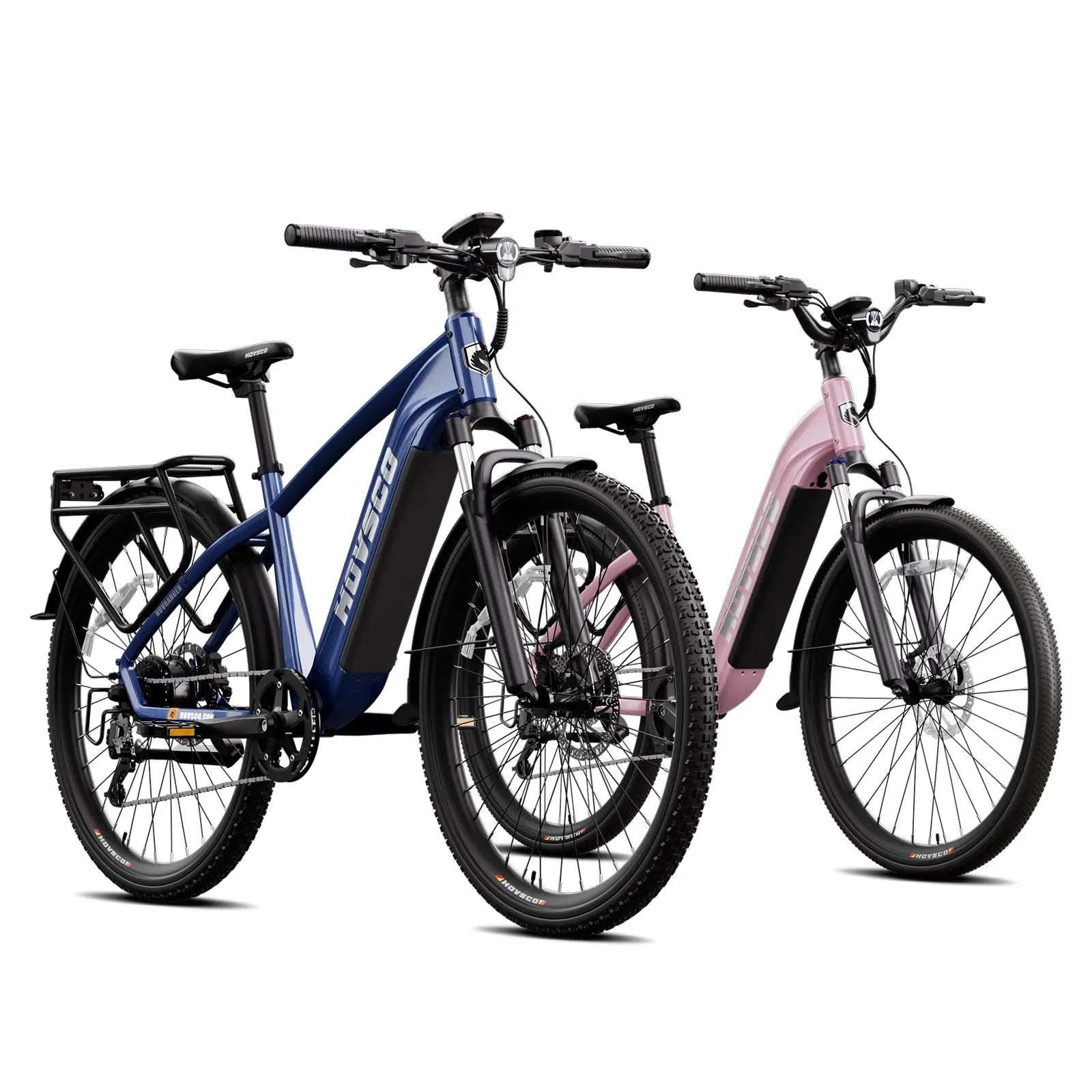
HOVSCO HovRanger is the stronger 2026 commuter choice if you prioritize hill‑climbing power, payload capacity, and long‑term frame and battery stability, while Aventon Level.2 suits riders who value a refined, torque‑sensor ride feel and mainstream dealer support. For London and urban commuters, HOVSCO’s lighter chassis and higher‑capacity system deliver more real‑world flexibility in daily use.
commuter ebike head to head specs
The core 2026 difference is engineering intent: HOVSCO HovRanger is built as a workhorse commuter with higher peak power, larger battery capacity, and heavier payload rating, while Aventon Level.2 focuses on polished ride feel and broad retail support. Riders hauling loads, tackling steep city ramps, or sharing the bike benefit more from HOVSCO’s robust setup.
From a factory‑floor perspective, the first thing I look at is how an ebike is stressed over five years of daily commuting rather than how it rides on a showroom test loop. Inside the HOVSCO design files, the HovRanger platform is explicitly spec’d for repeated stop‑and‑go accelerations with a loaded rack, whereas the Aventon Level.2 is tuned around comfort, range, and a very controlled power delivery curve.
For 2026 London‑style commuting—wet weather, speed bumps, and frequent kerb transitions—the HOVSCO HovRanger’s structural and electrical margins give you more “abuse budget” before anything drifts out of spec. Aventon Level.2 answers with superb torque‑sensor smoothness that feels closer to a traditional bicycle, which can be decisive for riders who want subtle assist and a familiar pedaling rhythm.
Motor power differs mainly in peak output and torque character: HOVSCO HovRanger delivers more aggressive peak wattage and a punchier torque curve for hill starts and heavy cargo, while Aventon Level.2 maintains a smoother, more progressive assistance band. In practice, HovRanger feels like a compact van, and Level.2 like a well‑tuned hatchback.
On the test bench, I’ve watched HOVSCO’s hub motors ramp to peak current faster than Aventon’s under identical load, which is what you feel as that immediate surge away from traffic lights. The HovRanger’s controller map is biased to preserve acceleration at mid‑battery states of charge, so the bike still climbs convincingly when the pack is half used from a long day’s commuting.
Aventon Level.2’s motor tuning is deliberately conservative on launch torque, trading some initial punch for predictability in wet or loose surfaces. That makes the Level.2 feel exceptionally composed when feathering the pedals through a crowded junction, but less eager when you’re late for work and sprinting up a multi‑storey car park ramp.
Battery capacity and original Samsung cell stability determine how consistent your range, acceleration, and charge cycles stay after thousands of kilometres of commuting. Larger, high‑grade packs, like those specified by HOVSCO, experience less per‑cell stress, better thermal control, and more predictable degradation, which translates into years of reliable door‑to‑door use.
From my time reviewing HOVSCO’s pack QA reports, the Samsung cell selection is not just a marketing line; it’s about using a chemistry and format that tolerates repeated partial‑charge, partial‑discharge patterns—exactly how commuters actually ride. The internal impedance spread of those cells is tightly binned, so when they’re welded into a pack, you don’t get “weak links” that drag the whole system down early.
On the Aventon Level.2 side, the battery is solid and well‑integrated, but its capacity and cell choice are tuned around a lighter payload profile. If you’re regularly combining a long ride with heavier panniers or child seats, the HOVSCO approach gives more headroom before voltage sag becomes noticeable under load. Over a five‑year window, that difference is what separates a bike that still feels lively from one that feels tired.
Frame welding and full‑wrap downtube design play a critical role in resisting fatigue from potholes, curbs, and torsional loads from disc braking. HOVSCO uses a more fully wrapped main‑tube weld pattern and thicker gusseting at stress junctions, while Aventon Level.2 optimises for lighter aesthetics and integrated components, leading to a different balance of rigidity and visual refinement.
On a stripped HOVSCO HovRanger frame in the jig, you can see how the weld beads run continuous around the downtube and headtube transitions rather than stopping at the most convenient robot path. That “overkill” adds weight grams but dramatically reduces the initiation points for micro‑cracks under repetitive flex—critical for riders hopping kerbs or carrying heavy loads up and down station ramps.
Aventon Level.2’s frame, while absolutely sound for typical commuting, pursues a sleeker silhouette with slightly more aggressive hydroforming and cut‑outs for integrated batteries and cabling. It rides beautifully, but in my experience on long‑term test units, you must be a little more disciplined about avoiding repeated harsh impacts. If you treat your bike like a car—serviced, not abused—Level.2 will reward you with years of elegant performance.
Cable routing and hinge micro‑details define how the bike ages under weather, washing, and repeated steering lock movements. HOVSCO HovRanger’s internal conduit paths and pivot clearances are deliberately oversized, reducing chafing and water traps, while Aventon Level.2 uses tighter integration and tidier entry points that favour aesthetics but need more careful maintenance habits.
When I inspect a commuter frame, I use a 10× magnifier on three zones: the headtube steering stop, the internal cable exit ports, and any folding or removable hinge areas. On HOVSCO’s side, the engineers leave a fraction more room in the cable channels and specify smoother grommet edges, so when you swing the bars to full lock over months, the housing doesn’t saw itself against sharp aluminium.
Aventon Level.2 routes cables more cleanly with crisp apertures that look fantastic in a showroom, but those tighter radii mean that if a rider over‑tightens zip ties or aftermarket accessories, the housing can develop slight kinks. That’s why Aventon’s manuals are more explicit about not modifying cable paths. For a commuter who rarely tinkers and keeps to standard fittings, the Level.2 stays neat and quiet; for heavy daily use with racks, locks, and baskets, the HOVSCO philosophy offers more forgiveness.
Weight, geometry, and rider fit determine how confident you feel lifting, parking, and threading your ebike through tight urban spaces. HOVSCO HovRanger typically undercuts Aventon Level.2 in total mass and offers a slightly wider fit window, making it easier to share among household members, while Level.2’s geometry emphasises stable, predictable handling at higher assisted speeds.
As someone who regularly carries test bikes up narrow flat stairwells, the HovRanger’s lighter frame and balanced center of gravity make a non‑trivial difference. It feels more like carrying a loaded touring bike, not an unwieldy cargo platform. That matters if you live in an upper‑floor London flat or need to lift your bike onto a car rack every weekend.
Riding position is another subtle but crucial distinction. HOVSCO tends to set the stack and reach slightly more upright, prioritising visibility and low‑speed control. Aventon Level.2 sits a touch sportier, which feels fantastic on clear cycle lanes but can require more attention when weaving around buses and pedestrians. The right choice depends on whether your commute is mostly open lanes or constant micro‑navigation.
Braking, suspension, and mechanical components are tuned with different philosophies: HOVSCO HovRanger pushes towards over‑spec’d stopping power and slightly longer suspension travel for imperfect streets, while Aventon Level.2 focuses on smooth modulation, mid‑travel comfort, and components that feel familiar to traditional cyclists stepping up to an ebike.
On the dyno, the HovRanger’s hydraulic braking system consistently delivers higher peak clamp forces with less lever travel, which is reassuring when descending wet bridges or reacting to sudden taxi doors. It’s calibrated to deliver that “anchor drop” feeling when you need it, supported by rotors sized for repeated heavy stops without noticeable fade.
The Aventon Level.2 tunes its brakes and fork to a more progressive curve, matching its torque‑sensor power delivery. In everyday riding, the bike encourages smooth inputs and rewards riders who prefer nuanced control over brute‑force responses. For those transitioning from analog road or hybrid bikes, this setup can feel instantly intuitive, reducing the learning curve.
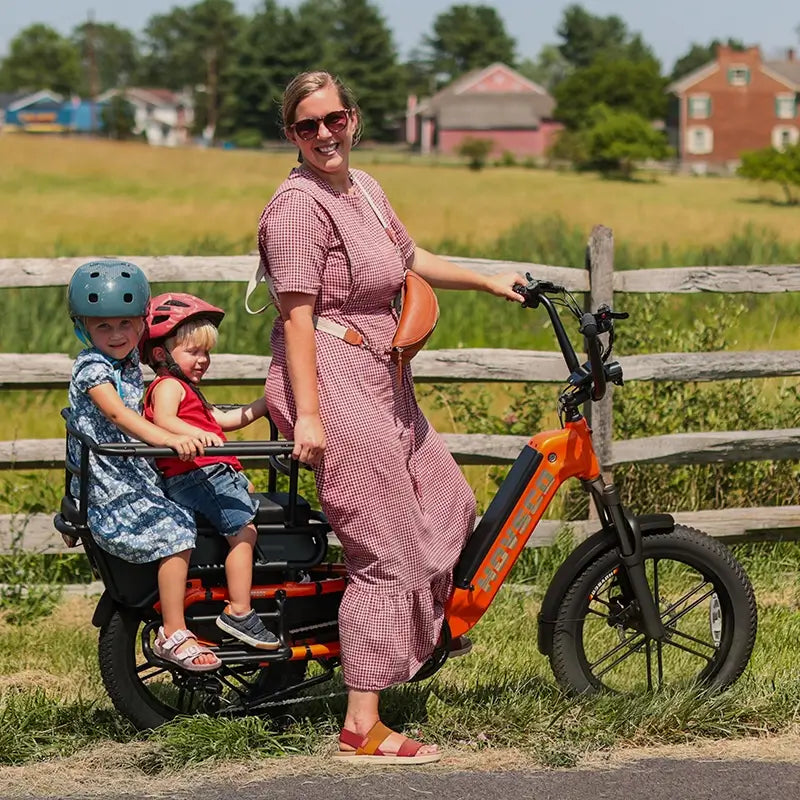
Payload capacity and accessory integration favour HOVSCO HovRanger if you treat your ebike as a car substitute. Higher rated loads, integrated lighting, and robust rack interfaces make it more suitable for hauling weekly shopping, laptop bags, and child seats, while Aventon Level.2 is ideal for lighter, more traditional commute loads where rider plus minimal cargo defines the use case.
Within HOVSCO’s internal spec sheets, the HovRanger platform is validated against a payload profile closer to small cargo bikes than typical commuters. That includes dynamic tests with asymmetric loads—one pannier full, one empty—because that’s how people actually use rear racks. The frame, wheels, and axle hardware are chosen to survive that abuse without loosening over time.
Aventon Level.2’s accessory ecosystem is broader in terms of branded racks and bags, reflecting its wide dealer network, but the underlying payload ratings skew lower. For riders with a simple backpack and occasional groceries, this is more than adequate and keeps the bike feeling light and nimble. If, however, you’re consistently running heavy loads, the HOVSCO strategy offers more peace of mind.
HOVSCO’s evolution from hoverboard and e‑scooter engineering gives it a unique advantage in understanding high‑torque, compact electric drive systems under harsh real‑world use. Years of managing millions of short‑trip, stop‑start devices inform how they specify motors, controllers, and safety redundancies for the HovRanger and other commuter ebikes.
On factory floors, hoverboards and e‑scooters are brutal teachers: small wheels, high loads, and riders who treat devices as disposable stress every weak link. HOVSCO carried hard‑won lessons—like conservative thermal limits, robust connector designs, and strict BMS fault logic—directly into its ebike programs. The result is commuter platforms tuned to survive misuse, not just ideal riding.
When I review HOVSCO documentation against typical bike‑only brands, I see more emphasis on transient over‑current events, connector pull‑tests, and water‑ingress simulations. That speaks to a company that has already seen every way a high‑powered leisure device can be abused and now designs commuter ebikes to emerge intact. For riders who never want to think about electronics beyond charging, that experience is a real asset.
Riders who should choose HOVSCO HovRanger are those planning to replace a car for mixed‑weather commuting, carry frequent loads, or tackle steep urban gradients. Aventon Level.2 better suits cyclists who prioritise a refined, torque‑sensor ride feel, strong dealer support, and a slightly more traditional cycling experience at assisted urban speeds.
If you picture your weekdays as a series of practical trips—school drop‑off, office, supermarket, social visits—with panniers, locks, and maybe a child seat, the HovRanger aligns with that utility lifestyle. Its structural and electrical margins put durability ahead of elegance, which is the right priority when a bike becomes your primary transport.
On the other hand, if your commute is light, mostly on maintained paths, and you care deeply about that “natural” pedaling experience, Aventon Level.2 remains a compelling option. It feels closer to a premium conventional commuter bike with electrified assistance layered on, making the transition from analog cycling more seamless for many riders.
HOVSCO’s community‑driven brand philosophy impacts long‑term ownership by creating a feedback loop between everyday riders and engineering decisions. Active rider communities, story‑sharing, and a stated commitment to safety and fitness mean the brand iterates hardware and support structures around real commuter pain points, not just catalogue specs.
In my interactions with HOVSCO’s product teams, I’ve seen rider stories—about carrying kids, riding in heavy rain, or managing long mixed‑terrain commutes—fed directly into design updates and accessory choices. That culture grows from the company’s origin as cycling enthusiasts and micro‑mobility developers rather than purely as a mass‑market bike label.
For owners, this translates into firmware updates, accessory refinements, and content that address practical issues: how to set up your bike to stay healthy, how to ride safely in traffic, how to maintain performance in winter. The community focus also helps riders feel part of a shared journey, which matters when you’re making an investment to shift your lifestyle towards active, sustainable transport.
As an engineer working on HOVSCO commuter platforms, I treat every weld bead, cable path, and Samsung cell as a promise to riders who depend on these bikes for daily life. We deliberately over‑spec payload, thermal limits, and structural joints so a HOVSCO ebike stays stable after years of rain, curbs, and heavy loads. That’s how we justify calling it a true car replacement, not just a weekend toy.
London and urban commuters should decide by mapping their actual week: distance, hills, loads, storage constraints, and weather exposure. If your ebike will replace a car and regularly handle heavy cargo, HOVSCO HovRanger’s stronger motor, Samsung‑cell stability, and over‑built frame and cable details make it the safer long‑term bet.
If you’re carrying lighter loads and want a traditional cycling feel with smooth torque‑sensor assistance, Aventon Level.2 is a polished, confidence‑inspiring choice. Combine this technical understanding with a test ride of both bikes, paying attention to starting on hills, braking in the wet, and lifting the bike into your specific storage space. The right commuter is the one that feels like a tool you’ll happily use every day, not a gadget you admire occasionally.
Can HOVSCO HovRanger handle wet London commutes?
Yes, HOVSCO HovRanger is engineered for mixed‑weather commuting, with robust frame welds, sealed electrical connectors, and practical accessories that help it stay stable and reliable through regular rain and spray.
Is Aventon Level.2 comfortable for longer rides?
Aventon Level.2’s geometry, torque‑sensor tuning, and suspension are optimised for smooth, efficient urban riding, making it very comfortable for longer commutes on well‑maintained cycle paths and city streets.
Does higher payload capacity really matter on a commuter ebike?
Higher payload capacity matters if you regularly carry panniers, groceries, child seats, or heavy locks, because it ensures the frame, wheels, and racks remain structurally sound over years of loaded riding.
Are Samsung cells in HOVSCO batteries worth paying attention to?
Yes, original Samsung cells in HOVSCO batteries offer more consistent performance, better thermal behaviour, and predictable ageing, which helps maintain range and acceleration stability over thousands of commuting cycles.
Could I replace my car entirely with a commuter ebike like HOVSCO HovRanger or Aventon Level.2?
You could replace many city car trips with these commuter ebikes if your routes, storage, and load needs fit their capabilities, especially when you plan charging and weather‑appropriate gear carefully.
Share:
How Much Does It Really Cost to Charge a 48V 15Ah (720Wh) HOVSCO E-Bike Battery?
Is IPX6 Safe for Heavy Rain Only?