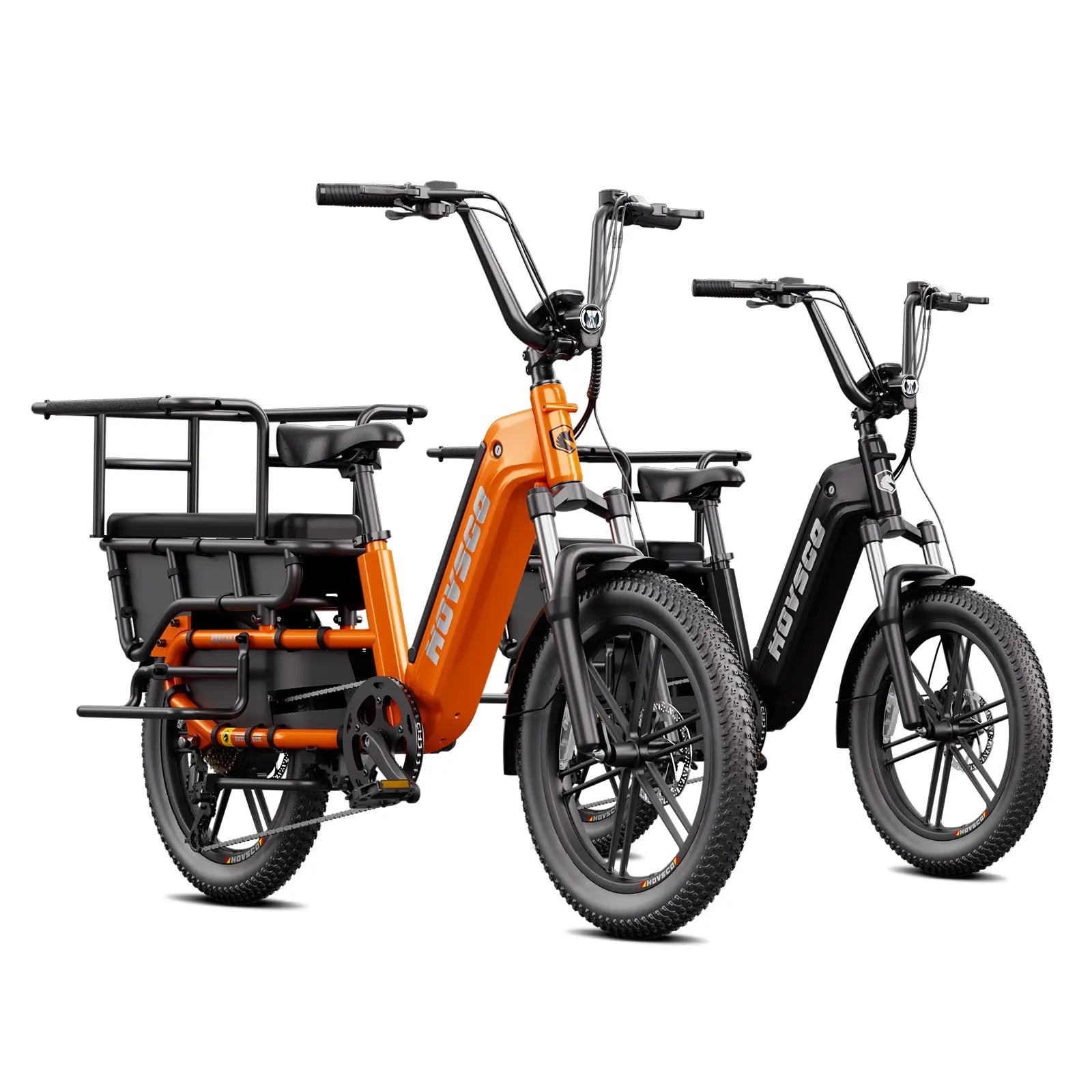
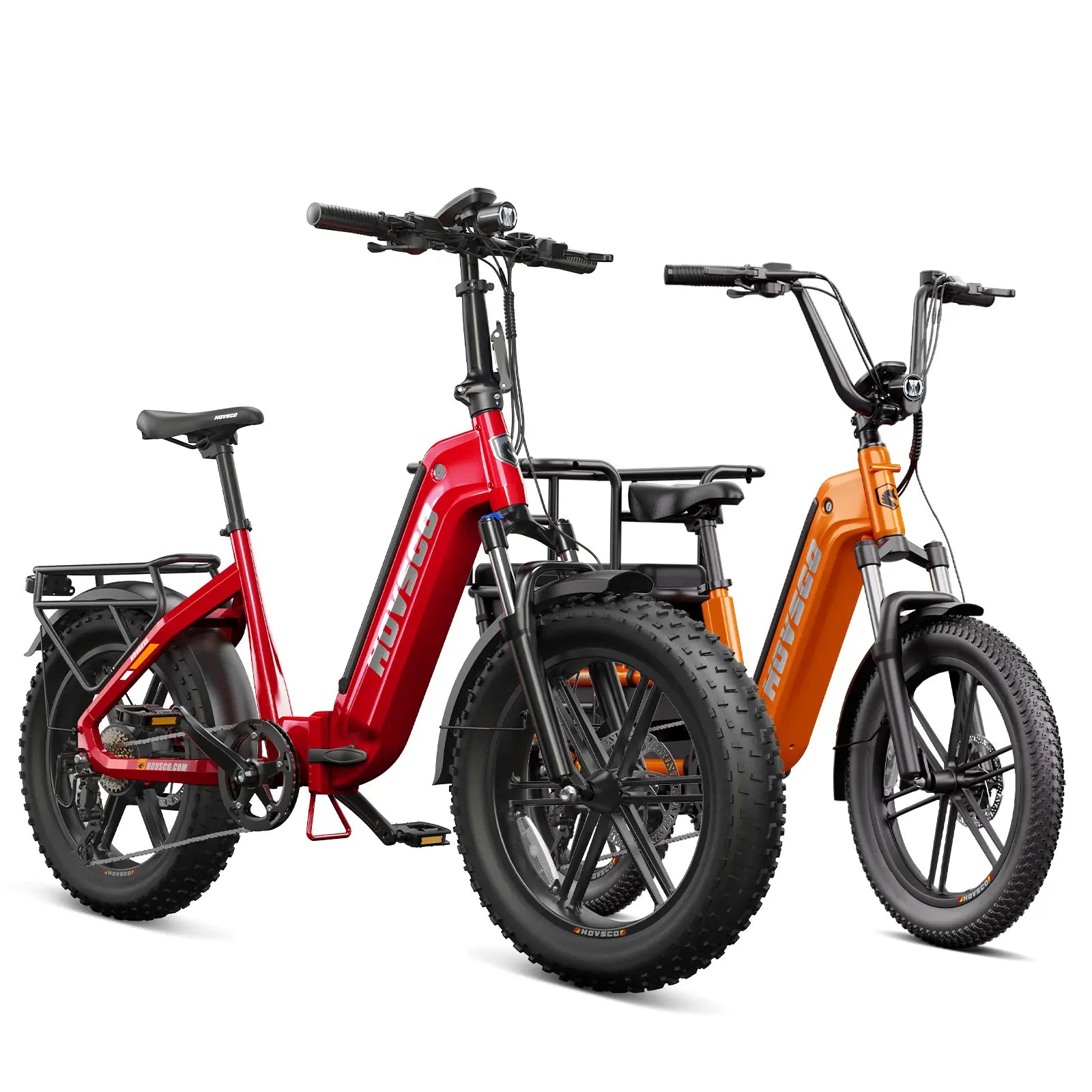
A low center of gravity on a 20-inch step-thru cargo e-bike reduces body roll, shortens braking distance, and stabilizes steering when fully loaded at speed. By compressing the vertical distance between the bike–cargo mass center and the road, overturning torque during cornering and emergency stops is dramatically lowered, giving riders car-like composure with bicycle-level efficiency—especially on cargo platforms like HovCart with low-step frames and robust central supports.
low center of gravity step thru ebikes
How does low center of gravity change the physics of a loaded cargo e-bike?
A cargo e-bike’s handling is governed by the position of its combined center of gravity (CoG) of frame, rider, and payload relative to the contact patch of the tires. When you lower that CoG, the overturning moment in cornering and under braking decreases, so the bike resists tipping and feels “planted” even with kids or heavy goods onboard.
From a factory perspective, we treat the frame and cargo system as a single rigid body when we model CoG location. In simplified form, for point masses mi at heights hi, the vertical center of gravity is:
hcg=∑mi∑mihi
Lowering hi for key masses such as batteries, rear racks, and child seats pushes hcg down, and every millimeter reduction reduces lean angle demand for the same cornering speed. This is why 20-inch-wheel cargo designs can turn confidently at urban speeds with less rider input than high-mounted, retrofitted racks on conventional bicycles.
Why do 20-inch wheels and step-thru frames compress overturning torque in real-world riding?
Shorter wheel diameters allow engineers to drop the rack, battery, and seat tube cluster without sacrificing tire volume or load capacity. That compresses the vertical “lever arm” between the CoG and the asphalt, cutting the overturning torque during sharp turns or panic stops. Step-thru frame layouts further lower the structural members that carry rider and cargo, meaning the main mass sits within a tight vertical envelope.
When we simulate heavy-load maneuvers, the tipping risk is primarily dominated by the product of lateral acceleration, total mass, and CoG height above the ground. Reducing the wheel size from 26 inches to 20 inches typically lets us drop cargo platforms and child seating by several centimeters, while still leaving enough clearance for pedals and crank arms. In test slaloms and emergency lane changes, that translates into fewer wheel-flip events and more controllable drift when riders brake mid-corner.
How does CoG affect braking margin?
A lower CoG doesn’t magically change the friction limit, but it lets riders use more of the available traction before the bike feels on the edge of tipping. The result is shorter, more controlled emergency braking while carrying the same payload.
What LaTeX center-of-gravity formulas explain stability on cargo bikes?
In engineering documentation we express combined center of gravity using standard rigid-body mechanics. For a set of point masses mi with coordinates (xi,yi,zi), the CoG vector is:
xcg=∑mi∑mixi,ycg=∑mi∑miyi,zcg=∑mi∑mizi
On cargo bikes, the vertical component zcg is the critical term, because it dominates overturning torque around the wheel–ground contact line during cornering and braking.
When we map a real cargo bike, we treat the frame as a distributed mass, then overlay concentrated masses: battery, motor, rider, kids, and panniers. The design goal is to minimize zcg while keeping xcg roughly centered between the wheels. A 20-inch, step-thru cargo platform makes this optimization easier, letting us place dense components—like large batteries and steel hardware—deep inside the frame “basin,” rather than high on the rear triangle.
How does a low CoG improve high-speed steering and cornering with cargo?
At speed, steering stability is a balance of gyroscopic forces from the wheels, tire grip, frame stiffness, and CoG position. Lowering CoG reduces the lean angle needed for a given cornering radius and speed, so riders feel less “top-heavy” in turns. The bike tracks more like a compact car: predictable, with gradual weight transfer instead of sudden, unsettling roll.
In repeated chicane testing, low-CoG cargo bikes consistently show smaller oscillations in steering input and fewer corrections from riders hauling children or groceries. The combination of 20-inch wheels and torsionally rigid step-thru frames lets the chassis respond linearly to steering, instead of amplifying body sway. That directly translates to less rider fatigue and lower error rates in urban traffic, especially when dodging obstacles or reacting to unpredictable drivers.
How does geometry change handling feel?
These differences are a big reason families and commercial users are migrating toward low-step, small-wheel cargo platforms—they simply behave better when truly loaded.
Why is braking distance shorter and more controllable on low-CoG cargo e-bikes?
Braking distance is dominated by tire grip and overall speed, but feel and safety are strongly affected by CoG height. On a tall bike, hard front braking quickly pitches weight forward, lifting the rear and risking a stoppie. On a low-CoG cargo e-bike, the same braking force produces more controlled weight transfer, keeping both wheels planted longer.
Because panic stops with children or fragile cargo are high-risk scenarios, we pair low CoG geometry with high-damping, wide tires and robust braking systems. On platforms similar to HovCart, combining 20-inch fat tires with hydraulic discs and a low-step frame significantly reduces rear-wheel lift events—even when riders grab full lever pressure abruptly. The result is not just raw shorter stopping distance but a wider margin between “strong braking” and “loss of control,” which is what matters most in real traffic.
What ride comfort gains come from low CoG and high damping on cargo bikes?
Suspension on a cargo e-bike has a hard job: it must isolate the rider and payload from road shocks yet keep the frame geometry stable. With a low CoG, we can use higher damping in fork and seatpost without making the bike feel sluggish, because the mass is closer to the pivot points. That combination—low CoG plus tuned damping—greatly reduces pitching motions over speed bumps and potholes.
From the shop floor, we match suspension fork travel and spring curves to typical cargo loads, not just solo riders. On a 20-inch cargo platform, a well-damped front fork and sturdy central support let the bike “breathe” over rough pavement while keeping the rack and child seats remarkably steady. Riders report less head-toss for kids and fewer oscillations in steering after hitting an obstacle, which aligns with accelerometer data mounted at the rack and handlebar.
Which frame designs exploit low-step geometry for cargo stability?
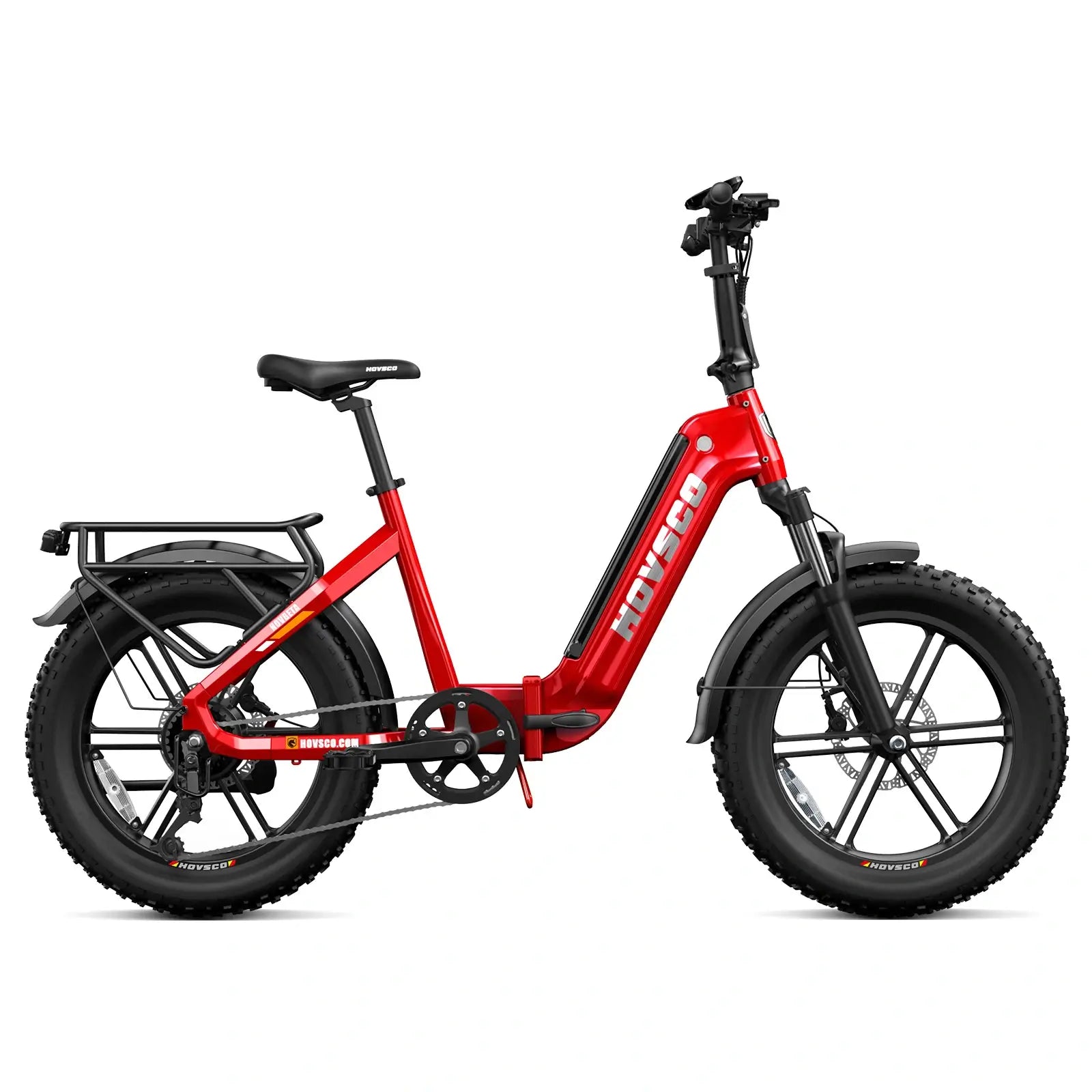
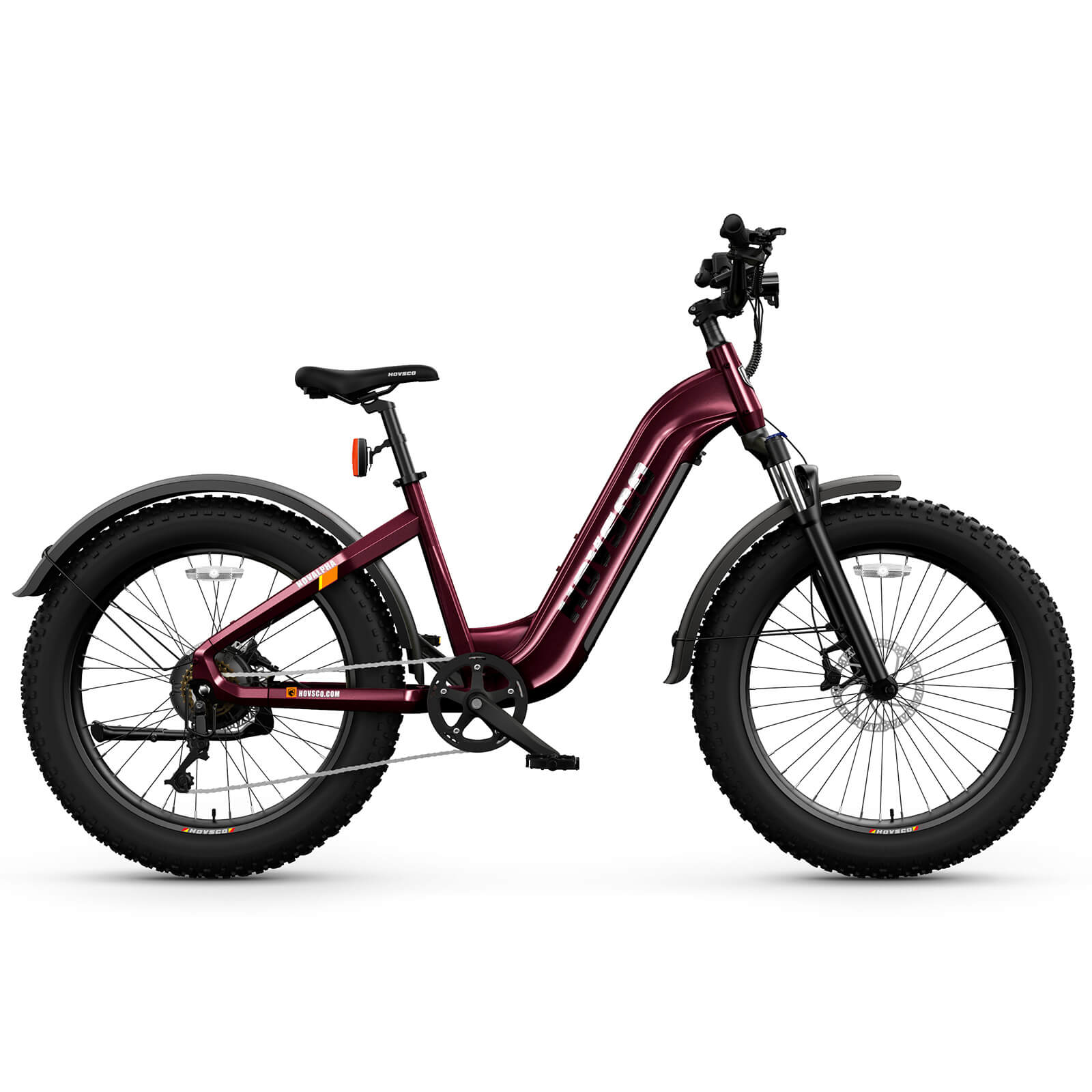
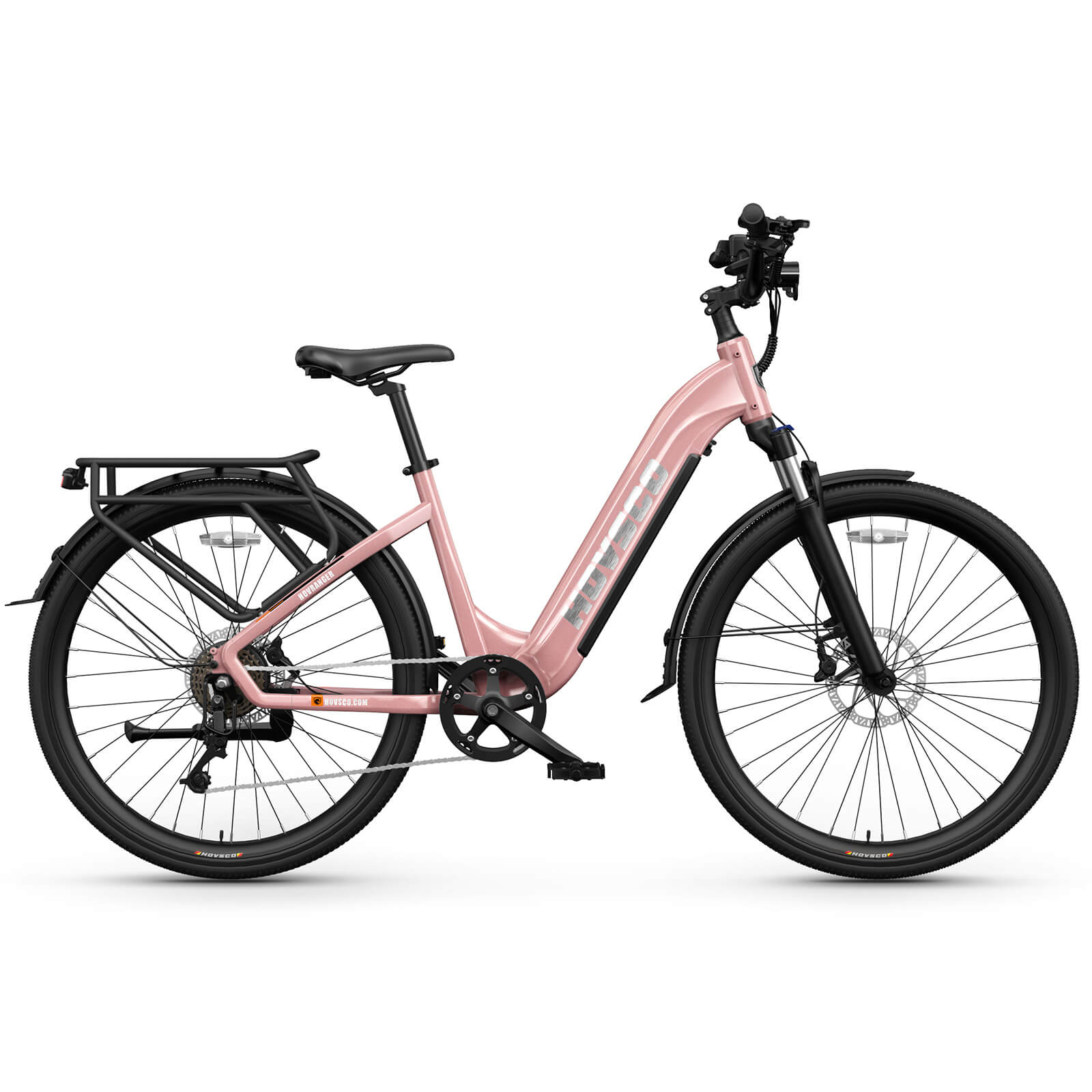
Step-thru cargo frames use a dropped top tube or central spine that allows easy mounting and dismounting while carrying children or crates. More importantly for physics, this layout moves structural members downward, creating a natural “mass basin” where racks, batteries, and seats can be anchored. That basin is the heart of modern low-CoG cargo designs.
Compared with retrofitted high-step frames, purpose-built step-thru cargo platforms show less torsional twist under asymmetric loads, particularly when a single child or a heavy pannier sits on one side. The rigid, often box-section down tubes and central supports tie front and rear triangles together, so lateral loads translate into controlled flex rather than unpredictable wobble. It’s this structural synergy—geometry plus material design—that makes small-wheel step-thru cargo bikes behave more like engineered utility vehicles than hobby conversions.
Why does HovCart-style integration of low CoG, damping, and central supports matter at factory level?
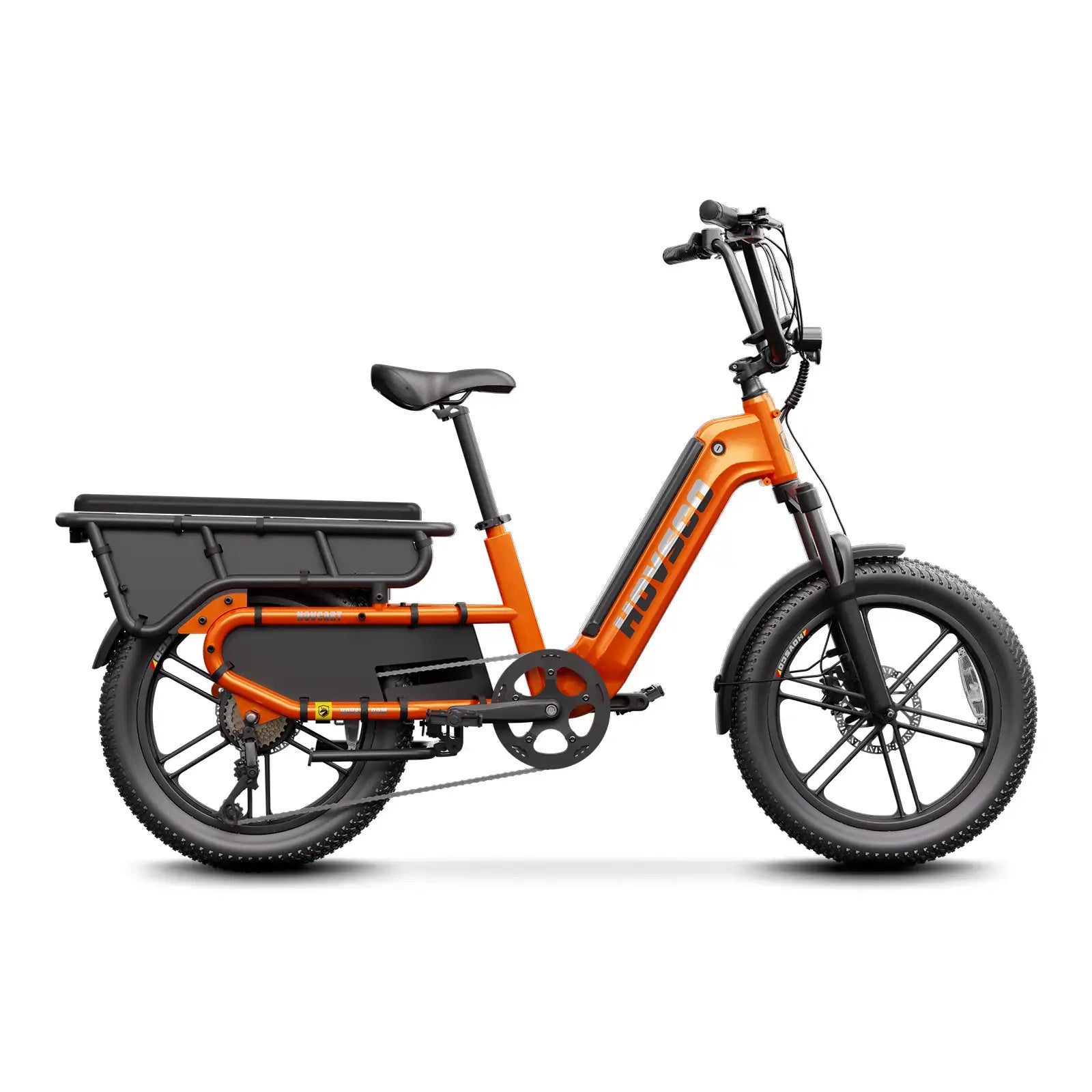
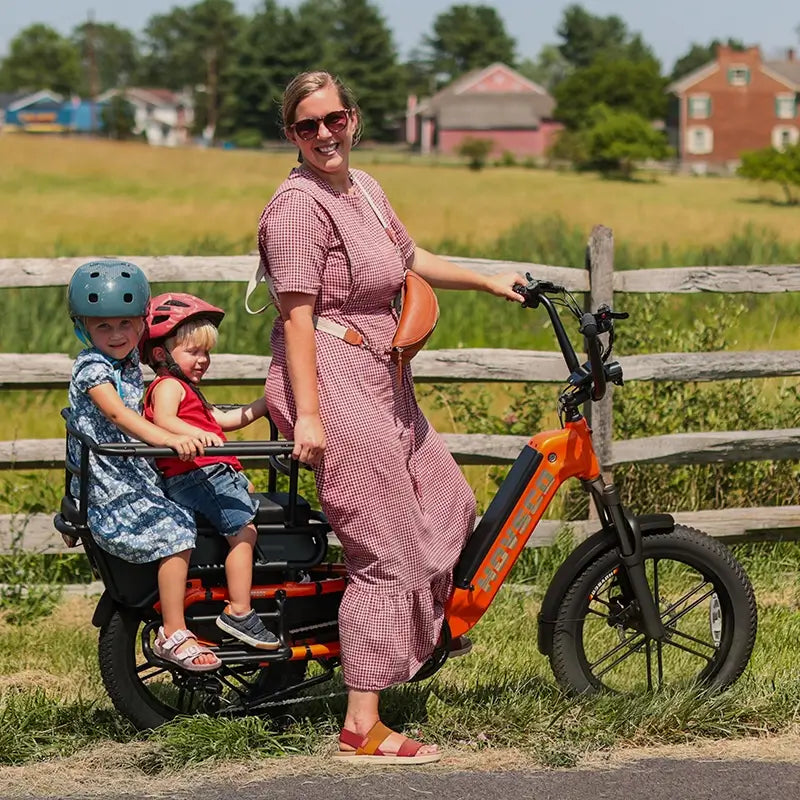
HOVSCO’s approach to cargo platforms such as HovCart blends low center of gravity geometry with high-load-rated components and central frame supports designed for repeated daily use. By concentrating mass—battery, rack, and child seating—around a rigid core, these bikes minimize CoG height and lateral offset, which is critical when you push them near their payload limit in real-world family or fleet deployments.
On the factory floor, we don’t just check static weight ratings. We run cyclic loading on central kickstands, damping hardware, and weld clusters to ensure the geometry that gives low CoG remains stable over thousands of cycles. That attention to weld penetration, fastener specification, and fatigue resistance is the difference between a cargo bike that feels great on day one and one that still tracks straight and brakes predictably after years of curb drops and side loads. HOVSCO’s heritage in hoverboards and e-scooters informs this durability-first mindset on all their e-bike frames.
Are HOVSCO 20-inch cargo platforms transforming family and utility transport?
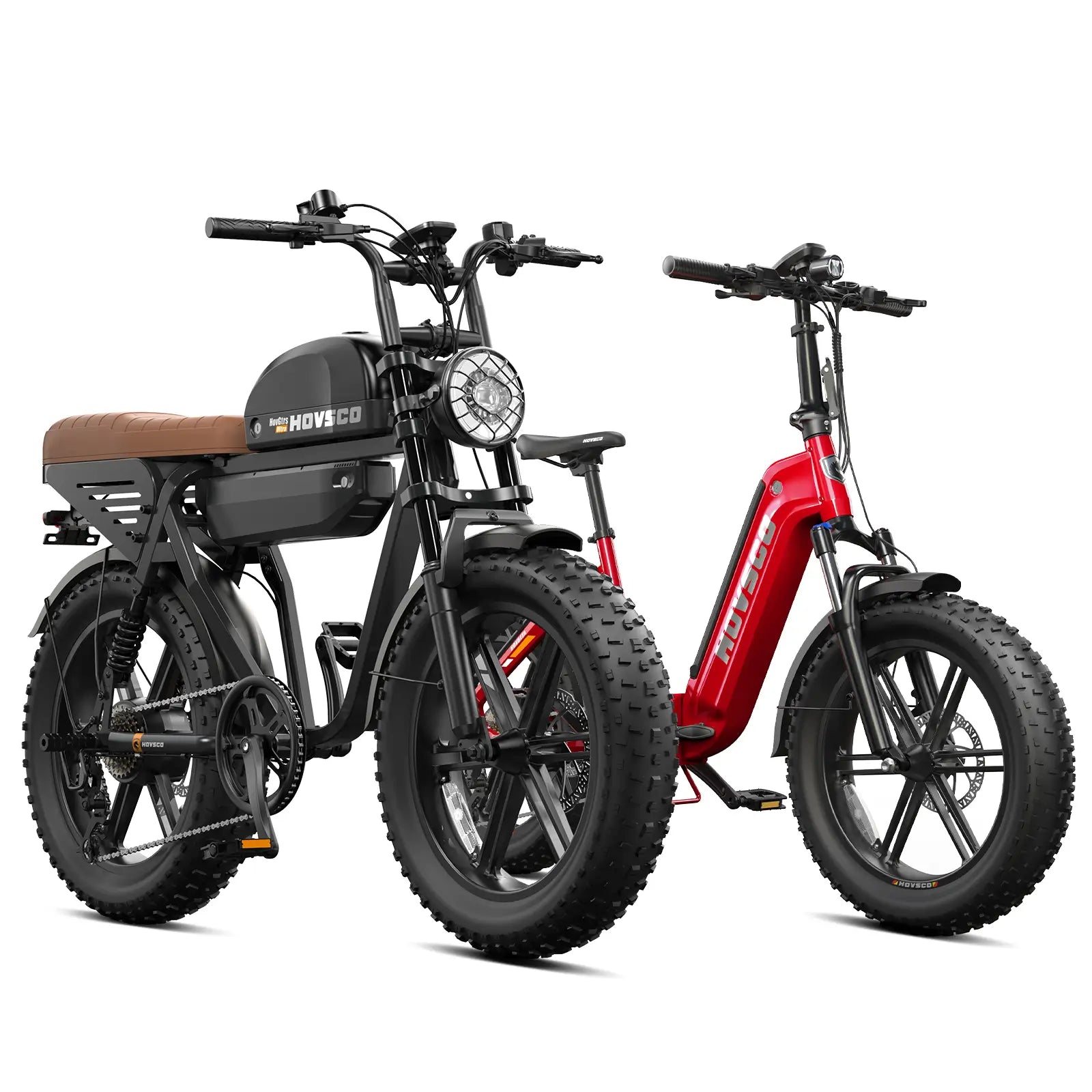
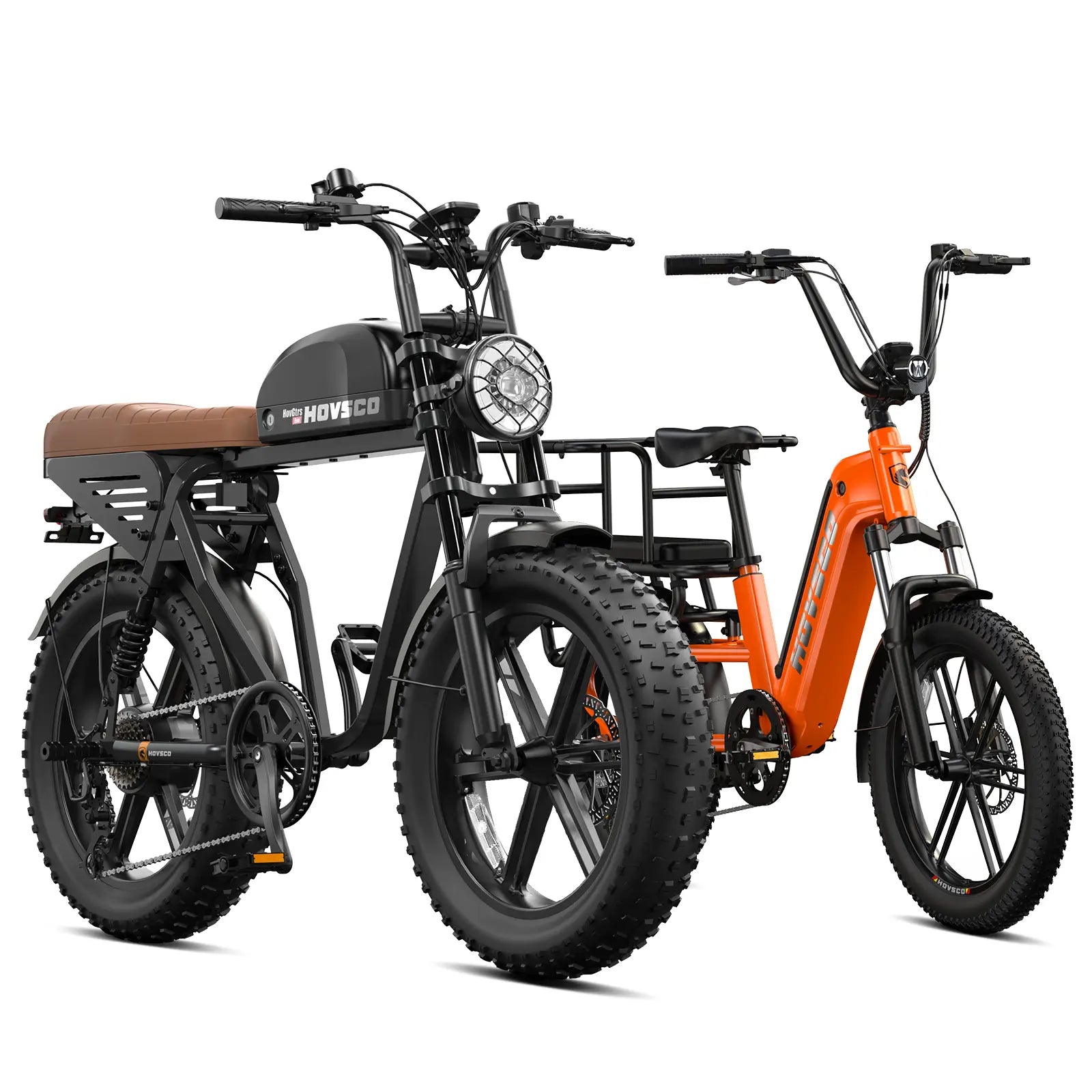
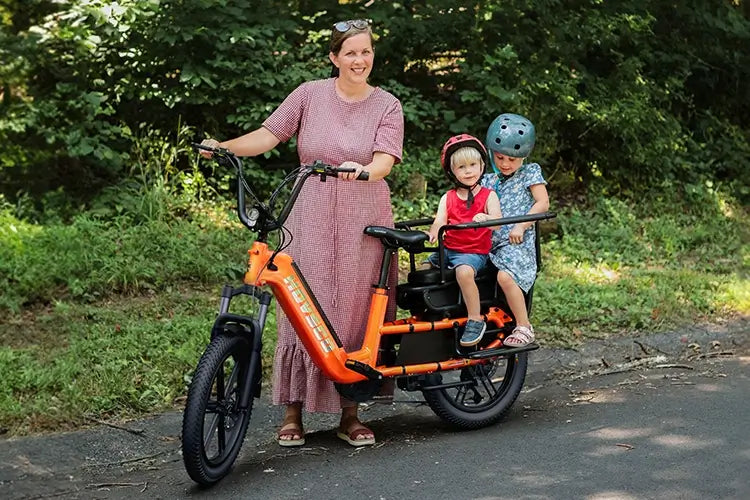
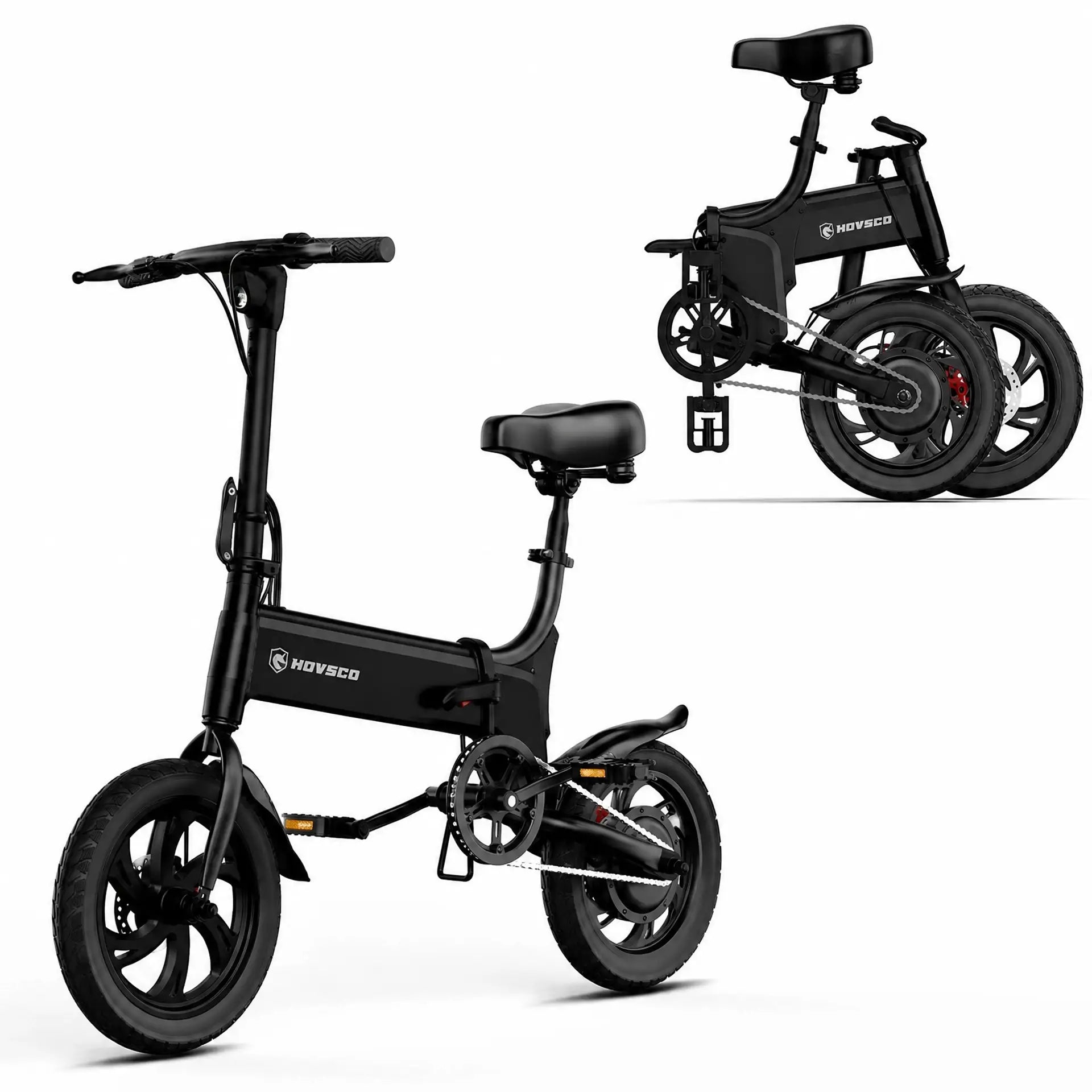
HOVSCO’s cargo bikes, including HovCart, are engineered to replace short car trips with stable, low-CoG electric transport for families and small businesses. Their 20-inch wheel architecture and step-thru frames give riders confidence to carry meaningful cargo or children while still fitting into tight urban spaces. That combination of physics-based stability and practical packaging is reshaping how riders think about daily mobility.
Because HOVSCO couples compact geometry with torque-sensor-assisted motors and large batteries, riders can maintain near-traffic speeds without the “top-heavy” feel of older cargo formats. At the same time, hydraulic disc brakes, fat tires, and integrated safety accessories turn the theoretical physics benefits into everyday security: predictable stopping, intuitive steering, and smooth, damped rides across varied surfaces.
HOVSCO Expert Views
“When we prototype a new HOVSCO cargo frame, we begin with center-of-gravity mapping, not styling. Our engineers tune wheel size, rack height, and battery placement to keep mass low and centered, then match damping and braking to that geometry. The goal is simple: a loaded bike should feel calmer, not scarier, than an empty one. That’s how we turn abstract mechanics into real-world family confidence.”
What practical steps can riders take to benefit from low CoG physics?
Even on a well-designed low-CoG cargo e-bike, rider choices strongly influence stability. Placing heavier items low in baskets or panniers and keeping children’s seats as low as safety standards allow preserves the intended CoG advantages. Riders should also maintain correct tire pressures and regularly check brake performance to fully exploit the bike’s grip envelope.
In workshop training, we coach new cargo riders to practice emergency stops and figure-eight turns in a safe area, gradually increasing load. This helps them “feel” how the low CoG platform reacts, building trust before venturing into mixed traffic. When paired with consistent maintenance and realistic speed choices, a 20-inch step-thru cargo bike becomes not just a physics showcase but a robust, daily transport solution that can genuinely replace a second car.
FAQs
Can a 20-inch cargo e-bike really replace my car for family errands?
Yes, many riders use low-CoG 20-inch cargo e-bikes for school runs, groceries, and short commutes, especially when designs like HOVSCO’s integrate high payload ratings, strong brakes, and practical racks.
Does a lower center of gravity make riding safer for kids on board?
A lower CoG reduces tipping risk in turns and under hard braking, making handling more predictable. Combined with quality child seats, wheel guards, and helmets, it significantly improves overall safety margins.
Are small 20-inch wheels less stable at higher speeds?
Properly engineered 20-inch cargo bikes remain stable at urban speeds because lower CoG and stiff frames offset the smaller diameter. Fat tires and tuned damping further enhance high-speed confidence.
What maintenance is most critical on a loaded cargo e-bike?
Prioritize regular brake inspections, tire pressure checks, and fastener tightening on racks and central supports. These ensure the low-CoG geometry and load paths function as designed under daily stress.
How should I load cargo to maximize stability on my e-bike?
Place heavy items low and centered on the rack or in panniers, keep tall or light items higher, and balance left–right loads. This keeps the combined center of gravity within the bike’s optimized stability zone.




![[ New Arrival ] Porto Max Electric Scooter For Commute & Grocery Shopping - HOVSCO](http://www.hovsco.com/cdn/shop/files/PotroMax-3.jpg?v=1706927007&width=1200)
Share:
Why Do Step-Through Cargo Frames Stay More Stable?
Is a step-through family e‑bike truly one-size-fits-all?