
























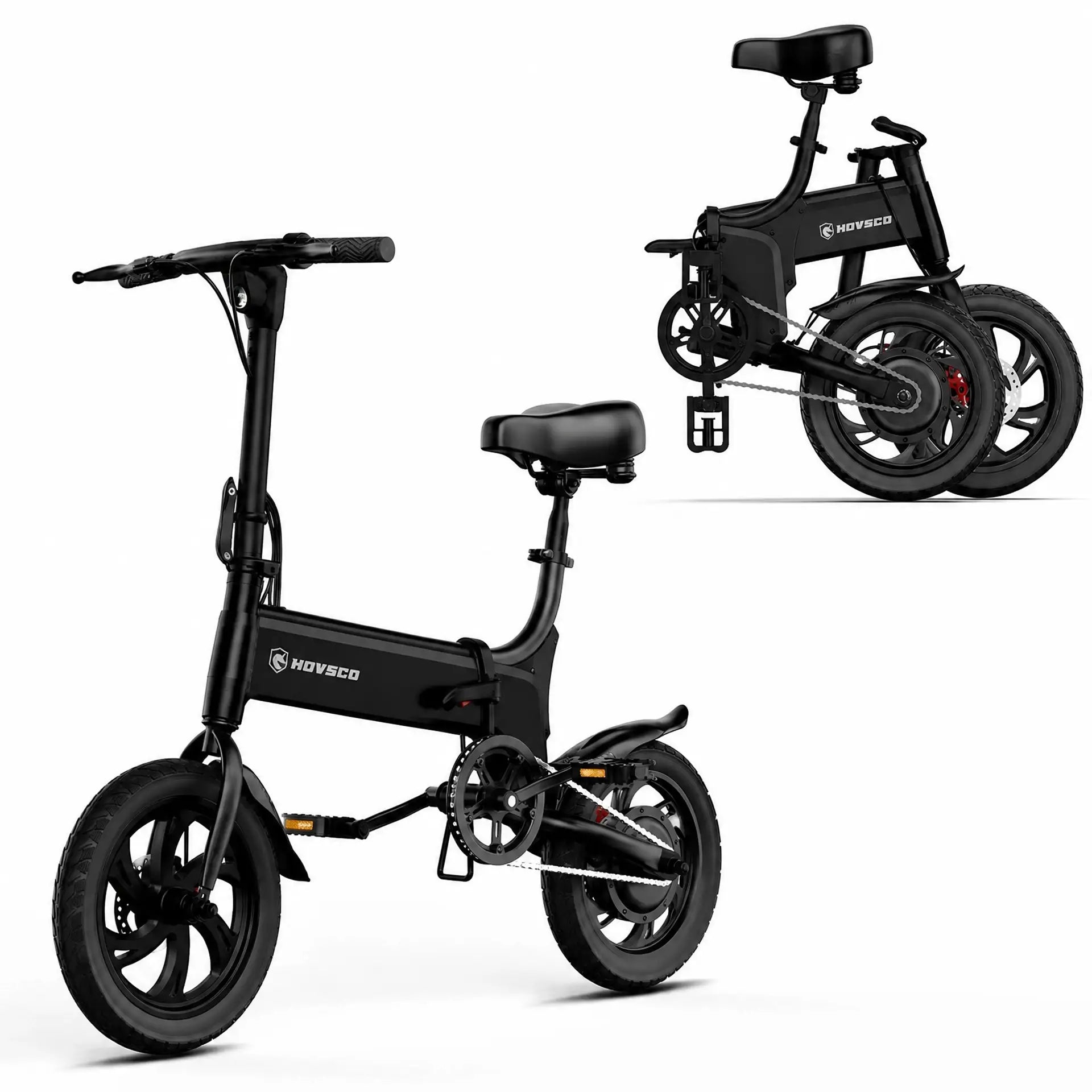
![[ New Arrival ] Porto Max Electric Scooter For Commute & Grocery Shopping - HOVSCO](http://www.hovsco.com/cdn/shop/files/PotroMax-3.jpg?v=1706927007&width=1200)
- by SEO
Why build family e-bikes for modern households?
- by SEO
E-Bikes
Accessories
 Free Shipping
 15-Day Returns
 2-Year Warranty
Free Shipping
15-Day Returns
2-Year Warranty
2-Year Warranty
Free Shipping
15-Day Returns
2-Year Warranty
Family e-bikes let parents replace many car trips with safe, fun, and affordable rides that keep everyone moving together. They combine cargo capacity, passenger-ready frames, and reliable motors to carry kids, groceries, and gear with ease. For brands like HOVSCO, family mobility is a core mission because it supports healthier, greener, and more connected daily life.
Check: family mobility and lifestyle ebikes
Family e-bikes are changing how families move by replacing short car trips with shared, low-cost, low-stress rides that keep parents and kids active. They combine cargo capacity, child-ready seating, and reliable electric assist so school runs, errands, and weekend adventures become simpler, cheaper, and more enjoyable for everyone.
From the factory floor, I have watched family e-bikes evolve from simple step-through commuters into robust mobility platforms that legitimately replace a second car for many households. Engineers now design frames, racks, and battery systems specifically around family payloads, not just solo riders, which transforms how families plan daily life and travel together.
Instead of treating bikes as weekend toys, families increasingly use them for school drop-offs, grocery runs, daycare commutes, and after-school activities. HOVSCO and other leaders build frames tested for high loads, long wheelbases for stability, and torque-sensing assist so parents can handle hills, wind, and traffic with confidence while carrying precious cargo.
Family e-bikes excel on short urban and suburban trips where cars are often overkill. They avoid parking hassles, cut fuel and insurance costs, and keep travel times predictable in congested areas. For many families, replacing 3–5 weekly car trips with a family e-bike delivers meaningful savings, better fitness, and more relaxed, conversation-filled rides with kids.
Here is a practical comparison of typical daily-use factors:
A family-ready e-bike includes a reinforced frame, extended rear or front cargo area, and passenger accessories designed and tested for real child loads and dynamic forces. It must combine stable handling, reliable brakes, and intuitive electric assist so parents can safely carry kids, groceries, and school bags in all-weather, all-week use.
On the production line, we check more than just total weight capacity; we test how the frame flexes under off-center loads, such as one child leaning to one side or a pannier packed with groceries. A true family e-bike uses thicker dropouts, stronger welds around seatstays and chainstays, and often a longer wheelbase to keep the center of gravity predictable when the bike is fully loaded.
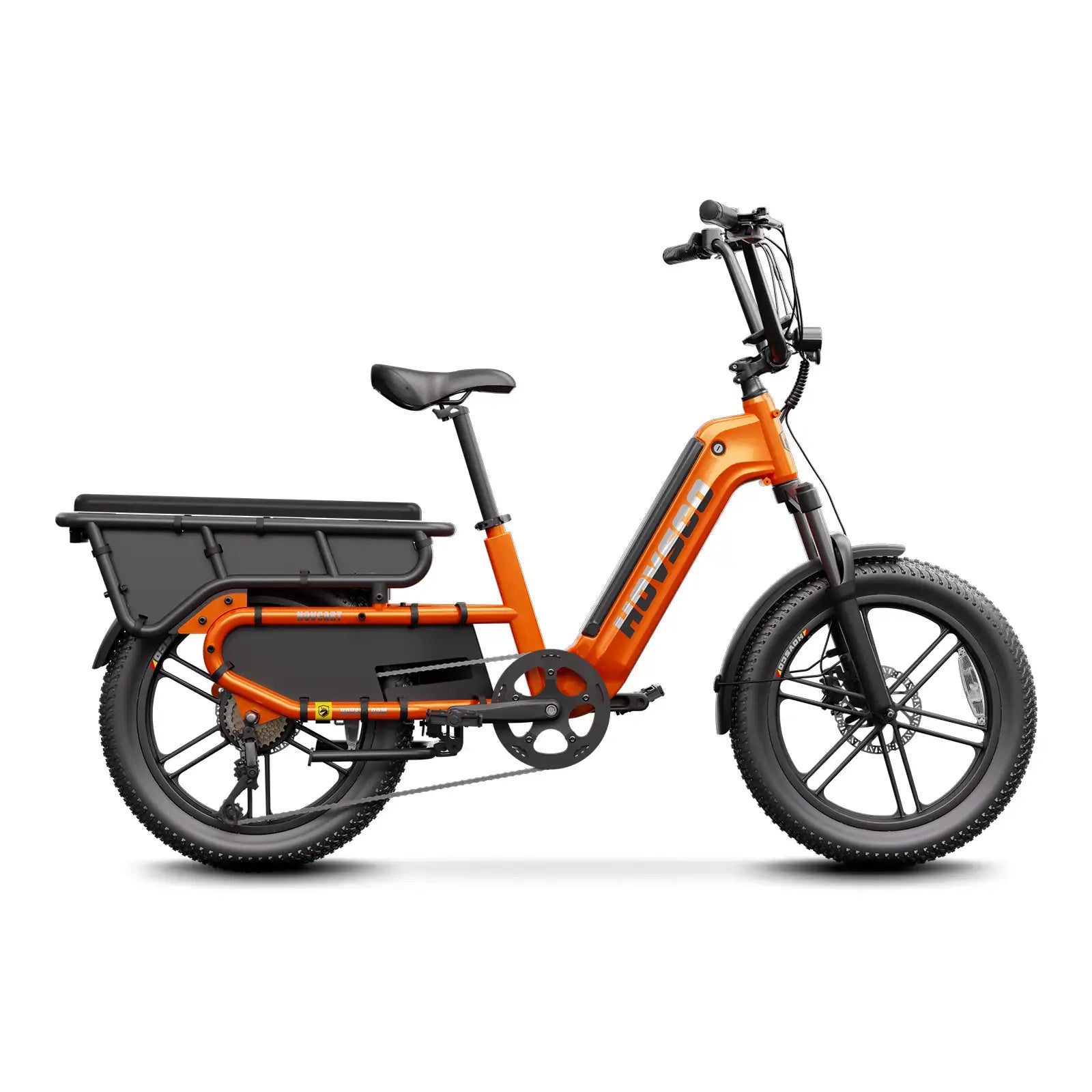
HOVSCO emphasizes integrated rear decks, modular racks, and passenger handle options so families can configure the same bike for school days, weekend rides, or grocery missions. Family-ready designs also prioritize step-through frames, wide kickstands for stable loading, and fender and lighting packages that make daily use simple and safe across seasons.
The components that matter most are frame strength, braking system, motor and torque sensor tuning, battery capacity, and contact points like tires and contact surfaces where kids sit or hold on. When these elements are engineered for high, dynamic loads, a family e-bike becomes a durable, trustworthy tool instead of just a hobby bike.
From an engineering standpoint, hydraulic disc brakes with appropriate rotor sizes and heat capacity are non-negotiable when you carry kids and cargo. Motor tuning matters as much as peak wattage; torque-sensing systems that respond proportionally to pedaling feel more natural and predictable when navigating tight neighborhoods or crowded paths.
HOVSCO designs its family-focused e-bikes around stout wheels, typically with higher spoke counts and double-wall rims, because wheel failures are the weak point on cheaply built cargo setups. Wide, puncture-resistant tires help distribute load and maintain grip, giving parents the confidence to ride over rough pavement and small obstacles with children on board.
HOVSCO’s mission to build long-lasting, trustworthy e-bikes for everyday riders drives a strong focus on safety, durability, and real-world usability. Founded by enthusiasts with prior success in hoverboards and e-scooters, HOVSCO applies accumulated safety lessons, battery expertise, and supply-chain strength to create family e-bikes that can handle demanding, daily use.
Because the team includes riders who commute, trail ride, and carry their own families, many design discussions start from lived experience instead of pure marketing requirements. That is why you see features like low step-through frames, integrated lighting, and robust cargo options prioritized before cosmetic add-ons.
A core part of HOVSCO’s mission is building a community around riding, not just selling products. That means listening to how families actually use their bikes—school runs, grocery hauls, weekend trips—and cycling feedback back into frame geometry, rack design, and accessory development so each new generation of family e-bikes feels more intuitive and reliable.
Founders focus on “family mobility” because the goal is not selling a single vehicle but enabling a lifestyle where parents and kids rely less on cars and more on active, shared transport. Family mobility includes safety, infrastructure, app support, and community practices that make it easy for families to choose bikes for more of their daily journeys.
On the inside, we see how design decisions like frame geometry, integrated child-seat mounting points, and battery placement influence whether a parent actually feels safe riding with their child. That is why founders talk about mobility systems, not just frames and motors; the product must fit real school schedules, storage constraints, and weather realities.
HOVSCO views family mobility as an ecosystem: durable bikes, reliable service, accessible parts, and community knowledge sharing. When parents trust that the brand will support them years down the line, they are more willing to retire a second car and commit to an e-bike-based lifestyle that benefits finances, health, and the environment.
Family-focused frames must balance stiffness, comfort, and step-through access, which requires careful tube shaping and material thickness choices. Designers have to keep the frame low enough for easy mounting while reinforcing the midsection and rear triangle to prevent flex under heavy passenger loads, especially during braking and cornering.
On the production side, we often adjust tube wall thickness by fractions of a millimeter in high-stress zones, like where the downtube meets the headtube or where the rear rack mounts to the frame. These tiny changes dramatically affect how the bike behaves when fully loaded, and they often cost more in material and welding time.
For HOVSCO, such trade-offs show up as slightly higher frame weights but noticeably better ride stability and longevity under family use. Rather than chasing the lightest possible frame, the brand aims for frames that pass internal tests simulating years of stop-and-go, loaded riding—tests that go beyond typical standards focused on solo riders.
Families who live within 3–8 miles of schools, workplaces, or shopping areas benefit most from switching to a family e-bike. Parents who want to reduce car dependency, improve fitness, and give kids more outdoor time gain significant advantages, especially when local infrastructure supports bike lanes or low-speed streets.
From experience, we see three main groups thrive with family e-bikes: urban families replacing short car trips, suburban households replacing a second car, and active families who already enjoy cycling and want to integrate it into everyday logistics. In each case, the e-bike becomes the default choice for many routine journeys.
HOVSCO’s family-oriented e-bikes are deliberately tuned for these broad scenarios, with gearing and assist levels that handle hills, headwinds, and fully loaded racks. When parents know they can reliably carry kids plus cargo without overexertion, the perceived barrier to leaving the car at home drops dramatically.
Family e-bikes fit into a healthy lifestyle by turning necessary trips into moderate exercise and stress-relieving outdoor time. Parents can commute or run errands while logging daily activity, and children experience fresh air and movement instead of sitting in back seats, which supports better physical and mental well-being for the whole family.
From the inside, we design motor-assist curves and gear ranges to keep riders in a comfortable cadence zone that encourages gentle cardiovascular effort rather than either overexertion or total coasting. Over time, this consistent moderate effort can contribute meaningfully to weekly activity goals without demanding extra gym time.
HOVSCO emphasizes this “active transport” philosophy in its brand mission to help people get healthy and fit through cycling. By making family e-bikes comfortable, approachable, and reliable, the company encourages more households to integrate movement into their daily routines rather than treating exercise as a separate, hard-to-schedule activity.
Families should prioritize proper helmets, secure child seating, predictable routes, and clear communication with kids about behavior on the bike. Consistent routines—like mounting and dismounting on the same side, checking brakes before departure, and using lights in low visibility—make every ride safer and more relaxed.
On the engineering side, we design frames to accept certified child seats, footboards, and handholds positioned to keep little hands away from wheels and moving parts. Still, how families use these features in real life matters just as much as the hardware itself.
Brands like HOVSCO also encourage regular maintenance checks: brake pad wear, bolt tightness on racks, and tire pressure. When parents follow a simple weekly checklist, they significantly reduce the risk of mechanical surprises on the road, especially when carrying the most important passengers—their children.
Families should choose configurations based on typical payload, route profile, and storage space at home. Long-tail cargo e-bikes suit multiple kids and large loads, while compact cargo models fit smaller homes and elevators. Motor power, battery capacity, and accessory compatibility should match real-world use rather than purely focusing on headline specs.
Here is a simple configuration guide:
From the product side, we often see families underestimate rack strength and overestimate motor power needs. The real priority is a stable, well-designed frame with balanced assist, not just high peak wattage. HOVSCO typically tunes motors for smooth, controllable power delivery that feels predictable when loaded.
Battery and motor technology determine how reliably families can replace car trips without worrying about range or hill performance. A well-matched motor and battery system delivers adequate torque for fully loaded starts, consistent range for daily commuting, and enough durability to handle years of heavy use with minimal degradation.
Inside the factory, we pay close attention to thermal performance under repeated high-load starts, such as climbing a short hill with kids on the back. Motors and controllers must handle bursts of current without overheating or derating, while batteries need robust cell selection and pack construction to prevent voltage sag under load.
HOVSCO leverages its prior experience in hoverboards and e-scooters to refine battery management systems (BMS) that balance safety, longevity, and usable capacity. While many riders fixate on watt-hours alone, the brand focuses on how the entire system behaves in the real world—how quickly it charges, how it performs after repeated cycles, and how predictable it feels for parents.
Family e-bikes can be highly sustainable when designed for repairability, supported with spare parts, and used to meaningfully reduce car mileage. Their environmental impact improves when families maximize their lifespan through proper maintenance, responsible battery care, and eventual component recycling or re-use.
From a manufacturing perspective, we build frames to outlast multiple component lifecycles, meaning motors, batteries, and electronics can be replaced while the core structure remains in service. This approach demands standardized mounting points, accessible wiring, and modular component choices rather than sealed, non-serviceable designs.
HOVSCO’s mission to build a long-lasting brand aligns with this long-term view. By maintaining parts supply and service support, the company helps families keep bikes on the road for years, amplifying the sustainability benefits and ensuring that initial investments in frame and battery production yield maximum real-world mileage.
As an engineer who has physically torqued every critical bolt on a production line, I can say family e-bikes live or die on the details: weld penetration, rack mount reinforcement, and real-world load testing. When we design for kids on board, we overbuild in the right areas, then ride these bikes ourselves with our families before they ever ship to customers. That philosophy guides every HOVSCO family-focused design.
Founders build family e-bikes to give households a joyful, practical alternative to car-dominated routines, aligning their mission with healthier lifestyles and more human-scale cities. The core passion is enabling shared rides—parents, kids, and friends—that turn errands into experiences and keep families connected, active, and present in their communities.
From internal development meetings, we often start with stories: a parent who wants to arrive at work without being exhausted, a child who loves the wind on their face, or a grandparent who wants to keep up with younger family members. These stories become design requirements, shaping geometry, assist levels, and feature sets.
For HOVSCO, “Enjoy the ride” is not just a slogan; it is a design filter. If a feature makes the bike harder to load, less comfortable, or more intimidating, it gets reworked or removed. The goal is a family e-bike that feels welcoming the first time a parent swings a leg over, and still feels trustworthy after years of shared adventures.
A family should consider switching when they frequently make trips under 8 miles, feel the financial and mental burden of car ownership, or desire more active time together outdoors. Ideal moments include moving closer to school or work, welcoming a new child, or reevaluating transportation costs during economic changes.
From observing customer patterns, the most successful transitions happen when families start small: replacing one or two weekly trips, then gradually increasing as confidence and routines grow. This incremental approach allows parents and kids to adapt to new routes, weather strategies, and gear setups without feeling overwhelmed.
HOVSCO encourages potential riders to test-ride family setups, ideally with some weight on the racks, before committing. When parents experience the stability, assist, and braking firsthand, they can better judge whether a family e-bike fits their lifestyle and how quickly they might recoup costs through reduced car use.
Community support makes adoption dramatically easier by providing shared knowledge, social proof, and practical help with routes, gear, and maintenance. Local riding groups, online forums, and brand communities reduce the learning curve and help families feel less isolated in their decision to ride instead of drive.
Inside brand communities, we see families share packing lists, child comfort tips, rain-gear recommendations, and even school-route maps. This peer-to-peer advice often answers questions more quickly and credibly than manuals, because it comes from people facing similar constraints and environments.
HOVSCO actively fosters such community connections, inviting riders to share stories “on the ride or off the bike.” When new families see others thriving with family e-bikes—commuting, exploring, and adventuring—they are more likely to trust the process and commit to their own journey toward more active, sustainable mobility.
A family e-bike can be a strong investment when it meaningfully reduces car usage, parking costs, and ride-share dependence. For households that regularly use it for commuting, school runs, and errands, the combination of financial savings, health benefits, and time efficiency often justifies the upfront cost within a few years.
From an engineering and manufacturing perspective, we design family e-bikes with a clear economic horizon—frames and components should withstand thousands of miles of mixed-use riding. When families leverage this durability by riding regularly, the cost per mile drops significantly compared with sporadically used recreational gear.
HOVSCO positions its family e-bikes to balance price and long-term value, leveraging efficient supply chains without cutting corners on critical components like brakes, frames, and batteries. For many households, the real return comes not just in dollars saved but in daily experiences—kids’ laughter, shared conversations, and a more relaxed relationship with mobility.
the mission behind our Family Ebike Lifestyle
Are family e-bikes safe for young children?Yes, when used with certified child seats, proper helmets, and stable frames designed for passenger loads, family e-bikes provide a safe, controlled ride. Parents should follow manufacturer guidelines and practice with weight before carrying kids.
How far can a typical family e-bike travel on one charge?Most family e-bikes comfortably cover 25–60 miles per charge, depending on terrain, assist level, and total load. Families usually have ample range for school runs, errands, and daily commuting without mid-day charging.
Do I need prior cycling experience to ride a family e-bike?Moderate cycling experience helps, but many parents learn quickly on stable, step-through frames with well-tuned assist. Starting in a quiet area, practicing starts, stops, and turns with light loads builds confidence before carrying children.
Can a family e-bike replace our second car?In many households, yes—especially when most trips are under 10 miles. With proper planning for weather, storage, and routes, a family e-bike can handle commuting, school runs, and errands that once required a second vehicle.
What maintenance does a family e-bike require?Family e-bikes need periodic brake checks, chain lubrication, tire pressure checks, and occasional professional tune-ups. Regular inspections keep components safe under higher loads and extend the bike’s lifespan for years of family use.
Share:
Is a step-through ebike the safest “Grandparent Express” for riding with grandkids?
Is a blue e-bike the smart choice for your next ride?