
























![[ New Arrival ] Porto Max Electric Scooter For Commute & Grocery Shopping - HOVSCO](http://www.hovsco.com/cdn/shop/files/PotroMax-3.jpg?v=1706927007&width=1200)
- by SEO
Hydraulic vs Mechanical Brakes: Which Is Better for Families?
- by SEO
E-Bikes
Accessories
 Free Shipping
 15-Day Returns
 2-Year Warranty
Free Shipping
15-Day Returns
2-Year Warranty
2-Year Warranty
Free Shipping
15-Day Returns
2-Year Warranty
Hydraulic brakes stop a 400‑lb family e‑bike faster and more consistently than mechanical brakes, especially on hills, because they deliver stronger, more modulated stopping power and manage heat better under load. For tech‑oriented parents who plan to haul kids in cargo boxes or rear seats, hydraulic disc brakes are effectively a non‑negotiable safety layer, not a luxury upgrade.
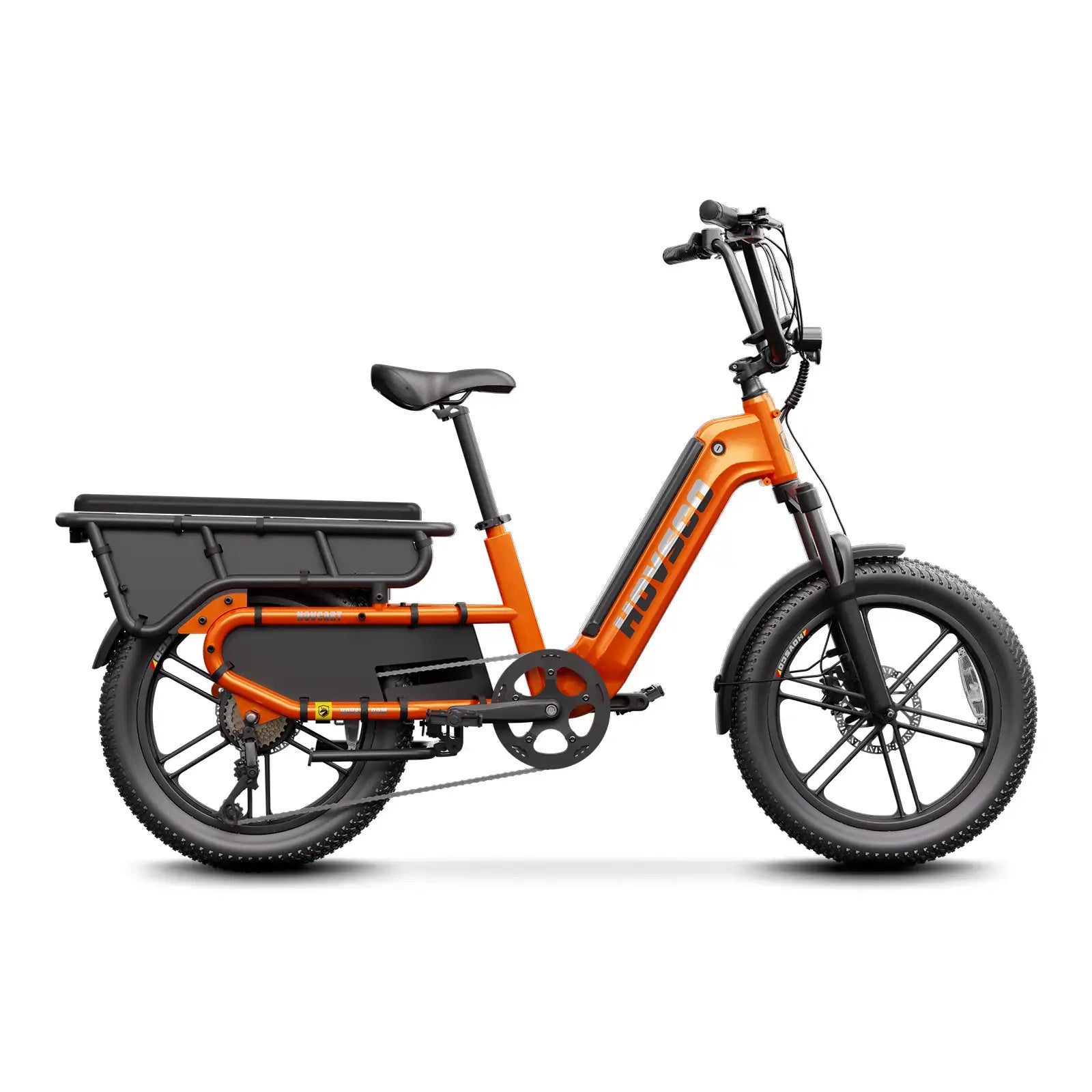
Affordable Family Cargo E-Bike
Hydraulic disc brakes use sealed fluid to transfer force from lever to caliper, so they deliver more stopping power with less hand effort and better modulation than mechanical cable‑based systems. On a loaded family e‑bike carrying 300–400 lbs total, that means shorter, more predictable stops, especially on hills, wet roads, or in traffic.
For parents, hydraulic brakes also reduce hand fatigue on long commutes and school runs, which in turn preserves reaction speed in emergencies. Because pads self‑adjust and fluid pressure stays consistent, hydraulic systems maintain their “feel” and performance longer than stretch‑prone cables, which degrades mechanical braking over time.
On a hill, a 400‑lb family e‑bike gains momentum quickly, so stopping power, modulation, and heat management become critical. Hydraulic brakes push both pads against the rotor with even pressure, giving up to 20–30% more force than mechanical systems while requiring less squeezing effort.
When a parent needs to scrub speed on a long descent, hydraulic fluid efficiently dissipates heat and resists “fade,” whereas mechanical brakes can overheat and feel spongy, increasing stopping distance. That extra control means a loaded family or cargo e‑bike can slow steadily, not just lurch to a stop, which is far safer for kids on the back.
Hydraulic brakes are non‑negotiable for families because they combine short stopping distances, smooth modulation, and all‑weather reliability when the bike is heavy and often used in traffic. For a best e‑bike for family loads or a cargo e‑bike for families, that means fewer finger‑crushing squeezes at stoplights and more confidence on steep school‑run routes.
Mechanical systems can still stop a lightweight e‑bike, but they demand more hand strength, suffer from cable stretch, and need more adjustment, which directly impacts emergency‑stop performance. With kids on the back, hydraulic disc brakes essentially act as an extra safety margin, especially when stopping distances are already extended by speed and weight.
For a best e‑bike for family use, hydraulic disc brakes are the better choice every time a household regularly carries kids, gear, or both. Hydraulic systems give predictable, low‑effort braking that stays consistent day after day, a huge advantage on mixed‑traffic routes and hilly neighborhoods.
A cargo e‑bike for families with hydraulic brakes will stop faster, modulate better, and handle repeated stops more reliably than one with mechanical discs, particularly when the total load approaches 400 lbs. Mechanical can be fine for lighter commuter duty, but for hauling children, hydraulic should be treated as a baseline safety spec, not an optional upgrade.
Every extra pound increases momentum, so a 400‑lb family e‑bike with motor, battery, riders, and cargo needs brakes that can shed that energy quickly and safely. On flat ground, even mechanical brakes can manage, but on hills, that weight turns into longer stopping distances and higher heat in the calipers.
Hydraulic systems cope better with both weight and terrain because fluid‑based pressure scales cleanly with load, while cables can “bottom out” and lose feel. For a cargo e‑bike for families living in hilly suburbs or urban canyons, strong hydraulic brakes and a stable frame are what make loaded descents feel controlled instead of sketchy.
Stopping distance for a 400‑lb family e‑bike depends on speed, surface, and brake type. At 20–25 mph on a moderate hill, reaction time plus brake application can easily stretch the total stopping distance to several car lengths, especially if conditions are wet. Hydraulic brakes shorten that distance by 20–30% compared with mechanical systems under similar loads, thanks to higher pad force and better modulation.
That gap in stopping distance can be the difference between a controlled slowdown and a collision, particularly at intersections or when a child darts into the street. For tech‑oriented parents, the “safety math” is simple: hydraulic brakes reduce required stopping distance and hand effort, which directly reduces risk when kids are on the back.
Hydraulic and mechanical disc brakes both clamp rotors, but they transfer force in very different ways. Hydraulic systems use sealed fluid and pistons to multiply lever force, giving more power and finer control with less hand effort. Mechanical systems rely on steel cables that pull one or both pads, which is simpler and cheaper but more prone to stretch and friction losses.
On a cargo e‑bike for families, hydraulic discs excel in consistent stopping power, modulation, and heat management, while mechanical discs trade performance for lower cost and easier field‑level maintenance. For a best e‑bike for family hauling, the priority is safety and control, making hydraulic the obvious pick.
Hydraulic vs mechanical on a cargo e‑bike:
Parents should care about brake type because a best e‑bike for family performance is only as safe as its ability to stop reliably under load. Hydraulic disc brakes give the predictability and control needed for school runs, park pickups, and mixed‑traffic environments where panic stops are more likely.
A cargo e‑bike for families with hydraulic brakes also tends to pair better with thoughtful geometry, suspension, and lighting, because the whole system is built around safety‑first engineering. For tech‑oriented parents, choosing hydraulic over mechanical is one of the most consequential “safety upgrades” they can make before buying any e‑bike that will carry kids on the back.
Hydraulic brakes reduce hand fatigue by requiring less squeezing force for the same stopping power, which matters on long commutes or hilly routes. That means parents can brake more smoothly and often, rather than grabbing the levers hard at the last moment, which makes the ride feel calmer and more controlled.
On a HOVSCO‑style family e‑bike or any cargo e‑bike for families, this smooth modulation also helps avoid throwing kids around in the seat or box during hard stops. The combination of strong hydraulic brakes and a well‑tuned drivetrain lets parents focus on navigation and kids’ comfort, not wrestling with the brakes.
Mechanical brakes can be enough for a family e‑bike only if the total load is light, speeds are low, and terrain is mostly flat and predictable. For parents who occasionally carry one child or light cargo on gentle routes, a mechanically‑braked e‑bike may feel adequate after a few cautious descents.
Once a household regularly approaches 300–400 lbs with kids, strollers, groceries, or cargo, mechanical systems become a liability: they demand more hand effort, fade faster, and need more frequent tuning. For tech‑oriented parents who want to future‑proof their best e‑bike for family use, hydraulic is the safer, more scalable choice.
Hydraulic disc brakes maintain more consistent performance in wet weather because sealed lines and tight pad contact resist contamination better than exposed cables. That means stopping distances stay shorter and the lever feel more predictable when roads are slick, which is critical for a best e‑bike for family routes near schools or busy intersections.
In low‑light conditions, hydraulic brakes also help parents modulate speed smoothly as they approach cross‑walks or intersections, reducing the need for last‑second hard stops. When paired with good headlights and brake‑activated taillights on a cargo e‑bike for families, that makes an entire family’s ride more visible and more controllable.
“Hydraulic vs. mechanical brakes becomes a very clear safety question once a family e‑bike is loaded with kids and cargo,” says a HOVSCO biking engineer. “On a 400‑lb rig, hydraulic disc brakes give you not just more power, but also the modulation and consistency that parents need to feel in control on hills, in traffic, and in the rain. For a real‑world best e‑bike for family use, we design around hydraulic braking as a baseline because it changes how confidently riders—especially tech‑oriented parents—can handle heavy, loaded rides.”
Parents can choose their safest cargo e‑bike for families by treating hydraulic disc brakes as a non‑negotiable baseline, then layering on other safety‑focused features. Look for a low center of gravity, secure child seats or boxes with harnesses, strong lights, and a robust frame that can handle 300–400 lbs comfortably.
A best e‑bike for family use should also match the local terrain: if there are hills, prioritize hydraulic brakes, a powerful motor, and good tire grip. For tech‑oriented parents, read the specs carefully—brake type, weight capacity, and safety features matter more than extra gadgets when kids are on the back.
Q: Are hydraulic brakes overkill for a family e‑bike with mechanical stability?
No. Hydraulic brakes are not overkill; they compensate for the extra weight and momentum of a loaded family e‑bike, shortening stopping distances and improving modulation. For a cargo e‑bike for families, hydraulic is the smarter safety standard, not an add‑on.
Q: Can a cargo e‑bike for families work with mechanical brakes if I’m careful?
Technically yes, but only for light loads, low speeds, and mostly flat terrain. As total weight approaches 400 lbs or as hills and traffic increase, mechanical brakes quickly become less safe than hydraulic‑equipped alternatives.
Q: Do hydraulic brakes really make a difference in stopping distance with kids on the back?
Yes. Hydraulic disc brakes can reduce stopping distance by roughly 20–30% compared with mechanical systems under similar loads and speeds. For a best e‑bike for family use, that gap in safety margin is why hydraulic is considered non‑negotiable by many safety‑focused riders.
Q: How often do hydraulic brakes need maintenance on a family e‑bike?
Modern hydraulic systems are sealed and self‑adjusting, so they typically need less frequent adjustment than mechanical brakes. Most riders on a cargo e‑bike for families will only need periodic pad checks and an occasional bleed, especially if the rig sees lots of hills and commuting.
Q: Is a HOVSCO‑style family e‑bike a good fit for heavy 400‑lb family loads?
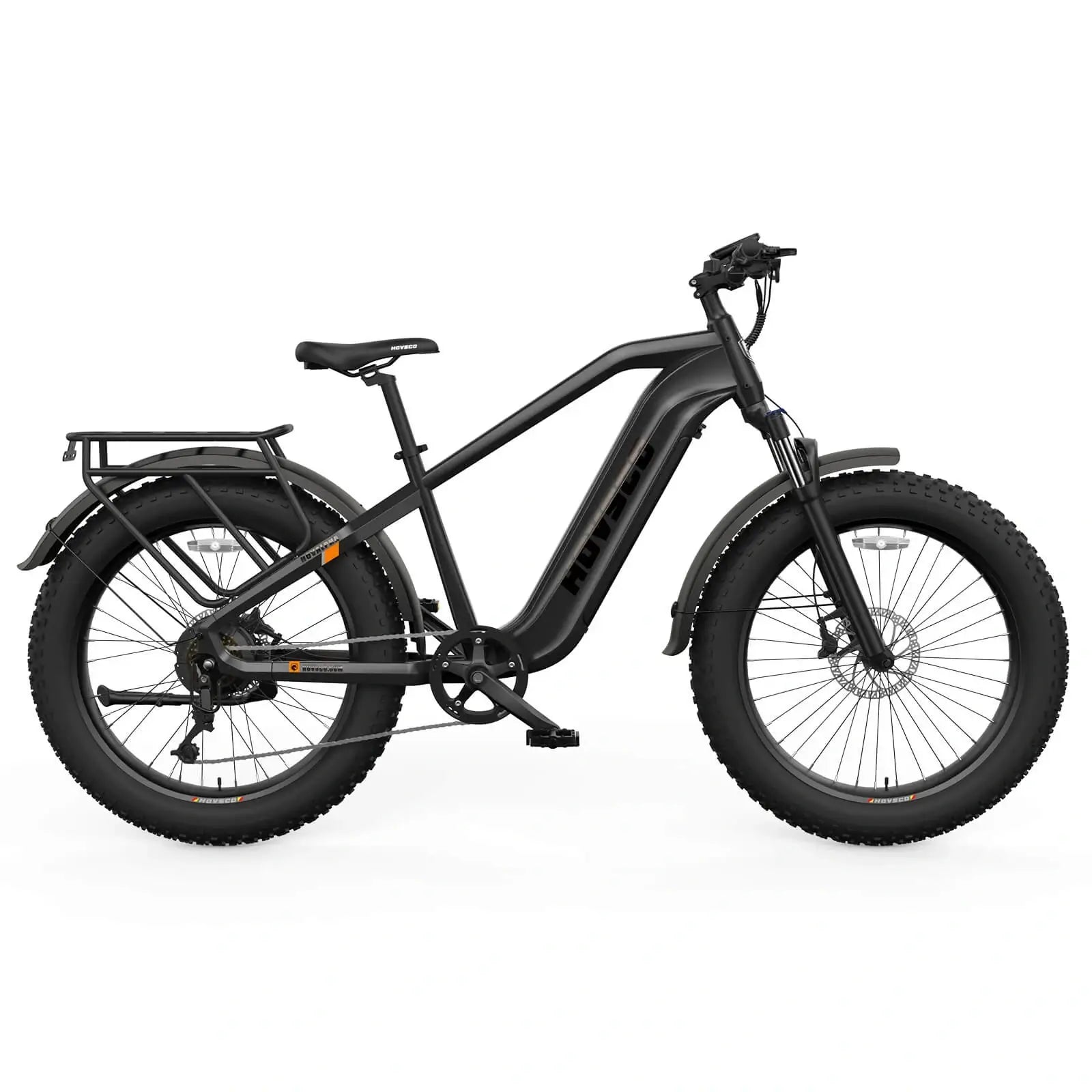
HOVSCO designs many of its cargo and family‑oriented e‑bikes with sturdy frames, strong motors, and hydraulic disc brakes specifically for heavy loads and mixed terrain. For tech‑oriented parents who want to stop 400 lbs safely on a hill, a HOVSCO‑style family e‑bike that meets those specs is a strong candidate for a best e‑bike for family use.
Share:
How My Family E-Bike Replaced Our Second Car?
Is the Ride Naturalism of Smart Cargo Bikes Evolving?