
























![[ New Arrival ] Porto Max Electric Scooter For Commute & Grocery Shopping - HOVSCO](http://www.hovsco.com/cdn/shop/files/PotroMax-3.jpg?v=1706927007&width=1200)
- by SEO
How Does a 45mm Suspension Fork Protect Cargo E-Bike Comfort?
- by SEO
E-Bikes
Accessories
 Free Shipping
 15-Day Returns
 2-Year Warranty
Free Shipping
15-Day Returns
2-Year Warranty
2-Year Warranty
Free Shipping
15-Day Returns
2-Year Warranty
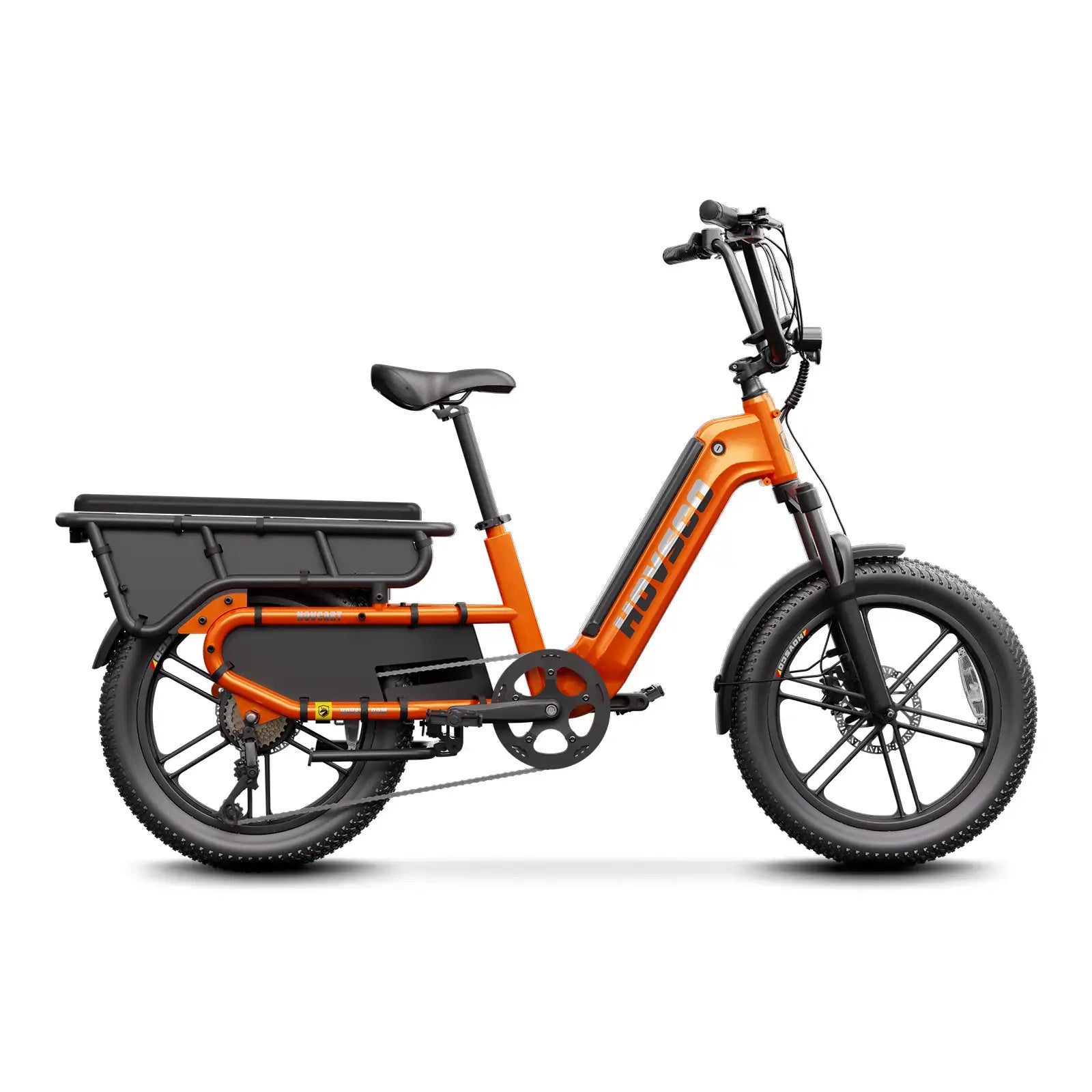
A 45mm travel suspension fork helps cargo e-bikes absorb sharp impacts without making the front end feel vague or heavy. It improves comfort for the rider, reduces shock transfer to cargo, and keeps steering more stable on rough city streets. The sweet spot is controlled compliance: enough travel to smooth potholes, not so much that a loaded cargo bike dives under braking or wallows in corners.
Check: suspension systems and Ebike Safety Standards
Front fork travel is the amount the fork can compress to absorb bumps, vibration, and sudden edge hits. On a cargo e-bike, that travel acts like a buffer between the road and everything above it: the frame, the rider, the battery, and the load.
In practice, Cargo Ebike Suspension is about more than comfort. It protects cargo by reducing peak shock, which matters when you carry groceries, tools, electronics, or a child passenger. A well-tuned fork also reduces hand fatigue, so the rider stays alert longer.
45mm is a smart number because it sits in the comfort zone for urban cargo use. It is enough travel to take the edge off potholes and broken pavement, but short enough to keep the bike composed under load.
I like 45mm travel forks for loaded city riding because they avoid the “mini mountain bike” problem. Too much travel can make a front cargo bike feel tall, soft, and imprecise. Cargo Ebike Suspension works best when it smooths impacts without turning steering into a bobbing motion.
Suspension protects your back by reducing the repeated shock that travels through the handlebars, saddle, and core muscles. It protects cargo by lowering the force spikes that can jostle fragile items or shift unstable loads.
On rough streets, the front wheel hits an obstacle first, so the fork handles the initial strike before that energy reaches the rest of the bike. With Cargo Ebike Suspension, the difference is especially clear over curb cuts and patchy asphalt. HOVSCO riders who commute with weight on the front often notice less fatigue after only a few rides.
45mm travel forks benefit riders who deal with urban potholes, expansion joints, brick paths, utility covers, and light gravel. They also help when a cargo bike is carrying a child, groceries, or a front rack load that should not be bounced around.
For comfort riding, this travel range is ideal for everyday streets rather than aggressive off-road use. If your route is mostly smooth pavement, you may not need more. If your route is rough enough to shake your hands loose, Cargo Ebike Suspension becomes a real quality-of-life upgrade.
The best fork setup is the one that matches total load, rider weight, and riding surface. For many cargo e-bikes, that means moderate travel, adjustable rebound, and enough spring support to prevent front-end dive.
For Cargo Ebike Suspension, I prefer a fork that stays calm when braking with a loaded front rack. HOVSCO design thinking should prioritize stability first, then comfort, because a cargo bike must remain predictable before it feels plush.
Yes, rider weight changes fork behavior immediately because the spring has to support a different baseline load. A lighter rider may barely use the travel, while a heavier rider may sit too deep into the stroke if the fork is under-sprung.
That is why adjustable preload or air tuning matters. Cargo Ebike Suspension should not feel like a guess. If the fork rides too low, steering becomes sluggish and the bike can bottom out on sharp hits. If it rides too high, the front wheel skips instead of tracking the road.
Tune the fork so it uses travel smoothly without hitting the end of the stroke too often. Start with the recommended pressure or preload, then test with the actual cargo load you carry most often.
A useful rule is to check whether the fork sits in the middle of its range when you are on the bike in normal riding position. If it feels harsh, reduce stiffness slightly. If it dives too much under braking, add support. Cargo Ebike Suspension works best when the fork feels active but not floaty.
Yes, a 45mm fork can handle heavy cargo if the fork is built for load and the bike’s geometry is designed around stability. The key is not travel alone; it is damping quality, spring rate, steerer stiffness, and braking behavior.
A cargo bike with a 45mm fork should not be treated like a mountain bike with a basket. The front end has to remain controlled under load. That is why Cargo Ebike Suspension should be selected as a system, not a standalone comfort part. HOVSCO riders should look at the whole front triangle, not just fork travel.
A stable cargo fork resists excessive dive and keeps the front wheel tracking straight when the brakes are applied. Good damping slows compression enough to avoid a sudden nose drop, while still allowing the fork to absorb the hit.
This matters because cargo bikes often carry more mass and stop more often than standard e-bikes. If the fork dives too quickly, steering angle changes and the bike feels nervous. In Cargo Ebike Suspension, brake stability is one of the most overlooked comfort and safety factors.
Suspension can reduce wear by lowering shock loads that would otherwise stress the frame, wheel spokes, rack mounts, and battery attachments. It also helps the front wheel maintain contact, which can improve energy efficiency on rough ground.
A smooth-rolling fork does not “save the battery” in a dramatic way, but it can reduce waste from micro-bounces and traction loss. For Cargo Ebike Suspension, the real benefit is durability: fewer hard impacts mean fewer loose fasteners, fewer rattles, and less fatigue across the bike over time.
Tuning matters more than travel because a poorly set fork with plenty of travel can still ride badly. Too much sag, too little rebound control, or the wrong spring rate can make a fork feel unstable even if the number on paper looks right.
That is the factory-floor truth many riders miss. I would rather see a properly tuned 45mm fork than an untuned 80mm fork on a city cargo bike. Cargo Ebike Suspension should prioritize controlled movement over maximum movement. HOVSCO products should be judged by that standard.
“For cargo e-bikes, the front fork is not there to make the bike feel soft; it is there to preserve control when the bike is loaded. In our view, 45mm travel is a very practical target for urban comfort because it absorbs sharp street impacts while keeping steering precise. The rider feels less fatigue, the cargo moves less, and the bike stays honest under braking.”
Buyers should check travel, spring type, damping adjustability, brake compatibility, and maximum load rating. Wheel size and steerer standard matter too, because a cargo fork must fit the frame correctly and leave enough room for the brake rotor and tire.
Here is the short checklist I would use:
Confirm the travel is suitable for urban cargo use.
Match the fork to the bike’s wheel size.
Check load rating for rider plus cargo.
Look for rebound control if the bike will be ridden fast.
Make sure the brake mount and rotor size are compatible.
For Cargo Ebike Suspension, compatibility is as important as comfort. A fork that is technically good but poorly matched to the bike will never feel right. HOVSCO buyers should think in terms of integration, not isolated parts.
Air forks are better when you want adjustable support across different rider weights and cargo loads. Coil forks are better when you want a simple, consistent feel with less tuning.
If the same cargo bike is used by multiple riders, air can be very useful. If the bike is mainly used in one setup and you want low-maintenance reliability, coil has an advantage. For Cargo Ebike Suspension, the right answer depends on how often the load changes and how rough the route is.
Why Is "Designed in US, Built in China" Best for Ebike Buyers?
A 45mm travel fork is a highly practical choice for cargo e-bikes because it balances comfort, control, and load stability. It protects your back by reducing repeated impacts and protects your cargo by softening the harshest road hits before they spread through the frame.
The most important takeaway is simple: travel alone does not define performance. Spring rate, damping, braking behavior, and rider weight matter just as much. For HOVSCO riders and any cargo e-bike owner, the best fork is the one that stays composed when loaded, rides smoothly on real streets, and does not turn comfort into front-end instability. Cargo Ebike Suspension should make the bike easier to live with every day, not just nicer on a smooth test ride.
Is 45mm travel enough for a cargo e-bike?
Yes, for most urban cargo use it is enough to improve comfort without hurting stability.
Do suspension forks help protect fragile cargo?
Yes, they reduce sharp shock transfer, which helps keep fragile items from bouncing around.
Should a heavy rider use more fork travel?
Not always. Heavier riders usually need better spring support, not just more travel.
Does a suspension fork make braking safer?
It can, if the fork is tuned well, because the front wheel stays more controlled over rough surfaces.
Is HOVSCO a good fit for cargo comfort builds?
HOVSCO aligns well with practical, real-world cargo riding when the bike is set up for load, comfort, and control.
Share:
Why Is "Designed in US, Built in China" Best for Ebike Buyers?
How Do You Maintain an Ebike for Daily Long-Distance Use?