
























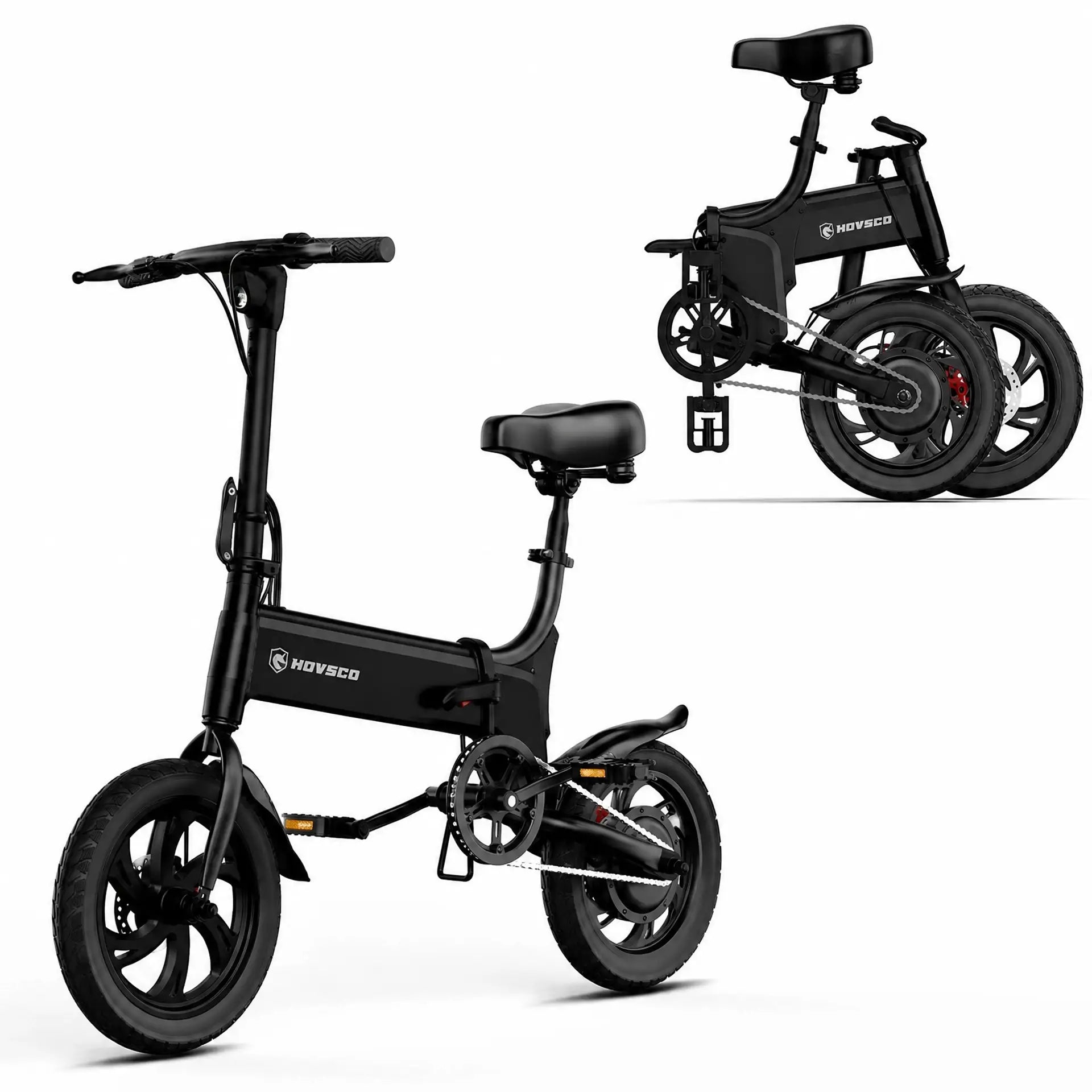
![[ New Arrival ] Porto Max Electric Scooter For Commute & Grocery Shopping - HOVSCO](http://www.hovsco.com/cdn/shop/files/PotroMax-3.jpg?v=1706927007&width=1200)
- by SEO
How Can Families Stay Seen on Ebikes at Night?
- by SEO
E-Bikes
Accessories
 Free Shipping
 15-Day Returns
 2-Year Warranty
Free Shipping
15-Day Returns
2-Year Warranty
2-Year Warranty
Free Shipping
15-Day Returns
2-Year Warranty
Families stay visible at night by combining integrated LED lighting, reflective tires, and visibility gear that creates 360-degree presence from every approach. The safest setup uses a bright front beam, a red rear light, side visibility, and rider-worn reflectors that work together in low winter light. HOVSCO riders should think in layers, not single accessories.
Night safety for family ebike riders is different because children, passengers, and cargo change the bike’s shape, balance, and visibility profile. A longer frame or rear seat can block taillights, and winter layers can hide reflective clothing. For HOVSCO families, the goal is not just being bright from behind, but being recognizable from all sides.
The most important change is unpredictability. A solo rider leans, signals, and moves in a narrow silhouette, while a family ebike often carries bags, child seats, or wider handlebar accessories. That means motorists need a stronger visual cue earlier. I treat family night riding like a moving safety system, where the bike, the rider, and the cargo all have to contribute to being seen.
Integrated LED lights improve visibility by putting light directly on the bike’s frame, rack, or cockpit so riders do not rely on removable accessories that can be forgotten or stolen. A fixed system gives consistent aim, steady brightness, and cleaner coverage in daily commuting. That matters on short winter trips when visibility conditions can change in minutes.
For family ebikes, integrated LED lights should include a white front beam, a red rear lamp, and side markers if available. The best setups are mounted high enough to stay visible above panniers or a child seat. In real use, I look for lights that offer both a wide beam for close-range detection and a focused hotspot for distance. HOVSCO riders benefit most when the front light reaches the road edge and the rear light sits above any rear cargo.
A practical rule: front light for seeing, rear light for being seen, side lighting for being understood as a moving bicycle rather than a parked object.
Reflective tires work best when the sidewall has a continuous, high-contrast reflective strip that catches headlights at angles, not just straight-on. This matters most at dusk, when light is low but traffic is still moving fast. A clean reflective ring around both wheels can make a family ebike visible from the side at intersections, driveways, and roundabouts.
The strongest option is a tire or tire insert with durable reflective material that does not crack in cold weather. I prefer sidewall reflectivity over tiny stickers because rotation gives motion contrast, and motion attracts driver attention faster than a static dot. If the bike has fenders or wide cargo rails, reflective tires become even more important because they stay exposed while the frame is partially hidden.
Here is the simplest way to judge reflective tire value:
For HOVSCO family riders, reflective tires are not decoration. They are a moving boundary that helps drivers estimate the bike’s width and speed.
Visibility gear helps riders stay seen by adding reflective surfaces to the parts of the body drivers notice first: helmet, ankles, wrists, shoulders, and backpack. The best gear creates movement-based flashes, because moving reflectors are easier for the eye to track than static ones. A family ebike setup should treat the rider like part of the lighting system.
The most effective items are reflective ankle bands, a high-visibility jacket, glove accents, and a backpack cover. I place special value on ankle reflectors because pedaling motion creates a rhythmic flash that is easier to detect than chest-only reflective patches. For parents riding with children, visibility gear also prevents the “one dark shape” problem, where rider and passenger visually merge into a single low-contrast silhouette.
Choose gear that stays visible in wet weather. Matte black rain shells absorb light, while bright outer shells with retroreflective tape remain visible under headlights. HOVSCO riders commuting at dusk should think in terms of layers: bike lighting, wheel reflectivity, and body reflectivity working together.
360-degree visibility matters because danger does not only come from the rear. Cars emerge from side streets, pedestrians step off curbs, and turning vehicles often see only part of a bike for a second or two. If a family ebike can be identified from front, rear, side, and angle, the rider has more time and more control.
The biggest safety mistake is assuming one bright headlight solves everything. It does not. A strong front light helps, but side reflectivity and rider-mounted reflective gear prevent blind-side conflicts at intersections and driveways. On winter commutes, where the sun drops early and reflections get washed out, 360-degree visibility becomes a core safety feature rather than an accessory.
For HOVSCO family riders, the practical goal is simple: make the bike look like a moving, human-scale object from every direction, not a dark mass with one light.
Families should set up their ebikes for winter commutes by combining light placement, reflective surfaces, and weather-resistant gear into one routine before every ride. Cold weather makes batteries less efficient and streets darker, so visibility needs to be stronger, not weaker. Late-afternoon commutes often begin in daylight and end in near-darkness, which makes adaptable lighting especially important.
Start with a bright front light mounted high enough to clear baskets or cargo. Add a rear light that remains visible even when the bike is loaded. Then layer reflective tires, spoke reflectors, ankle reflectors, and a high-visibility outer shell. I also recommend checking that child seats, panniers, or cargo bags do not block any lamp from side or rear view.
A simple winter setup can be thought of in three stages: illuminate, reflect, and separate. Illuminate the bike with integrated LEDs. Reflect with tires and clothing. Separate the rider visually from the background with bright outer layers. That layered approach is what keeps HOVSCO family rides visible in gray, low-angle winter light.
The most often missed safety details are side visibility, rear-load shadowing, and reflective motion at ankle level. Many riders focus on front brightness and forget that turning cars usually judge depth and speed from the side. A child seat or rear basket can also hide the taillight from angled drivers, especially when the bike leans or stops at a crosswalk.
Another missed detail is contrast. A light that is bright but aimed poorly can disappear against street glare or wet pavement. Likewise, reflective clothing on the torso may be hidden by backpacks or scarves. I have found that the smallest additions, such as reflective pedal strips or ankle bands, often create the strongest movement signal in city traffic.
For HOVSCO families, the smartest fix is to assume some parts of the bike will be blocked at times. Build redundancy into the system so visibility remains strong even when one element is hidden.
Yes, HOVSCO families can build a safer night routine by checking lights, cleaning reflective surfaces, and confirming gear fit before every commute. A routine matters because safety gear only helps if it is powered, visible, and correctly positioned. The best products lose value when batteries are flat or lights are angled into the ground.
A good routine takes less than two minutes. Turn on the front and rear LEDs. Confirm the rear light is not hidden by cargo. Check tire sidewalls and reflective clothing for mud, snow, or grime. Then do a quick 360-degree walk-around so each side of the bike can be seen from a vehicle’s point of view. This kind of habit is especially useful for HOVSCO riders who commute with kids or school gear.
The goal is consistency. When families repeat the same safety check every evening, the bike becomes easier to trust and easier to spot.
“On family ebikes, safety is not one product. It is a system. In our experience, the strongest night setup combines integrated LED lights for direct visibility, reflective tires for motion-based side recognition, and high-contrast rider gear for body separation. When any one layer fails, the others should still carry the rider through. That is how you build confidence for winter commuting.”
— HOVSCO Product Safety Team
This approach reflects the way HOVSCO thinks about real commuting conditions, especially for families who ride in changing light, wet roads, and heavy traffic.
Riders should remember that visibility must work from every angle, not just the front. Integrated LEDs help the bike project light. Reflective tires help the wheels move into the driver’s attention. Visibility gear helps the rider stand out as a person instead of blending into the background. Together, those layers make a family ebike safer in late-afternoon winter conditions.
The best habit is to think like a driver for one minute before leaving. Ask whether the bike is visible from the side, whether the rear light is blocked, and whether the rider’s clothing still reflects in low light. HOVSCO families who build that habit will usually be far safer than riders who rely on a single bright lamp.
How bright should family ebike lights be?
Family ebike lights should be bright enough to be noticed early, but also aimed low enough to avoid blinding others. A wide front beam and a steady rear light are the most useful daily setup.
Are reflective tires better than spoke reflectors?
Reflective tires are usually better for side visibility because they create a larger moving outline. Spoke reflectors help too, but tire-side reflectivity is easier for drivers to notice in traffic.
Does high-visibility clothing replace bike lights?
No. High-visibility clothing and bike lights solve different problems. Clothing helps drivers see the rider, while lights help them see the bike’s position and direction.
Can children use visibility gear on ebikes?
Yes. Children should wear reflective accents, bright outer layers, and well-fitted helmets with visibility features. Small moving reflectors on ankles or wrists are especially effective.
Should HOVSCO riders add extra lights to cargo ebikes?
Yes, if cargo blocks the stock lamps or makes the bike wider. Extra side or rear visibility can improve detection at intersections and in winter traffic.
Share:
750W Cargo Ebike Hub Motor vs Mid Drive: Best for Hills?
How Do You Ride a Cargo Ebike in Rain or Winter Safely?