

























- by John White
How to Convert PSI to kPa for E-Bike Tire Pressure?
- by John White
E-Bikes
 Free Shipping
 15-Day Returns
 2-Year Warranty
Shop By Models
Shop By Style
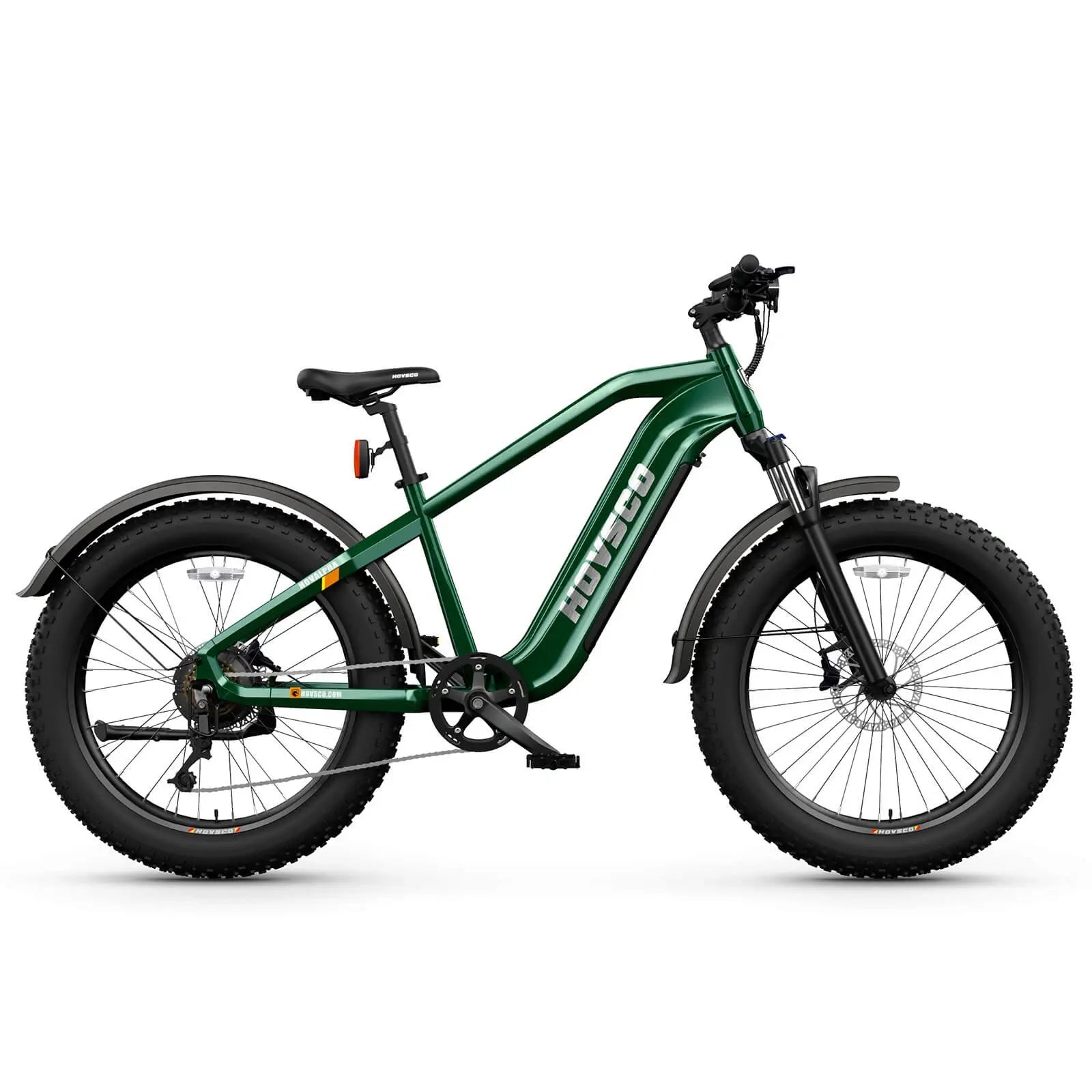
To convert PSI to kPa for e-bike tires, multiply PSI by 6.895 (1 PSI = 6.895 kPa). Examples: 20 PSI fat tires = 138 kPa; 50 PSI commuter tires = 345 kPa. For HOVSCO fat bikes like HovAlpha (10-20 PSI/69-138 kPa) use lower for sand/snow; commuters like HovRanger (40-60 PSI/276-414 kPa) higher for pavement.
Check: Moped-Style ebikes
PSI to kPa conversion uses the formula kPa = PSI × 6.895, making it simple for e-bike riders to switch units for optimal tire pressure. This ensures precise adjustments on models like HOVSCO's HovAlpha fat tire e-bike.
Understanding tire pressure units is crucial for e-bike performance, safety, and comfort. PSI, or pounds per square inch, is the standard in the US, perfect for American riders hitting the trails or streets on their electric bikes. kPa, kilopascals, is a metric unit common in international specs—1 PSI equals exactly 6.89476 kPa, often rounded to 6.895 for quick calculations.
For e-bikes, this conversion matters because fat tire models like the HOVSCO HovAlpha (with its 1300W peak motor and 450 lbs payload) run low pressures around 10-20 PSI (69-138 kPa) for traction, while commuters like the HovRanger Step-Thru prefer 40-60 PSI (276-414 kPa) for efficiency. Always check your sidewall for max ratings, and use a digital gauge for accuracy. This formula keeps your ride smooth, extending range on those 40-80 mile adventures powered by HOVSCO's removable lithium-ion batteries.
Convert by multiplying PSI by 6.895: 10 PSI = 69 kPa (fat tires), 30 PSI = 207 kPa (hybrid), 50 PSI = 345 kPa (commuters). Use charts for HOVSCO models to match your HovScout or HovCity setup instantly.
E-bike riders love quick references. Here's a handy conversion table tailored for common e-bike pressures, from low-fat tire setups to high-speed commuters:
| PSI | kPa | E-Bike Use Case |
|---|---|---|
| 10 | 69 | Fat tires (snow/sand) |
| 15 | 103 | Fat tires (light trail) |
| 20 | 138 | Fat tires (pavement) |
| 30 | 207 | Hybrid/urban |
| 40 | 276 | Commuter front |
| 50 | 345 | Commuter rear |
| 60 | 414 | High-speed pavement |
To convert manually, grab your phone calculator: for the HOVSCO HovBeta Foldable Fat Tire eBike's ideal 15 PSI, multiply 15 × 6.895 = 103 kPa. This keeps its 28 mph unlocked speed grippy without pinch flats. Pro tip: Adjust front tire 2-4 PSI lower than rear for balanced handling on HOVSCO's torque sensor-equipped flagships.
HOVSCO fat tire e-bikes like HovAlpha and HovScout run 10-20 PSI (69-138 kPa) optimal, balancing traction and efficiency for 450 lbs payloads. Increase 2-5 PSI for heavier loads or pavement.
Fat tire e-bikes shine in adventure riding, and HOVSCO nails this with models like the HovAlpha Electric Fat Bike (standard or step-thru frames). These beasts feature 1300W peak motors, 48V 20Ah batteries for 60-80 mile range, and massive 450 lbs payloads—perfect for US riders tackling beaches or snow.
Optimal pressures: 10-15 PSI (69-103 kPa) for max float on soft terrain, up to 20 PSI (138 kPa) on firm ground. The HovScout Full Suspension Fat eBike, with hydraulic disc brakes and rear suspension, thrives at 12-18 PSI (83-124 kPa) to leverage its 80mm fork travel. Always inflate cold, and use the BC280 LCD Smart Display to monitor ride feel via the free HOVSCO App.
Compare fat vs. commuter in this HOVSCO-focused table:
| Model | Tire Type | Optimal PSI | Optimal kPa | Payload (lbs) |
|---|---|---|---|---|
| HovAlpha | Fat | 10-20 | 69-138 | 450 |
| HovScout | Fat (Full Susp.) | 12-18 | 83-124 | 450 |
| HovBeta | Fat (Foldable) | 10-20 | 69-138 | 450 |
| HovRanger | Commuter | 40-55 | 276-379 | 300 |
| HovCity | Urban Commuter | 45-60 | 310-414 | 300 |
Lower PSI (10-15/69-103 kPa) for snow/sand on fat tires like HOVSCO HovAlpha for traction; higher (40-60/276-414 kPa) for pavement on commuters like HovRanger to reduce rolling resistance and boost range.
Terrain dictates pressure for peak e-bike performance. On snow or sand, drop to 8-12 PSI (55-83 kPa) on HOVSCO fat tires—the HovGTRS Moped Style's 20x4" tires excel here at 32 mph unlocked speeds, gripping with its 450 lbs payload and dual-battery Ultra option for 65-150 mile range.
Pavement calls for higher: 45-60 PSI (310-414 kPa) on HovCity commuters minimizes drag, maximizing the 36V system's efficiency. Sand/snow needs lower pressures to increase contact patch, preventing spin-outs on your 750W sustained motor. Test via pedal assist levels 1-5—feel the torque sensor magic on HOVSCO flagships. Safety first: never exceed sidewall max, and reinflate for roads.
Add 1-2 PSI (7-14 kPa) per 50 lbs over base rider weight; HOVSCO's 450 lbs payload models like HovAlpha need 15-25 PSI (103-172 kPa) for heavy loads to avoid flats and maintain 60-80 mile range.
HOVSCO designs for real US riders—up to 450 lbs on fat models means scalable pressures. Base: 150-200 lb rider at 12 PSI fat / 50 PSI commuter. For 300 lbs total, bump +5 PSI front/rear. The HovCart Cargo eBike's large basket handles groceries at 15-22 PSI (103-152 kPa), preserving its 40-60 mile range.
Use this rule: PSI = (rider + cargo + bike weight) / tire volume factor. HOVSCO's Shimano 7-speed and throttle-on-demand shine with proper setup, ensuring smooth 28 mph cruises.
HOVSCO Expert Views
"At HOVSCO, tire pressure is key to unlocking your bike's potential. Our fat tire lineup, like the HovAlpha with 960Wh battery and 450 lbs capacity, thrives at 10-20 PSI for off-road adventures, while commuters hit 40-60 PSI for urban efficiency. Pair with the HOVSCO App and BC280 display to track real-time performance—optimize for terrain, monitor via torque sensors, and enjoy extended range. Founded by cycling enthusiasts, we engineer for wellness and utility. Enjoy the ride. Be with us!" – HOVSCO Engineering Team
15-20 PSI (103-138 kPa) on HovAlpha/HovScout maximizes 60-80 mile range by balancing traction and low resistance; overinflate cuts efficiency by 10-20%.
Range kings like HovAlpha (960Wh battery) and HovScout hit peaks at precise pressures. Optimal: 16 PSI (110 kPa) for mixed terrain, leveraging 1300W peaks and suspension. Underinflation saps battery; test on level 3 pedal assist. HOVSCO's app logs data—dial in for those epic 28 mph hauls.
Yes, the free HOVSCO App (App Store/Google Play) pairs with BC280 display to track speed, battery, and ride metrics—feel pressure effects via assist response and range estimates on all models.
Smart tech elevates maintenance. Connect your HovRanger or HovGTRS to monitor how 50 PSI vs. 40 PSI affects torque delivery. No direct pressure sensor, but real-time data reveals efficiency—lower for trails, higher for commutes. All HOVSCO e-bikes include this for data-driven tweaks.
Check: ultra dual battery moped style electric bike
HovAlpha, HovScout, HovBeta, and HovGTRS fat tire models need 8-15 PSI (55-103 kPa) for ultimate traction in snow/sand, supporting 450 lbs payloads.
Lowest for HOVSCO's fat squad: HovAlpha step-thru for easy mounts, HovScout full-suspension for bumps. HovGTRS Ultra dual-battery crushes at 10 PSI with 4" tires. Commuters skip this—stick to higher.
Master PSI to kPa conversions and terrain tweaks to supercharge your HOVSCO e-bike. From HovAlpha fat adventures to HovCity daily commutes, perfect pressure boosts safety, range, and fun. Explore HOVSCO's lineup at hovsco.com—enjoy the ride, be with us!
What is a kPa? kPa (kilopascal) is a metric pressure unit; 1 kPa = 0.145 PSI, common for international e-bike specs.
PSI vs. PSIA for bike tires? Bike tires use PSI (gauge); PSIA is absolute (includes atmospheric), irrelevant for tires.
Best PSI for HOVSCO HovGTRS on sand? 10-12 PSI (69-83 kPa) for its 4" tires and 32 mph power.
How often check HOVSCO tire pressure? Weekly or pre-ride; use digital gauge for 28 mph safety.
Convert 35 PSI to kPa? 35 × 6.895 = 241 kPa, ideal hybrid commuter.
Share:
Presta vs Schrader: Which Valve for HOVSCO E-Bikes?
What Are the Best E-Bike Throttle Types for Class 2/3 in 2026?